Parshat Beshalach6 min read

The Angel of God Turned Behind the Camp at the Sea

The angel moved from the front of the camp to the rear, set itself between Israel and Pharaoh's chariots, and a different Name rode with it.

Curated by Arthur · Told by Maggid ·
Table of Contents
  1. The Angel Walked at the Head of the March
  2. The Sound of Chariots Came From Behind
  3. Rabbi Nathan Pressed the Name
  4. Rabbi Shimon Named What the Word Meant
  5. The Father Who Carried the Child Through Every Danger

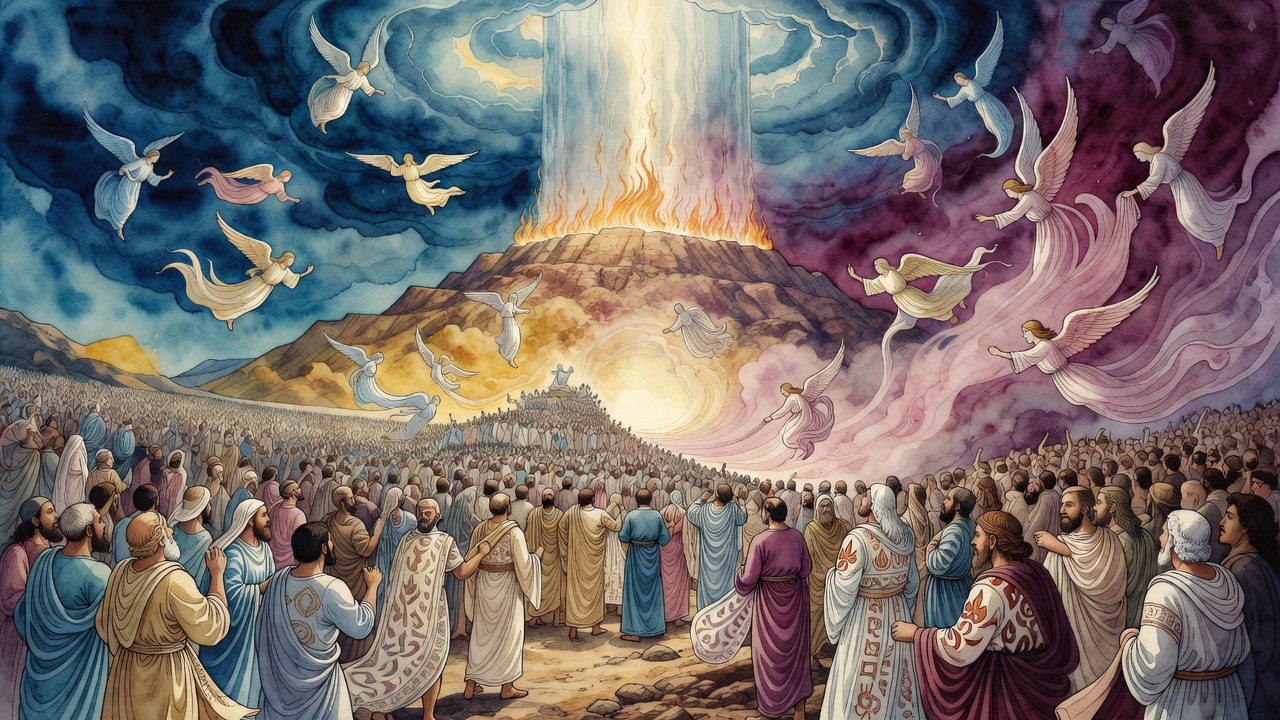
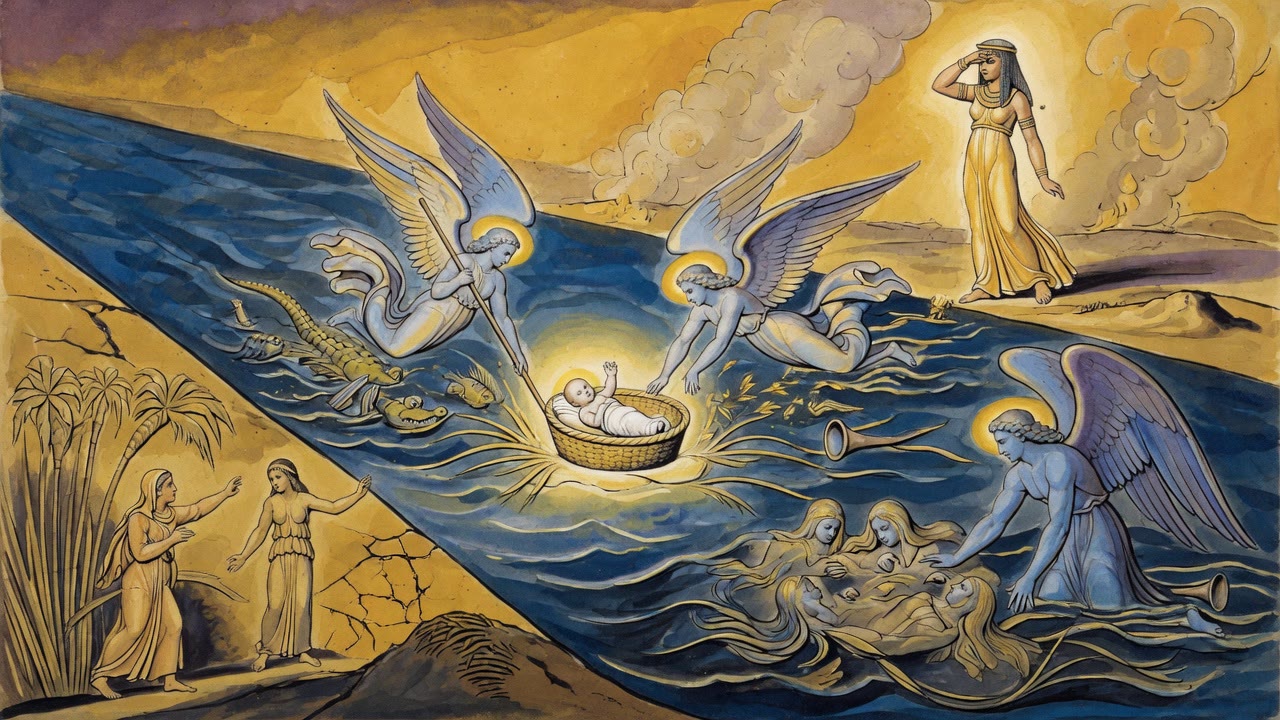
The sea would not part. Water stood ahead, dark and heavy, refusing the people a single dry step. Behind them the ground had begun to shake, and the shaking had a rhythm to it, the rolling thunder of wheels and hooves coming on fast across the flats. Pharaoh's chariots. The whole crushing weight of Egypt, bearing down on a crowd of freed slaves penned against the water.
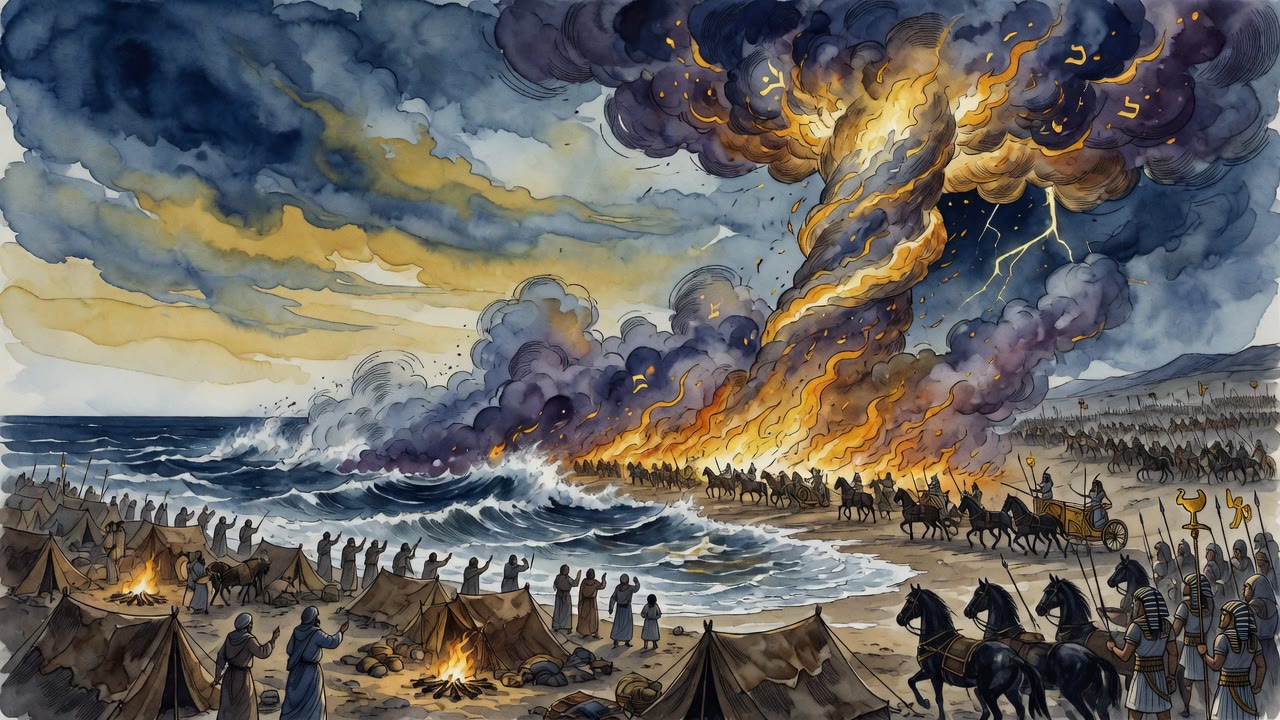
And at the front of that crowd, where it had walked for days, the messenger of God stood. It had led them out of the brickyards. It had gone before the camp the whole way, a presence at the head of the march, and above it the pillar of cloud had hung like a banner, showing the road, telling every weary foot where to fall next.

The Angel Walked at the Head of the March

For days the order had been simple. The messenger in front, the cloud in front, the people streaming after like children behind a father on an open road. A father will walk that way when the path is clear and the danger lies somewhere ahead, where his eyes can find it. He keeps the small one before him, in plain sight, and he watches the horizon.

So it had been since the going out. The light went first. The people followed. No one looked back, because looking back meant Egypt, and Egypt was finished with them, or so the morning had promised.

The Sound of Chariots Came From Behind

Then the threat changed its place. It did not rise ahead of them, where the cloud could face it. It came from the rear, from the country they thought they had left, and it came as sound before it came as sight, that low growing thunder that is felt in the chest before it is named by the ear.

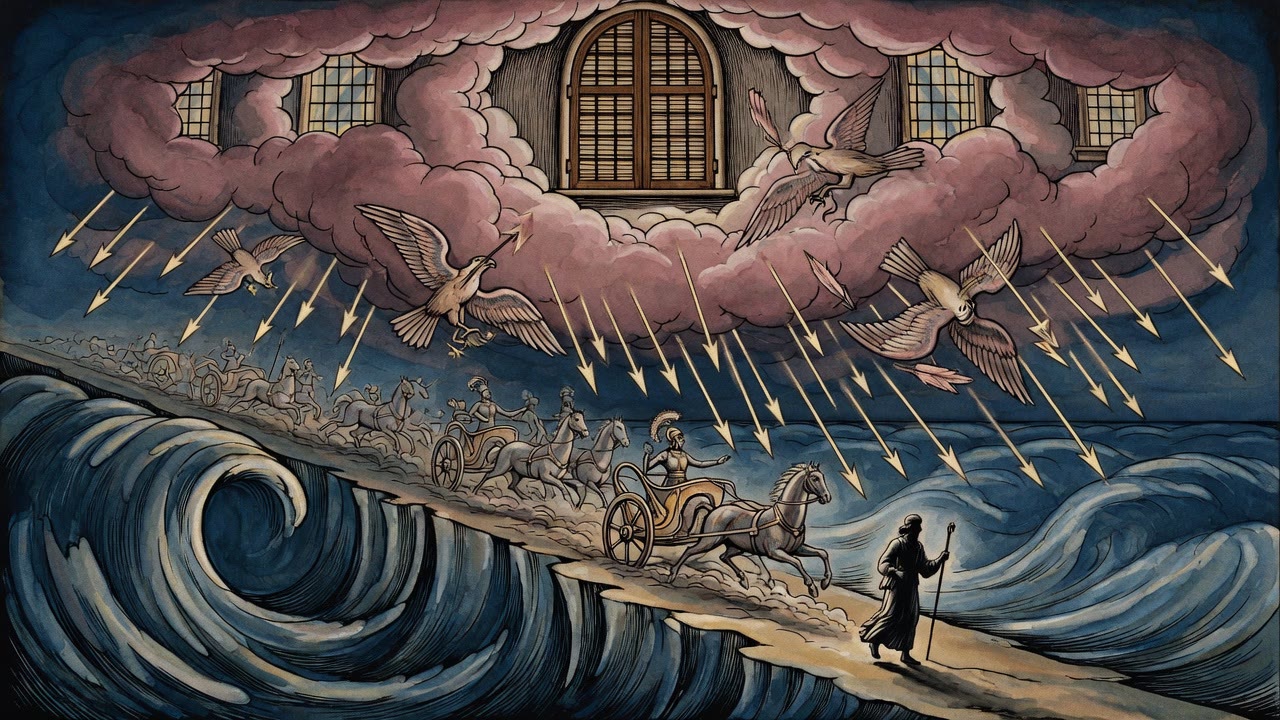
A father on the road, hearing robbers close in behind him, does the only thing a father can do. He takes the child from in front and sets him at his back, putting his own body between the small one and the men with the knives. So the messenger turned. It left the head of the march. It moved the whole length of the camp and set itself down in the gap between Israel and the oncoming wheels, and the pillar of cloud went with it, sliding from the front to the rear, no longer a guide now but a wall.

The verse that holds this turning is dense past its size (Exodus 14:19). The angel that went before the camp moved and went behind them, and the cloud moved from before them and stood behind them. One sentence, and a rescue begins inside it.

Rabbi Nathan Pressed the Name

There was a man who could not let one word in that sentence rest. Rabbi Nathan had read the whole march carefully, and he had noticed something about the messenger that nobody around him seemed to weigh.

Everywhere else, he said, the messenger carries the same title. The one who found Hagar by the spring in the wilderness is called the angel of the Lord (Genesis 16:7). The one who spoke to her there is the angel of the Lord (Genesis 16:9). The one in the bush that burned and was not eaten, the one that stopped Moses cold, is the angel of the Lord (Exodus 3:2). Always the four-letter Name, the Name that means tenderness, covenant, the leaning-in of a God who keeps promises.

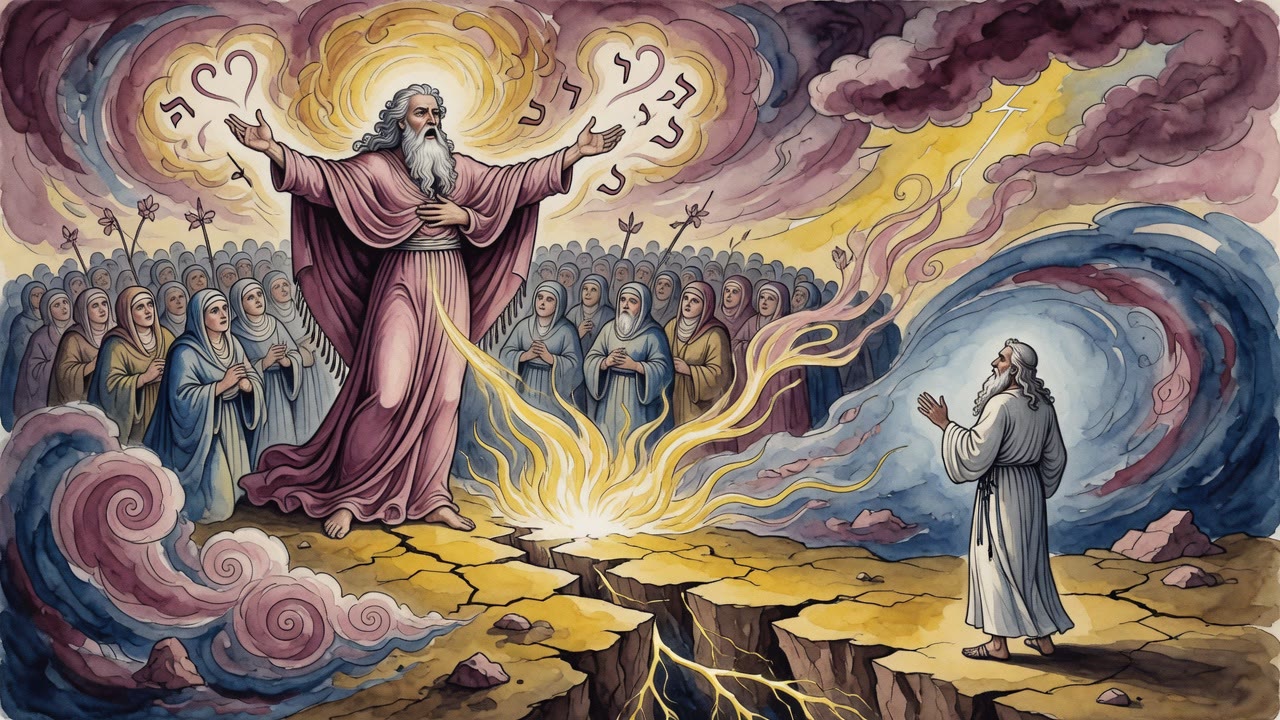
But here at the water, in the very breath of the rescue, the title slips. The verse does not say the angel of the Lord. It says the angel of Elohim (a Name of God, the one tied to judgment). The same messenger, the same turning, a different Name riding on its shoulders. Rabbi Nathan brought the puzzle to Rabbi Shimon ben Yochai and asked him plainly why the change.

Rabbi Shimon Named What the Word Meant

Rabbi Shimon did not soften it. The Name Elohim, he answered, is in every place the Name of the Judge. Wherever it stands, it stands for strict justice, for the weighing of a thing on a scale that does not flinch. It is not a warm word. It is the word for a court in session.

So its presence at the sea was no accident of phrasing. If the Judge's Name rode behind the camp at the hour of rescue, then a judgment was underway at that very hour, and the ones being judged were not the Egyptians alone. Israel stood on the scale too. In the gap between the water that would not open and the wheels that would not stop, the question hanging in the silent air was whether these people had earned the dry path through the sea or earned the same drowning as their pursuers.

The redemption and the trial happened in the same instant. The hand that turned to shield them was also the hand that held the scale, and for one held breath it was not certain which way the weighing would fall.

The Father Who Carried the Child Through Every Danger

And still the older picture pressed underneath the verdict, the picture of the father on the road. When robbers came at his back he moved the child behind him. When a wolf lunged from the front he swept the child forward again. When robbers stood before and wolves behind, he lifted the child onto his own shoulders and bore him above both. The sun scorched the boy, and the father spread his own garment over him for shade (Psalms 105:39). The boy hungered, and the father fed him bread out of the sky (Exodus 16:4). The boy thirsted, and water came (Psalms 78:11).

I pampered Ephraim, the line goes, taking them up on My arms, and they did not know that I had healed them (Hosea 11:3). That is the camp at the sea. Carried, shielded, weighed, and not once understanding whose arms held them up while the chariots screamed closer and the Name behind them changed.


← All myths
From the tradition

Sources

4 sources

The texts this telling draws on, in full. Open a card to read inline, or expand it for a wider, quieter read.

Mekhilta Tractate Vayehi Beshalach 5:2Mekhilta DeRabbi Yishmael

When the Israelites stood trapped between the sea ahead and Pharaoh's army behind, a single verse describes the moment the divine rescue began (Exodus 14:19): "And the angel of God, who went before the camp of Israel, moved and went behind them; and the pillar of cloud moved from before them and stood behind them." Rabbi Yehudah declared that this verse is "rich in allusions", packed with meaning far beyond its surface.

The Mekhilta preserves a vivid image of what happened. The angel of God had been traveling at the front of the Israelite camp, leading them forward through the wilderness. But the moment danger appeared from behind, the thunder of Egyptian chariots closing in, the angel shifted position. Like a father walking with his child who suddenly sees a threat from behind, the angel moved to the rear, placing itself between Israel and their pursuers.

The pillar of cloud did the same. It had been guiding the people from the front, a luminous beacon showing them where to go. Now it relocated behind them, forming a wall of divine cloud that separated the Egyptian army from the Israelite camp. On one side, darkness engulfed the Egyptians. On the other, light illuminated the Israelites. The same cloud that had been a guide became a shield.

Rabbi Yehudah's observation, that this single verse is "rich in allusions", captures the rabbinic sense that every word of the Torah carries layered meaning. This one verse describes a cosmic repositioning: God's angel and God's cloud simultaneously pivoting from leaders to protectors, from guides to guardians. The whole architecture of divine escort reversed itself in an instant, all to save Israel at the sea.

Full source
Mekhilta Tractate Vayehi Beshalach 5:4Mekhilta DeRabbi Yishmael

R. Nathan brings a textual puzzle to R. Shimon b. Yochai about the divine name attached to the angel at the sea. Throughout the Torah, the messenger is called the angel of the L-rd under the four-letter Name, the Name of mercy: "an angel of the L-rd found her" (Genesis 16:7), "the angel of the L-rd said to her" (Genesis 16:9), "an angel of the L-rd appeared to him" (Exodus 3:2). Yet at the splitting of the sea the verse reads that "the angel of God," using the name Elokim, turned and moved behind the camp. Why the change?

R. Shimon answers from a fixed principle of rabbinic reading. The name Elokim, wherever it appears, signals the attribute of strict justice and denotes a judge. Its presence at this moment is not incidental. The midrash in the Mekhilta DeRabbi Yishmael draws the conclusion that at the very hour of the redemption, Israel themselves stood under judgment. The question hanging in the balance was whether they deserved to be rescued through the sea or to be destroyed in it alongside the Egyptians, for they too had been drawn into idolatry in Egypt. The shift to the name of judgment marks the gravity of that moment: salvation was not automatic, and the same waters that could deliver them could also have condemned them.

Full source
Mekhilta Tractate Vayehi Beshalach 5:3Mekhilta DeRabbi Yishmael

An analogy: A man was walking on the road leading his son before him when robbers came to snare him, whereupon he took him and placed him behind him, when a wolf came to snatch him, whereupon he took him and placed him in front, whereupon robbers came before him and wolves behind him, whereupon he took him and placed him on his shoulders, whereupon his son was scorched by the sun, whereupon his father spread his garment over him. He hungered and he fed him; he thirsted and he gave him to drink. Thus, the Holy One Blessed be He, viz. (Hoshea 11:3) "And I pampered Ephraim, taking them on My arms, and they did not know that I had healed them." His son was scorched by the sun, whereupon He spread his garment over him, viz. (Psalms 105:39) "He spread a cloud for a cover and fire to light up the night." "He hungered and He fed him," viz. (Exodus 16:4) "I shall rain down bread for you from heaven." He thirsted and he gave him water to drink, viz. (Psalms 78:11) "And He brought forth nozlim from a rock," "nozlim" being living waters, as in (Song of Songs 4:15) "a garden spring, a well of living waters, and nozlim, etc." and (Mishlei 5:15) "Drink waters from your pit and nozlim from your well."

Full source
Yalkut Shimoni on Torah 233:7Yalkut Shimoni on Torah

"And the angel of God who went before the camp of Israel moved and went behind them" (Exodus 14:19). What does Scripture teach by "And the pillar of cloud moved from before them and stood behind them"? Rather, that very attribute of strict justice which had been stretched out against Israel, the Holy One, blessed be He, turned it against the Egyptians.

"And the angel of God moved." Rabbi Yehudah says: This is a verse rich in many places. They told a parable. To what is the matter like? To one who was walking on the road with his son walking before him. Bandits came to seize the boy, so he took him from before him and placed him behind him. A wolf came to take him from behind, so he took him and placed him upon his arms, as it is said, "I taught Ephraim to walk, taking them on his arms" (Hosea 11:3). The son began to suffer from the heat of the sun, so he spread his garment over him, as it is said, "He spread a cloud for a covering" (Psalms 105:39). He grew hungry, so he fed him bread, as it is said, "Behold, I will rain bread for you" (Exodus 16:4). He grew thirsty, so he gave him water to drink, as it is said, "And He brought streams out of the rock," and streams means nothing but living water.

Rabbi Nathan asked Rabbi Shimon ben Yohai: Everywhere it says "the angel of the LORD," "the angel of the LORD said to her" (Genesis 16:7), "the angel of the LORD appeared" (Exodus 3:2), yet here it says "the angel of God." He said to him: "God" everywhere means nothing but justice. Scripture teaches that Israel stood in judgment at that hour, whether to be saved or to be lost with the Egyptians.

Full source