At Sinai the Elders Saw Gabriel's Brick of Slavery Beneath God's Throne
A woman went into labor while she was treading mortar for Pharaoh. The child came out into the brick mold, and an angel came down for the mold.
Table of Contents
 Click for full size
Straw in the Heels
The overseers had a number to hit, and they hit the workers to get it.
Since the straw was no longer delivered, the families went out into the scrub to pull it themselves. They loaded it on donkeys and on their own backs, and on their wives, and on their children. Wilderness straw is not soft. It went through their heels as they walked the mortar down, and their blood went into the mortar with it, and the bricks went up the wall that way, counted and stacked and counted again.
Among the treaders that season was a woman called Rachel, of the house of Shuthelach. She was near her time. Her husband worked the clay beside her, and she worked it with him, because nobody had told the overseers that a pregnant woman counts for less than a full share.
The Child in the Mold
The pains took her standing in the pit.
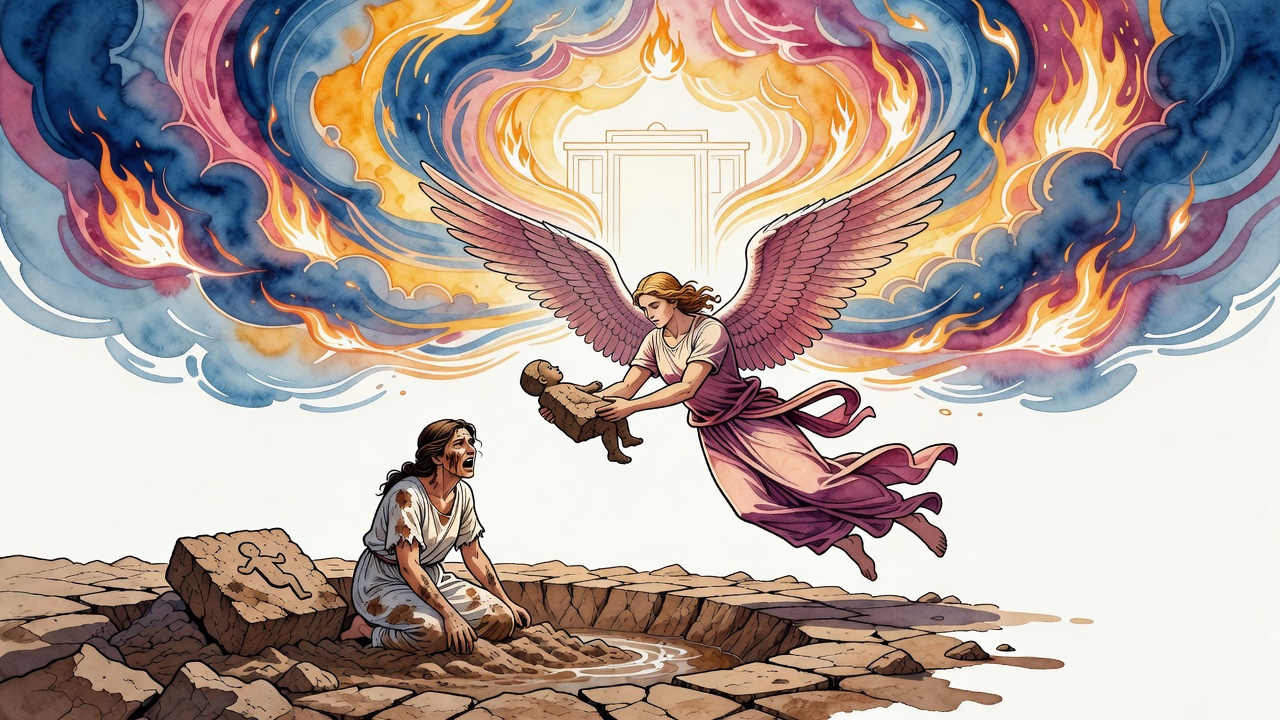
She gave birth there, with the clay to her knees, and the newborn went down into the wet mortar and into the wooden mold and did not come up. The mold went on filling. The clay closed over.
Her scream did not stop at the wall of the brickyard. It went up past the overseers, past the sky, and arrived at the Throne of Glory, which had heard a great deal of noise out of Egypt and had answered none of it yet.
The Angel Who Came Down for a Brick
Gabriel came down into the pit.
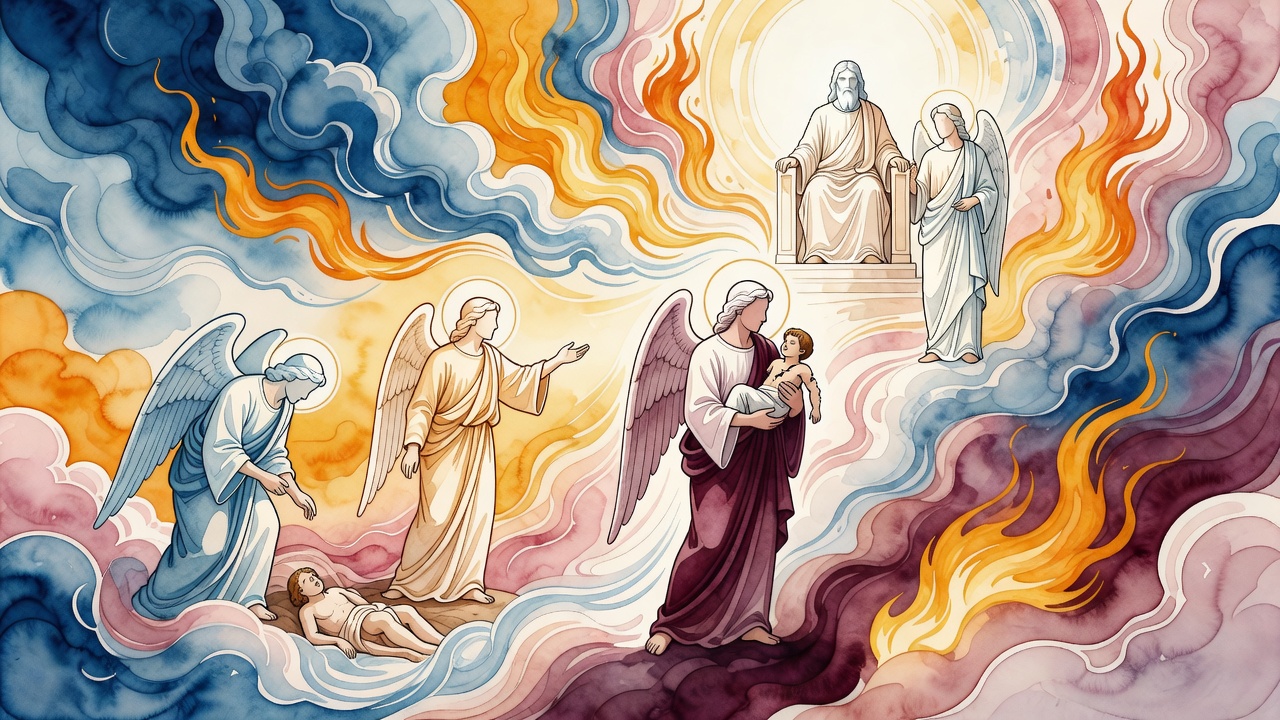
He did not stop the work. He did not strike anyone. He bent over the mold, lifted it out with the clay and the child still in it, and carried it up, all the way up, past the last of the heavens, into the room where God sits. There he set it down under the divine feet as a footstool, and left it there.
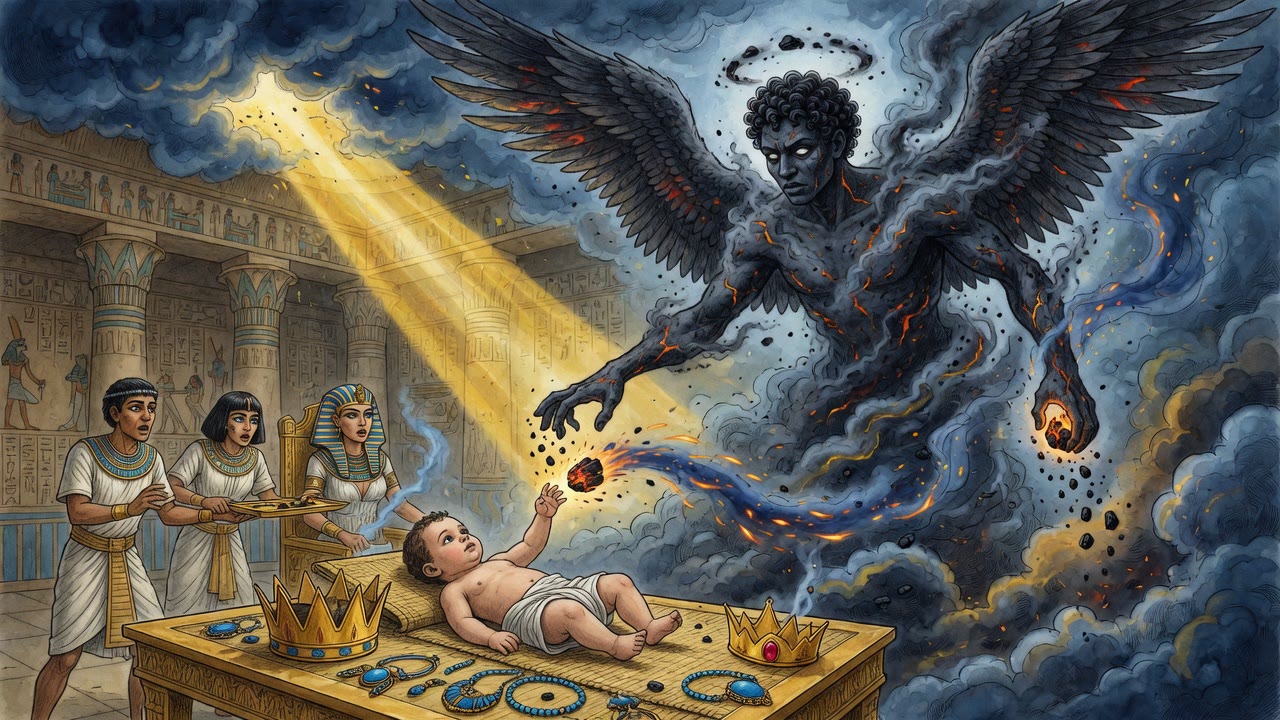
That night God went through Egypt and killed the firstborn in every house.
Blood in the Basins
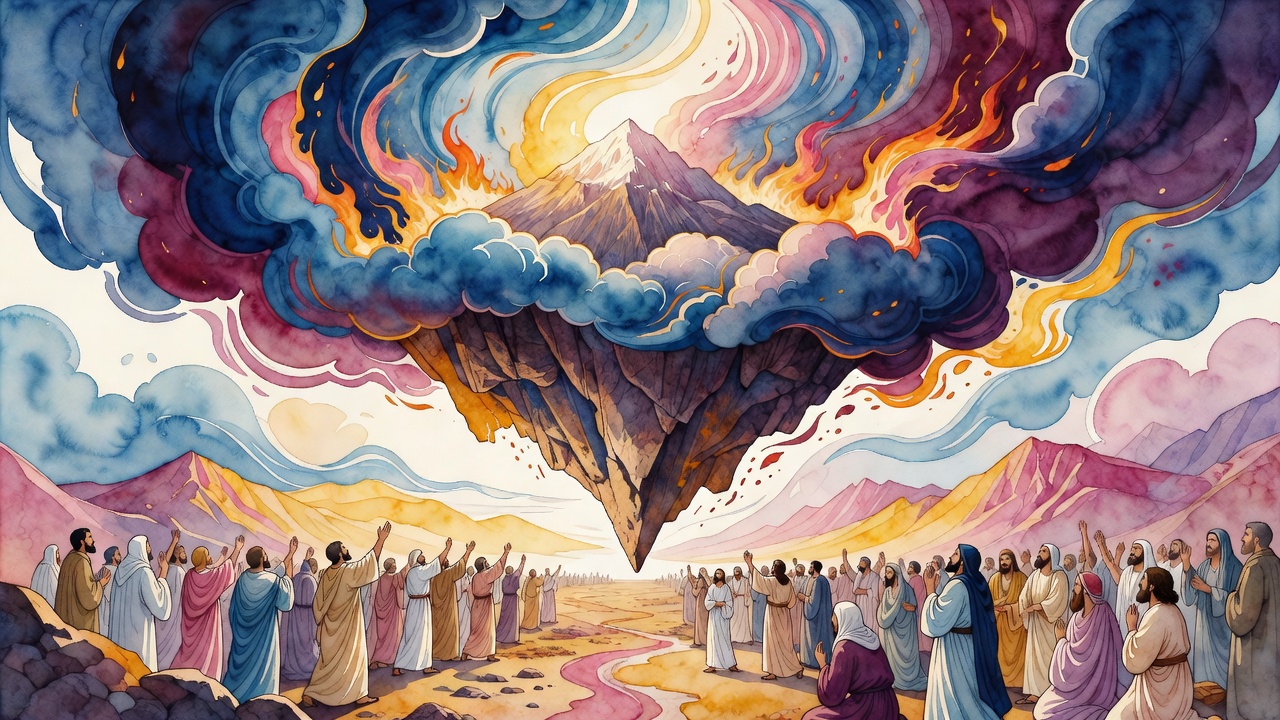
Weeks later the same people were standing at the foot of a mountain in the wilderness, free, filthy, and about to sign something.
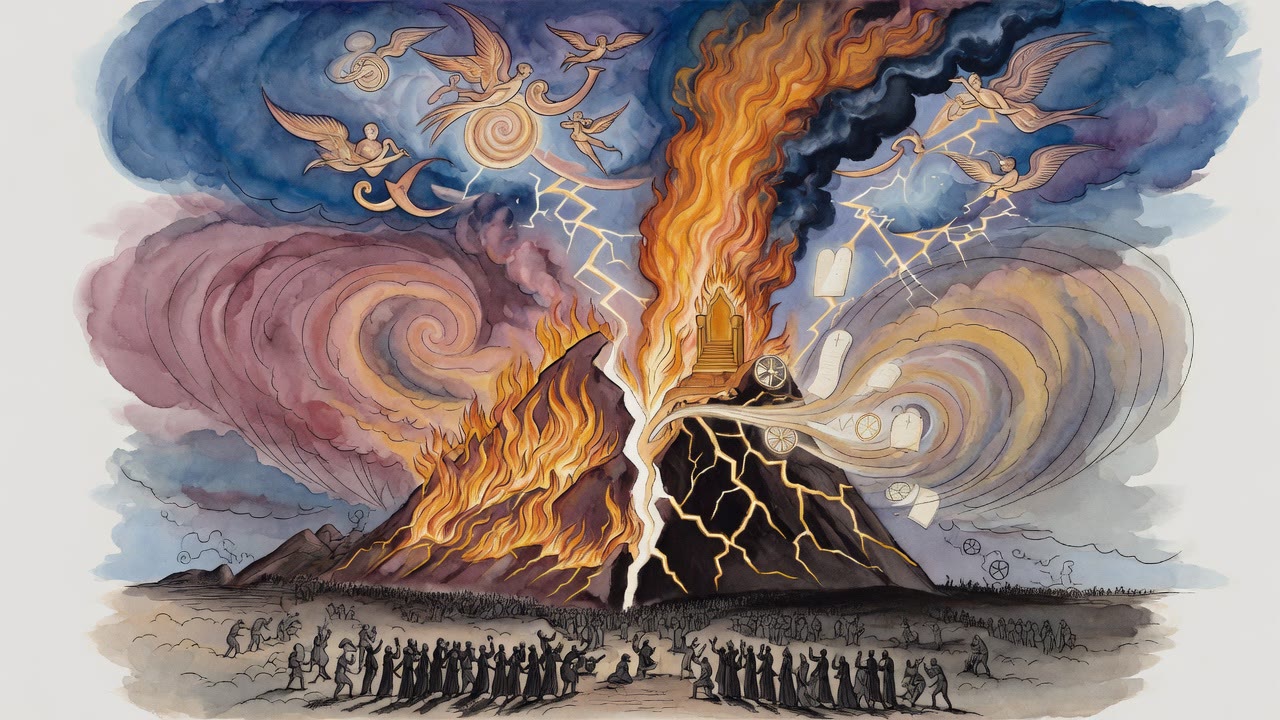
Moses built an altar at the base of the mountain and set up twelve standing stones, one for each tribe. There were no priests yet. Aaron had not been given the office, and the Tent had not been made, so the work fell to the firstborn sons, who slaughtered oxen and burned them.
Moses caught half the blood in basins and threw the other half against the altar. Then he read the book of the covenant out loud to the whole camp, and the people answered him in one voice: everything the Lord has said, we will do, and we will listen.
So he took up the basins and threw the blood he had kept over the people who had just spoken.
"This is the blood of the covenant that the Lord has cut with you, on all these terms."
What Nadab and Abihu Saw Under the Feet
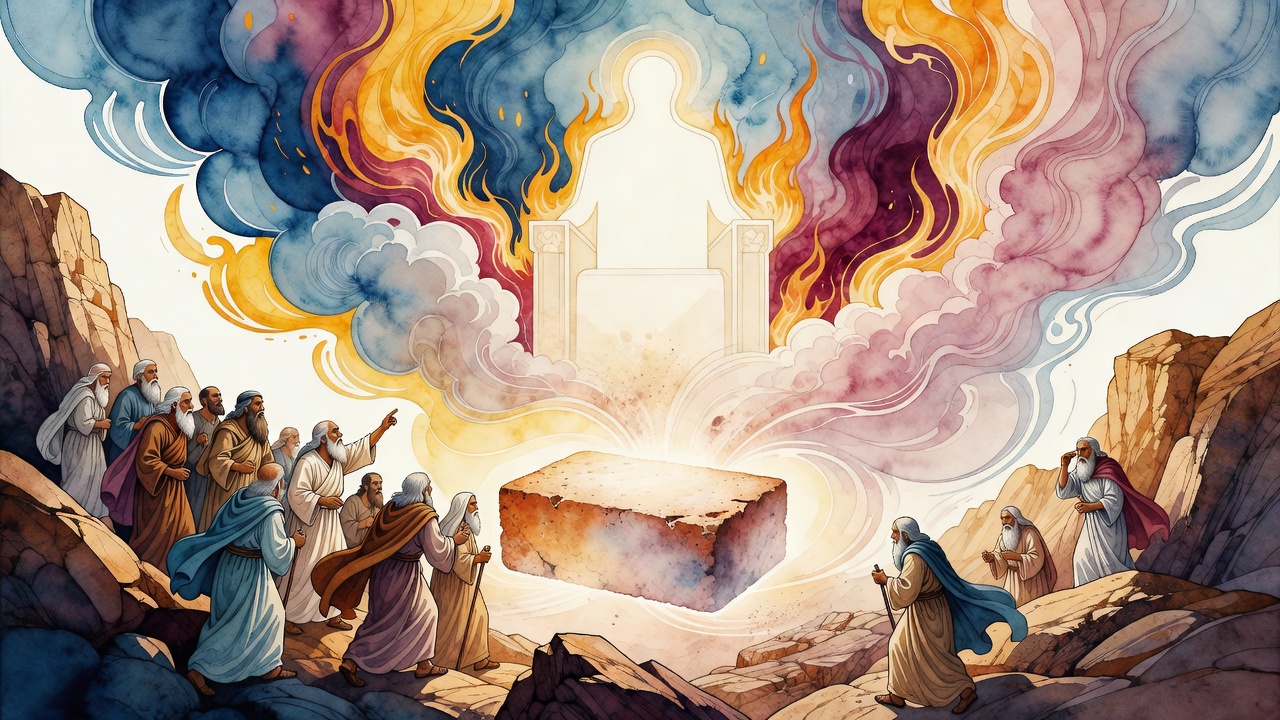
On the seventh of the month Michael, Prince of Wisdom, came with the summons. Moses and Aaron, Nadab and Abihu, and seventy elders of Israel were to come up and worship at a distance. Only Moses could approach.
They climbed. Nadab and Abihu, young men, priests' sons, raised their eyes higher than they had been told to raise them, and saw the God of Israel.
Under His feet was a footstool, and the footstool was set beneath the throne, and it was worked like sapphire, and it was a slave's brick.
Everything was in it. The clay pits. The women treading beside their husbands. The girl carrying a child who went down under the weight of the mud and lost it there. The whole account of what Egypt had done, kept where a foot would rest on it. It threw off light like a cut stone, like the sky on a day with no cloud anywhere in it.
The stroke should have fallen on the two of them for looking. It did not fall that hour. It was set aside and kept, and it came for them eight days later, at the dedication, over a pan of fire they had not been asked to bring.
They did not know that on the mountain. They stood there in the light coming off the brick, glad their offerings had been accepted, as though they were eating and drinking at a feast.
← All myths