5 min read

Angels Stripped Israel After the Golden Calf

At Sinai, Israel wore garments of divine names like angels. After the calf, the same six hundred thousand angels came back.

Curated by Arthur · Told by Maggid ·
Table of Contents
  1. The Hosts Left Egypt
  2. Names Became Garments
  3. Gold Changed Hands
  4. The Angels Came Back
  5. Bare Before the Mountain

At Sinai, Israel did not only hear a voice. They wore it.

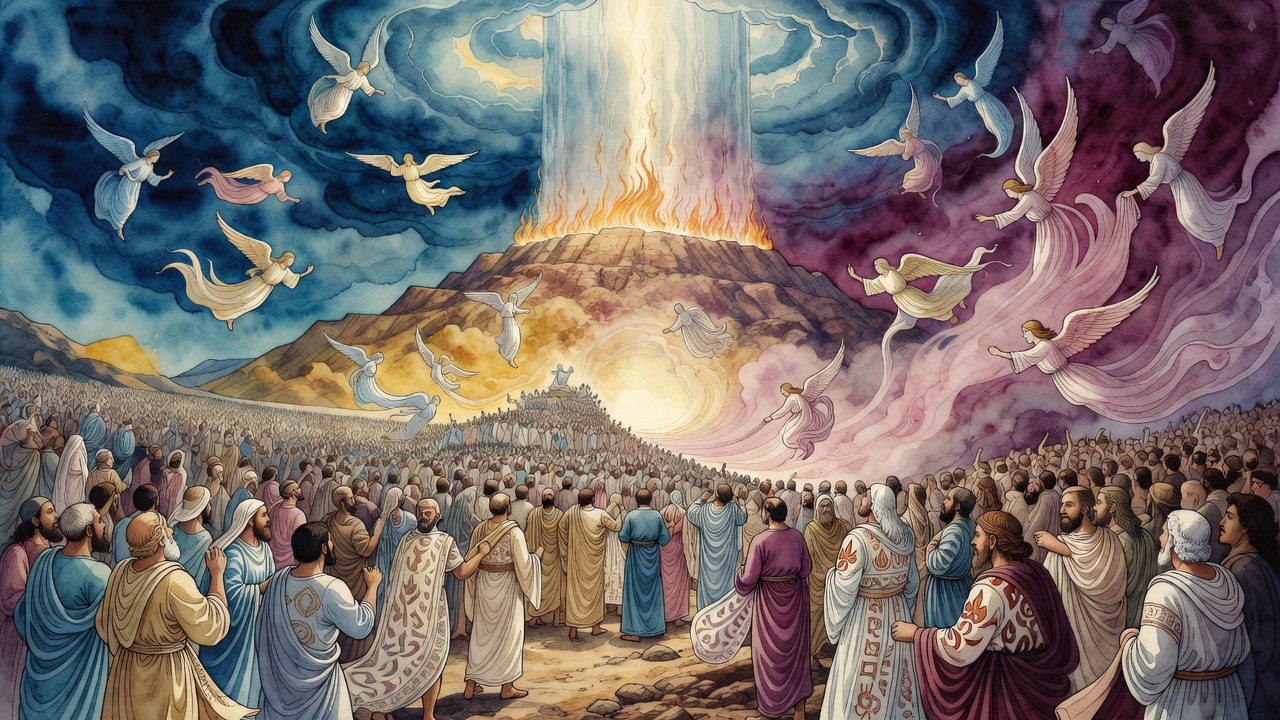
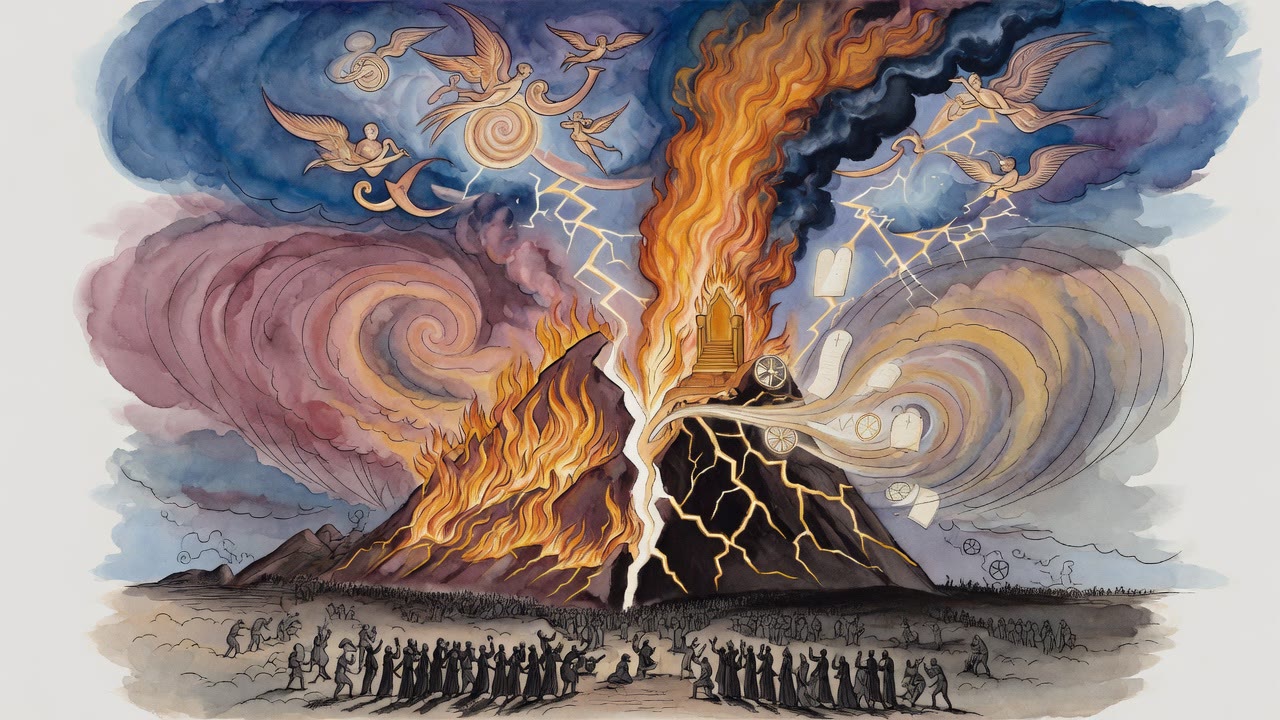
The mountain burned. The people stood below it, washed, trembling, gathered into ranks after the long road from Egypt. Above them moved the hosts of heaven. Around them stood the hosts of Israel. For one bright hour, the border between the two armies thinned.

The Hosts Left Egypt

They had not escaped Egypt like scattered fugitives. They had marched out as tzeva'ot, hosts under command. The word can belong to angels, to armies, to ordered forces that move because God sends them. At the Exodus, the heavenly hosts were already accounted for. That left another host on the road.

The people themselves had become God's host.

Children who had watched bricks dry under the Egyptian sun now walked beneath a title usually heard in the court of heaven. Women with kneading bowls on their shoulders, men with staffs in their hands, elders counting steps out of bondage, all of them moved in formation under a divine name. Freedom did not make them loose. It made them ordered.

Names Became Garments

At Sinai, the order became visible. Six hundred thousand ministering angels descended, matching the number of Israel's fighting men. Each angel brought an adornment. Not linen. Not wool. Not gold. A garment of glory formed from the Name.

The people put on brightness the way a priest puts on vestments. Faces changed. Shoulders straightened. Bodies that had known slave labor now carried honor. Dressed in the Name, Israel became beautiful before God, good in appearance and rank, like the ministering angels.

The gift did not erase flesh. It crowned it. Human bodies stood at the mountain wearing a sign that heaven had recognized them as fit for covenant.

Gold Changed Hands

Then Moses stayed too long above the cloud.

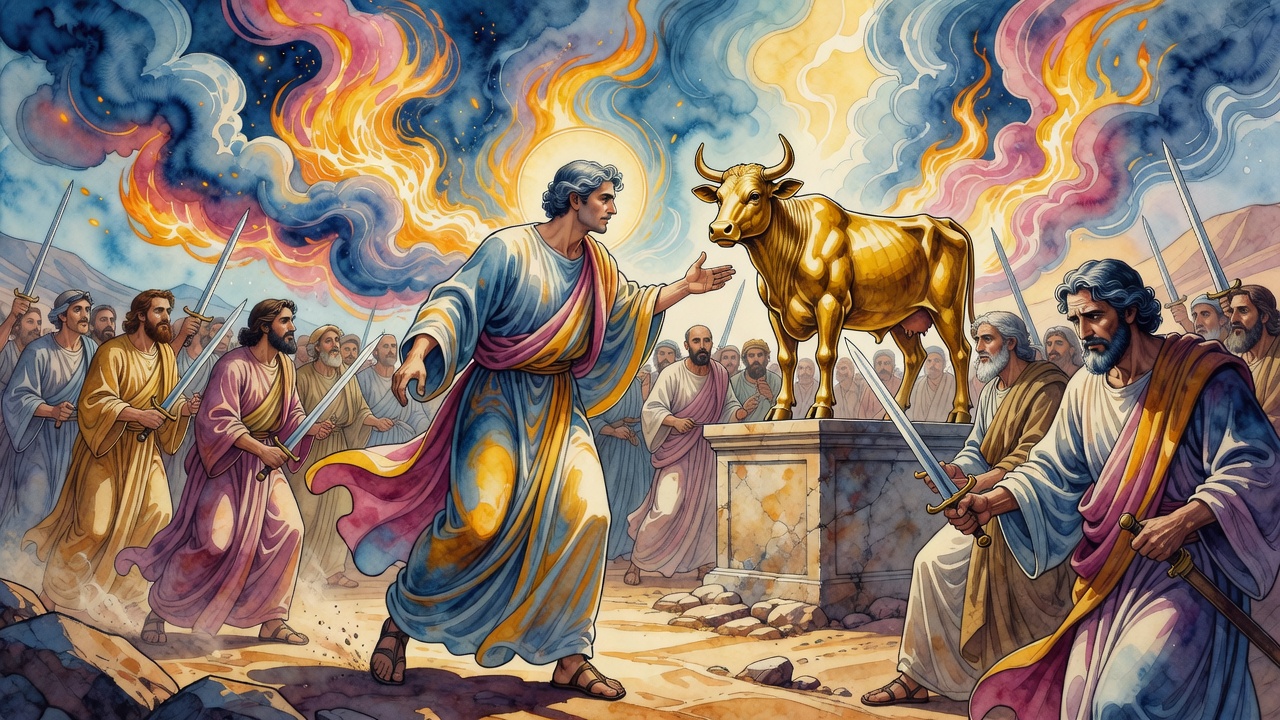
Below, fear went looking for something it could touch. Earrings came off. Gold changed hands. Fire received it. A calf came out, hard and shining, small enough to be made by people who had just heard the living voice of God and still wanted an object they could point to.

The garments of glory remained on their bodies while they danced. That is the terrible part. The Name still covered them when they turned toward the calf. Splendor can be worn badly. Honor can sit on a person who has forgotten what it weighs.

The Angels Came Back

Night fell, and the same number descended again.

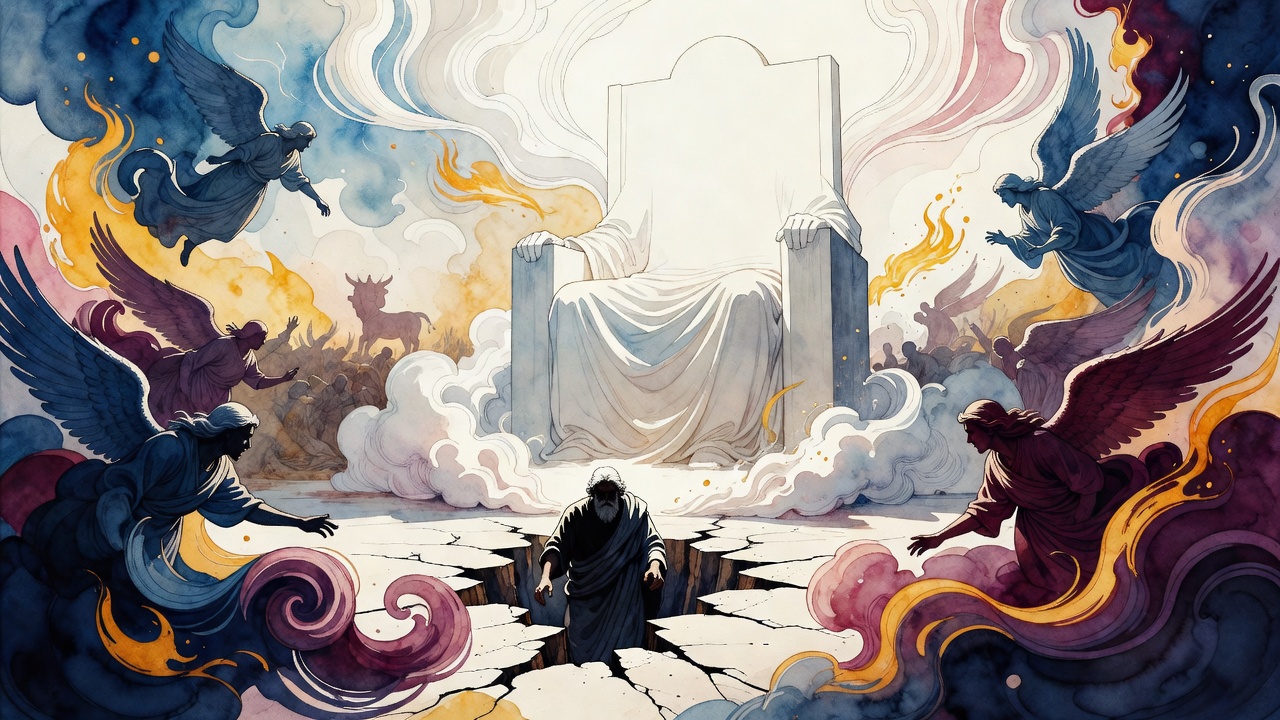
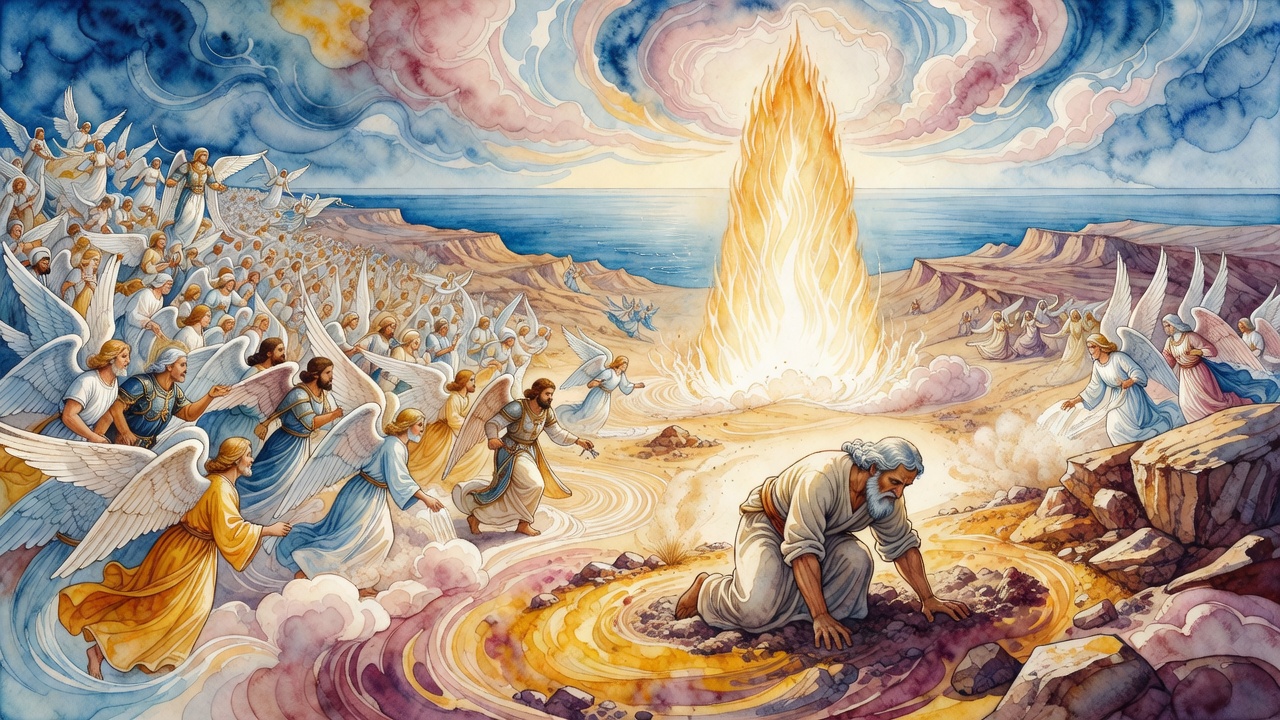
Six hundred thousand ministering angels entered the camp, not as bearers of gifts this time, but as collectors. Each one came back to the Israelite he had dressed. Each one reached for the adornment he had placed there at Sinai.

No Israelite wanted to be bare. The glory had made them beautiful. It had made them resemble the court above. But the garments did not ask permission to leave. Some were taken. Some slipped away by themselves, as if holiness knew how to withdraw when dishonored.

By morning, the camp had changed. The people who had worn the Name stood exposed before the mountain.

The golden calf still stood somewhere in the wreckage, but the greater loss was not metal. Israel had been stripped of the clothing that made the camp look like heaven. The sound after the angels left was worse than shouting, because no one could pretend the brightness had only been decoration. It was rank, covenant, and nearness leaving skin.

Bare Before the Mountain

There is shame that comes from being caught, and shame that comes from losing the person one had almost become. Israel's shame after the calf was the second kind. They had not merely broken a rule. They had been dressed for a higher life and had watched the clothing leave their bodies.

The covenant did not end. Moses still went back up. Prayer still rose. The tablets would be carved again. A dwelling place would be built so the presence could live among them in measured space. But the first brightness did not return in the same form.

The camp would carry commandments instead of angelic garments. They would build boards, sockets, curtains, hooks, altars, and lamps. Holiness would come back through work, not through a single descent of six hundred thousand angels. The Name that had once rested on their bodies would now demand a house, a law, and a people willing to keep standing after the glory was gone.


← All myths

From the tradition

Sources

2 sources

The texts this telling draws on, in full. Open a card to read inline, or expand it for a wider, quieter read.

Pirkei DeRabbi Eliezer 47:2Pirkei DeRabbi Eliezer

The Israelites, fresh from the Exodus, experienced just that, according to Pirkei DeRabbi Eliezer, a fascinating collection of stories and interpretations of Jewish tradition.

Rabbi Judah paints a vivid picture. Imagine the Israelites, basking in the glow of divine favor. They are "dressed in garments of glory," radiating beauty and honor. What are these garments? They are, metaphorically, the very Name of God. Clothed in this divine connection, they were "good before the Holy One, blessed be He, like the ministering angels." A powerful image, isn't it?

Then… the golden calf.

That single act of idolatry, a moment of profound faithlessness, changed everything. God’s anger, a concept we confront even today, descends. And with it comes a cosmic consequence, as Pirkei DeRabbi Eliezer dramatically recounts.

Sixty myriads – that's six hundred thousand! – of ministering angels descend in the night. Their task? To strip away the Israelites' garments of glory, that radiant connection to the Divine. Each angel takes from each Israelite the divine apparel that had been bestowed upon them.

Think about the sheer scale of this. The loss, the humiliation.

The text emphasizes the Israelites didn't willingly give up their adornment. "And the children of Israel stripped themselves" (Exodus 33:6). The Hebrew here is crucial. It doesn't say "they took away," implying an active choice. Instead, "they stripped themselves" suggests something was forcibly removed, or, as some interpretations suggest, simply fell away on its own.

This passage from Pirkei DeRabbi Eliezer offers a powerful lesson about the fragility of spiritual connection. It reminds us that our actions have consequences, not just for ourselves, but for our relationship with the Divine. The Israelites lost something precious because of their choices. It’s a stark reminder of the importance of staying connected to our values, to our faith, to that “garment of glory” that makes us who we are.

What "garments of glory" do we wear today? And what are we doing to protect them?

Full source
Mekhilta Tractate Pischa 9:15Mekhilta DeRabbi Yishmael

The Torah describes the Exodus with the phrase "I took out your hosts." The Mekhilta asks a question that might seem obvious but carries deep theological weight: whose hosts are being described? The hosts of Israel. Or the hosts of the ministering angels?

The word "hosts", tzeva'ot in Hebrew, appears throughout the Torah and prophets in connection with both human armies and angelic armies. God is called the "Lord of Hosts," a title that encompasses command over both heavenly and earthly forces. So when the Torah says "I took out your hosts," the referent is genuinely ambiguous.

The Mekhilta resolves this by pointing to a nearby verse. (Exodus 12:41) already states, "All the hosts of the Lord went out from the land of Egypt." This verse, the rabbis determine, refers to the angelic hosts, the heavenly forces that accompanied the Exodus. Since the angels are already accounted for, the phrase "I took out your hosts" must refer to something else: the human hosts, the people of Israel themselves.

The theological implication is remarkable. God speaks of the Israelites using the same military language He uses for His angels. The people leaving Egypt are not refugees or fleeing slaves in this framing, they are an army, a host, a marshaled force under divine command. The Exodus is not an escape. It is a deployment.

Two hosts left Egypt that night: one angelic, one human. The Torah accounts for both.

Full source