5 min read

Israel's Guardian Angels Withdrew After the Calf

Angels rushed armed to the sea and crowded Sinai in myriads, but after the calf, Moses had to bury fierce anger in the earth.

Curated by Arthur · Told by Maggid ·
Table of Contents
  1. The Angels Came Armed to the Sea
  2. Sinai Filled With Chariots
  3. After the Calf Only Wrath Remained
  4. Moses Buried Fierce Anger
  5. A Rebuke Became Deborah's Light

The angels came to the sea armed.

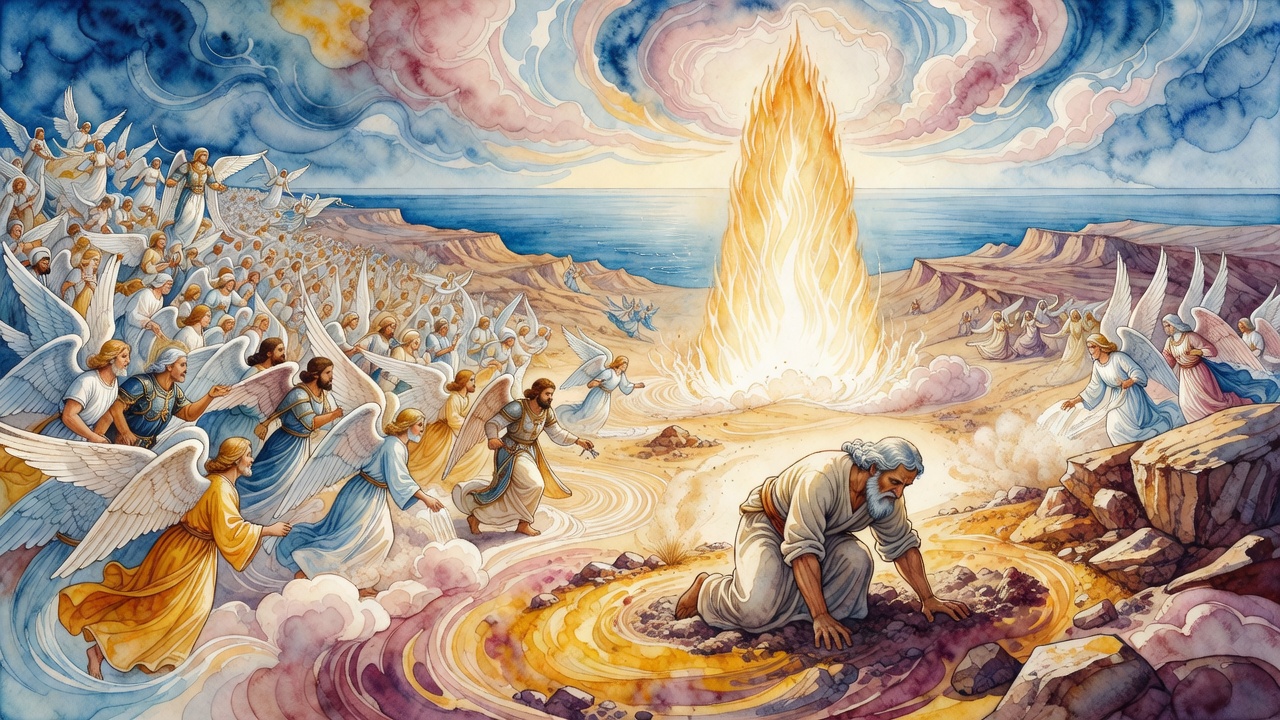
Egypt was behind Israel, the water was ahead, and the night had closed like a fist. Then heaven stirred. Ministering angels rushed toward battle carrying swords, bows, and spears, eager to strike the Egyptians as Pharaoh's chariots thundered into the trap.

God did not take their weapons.

The adversaries would pass away without them.

The Angels Came Armed to the Sea

Midrash Tehillim imagines the moment with almost comic excess. The angelic army arrives ready for war, and God needs none of it. A mortal king drags an army behind him when he goes to battle. The King of Kings goes to war alone.

At the sea, that loneliness is not weakness. It is sovereignty. The waves stand. The chariots enter. The Egyptians disappear beneath water that moments earlier had opened like gates for Israel.

The angels had wanted to be useful. Their swords stayed unnecessary.

Israel learned something without being lectured. Protection does not always look crowded. Sometimes the strongest guard is the One who tells even heaven's soldiers to stand aside.

Sinai Filled With Chariots

At Sinai, the pattern changed.

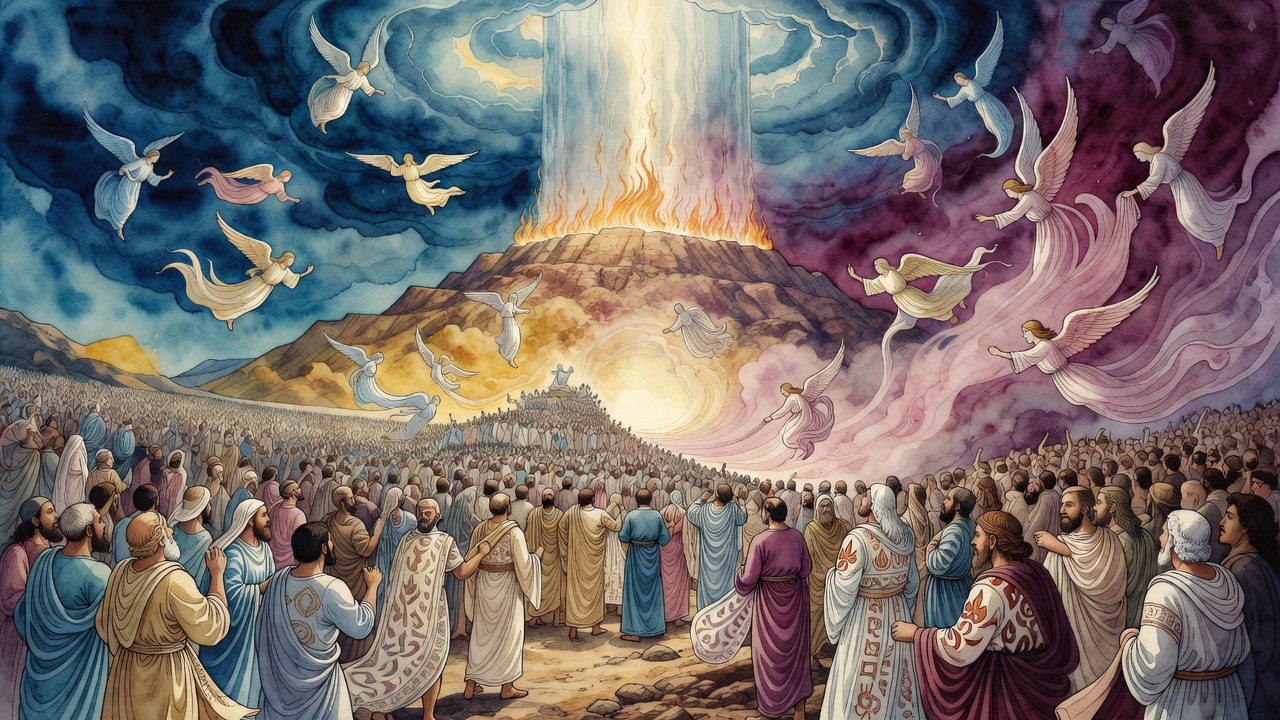
When God came for war, He came alone. When God came for delight, to give Torah, heaven arrived in multitudes. Chariots of God, myriads upon myriads, gathered around the mountain. The same angels who had been dismissed at the sea now crowded the edge of revelation.

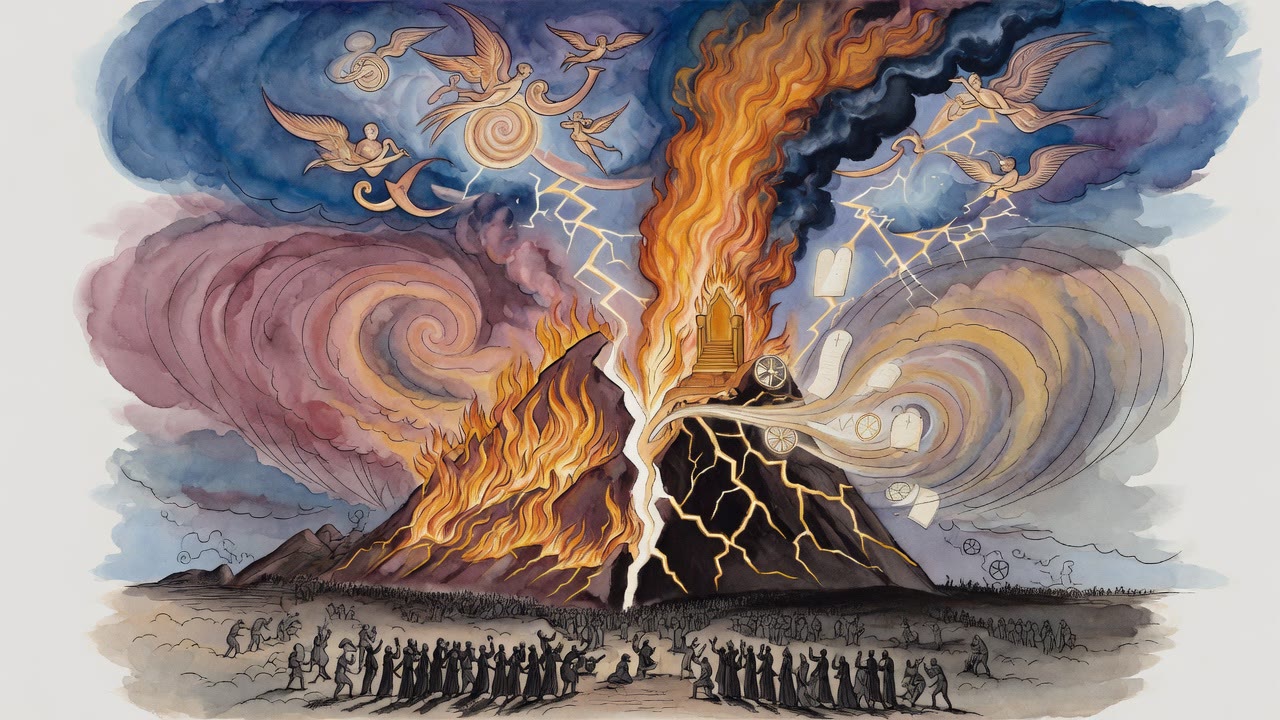
Israel stood below in terror. Fire smoked from the mountain. The shofar voice grew louder. The air filled with the presence of a court too vast for human sight, and the people heard commandments spoken into the world.

The angels were not there to win a battle. They were there because Torah deserved an escort.

A rescued nation had seen God fight alone. A covenant nation now saw God surrounded.

The shift made the mountain feel even more dangerous. Help at the sea had been refused because no help was needed. Attendance at Sinai was accepted because the gift itself deserved a court.

After the Calf Only Wrath Remained

Then came the calf.

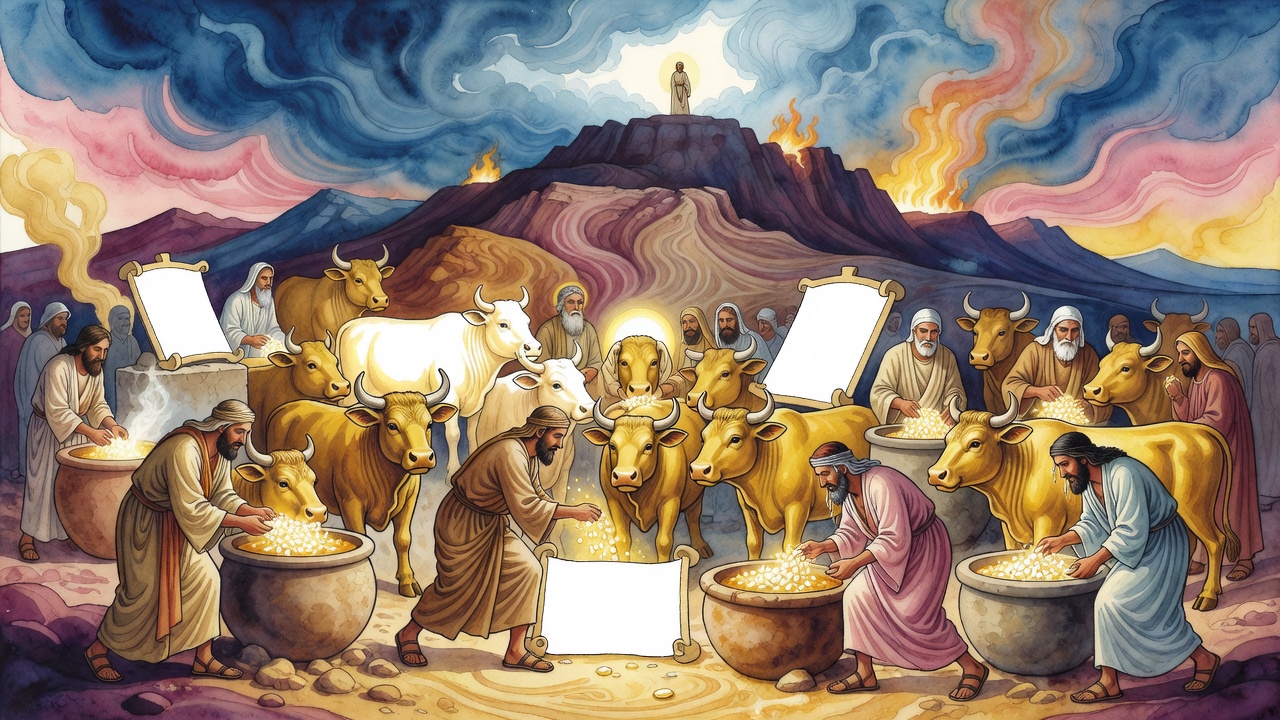
The camp bent itself around gold, and the heavenly company no longer looked like wedding attendance. Pirkei DeRabbi Eliezer imagines forces of anger pressing toward Israel. The merit of Abraham, Isaac, and Jacob held some back. Three angels restrained Wrath, Anger, and Temper. But Destruction and the Glow of Anger still remained.

Moses stepped between them and the people.

He pleaded by the oath sworn to the patriarchs, and Destruction was held back. Then he pleaded by the great and holy Name revealed to him, and the Glow of Anger was restrained too.

Israel lived because Moses knew how to stand where the blow was falling.

Moses Buried Fierce Anger

One force still needed a prison.

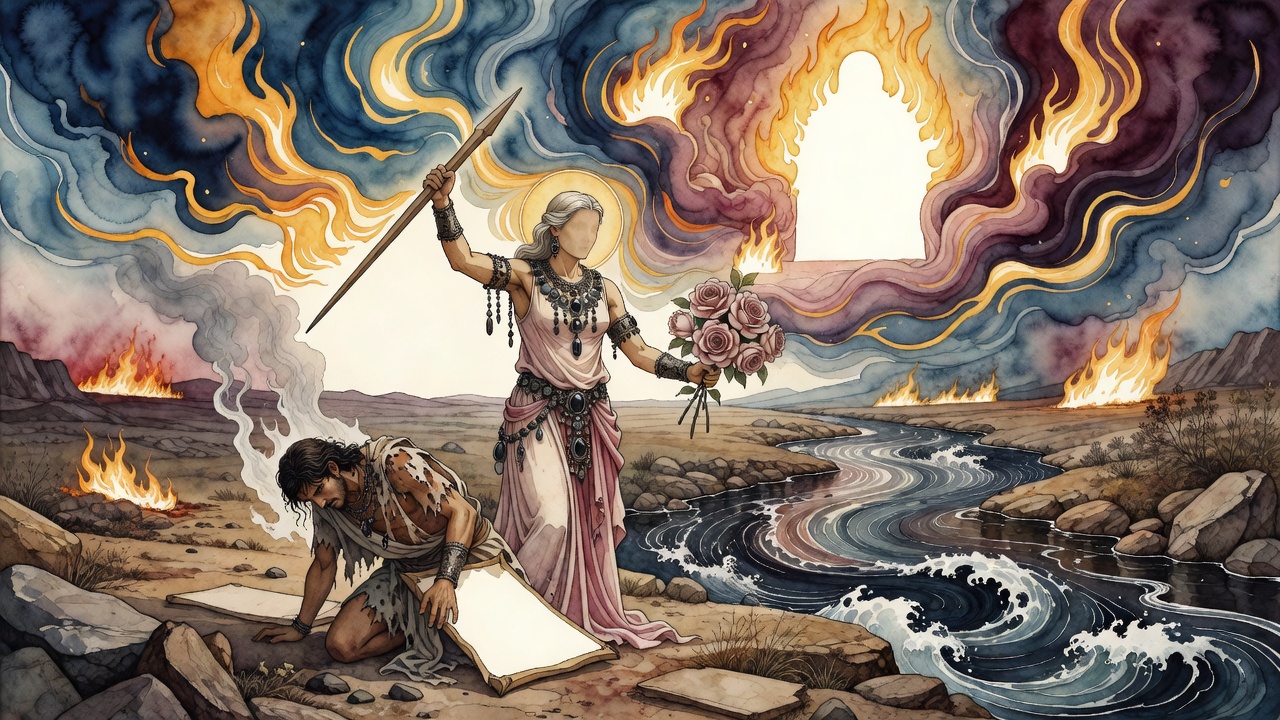
Moses dug into the territory of Gad as if laying a foundation for a building no one wanted to see. Into that pit he buried Fierce Anger. The image is blunt and physical. Wrath is not only an emotion in heaven. It is a creature that can be locked under earth, mouth covered, breath trapped.

But the burial was not permanent rest. Whenever Israel sinned, Fierce Anger pushed upward. Its mouth opened. Destructive breath sought release.

Moses had not abolished danger. He had contained it.

The guardian work after the calf no longer looked like angelic armies flashing at the sea. It looked like intercession, restraint, and a buried force rumbling under the ground of Israel's future.

A Rebuke Became Deborah's Light

Generations later, after Ehud died, Israel strayed again.

Ginzberg preserves an angelic rebuke from that dark hour. God had chosen Israel from all nations and expected His glory to rest on them as long as the world stood. Moses had been sent to teach goodness and righteousness. The people had turned away.

The angel's message was severe. Enemies would rise. Israel would be ruled by others. In distress, they would confess that forsaking the ways of the fathers had brought the trouble upon them.

Then the rebuke opened a window. A woman would be sent, and she would shine for them as a light for forty years.

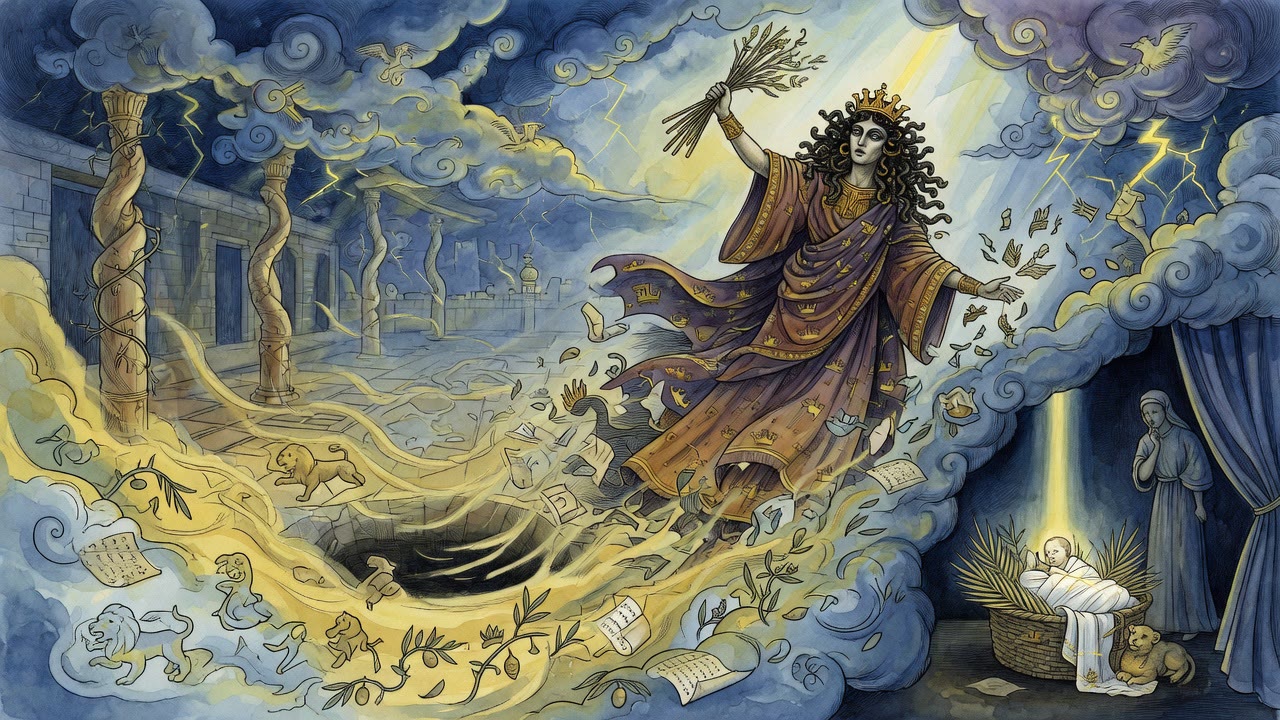
That woman was Deborah. The same tradition that fills the sea and Sinai with angels also knows that rescue can arrive as a prophetess under a palm tree, lighting Israel after the guardians have withdrawn and the people have learned again how badly they need guidance.


← All myths
From the tradition

Sources

3 sources

The texts this telling draws on, in full. Open a card to read inline, or expand it for a wider, quieter read.

Midrash Tehillim 18:15Midrash Tehillim

Midrash Tehillim, a collection of homiletic interpretations on the Book of Psalms, offers some fascinating perspectives on this very question, particularly in its treatment of Psalm 18. It paints a picture of God's might that's both awe-inspiring and surprisingly… intimate.

The Midrash (rabbinic interpretive commentary) opens with the phrase, "Manoah's adversaries passed away. When the wind subsides and the sun rises, his adversaries passed away." This sets a tone of effortless victory. No struggle, no drawn-out battle scenes – just… passing away. It’s almost casual, isn’t it?

Rabbi Yudan, quoting Rabbi Abba, then brings us to a pivotal moment: the parting of the Red Sea. Remember that scene in Exodus? The Egyptians are bearing down on the Israelites, trapped between the sea and their pursuers. According to this Midrash, when God came to wage war on the Egyptians at the sea, the ministering angels rushed to assist Him. Imagine! Angels armed with swords, bows, and spears, eager to join the fray.

Here’s the kicker. God says, "I do not need weapons from you at this hour. My adversaries have passed away."

Wow. The implication is clear: God's power is so absolute that even the mightiest angelic armies aren't necessary. He is sufficient. It's a statement of supreme sovereignty.

Rabbi Yehuda HaNasi elaborates on this idea with a compelling analogy. He contrasts a mortal king with the King of Kings. A human king, "who is flesh and blood," takes his entire army to war. But when he's just going for a stroll, he only brings his personal guard.

God, however, is different. "When He goes out to war, He goes alone, as it is said, 'The Lord is a man of war, the Lord is His name' (Exodus 15:3)." This verse, of course, is part of the Song of the Sea, celebrating the Israelite's miraculous escape from Egypt.

But when God goes out "for His own pleasure to give the Torah," as Rabbi Yehuda HaNasi continues, we see a very different picture. "The chariots of God are myriads, thousands upon thousands" (Psalm 68:18). And, "The Lord God will come with all the holy ones with you" (Zechariah 14:5).

So, what's the takeaway? Is God a lone warrior, or a king surrounded by a heavenly host?

Perhaps the point isn't about literal warfare or parades. Maybe it's about understanding the many-sided nature of the Divine. When facing injustice and oppression, God acts decisively, powerfully, and if necessary, alone. But when offering guidance, revelation, and connection (as with the giving of the Torah at Sinai), God is surrounded by love, support, and countless blessings, symbolized by the myriads of angels.

This Midrash reminds us that God's power isn't just about brute force. It's about knowing when to act with decisive authority and when to shower us with boundless love and support. It’s a powerful reminder that even in our darkest moments, we are never truly alone. And perhaps, just perhaps, that’s the most comforting thought of all.

Full source
Pirkei DeRabbi Eliezer 45:13Pirkei DeRabbi Eliezer

The ancient texts are full of these brushes with oblivion, and the forces, both divine and human, that intervene. to a fascinating passage from Pirkei DeRabbi Eliezer, a collection of stories and interpretations from the early Middle Ages. This particular section, Chapter 45, paints a vivid picture of divine wrath, angelic restraint, and the pivotal role of Moses.

The story begins with a dire situation. Because of the merit of the three patriarchs – Abraham, Isaac, and Jacob – and the intervention of three specific angels, some of the forces of divine anger. Wrath, Anger, and Temper, were held back from harming Israel. But, alas, two remained: Destruction and Glow of Anger. Not good.

Moses, ever the advocate for his people, steps up to the plate, engaging in a direct dialogue with the Holy One, blessed be He. He pleads, "Sovereign of all the universe! For the sake of the oath which Thou didst swear unto them, keep back the angel Destruction from Israel." He's referring to an earlier divine promise, referencing the verse, "To whom thou swarest by thine own self" (implied, see (Exodus 32:1)3). And, miraculously, Destruction was kept back. As the text points out, referencing (Psalms 78:38), "But he, being full of compassion, forgave their iniquity, and destroyed them not." A close call, averted by divine mercy and Moses's powerful intercession.

What about that other angel, “Glow of Anger"? Moses doesn't stop there. Again, he speaks before the Holy One, blessed be He: "Sovereign of all worlds! For the sake of Thy great and holy Name, which Thou didst make known unto me, hold back from Israel the angel called Glow of Anger." He directly quotes God, reminding Him to "Turn away from thy fierce anger" (Exodus 32:12).

So what does Moses do next? This is where the story gets really interesting. He essentially performs a spiritual act of containment. He digs a large pit in the territory of Gad – almost like laying the foundation for a massive building – and he buries "Fierce Anger" within the earth, like a prisoner locked away. The text vividly describes that every time Israel sins, this buried anger rises, its mouth opening to unleash a destructive breath. But Moses, using the divine Name, forces it back down beneath the earth.

And here’s the kicker: This act is the origin of the name Peor, meaning "the one who opens" – a reference to the opening mouth of the buried anger.

But the story doesn’t end with Moses's life. What happens when he's gone? When Moses died, the Holy One, blessed be He, placed his burial site directly opposite Peor. So now, every time Israel sins and that buried anger threatens to erupt, it sees the grave of Moses and retreats. The passage references (Deuteronomy 34:6), "And he buried him in the valley, in the land of Moab, over against the house of Peor." The very presence of Moses, even in death, acts as a shield, a constant reminder of divine compassion and the power of intercession. It's a powerful image: the resting place of a leader, forever guarding his people from the consequences of their own actions.

What does this story tell us about ourselves? About the nature of anger, divine and human? About the power of leadership, both in life and beyond? Perhaps it’s a reminder that even when we stumble, even when we unleash our own inner "Glow of Anger," there is always the possibility of restraint, of forgiveness, and of protection – whether it comes from divine intervention, the memory of righteous leaders, or the strength of our own commitment to a better path.

Full source
Legends of the Jews 2:37Legends of the Jews

The story of Deborah unfolds not long after the time of Ruth, another woman held up as an ideal. The Book of Judges tells us that after the death of Ehud, a judge who delivered Israel from the Moabites, the people "again did what was evil in the sight of the Lord." (Judges 4:1). And when they strayed, trouble followed.

In Ginzberg's retelling in, Legends of the Jews, God sent an angel to the Israelites with a rather stern message. It's a message that really gets to the heart of the covenantal relationship. "Out of all the nations on earth, I chose a people for Myself," the angel declared, "and I thought, so long as the world stands, My glory will rest upon them. I sent Moses unto them, My servant, to teach them goodness and righteousness. But they strayed from My ways." Ouch.

The consequences? God threatened to rouse their enemies against them. They'd be ruled over, and in their distress, they would cry out, "'Because we forsook the ways of our fathers, hath this come over us.'"

Here's where it gets interesting. Even in this moment of rebuke, there's a glimmer of hope. The angel continues, "Then I will send a woman unto them, and she will shine for them as a light for forty years." A woman. Not a king, not a warrior, but a woman who would lead them out of darkness. This is Deborah. And her story is just beginning. What does it mean that God would send a woman to lead? What kind of "light" would she bring? These are the questions that her story invites us to explore.

Full source