5 min read

The Crowns Israel Lost When the Calf Rose

Angels tied two crowns on every Israelite at Sinai, but the Golden Calf brought destroying angels, lepers, impurity, and death.

Curated by Arthur · Told by Maggid ·
Table of Contents
  1. The Secret Left Human Mouths
  2. Angels Tied Light Above Every Head
  3. Forty Days Held Their Breath
  4. The Calf Pulled Destroyers Down
  5. The Lepers Appeared in the Camp
  6. A Crown Waited Beyond the Loss

The mountain hung over them like an overturned basin, and still Israel found the words.

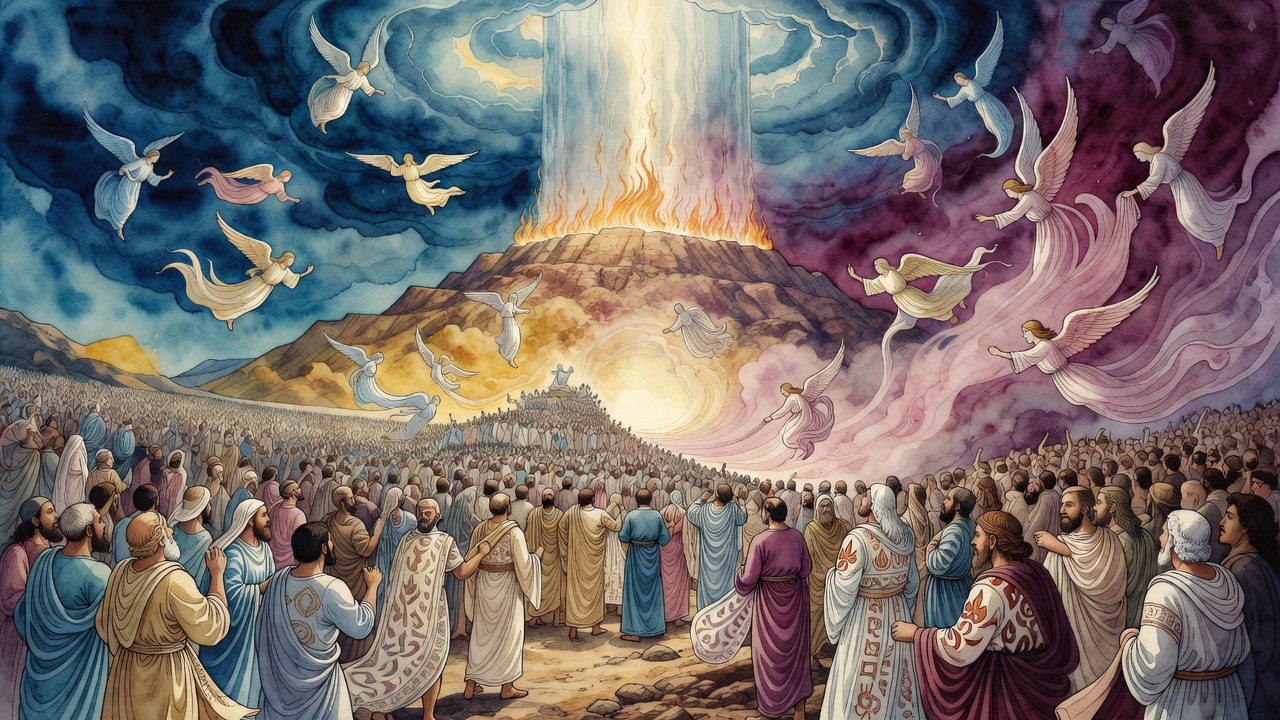
"We will do," they said. "We will listen." The order mattered. Their mouths placed obedience before understanding, action before explanation, the step before the map. The air above Sinai changed as soon as the sentence left them.

The Secret Left Human Mouths

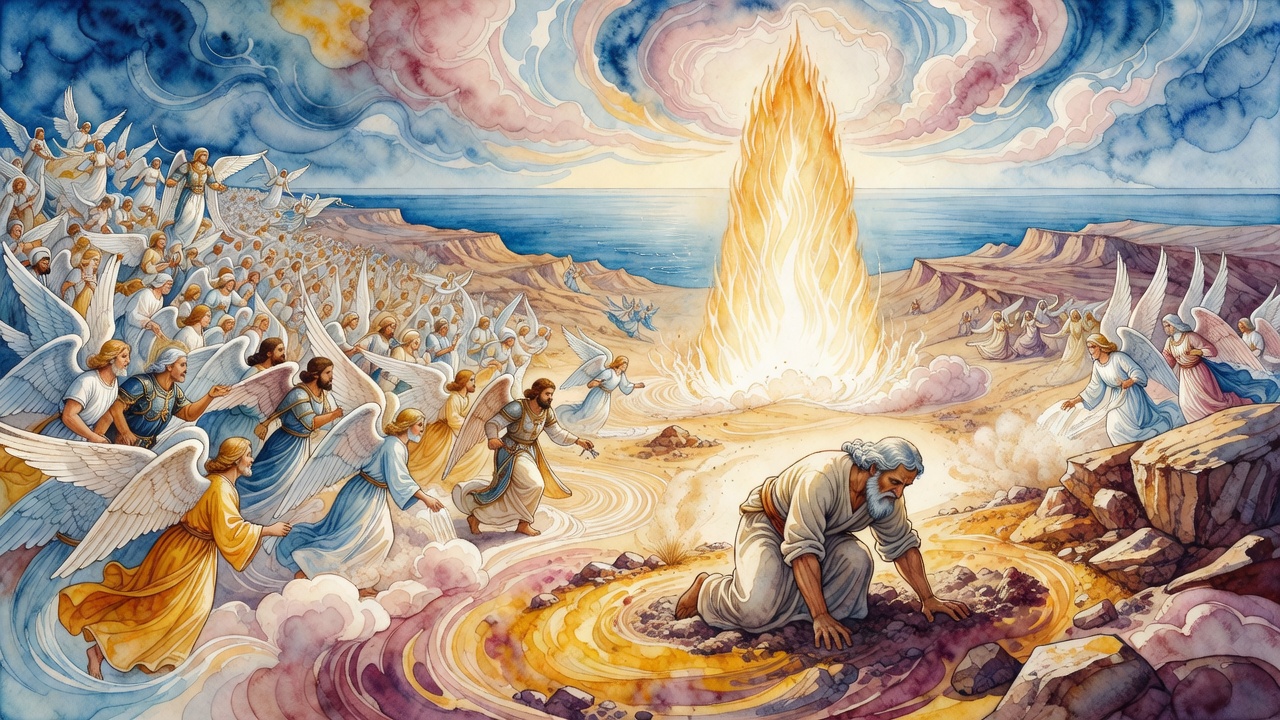
A voice went out from heaven in astonishment. Who had revealed this secret to God's children? Angels knew that order. They served first and listened into understanding afterward. Human beings usually bargained for the reason before lifting the burden. At Sinai, for one hour, the people spoke like the servants above.

The camp was still made of tents, dust, frightened families, animals pulling at ropes, and elders watching the mountain burn. Nothing about the bodies below looked angelic. Feet were dirty. Throats were dry. Fear had not left simply because the right words had been found. Still, the sentence stood in the air, and heaven treated it as real.

Angels Tied Light Above Every Head

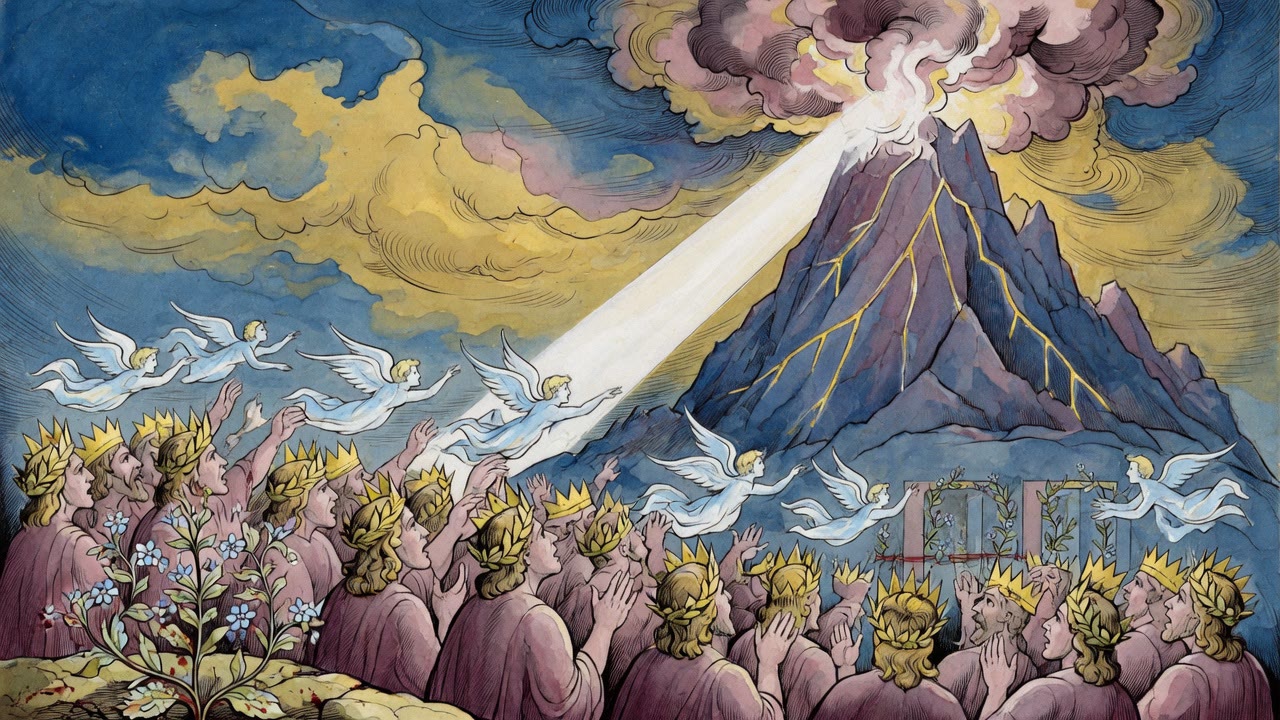
Six hundred thousand ministering angels descended, one for each Israelite. They did not bring scrolls or weapons. They brought crowns. Two crowns for every person, one for na'aseh, doing, and one for nishma, listening. The angels tied them on as if the words had become metal, light, and honor above the brow.

No one in the camp wore only borrowed splendor. Every person carried the sign. Children looked up at crowned parents. Elders felt the weight of two answers resting above old foreheads. The people who had been slaves in Egypt stood under Sinai with angelic ornaments, and the angel of death could not enter the camp.

For those days, no funeral line cut through the tents. No body lay waiting for burial. The destroyer stood outside the covenant's bright border and found no path in.

Forty Days Held Their Breath

Moses went up into the cloud, and the crowns remained below. The people counted days under a sky that had once opened for them. Their bodies carried a strange wholeness. No zavim moved through the camp under the burden of ritual impurity. No metzoraim, lepers marked by tzara'at, sat outside the boundary with torn garments and covered lips. Death itself had been suspended.

The camp was not paradise. Fear still had a tongue. Waiting has its own hunger, and absence can turn even a holy mountain into a place of suspicion. The crowns shone above heads that could still panic. The body can wear a sign of trust while the heart begins looking for something it can touch.

Gold entered the fire.

The Calf Pulled Destroyers Down

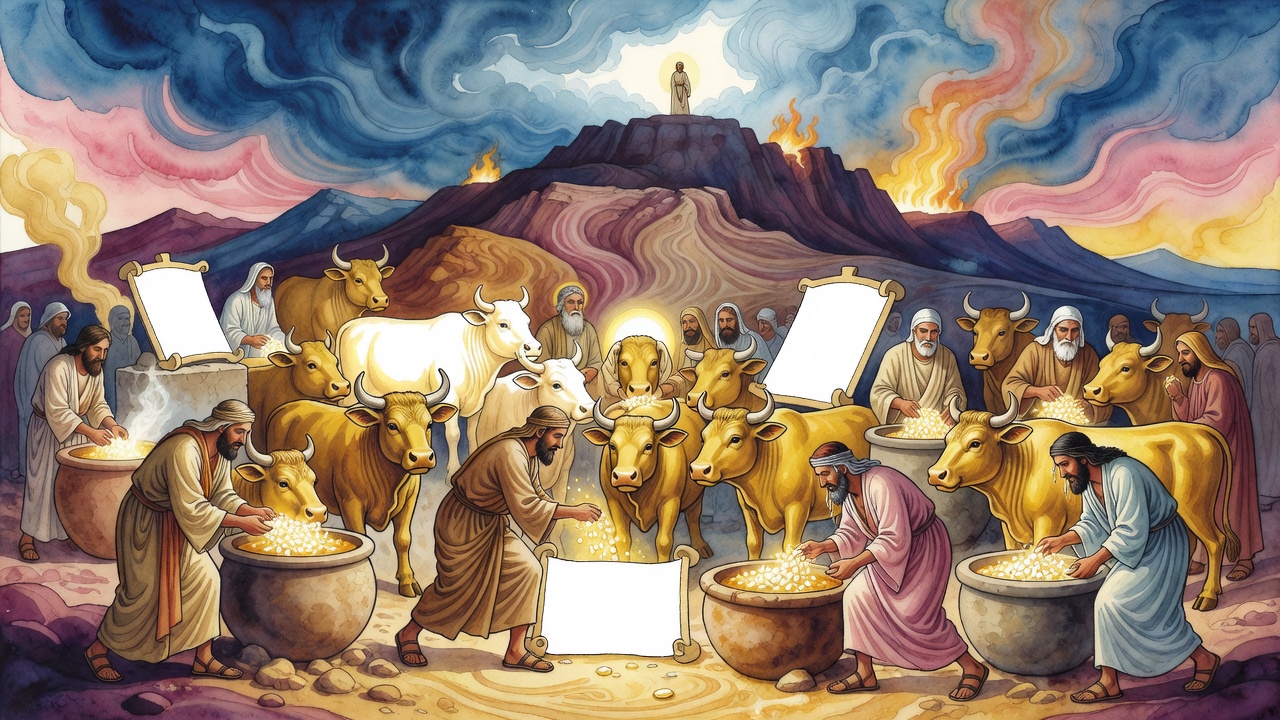
The calf rose where the people wanted certainty. It had a face. It had shape. It did not thunder from an unseen height or keep Moses hidden in cloud. Around it the camp moved from waiting to frenzy, and the crowns above their heads became accusations.

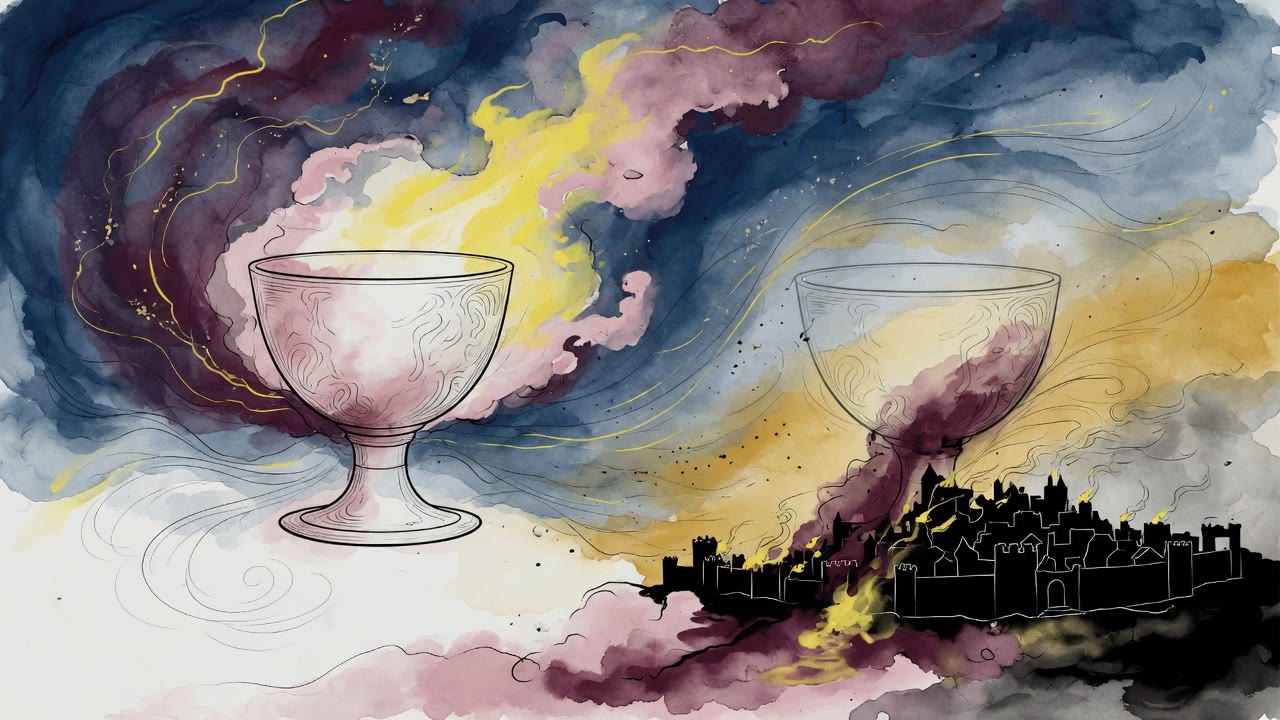
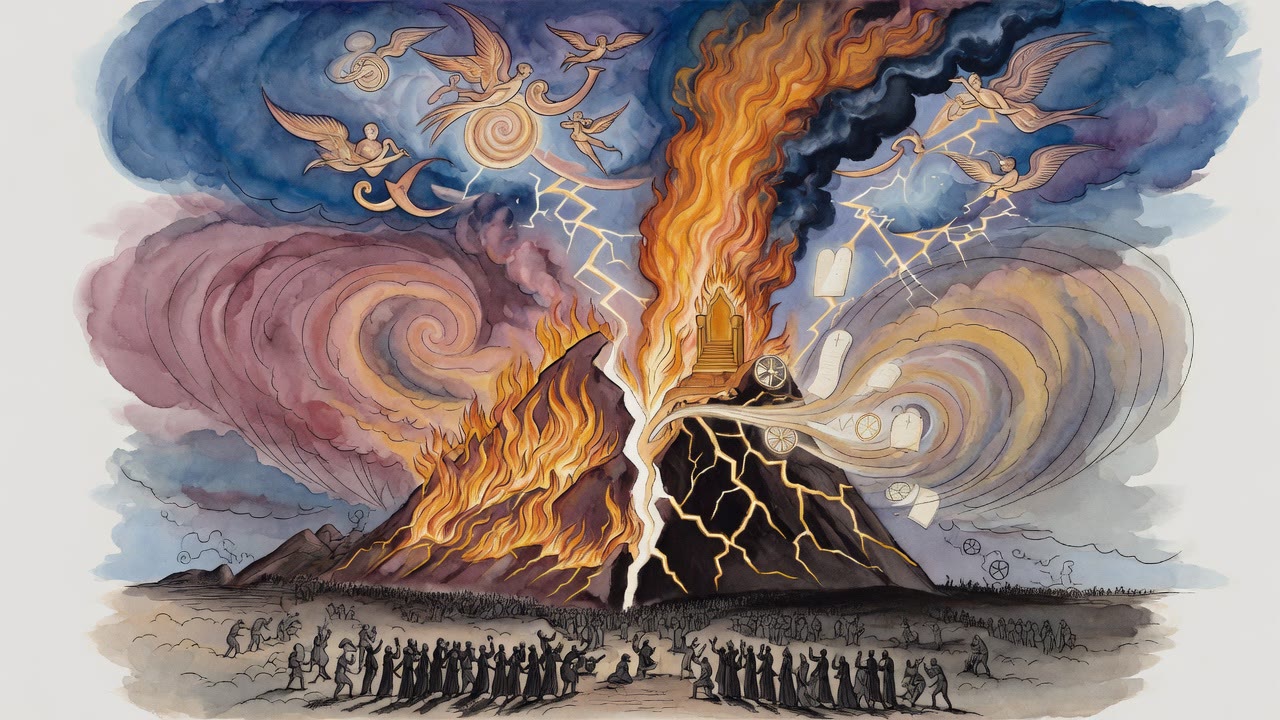
Then the sky filled again. The first descent had brought six hundred thousand angels with gifts. The second brought one million two hundred thousand angels of destruction, one for every crown that had to be removed. They came not to crown but to strip. Hand after hand reached toward the heads of Israel. The crown of doing came loose. The crown of listening came loose. Light left the camp in pieces.

No blade had to fall for the loss to be violent. A people who had worn the secret of angels now stood bareheaded at the foot of the same mountain.

The Lepers Appeared in the Camp

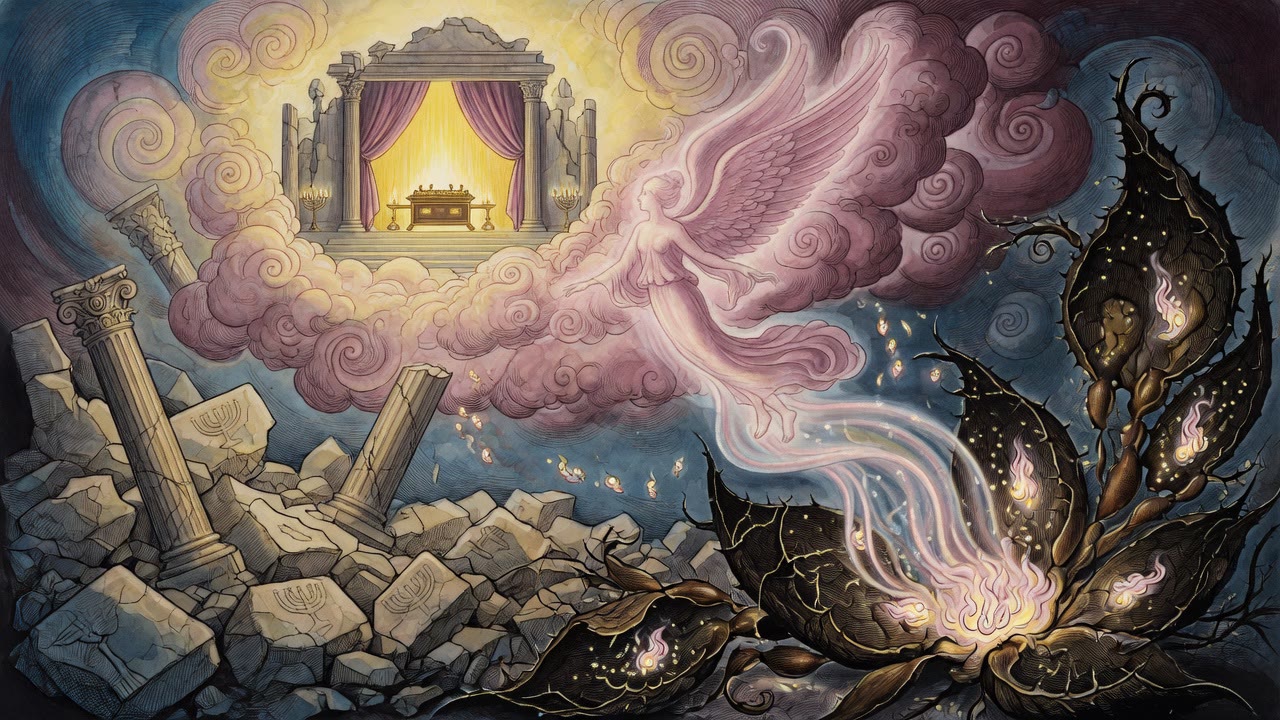
The body learned the loss before the mind could explain it. Zavim appeared. Metzoraim appeared. Death returned and took up its old work. On the day the calf broke the covenant, impurity and mortality crossed the border together, as if they had been waiting just outside the light for permission to enter.

The camp that had been free of funerals heard mourning again. The skin that had been whole showed its marks. The suspended angel of death no longer stood idle. He found doors, names, beds, and breath. The crowns had not merely decorated Israel. They had made a different condition possible, and when they were taken, the old world came rushing back.

A Crown Waited Beyond the Loss

The crowns were removed, not destroyed. Somewhere beyond the reach of the calf, the ornaments of that hour remained. A promise followed the stripping: joy would return upon the head. What had been tied at Sinai could be restored, but not by pretending the calf had never stood there.

The people left the mountain with bare heads and marked bodies. They carried Torah, but also the memory of what Torah had once made them for a moment: crowned, deathless, whole. Above them waited the light that had touched every forehead and then withdrawn. It had known the shape of their heads. It could find them again.


← All myths

From the tradition

Sources

6 sources

The texts this telling draws on, in full. Open a card to read inline, or expand it for a wider, quieter read.

Shabbat 88aTalmud Bavli, Shabbat

"And they stood at the foot of the mountain" (Exodus 19:17). Rav Avdimi bar Hama bar Hasa said: This teaches that the Holy One, blessed be He, overturned the mountain upon them like a tub, and said to them: If you accept the Torah, good; and if not, there will be your burial place.

Rabbi Simai expounded: When Israel gave precedence to "we will do" over "we will hear," six hundred thousand ministering angels came, and to each and every one of Israel they tied two crowns, one corresponding to "we will do" and one corresponding to "we will hear." And once Israel sinned, one million two hundred thousand angels of destruction descended and removed them, as it is said: "And the children of Israel stripped themselves of their ornaments at Mount Horeb" (Exodus 33:6). Reish Lakish said: In the future the Holy One, blessed be He, is destined to return them to us, as it is said: "And the ransomed of the LORD shall return, and come to Zion with singing, and everlasting joy upon their heads" (Isaiah 35:10) - the joy that is from of old shall be upon their heads.

Rabbi Elazar said: When Israel gave precedence to "we will do" over "we will hear," a Divine Voice went forth and said to them: Who revealed to My children this secret that the ministering angels make use of? As it is written: "Bless the LORD, you His angels, mighty in strength, that fulfill His word, hearkening to the voice of His word" (Psalms 103:20) - first "that fulfill" [doing], and afterward "hearkening."

Full source
Bamidbar Rabbah 7:6Bamidbar Rabbah

Rabbi Yosei HaGelili, a sage known for his sharp insights, challenges us to consider just that. He points to a time when things were different for the Israelites, a time of purity we can barely imagine.

"Come and see," he urges, "how severe is the power of transgression." It’s a powerful opening, isn't it? He’s not just lecturing us; he's inviting us to witness something profound.

His observation? Before the Israelites’ great sin, before they fell from grace, there were no zavim and no lepers among them. Zavim refers to men experiencing certain bodily discharges that render them ritually impure, requiring purification rituals according to the Torah. Leprosy, or tzara'at as it's known in Hebrew, was not just a physical ailment but a spiritual one, a sign of some deeper imbalance. A community free of these signs of impurity and disease. What must that have felt like?

Then came the transgression. The infamous Golden Calf. A moment of profound idolatry and a devastating break in the covenant between God and the Israelites. And, according to Rabbi Yosei, everything changed. "Once they transgressed," he states starkly, "there were zavim and lepers in their midst."

It’s a direct cause and effect, isn’t it? Sin brings impurity. Transgression opens the door to suffering.

The Bamidbar Rabbah (Numbers Rabbah), a collection of rabbinic teachings and interpretations on the Book of Numbers, goes on to elaborate. It suggests that not only did these ailments appear, but so did death itself, in a new and harsh way. According to this understanding, as supported by the Sifrei, a legal midrash on the Book of Numbers, these three things – the presence of zavim, the presence of lepers, and death – all manifested on that very day, the day of the Golden Calf.

Before that fateful day, the malach ha-mavet, the angel of death, was, in a sense, suspended. As the text says, "From the giving of the Torah until the sin of the Golden Calf, the angel of death was suspended and did not take any lives." It's a stunning image. A world where death held back, where life flowed without the constant specter of mortality.

The implications are staggering. It suggests that our actions have far-reaching consequences, impacting not only ourselves but the very fabric of our reality. The Golden Calf wasn't just a mistake; it was a rupture, a tear in the delicate pattern of existence.

What does this mean for us today? Perhaps it's a reminder to be mindful of our choices, to consider the ripple effects of our actions. Maybe it's an invitation to strive for purity, to create lives and communities that are free from the spiritual "diseases" that plague us. Maybe it is about taking responsibility for our actions, and accepting that we are all linked. To strive to do better, so that we are not the cause of impurity in the world.

Full source
Midrash Tanchuma Buber, Vaera 9:2Midrash Tanchuma Buber, Vaera

Similarly you say (in Psalms 50:7): "Hear, O My people, and I will speak; O Israel, and I will testify against you: I am God, your God." When Israel stood at Mount Sinai and said (in Exodus 24:7): "All that the Lord has spoken we will do and we will obey," Rabbi Yochanan said: Six hundred thousand angels came down and placed crowns upon their heads. Rabbi Simai said: He clothed them in purple. Rav Huna of Tzippori said: He girded them with girdles. Rabbi Shimon said: They gave them weapons, and the Great Name was inscribed upon them; and as long as it was in their hands, the angel of death could not have power over them, as it is said (in Exodus 32:16): "engraved upon the tablets." What is the meaning of "engraved" (charut)? Rabbi Yehudah says: Freedom (cheirut) from the kingdoms. Rabbi Nechemiah says: Freedom from the angel of death. Rabbi Pinchas the Priest, son of Chama, said in the name of Rabbi Yochanan, in the name of Rabbi Elazar son of Rabbi Yose [the Galilean]: If the angel of death should come and say to me, "Why was I created?", I would say to him: If I created you, I created you over the nations of the world, and not over My children. Why? Because I made them gods, as it is said (in Psalms 82:6): "I said: You are gods, and all of you are children of the Most High." Therefore, when He came to give them the commandments, He said to them: Hear what I am saying to you. Thus it is said: "Hear, O My people, and I will speak; O Israel, and I will testify against you: I am God, your God." See, here the Holy One, blessed be He, said to Moses: Even though I made you a god, I am your God, and you are a god only to Pharaoh, as it is said (in Exodus 7:1): "See, I have made you a god to Pharaoh."

Full source
Shabbat 88aHebraic Literature (1901)

At the foot of Mount Sinai, when Israel answered the Torah with five Hebrew words, na'aseh v'nishma, "we will do and we will hear" (Exodus 24:7), they did something strange. They committed to obey before they knew what obedience would demand. They said na'aseh first, nishma second.

The Talmud (Shabbat 88a) says heaven responded immediately. Six hundred thousand ministering angels descended, one for every adult Israelite, and each angel placed two crowns upon the head of each Israelite: one crown for na'aseh, one for nishma. For one hour, every Jew at Sinai wore the regalia of a being who had said yes before asking for the clause.

Then Israel sinned. The Golden Calf rose from the furnace. And the Torah says (Exodus 33:6), And the children of Israel stripped themselves of their ornaments by Mount Horeb. What ornaments? These crowns. Twice six hundred thousand destroying angels, the Talmud continues, one million two hundred thousand of them, came down and took back what had been given.

Resh Lakish refused to let the story end there. He quoted (Isaiah 35:10): The ransomed of the Lord shall return, and come to Zion with songs and everlasting joy upon their heads. Upon their heads. The crowns, Resh Lakish said, are not lost forever, they are in storage. In the future, the Holy One will return them, and the ransomed will come home wearing the very joy they wore in the hour when they said yes before asking why.

Full source
Targum Pseudo-Jonathan on Exodus 32:25Targum Pseudo-Jonathan on Exodus

When Moses saw the camp dancing around the calf, the Torah says he saw that "the people were naked." What kind of nakedness? Targum Pseudo-Jonathan, the Aramaic paraphrase of the Torah, reveals the loss.

At Sinai, every Israelite had received a holy crown. Upon that crown was inscribed the great and glorious Name of God. The people had worn it not as decoration but as a covenant. When Aaron bent to the will of the mob, those crowns were stripped from every head (Exodus 32:25). The camp stood suddenly bareheaded before their God, and worse, bareheaded before history.

The Targum adds a second, sharper loss. "Their evil report would go forth among the nations of the earth, and they would get to them an evil name unto their generations." The shame of the calf would outrun any apology. The nations would speak of this moment long after the gold had been scattered on the stream.

This is why Moses is so devastated. He does not only see a ritual violation. He sees a people who removed the Name of God from their foreheads and handed the gentiles a story to tell forever.

Takeaway: What we lose in a moment of collective failure is rarely only the immediate thing. It is the crown we did not know we were wearing, and the testimony we leave for generations.

Full source
Yalkut Shimoni on Torah 277:1Yalkut Shimoni on Torah

Rabbi Simai expounded: At the moment when Israel gave precedence to "we will do" over "we will hear," six hundred thousand ministering angels came, and to each and every one of Israel they bound two crowns, one corresponding to "we will do" and one corresponding to "we will hear." And once Israel sinned, one million two hundred thousand angels of destruction came down and removed them, as it is said, "And the children of Israel stripped themselves of their ornaments from Mount Horeb" (Exodus 33:6). At Horeb they were laden and at Horeb they were stripped. At Horeb they were laden, as we said. At Horeb they were stripped, as it is written, "And the children of Israel stripped themselves," etc. Rabbi Yochanan said: and Moses merited and took them all, since adjacent to it is, "And Moses would take the tent" (Exodus 33:7). Resh Lakish said: The Holy One, blessed be He, is destined to return them to Israel, as it is said, "And the ransomed of the LORD shall return and everlasting joy shall be upon their heads" (Isaiah 51:11). Rabbi Elazar said: At the moment when Israel gave precedence to "we will do" over "we will hear," a heavenly voice went out and said to them: My children, who revealed to you this secret that the ministering angels make use of, as it is written, "Bless the LORD, you His angels," etc. - first "who do" and afterward "who hearken"? Rabbi Chama bar Chanina said: What is the meaning of "As the apple tree among the trees of the wood" (Song of Songs 2:3)? Why are Israel likened to an apple tree? Just as this apple tree, its fruit comes before its leaves, so too Israel gave precedence to "we will do" over "we will hear." A certain heretic saw Rava absorbed in his studies while he pressed his finger beneath his foot and was crushing it until his finger spurted blood. He said to him: You rash people, who put your mouth before your ears - you still stand in your recklessness! First you should have listened: if you were able you would accept it, and if not you would not accept it. He said to him: We who walk in wholeness, of us it is written, "The integrity of the upright shall guide them" (Proverbs 11:3). Of those people who walk in cunning it is written, "and the perverseness of the treacherous shall destroy them."

Full source