Israel Took the Torah Before Hearing the Terms
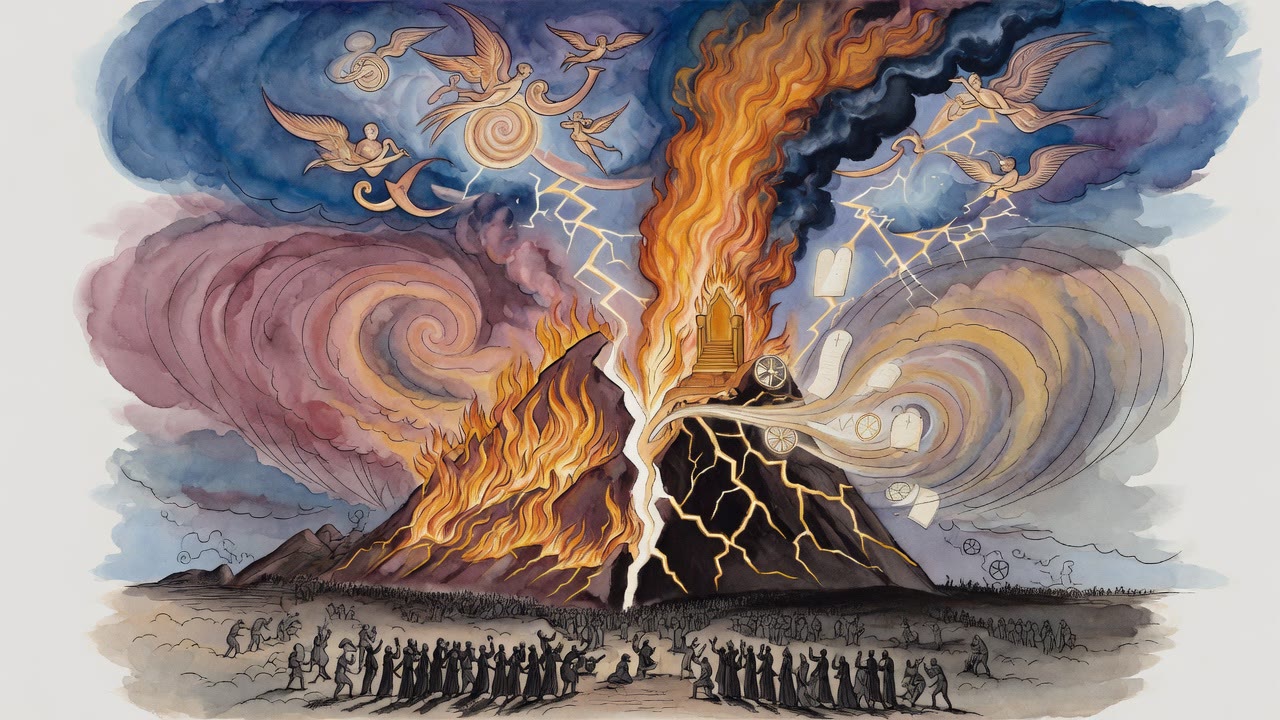
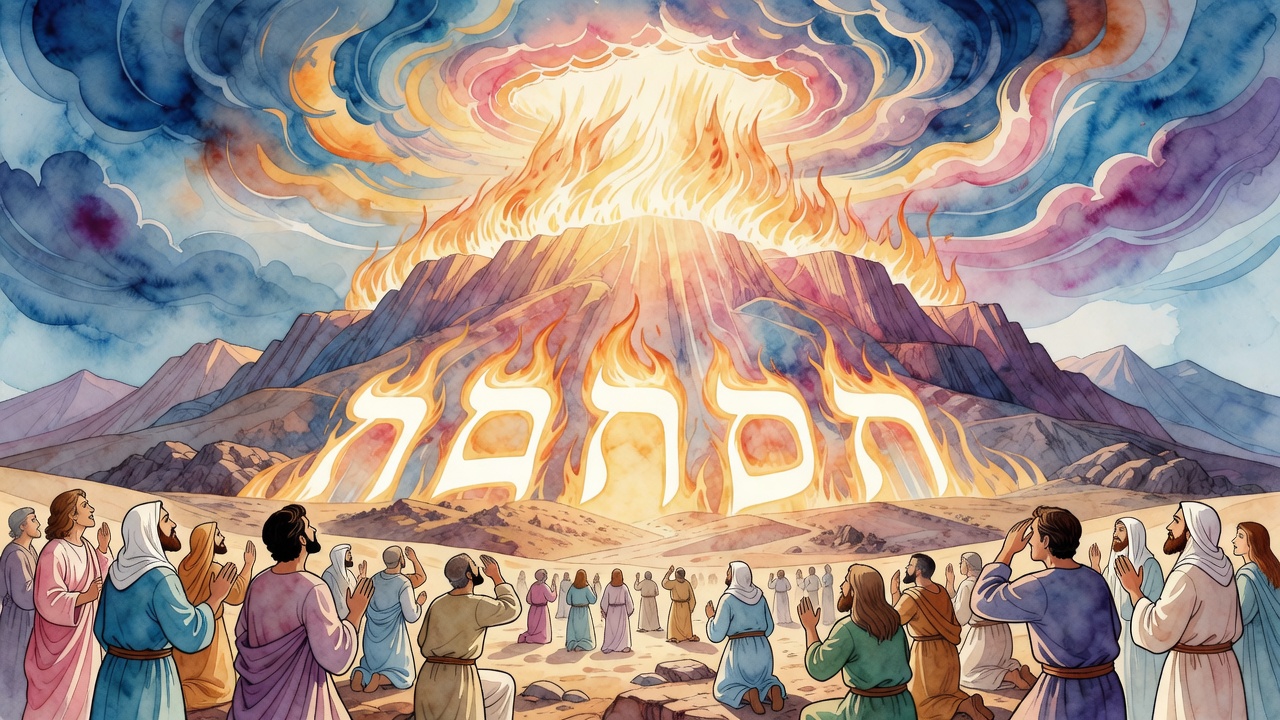
At Sinai, Israel said na'aseh v'nishma, doing before hearing, and heaven answered with crowns, terror, and a mountain overhead.
Table of Contents
Moses held the Book of the Covenant in his hands, and Israel answered before the terms could settle in their ears.
 Click for full size
They said na'aseh v'nishma, we will do and we will hear. The order was dangerous. Anyone can promise after hearing the full demand. Israel promised at the foot of a smoking mountain, before comprehension could protect them.
The Words Came Before the Terms
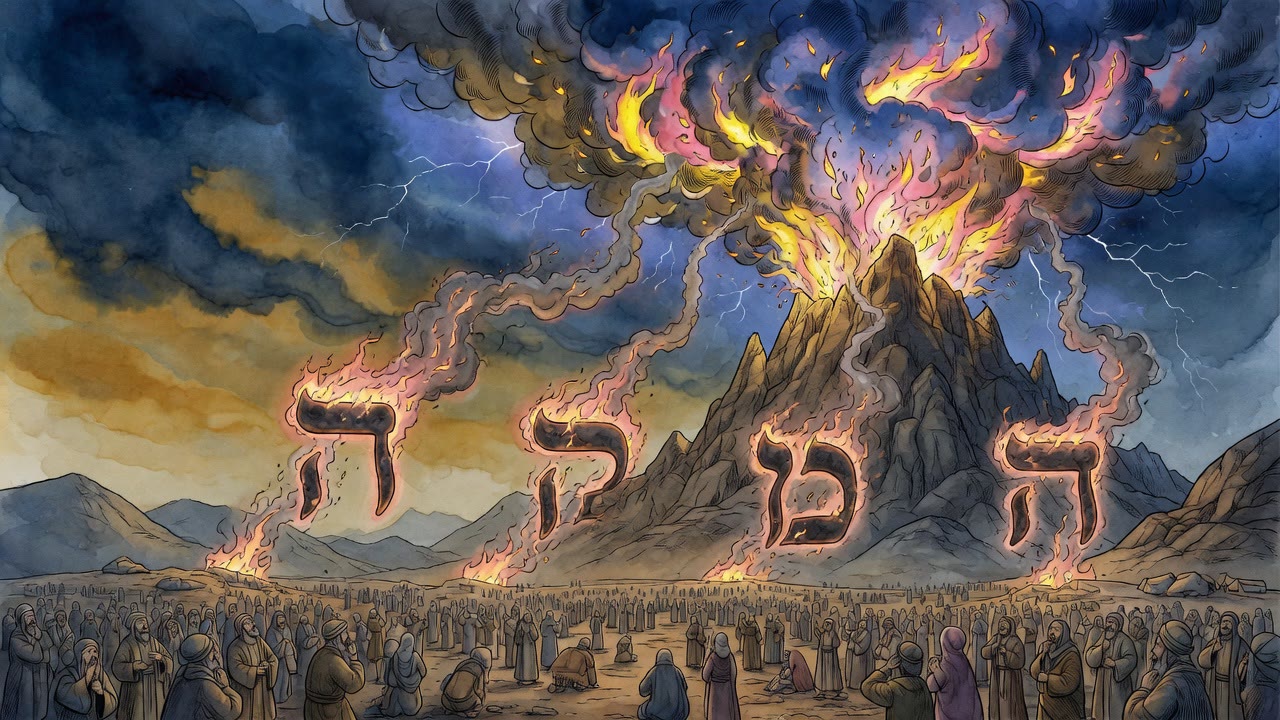
The covenant did not begin with a committee around a table. It began with a nation gathered under thunder, dust, fear, and the smell of wilderness. Moses read from the book. The people listened. Then their answer came out with the verbs reversed from ordinary caution.
First doing. Then hearing.
That order made the sentence more than consent. It made the body move before the mind had finished measuring the path. A nation of former slaves, not long out of Egypt, stood where freedom could have become bargaining power. They did not bargain. They bound themselves first and left understanding to follow after obedience.
Heaven Recognized Its Own Secret
The answer did not sound human to heaven. A voice rose above the mountain and asked who had revealed that secret to God's children. The secret belonged to ministering angels, the ones mighty in strength, the ones who do God's word and only then hear the sound of it.
Angels do not pause before service to weigh every command against personal comfort. They move at the King's word. Israel, for one breath at Sinai, spoke in that same order. Flesh and blood reached for an angelic grammar.
The mountain still smoked. The people still stood in bodies that could tremble, hunger, doubt, and run. That is what made the sentence so sharp. Angels have no Egypt behind them. Israel did. Angels have no lash-memory in their backs. Israel did. A people who knew command as oppression now answered a divine command with trust.
Every Head Wore Two Crowns
Then the crowns came down.
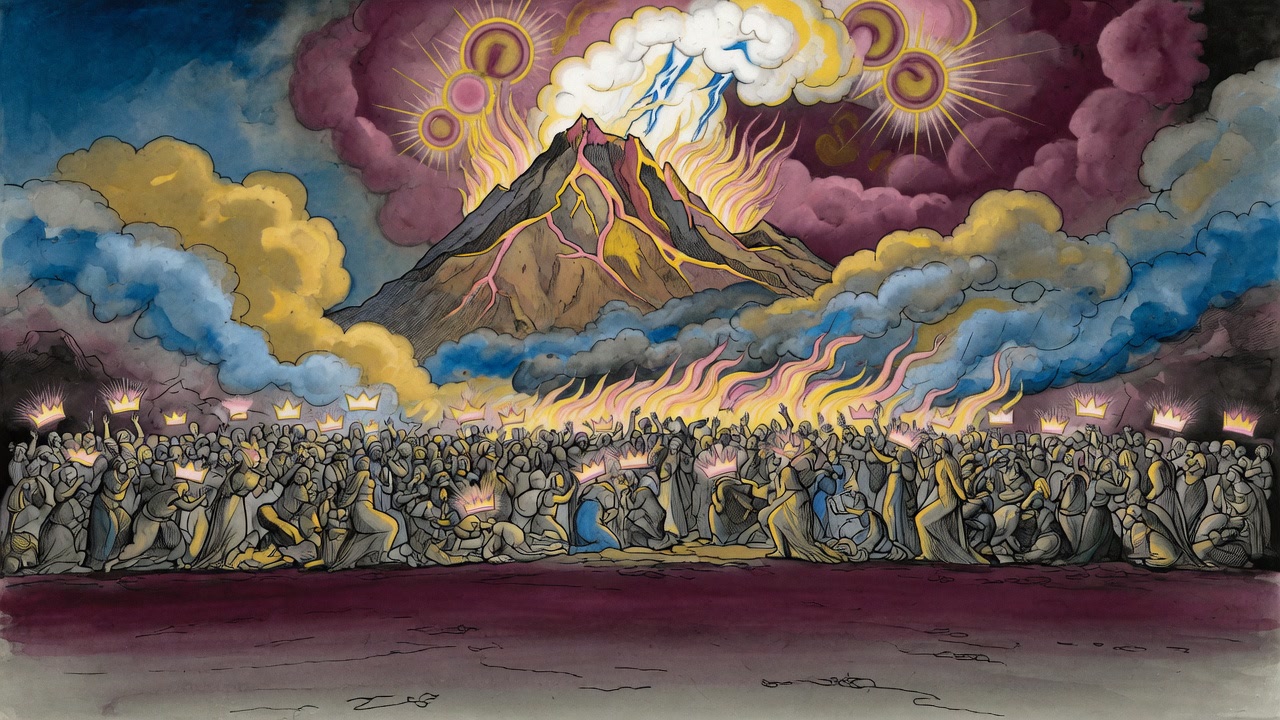
Six hundred thousand ministering angels descended, and every Israelite received two crowns. One crown for na'aseh, one for nishma. The camp that had walked out of Egypt carrying dough before it could rise now stood crowned for a sentence spoken before it could be fully understood.
No king could have staged a coronation like that. No human court had enough gold, height, or radiance. The crowns rested on heads that had known brickwork, panic, thirst, and complaint. The same people who had cried out under bondage now wore the signs of a trust that heaven recognized as its own.
For a moment, Sinai did not only give Torah to Israel. It changed the visible rank of the people receiving it.
The Mountain Hung Like a Barrel
Then the same covenant darkened.
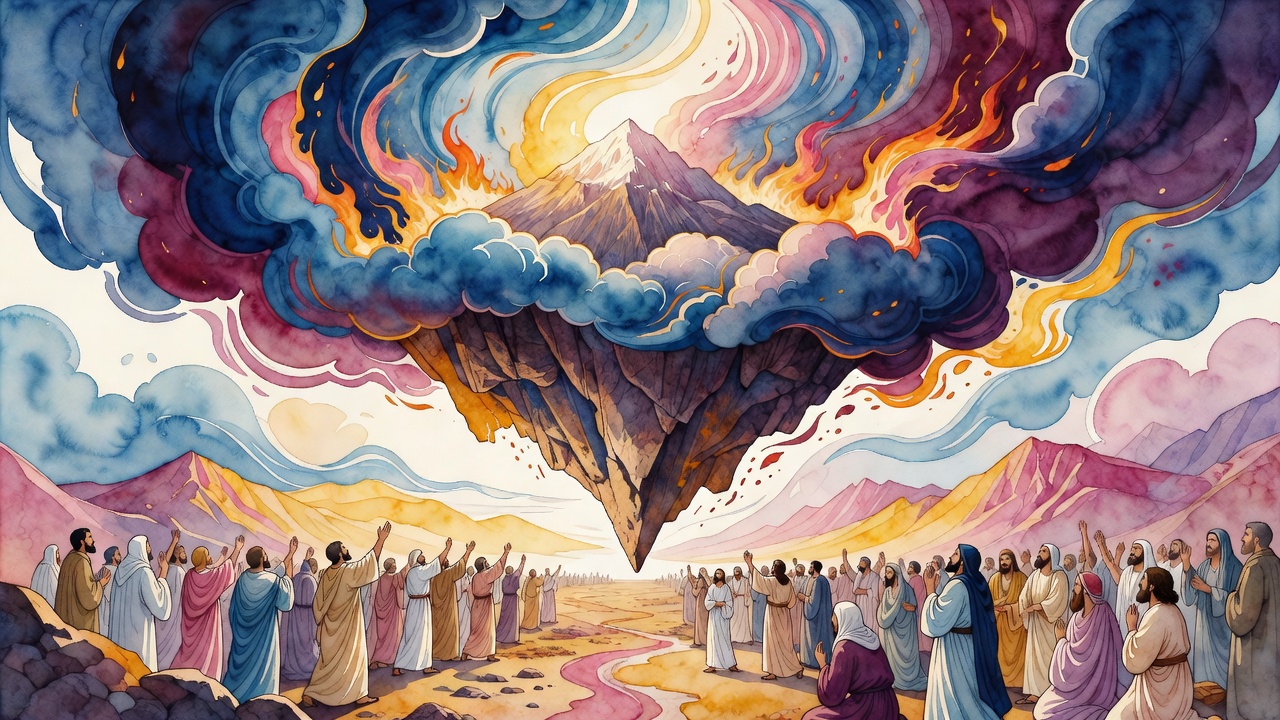
The mountain lifted above them like an overturned barrel. The place of revelation became a roof of stone. If they accepted the Torah, good. If not, that mountain would be their burial. The crowns still glittered in memory, but a grave now hung overhead.
The pressure changes everything. The yes at Sinai cannot be flattened into a clean scene of willing enthusiasm. It carries glory and terror at once. Israel speaks like angels, and God holds a mountain above human heads. The covenant is love with fire around it, consent with stone pressing down from the sky.
That image troubled the sages because it made the agreement look forced. A promise under threat can protest later. A nation can say the words were spoken with burial hanging over them. Sinai gives the covenant its height, but the lifted mountain gives it its wound.
The Voice Emptied Their Bodies
When the divine voice broke open, the body could not hold it.
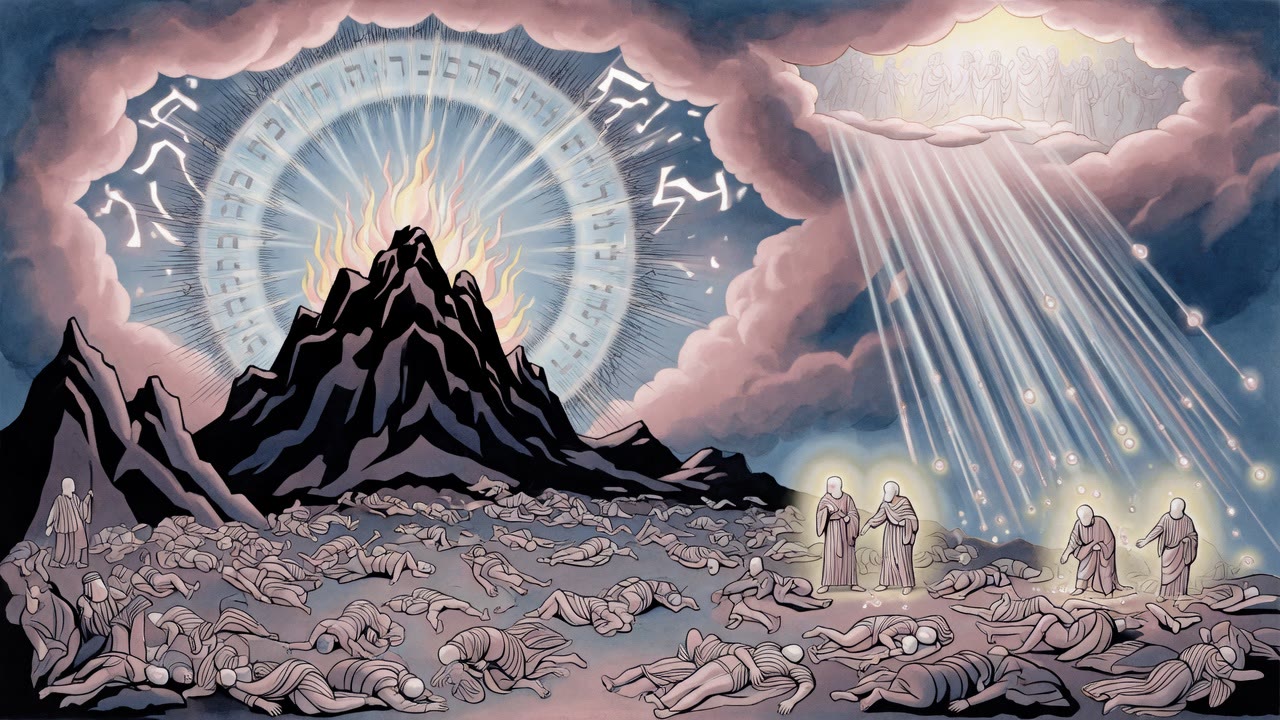
The people fled backward from the sound. Twelve miles of terror opened between them and the mountain. Their souls went out. Sinai became a field of bodies that had heard too much holiness at once. Revelation was not gentle information passing into the mind. It was a force strong enough to drive life out of the chest.
Then life returned. Heaven did not bring Israel to Sinai to leave them dead below the mountain. The same revelation that overwhelmed them also carried them back. The people rose, shaken by the voice that had emptied them and restored them.
They had said they would do and hear. At Sinai, hearing itself nearly destroyed them.
The Promise Had to Stand Again
The crowns, the mountain, the flight, the return of the soul: none of it lets the covenant become simple. Israel's first yes was angelic. It was also spoken under a threat so heavy that later voices could challenge its force.
That is why the promise had to live beyond the mountain. A covenant born under stone cannot remain only under stone. It has to be carried into days when no peak hangs overhead, into danger, exile, law, feast, mourning, study, and the ordinary discipline of doing before all hearing is complete.
At Sinai, Israel stood between crown and burial. The words came out anyway. Na'aseh v'nishma. First the deed. Then the hearing. Above them, the mountain. Above that, the angels who recognized the sentence.
← All myths