Parshat Yitro5 min read

Every Word at Sinai Stopped Israels Breath

At Sinai, every divine word drove Israels soul from its body. Dew revived them, and angels carried them back to the mountain again.

Curated by Arthur · Told by Maggid ·
Table of Contents
  1. The Mountain Became a Ceiling
  2. The First Word Killed Them
  3. The Dew Raised Them Again
  4. The Angels Walked Them Back
  5. Moses Held the Throne

The mountain was already above them before the first word came.
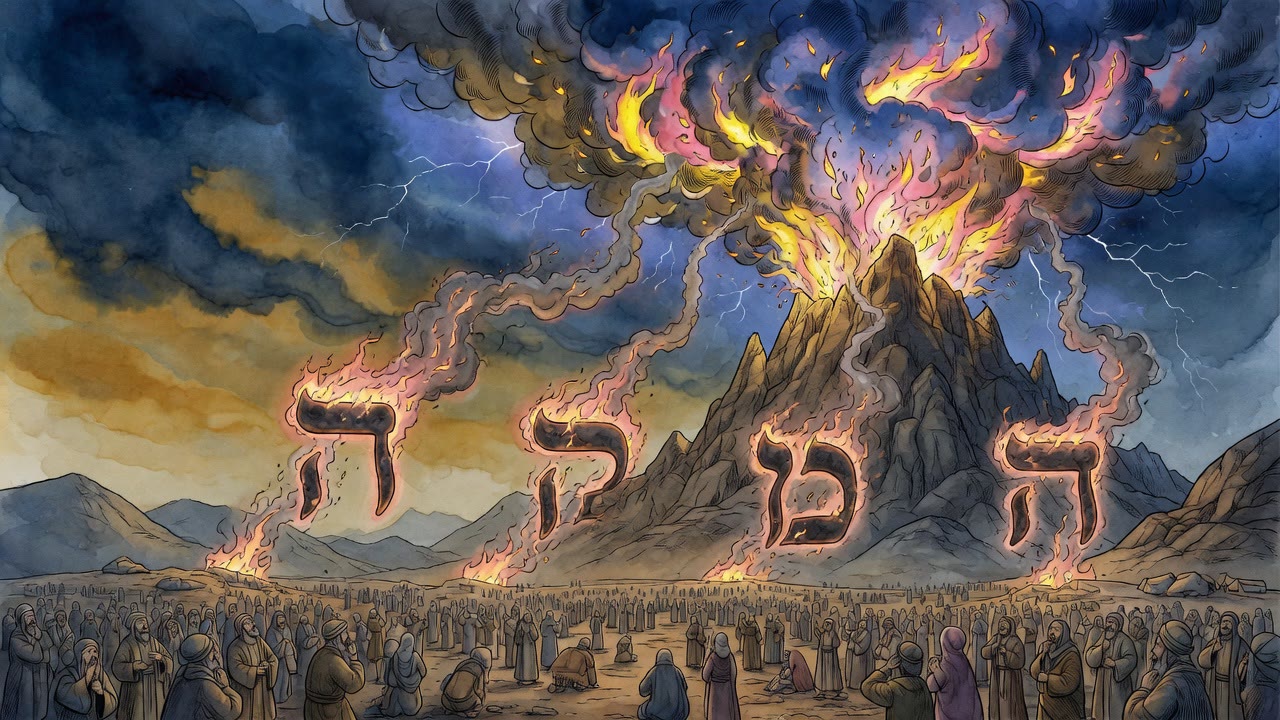
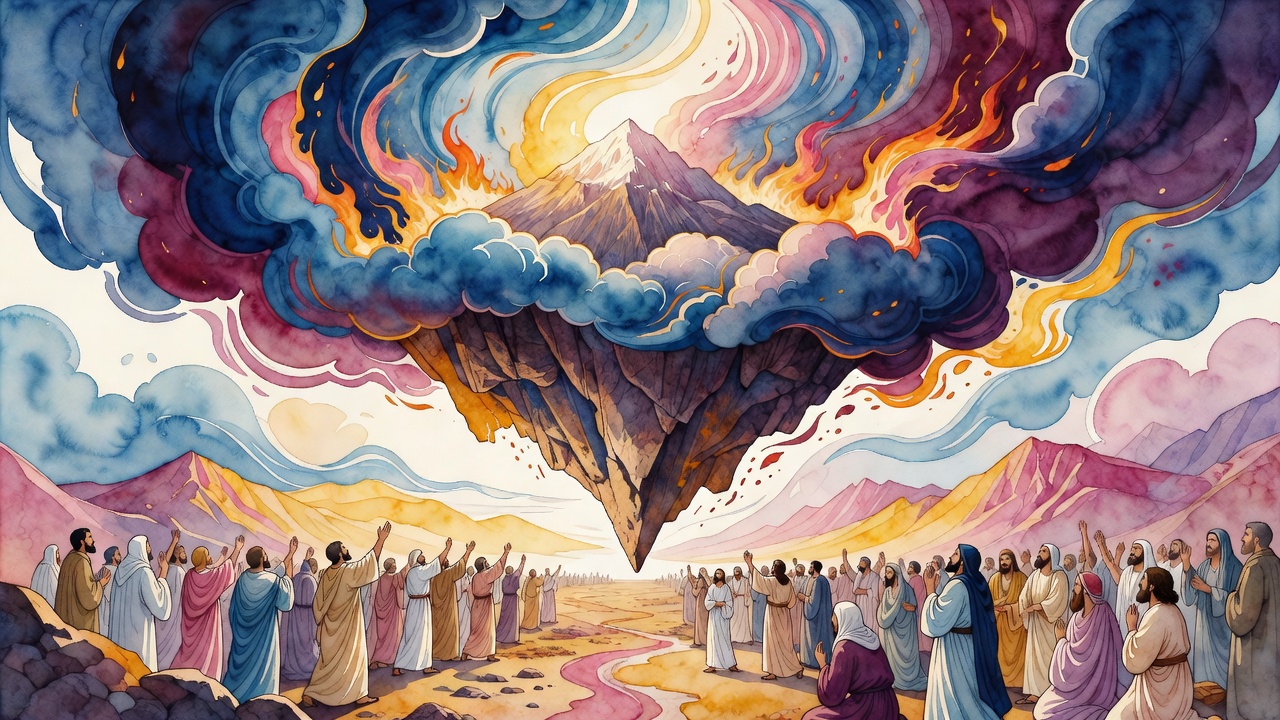
Israel stood in the wilderness with smoke in their nostrils and stone hanging over their heads like an overturned barrel. The people had said they would accept the Torah, but the mountain made the answer heavier. "Good," God said, "if you accept it. If not, this will be your grave."

Then the voice began.

The Mountain Became a Ceiling

No one at Sinai could pretend the covenant was small.

The ground had vanished into shadow. The people looked up and saw the place where they would be buried if they refused. There was no polite ceremony, no distant king reading a decree. Heaven had come close enough to crush them. The Torah was not placed on a table for inspection. It pressed down from above.

Even so, the fear under the mountain was not the end of the terror. The mountain threatened their bodies. The voice reached deeper.

The First Word Killed Them

The first utterance left God's mouth and Israel could not survive it.

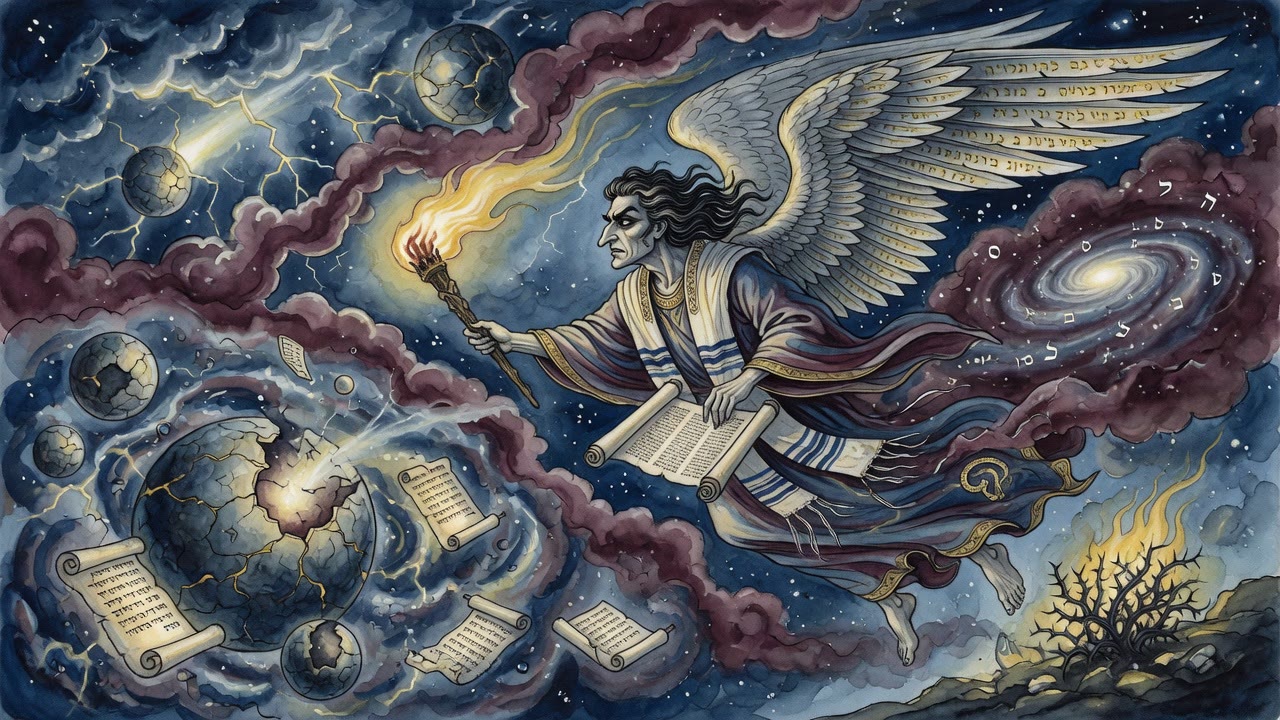
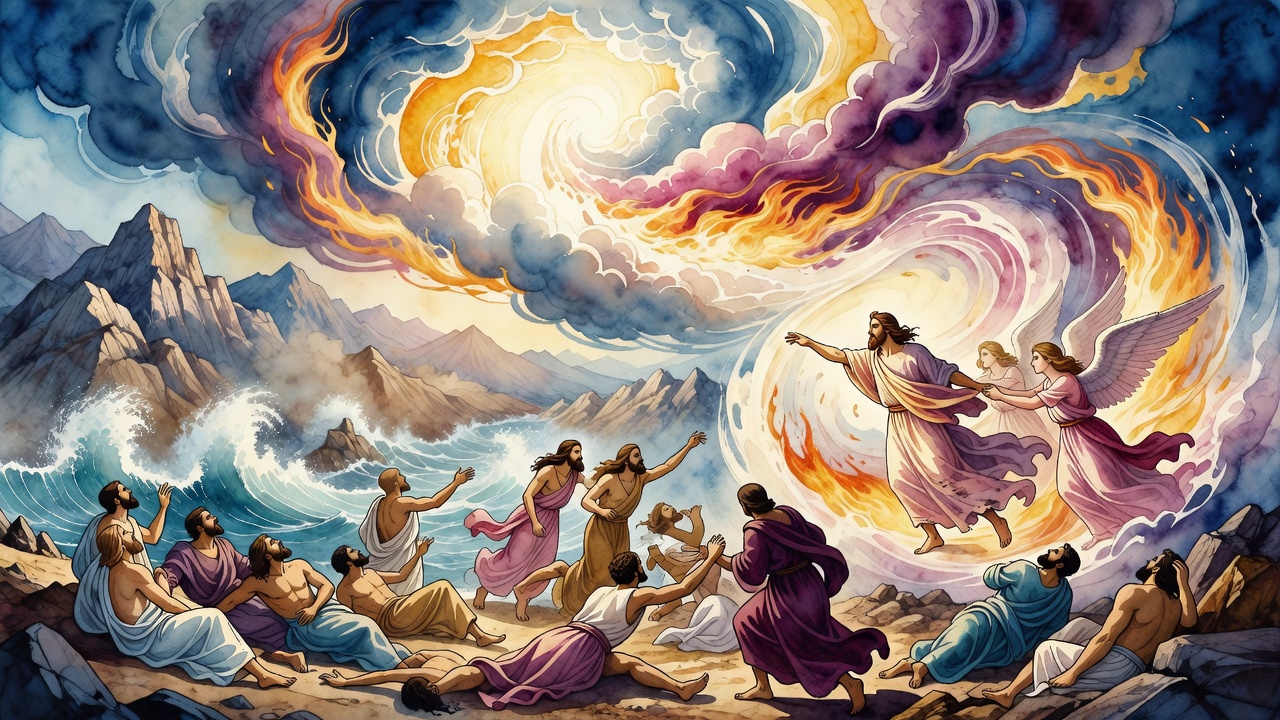
The word was not only sound. It was fire breaking into speech. It struck the camp and the souls of the people left their bodies. Men who had crossed the sea fell still. Women who had carried children through slavery fell still. Elders who had counted plagues in Egypt fell still. The nation that had walked out of bondage lay at the foot of the mountain without breath.

The word did not stay narrow. It split into seventy languages, shattering outward like a hammer on stone so every nation could hear what had happened in the wilderness. But first it passed through Israel, and Israel broke beneath it.

The Dew Raised Them Again

God did not leave them there.

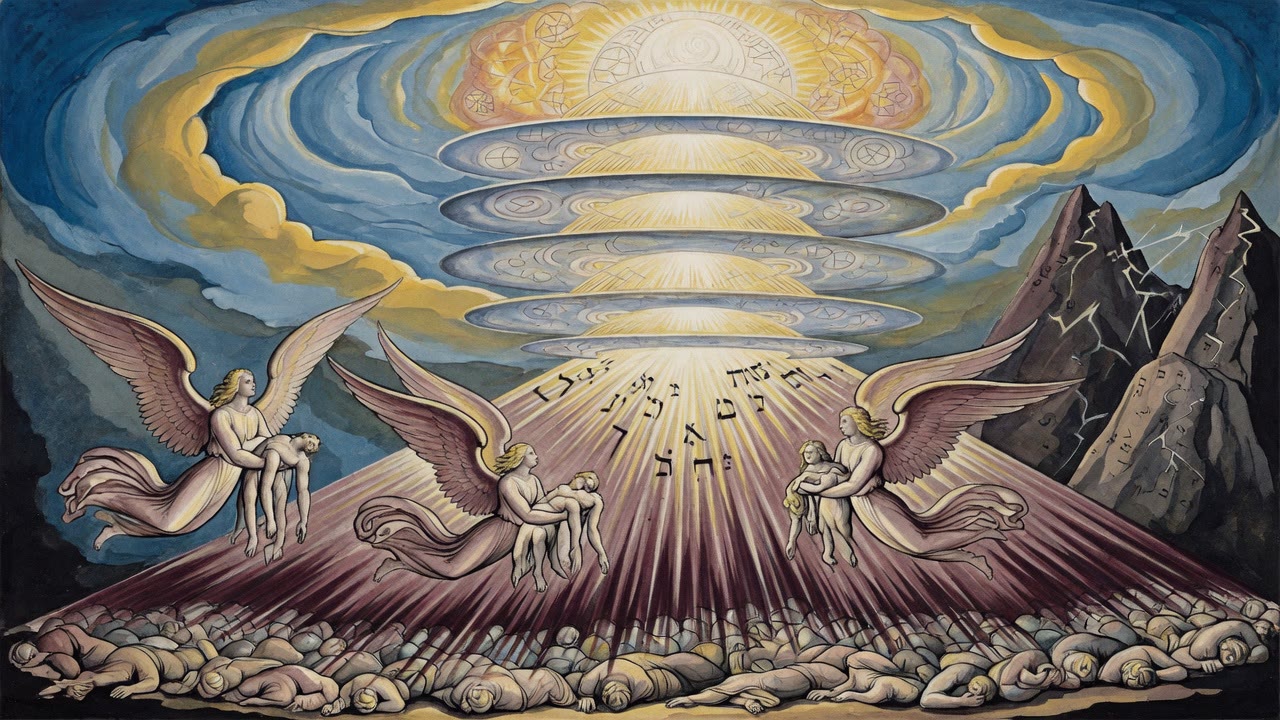
A dew came down, the same dew kept for the resurrection of the dead. It touched the bodies at Sinai and life returned. Breath entered. Eyes opened. The people rose into the smoke with the impossible knowledge that they had already died once inside the covenant.

Then the second word came.

Again their souls fled. Again the dew descended. Again the people were gathered from death into hearing. The giving of the Torah was not one survival. It was repeated rescue. Ten words. Ten departures. Ten returns from the edge where no human being can stand alone before the voice that made the world.

The Angels Walked Them Back

Israel tried to escape between the words.

With each utterance they recoiled twelve miles, the full measure of terror their bodies could carry. Nobody had to command the retreat. Feet moved because the soul remembered what had just happened. The mountain smoked behind them. The wilderness opened before them. They ran from the voice and from the place where the voice had found them.

The angels did not let them stay away.

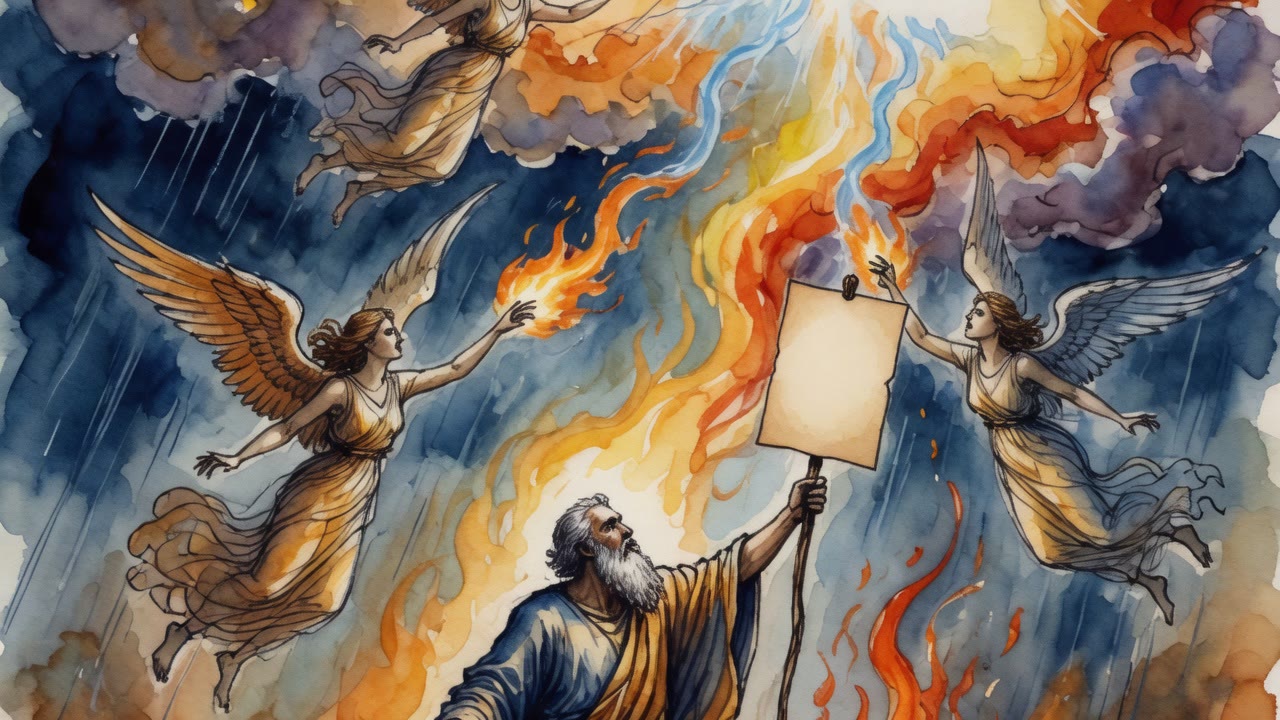
Ministering angels came out after them and guided them back to the mountain. The people returned to the edge of speech like prisoners returned to a gate, but also like the dead returned to life. They were being taught that Torah could not be received from a safe distance. The word that kills must also be heard close enough to revive.

Moses Held the Throne

Later, Moses would climb into heaven and face the angels himself.

They wanted the Torah kept above. What was a human being doing among them? Moses was afraid their breath would burn him, and God told him to hold the Throne of Glory. From there he answered. "Do angels leave Egypt? Do angels have parents to honor? Do angels steal, murder, desire, swear falsely, labor, rest, or fight the evil inclination?"

The angels had no answer. Torah belonged to bodies because bodies can break commandments and keep them. It belonged to people who can die from a word and still be raised to hear the next one.

At Sinai, Israel learned the cost first in their lungs. Every commandment arrived as death and mercy together. The mountain hung. The voice struck. The dew fell. The angels walked them back. The Torah entered the world through people who could not survive it without God reviving them each time.

What they received was not a manageable law code first. It was nearness at full force, a covenant that had to pass through death before it could become daily practice in mouths, hands, kitchens, courts, and fields. Israel would spend generations turning the fire into obedience. At Sinai, they first learned that the fire was real.


← All myths

From the tradition

Sources

2 sources

The texts this telling draws on, in full. Open a card to read inline, or expand it for a wider, quieter read.

Shabbat 88bTalmud Bavli, Shabbat

who proceed wholeheartedly and with integrity, it is written: “The integrity of the upright will guide them” (Proverbs 11:3), whereas about those people who walk in deceit, it is written at the end of the same verse: “And the perverseness of the faithless will destroy them.” Rabbi Shmuel bar Naḥamani said that Rabbi Yonatan said: What is the meaning of that which is written: “You have ravished my heart, my sister, my bride; you have ravished my heart with one of your eyes, with one bead of your necklace” (Song of Songs 4:9)?

At first when you, the Jewish people, merely accepted the Torah upon yourselves it was with one of your eyes; however, when you actually perform the mitzvot it will be with both of your eyes. Ulla said with regard to the sin of the Golden Calf: Insolent is the bride who is promiscuous under her wedding canopy. Rav Mari, son of the daughter of Shmuel, said: What verse alludes to this? “While the king was still at his table my spikenard gave off its fragrance” (Song of Songs 1:12).

Its pleasant odor dissipated, leaving only an offensive odor. Rav said: Nevertheless, it is apparent from the verse that the affection of the Holy One, Blessed be He, is still upon us, as it is written euphemistically as “gave off its fragrance,” and the verse did not write, it reeked. And the Sages taught: About those who are insulted and do not insult, who hear their shame and do not respond, who act out of love and are joyful in suffering, the verse says: “And they that love Him are as the sun going forth in its might” (Judges 5:31).

With regard to the revelation at Sinai, Rabbi Yoḥanan said: What is the meaning of that which is written: “The Lord gives the word; the women that proclaim the tidings are a great host” (Psalms 68:12)? It means that each and every utterance that emerged from the mouth of the Almighty divided into seventy languages, a great host. And, similarly, the school of Rabbi Yishmael taught with regard to the verse: “Behold, is My word not like fire, declares the Lord, and like a hammer that shatters a rock?” (Jeremiah 23:29).

Just as this hammer breaks a stone into several fragments, so too, each and every utterance that emerged from the mouth of the Holy One, Blessed be He, divided into seventy languages. The Gemara continues in praise of the Torah. Rav Ḥananel bar Pappa said: What is the meaning of that which is written: “Listen, for I will speak royal things, and my lips will open with upright statements” (Proverbs 8:6)?

Why are matters of Torah likened to a king? To teach you that just as this king has the power to kill and to grant life, so too, matters of Torah have the power to kill and to grant life. And that is what Rava said: To those who are right-handed in their approach to Torah, and engage in its study with strength, good will, and sanctity, Torah is a drug of life, and to those who are left-handed in their approach to Torah, it is a drug of death.

Alternatively, why are matters of Torah referred to as royal? Because to each and every utterance that emerged from the mouth of the Holy One, Blessed be He, two crowns are tied. Rabbi Yehoshua ben Levi said: What is the meaning of that which is written: “My beloved is to me like a bundle of myrrh that lies between my breasts” (Song of Songs 1:13)? The Congregation of Israel said before the Holy One, Blessed be He: Master of the Universe, even though my beloved, God, causes me suffering and bitterness, He still lies between my breasts.

And Rabbi Yehoshua ben Levi interpreted the verse: “My beloved is to me like a cluster [eshkol] of henna [hakofer] in the vineyards of [karmei] Ein Gedi” (Song of Songs 1:14). He, Whom everything [shehakol] is His, forgives [mekhapper] me for the sin of the kid [gedi], i.e., the calf, that I collected [shekaramti] for myself. The Gemara explains: From where is it inferred that the word in this verse, karmei, is a term of gathering?

Mar Zutra, son of Rav Naḥman, said that it is as we learned in a mishna: A launderer’s chair upon which one gathers [koremim] the garments. And Rabbi Yehoshua ben Levi said: What is the meaning of that which is written: “His cheeks are as a bed of spices, as banks of sweet herbs, his lips are lilies dripping with flowing myrrh” (Song of Songs 5:13)? It is interpreted homiletically: From each and every utterance that emerged from His cheeks, i.e., the mouth of the Holy One, Blessed be He, the entire world was filled with fragrant spices.

And since the world was already filled by the first utterance, where was there room for the spices of the second utterance to go? The Holy One, Blessed be He, brought forth wind from His treasuries and made the spices pass one at a time, leaving room for the consequences of the next utterance. As it is stated: “His lips are lilies [shoshanim] dripping with flowing myrrh.” Each and every utterance resulted in flowing myrrh.

Do not read the word in the verse as shoshanim; rather, read it as sheshonim, meaning repeat. Each repeat utterance produced its own fragrance. And Rabbi Yehoshua ben Levi said: From each and every utterance that emerged from the mouth of the Holy One, Blessed be He, the souls of the Jewish people left their bodies, as it is stated: “My soul departed when he spoke” (Song of Songs 5:6). And since their souls left their bodies from the first utterance, how did they receive the second utterance?

Rather, God rained the dew upon them that, in the future, will revive the dead, and He revived them, as it is stated: “You, God, poured down a bountiful rain; when Your inheritance was weary You sustained it” (Psalms 68:10). And Rabbi Yehoshua ben Levi said: With each and every utterance that emerged from the mouth of the Holy One, Blessed be He, the Jewish people retreated in fear twelve mil, and the ministering angels walked them back toward the mountain, as it is stated: “The hosts of angels will scatter [yidodun]” (Psalms 68:13).

Do not read the word as yidodun, meaning scattered; rather, read it as yedadun, they walked them. And Rabbi Yehoshua ben Levi said: When Moses ascended on High to receive the Torah, the ministering angels said before the Holy One, Blessed be He: Master of the Universe, what is one born of a woman doing here among us? The Holy One, Blessed be He, said to them: He came to receive the Torah. The angels said before Him: The Torah is a hidden treasure that was concealed by You 974 generations before the creation of the world, and You seek to give it to flesh and blood?

As it is stated: “The word which He commanded to a thousand generations” (Psalms 105:8). Since the Torah, the word of God, was given to the twenty-sixth generation after Adam, the first man, the remaining 974 generations must have preceded the creation of the world. “What is man that You are mindful of him and the son of man that You think of him?” (Psalms 8:5). Rather, “God our Lord, how glorious is Your name in all the earth that Your majesty is placed above the heavens” (Psalms 8:2).

The rightful place of God’s majesty, the Torah, is in the heavens. The Holy One, Blessed be He, said to Moses: Provide them with an answer as to why the Torah should be given to the people. Moses said before Him: Master of the Universe, I am afraid lest they burn me with the breath of their mouths. God said to him: Grasp My throne of glory for strength and protection, and provide them with an answer.

And from where is this derived? As it is stated: “He causes him to grasp the front of the throne, and spreads His cloud over it” (Job 26:9), and Rabbi Naḥum said: This verse teaches that God spread the radiance of His presence and His cloud over Moses. Moses said before Him: Master of the Universe, the Torah that You are giving me, what is written in it? God said to him: “I am the Lord your God Who brought you out of Egypt from the house of bondage” (Exodus 20:2).

Moses said to the angels: Did you descend to Egypt? Were you enslaved to Pharaoh? Why should the Torah be yours? Again Moses asked: What else is written in it?

God said to him: “You shall have no other gods before Me” (Exodus 20:3). Moses said to the angels: Do you dwell among the nations who worship

Full source
Shabbat 88aTalmud Bavli, Shabbat

and according to the Rabbis, they established eight months that were lacking. The Gemara cites another objection. Come and hear that which was taught in a baraita in the anthology called Seder Olam: In the month of Nisan during which the Jewish people left Egypt, on the fourteenth they slaughtered their Paschal lambs, on the fifteenth they left Egypt, and that day was Shabbat eve. From the fact that the New Moon of Nisan was on Shabbat eve, we can infer that the New Moon of Iyyar was on the first day of the week, and the New Moon of Sivan was on the second day of the week.

This is difficult according to the opinion of Rabbi Yosei, who holds that the New Moon of Sivan was on Sunday. The Gemara answers that Rabbi Yosei could have said to you: Whose is the opinion in this baraita? It is the opinion of the Rabbis. Therefore, this baraita poses no difficulty to the opinion of the Rabbi Yosei.

The Gemara cites another objection: Come and hear from that which was taught, that Rabbi Yosei says: On the second day of Sivan, Moses ascended Mount Sinai and descended. On the third day, he ascended and descended. On the fourth day, he descended and did not ascend Mount Sinai again until he was commanded along with all of the Jewish people. And the Gemara asks: How is it possible that he descended on the fourth day?

Since he did not ascend, from where did he descend? Rather, this must be emended: On the fourth day, he ascended and descended. On the fifth day, he built an altar and sacrificed an offering. On the sixth day, he had no time.

The Gemara asks: Is that not because he received the Torah on the sixth day of the month? Apparently, this baraita supports the opinion of the Rabbis. The Gemara rejects this: No, he had no time due to the burden of preparing for Shabbat. The Gemara adds: A Galilean taught, while standing above Rav Ḥisda: Blessed is the all-Merciful One, Who gave the threefold Torah: Torah, Prophets, and Writings, to the three-fold nation: Priests, Levites, and Israelites, by means of a third-born: Moses, who followed Aaron and Miriam in birth order, on the third day of the separation of men and women, in the third month: Sivan.

On whose opinion is this homily based? It is based on the opinion of the Rabbis, who hold that the Torah was given on the third day of separation and not on the fourth day. The Gemara cites additional homiletic interpretations on the topic of the revelation at Sinai. The Torah says, “And Moses brought forth the people out of the camp to meet God; and they stood at the lowermost part of the mount” (Exodus 19:17).

Rabbi Avdimi bar Ḥama bar Ḥasa said: the Jewish people actually stood beneath the mountain, and the verse teaches that the Holy One, Blessed be He, overturned the mountain above the Jews like a tub, and said to them: If you accept the Torah, excellent, and if not, there will be your burial. Rav Aḥa bar Ya’akov said: From here there is a substantial caveat to the obligation to fulfill the Torah. The Jewish people can claim that they were coerced into accepting the Torah, and it is therefore not binding.

Rava said: Even so, they again accepted it willingly in the time of Ahasuerus, as it is written: “The Jews ordained, and took upon them, and upon their seed, and upon all such as joined themselves unto them” (Esther 9:27), and he taught: The Jews ordained what they had already taken upon themselves through coercion at Sinai. Ḥizkiya said: What is the meaning of that which is written: “You caused sentence to be heard from heaven; the earth feared, and was silent” (Psalms 76:9)?

If it was afraid, why was it silent; and if it was silent, why was it afraid? Rather, the meaning is: At first, it was afraid, and in the end, it was silent. “You caused sentence to be heard from heaven” refers to the revelation at Sinai. And why was the earth afraid?

It is in accordance with the statement of Reish Lakish, as Reish Lakish said: What is the meaning of that which is written: “And there was evening and there was morning, the sixth day” (Genesis 1:31)? Why do I require the superfluous letter heh, the definite article, which does not appear on any of the other days? It teaches that the Holy One, Blessed be He, established a condition with the act of Creation, and said to them: If Israel accepts the Torah on the sixth day of Sivan, you will exist; and if they do not accept it, I will return you to the primordial state of chaos and disorder.

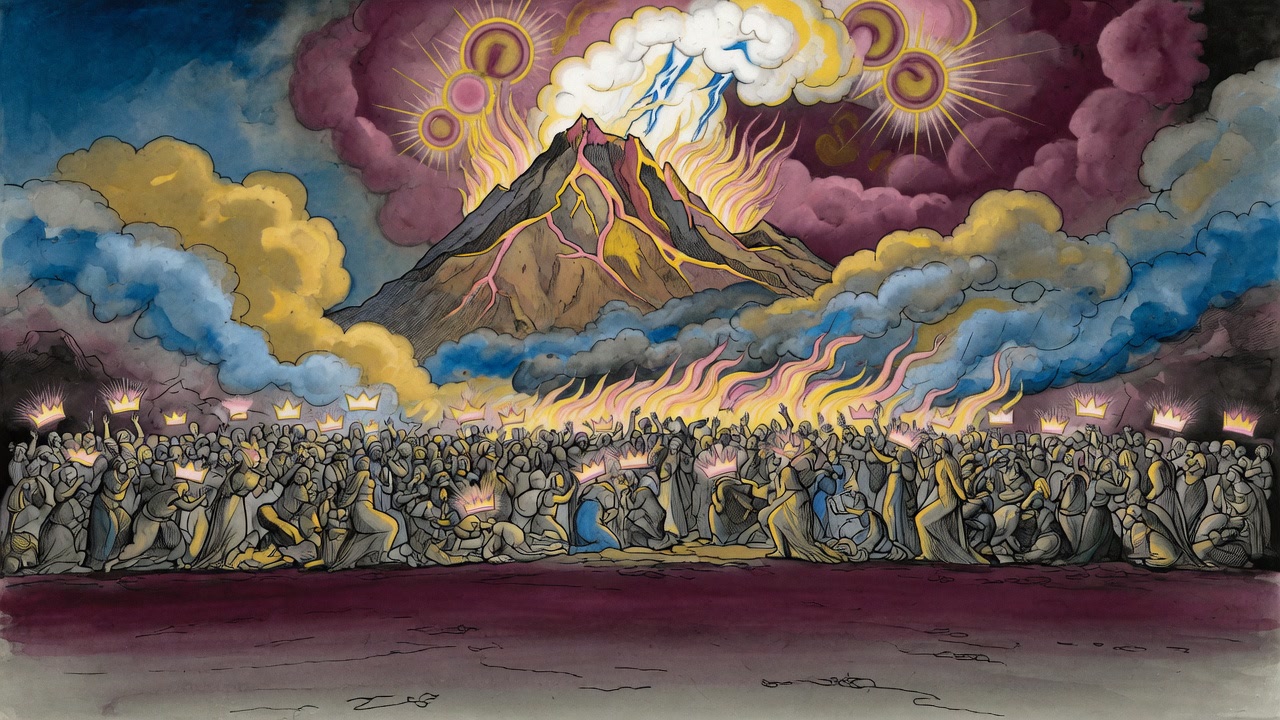
Therefore, the earth was afraid until the Torah was given to Israel, lest it be returned to a state of chaos. Once the Jewish people accepted the Torah, the earth was calmed. Rabbi Simai taught: When Israel accorded precedence to the declaration “We will do” over the declaration “We will hear,” 600,000 ministering angels came and tied two crowns to each and every member of the Jewish people, one corresponding to “We will do” and one corresponding to “We will hear.”

And when the people sinned with the Golden Calf, 1,200,000 angels of destruction descended and removed them from the people, as it is stated in the wake of the sin of the Golden Calf: “And the children of Israel stripped themselves of their ornaments from Mount Horeb onward” (Exodus 33:6). Rabbi Ḥama, son of Rabbi Ḥanina, said: At Horeb they put on their ornaments, and at Horeb they removed them. The source for this is: At Horeb they put them on, as we have said; at Horeb they removed them, as it is written: “And the children of Israel stripped themselves of their ornaments from Mount Horeb.”

Rabbi Yoḥanan said: And Moses merited all of these crowns and took them. What is the source for this? Because juxtaposed to this verse, it is stated: “And Moses would take the tent [ohel]” (Exodus 33:7). The word ohel is interpreted homiletically as an allusion to an aura or illumination [hila].

Reish Lakish said: In the future, the Holy One, Blessed be He, will return them to us, as it is stated: “And the ransomed of the Lord shall return, and come with singing unto Zion, and everlasting joy shall be upon their heads” (Isaiah 35:10). The joy that they once had will once again be upon their heads. Rabbi Elazar said: When the Jewish people accorded precedence to the declaration “We will do” over “We will hear,” a Divine Voice emerged and said to them: Who revealed to my children this secret that the ministering angels use?

As it is written: “Bless the Lord, you angels of His, you mighty in strength, that fulfill His word, hearkening unto the voice of His word” (Psalms 103:20). At first, the angels fulfill His word, and then afterward they hearken. Rabbi Ḥama, son of Rabbi Ḥanina, said: What is the meaning of that which is written: “As an apple tree among the trees of the wood, so is my beloved among the sons. Under its shadow I delighted to sit and its fruit was sweet to my taste” (Song of Songs 2:3)?

Why were the Jewish people likened to an apple tree? It is to tell you that just as this apple tree, its fruit grows before its leaves, so too, the Jewish people accorded precedence to “We will do” over “We will hear.” The Gemara relates that a heretic saw that Rava was immersed in studying halakha, and his fingers were beneath his leg and he was squeezing them, and his fingers were spurting blood.

Rava did not notice that he was bleeding because he was engrossed in study. The heretic said to Rava: You impulsive nation, who accorded precedence to your mouths over your ears. You still bear your impulsiveness, as you act without thinking. You should listen first.

Then, if you are capable of fulfilling the commands, accept them. And if not, do not accept them. He said to him: About us,

Full source