Parshat Yitro5 min read

Ha-Satan Searched Creation for the Hidden Torah

Moses came down from heaven with Torah, and Ha-Satan could not find it anywhere. Earth, sea, depth, and death all denied him.

Curated by Arthur · Told by Maggid ·
Table of Contents
  1. The Angels Had Already Lost
  2. The Accuser Questions the Earth
  3. The Sea and the Depth Refuse Him
  4. Moses Hides Behind Humility
  5. The Treasure Receives a Name

Ha-Satan knew something had gone missing.

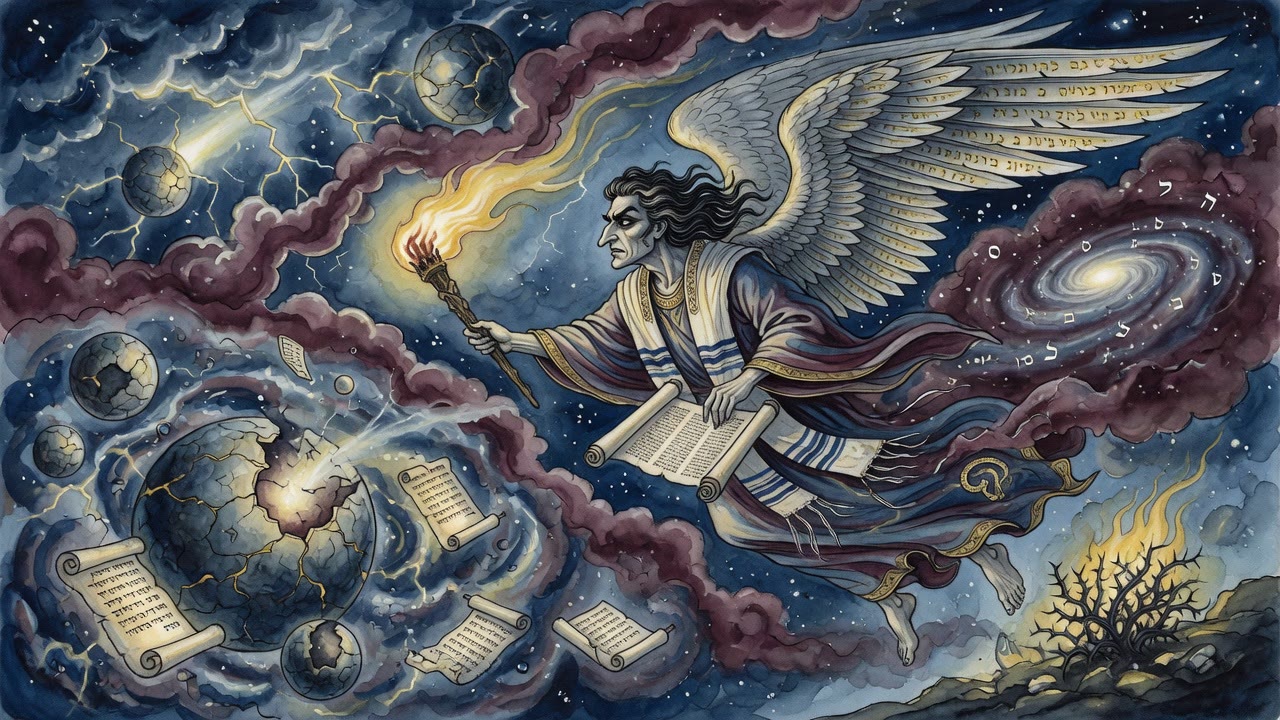
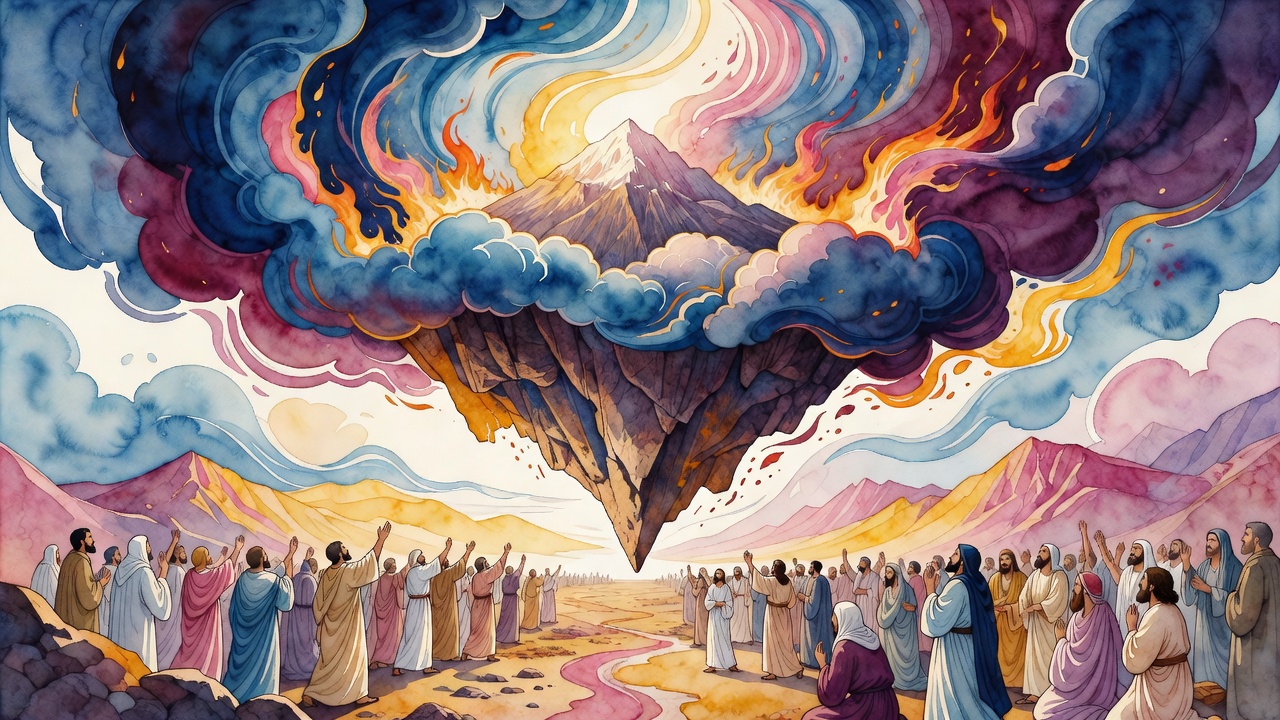
Moses had descended from the height, and the air below Sinai carried the aftertaste of fire. The angels had argued and lost. A mortal had climbed into their realm, gripped the Throne of Glory, and walked back down with the treasure heaven had guarded before creation.

The Accuser began to search.

The Angels Had Already Lost

The search began after humiliation.

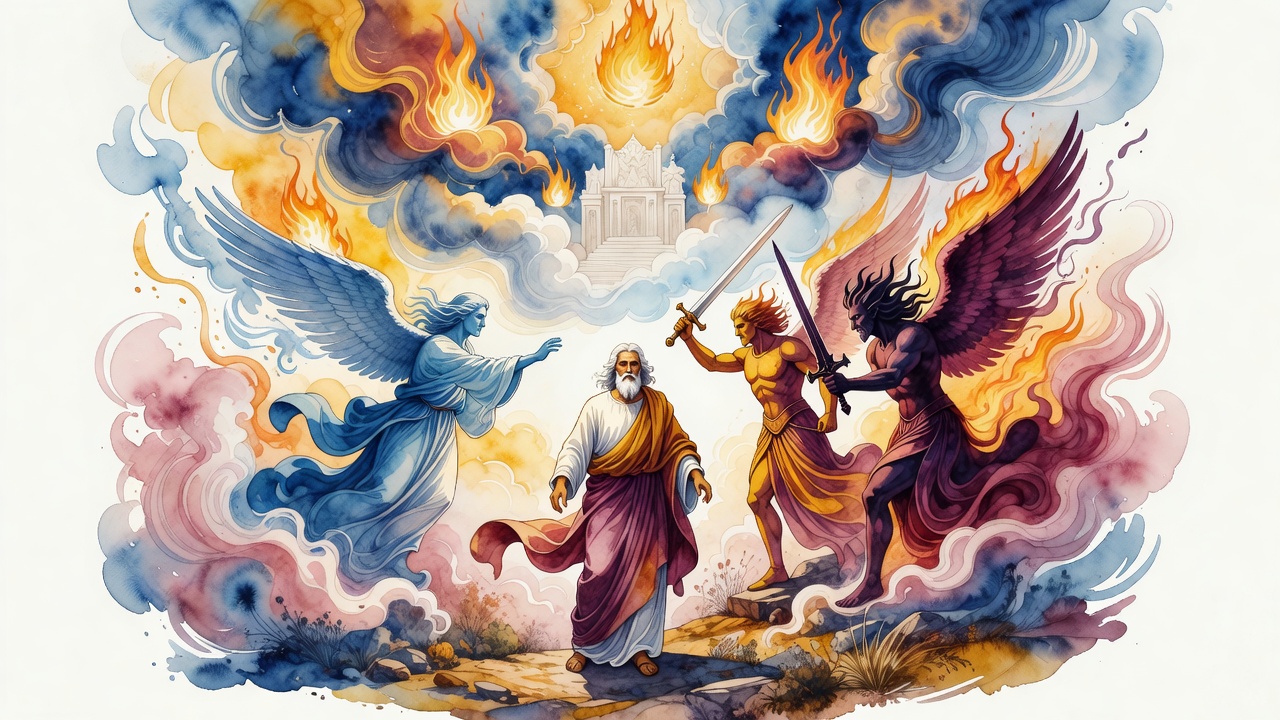
The angels had tried to keep the Torah above. They saw Moses and protested that a human being had no place among them. Their breath could burn flesh. Moses knew it and trembled. God made him hold the Throne, and from that shelter Moses turned the commandments against the angels one by one.

Were they enslaved in Egypt? Did they labor and need Shabbat? Did they bargain and swear falsely? Did they have parents to honor, jealousy to master, blood to keep from spilling, desire to discipline?

No. The Torah was useless to beings without bodies. The angels conceded, then gave Moses gifts. Even the Angel of Death gave him the secret of incense that stops a plague.

Then the Torah disappeared from heaven's reach.

The Accuser Questions the Earth

Ha-Satan went first to God.

"Where is the Torah?"

God did not hand him an answer. He sent him downward. "I gave it to the earth."

So the Accuser went to the earth and asked. The ground that had swallowed blood, hidden graves, grown grain, and carried generations underfoot gave him nothing. It did not know. The Torah was not in its fields, not in its dust, not beneath the paths where human feet would soon carry scrolls from place to place.

Creation had begun to withhold testimony.

The Sea and the Depth Refuse Him

He went to the sea.

The sea had opened once for Israel and closed over Egypt. If anything in the lower world knew how divine command moved through matter, the sea did. But the sea refused him too. "It is not with me."

So Ha-Satan went lower, into the deep places where ordinary searching fails. The depth answered as the sea had answered. "Not here." Destruction and Death, the bottommost witnesses, could offer only a rumor. They had heard of Torah, but they did not hold it.

By then the search had crossed earth, water, abyss, and the places where endings gather. The Torah was nowhere the Accuser could seize.

Moses Hides Behind Humility

Ha-Satan returned to God without the treasure.

God sent him to Moses son of Amram.

The Accuser came to the man who had stood among angels and asked the question directly. "The Torah that God gave you, where is it?"

Moses did not clutch the tablets and boast. He did not say that he had defeated the angels or carried the treasure out of heaven. He lowered himself until the truth was hidden inside humility. "Who am I that God would give me the Torah?"

It sounded like denial. It also sounded like reverence. Moses knew that claiming ownership over God's hidden delight would be another kind of theft. He had received Torah. He had not become its owner.

The Treasure Receives a Name

God pressed him.

"Moses, are you lying?"

The question exposed the narrow path Moses had walked. He had not wanted the Accuser to seize the Torah. He had not wanted to take credit for what belonged to God. So he answered from that narrow place. "You have a hidden treasure in which You delight every day. Should I claim the good for myself?"

Then God gave him the reward humility could receive. Because Moses would not call the Torah his own, God called it by Moses' name. "Remember the Torah of Moses My servant."

Ha-Satan had searched creation and found no handle on it. Earth had none. Sea had none. Death had none. Moses had it only because he would not pretend it had become his possession. The Torah came down in human hands, but the hands that carried it stayed open.

The Accuser found no hiding place because the hiding place was a man who would not boast. Moses defeated heaven by admitting earth's weakness, then protected the gift by refusing to make humility into display. The search ended not with a locked chest or a secret cavern, but with open hands. Torah could enter Israel because Moses carried it without pretending it had become his possession.


← All myths
From the tradition

Sources

2 sources

The texts this telling draws on, in full. Open a card to read inline, or expand it for a wider, quieter read.

Shabbat 89aTalmud Bavli, Shabbat

idols that you require this special warning? Again Moses asked: What else is written in it? The Holy One, Blessed be He, said to him: “Remember the Shabbat day to sanctify it” (Exodus 20:8). Moses asked the angels: Do you perform labor that you require rest from it?

Again Moses asked: What else is written in it? “Do not take the name of the Lord your God in vain” (Exodus 20:7), meaning that it is prohibited to swear falsely. Moses asked the angels: Do you conduct business with one another that may lead you to swear falsely? Again Moses asked: What else is written in it?

The Holy One, Blessed be He, said to him: “Honor your father and your mother” (Exodus 20:12). Moses asked the angels: Do you have a father or a mother that would render the commandment to honor them relevant to you? Again Moses asked: What else is written in it? God said to him: “You shall not murder, you shall not commit adultery, you shall not steal” (Exodus 20:13) Moses asked the angels: Is there jealousy among you, or is there an evil inclination within you that would render these commandments relevant?

Immediately they agreed with the Holy One, Blessed be He, that He made the right decision to give the Torah to the people, and as it is stated: “God our Lord, how glorious is Your name in all the earth” (Psalms 8:10), while “that Your majesty is placed above the heavens” is not written because the angels agreed with God that it is appropriate to give the Torah to the people on earth. Immediately, each and every one of the angels became an admirer of Moses and passed something to him, as it is stated: “You ascended on high, you took a captive, you took gifts on account of man, and even among the rebellious also that the Lord God might dwell there” (Psalms 68:19).

The meaning of the verse is: In reward for the fact that they called you man, you are not an angel and the Torah is applicable to you, you took gifts from the angels. And even the Angel of Death gave him something, as Moses told Aaron how to stop the plague, as it is stated: “And he placed the incense, and he atoned for the people” (Numbers 17:12). And the verse says: “And he stood between the dead and the living, and the plague was stopped” (Numbers 17:13).

If it were not that the Angel of Death told him this remedy, would he have known it? And Rabbi Yehoshua ben Levi said: When Moses descended from standing before the Holy One, Blessed be He, with the Torah, Satan came and said before Him: Master of the Universe, where is the Torah?He said to him: I have given it to the earth. He went to the earth, and said to it: Where is the Torah? It said to him: I do not know, as only: “God understands its way, and He knows its place” (Job 28:23).He went to the sea and asked: Where is the Torah?

And the sea said to him: “It is not with me.”He went to the depths and asked: Where is the Torah? And the depths said to him: “It is not within me.” And from where is it derived that the sea and the depths answered him this way? As it is stated: “The depth said: It is not within me, and the sea said: It is not with me” (Job 28:14).

“Destruction and death said: We heard a rumor of it with our ears” (Job 28:22).Satan returned and said before the Holy One, Blessed be He: Master of the Universe, I searched for the Torah throughout all the earth and did not find it. He said to him: Go to Moses, son of Amram. He went to Moses and said to him: The Torah that the Holy One, Blessed be He, gave you, where is it? Moses evaded the question and said to him: And what am I that the Holy One, Blessed be He, would have given me the Torah?

I am unworthy. The Holy One, Blessed be He, said to Moses: Moses, are you a fabricator? Moses said before Him: Master of the Universe, You have a hidden treasure in which You delight every day, as it is stated: “And I was His delight every day, playing before Him at every moment” (Proverbs 8:30). Should I take credit for myself and say that You gave it to me?

The Holy One, Blessed be He, said to Moses: Since you belittled yourself, the Torah will be called by your name, as it is stated: “Remember the Torah of Moses My servant to whom I commanded at Horeb laws and statutes for all of Israel” (Malachi 3:22). And Rabbi Yehoshua ben Levi said: When Moses ascended on High, he found the Holy One, Blessed be He, tying crowns to letters. On the tops of certain letters there are ornamental crownlets.

Moses said nothing, and God said to him: Moses, is there no greeting in your city? Do people not greet each other in your city? He said before Him: Does a servant greet his master? That would be disrespectful.

He said to him: At least you should have assisted Me and wished Me success in My work. Immediately he said to Him: “And now, may the power of the Lord be great as you have spoken” (Numbers 14:17). And Rabbi Yehoshua ben Levi said: What is the meaning of that which is written: “And the people saw that Moses delayed [boshesh] to come down from the mount” (Exodus 32:1)? Do not read the word in the verse as boshesh; rather, read it as ba’u shesh, six hours have arrived.

When Moses ascended on High, he told the Jewish people: In forty days, at the beginning of six hours, I will come. After forty days, Satan came and brought confusion to the world by means of a storm, and it was impossible to ascertain the time. Satan said to the Jews: Where is your teacher Moses? They said to him: He ascended on High.

He said to them: Six hours have arrived and he has not yet come. Surely he won’t. And they paid him no attention. Satan said to them: Moses died.

And they paid him no attention. Ultimately, he showed them an image of his death-bed and an image of Moses’ corpse in a cloud. And that is what the Jewish people said to Aaron: “For this Moses, the man who brought us up out of the land of Egypt, we know not what has become of him” (Exodus 32:1). One of the Sages said to Rav Kahana: Did you hear what is the reason that the mountain was called Mount Sinai?

Rav Kahana said to him: It is because it is a mountain upon which miracles [nissim] were performed for the Jewish people. The Sage said to him: If so, it should have been called Mount Nisai, the mountain of miracles. Rather, Rav Kahana said to him: It is a mountain that was a good omen [siman] for the Jewish people. The Sage said to him: If so, it should have been called Har Simanai, the mountain of omens.

Rav Kahana said to him: What is the reason that you do not frequent the school where you can study before Rav Pappa and Rav Huna, son of Rav Yehoshua, who study aggada? As Rav Ḥisda and Rabba, son of Rav Huna, both said: What is the reason it is called Mount Sinai? It is because it is a mountain upon which hatred [sina] for the nations of the world descended because they did not accept the Torah. And that is what Rabbi Yosei, son of Rabbi Ḥanina, said: The desert in which Israel remained for forty years has five names.

Each name has a source and a rationale: The Zin Desert, because the Jewish people were commanded [nitztavu] in it; the Kadesh Desert, because the Jewish people were sanctified [nitkadshu] in it. The Kedemot Desert, because the ancient [keduma] Torah, which preceded the world, was given in it. The Paran Desert,

Full source
Shabbat 88bTalmud Bavli, Shabbat

who proceed wholeheartedly and with integrity, it is written: “The integrity of the upright will guide them” (Proverbs 11:3), whereas about those people who walk in deceit, it is written at the end of the same verse: “And the perverseness of the faithless will destroy them.” Rabbi Shmuel bar Naḥamani said that Rabbi Yonatan said: What is the meaning of that which is written: “You have ravished my heart, my sister, my bride; you have ravished my heart with one of your eyes, with one bead of your necklace” (Song of Songs 4:9)?

At first when you, the Jewish people, merely accepted the Torah upon yourselves it was with one of your eyes; however, when you actually perform the mitzvot it will be with both of your eyes. Ulla said with regard to the sin of the Golden Calf: Insolent is the bride who is promiscuous under her wedding canopy. Rav Mari, son of the daughter of Shmuel, said: What verse alludes to this? “While the king was still at his table my spikenard gave off its fragrance” (Song of Songs 1:12).

Its pleasant odor dissipated, leaving only an offensive odor. Rav said: Nevertheless, it is apparent from the verse that the affection of the Holy One, Blessed be He, is still upon us, as it is written euphemistically as “gave off its fragrance,” and the verse did not write, it reeked. And the Sages taught: About those who are insulted and do not insult, who hear their shame and do not respond, who act out of love and are joyful in suffering, the verse says: “And they that love Him are as the sun going forth in its might” (Judges 5:31).

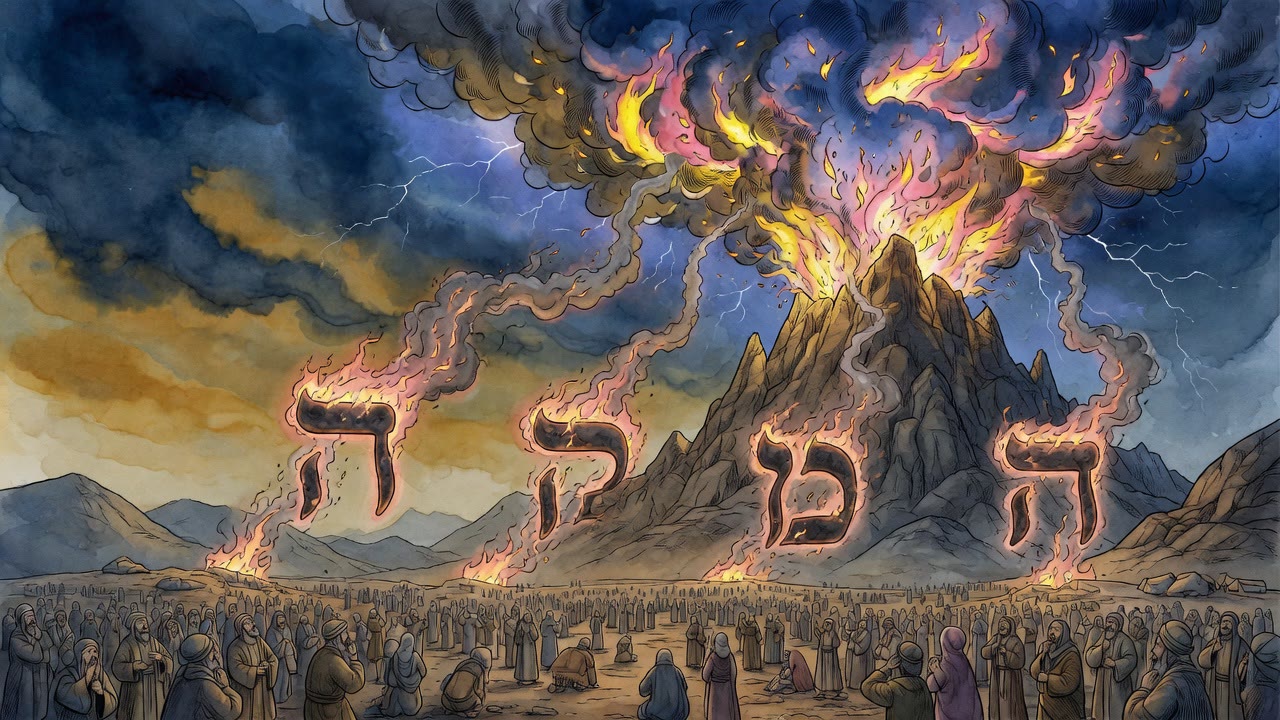
With regard to the revelation at Sinai, Rabbi Yoḥanan said: What is the meaning of that which is written: “The Lord gives the word; the women that proclaim the tidings are a great host” (Psalms 68:12)? It means that each and every utterance that emerged from the mouth of the Almighty divided into seventy languages, a great host. And, similarly, the school of Rabbi Yishmael taught with regard to the verse: “Behold, is My word not like fire, declares the Lord, and like a hammer that shatters a rock?” (Jeremiah 23:29).

Just as this hammer breaks a stone into several fragments, so too, each and every utterance that emerged from the mouth of the Holy One, Blessed be He, divided into seventy languages. The Gemara continues in praise of the Torah. Rav Ḥananel bar Pappa said: What is the meaning of that which is written: “Listen, for I will speak royal things, and my lips will open with upright statements” (Proverbs 8:6)?

Why are matters of Torah likened to a king? To teach you that just as this king has the power to kill and to grant life, so too, matters of Torah have the power to kill and to grant life. And that is what Rava said: To those who are right-handed in their approach to Torah, and engage in its study with strength, good will, and sanctity, Torah is a drug of life, and to those who are left-handed in their approach to Torah, it is a drug of death.

Alternatively, why are matters of Torah referred to as royal? Because to each and every utterance that emerged from the mouth of the Holy One, Blessed be He, two crowns are tied. Rabbi Yehoshua ben Levi said: What is the meaning of that which is written: “My beloved is to me like a bundle of myrrh that lies between my breasts” (Song of Songs 1:13)? The Congregation of Israel said before the Holy One, Blessed be He: Master of the Universe, even though my beloved, God, causes me suffering and bitterness, He still lies between my breasts.

And Rabbi Yehoshua ben Levi interpreted the verse: “My beloved is to me like a cluster [eshkol] of henna [hakofer] in the vineyards of [karmei] Ein Gedi” (Song of Songs 1:14). He, Whom everything [shehakol] is His, forgives [mekhapper] me for the sin of the kid [gedi], i.e., the calf, that I collected [shekaramti] for myself. The Gemara explains: From where is it inferred that the word in this verse, karmei, is a term of gathering?

Mar Zutra, son of Rav Naḥman, said that it is as we learned in a mishna: A launderer’s chair upon which one gathers [koremim] the garments. And Rabbi Yehoshua ben Levi said: What is the meaning of that which is written: “His cheeks are as a bed of spices, as banks of sweet herbs, his lips are lilies dripping with flowing myrrh” (Song of Songs 5:13)? It is interpreted homiletically: From each and every utterance that emerged from His cheeks, i.e., the mouth of the Holy One, Blessed be He, the entire world was filled with fragrant spices.

And since the world was already filled by the first utterance, where was there room for the spices of the second utterance to go? The Holy One, Blessed be He, brought forth wind from His treasuries and made the spices pass one at a time, leaving room for the consequences of the next utterance. As it is stated: “His lips are lilies [shoshanim] dripping with flowing myrrh.” Each and every utterance resulted in flowing myrrh.

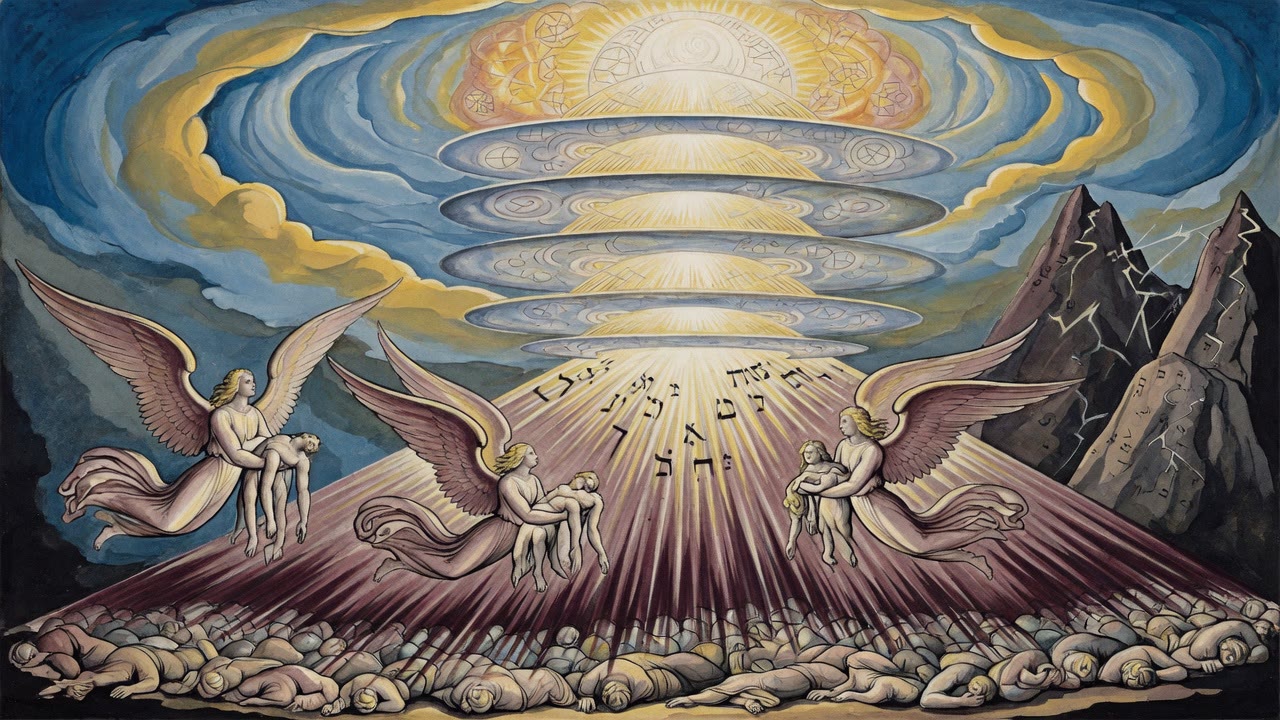
Do not read the word in the verse as shoshanim; rather, read it as sheshonim, meaning repeat. Each repeat utterance produced its own fragrance. And Rabbi Yehoshua ben Levi said: From each and every utterance that emerged from the mouth of the Holy One, Blessed be He, the souls of the Jewish people left their bodies, as it is stated: “My soul departed when he spoke” (Song of Songs 5:6). And since their souls left their bodies from the first utterance, how did they receive the second utterance?

Rather, God rained the dew upon them that, in the future, will revive the dead, and He revived them, as it is stated: “You, God, poured down a bountiful rain; when Your inheritance was weary You sustained it” (Psalms 68:10). And Rabbi Yehoshua ben Levi said: With each and every utterance that emerged from the mouth of the Holy One, Blessed be He, the Jewish people retreated in fear twelve mil, and the ministering angels walked them back toward the mountain, as it is stated: “The hosts of angels will scatter [yidodun]” (Psalms 68:13).

Do not read the word as yidodun, meaning scattered; rather, read it as yedadun, they walked them. And Rabbi Yehoshua ben Levi said: When Moses ascended on High to receive the Torah, the ministering angels said before the Holy One, Blessed be He: Master of the Universe, what is one born of a woman doing here among us? The Holy One, Blessed be He, said to them: He came to receive the Torah. The angels said before Him: The Torah is a hidden treasure that was concealed by You 974 generations before the creation of the world, and You seek to give it to flesh and blood?

As it is stated: “The word which He commanded to a thousand generations” (Psalms 105:8). Since the Torah, the word of God, was given to the twenty-sixth generation after Adam, the first man, the remaining 974 generations must have preceded the creation of the world. “What is man that You are mindful of him and the son of man that You think of him?” (Psalms 8:5). Rather, “God our Lord, how glorious is Your name in all the earth that Your majesty is placed above the heavens” (Psalms 8:2).

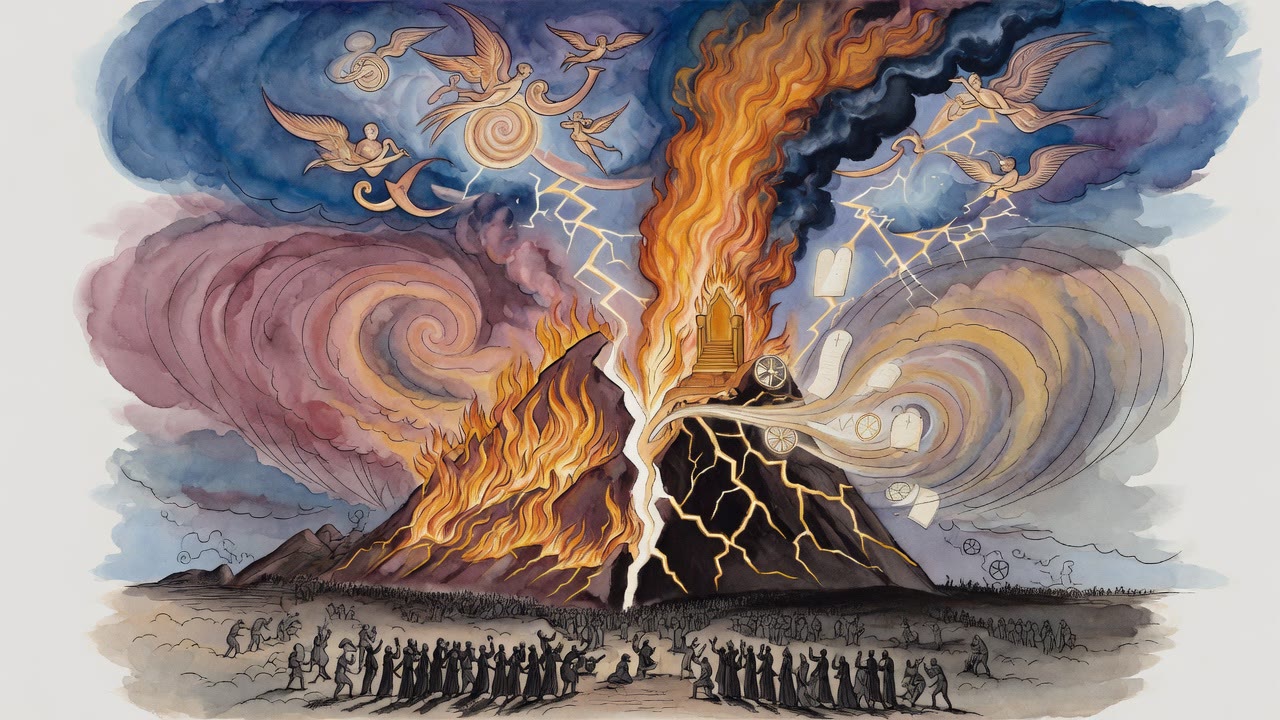
The rightful place of God’s majesty, the Torah, is in the heavens. The Holy One, Blessed be He, said to Moses: Provide them with an answer as to why the Torah should be given to the people. Moses said before Him: Master of the Universe, I am afraid lest they burn me with the breath of their mouths. God said to him: Grasp My throne of glory for strength and protection, and provide them with an answer.

And from where is this derived? As it is stated: “He causes him to grasp the front of the throne, and spreads His cloud over it” (Job 26:9), and Rabbi Naḥum said: This verse teaches that God spread the radiance of His presence and His cloud over Moses. Moses said before Him: Master of the Universe, the Torah that You are giving me, what is written in it? God said to him: “I am the Lord your God Who brought you out of Egypt from the house of bondage” (Exodus 20:2).

Moses said to the angels: Did you descend to Egypt? Were you enslaved to Pharaoh? Why should the Torah be yours? Again Moses asked: What else is written in it?

God said to him: “You shall have no other gods before Me” (Exodus 20:3). Moses said to the angels: Do you dwell among the nations who worship

Full source