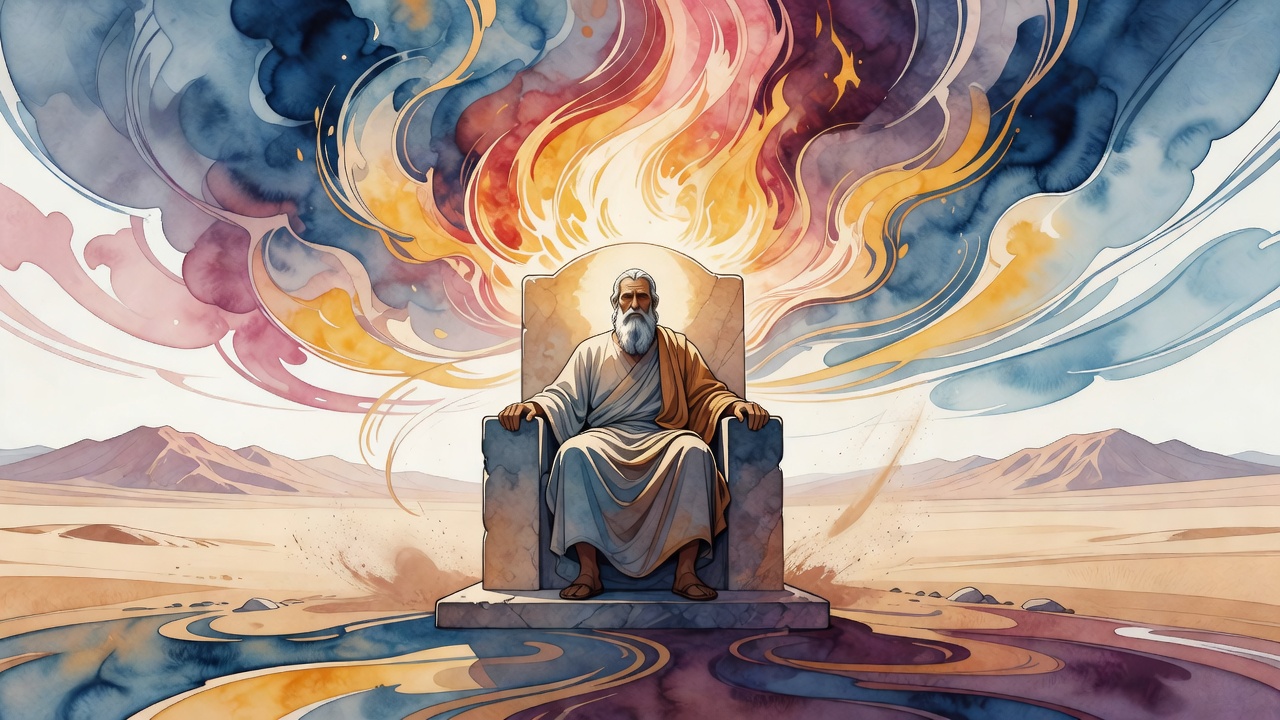
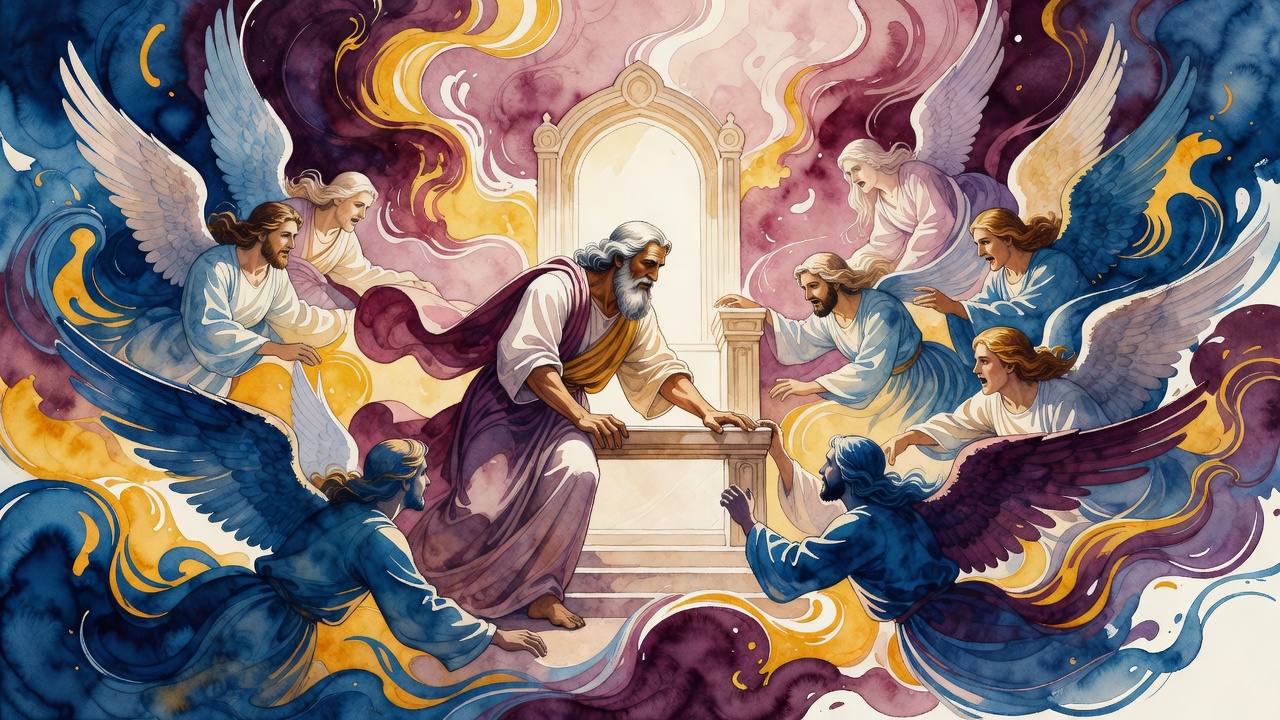
Hadarniel Towered Over Moses on the Way to Torah
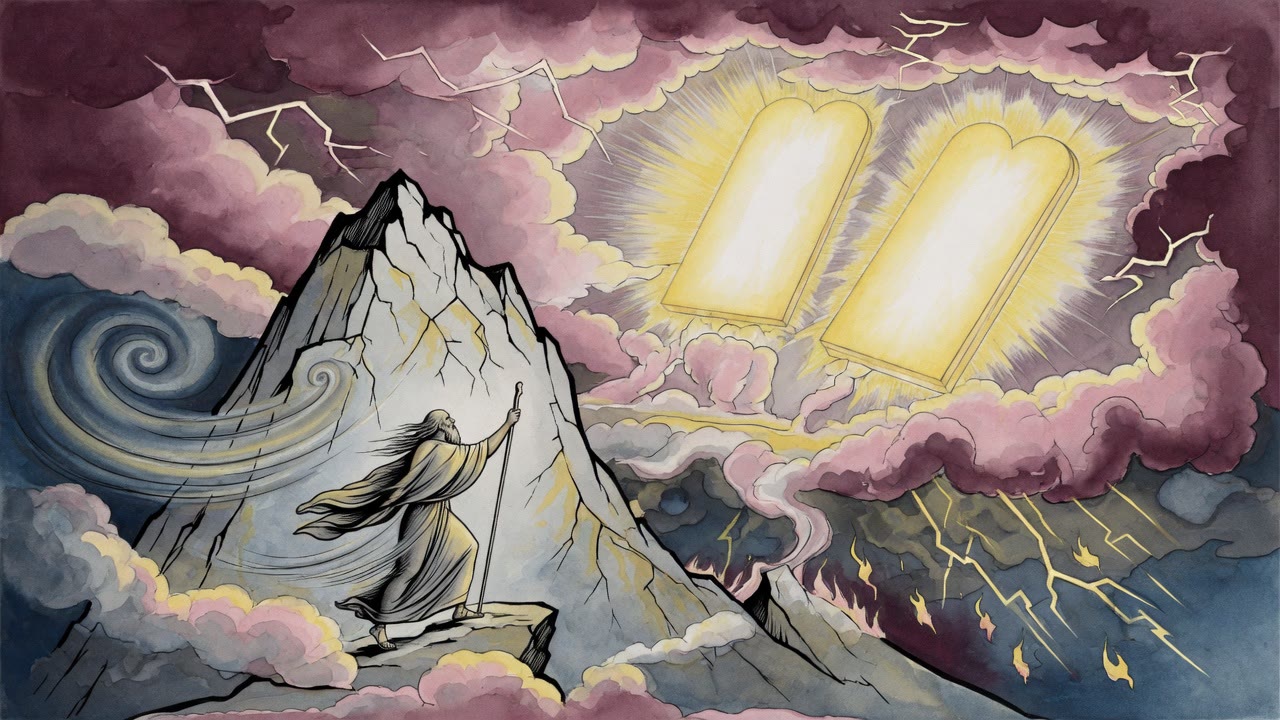
When Moses ascended to receive the Torah, an angel sixty myriads of parasangs tall blocked his path and unleashed lightning with every word.
Table of Contents
 Click for full size
The Cloud That Swallowed Him
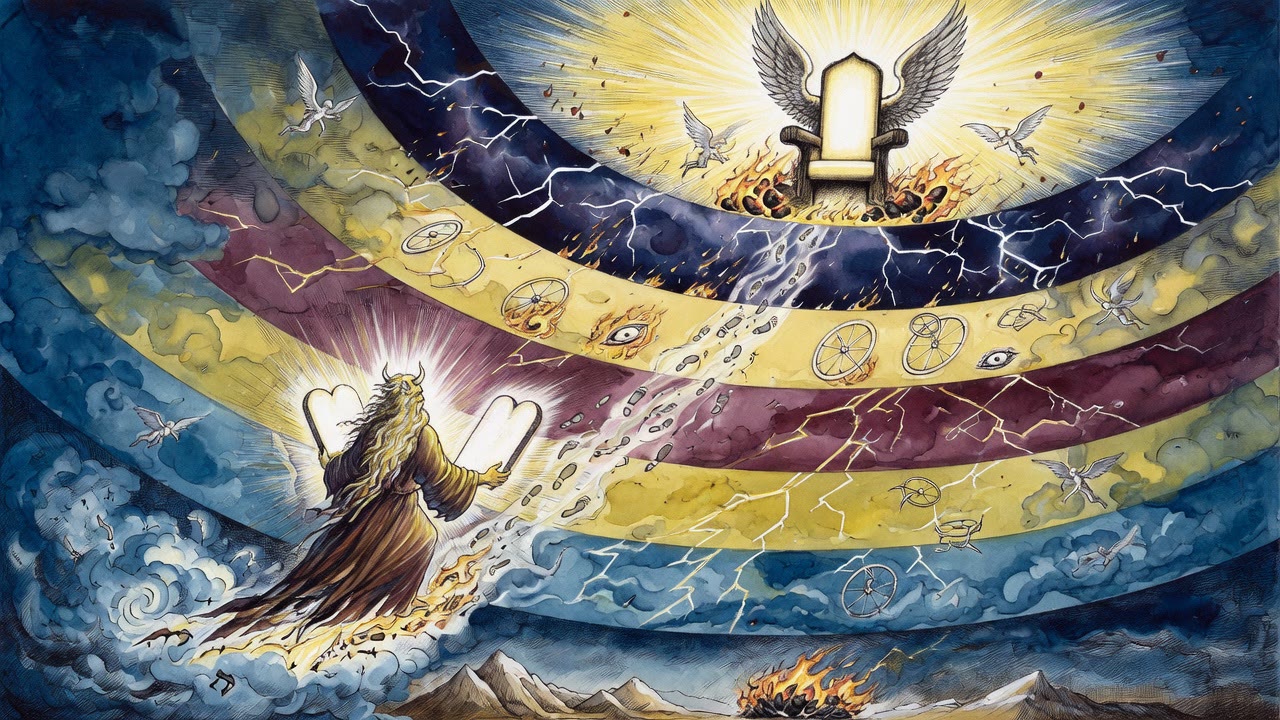
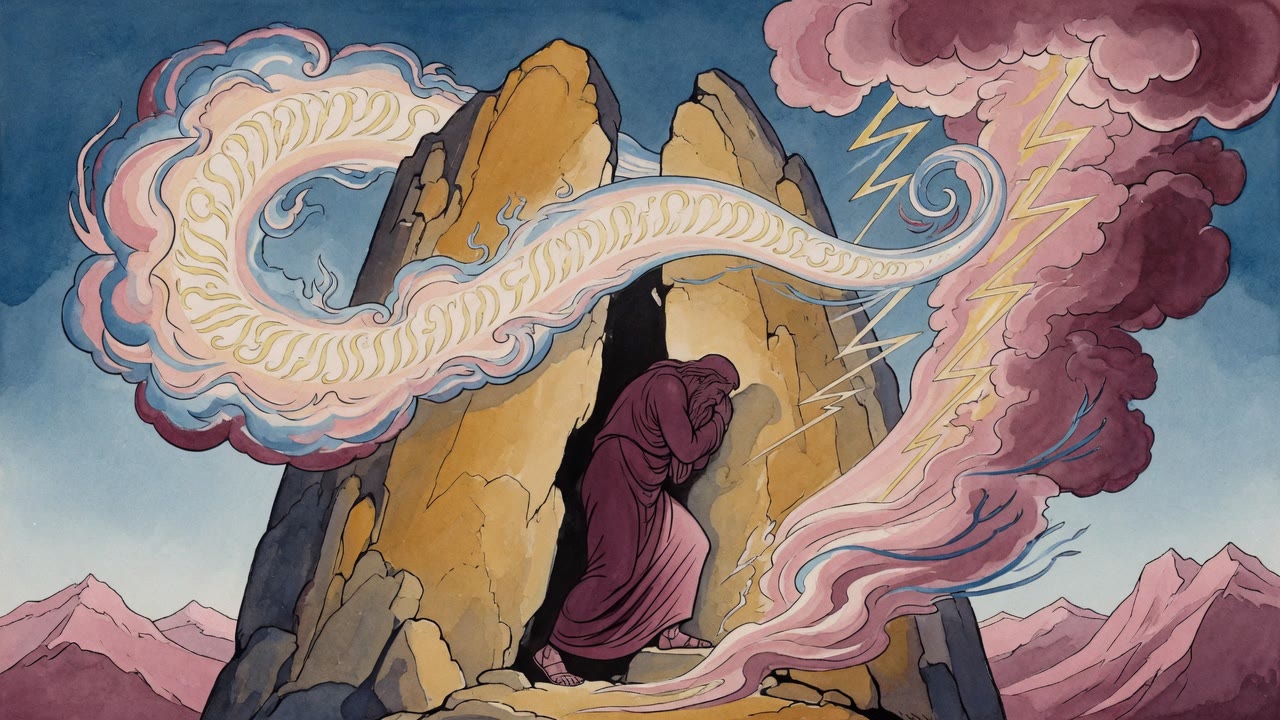
Moses stood at the foot of Sinai and a cloud crouched before him like a living thing. He did not know whether to climb it or grip it or simply walk into it. It opened. It swallowed him. Then he was standing on the firmament, walking it the way a person walks the ground, crossing toward the Torah that lived at the center of heaven.
The first angel he met was Qemuel, commander of twelve thousand angels of destruction who guard heaven's gate. Qemuel did not greet him. "You come from a place of defilement," Qemuel said. "What are you doing here?"
Moses destroyed him and kept walking.
Hadarniel's Greeting
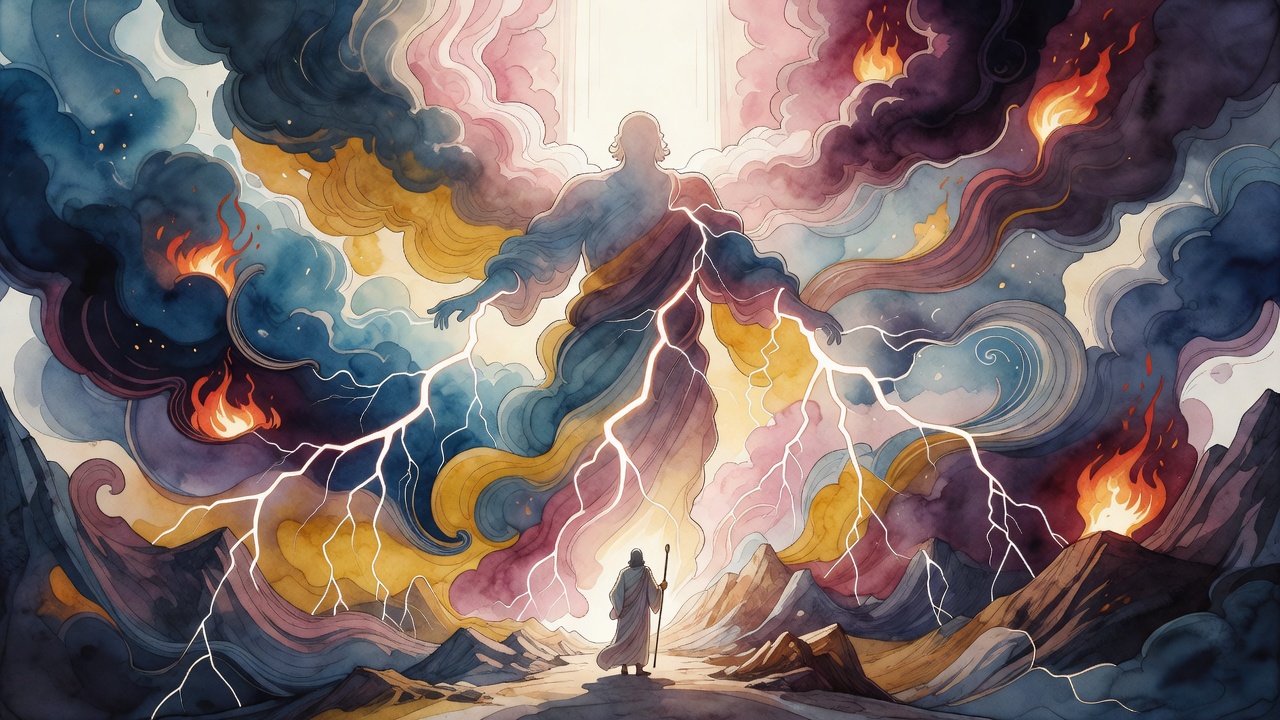
The angel Hadarniel stood at the next threshold. He exceeded his fellow angels in height by sixty myriads of parasangs. A parasang is an ancient Persian unit of distance, roughly three miles. Sixty myriads of them places Hadarniel at a scale that belongs to the architecture of heaven rather than anything that could be encountered in ordinary experience. And that was only the height by which he exceeded the other angels, not his total height.
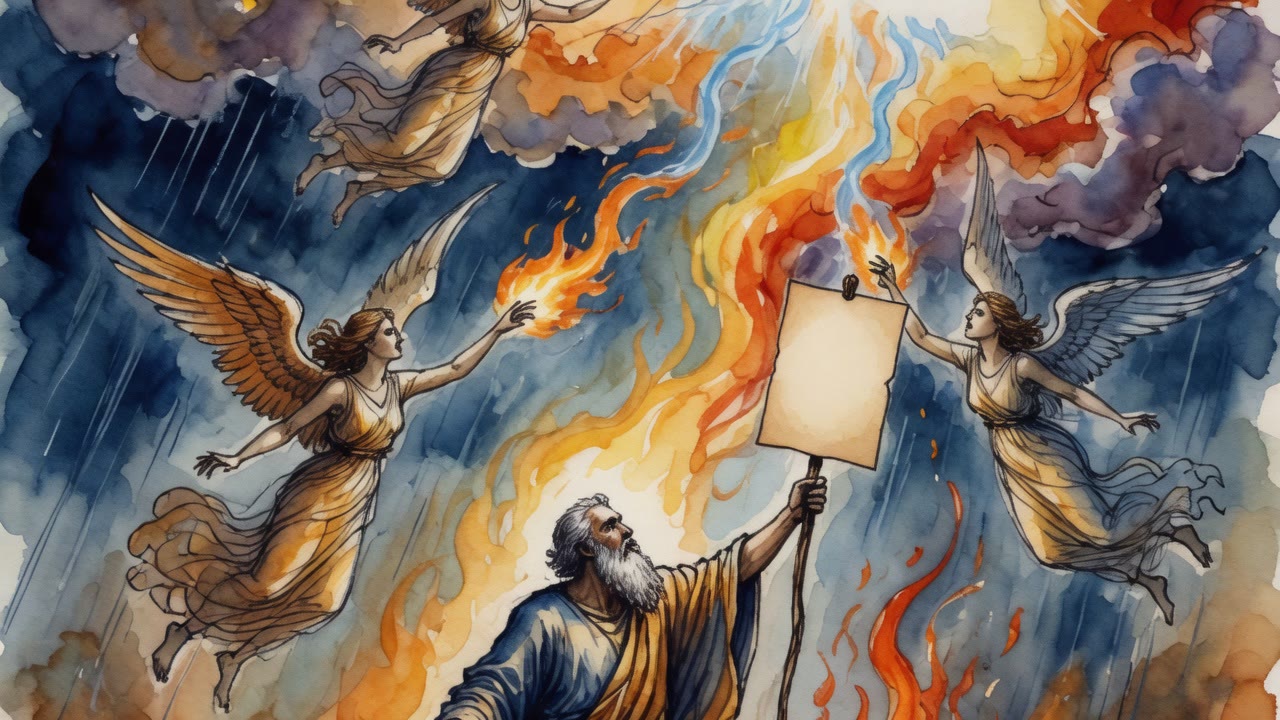
Every word that came out of Hadarniel's mouth released twelve thousand flashes of lightning. Not figuratively. Not as poetry. The lightning moved through the air ahead of his voice the way sound moves through a hall. He opened his mouth to speak and the sky ahead of his words caught fire.
Moses stopped. All his experience of fighting and negotiating and standing before Pharaoh and arguing with God did not prepare him for an angel who spoke in lightning. He stood there paralyzed and wept. He could not think of a response to twelve thousand bolts per sentence.
God's Intervention at the Gate
God saw what was happening and intervened. Not by destroying Hadarniel, who was functioning correctly as heaven's gatekeeper, but by reminding him who Moses was. The voice of God addressed Hadarniel and said: "this one has already survived my presence at Sinai. He has endured things that unmade the generation before him. Let him through."
Hadarniel stepped aside. More than that: he became Moses's guide. The lightning-voiced angel who had stopped him at the gate now led him through the levels of heaven, accompanying him toward the Torah. The confrontation became an escort. The obstacle became the road.
This pattern repeated itself at each successive threshold. The angel Sandalphon appeared and Moses nearly lost his footing on the cloud he was walking. The Legends of the Jews records that Moses begged God for mercy at the sight of Sandalphon, who is stationed in the fifth heaven and is so tall that it took the angels five hundred years to walk from his feet to his head. Moses cried out in desperation and God steadied him.
Sandalphon and the Crown of Prayers
Sandalphon's office is the collection of prayers. Every prayer offered in every synagogue below is gathered by this angel and woven into a crown for God. The Talmud, in Tractate Hagigah 13a, specifies that the angels of heaven cannot sing until the children of Israel sing below. The prayers rise. Sandalphon weaves them. The crown is placed on the divine throne.
Moses passed through Sandalphon's station with God's support and continued toward the Torah. He had crossed lightning and near-infinite height and the vertigo of standing before an angel who turned prayers into crowns. What he had not yet faced was the angels who would argue that the Torah should not go back with him at all, that it belonged in heaven and not in the hands of a creature made of flesh. That argument was still ahead of him. He had only survived the gatekeepers. The court was waiting.
← All myths