Retold in our words. Read the original at the link below.Sefaria Community Translation · CC0
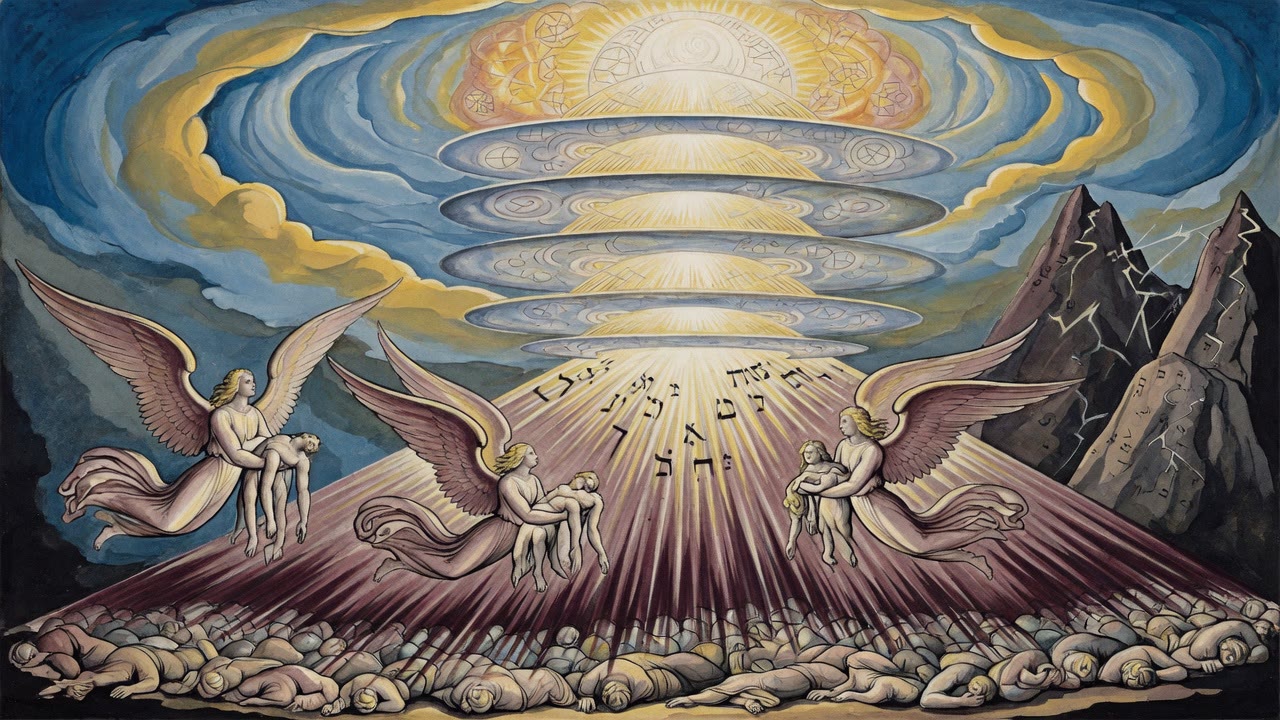
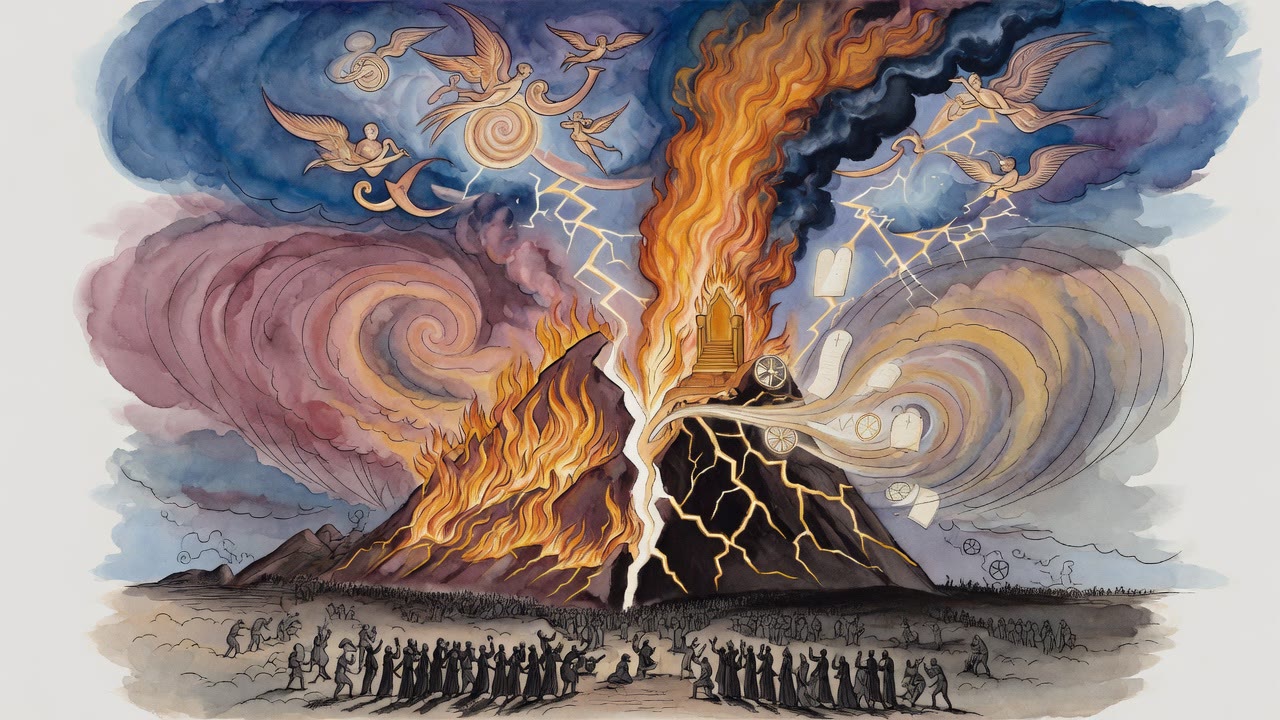
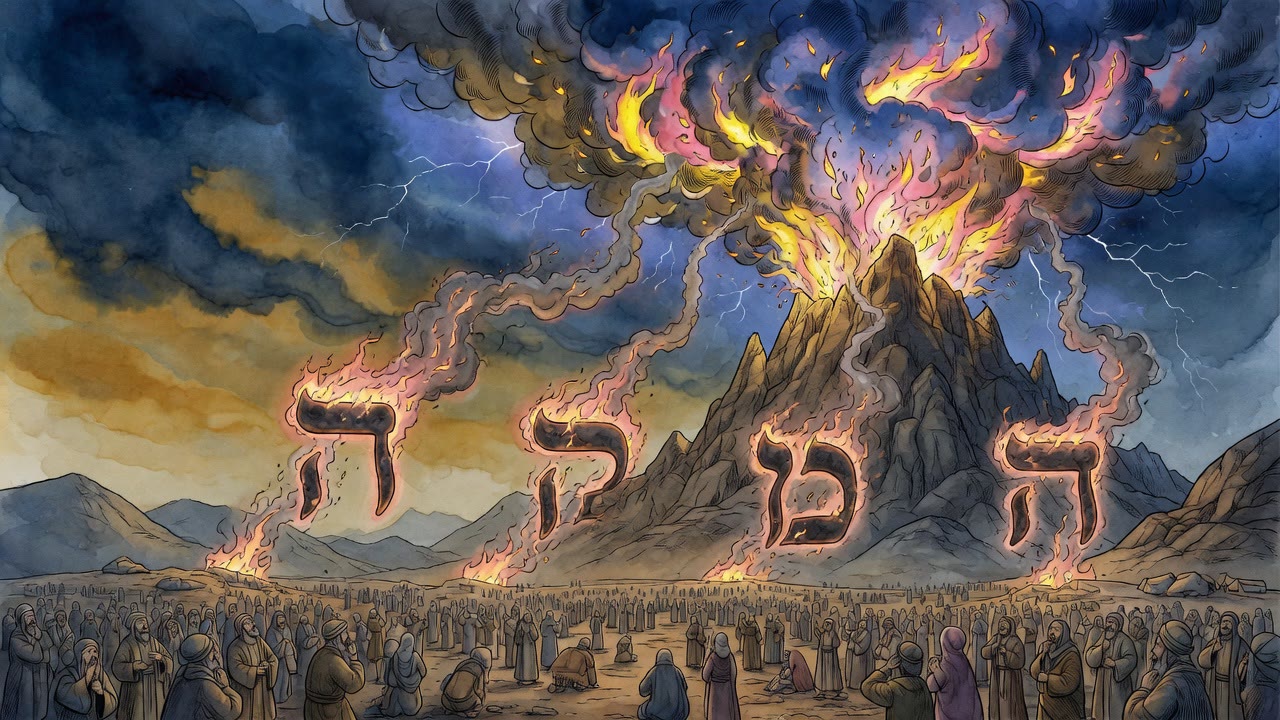
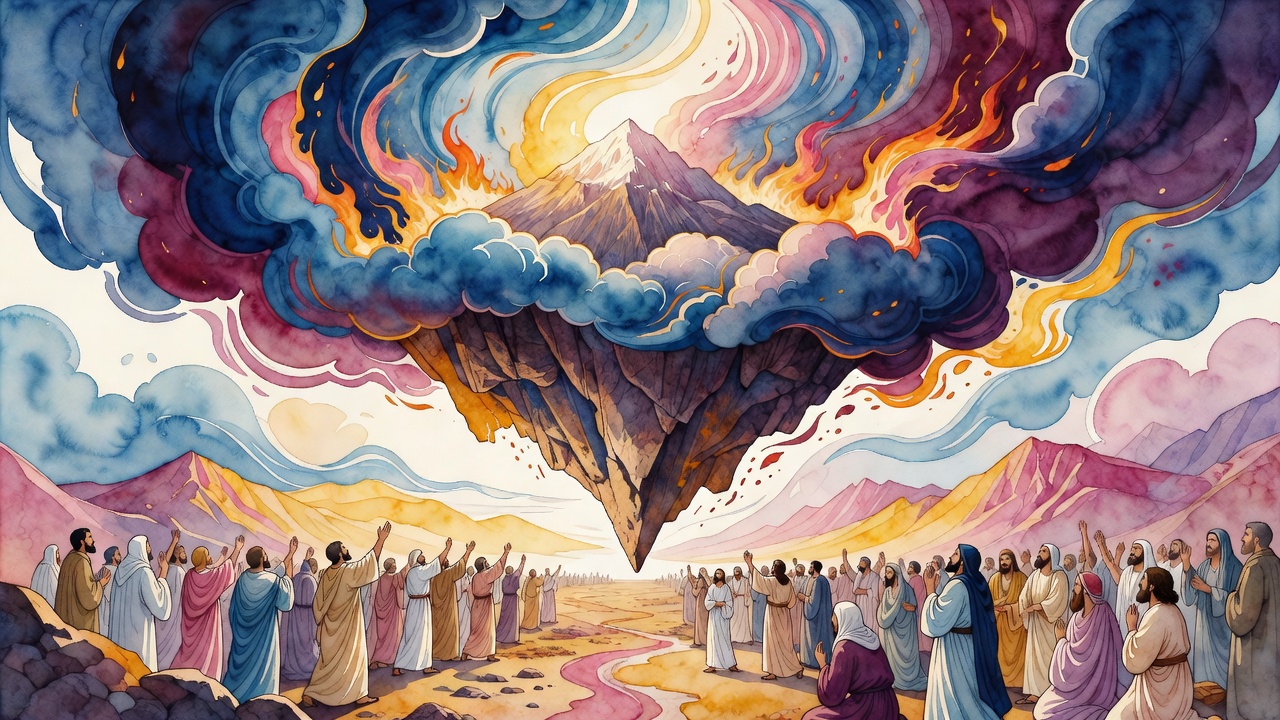
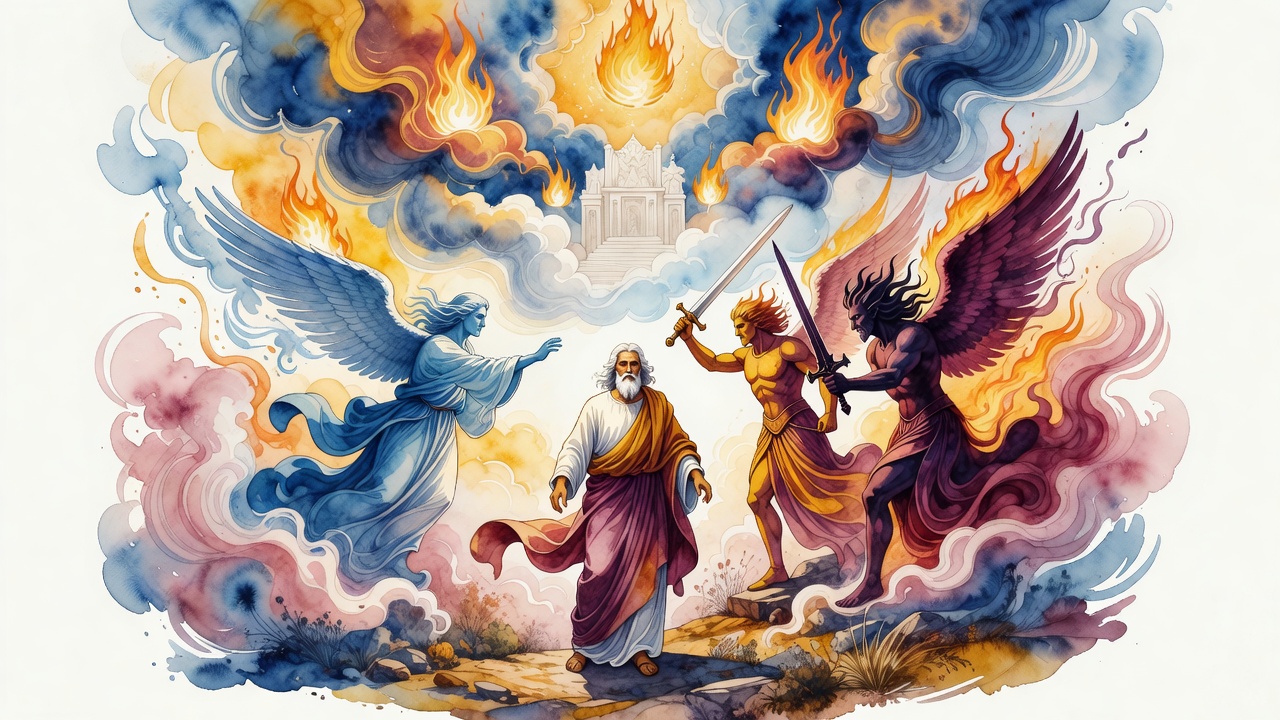
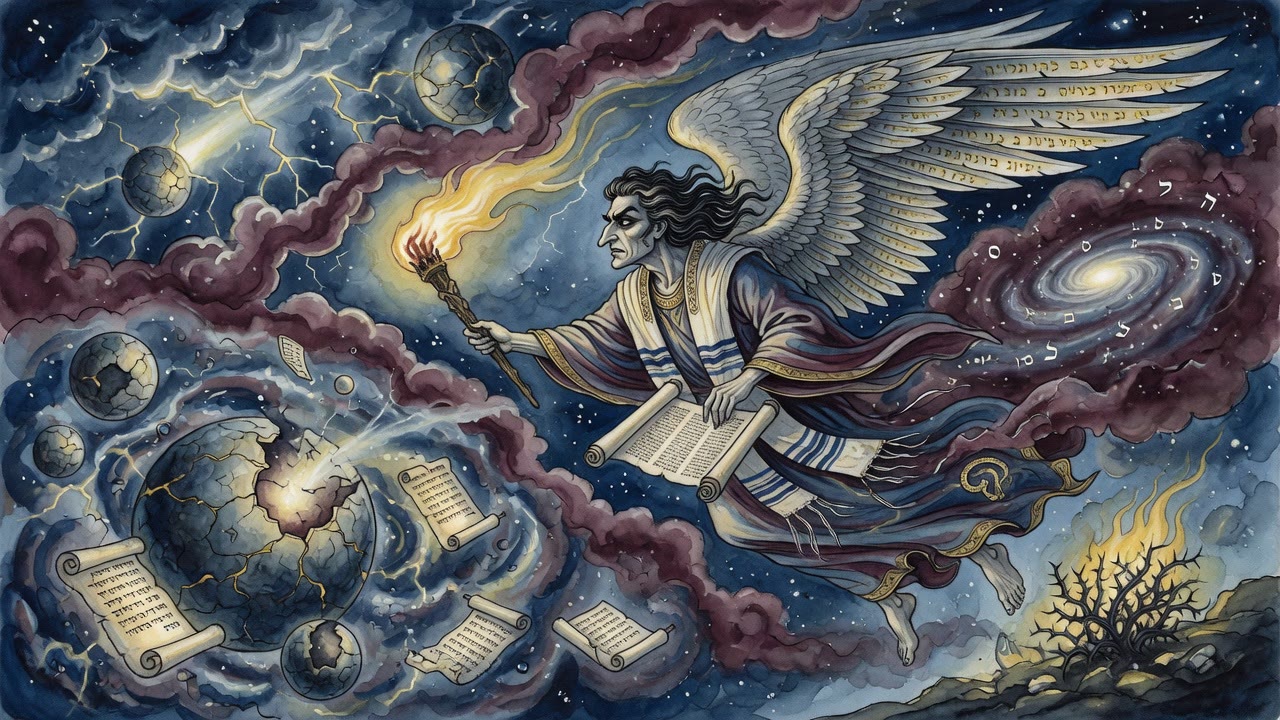
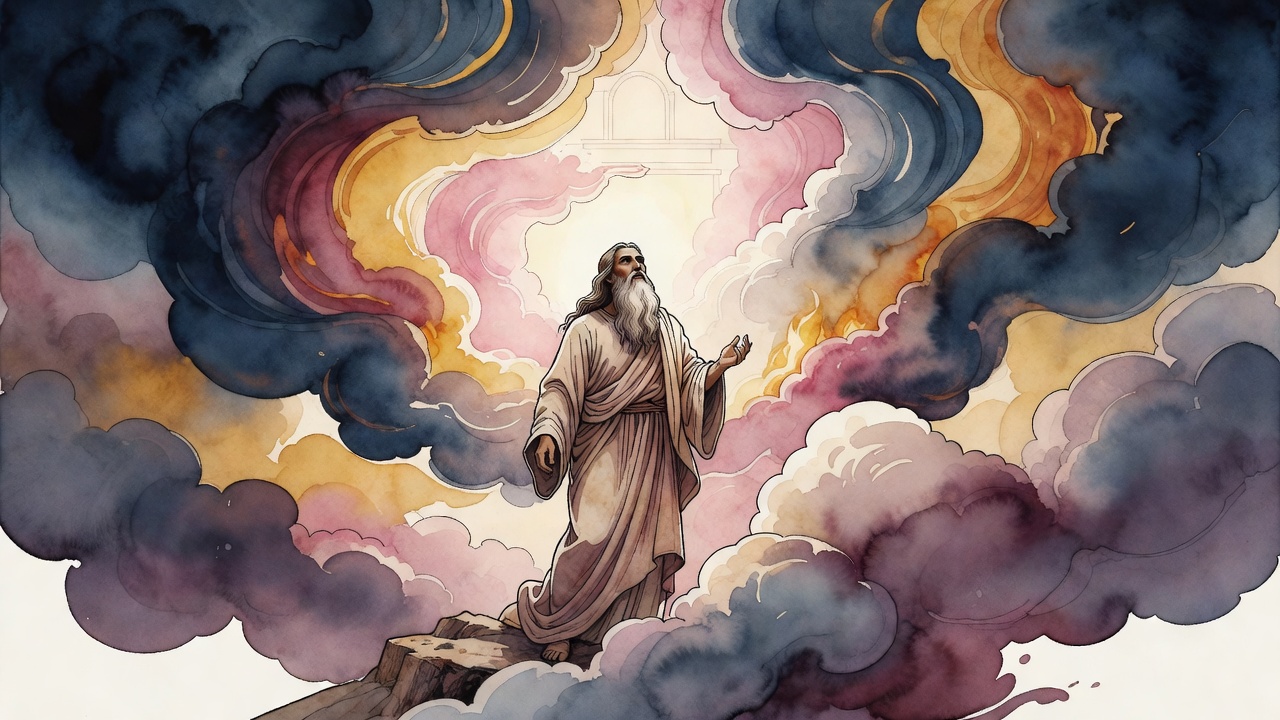
The Book of the Wellspring of Wisdom When Moses ascended on high, a cloud came up against him, and Moses our teacher did not know if one rides it or holds it. Immediately, the cloud opened its mouth and Moses entered it, and he walked into the firmament like a man walking on land, as it is written in the Torah: "And Moses entered within the cloud" [(Exodus 24:18)].He encountered Kemu'el, the guardian angel in charge of the twelve thousand angels of destruction who were standing at the gates of the firmament. He rebuked Moses, saying to him: "What do you have, son of Amram, that you should come into the place of the Fiery Angels?" Moses said to him: "I did not come merely by myself, but only with the permission of the Holy One, Blessed be He, to receive the Torah and bring it down to Israel. Since he would not let him pass, Moses hit him with one hit, and he made him lost from the world. And Moses continued walking in the firmament until he confronted the angel Hadraniel. They said about the angel Hadraniel that he is taller than his kinsman, six-hundred thousand parasangs [tall]. And with each and every word that comes out of his mouth, twelve thousand bolts of fire come out of his mouth (all at once). And when he saw Moses he rebuked him, saying, "What do you have, son of Amram, in the place of the highest holiness?" When Moses heard his voice, Moses became afraid before him. And his eyes were dripping tears and he wanted to be let down from the cloud. Immediately, the Holy One, Blessed be He's mercy was aroused, and He said to Hadraniel, "From the day I created you (all), you (all) have been an opponent of theirs [the humans]. In the beginning, when I wanted to created Adam the First, you (all) made their prosecution before me, and you (all) said to me, 'What is man that You are mindful of him?' [(Psalms 8:5)] And I was upset with you (all), and I burnt from you (all) many bunches with my little finger. And now you (all) are quarreling with my loyal servant, whom I brought up here to receive the Torah and to bring down to my chosen child? If it were not for the Torah that Israel is receiving, you (all) would not have a living space in the firmament!" When Hadraniel heard this, immediately he hastened himself before the Holy One, Blessed be He, and said before him, "Master of the Universe, it is revealed and known before you, but I did not know that he [Moses] came with your permission. Now I shall be his emissary and go before him as a student before his teacher." At once, Hadraniel ran and lowered himself before Moses as a student before his teacher, until they arrived at Sandalphon's fire. Hadraniel said to Moses, "You must return, for I am not able to protect myself before Sandalphon's fire that it should not burn me." When Moses saw Sandalphon, he was immediately startled and hastened to go down from the cloud, and his eyes were dripping tears, and he asked for mercy before the Holy One, Blessed be He. And He answered him. Out of his great fondness for Israel, the Holy One, Blessed be He, Himself descended from His Throne of Glory and stood before Moses until he passed from Sandalphon's fire. About that time it was written in the Torah: "And YHWH passed before him" [(Exodus 34:6)]. They said about Sandalphon that he was taller than his kinsman, the distance of five-hundred years, and about him it is written: "One of the Ophanim on the ground, next to the Chayot" [(Ezekiel 1:15)], this is Sandalphon, who stands behind the Chariot and ties crowns for its owner.Does it cross your mind that the ministering angels know where the Holy One, Blessed be He, dwells, for is it not written, "Blessed is YHWH's glory from His place [mimkomo]" [(Ezekiel 3:12)]? However, it does not say "in His place" [bimkomo] but rather "from His place" [mekomo], which teaches that the place of the Holy One, Blessed be He, is not known. But Sandalphon completes the crown that crowns the place of the Holy One, Blessed be He, with sanctity. And the crown rises from its own accord and sits on the head of its master. Immediately, all the legions on high are afraid and trembling, and the chayot are silent, and the holy seraphim roar like lions, and the seraphim call out, "Holy, holy, holy, YHWH of legions, the whole earth is filled with His glory" [(Isaiah 6:3)]. And this is its interpretation: holy in the upper [world]; holy in the lower [world]; holy, the eternal YHWH, who is sanctified in the foundations of the legions of Israel. And at the time when the crown reaches the Throne of Glory, immediately the wheels of the chariot start rolling, and the Lord shakes his footstool and all the heavens are shaken. And at the time when the crown passes over the Throne of Glory to sit in its place, all the legions on high open their mouths and they say, "Blessed is YHWH's glory from His place" [(Ezekiel 3:12)]. Come and see the praise of the Holy One, Blessed be He: that when the crown arrives at His head, YHWH holds His head to receive the crown from His servants. And all the chayot and seraphim and the wheels of the chariot and the Throne of Glory and the legions of the heavens and the chashmalim and the cherubim, elevate themselves and unite and give majesty and splendor, and they proclaim, and they say in one voice: "YHWH is king, YHWH was king, YHWH will be king forever and ever." And this is its interpretation: YHWH, the King before the creation of the world; YHWH, the King from the creation of the world; YHWH will reign forever and until the world to come. And the Holy One, Blessed be He, Blessed be His name, consents, and says: "YHWH shall reign forever, your God, O Zion, for all generations, hallelujah" [(Psalm 146:10)]. And when Moses passed by Sandalphon, he encountered Regyon, which is the river of fire. And in its burnings the ministering angels are immersing and renewing themselves every morning, as it says: "They are renewed every morning, great is Your faithfulness" [(Lamentations 3:23)], and so it is interpreted through Daniel [7:10]: "A river of fire streamed forth before Him; a thousand thousands served Him; myriads upon myriads attended Him; the court sat and the books were opened." And this is its interpretation: "river of fire", this is called Regyon, which flows with burning embers, and it goes out before the the Throne of Glory of the Holy One, Blessed be He. And it is made with the sweat of the four chayot beneath the Throne of Glory. And they sweat fire in awe of the Holy One, Blessed be He, and from the fiery sweat, that river is made. And the Holy One, Blessed be He, sits on the Throne of Judgement and judges even the ministering angels, as it says: "If He cannot trust His own servants, and casts reproach on His angels" [(Job 4:18)]. And it is written: "He puts no trust in His holy ones; the heavens are not guiltless in His sight" [(Job 15:15)]. And when the ministering angels are brought to judgment, they renew themselves in that river of fire. Therefore, if the ministering angels were immersing in the river of fire, would not humans also be doing so? Immediately, the Holy One, Blessed be He, sent it [the river of fire] away, and he [Moses] came upon Galizur, called Raziel, about whom it is said, "Is it not at the word of the Most High, that evil and good emanate?" [(Lamentations 3:39)] And why is his name Galizur? Because he reveals [gala] the taste of rock [tzur]. And why is his name Raziel? Because he is one who hears behind the curtain [ragod] what is decreed [gazer] to be, and he proclaims it in the world. And Elijah, who should be recalled for good, stands on Mount Horeb, and he hears the voice of the proclamation from His mouth, and he makes heard the voice in the world. As it is written: "For a bird of the air may carry the utterance" [(Ecclesiastes 10:20)], this is Raziel; "and a winged creature may report the word" [(Ecclesiastes 10:20)], this is Elijah.It is said about Galizur [Raziel] that he stands in front of the throne with his wings spread to receive the noxious breath from the mouth of the chayot, otherwise, all the ministering angels would be burned from the noxious breath of the chayot. And another vocation is said about Galizur: that he takes like an iron pan, which is made of fire, burning embers in the river Regyon, and he stands opposite the kings and ministers, leaders of the world, so that there luster should prevail and their awe befall the world. When Moses saw him, he trembled. Immediately, the Holy One, Blessed be He, took him and removed him from there. He [Moses] encountered a regiment of Angels of Terror, who surround the Throne of Glory, those who are mighty of all the angels. And they wanted to burn him with the noxious breath of their mouths. Immediately, the Holy One, Blessed be He, spread the luster of his glory and said to Moses: "Give them an answer." Moses our teacher said to them: "It is written in the Torah, 'I am the Lord your God Who brought you out of the land of Egypt, the house of bondage' [(Exodus 20:2)]; perhaps you were enslaved in Egypt and went forth as free people, that you are in need of the Torah? It is written: 'You shall have no other Gods' [(Exodus 20:3)]; perhaps there is idol worship amongst you and you are in need the Torah? It is written: 'You shall not swear' [(Exodus 20:7)]; perhaps there are dealings amongst you that you are in need of the Torah regarding oaths? It is written: 'Remember the Sabbath day and sanctify it' [(Exodus 20:8)]; perhaps there is activity amongst you that you are in need of the Torah? It is written: 'Honor your father and mother' [(Exodus 20:12)]; perhaps you have a father and mother that you are in need of the Torah? It is written: 'You shall not murder' [(Exodus 20:13)]; perhaps there is bloodshed amongst you that you are in need of the Torah? It is written: 'You shall not commit adultery' [(Exodus 20:13)]; perhaps there are women amongst you that you need the Torah? It is written: 'You shall not steal' [(Exodus 20:13)]; perhaps there are finances in the firmament that you are in need of the Torah? It is written, "You shall not bear [false witness]' [(Exodus 20:13)]; perhaps there are false testimonies amongst you that you are in need of the Torah? It is written: 'You shall not covet' [(Exodus 20:14)]; perhaps there are houses and fields and vineyards amongst you that you are in need of the Torah?" Immediately, all the ministering angels retracted [their desire to burn Moses] and they admitted to his words to the Holy One, Blessed be He. And they said: "YHWH, our Master, 'How majestic is Your name throughout the earth, you who have covered the heavens with Your splendor!'" [(Psalm 8:2)] And He, the Holy One, Blessed be He, taught him [Moses] the whole Torah in forty days. And when he [Moses] came to descend [from the firmament] and saw the awesomeness of the angels, and the legions of awesome angels, trembling [zia] angels, and shuddering [chalchala] angels, and quaking [ratat] angels, immediately, shuddering [chalchala] took hold of him and he forgot it [the Torah] all at one moment. Immediately, the Holy One, Blessed be He, called to Yefefiah, Minister of Torah, who gave over to him [Moses] the Torah, fully prepared and preserved. And all the ministering angels became his [Moses's] admirer. And each one of them gave him something of healing and the hidden meaning of names that comes out of each and every section of Torah [parsha] and all their uses, as it says, "You went up to the heights, having taken captives, having received tribute of men" [(Psalm 68:19)]. And even the Angel of Death gave him something, as it is written: "He places the incense and made expiation for the people" [(Numbers 17:12)]. And this is the honorable use of that which was taught to him by Yefefiah, the Minister of Torah, and by Metatron, Minister of the Faces. And Moses gave it over to Elazar, and Elazar to his son Pinchas, who is Elijah the great and precious priest, he should be remembered for good. Amen.

 Click for full size