Esau Blocked Jacob's Burial and a Deaf Warrior Cut Off His Head
Jacob's body waited at the cave mouth while the brothers argued a deed. Dan's deaf son asked why the grave was still empty.
Table of Contents
 Click for full size
The Ivory Couch
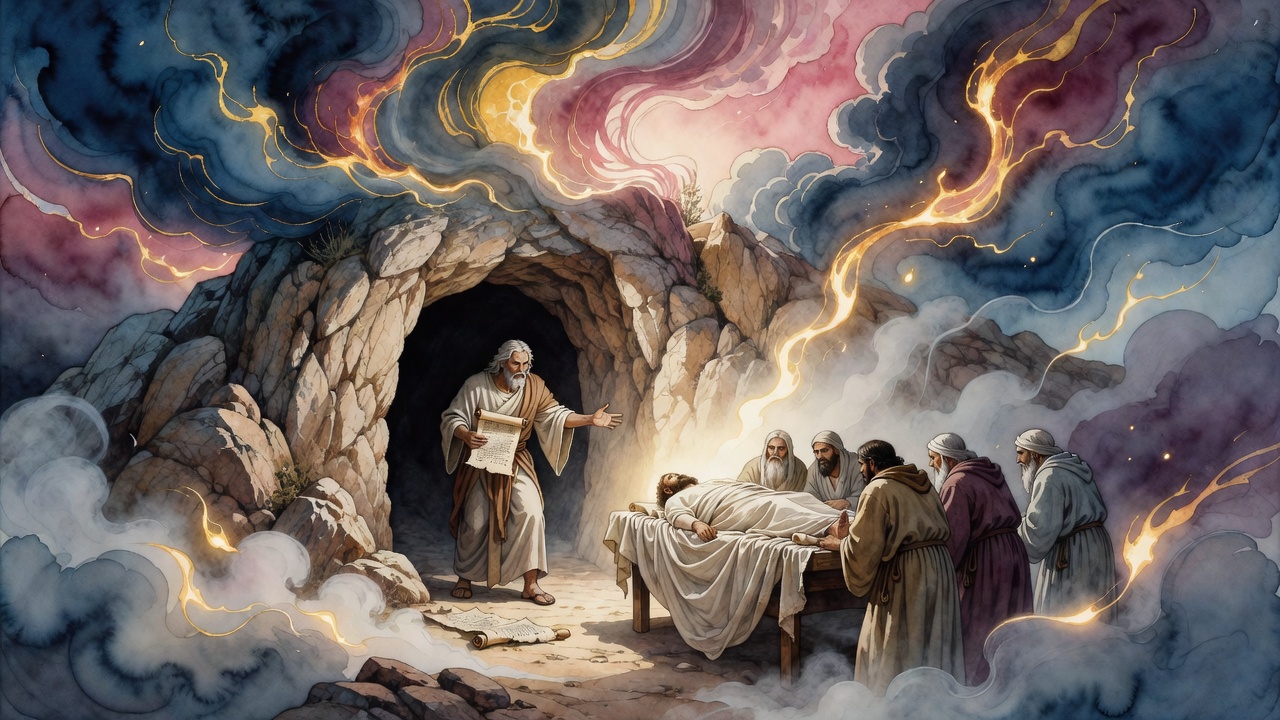
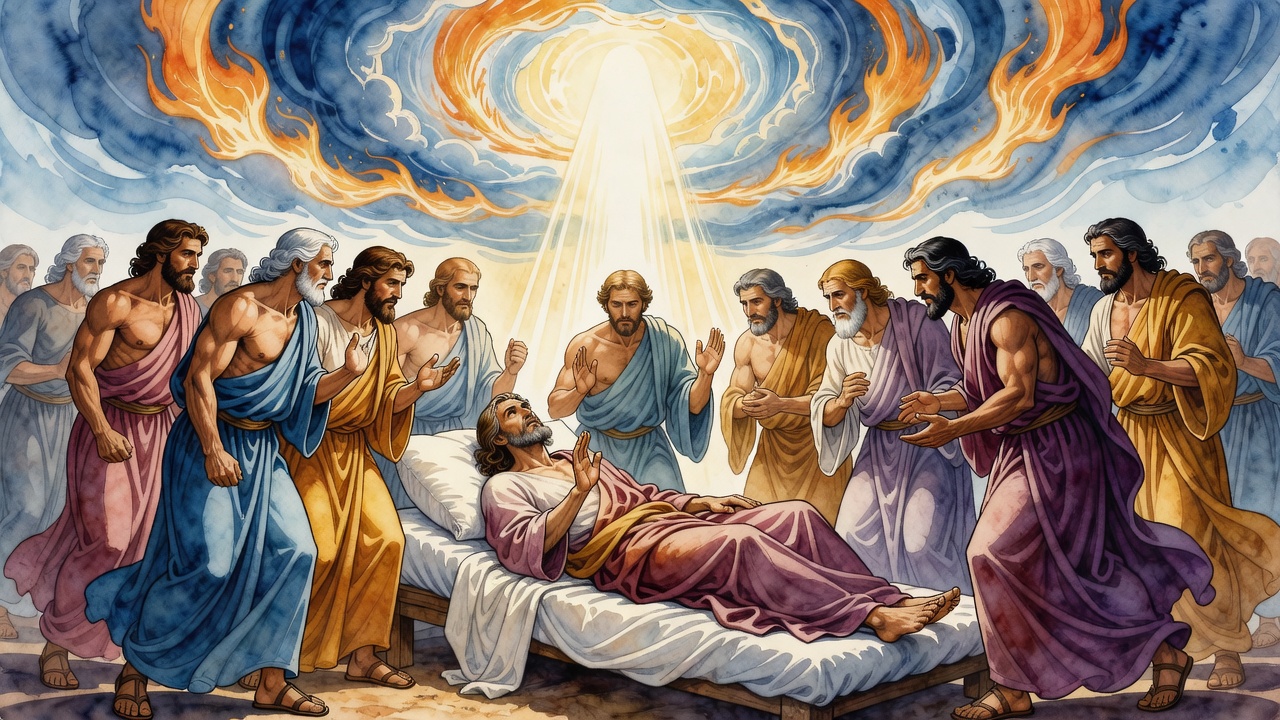
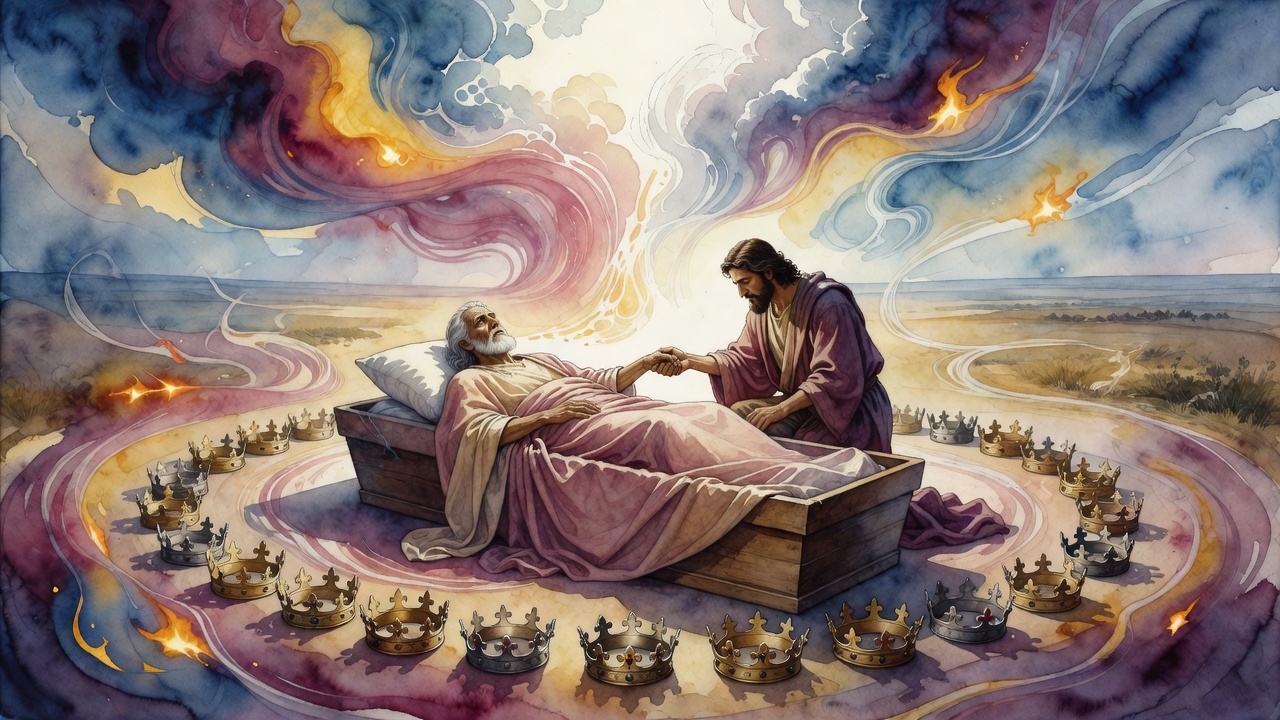
Joseph laid his father on a couch of ivory framed with gold, inlaid with stones, tied with cords of fine linen. They poured hot wine. They burned perfume until the room hurt the eyes. Chiefs of Esau's house stood along the wall. Chiefs of Ishmael's house stood with them. Then Judah rose.
He called Jacob a cedar whose head reached heaven, whose shade covered the earth, whose roots went down into the deep. From that tree, he said, twelve tribes had come, and kings, and priests. When a cedar falls, every bird that nested in it has to mourn. He was not making a pretty speech. He was naming the beam the house had been built on.
Joseph bowed on his father's face and wept and kissed him. The physicians of Egypt went to work. Forty days of embalming. Seventy days of Egyptian lament, men saying to one another, Come, let us mourn Jacob the Holy, whose righteousness turned the famine from this land. It had been decreed forty-two years of hunger. Through Jacob, forty of those years were held back. Egypt had starved two years, not forty-two, and even that had ended while he lay in the house.
The Column That Made Canaan Stare
Pharaoh said, Go up, and bury your father as he made you swear. Joseph went. The servants of Pharaoh went. The elders of Egypt went. The twelve tribes marched in the order they would later keep in the wilderness, each in its place. Chariots. Horsemen. A company so large the people of Canaan, watching from the ridges, named the place Abel-Mizraim, the meadow of Egypt's mourning, because they had never seen a grief that wide walk on their roads.
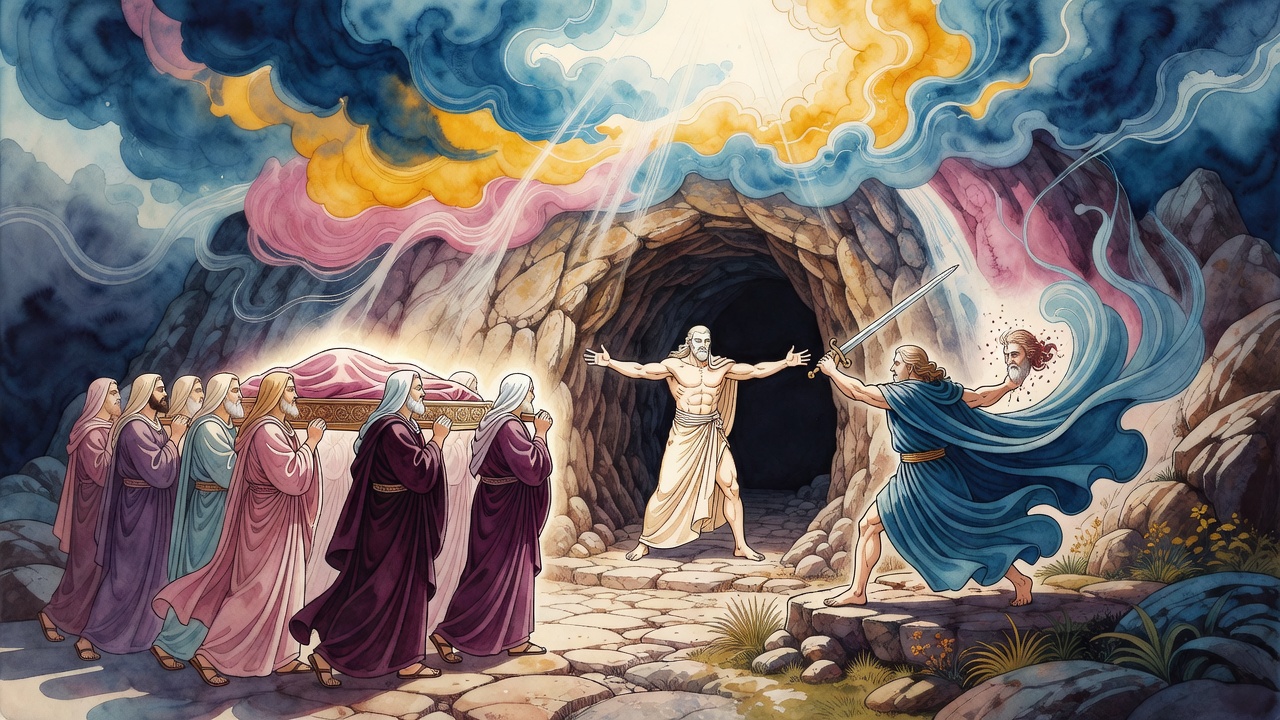
The column reached Hebron. The cave of Machpelah waited, where Abraham and Sarah, Isaac and Rebekah, and Leah already lay. Jacob had bought his place. He had sworn his sons to put him there. The mouth of the cave was a dark slot in the hillside.
Esau was standing in it.
The Claim at the Cave Door
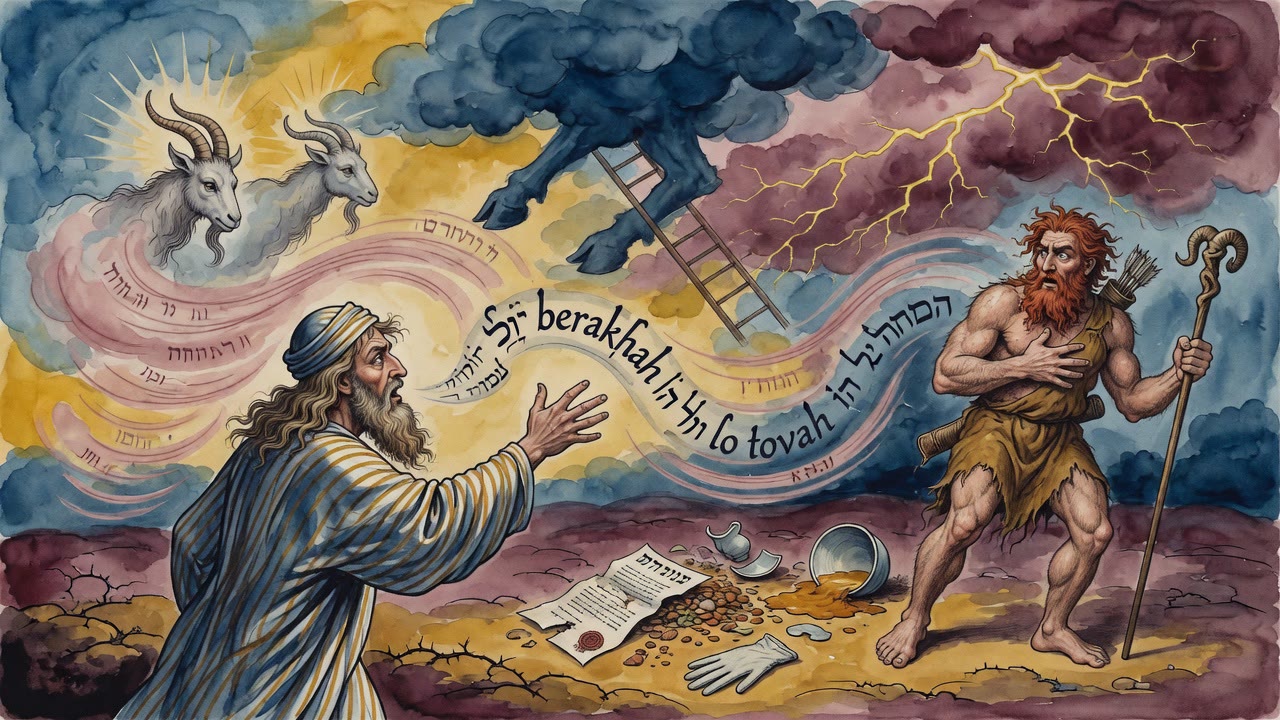
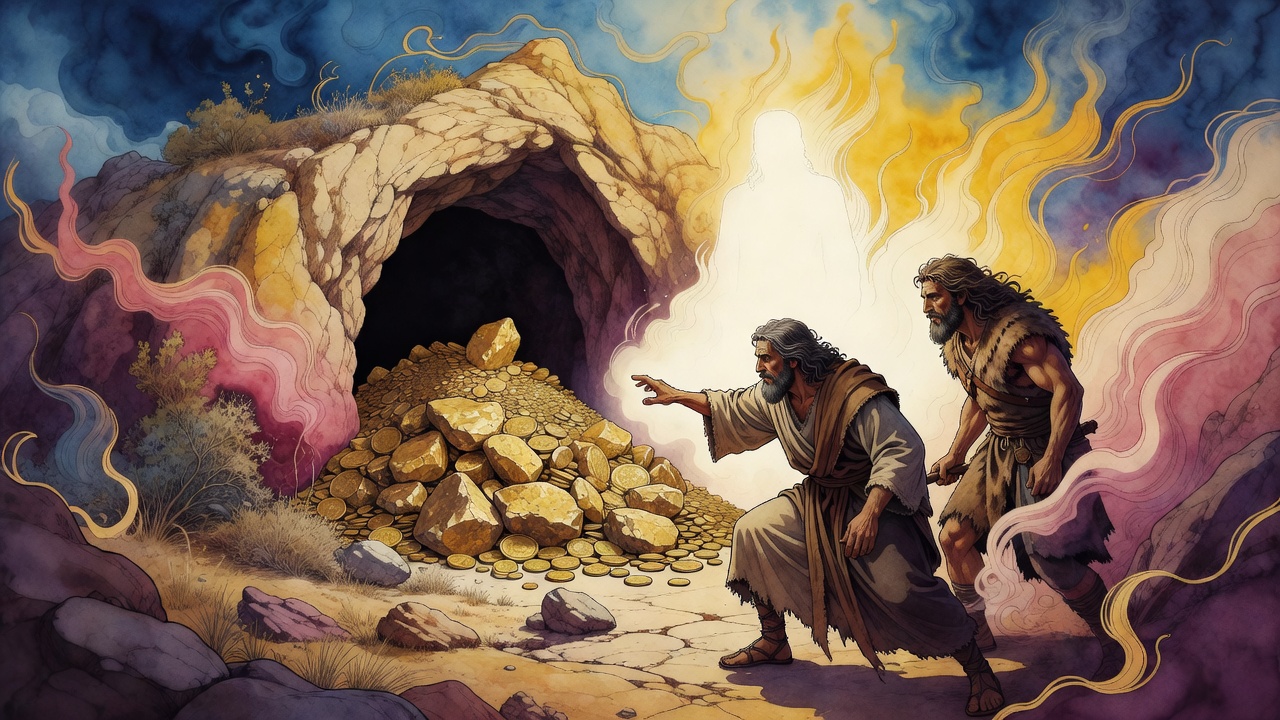
Esau put his body in the doorway and spoke like a man with a deed of his own. The cave had pairs, he said. Adam and Eve. Abraham and Sarah. Isaac and Rebekah. Jacob had already used his slot for Leah. The space left was Esau's, by birth, as Isaac's son. He had sold the birthright, he said. He had not sold this.
The sons of Jacob knew better. Their father had bought Esau's share. A bill of sale existed. Esau, guessing it had been left in Egypt, denied that any such writing had ever been made. So they sent Naphtali, swift as a hind, back down the road for the document.
Jacob's body waited in the sun while the argument ran. Judah's patience thinned. He had given the eulogy. He had led the march. He was not going to hold his father's corpse at a property line while Esau performed a legal trick.
Four Thousand at Leah's Grave
This was not a new quarrel. Years earlier, when Leah died, Esau had come against the house with four thousand men in iron and brass, shields, bows, lances, and they had surrounded the fortress while Jacob and his sons sat in mourning. Two hundred servants were all the house had inside the walls.
Jacob climbed the tower and called down words of peace, friendship, brotherhood. Esau did not heed them. Arrows hit the stone. Judah said to his father, How long will you speak love while he comes in armor to slay us? Jacob bent the bow. He killed Adoram the Edomite. He sent a second arrow into Esau's right shoulder. Esau went weak. His sons lifted him onto a white mule and carried him away. Some said he died of that wound. He had not. He had kept the anger for a cave door.
Now the same man stood in the slot of Machpelah and would not move. The old armor was gone. The claim was the same.
Chushim Did Not Wait for the Deed
Dan's son Chushim was deaf. He had followed the procession from Egypt. He had stood through the talk at the cave. He could not follow the legal argument, or the counter-argument, or the long wait for a paper still on the road from Egypt. He watched his grandfather's body lie in front of a closed cave while his uncles argued with a man who kept saying no.
He asked, at last, what the delay was. Someone put it into his face with slow mouth-shapes: Esau is blocking the burial. Esau is claiming the plot. Naphtali has gone for the deed.
Chushim said, "And while all this happens, my grandfather lies dishonored in front of the cave?"
He took his sword and cut off Esau's head. The head rolled into the cave and came to rest in the lap of Isaac, who was already buried there. In another telling the blow was a club, and Esau's eyes fell out onto Jacob's knees, and Jacob opened his own eyes and smiled. Either way the doorway was clear.
The deed arrived from Egypt a little later. No one needed it. Joseph lowered his father into the cave as he had sworn. Esau's head was already inside with Isaac. Rebekah's old fear, that she would lose both sons in one day, had come due at last.
← All myths