Esau Came With Four Thousand Men While Jacob Was Still in Mourning
Jacob's wife had just died when the men of Hebron sent warning. His brother was coming with four thousand soldiers, and the timing was deliberate.
Table of Contents
 Click for full size
The Timing Was Chosen
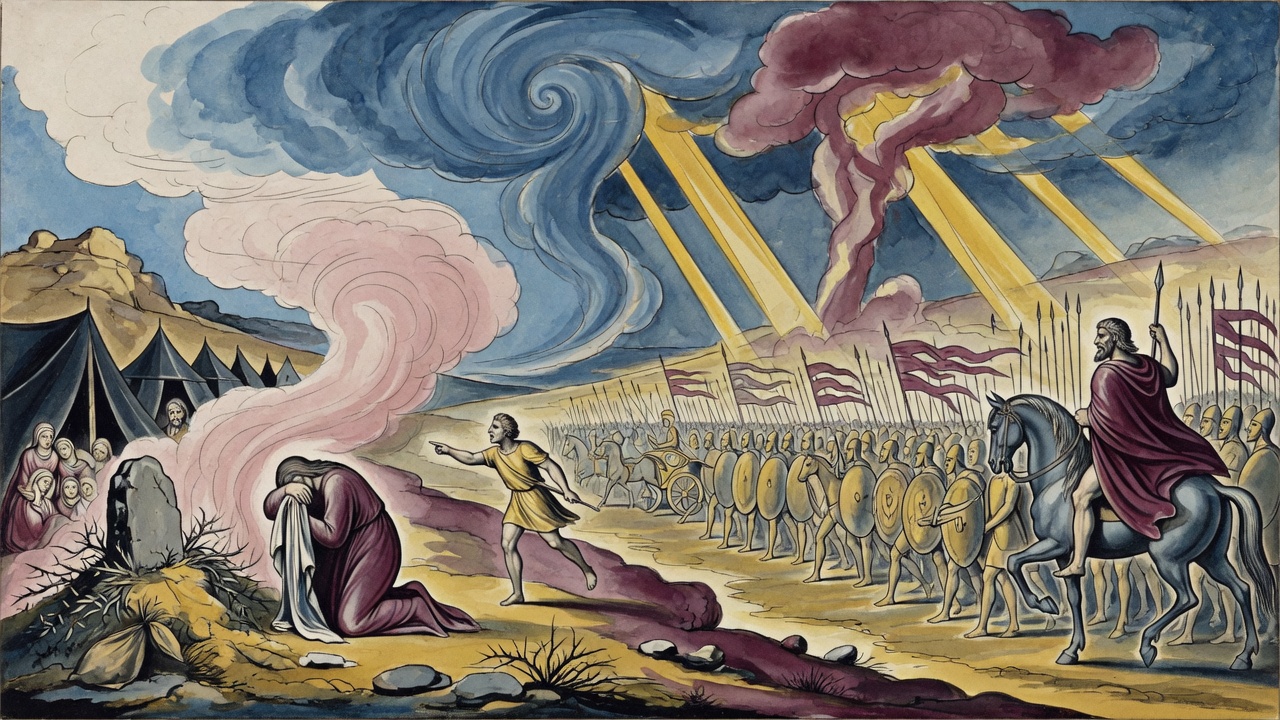
Jacob's wife was newly buried when the men of Hebron sent word: your brother is coming, four thousand men, girt with swords, carrying shields and weapons of war. The dust of the burial had not settled in the tower's courtyard. The grief was still raw in the house, the rooms still hung with mourning, and Esau had chosen this exact moment. He had waited until Jacob stood on the worst possible footing a man could have when four thousand soldiers arrived at his walls, the household bent over a fresh grave, the gates of the tower not yet barred.
Esau's sons had been at work for years. They had told their father: "Jacob has carried off everything, taken the flocks and the land and the possessions that belonged before your face, treated you like a man receiving charity rather than a brother claiming what is his." They said it again and again, at the table, in the field, until the words wore a groove. They called this bitter. They called this unacceptable. They pressed their father until he moved.
Jacob Answers From the Battlements
The men of Hebron sent the warning because they loved Jacob more than Esau. He was a more liberal and merciful man, the text says, which in the language of the tradition means he was more generous to those around him, more open-handed, easier to live near. Jacob would not believe the report until the army was at the tower's base, until he could hear the tread of so many feet and see the sun catch on four thousand spearheads ranged below. Then he closed the gates, climbed to the battlements, and looked down at his brother with the soldiers ranked behind him.
He spoke first, calling down over the wall before Esau could give an order. He had not wronged Esau, he said. He had given his brother everything he asked for: all the flocks their father possessed, all the cattle, all the silver and gold. He had taken only what was legally his under the terms of the blessing. He had paid a fair price for the birthright. He had accepted the blessing Isaac offered with his own mouth. He was not a thief. He was asking now, as a brother, standing above his own closed gate, to be left in peace.
Esau's Sons Answer For Him
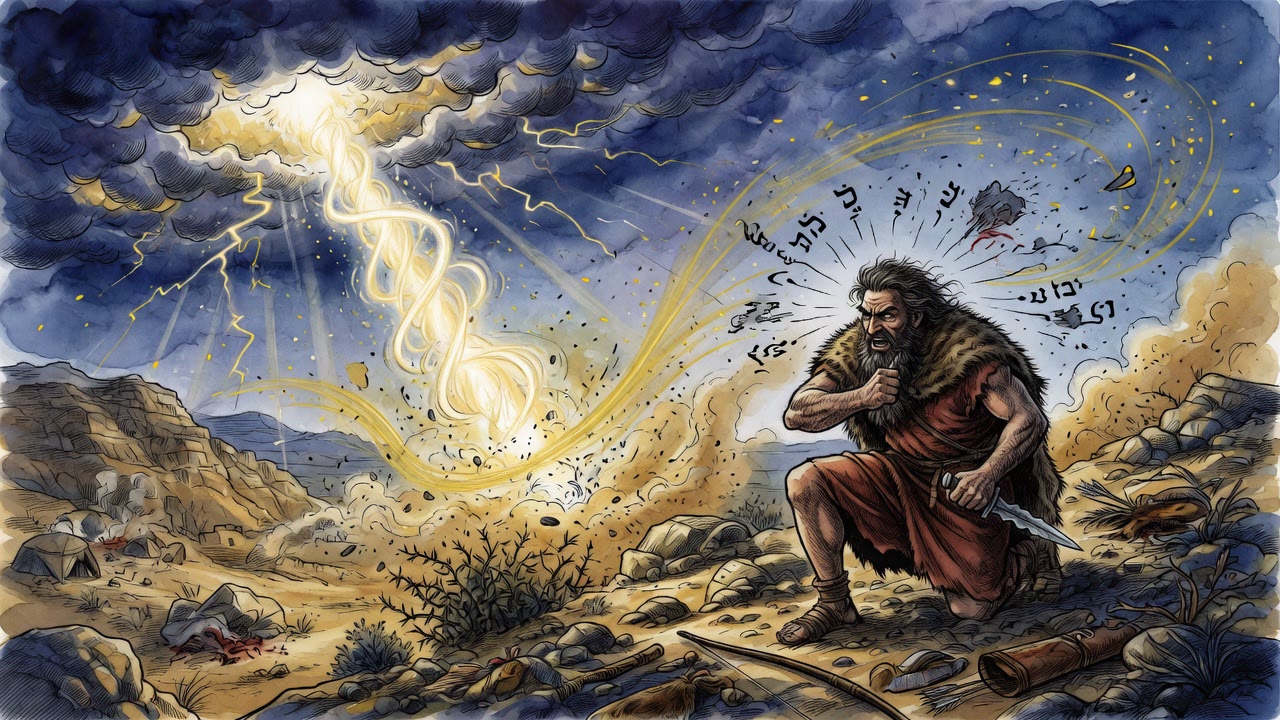
Esau's sons answered for him, shouting up from the foot of the wall. Their words closed every possible exit. They told Jacob to his face that he was a liar, that everything he claimed was false, that his love of peace was just another form of the same cunning he had always used. And Esau, who had been prepared by decades of his sons' whispering, had his own speech ready. He had prepared words whose purpose was not to argue but to conclude, words meant to end the matter the way a sword ends it.
The Promise Made to a Dying Mother
There had been one restraint on Esau, and it was already gone. Rebekah had once begged Esau to keep peace with Jacob, in the last conversation she had with her older son before she died. She had asked him to love his brother. Esau had stood at her bedside and told her he would. He had said the words to quiet a dying mother, to close her eyes on something gentle. He had not meant them then, and standing now at the base of his brother's tower with four thousand men at his back, he did not mean them. The promise had been buried with her. What remained was the army, and the morning, and the open quarrel his sons had kept alive for years.
← All myths