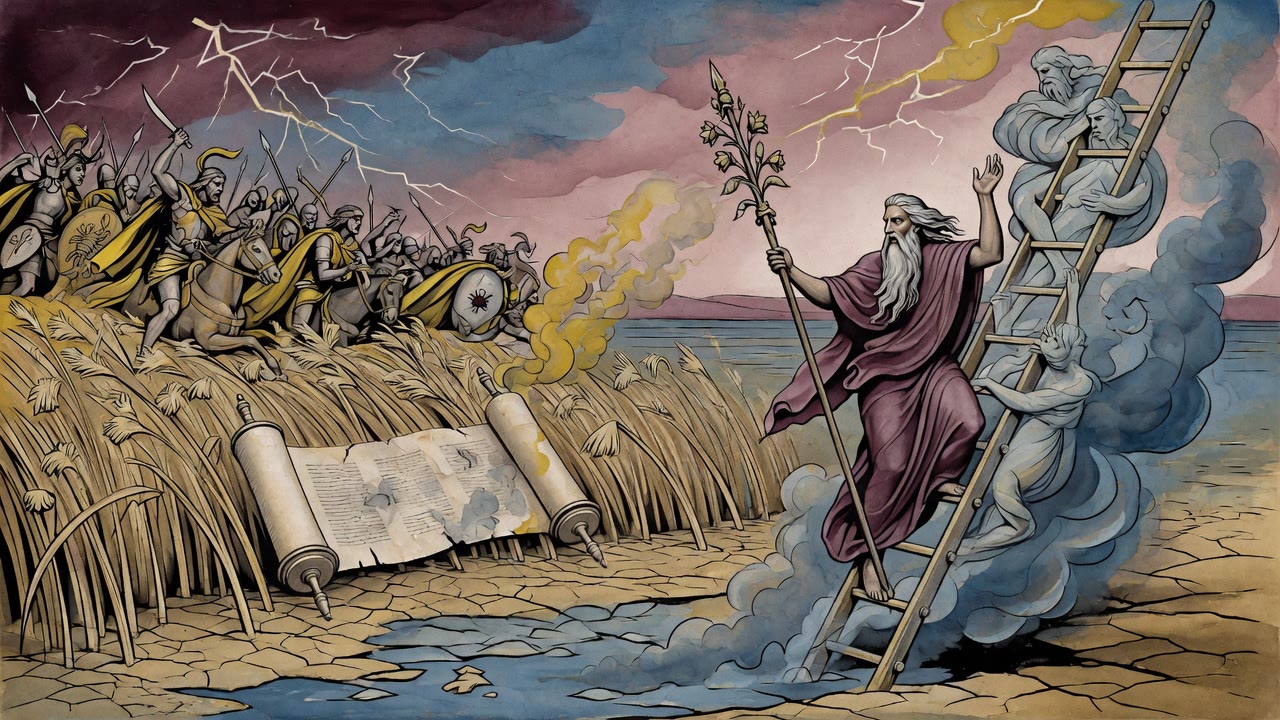
The Door That Closed on Timna and Opened on Amalek
A princess of royal blood begged to join the covenant of Abraham, was turned from the door, and from that wound she bore Amalek.
Table of Contents
Timna came to the tents of the patriarchs in the clothes of a princess. Her brother Lotan was a chieftain among the Horites, a ruler of his own people, and she had grown up with servants at her shoulder and kings sending word to her brother's house. None of it was what she wanted. She wanted in.
 Click for full size
She had heard what lived inside the household of Abraham. A God who spoke. A covenant cut into flesh and carried down through sons. A holiness that clung to the family the way scent clings to cloth. From across the desert the kingdoms watched that tent and ached to be tied to it, and Timna, royal as she was, ached worse than any of them.
The Princess at the Threshold
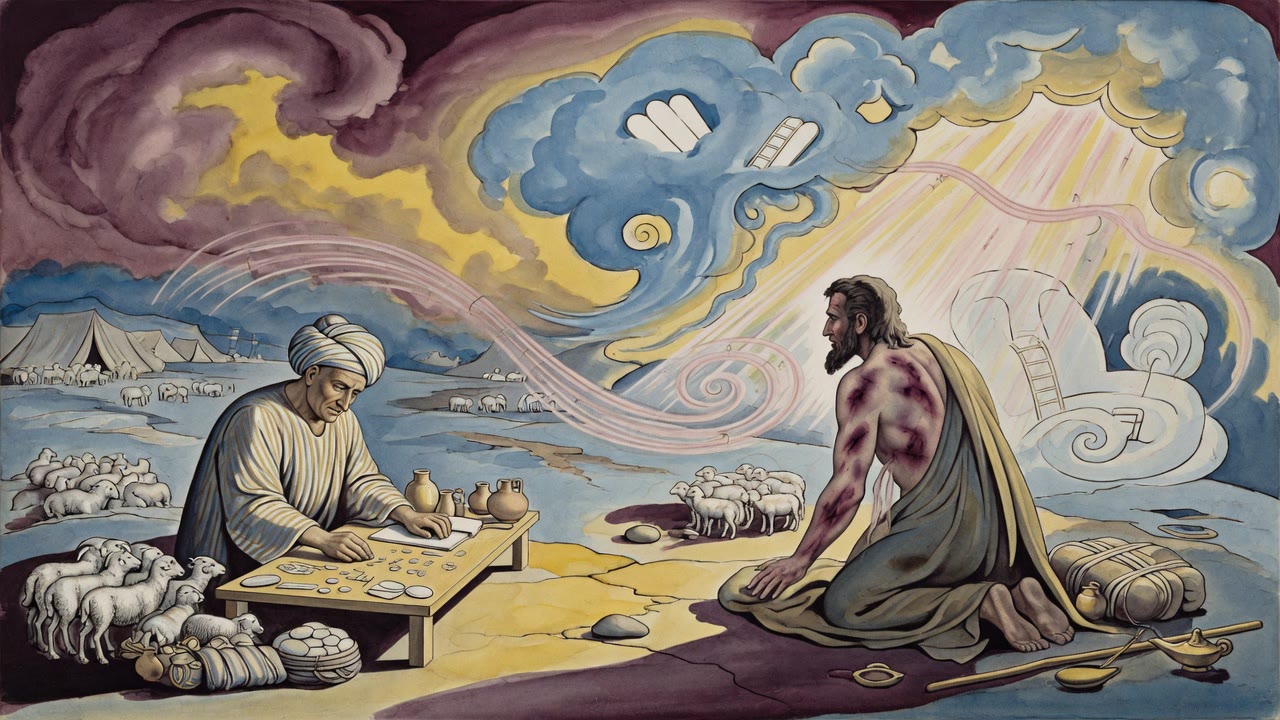
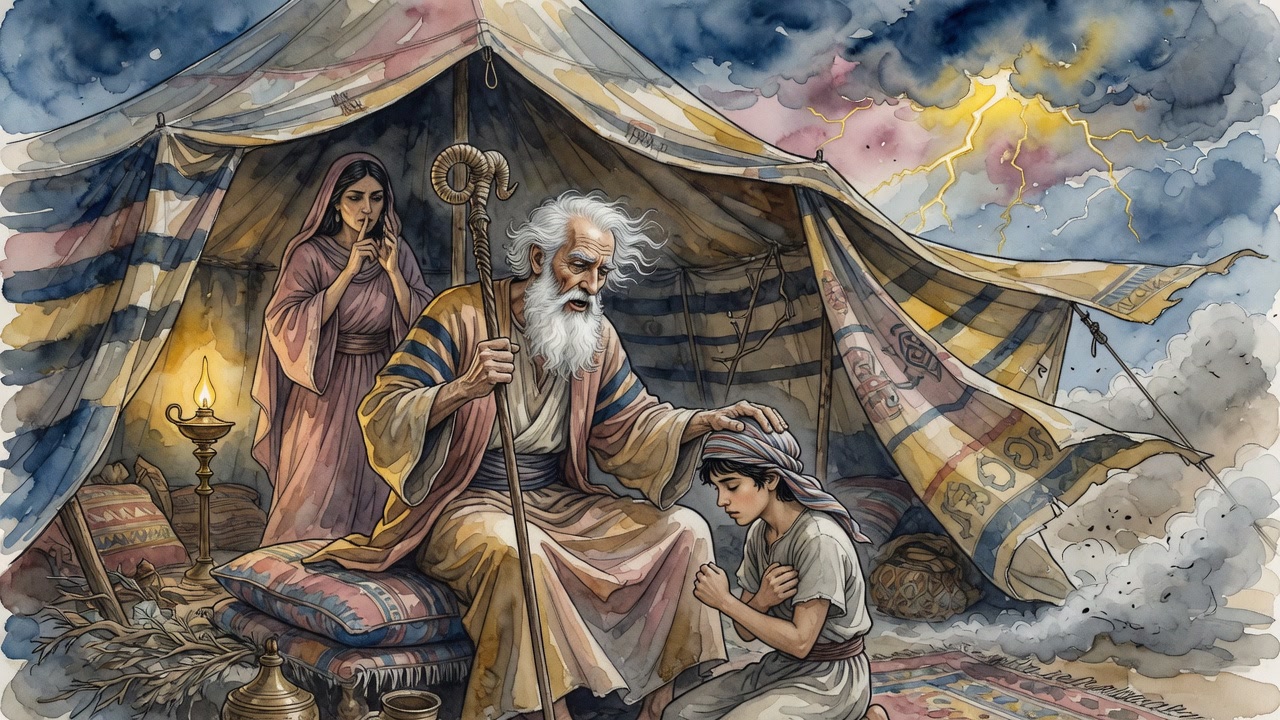
She went to Abraham first. She stood at the opening of his tent and asked to be received, to be folded into the faith, to belong. Abraham turned her away. She went to Isaac. Isaac turned her away. She went to Jacob, the whole man, the one who kept the entire law before it was given, and the man who wrestled God at the river would not open the flap for her either. Three times she stood at the door of the covenant. Three times the door stayed shut.
A lesser woman would have gone home and nursed the insult into hatred. Timna did something stranger. She decided that the dregs of this family were worth more than the throne of any other.
Better a Servant Among the Chosen
"Rather will I be a maidservant unto the dregs of this nation," she said, "than mistress of another nation." She would not be a wife. The wives of the covenant were not for her. So she found Eliphaz, the son of Esau, the grandson of Isaac, the nephew of Jacob, a man one rung down from the blessing and one rung up from nothing. To him she came not as a queen but as a concubine.
Think of what she gave up. A daughter of royalty, sister to a chieftain, kneeling to braid herself into the edge of a family that had told her three times she was not wanted. She measured the holiness of Abraham's line against everything she owned and counted her crown the cheaper thing. "I am not worthy to be his wife," she said. "Let me be his maidservant." Even the wicked Esau pulled kings toward him with a single good deed, the honor he paid his blind father. The light in that house was real, and Timna walked toward it the only way the door would let her, sideways and on her knees.
What Was Born From the Closed Door
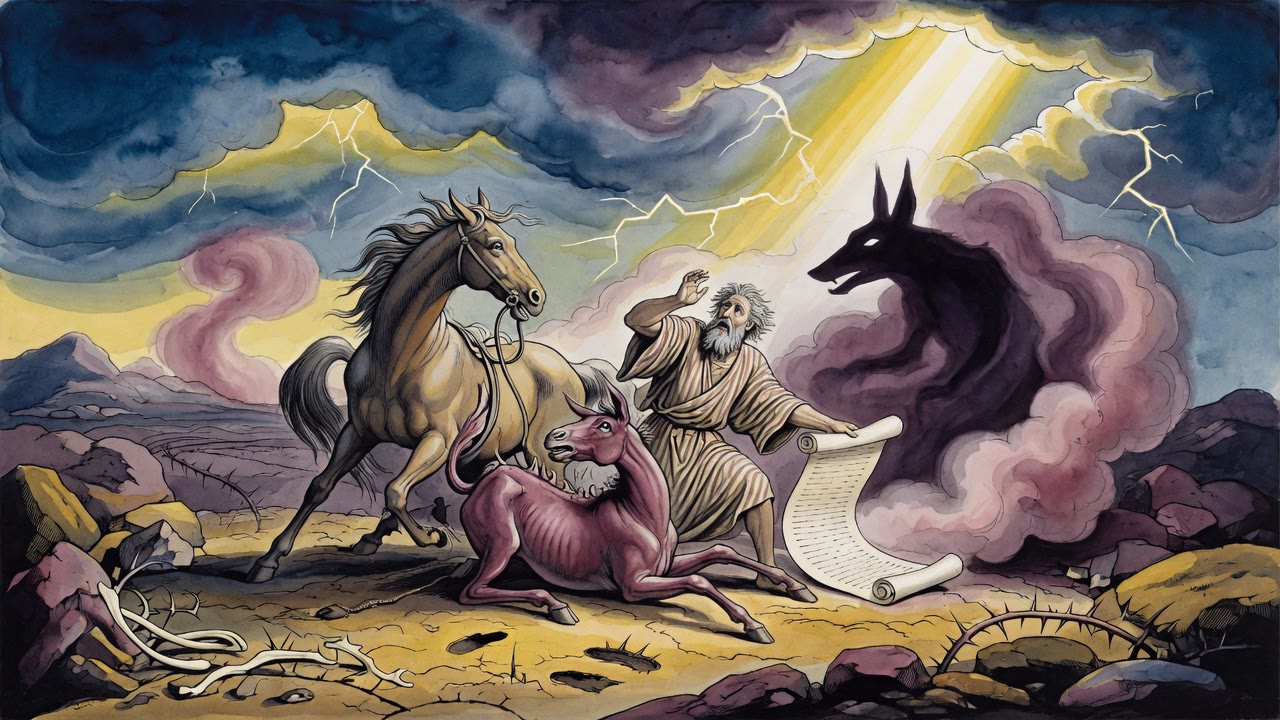
She conceived. She bore a son to Eliphaz, and the child's name was Amalek.
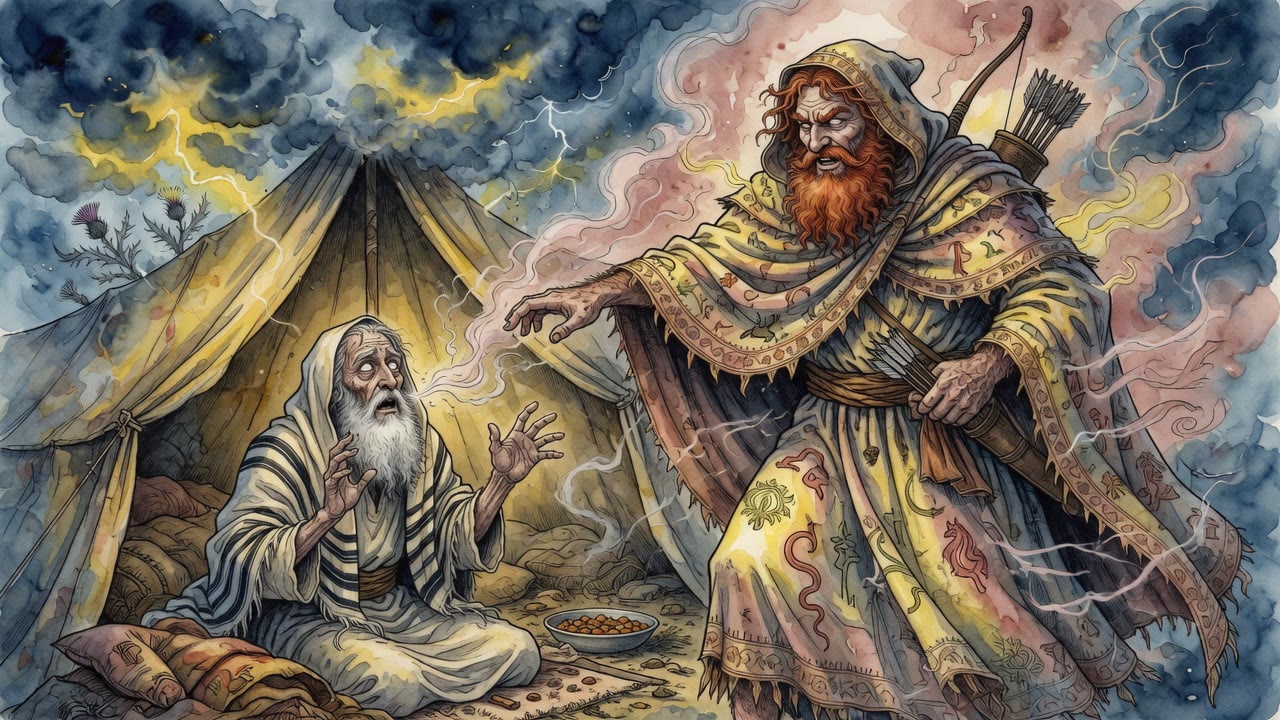
Not a footnote. Not a minor grandson lost in a genealogy. Amalek. The nation that would one day come up out of the desert and fall on Israel from behind, cutting down the weak and the lagging, the children and the exhausted, the ones who could not keep the pace. Amalek, whose name God would swear by His own throne to blot out from under heaven. Amalek, whom Israel would be commanded never to forget and never to forgive, generation after generation, until the end of days. That war, that wound that would not close, came into the world through the body of a woman who had only ever wanted to be let inside.
The Affront the Patriarchs Could Not Take Back
The old teachers looked at the verse, "Timna was a concubine of Eliphaz son of Esau, and she bore Amalek," and they refused to read it as an accident. They saw a chain. The patriarchs shut a door. A princess was turned away. And the turning away did not vanish into the desert air. It came back wearing armor.
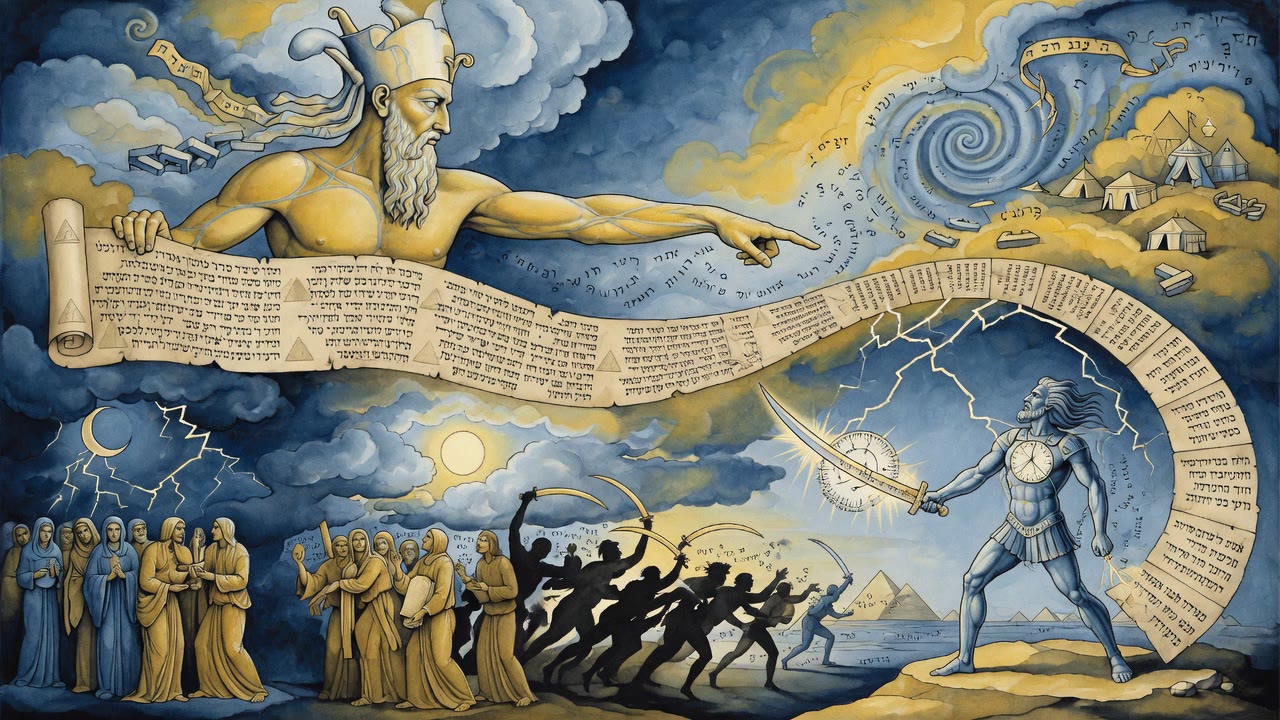
So they said it plainly, the way you say a thing you do not enjoy saying. Amalek was the punishment for the affront the patriarchs had offered Timna. The men who carried God's covenant had, at the threshold of their own tents, sent away a soul that wanted nothing but to come in. And the cost of that closed door was a son who would spend the strength of nations trying to tear that same family out of the world.
She had stood outside three tents and been refused. From her refusal came the enemy who would chase her rejecters for a thousand years. The door she could not open did not stay closed. It opened on Amalek instead.
← All myths