Amalek Struck the Weak and Israel Was Commanded to Remember Him
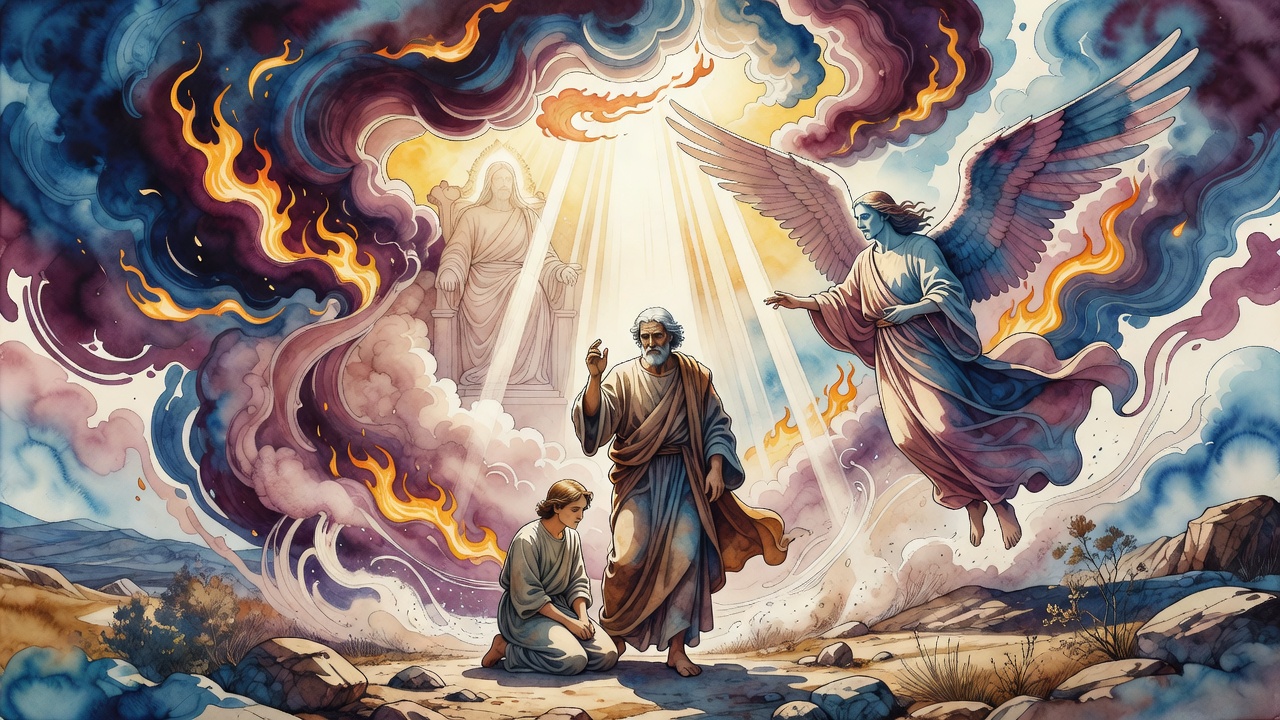
Eliphaz asked his son who would own this world and the next, then let it drop when the boy ignored him. The boy's name was Amalek.
Table of Contents
 Click for full size
The Question His Father Let Drop
Eliphaz put the question to his son more than once, and every time he put it the same soft way.
"Do you actually know who is going to hold this world and the world that comes after it?"
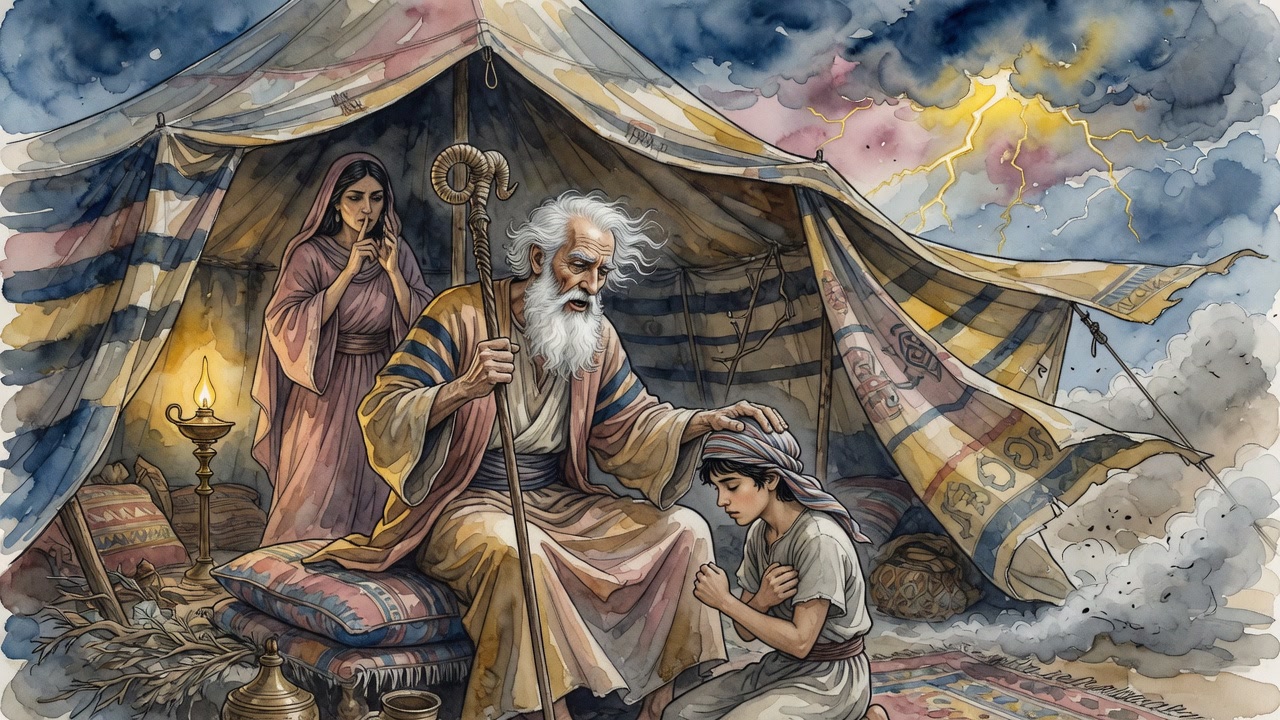
The boy did not ask what he meant. He heard a riddle from an old man and let it go by, and his father watched him let it go by and did not push. One clear sentence would have done it. Israel takes both worlds, so go dig wells along their roads and build the roads themselves, and you will have earned a share of what is coming. Eliphaz never said that sentence. He hinted at it, and his son walked off, and that was the end of the education of Amalek.
The House He Grew Up In
His grandfather Esau had come in from the field on the day of a funeral and found Jacob at the fire cooking lentils, the food cooked for mourners.
"Why are you sitting there cooking lentils?"
"Because our grandfather died in his old age, and I am sitting here grieving over him, so that when the dead are brought back he will know I grieved."
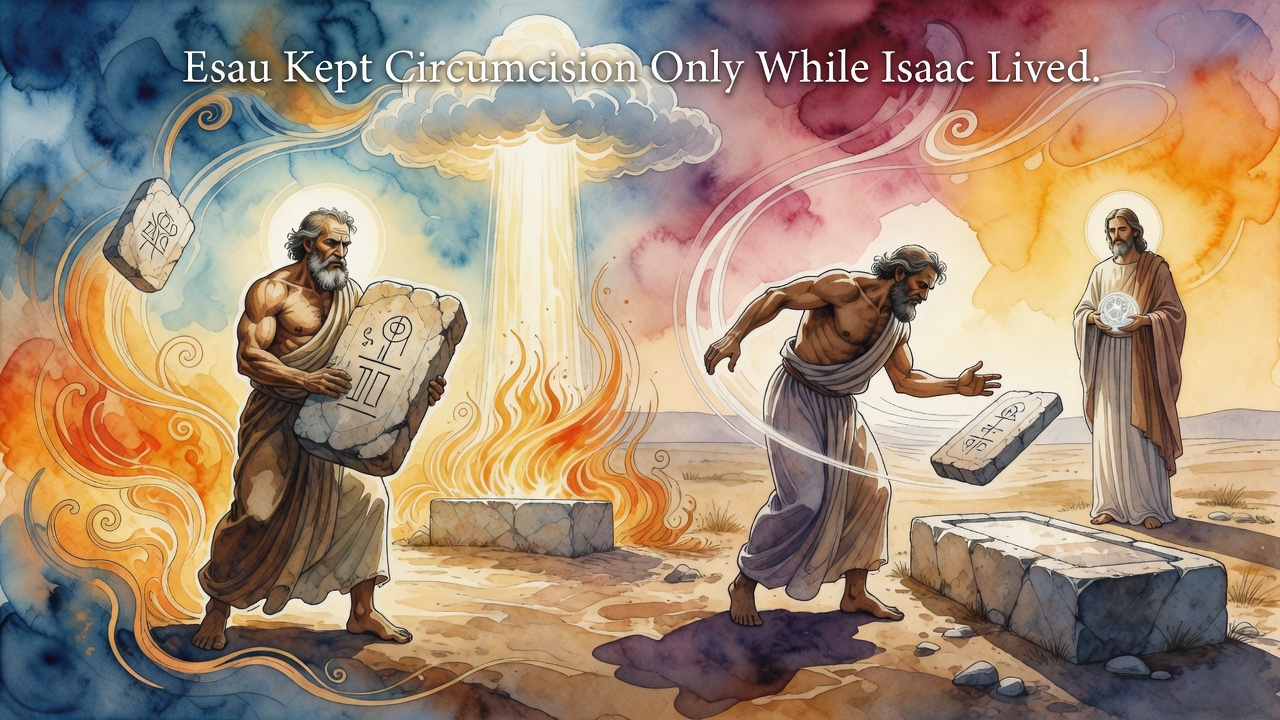
Esau laughed at him. "You are a fool. A man goes into the grave and that is where he stays. Look at me, I am going to die too." Then he sold the right of the firstborn for a bowl out of that same pot, and later he waited for his father's mourning days to come near so he could kill his brother, and Jacob ran and stayed gone for twenty-two years. The smoke of what Esau burned to his idols went up into Isaac's face year after year until the old man could not see across a room.
The comparison heaven made afterward was with Joseph. Joseph lived in the house of Potiphar and then in the court of Pharaoh, surrounded by men worth copying nothing from, and copied nothing. Esau lived within reach of Isaac and of Abraham, and copied nothing from them either. Blood did not decide it. Proximity did not decide it. Each of them looked at what was standing next to him and chose.
The Back of the Column
Amalek made his own choice at the rear of a marching column.
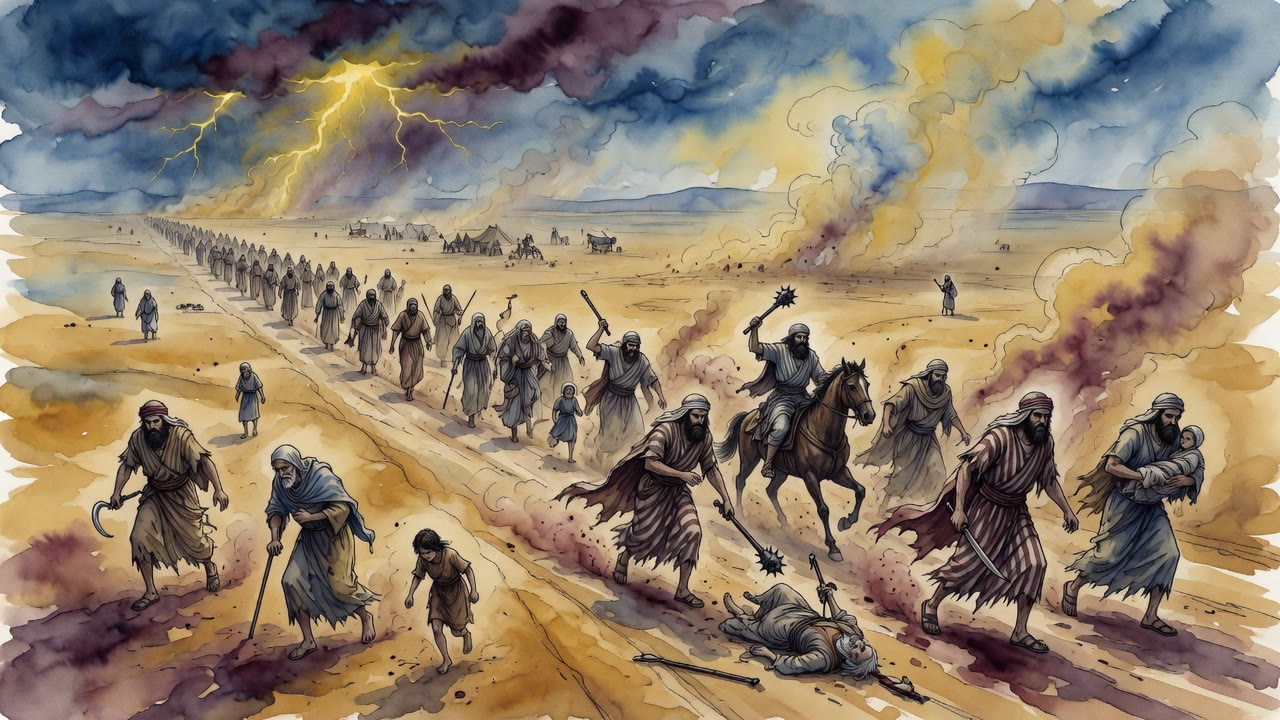
Israel had walked out of Egypt and through the sea, and the nations had gone quiet listening to the reports. The front of that column was strong. The back of it was children, the sick, the old, everyone who could not keep the pace, strung out behind in the dust where the sound of the camp had thinned to nothing. Amalek did not go at the front. He came in at the back, where the people were weak and worn out and had no way to answer him, and he struck them there, and he was not afraid of God while he did it.
Afterward the accounts were settled nation by nation, and they were not settled the same way. An Edomite was not to be despised, because an Edomite is a brother. An Egyptian was not to be despised, because Israel had lived in his land as a stranger. Both of those houses had done harm and both were left standing.
"Do not be a horse or a mule with nothing in its head," God told Israel. "A man walks up to a horse with food in his hand and the horse twists its neck and kicks him. You be smarter than the animal. When you come into the land, pay back what was done to you, the good as good and the evil as evil."
Say It Out Loud Every Year
Two orders came down together and neither one could be dropped. Remember what Amalek did on that road. Wipe the memory of Amalek out from under heaven.
They sound like opposites and they were given as a pair, and the second one only works if the first is carried out loud. So Israel was commanded to say it out loud, in front of everyone, once a year, out of the scroll.
The penalty attached to it was not vague. "If you do not remember it and call it out every year," God said, "I put you back into the slavery of Egypt." Clay and bricks, waiting where the memory used to be.
The Door That Never Opened Again
Moses was told to turn away nobody. Any nation, any heathen, anyone who came and asked to come in was to be brought in. One exception was written into it. Never an Amalekite. Not one, not ever.
God said the rest of it to Amalek directly. "You fool. I made you last, after all seventy nations. For what you have done you will be the first one to go down into Gehinnom (the realm of judgment after death)."
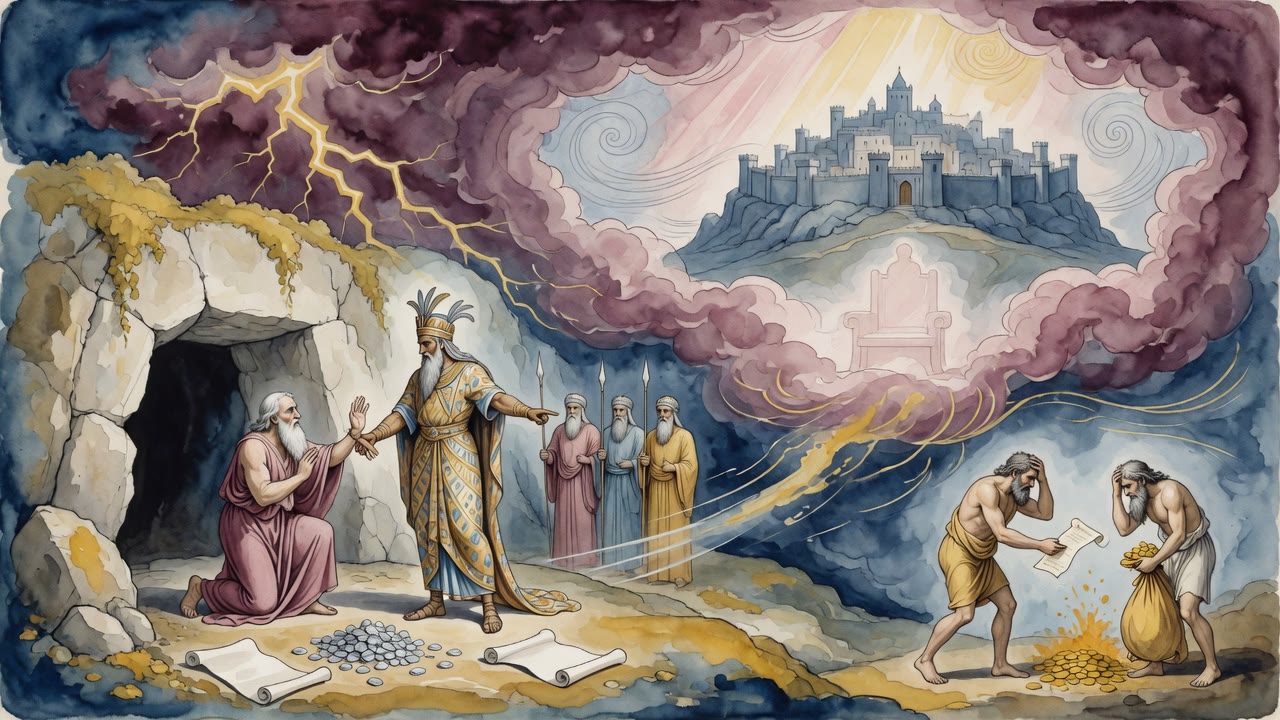
Generations later a man walked into David's camp with the crown off Saul's head, dressed like an Israelite, talking like an Israelite, carrying the news of Saul and Jonathan dead on the mountain and expecting to be paid for it. David asked him where he came from. The man said he was an Amalekite. David looked at him and saw a heathen wearing Jewish clothes, and gave the order, and the man was cut down in the tent holding the crown he had come to sell.
Somewhere behind him, a long way back, was an old man who had a question he could have finished.
← All myths