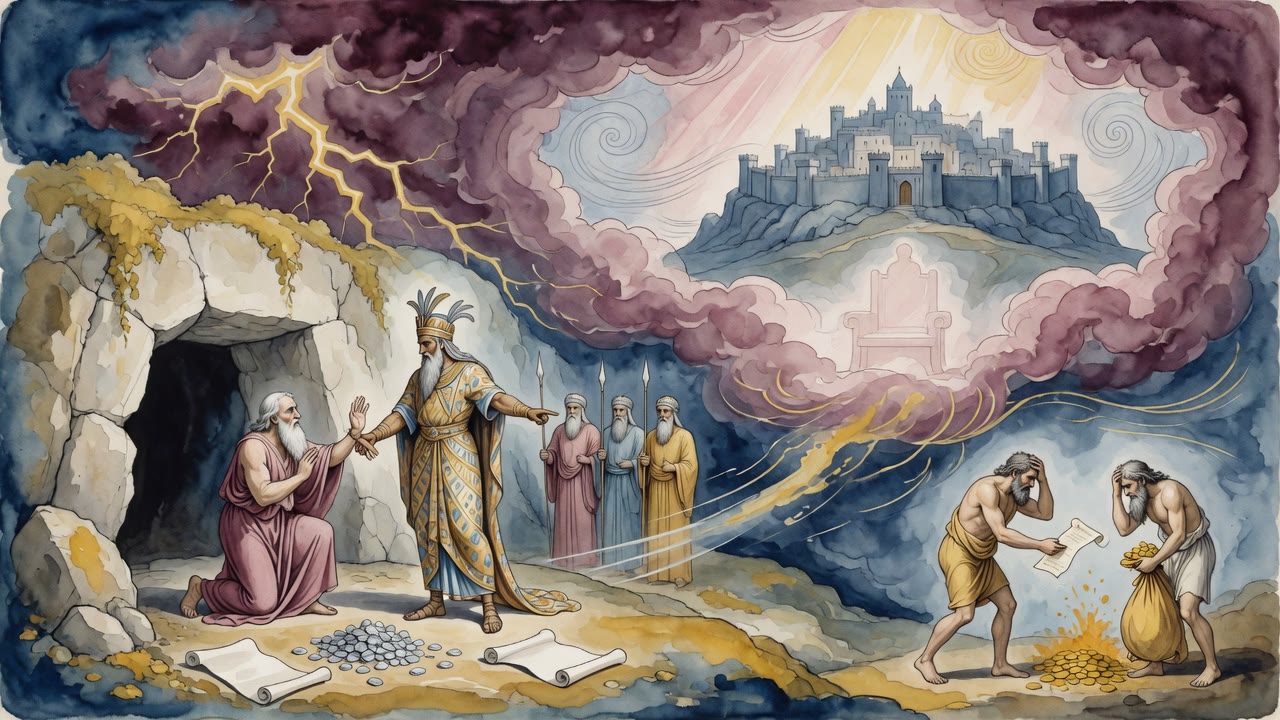
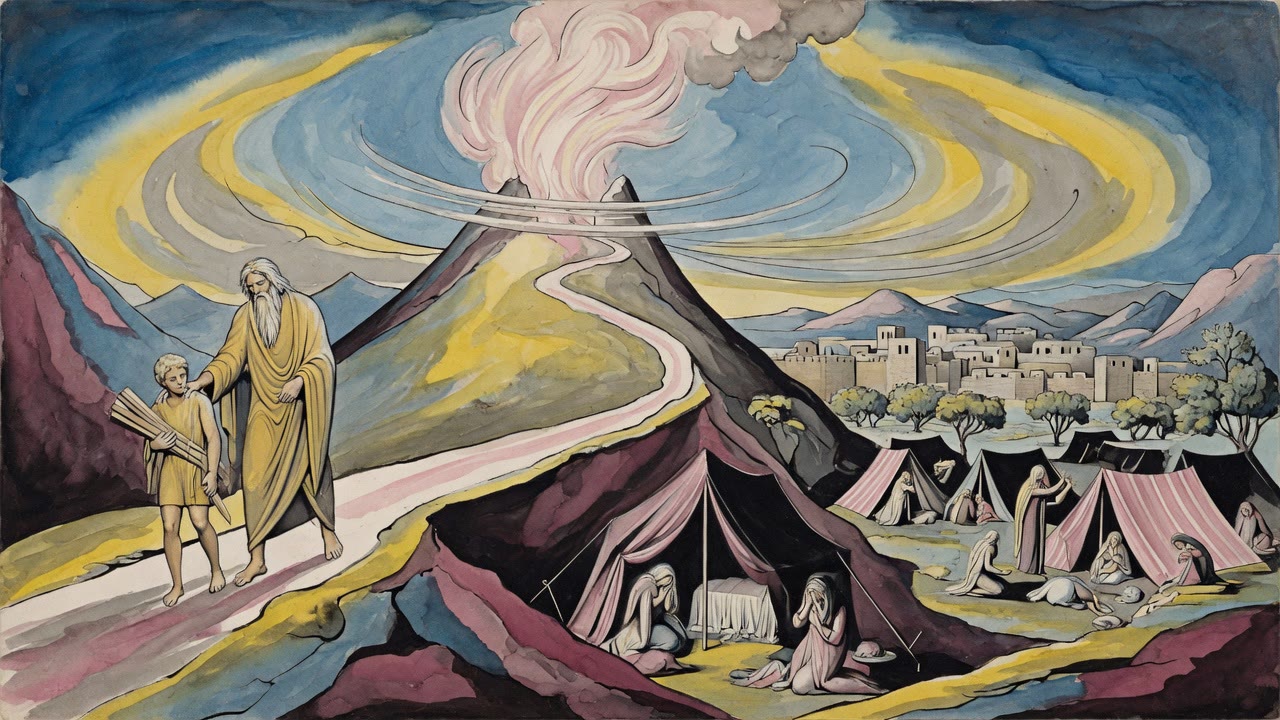
Abraham Left Without Knowing and Jacob Bowed Seven Times
Twenty years after the theft, Jacob sent word ahead to Esau. The message listed his cattle, his servants, his donkeys. It never mentioned the blessing.
Table of Contents
 Click for full size
Two Commands, One Name
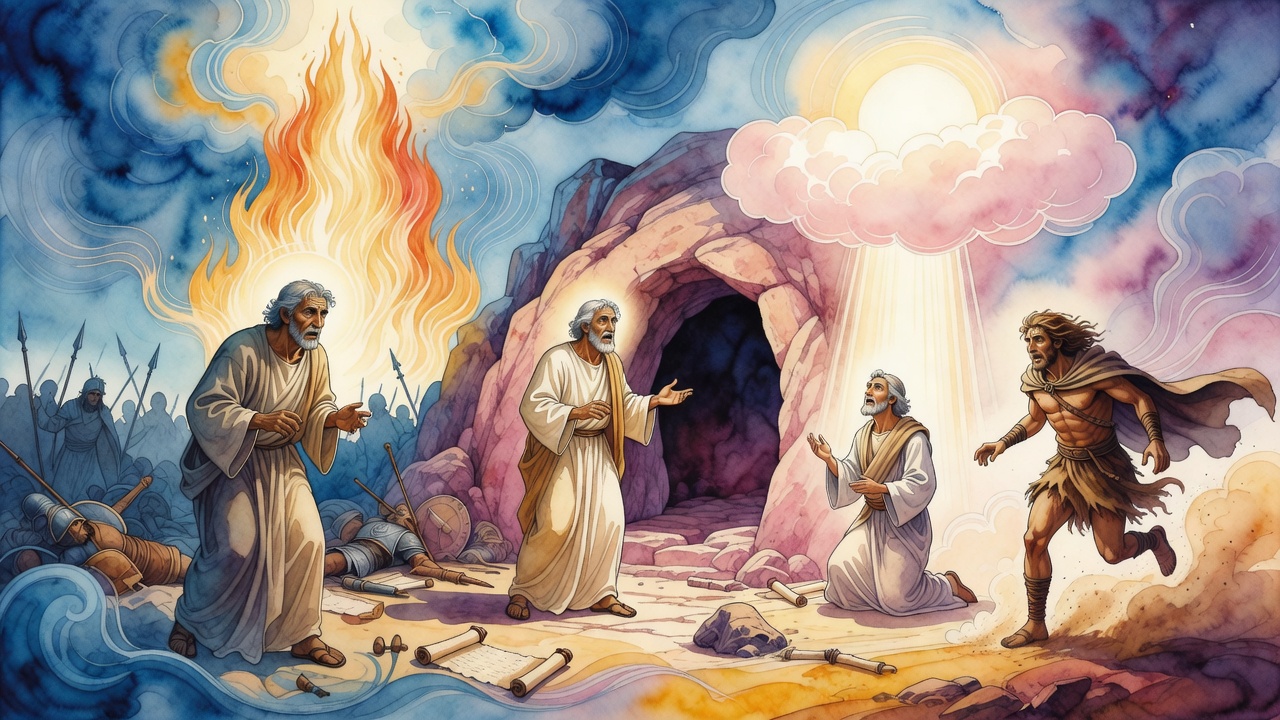
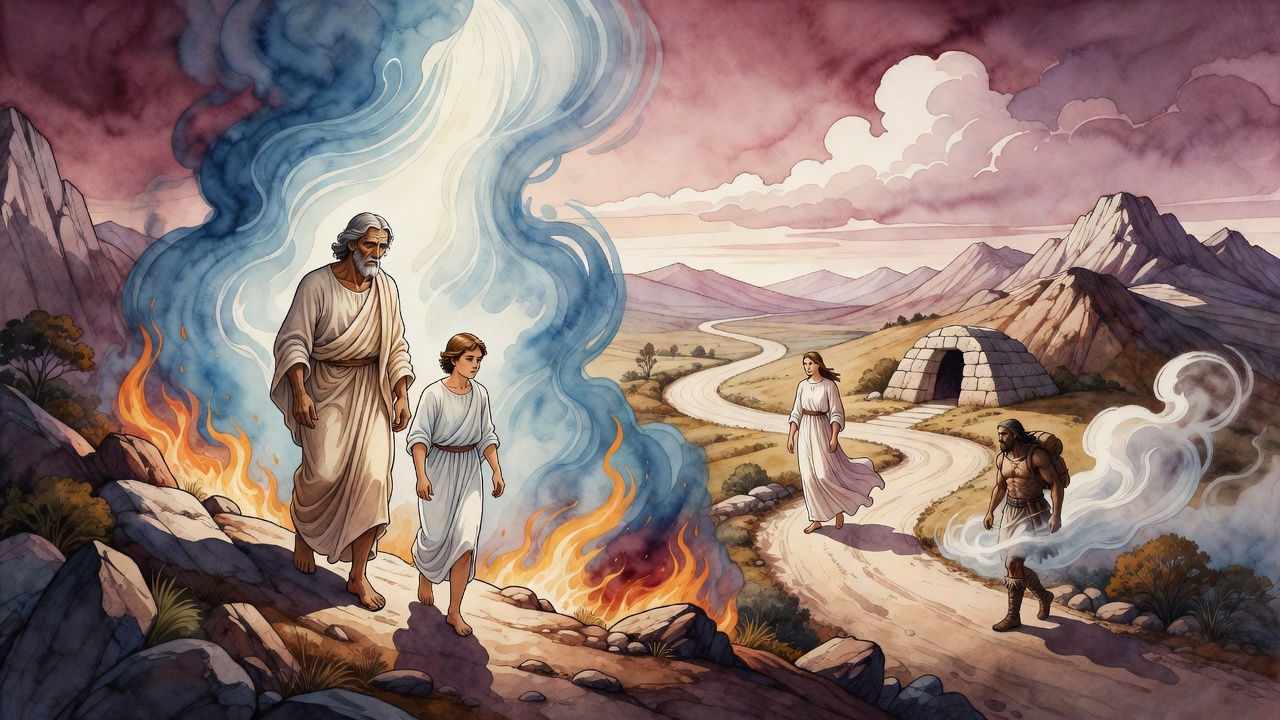
The phrase lekh lekha, go for yourself, appears twice in Abraham's life. The first time, God tears him loose from his country, his birthplace, and his father's house and sends him toward a land God has not yet named. The second time, the command points Abraham toward the mountain where Isaac will be bound. Bereshit Rabbah asks which of these two commands was the harder one to obey, and the question reveals that the rabbis understood Abraham's life not as a single great test but as a sequence of tests, each one building on the wounds left by the last.
Abraham left the first time without knowing where he was going. Leaving home in the ancient world meant losing the protection of kinship, the certainty of language and law, the gods whose names you knew and whose requirements were familiar. Abraham walked into uncertainty on the strength of a promise whose shape he could not yet see. The midrash says his greatness was not that he was unafraid but that he walked anyway.
Marriage Held the Promise Together
Bereshit Rabbah slows down at the genealogy behind Abram and Sarai. The Torah names fathers, wives, and siblings with unusual care, and the rabbis follow the lines of relationship to understand how the covenant was structured from the beginning. Sarai is not peripheral. She is the vessel through which the specific promise would pass. The genealogy is not background information. It is the route the promise takes.
The promise did not travel through Abraham alone. It traveled through a marriage that carried both of them. When God told Abraham not to fear, the guarantee attached to both their names. When God renamed them Abraham and Sarah, the covenant expanded through the new letters added to each name. Marriage in the patriarchal narrative is not a personal arrangement that runs alongside the covenant. It is the path the covenant takes through the world.
Isaac Grew Suspicious at the Feast
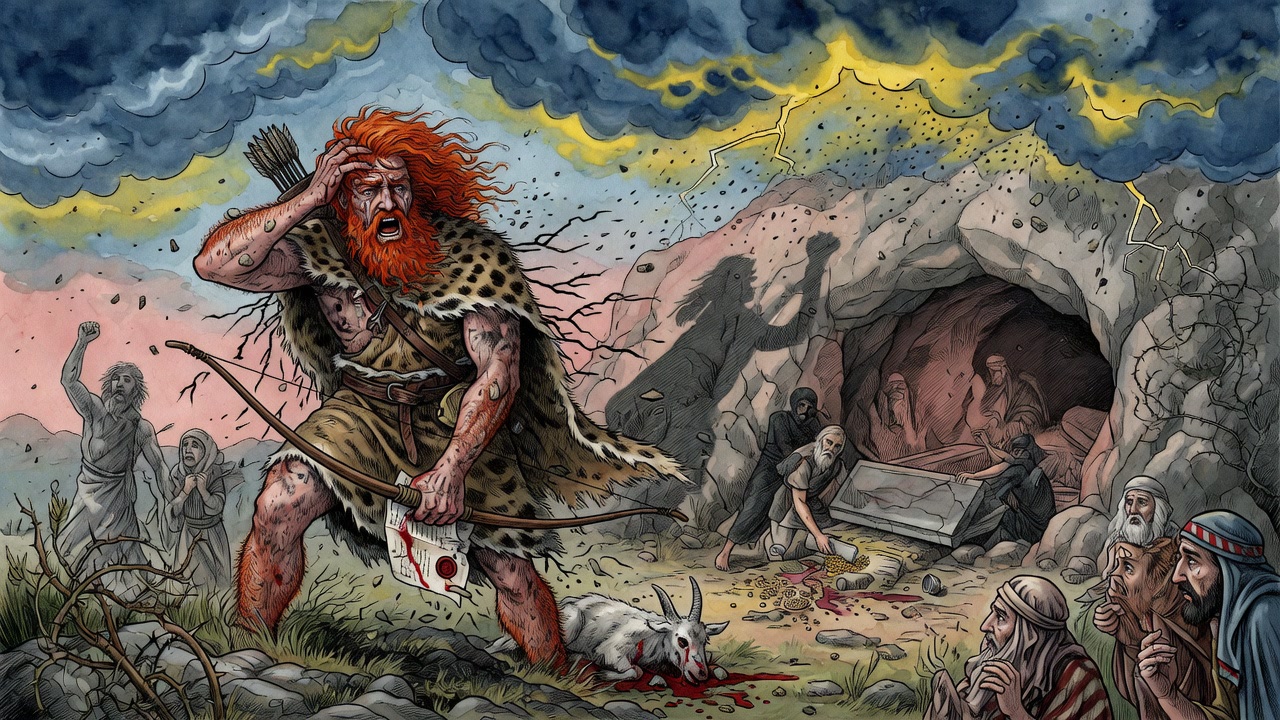
Jacob came home from the hunt faster than Isaac expected. He came with the venison his father had requested, with his brother's voice clumsily disguised by his mother's instructions. Isaac touched the hands, felt the hair of skins on smooth skin, heard the voice that was Jacob's, and grew suspicious. He asked: are you really my son Esau? The answer came back yes. Isaac blessed him.
Bereshit Rabbah does not read this as simply Isaac being deceived. It reads the suspicion as something Isaac held in tension with the blessing. He had to know, somewhere, that something was wrong with the sequence. He blessed Jacob anyway. The rabbis see in that act something deliberate: the blessing went where it was supposed to go, even if the path it traveled was irregular.
Jacob's Message to Esau
Jacob sends messengers to Esau before the reunion. The message is carefully diplomatic: I have been with Laban, I have cattle and servants and donkeys, I am sending to find favor in your eyes. The message does not say: I stole your blessing twenty years ago. It does not say: I am afraid of you. But the fear is in every word. Jacob's diplomatic language, stripped to its bones, is the language of someone who does not know if the next meeting will be an embrace or an ambush.
Bereshit Rabbah reads the message as an example of the complicated work of reconciliation. Jacob does not pretend there is no wound. He does not demand credit for surviving Laban. He offers his brother a full account of his wealth and he bows his language as he will later bow his body, seven times, before Esau's face.
Seven Bows Before a Brother
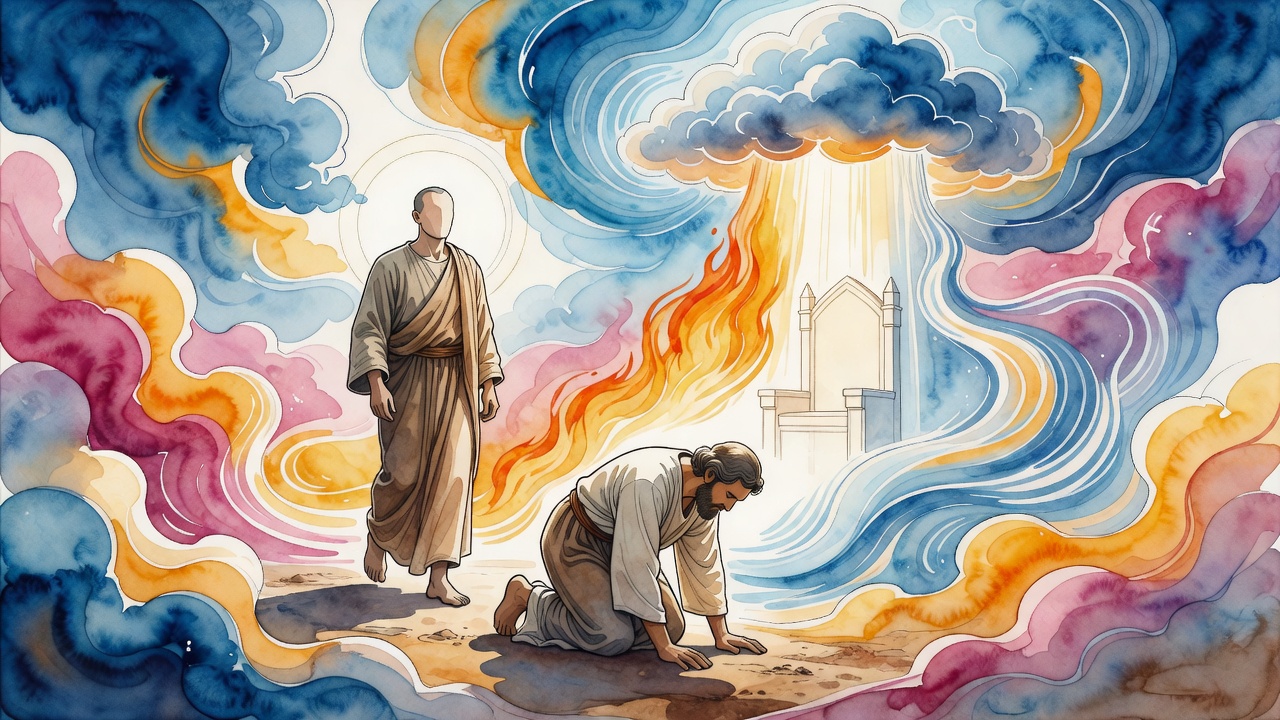
Jacob bowed to the ground seven times as he approached Esau. The number is deliberate. Seven is the number of completeness. Jacob approached his brother in complete humility, which is not the same as submission. He bowed seven times while his family was behind him, while his plan was already in place to put them in order of vulnerability with his most beloved at the back. He bowed completely and also arranged his household for survival. Both things at once.
Bereshit Rabbah sees in those seven bows the full weight of what Jacob carried into that meeting: twenty years of fear, a stolen blessing, a dream at Bethel, a limp from Peniel, four wives, twelve children, and a God who had promised him everything without telling him how much everything would cost. He bowed seven times and Esau ran toward him and they wept. The promise survived the brothers.
← All myths