Abraham Returned to Complete the Yom Kippur Minyan
The gabbai counted the men in the Hebron prayer house again. Nine, and Kol Nidrei waiting. An old man in white left his shawl on the bench.
Table of Contents
The cave in Hebron had swallowed Abraham, but it had not learned how to keep him.
 Click for full size
On the eve of Yom Kippur the little house of prayer counted its men again. The gabbai counted slowly, as if nine might change out of pity into ten. Nine faces waited in the falling light, nine mouths ready for Kol Nidrei, the prayer that opens the Day of Atonement, and one voice short.
Nine Faces and a Latch
Outside, Hebron was turning blue. The tombs of the patriarchs and matriarchs rested in the hill like sealed rooms under the skin of the earth. Inside, the candles were already awake, and they trembled against the walls while the men shifted their feet and looked toward the door.
A minyan does not begin on hope, because it begins with ten. Without the tenth the prayer waits, so vows remain unopened and regret has no public mouth.
Then came the knock.
The Stranger Gave One Name
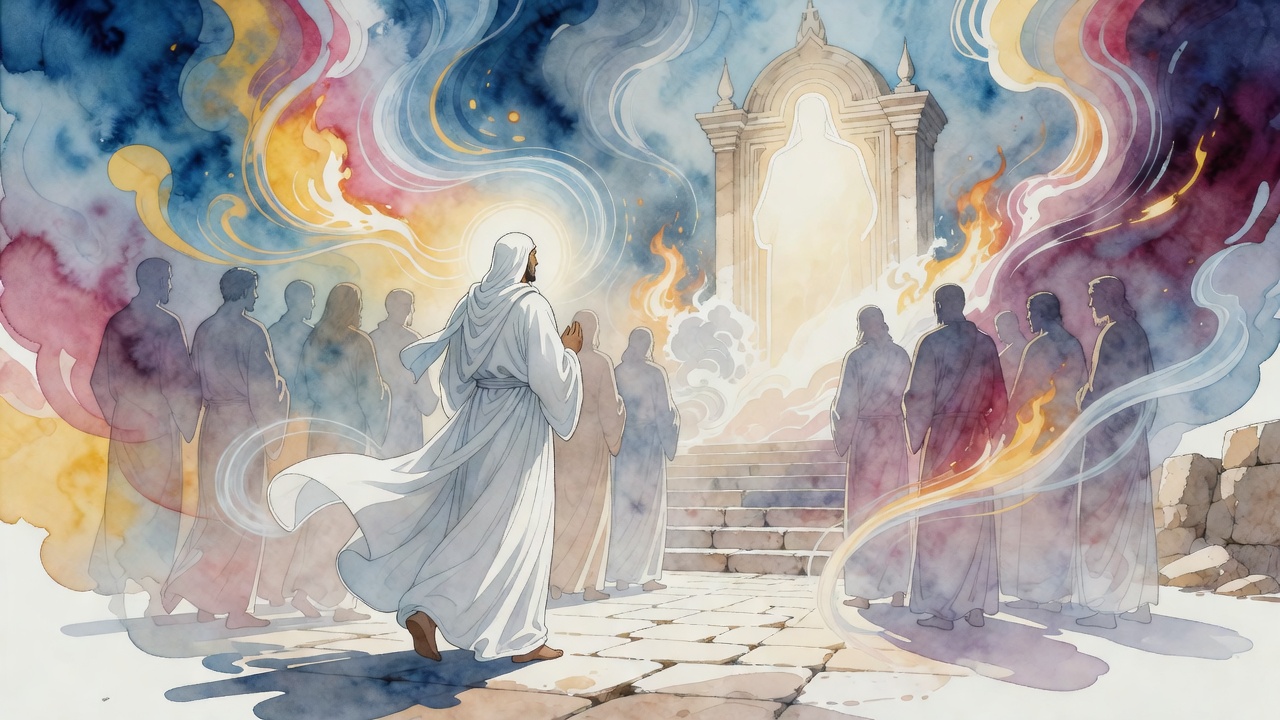
The gabbai lifted the latch. An old man stood at the threshold in white: white robe, white beard, white tallit (טלית), a prayer shawl, folded over him like moonlight. No one knew his face, but the sun was dropping too fast for a long interrogation, so the gabbai asked his name anyway.
"Abraham," the old man said.
They took it for a common name, because Hebron is full of men named for the grave up the hill. The stranger stepped inside, and the room became ten, so Kol Nidrei began.
He did not stand above them. He stood among them, wrapped in white, while the first words of the vows entered the air. All bindings. All promises made under pressure and fear. Abraham knew the weight of a mouth. He had lived by speech: the call that sent him from his land, the promise of a son, the second voice from heaven after the knife.
The Night That Would Not Tire Them
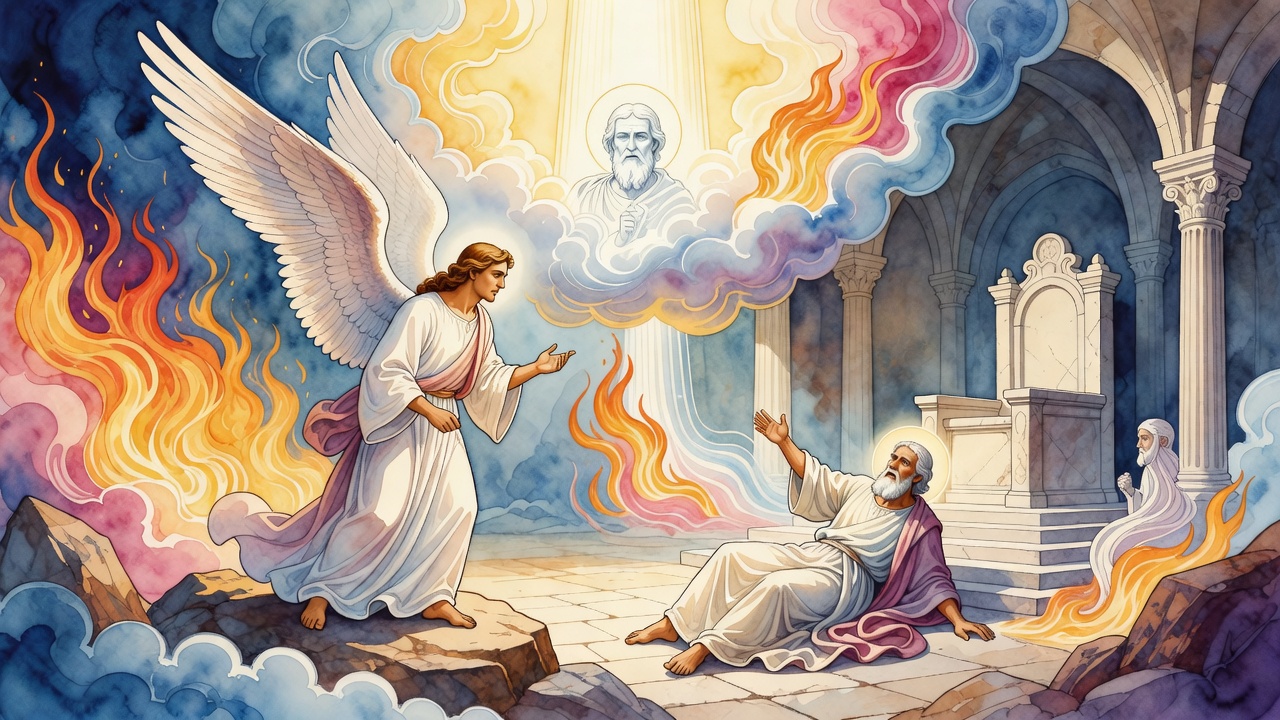
They prayed all night and into the next day, but no one felt hunger and no one felt the legs give, because the Shechinah (שכינה), God's presence, filled the house until the candles looked ashamed of their own small fire.
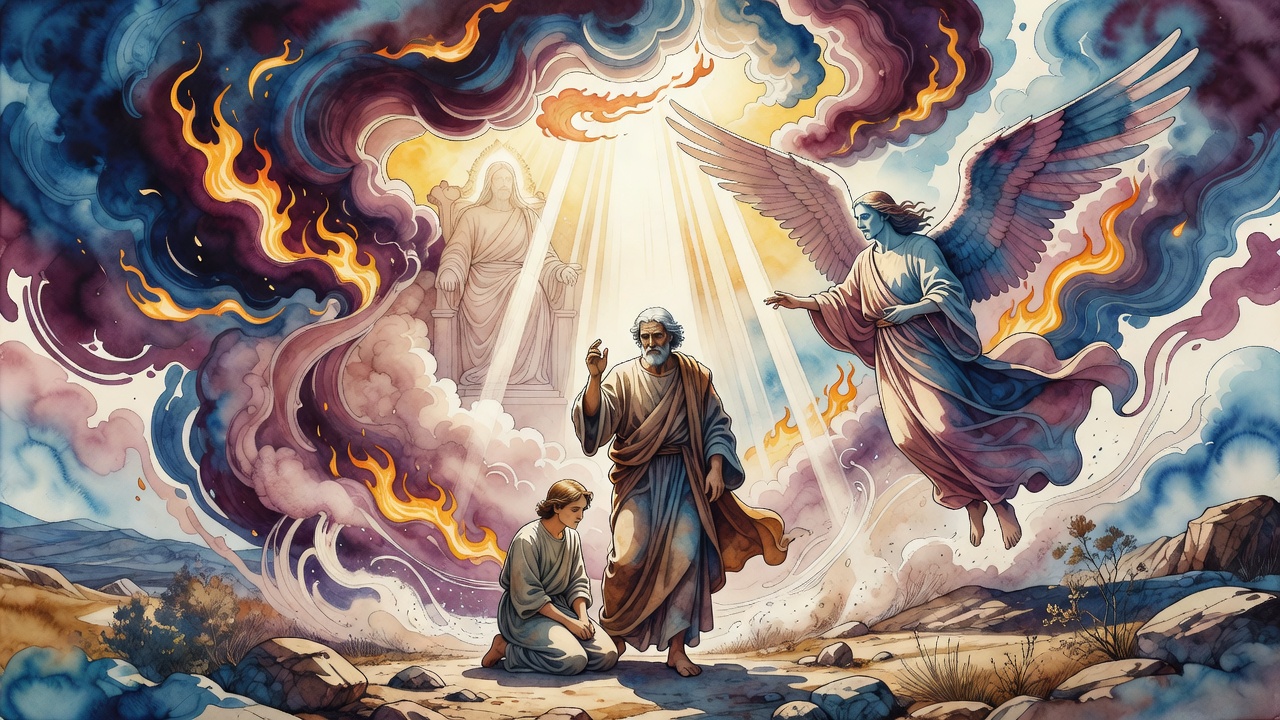
While the old man stood in the row, an older mountain stood in him. Isaac had been bound. The ram had been taken instead. A voice had called Abraham by name a second time from heaven, not from a tent flap, and had sworn by God's own self because the father had not withheld the boy. Descendants would be as stars and as sand. Nations would be blessed in that seed. Abraham had walked down the mountain marked by a promise that did not belong only to him.
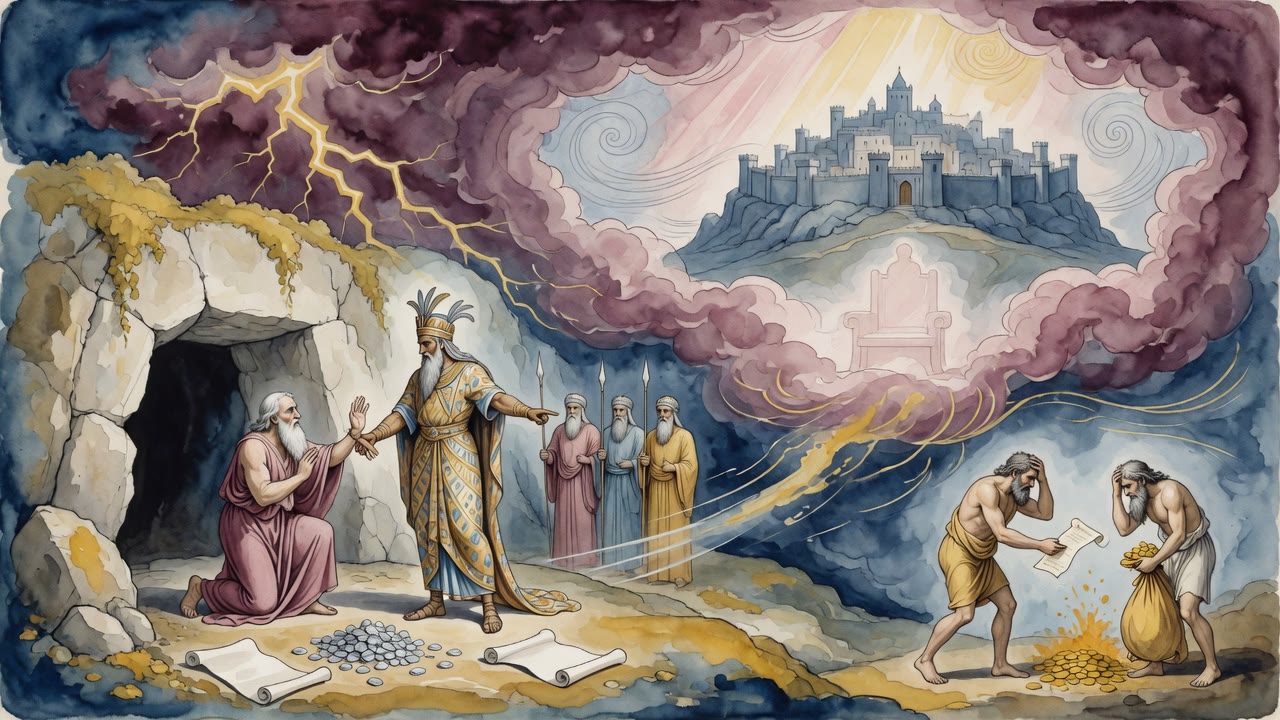
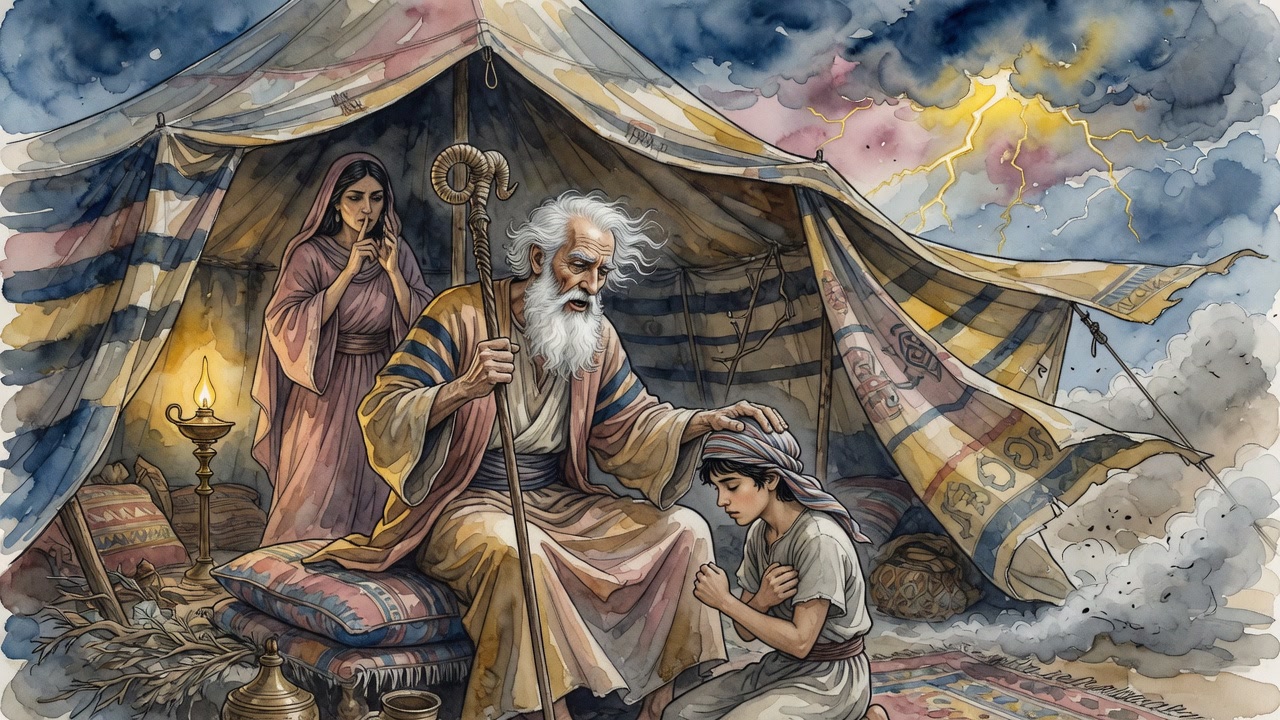
Years after that descent, two children had run through the tents, and the household could not yet tell what each one carried. Jacob and Esau looked alike while they were small, the way a myrtle and a thorn-bush look alike before the fragrance and the points declare themselves. At thirteen the split opened. Jacob turned toward the house of study of Shem and Eber. Esau turned toward idols and appetite. Abraham had blessed Jacob in Rebekah's hearing and told her to watch the boy, because the name and the seed would be called in him. He was still watching. That is why a knock answered nine men in Hebron.
The Shawl on the Bench
When the fast ended, the men turned toward him. A place to sleep should have been offered. Bread, water, a seat near the door. Abraham had made a life out of welcoming strangers, and his children knew the shape of that duty.
The white-robed man was already gone, and the doorway held only night air, but on the bench the tallit lay folded, still warm.
The gabbai snatched it up and ran into the street. Hebron gave back no footsteps. Behind the city stones lay the cave where Abraham was buried beside Sarah, and above the city the Day of Atonement had closed.
Buried in the Gift
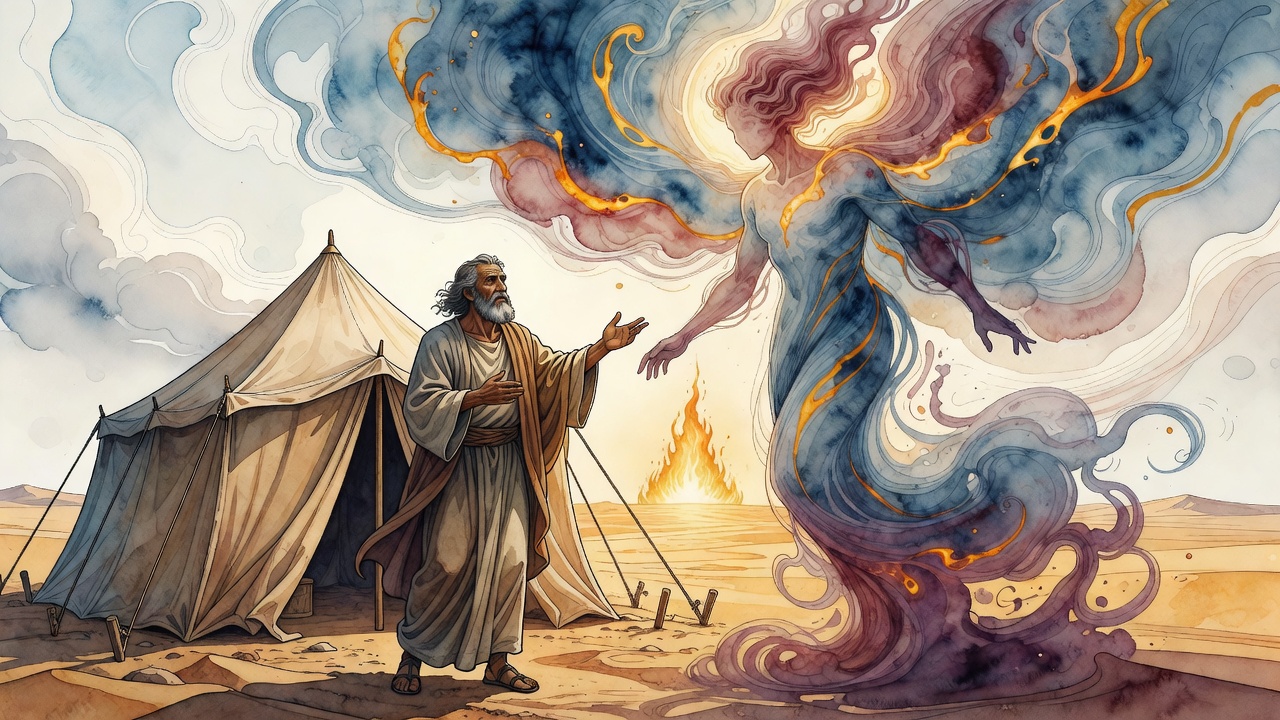
That night the old man returned in a dream. "I am Abraham," he said, and this time the gabbai understood the name. "I left the shawl as a gift. Wear it when you pray, and you will be shown the Presence."
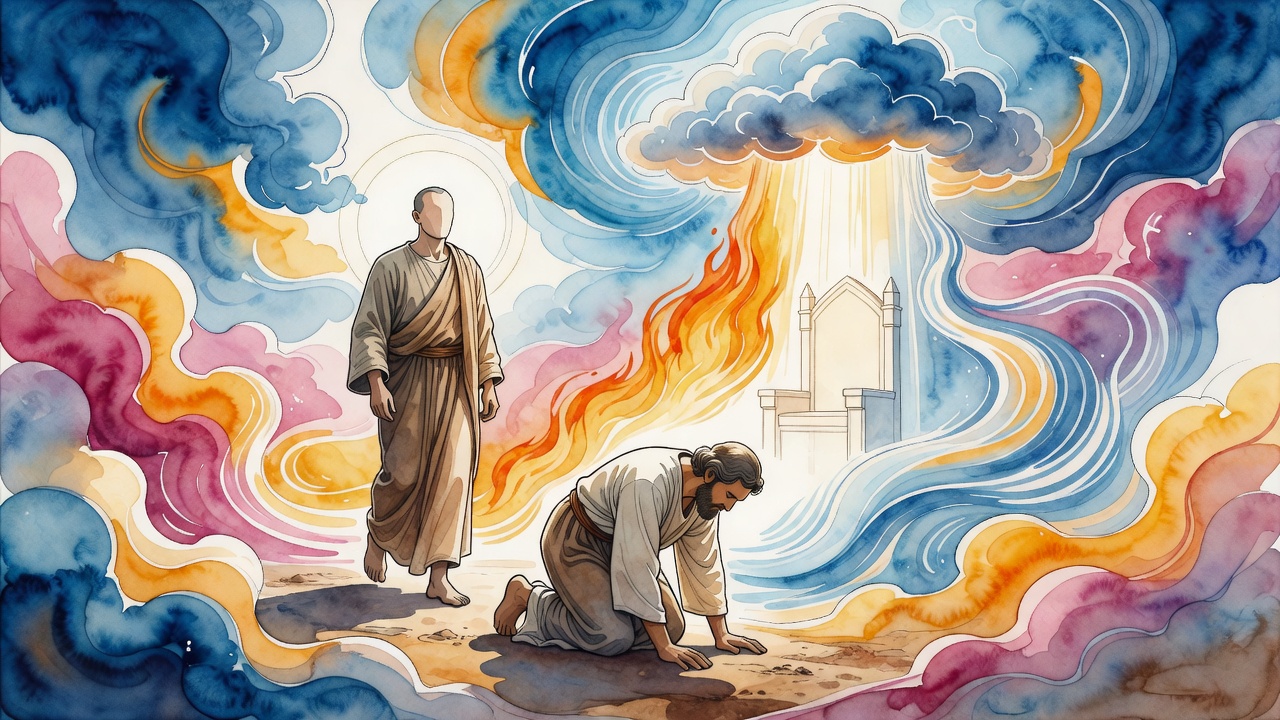
The next day the gabbai wrapped himself in the tallit and closed his eyes. For a moment a light stood in the dark that was not the candles. Afterward the light returned whenever he shut his lids, as if it had been pressed there.
Years later, shortly before the gabbai's own death, Abraham came again in a dream and told him to be buried in that shawl. They did as they were told. As soon as the cloth covered him, his soul went up, not into a blank rest, but into Abraham's own house of prayer above. There he became the gabbai of that minyan, still wrapped in the tallit, still counting to ten for a grandfather who had refused to stay all the way dead.
Nine men could feel abandoned by heaven, but ten men could begin. Some graves close, but some shawls do not.
← All myths