Jacob Wrestled All Night at Jabbok and Woke as Israel
Jacob crosses the Jabbok alone at night and struggles until dawn with a being who will not say its name but gives him a new one.
Table of Contents
 Click for full size
Alone at the Ford
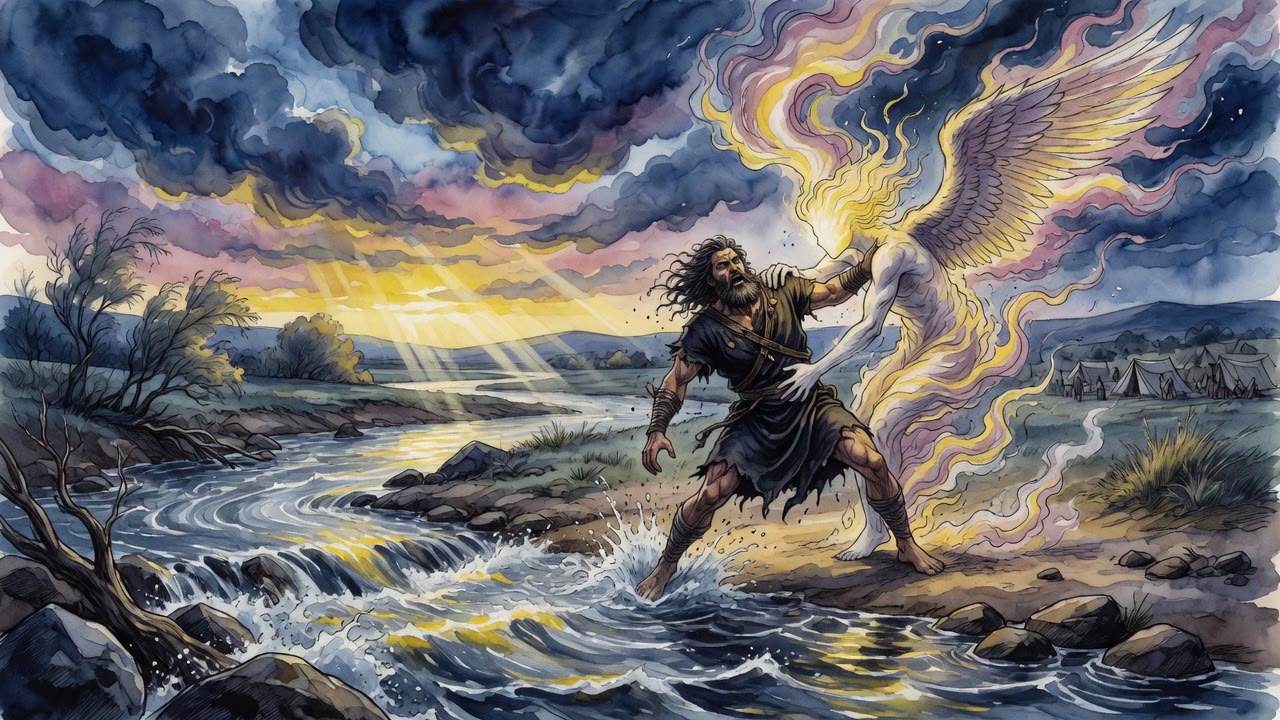
Jacob sent his family across the Jabbok first. His wives, his servants, his eleven sons, everything he had accumulated in twenty years of exile across the river and moving toward the next camp. Then he was alone on the near bank, and the night came down.
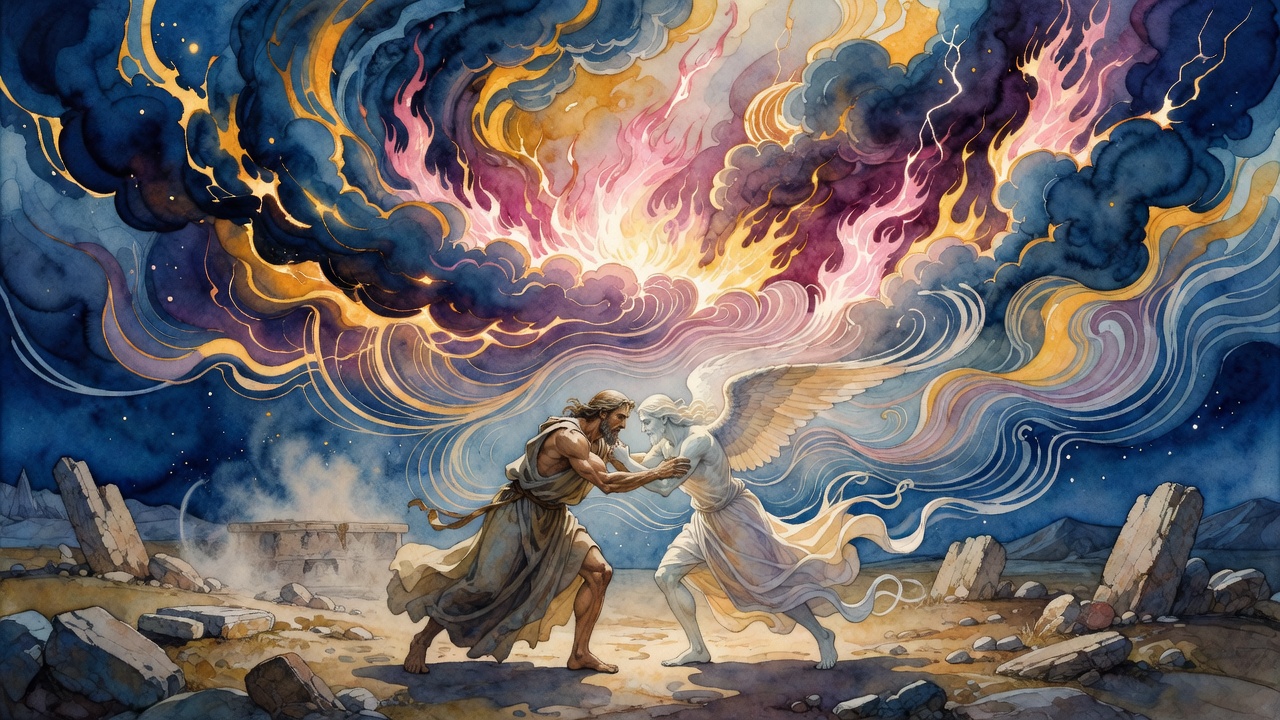
A man wrestled with him until the breaking of the dawn.
The Torah gives no preamble. No explanation of who the man was, where he came from, why this ford at this night. Jacob was on his way back toward Esau, toward the brother he had deceived and who was riding out with four hundred men to meet him. He had already sent gifts ahead. He had already divided his camp into two groups so that if one was destroyed the other might survive. He had prayed and arranged and planned and still the terror was in him. Then a man arrived and they fought.
What Jubilees Says About Who It Was
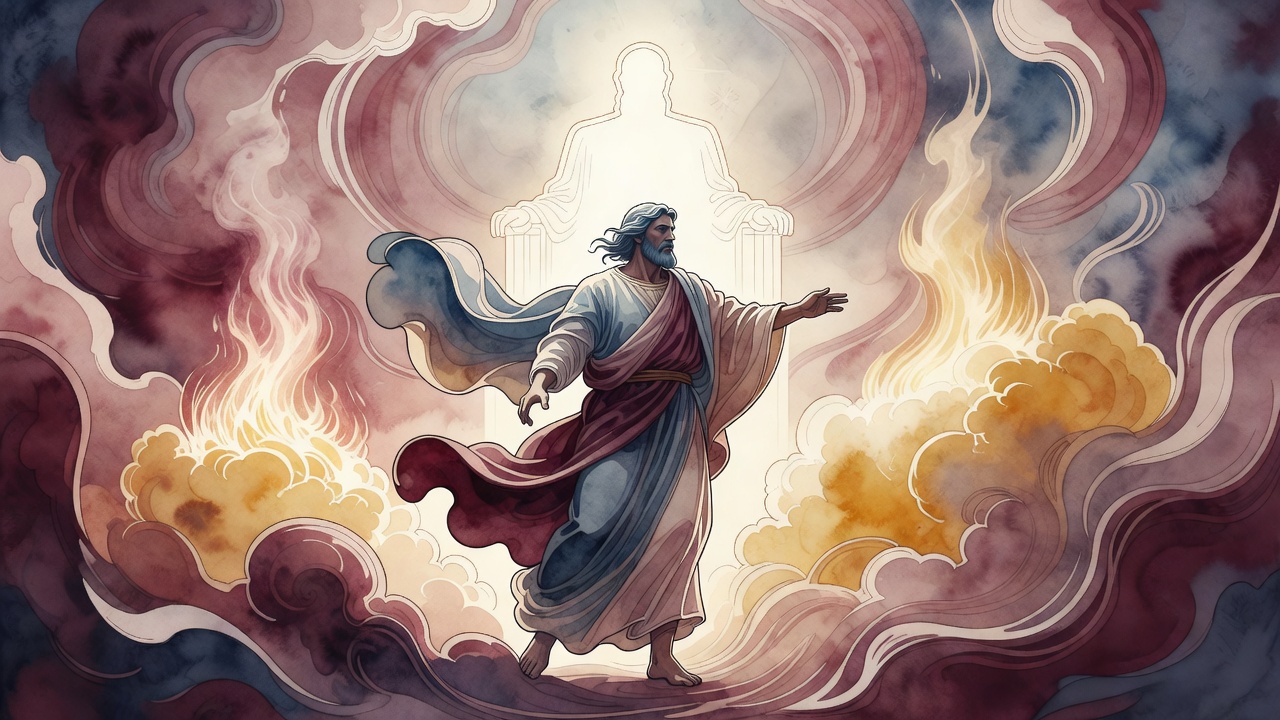
Most traditions say the man was an angel, specifically the guardian angel of Esau, sent to settle the question of inheritance in the only language Esau had ever understood. But the Book of Jubilees, the second-century BCE retelling of Genesis, is direct where the Torah is ambiguous. Jacob wrestled with God. Not a representative, not a deputy, not an angel standing in for someone else. God.
Jubilees frames this not as a mystery but as a declaration. The encounter at the ford of Jabbok was a direct confrontation between a mortal man and the divine, and what happened there was a blessing purchased by endurance. Jacob held on past the moment when any reasonable person would have let go. He held on until dawn began to show, and when the being asked to be released, Jacob said: I will not let you go unless you bless me.
He asked the being's name. It refused to give it. But it gave him a name instead: Israel. You have striven with God and with men and have prevailed.
The Limp as Proof
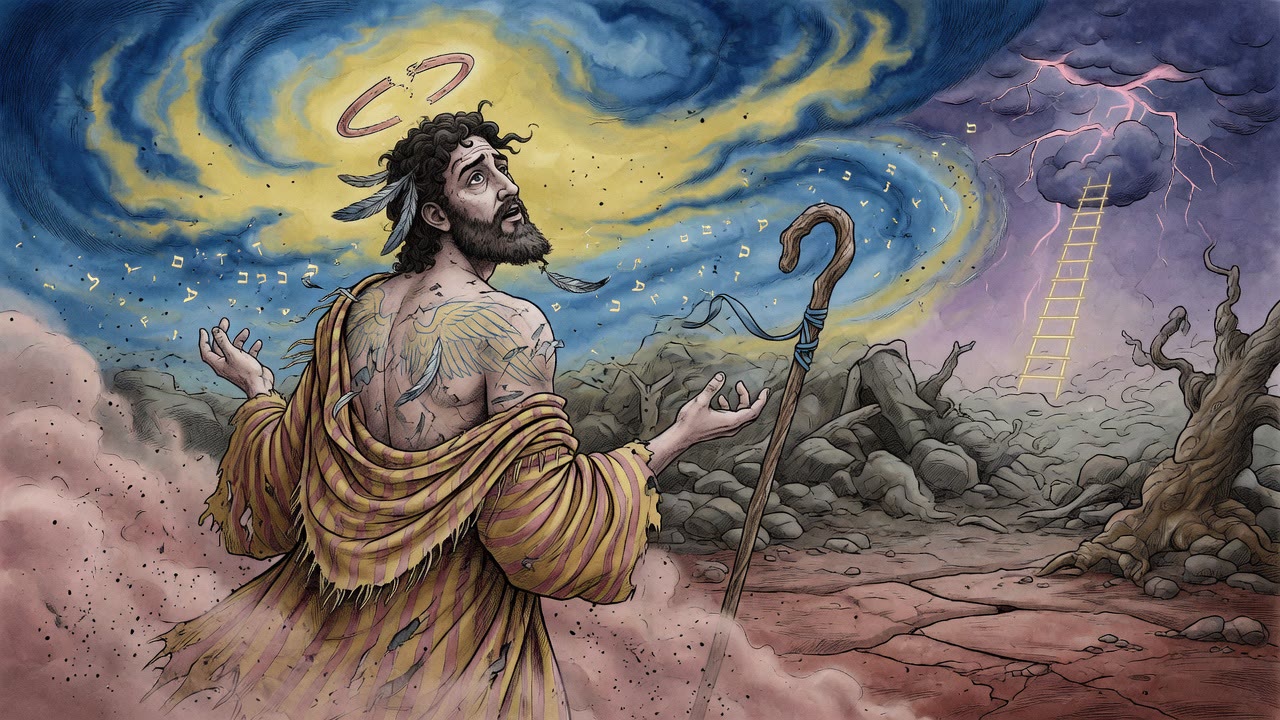
The touch to Jacob's hip socket dislocated something. He walked away from the ford limping, and he walked the rest of his life with that limp. The text notes that the children of Israel do not eat the sinew of the hip socket to this day because of what was touched at Jabbok. The wound became a dietary law. The mark on Jacob's body became a mark on the body of his descendants.
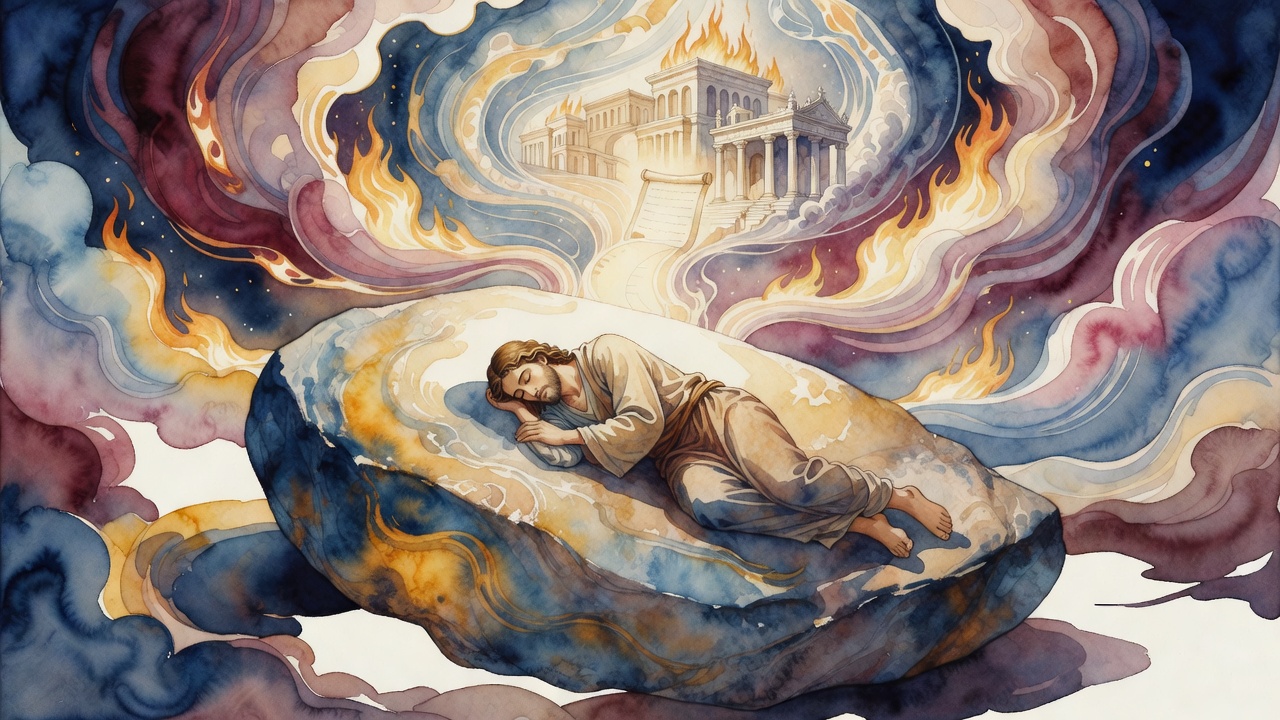
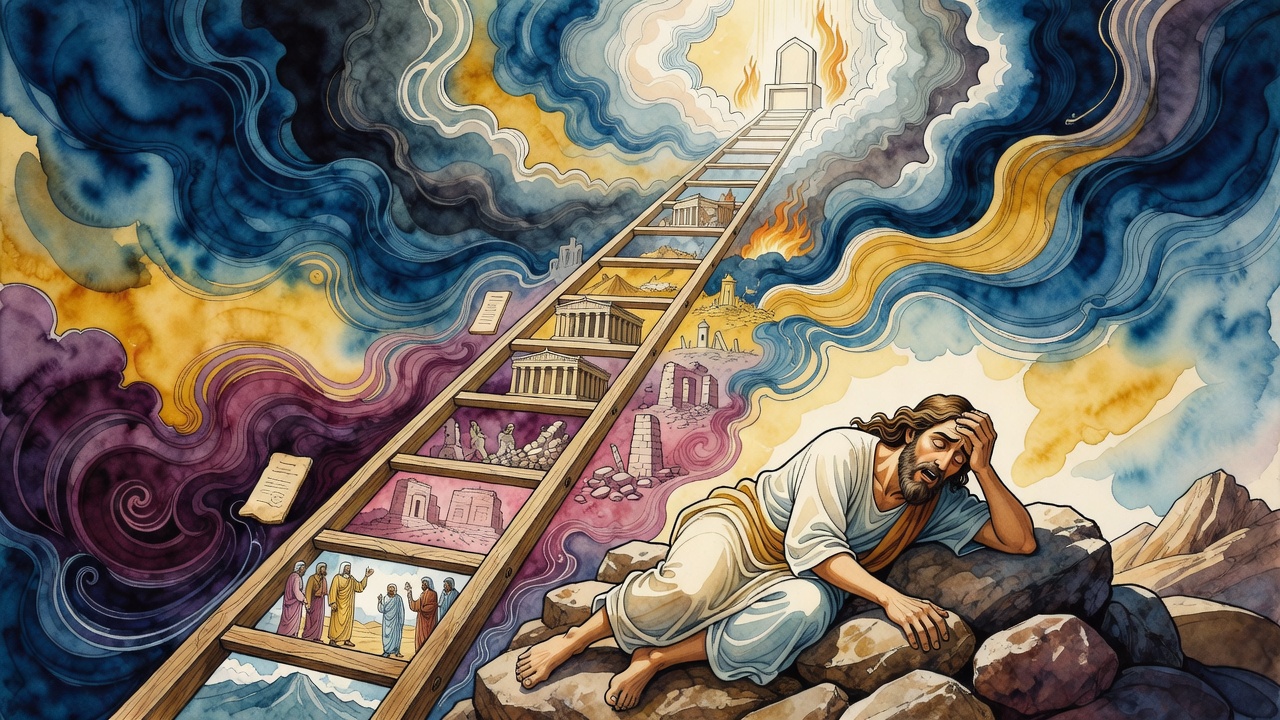
Legends of the Jews, drawing on midrashic sources, records what Jacob was thinking when he woke from the encounter. He looked around at the dawn and found himself shaking. Not from the fight, or not only from the fight. He had seen what place this was. He had been standing in the site where the Temple would one day be built, and he had been wrestling there without knowing it, and now the vision of what that place would become, and what would be destroyed there, had come down on him all at once.
He wept for the Temple in ruins before the Temple had been built.
Esau Did Not Stop Coming
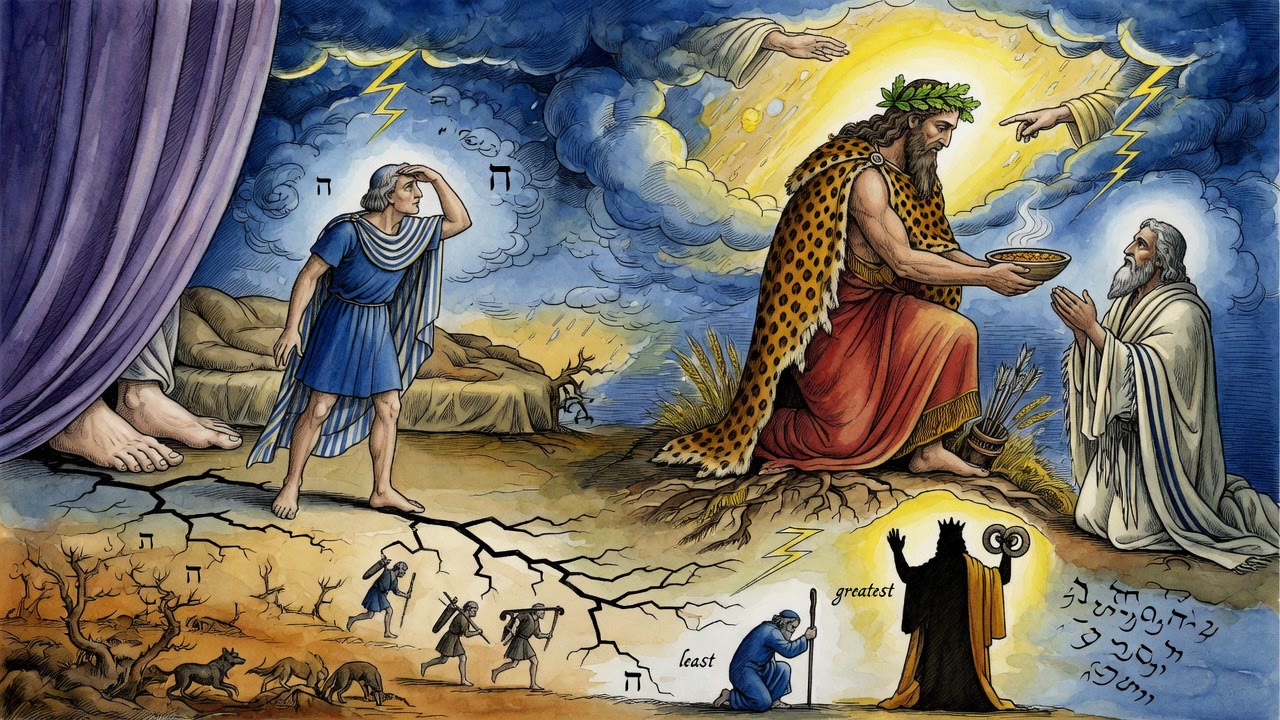
While Jacob was wrestling at the ford, Esau was still riding. The armies of Esau, the four hundred men, the brother's decades of grievance, none of that paused for what was happening at the Jabbok. When dawn came and Jacob limped across to rejoin his family, the encounter with his brother was still in front of him.
But something had changed. According to Legends of the Jews, drawing on Talmudic sources, Jacob emerged from the night at the ford in a state different from the one he had entered it in. The fear was still there. He bowed to Esau seven times as he approached. But something in him had been settled that had not been settled before. He had held on through the dark and the breaking had come to him rather than to his grip.
Esau, when he arrived, ran to meet Jacob and embraced him. The four hundred men were not a hostile army. The reunion was neither simple nor permanent, and later traditions record that Esau renewed hostilities against Jacob as soon as the moment passed, attacking with troops from a different direction. But at that first meeting, after the night at the ford, the brothers held each other and wept.
The Name Hidden Inside the First Word of Torah
The Tikkunei Zohar finds a trace of what happened at Jabbok embedded in the structure of creation itself. The name Israel, the name Jacob received at the ford, is hidden inside the first word of the Torah, bereshit. Israel is not a later addition to the story of the world. It is the word the world was made for, planted in the beginning before any of the events that would arrive at Jacob's night on the riverbank.
He crossed the ford a man with a past full of cunning and calculation. He crossed back with a wound that would not heal and a name that had been waiting for him in the first word of creation since before the world began.
← All myths