Jacob Dreamed the Entire Future and Woke Up Afraid
The two angels from Sodom had been shut out of heaven for 138 years. They used Jacob's sleep as the hour they were allowed back up.
Table of Contents
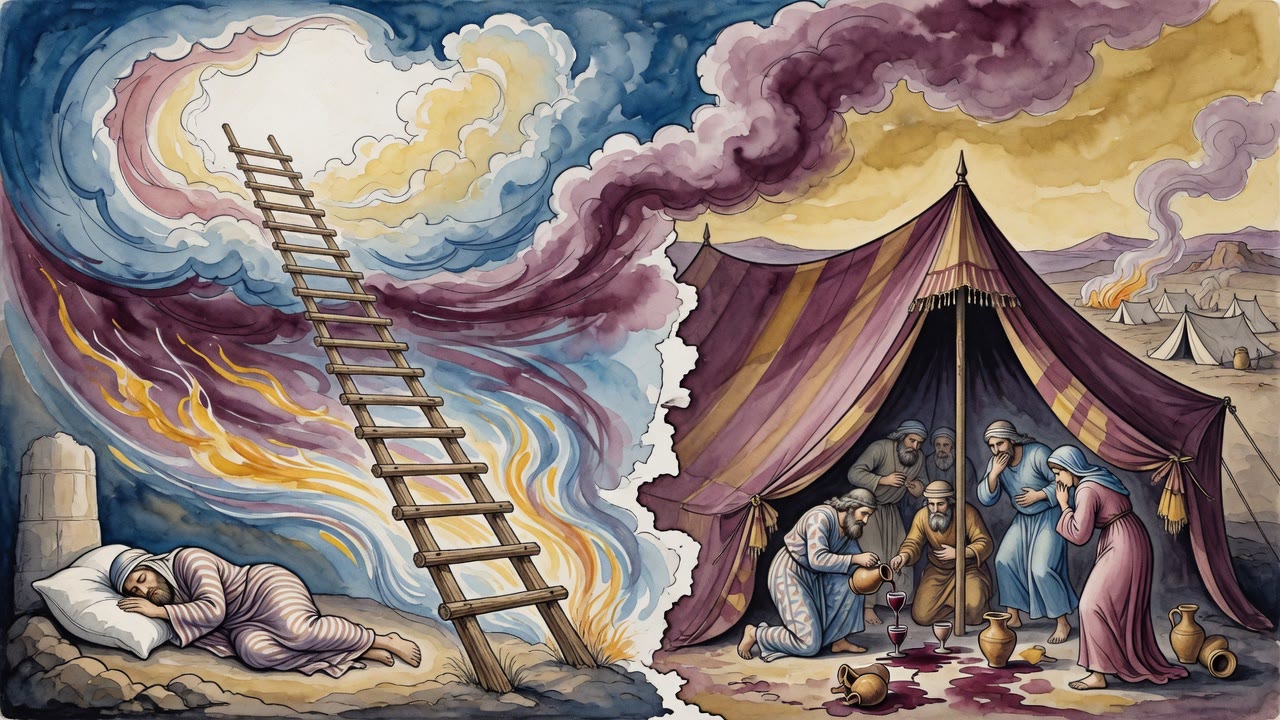
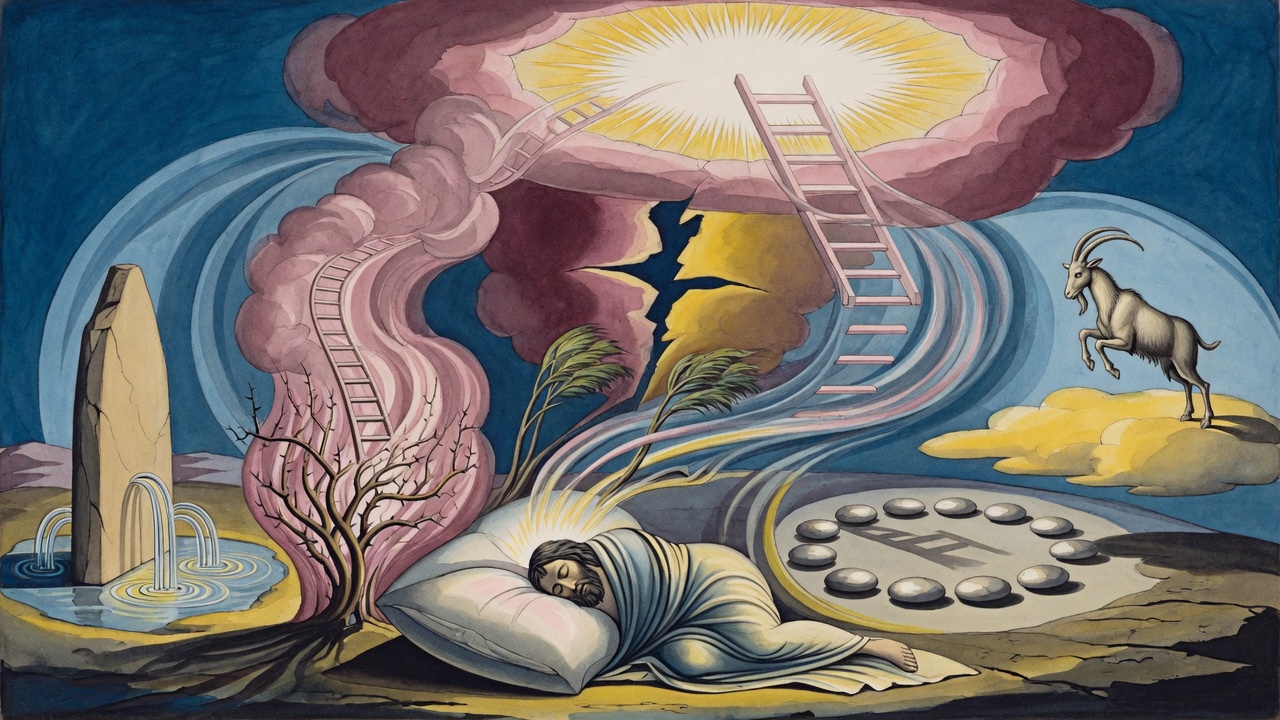
Jacob put a stone under his head and slept with his brother still behind him on the road. He had left home with no silver and no bread to spare. The sky was the blanket. Luz was the name of the place, and he did not yet know what it would be called in the morning.
 Click for full size
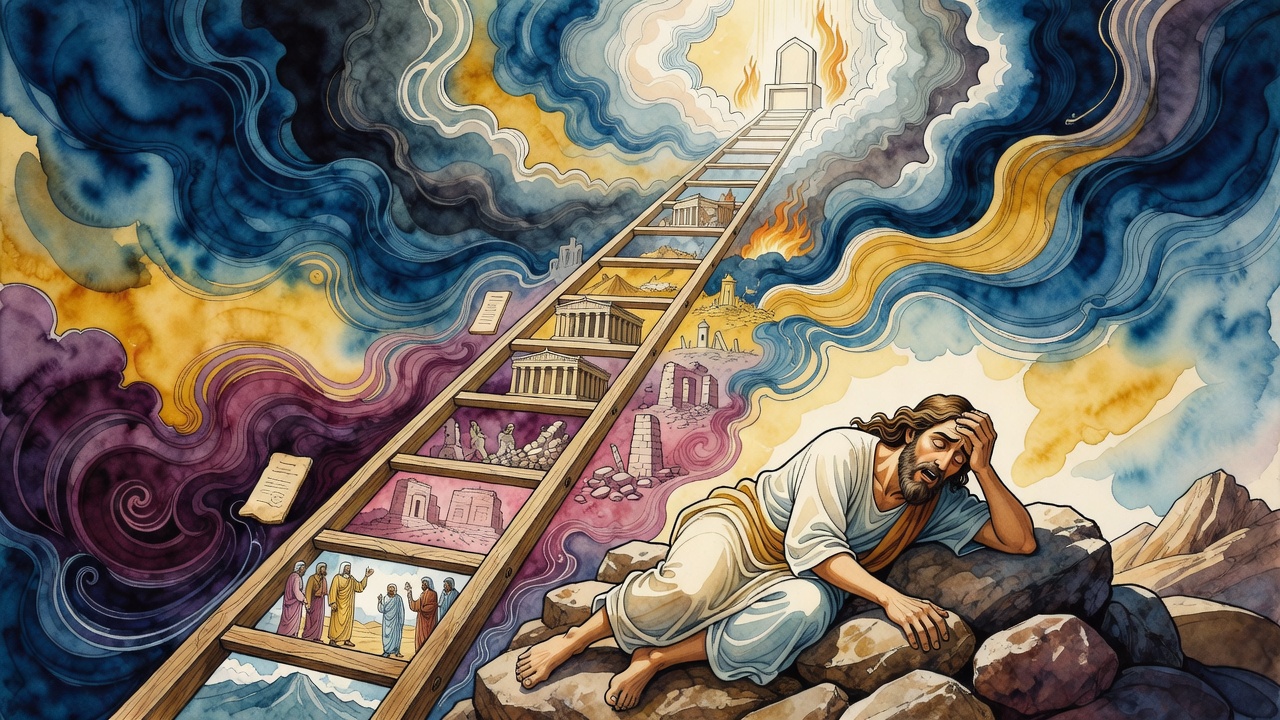
A ladder stood on the earth. The top of it reached heaven. God stood over him and spoke the old promise again: the land, the children like dust, the blessing of the nations. That was only the frame. What moved on the rungs was older than Jacob, and farther ahead than any road he could walk.
He Slept on Stones With a Brother Behind Him
Esau had sworn to kill him. The stones under the tree were all the bed he had. He walked alone, and he slept. That night he dreamed the entire future of his children. In the dark the whole land of Canaan was folded and set beneath his body, so that the promise covered more ground than the patch of dirt his hip could feel.
"I am the Lord God of Abraham thy father, and the God of Isaac," the voice said. "The land whereon thou art sleeping, to thee shall I give it, and to thy seed after thee." As the earth survives all things, the children would survive the nations. As the earth is trodden, they would be trodden when they trespassed. Jacob slept through the warning and the gift at the same time.
The Banished Angels Used His Ladder
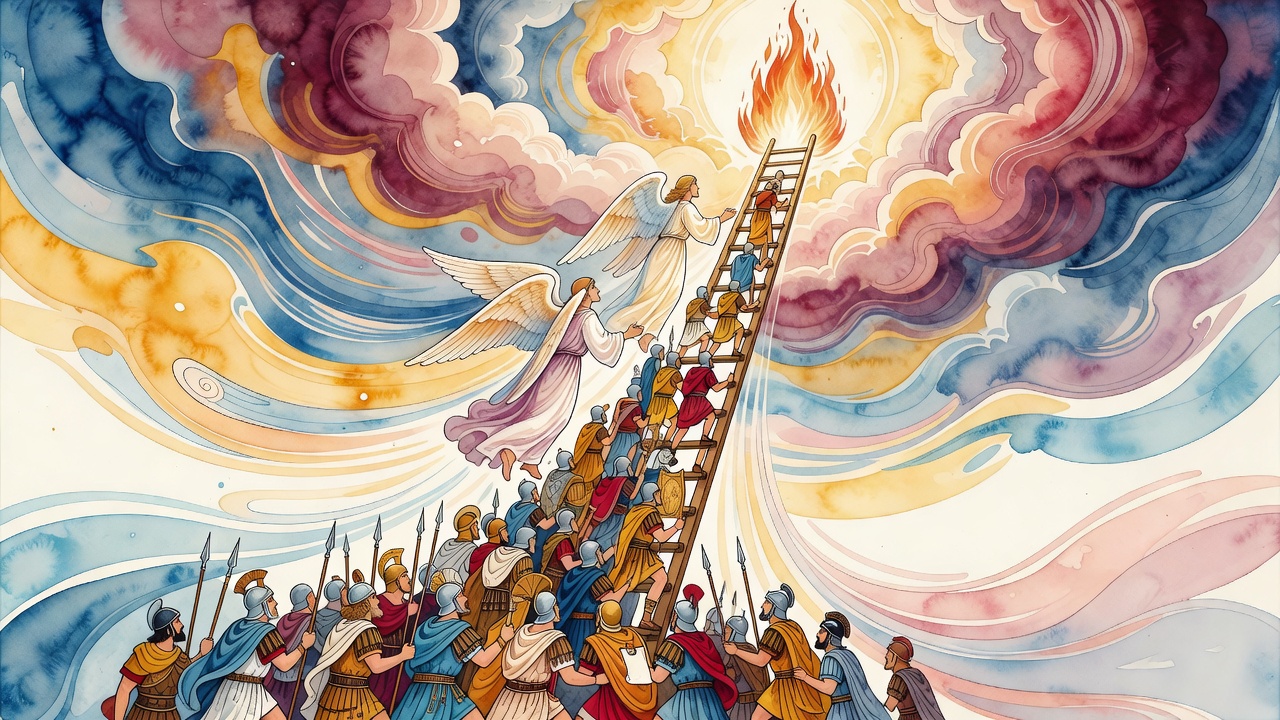
The first figures going up were not random messengers. They were the two angels who had been sent to Sodom. For one hundred and thirty-eight years they had been shut out of heaven, because they had told Lot what they were not supposed to tell. They had walked with Jacob from his father's house as far as this stone. The foot of the ladder was the place they were finally allowed to go home.
They climbed. When they arrived they called the others. "Come ye and see the countenance of the pious Jacob, whose likeness appears on the Divine throne, ye who yearned long to see it." Then angels came down to look at the man asleep on the rock. They had wanted that face. It was already on the throne, and they had not been permitted to stare.
The sequence mattered. Heaven's own were going up first, because they had been away. What came down afterward came to look at him, and to walk with him from here on.
Four Empires Climbed Past His Face
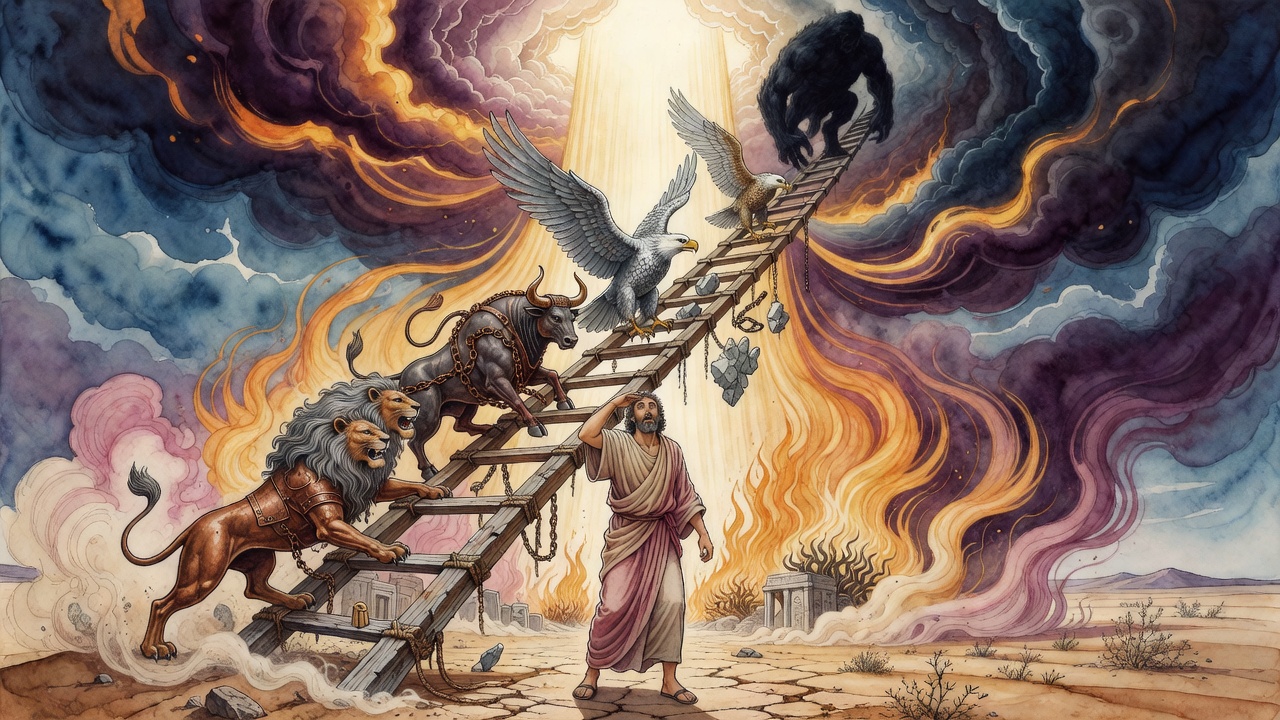
Other angels took the rungs. The angel of Babylon mounted seventy. The angel of Media mounted fifty-two. The angel of Greece mounted one hundred and eighty. The angel of Edom climbed so high he spoke as if the top were his. "I will ascend above the heights of the clouds. I will be like the Most High."
A voice answered him from above the last rung. He would be brought down to the pit, to the uttermost part of it. God spoke to Edom the way a man speaks to a climber who has mistaken height for a claim. "Though thou mount on high as the eagle, and though thy nest be set among the stars, I will bring thee down from thence."
Jacob lay still and watched kingdoms go up his dream like men on a stair. Each one rose. Each one had a number. Edom's number was not given, only the fall.
He Saw the Temple Rise and Burn
Inside the same night God showed him Sinai, the mountain in fire, the people at its foot. He showed him Elijah taken up. He showed him the Temple in its glory, then the Temple torn, stones black, smoke where the incense had been. He showed him three men in a furnace and a fourth walking with them, and Daniel standing before Bel.
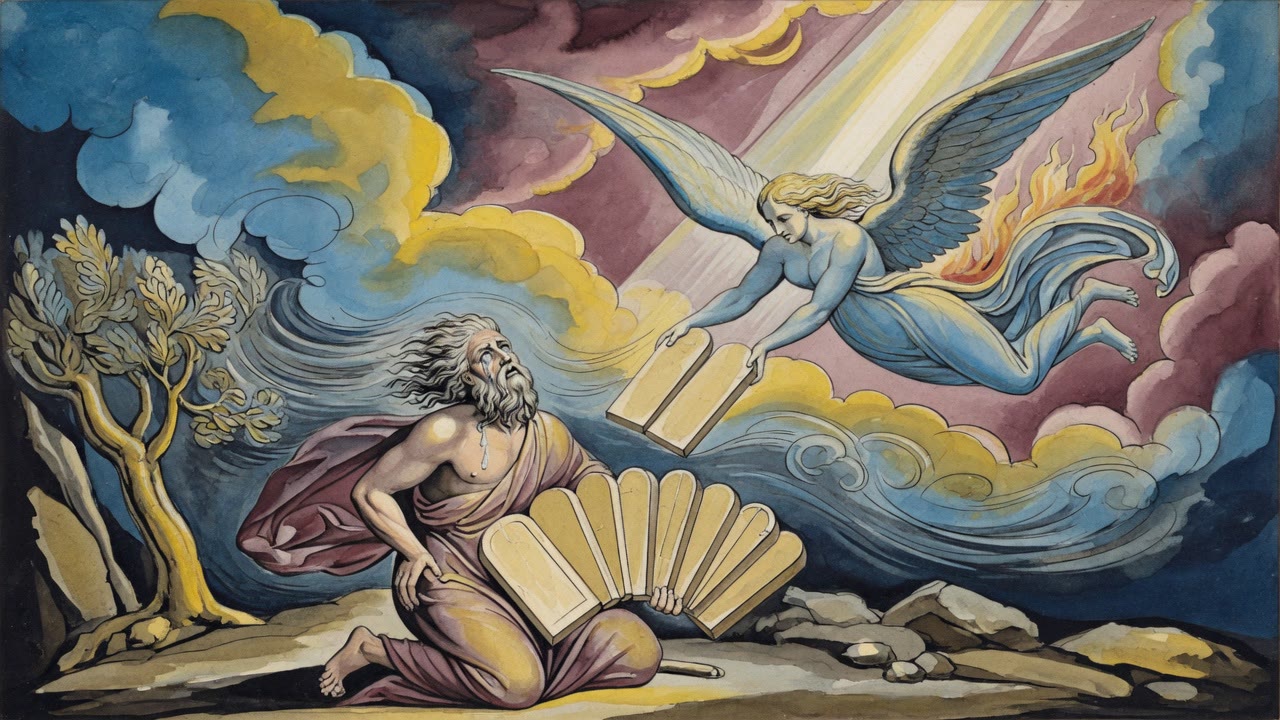
An angel came down with seven tablets in his hands and put them in Jacob's hands. Jacob read them. He knew what would befall him and his sons through all the ages. Then the angel said, "Do not build this place, and do not make it an eternal sanctuary, and do not dwell here, for this is not the place." The House he had seen burning was not this stone. The stone was a gate. The House would stand elsewhere, and it would fall, and he had now seen both.
The knowledge sat in him the way a sealed letter sits in a coat. He would live it out without being able to recite the lines by day.
He Woke Afraid and Poured the Oil
He woke with a start. The fright was not only the holiness of the ground. He had seen the destruction of the Temple. He cried out, "How dreadful is this place. This is none other but the house of God, and this is the gate of heaven."
He took the stone that had been under his head, a stone made out of twelve, and set it up for a pillar. Oil ran down from heaven onto the top of it. He poured. God sank that anointed stone into the abyss to serve as the center of the earth, the Eben Shetiyah (אבן השתייה), the foundation stone, the same stone that would sit in the sanctuary with the Name on it.
He called the place Bethel. It had been Luz. He vowed a vow. If the Lord would be with him on this road, and give him bread to eat and clothes to put on, and bring him home in peace, then this stone would be God's house, and of all that he was given he would return a tenth. He had seen the price. He agreed to pay it. He was still afraid.
← All myths