Jacob Slept on the Foundation Stone and Saw the Temple Site
The stone Jacob used as a pillow at Bethel was the stone from which God had spread all creation outward. Jacob's dream showed him what would be built there.
Table of Contents
 Click for full size
The Stone Under His Head
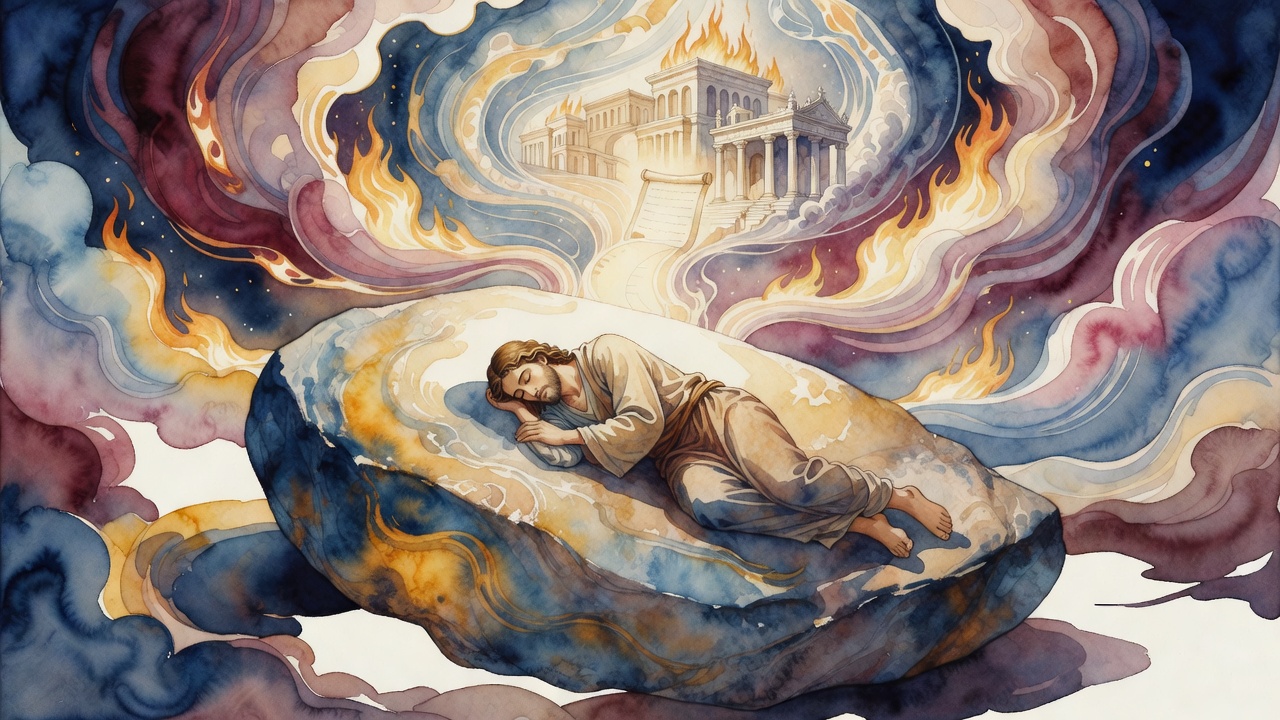
Jacob was fleeing when he stopped. He had stolen Esau's blessing and Esau wanted him dead, and the road north to Haran was long and he had no choice but to sleep somewhere. He chose a place he did not know, a stone he used as a pillow, a patch of open ground with nothing remarkable about it except that it happened to be where he stopped. Then he fell asleep and the dreams began.
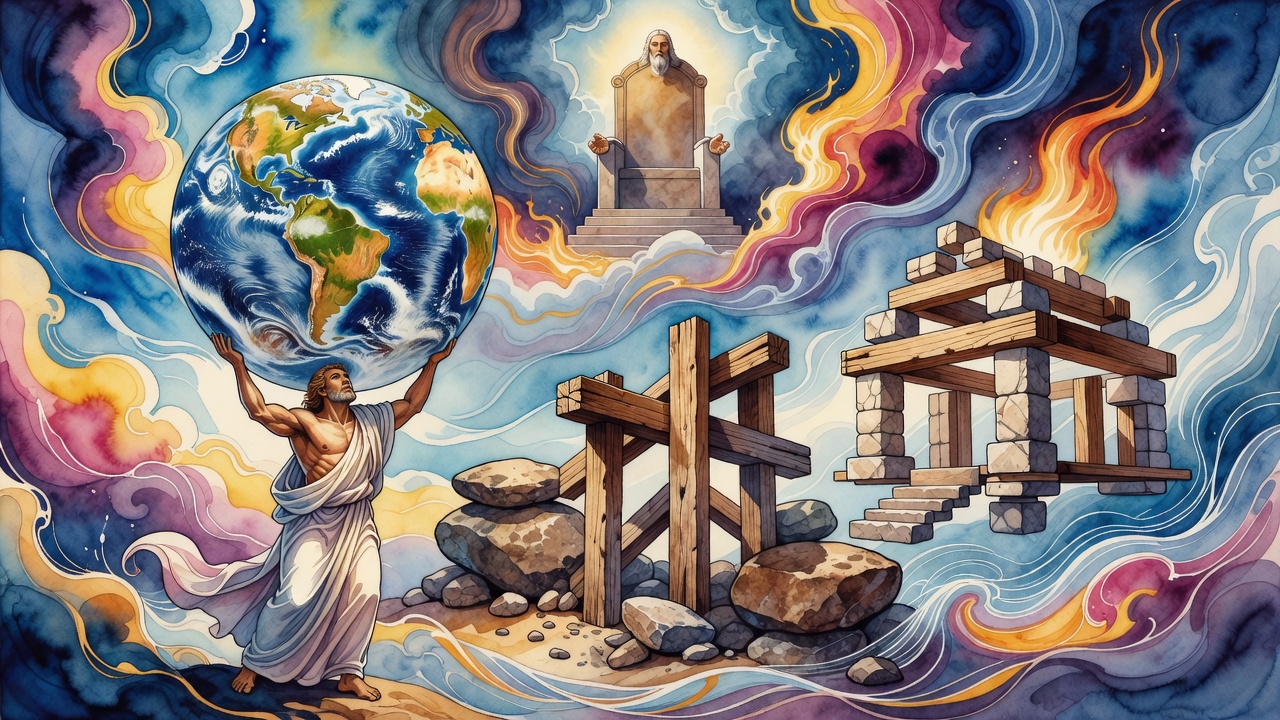
The Book of Jubilees, the second-century BCE retelling of Genesis and Exodus, names the stone Jacob used as a pillow with complete specificity: it was the Foundation Stone, the primordial rock from which God had spread all of creation outward at the beginning. Not a convenient stone. Not a local landmark. The stone at the center of the world. Jacob had not stumbled onto an unremarkable piece of ground. He had arrived at the axis of creation, in the dark, without knowing it, and laid his head on the place where heaven and earth had originally been joined.
The Dream That Showed What Would Be Built
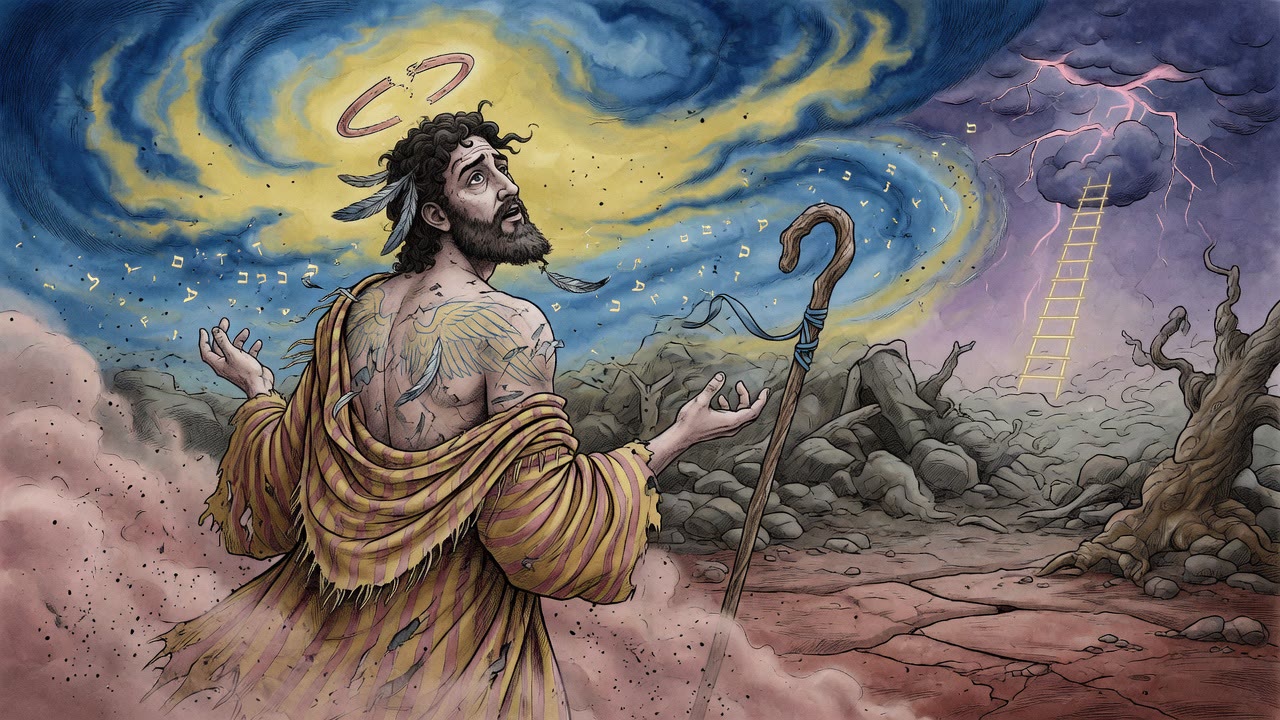
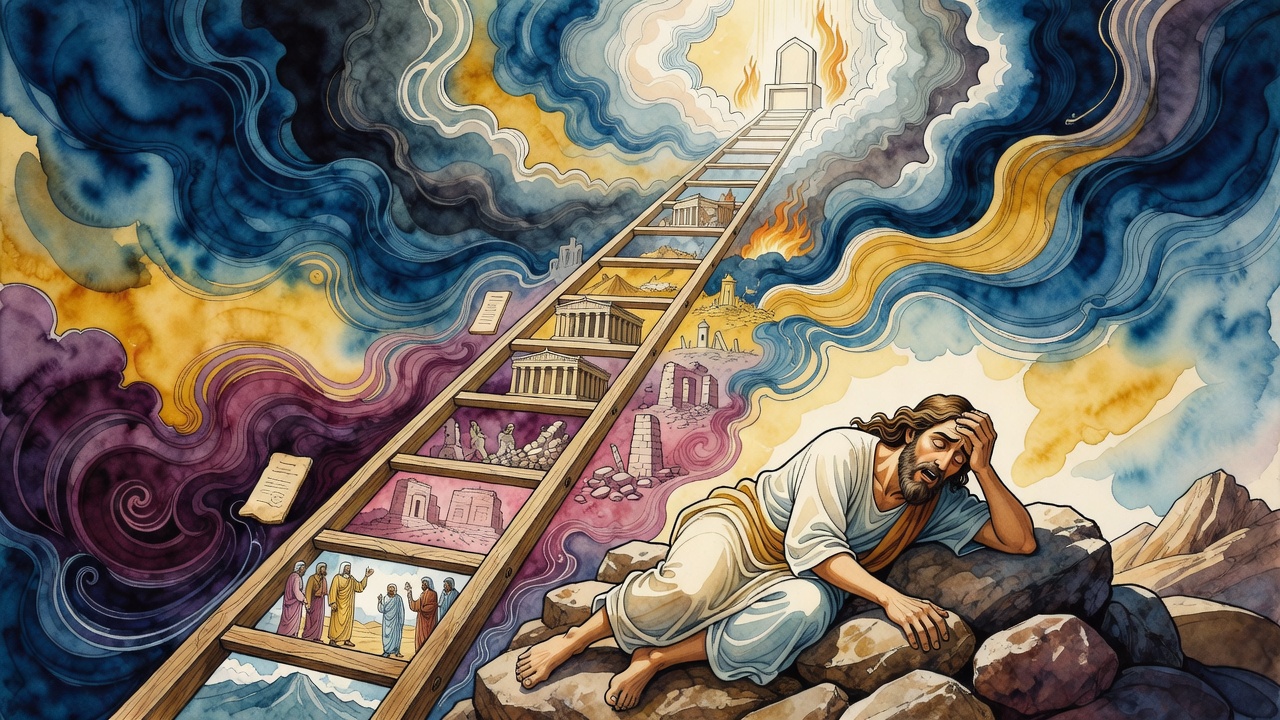
What Jacob saw on that stone is described in Genesis as a ladder, angels ascending and descending, God standing above and speaking. But the tradition that preserved itself in Jubilees and in the midrashic readings of the dream insisted that the ladder was not the primary image. The primary image was the place. The ladder connected that specific ground to heaven. The angels moved between them because Bethel was the place where the connection had always been thinnest, where the distance between human and divine was shortest, where building something permanent would cost the least and mean the most.
Jacob woke from the dream and said: this is none other than the house of God, and this is the gate of heaven. He set up the stone he had slept on as a pillar and poured oil on it. He called the place Bethel: House of God. He made a vow. If God would be with him on the journey and bring him back to this ground, this stone would be God's house, and he would give a tenth of everything to God.
He was making a temple vow at the future site of the Temple, over the Foundation Stone of the world, without knowing any of it consciously. The tradition heard the unconscious knowledge in the words and preserved them as prophecy.
The Sabbath the Angels Had Kept There
The Book of Jubilees adds a layer to the ground under Jacob's stone. The Sabbath, the text insists, was instituted in heaven before it was given on earth, and the first Sabbath sanctified in heaven was observed by the angels at precisely the location where Jacob would later sleep. The ground was already consecrated before Jacob arrived. The angels had kept Sabbath at Bethel since before Adam walked the earth. The holiness that Jacob felt in the dream, the holiness that made him wake trembling and say he had not known God was in this place, was not new. It had been accumulating since creation.
This is the structure Jubilees builds beneath the Genesis narrative: sacred practices precede their earthly performances. The Sabbath was kept in heaven at Bethel before the Israelites observed it in the wilderness. The Torah existed on heavenly tablets before Moses received it at Sinai. The Temple site was consecrated on the Foundation Stone before Jacob set up his pillar, and the pillar preceded the Temple by more than a thousand years. History catches up to holiness. Holiness does not wait for history.
The Night He Became Israel
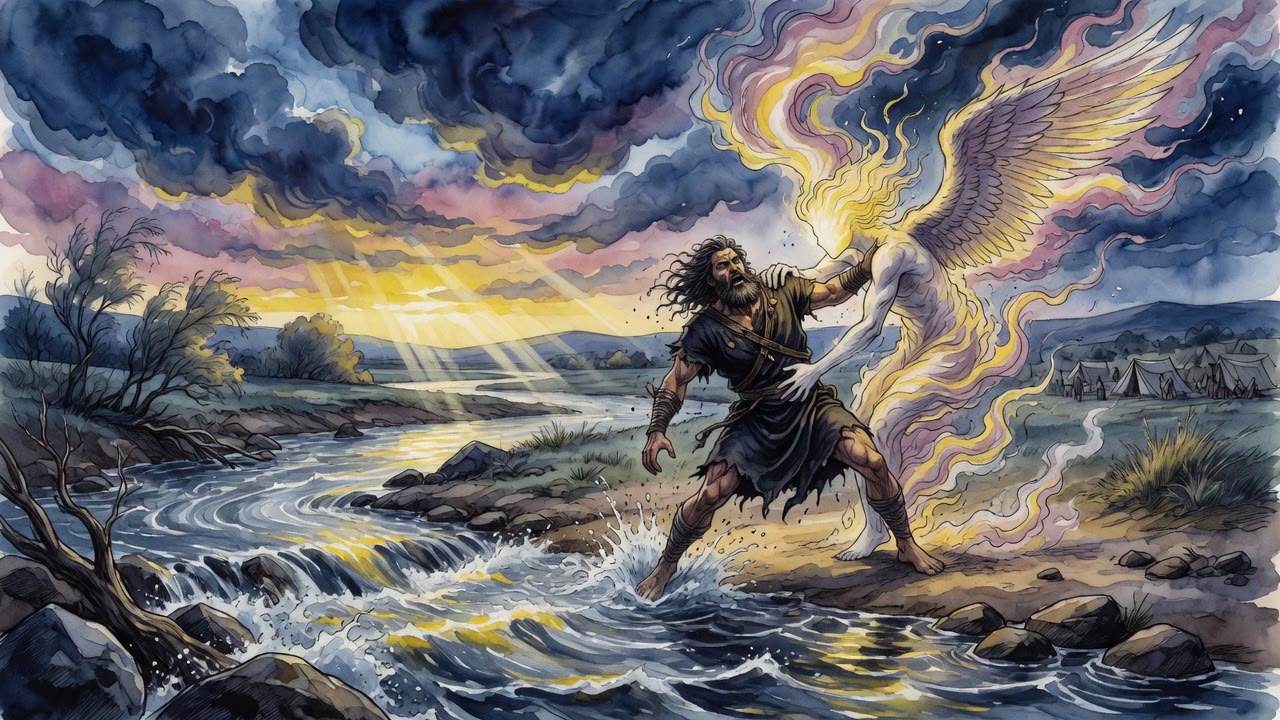
Years later Jacob came back to this same region and wrestled through the night with a figure the tradition identifies as an angel, as the guardian spirit of Esau, as the divine itself in its most intimate and violent form. He would not let go until he received a blessing. His hip was wrenched out of socket during the fight. He held on. At dawn the figure asked to be released and Jacob said he would not release it without a blessing. The blessing came in the form of a new name: Israel, because you have striven with God and with humans and have prevailed.
The Book of Jubilees links this wrestling to Bethel as part of a single continuous experience of the axis of the world. Jacob who had slept on the Foundation Stone as a fugitive became Israel who had wrestled at the threshold of the divine as a returning patriarch. The site held both experiences. The Temple that Solomon would build a thousand years later on the same Foundation Stone was, in the tradition's reading, being prepared by Jacob's two visits: the dream that showed the blueprint and the wrestling that named the builder.
← All myths