Jacob Was an Angel Who Came to Earth and Forgot
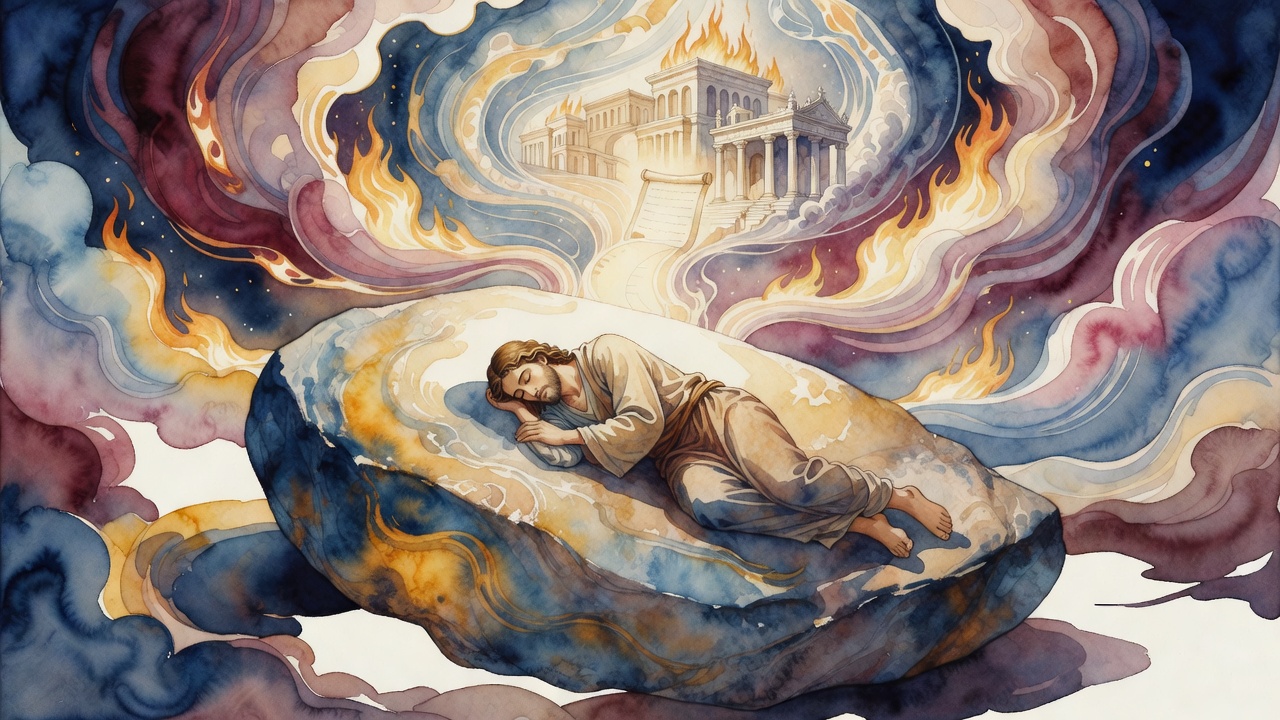
Isaac put a hand on Jacob's head and named Mastema. That night escort angels climbed to match his sleeping face against the Throne.
Table of Contents
 Click for full size
The Angels Climbed to Check His Face
Before Jacob left home, Isaac put a hand on his head and asked for large things. He wanted his son to have what had been given to Adam, and to Enoch, and to Noah, and to Shem, everything God had promised him, passed down and made to stick to the boy and to the boy's children for as long as there was sky over the earth. Then he asked one more thing, in the plainest words in the blessing. "Let the spirits of Mastema not rule over you, or over your seed, ever."
Jacob walked out of the house alone, except that he was not alone. Angels went with him from his father's door, and he did not know they were there.
He stopped at nightfall, put a stone under his head, and slept in the open like a man on the run from his brother.
The angels who had walked him out went up.
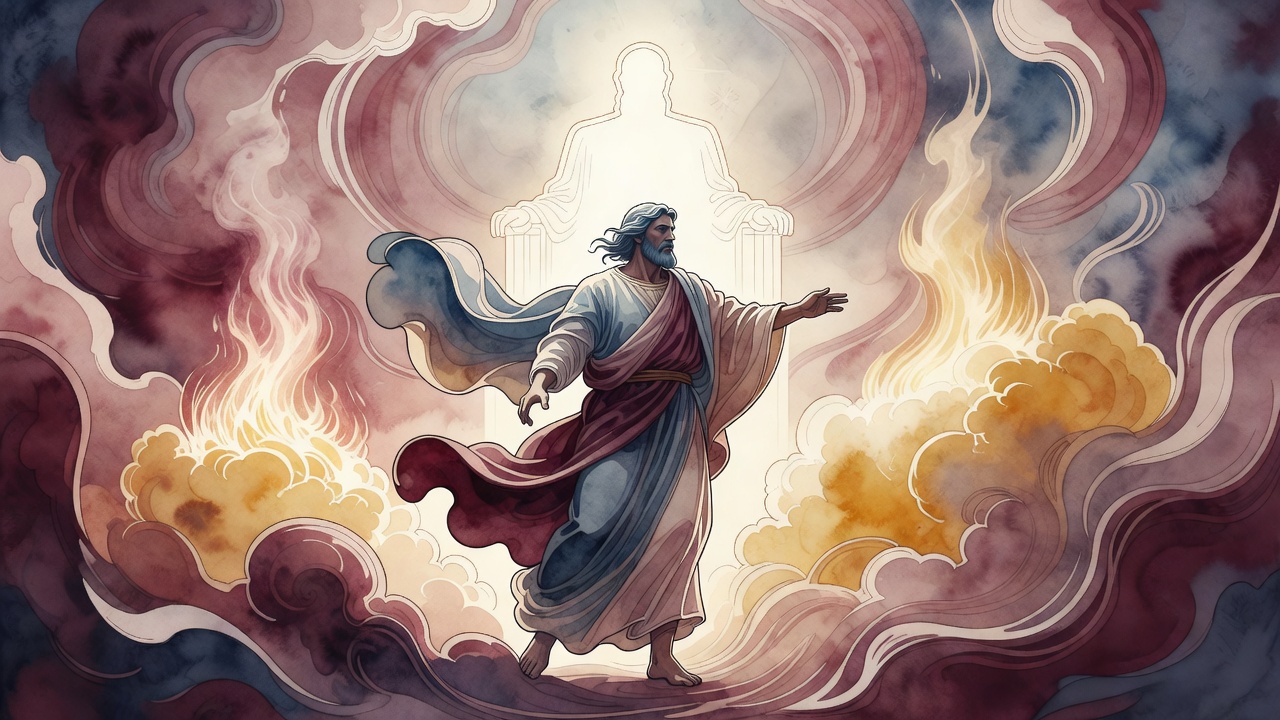
"Come and look at Jacob the pious," they called to the host above, "the one whose face is fixed on the Throne of Glory, the one you have been wanting to see." So the rest of them came down the ladder to look at the man on the ground, then climbed back to compare him against the face carved into the Throne, and came down again to be sure. That was the traffic he watched all night in his sleep. Angels going up to see a face in heaven and coming down to see the same face on a stone.
He Would Not Climb the Ladder
A voice reached him out of that traffic.
"You too, Jacob. Climb the ladder."
He had one moment to answer, and what he said was the most human thing in the account.
"Master of the Universe, I am afraid that if I go up, I will have to come down."
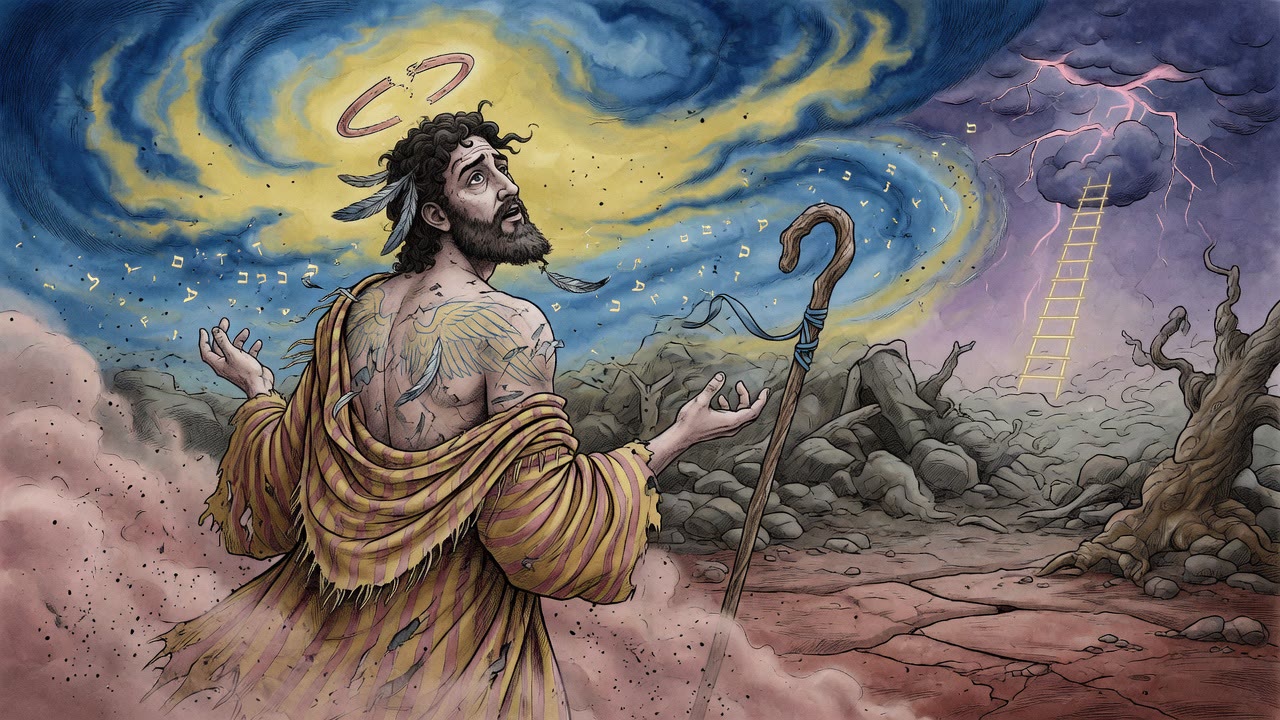
He stayed where he was. The ladder stood there with its top in heaven and its foot in the dust beside his head, and the man refused it because he could not face being sent back down a second time. Had he climbed, his children would have been spared what came to them afterward. Every exile. All of it.
He woke, called the place terrible, set the stone upright, poured oil on it, and went on to Haran to look for work.
Laban Put Leah in the Dark
Seven years he served for Rachel. At the end of them he went to Laban and said, straight out: give me my wife, I have served for her.
"I will give you your wife," Laban said. He made a feast. He took Leah, his older daughter, and brought her instead.
Jacob did not know. He thought she was Rachel. He went in to her in the dark, and in the morning it was Leah.
He was furious, and the fury had nowhere to land. Why have you done this to me, he said. Did I not serve you for Rachel. Why have you cheated me. The first minister before the face of God, the archangel of the power of the Lord, standing in a herdsman's tent in Haran, beaten by a swap any village could have pulled off. He had forgotten what he was. That was the whole condition of the descent. A being comes down, and the memory of it closes over like water.
Uriel Came Out at the Ford
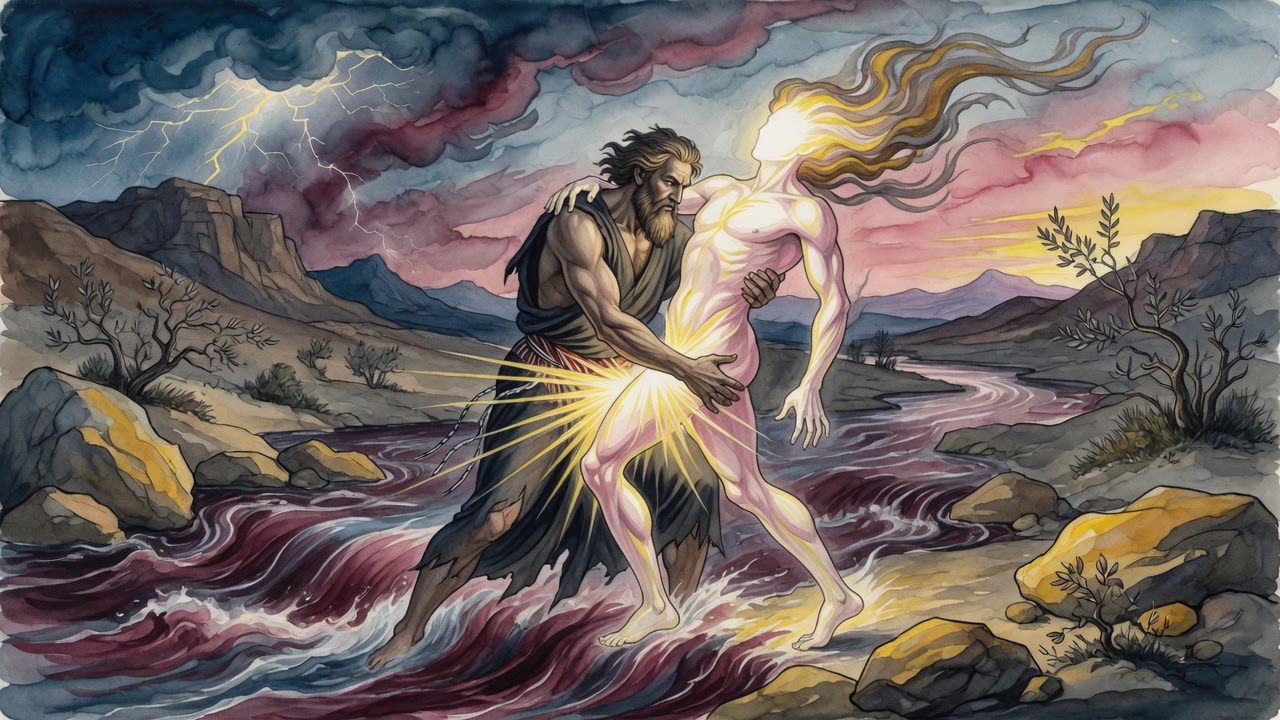
Years later he came back the other way, with wives and children and flocks. He stopped at the ford of the Jabbok, sent everyone across ahead of him, and stayed behind on the empty bank.
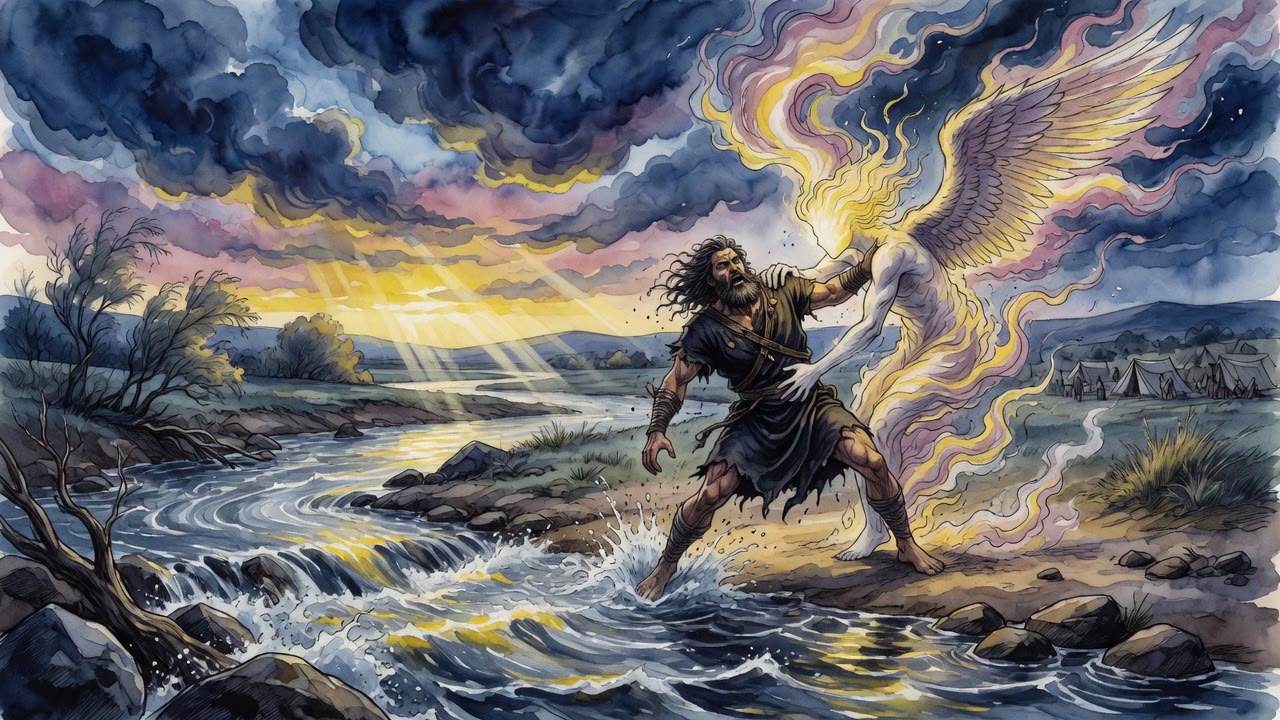
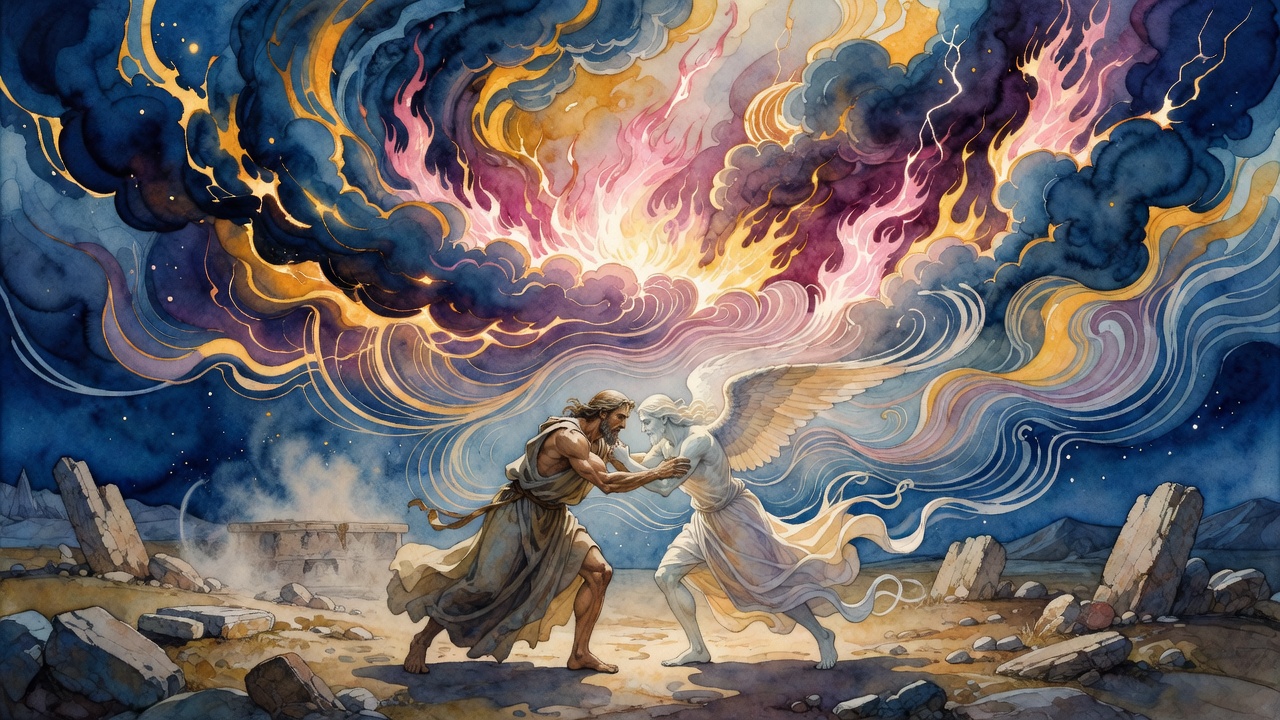
Someone came out of the dark at him.
It was Uriel. He held high rank among the sons of God, and he had spent a long time resenting the one ranked above him. Now that one was down here in a body, tired, with a limp coming, and could be taken. Uriel wrestled him for first place. He wanted his own name to stand first.
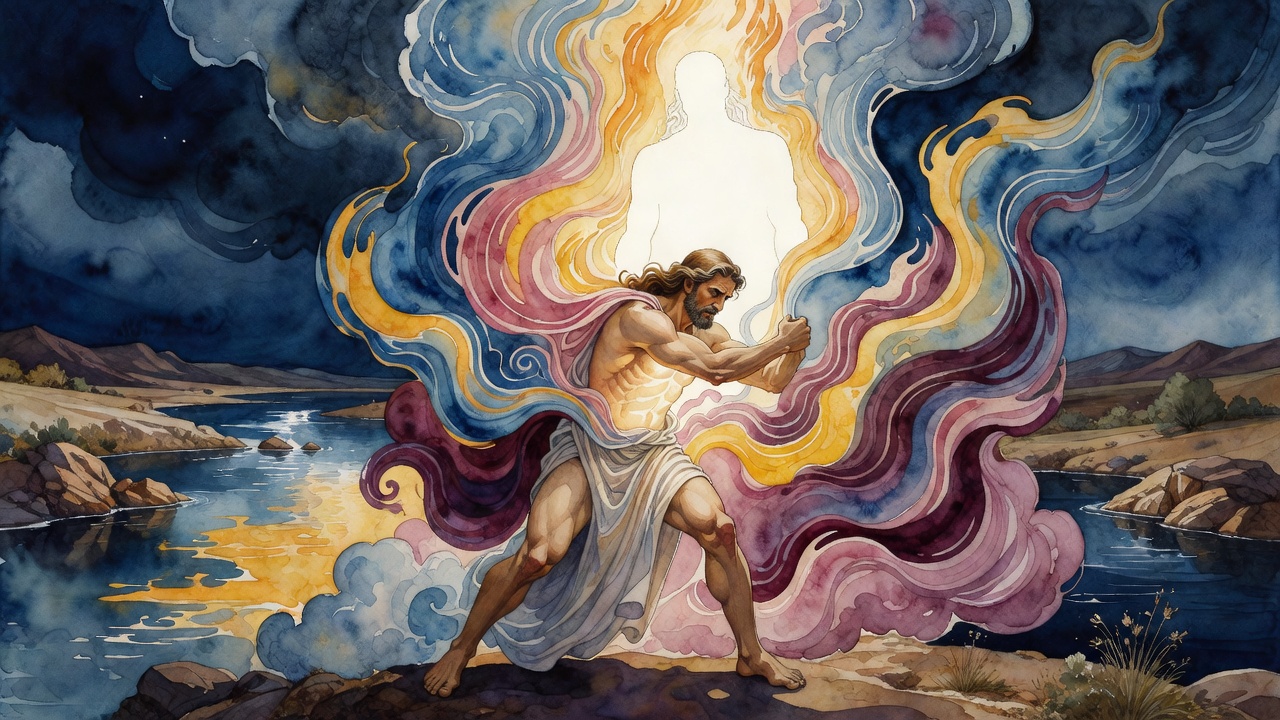
They fought all night in the shallows.
Somewhere in it the memory came back. Jacob got a grip on him and said the thing that ended it.
"Are you not Uriel? Have you forgotten that I am Israel, the chief commander of the heavenly host?"
He spoke the Name that does not go out. The fight was over. Uriel asked to be let go because the sun was coming up.
Jacob would not release him without a blessing, and the blessing he got was his own name back. Not a prize for wrestling well. A correction. He had been an angel. He had come down. Down here they called him Jacob. His name was Israel, and it had been Israel before he was born into this body.
He crossed the water at sunrise, limping.
The Eulogizers Buried Him Anyway
Long after, two rabbis finished a meal and one of them repeated a line of Rabbi Yochanan's: Jacob our father did not die.
The other one put down whatever he was holding. "Was it for nothing that the eulogizers eulogized him, and the embalmers embalmed him, and the buriers buried him?"
"I am expounding a verse," the first one said. Fear not, My servant Jacob, and do not be dismayed, Israel, for I am saving you from far off, and your seed from the land of their captivity. The man is set beside his children in that sentence, and his children are alive.
He did not take it back. The line stood, and it kept standing. The angel who came down and forgot, who would not climb when he was invited, who was cheated by his father-in-law and wounded by a jealous colleague at a river crossing, was buried in Hebron with his fathers, and is alive as long as his seed is alive.
← All myths