Jacob Forgot He Was an Angel Until Uriel Reminded Him at the River
God invited him up the ladder and he said no, because if he climbed he would have to come down again. He did not yet know he had come down once already.
Table of Contents
 Click for full size
The Ladder He Would Not Climb
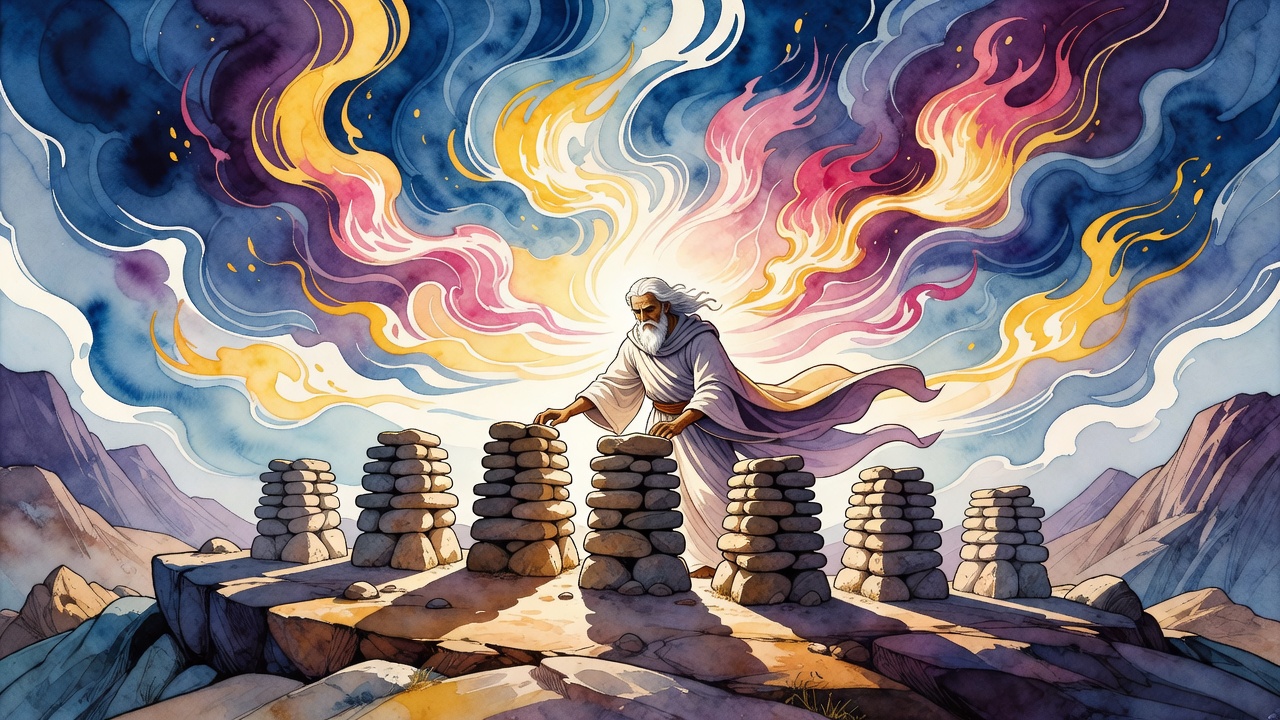
The angels who had walked with Jacob out of his father's house went up the ladder first, and they went up talking.
"Come and look at Jacob the pious, the one whose face is set into the Throne of Glory. The one you have been wanting to see."
So the rest of them came down to look. They went up to study the face carved on the throne, then came down and stood over the man asleep on the ground with a stone under his head, checking one against the other. It matched.
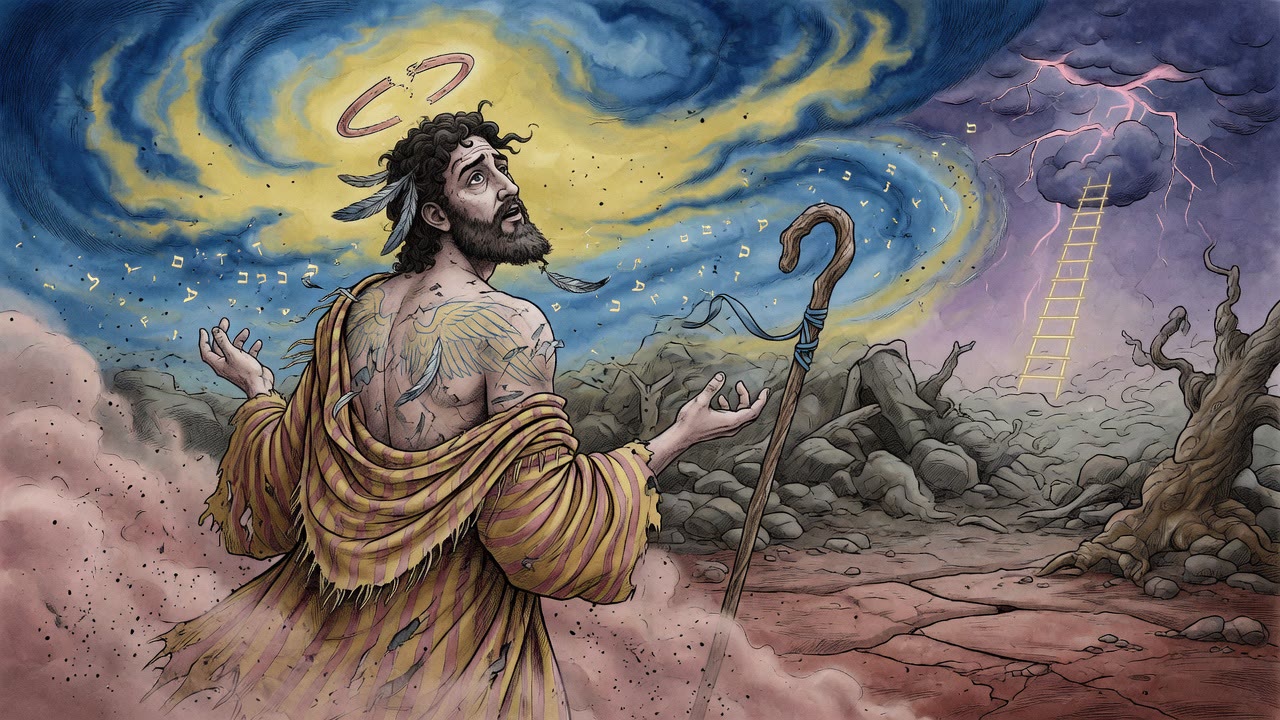
Then God spoke to him out of the top of it. "You as well, Jacob. Climb."
Jacob looked up the ladder and did not move.
"Master of the Universe. I am afraid that if I go up, I will have to come down again."
He stayed on the ground. He woke up, set the stone as a pillar, poured oil on it, and went on toward Haran, and the invitation was never made twice.
What He Had Forgotten
He had reason to be careful about heights. He had come down one before.
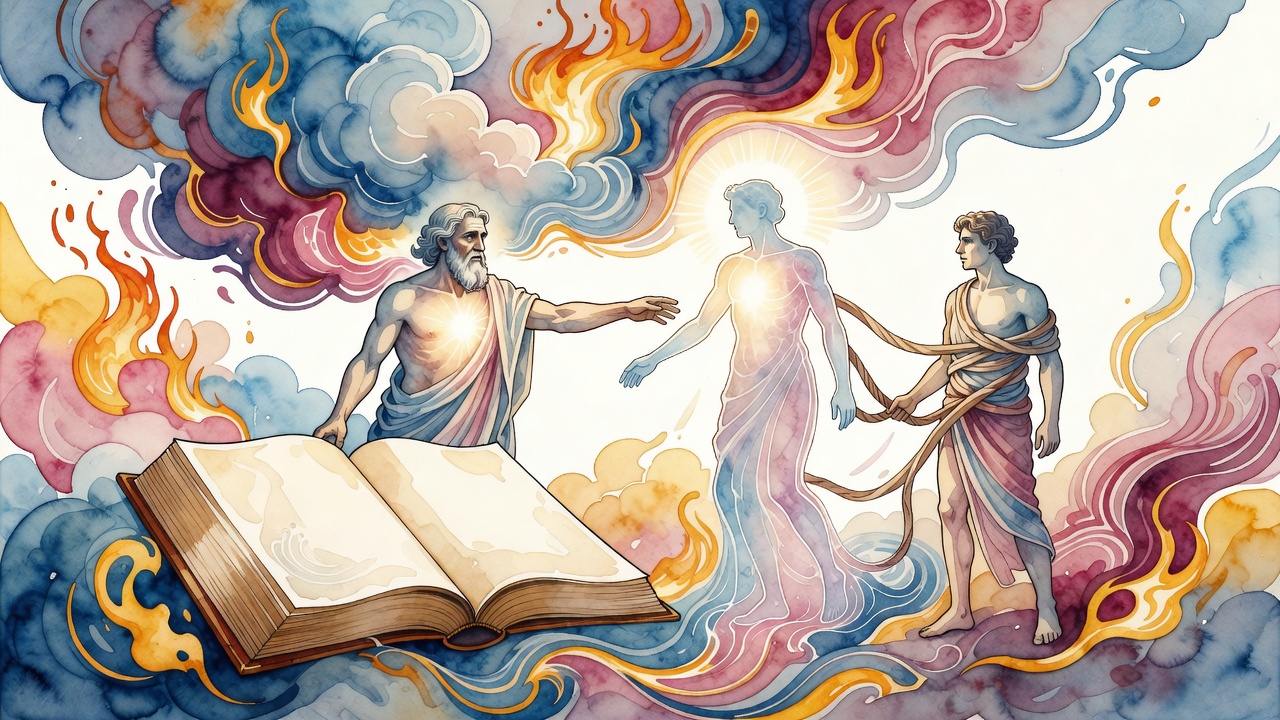
In his own account of himself, given in the first person and preserved only in scraps, he says it flatly: I, Jacob, who am speaking to you, am also Israel. I am an angel of God and a ruling spirit. I am the first minister before the face of God. I am the firstborn of every living thing that God brought to life.
That was the being who had descended, taken a body, and been born of Rebekah. Coming down cost him the memory of it. He forgot. He grew up herding his father's animals. He tricked his brother out of a birthright, ran for his life, and lay down in a field with a rock for a pillow, carrying an angel's name and no idea he had it.
What he was carrying besides was counted out for him under the name El Shaddai: many possessions, and increase, and multiplication into twelve tribes, and a place among the seventy who would sit in the Sanhedrin, one for each of the nations of the world. Twelve tribes and seventy elders, promised to a man who at that moment owned a staff.
The Wrestler at the Jabbok
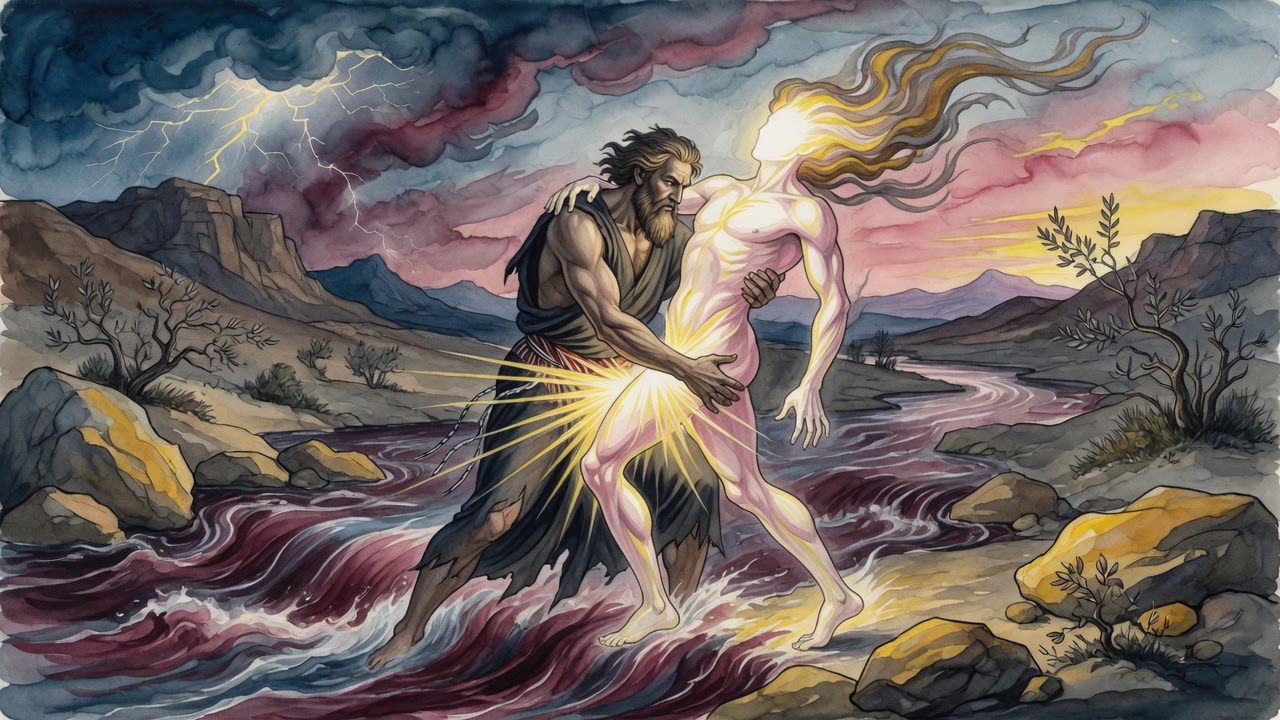
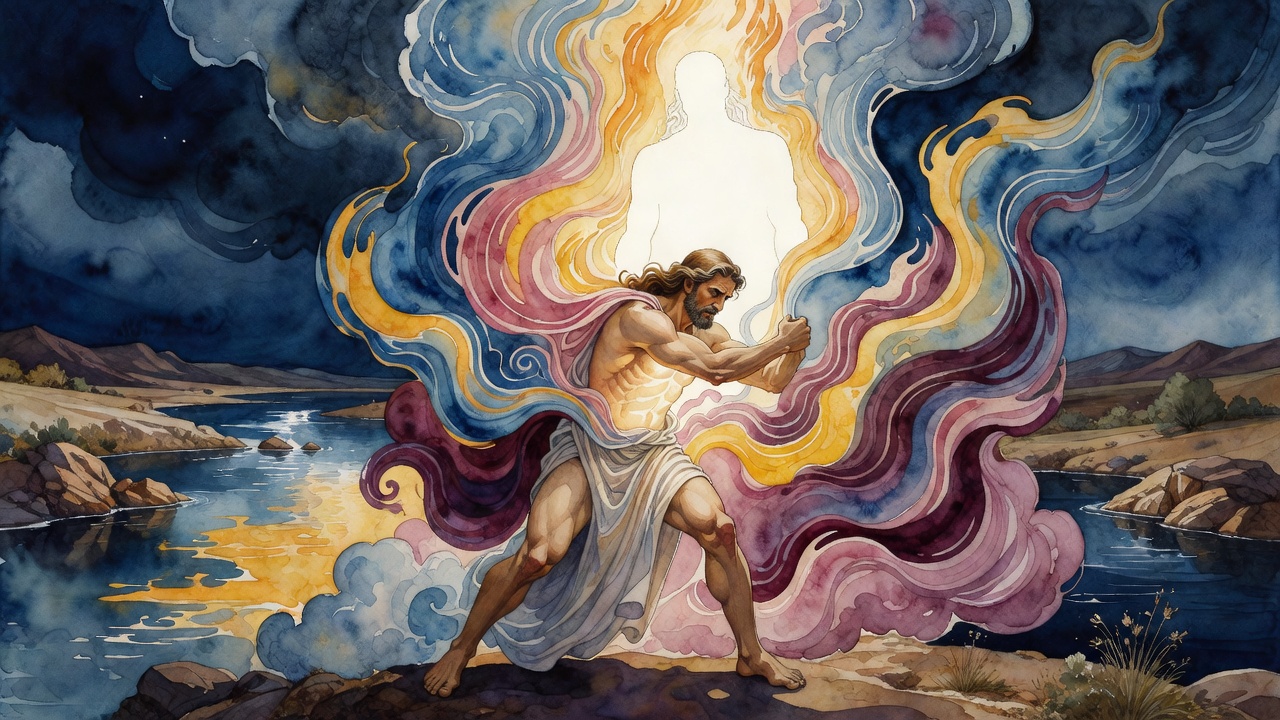
Years later he sent his wives across the river, then his children, then his servants and his flocks, and went back alone to the empty bank, and something took hold of him in the dark.
The one who had him was Uriel, and Uriel had a grievance about rank. He had come down first. By his reckoning that put him above the other one, and he had come to settle the order and to remind the other one what he was.
They fought until the sky went grey.
Then the memory came back, mid-grip, and Jacob heard his own voice saying a thing he had not known he knew.
"Are you not Uriel? Have you forgotten that I am Israel, the chief commander among the hosts?"
He spoke the hidden Name and the fight was over. He had been reminded.
"Your name will not be Jacob any longer. It will be Israel." Which was not a promotion. It was a correction to the record. It was what they had been calling him upstairs since before the world was made.
The Sinew That Remembered
Uriel had touched him at the hip on the way down, and the socket never came right again.
Jacob crossed the ford in daylight limping, and he limped for the rest of his life, and his children stopped eating the sinew of the thigh on account of it. They still do. A whole nation eats around one tendon because of five minutes in the dark by a river, which is a strange way to keep a record and an accurate one.
The wound is the size of the thing that made it.
What the Fathers Asked From the Throne
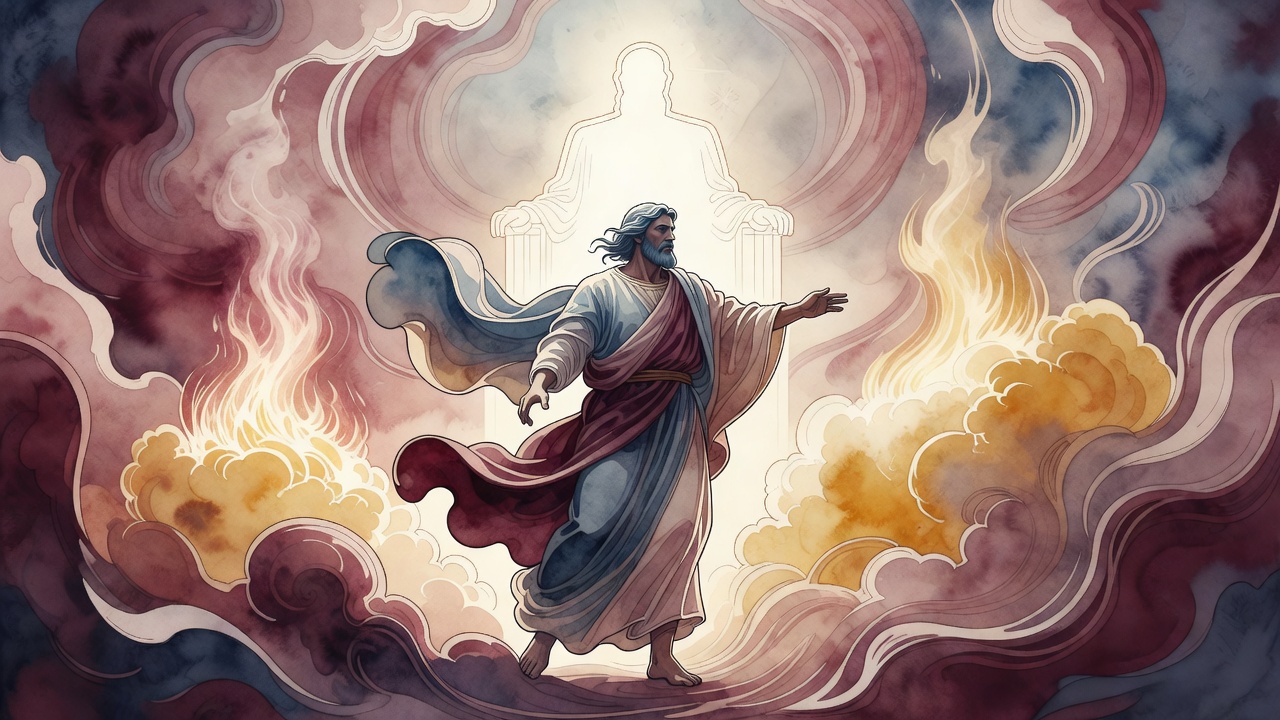
Long after the burials, the souls of Abraham, Isaac, and Jacob were brought up out of their graves and stood in front of the throne, and they did not come to be praised.
"Master of the Universe. How long are you going to sit up here like a man in mourning, with your right hand behind your back, and not redeem your sons and your daughters? How long will you not pity your own children, who are slaves among the nations? Have you no pity?"
The answer came back. "These wicked ones have sinned and broken faith. How am I supposed to take them out from among the nations and show my kingdom now?"
The three of them stood there and wept.
God spoke again, gentler and no better. "Abraham, my beloved. Isaac, my chosen. Jacob, my firstborn. How can I save them at this hour?"
Michael, the prince who is assigned to Israel, could not hold it any longer. He cried out in front of the whole court, in a voice that came apart as it went, the only line anybody had left.
"Why do you stand so far off, Lord?"
The angel who had refused the ladder because he was afraid of coming back down was standing in front of the throne after all, and the answer was still no.
← All myths