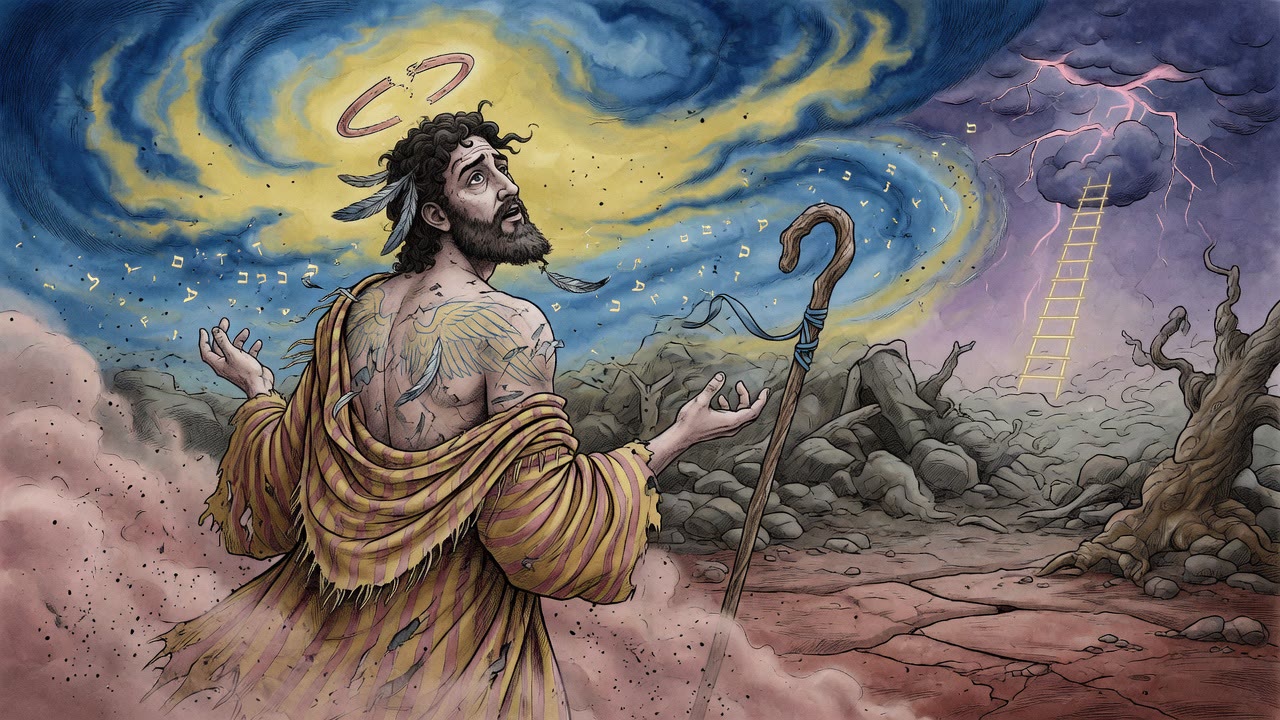
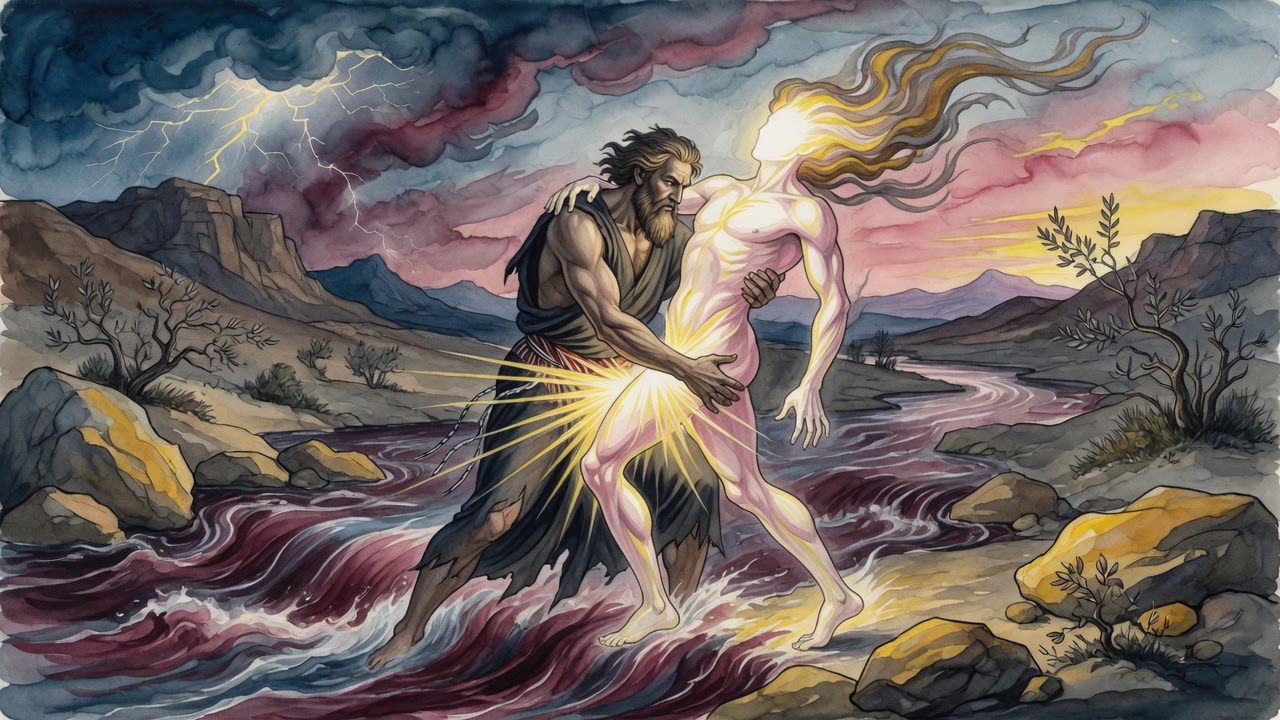
Jacob Held the Angel Until the Choir Began
Jacob wrestles through the night over a forgotten tithe, a stolen blessing, and an angel whose first song waited since creation.
Table of Contents
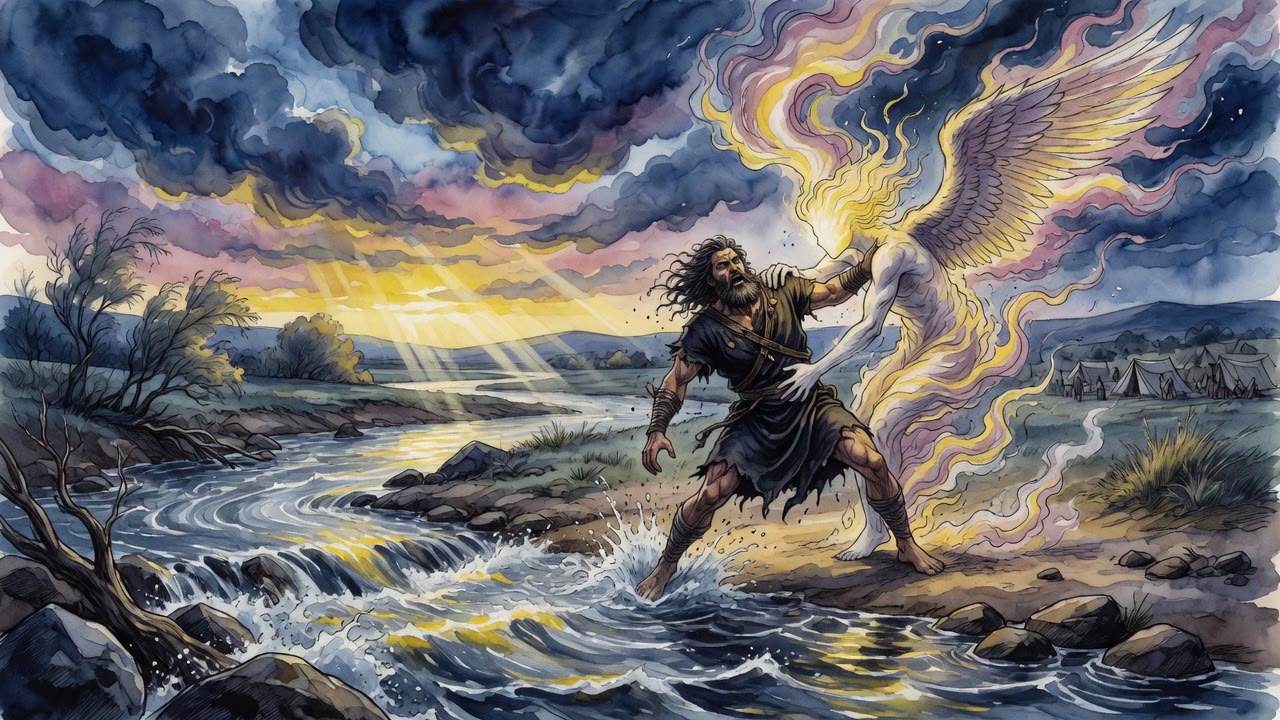
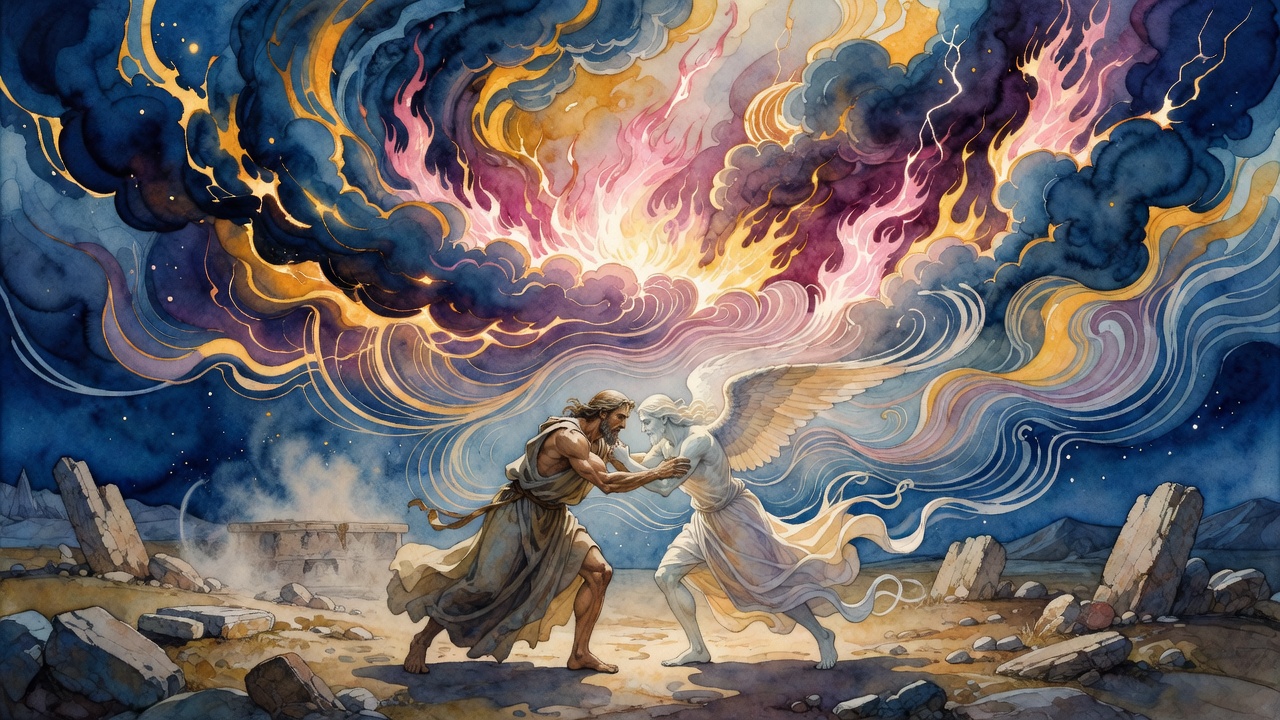
Jacob sent everyone across the Jabbok before he crossed himself. Wives, children, servants, flocks, gifts for Esau. All of it went ahead into the dark. Then the riverbank emptied, and the night kept one man back.
 Click for full size
The figure who stepped toward him wore the shape of a man. He did not announce a kingdom. He did not draw a sword. He closed on Jacob like a creditor at the door.
A Debt Waited at the Ford
The old vow had followed Jacob for years. He had promised to give a tenth of everything that became his. Sheep could be counted. Camels could be counted. Silver, servants, jars, tents, all of it could pass under a reckoning hand. Children were harder.
Ten sons stood in Jacob's house, and one daughter. The angel pressed him on the sons. A tenth belonged to God. Jacob could not walk into the land with the debt unpaid.
So the wrestling began as accounting, which is a terrible kind of wrestling. Jacob had to count his own children under the stare of heaven. The four firstborn sons of the four mothers were set aside first, because the firstborn already stood apart. Eight remained. He began again, one name after another, and the tenth fell on Levi.
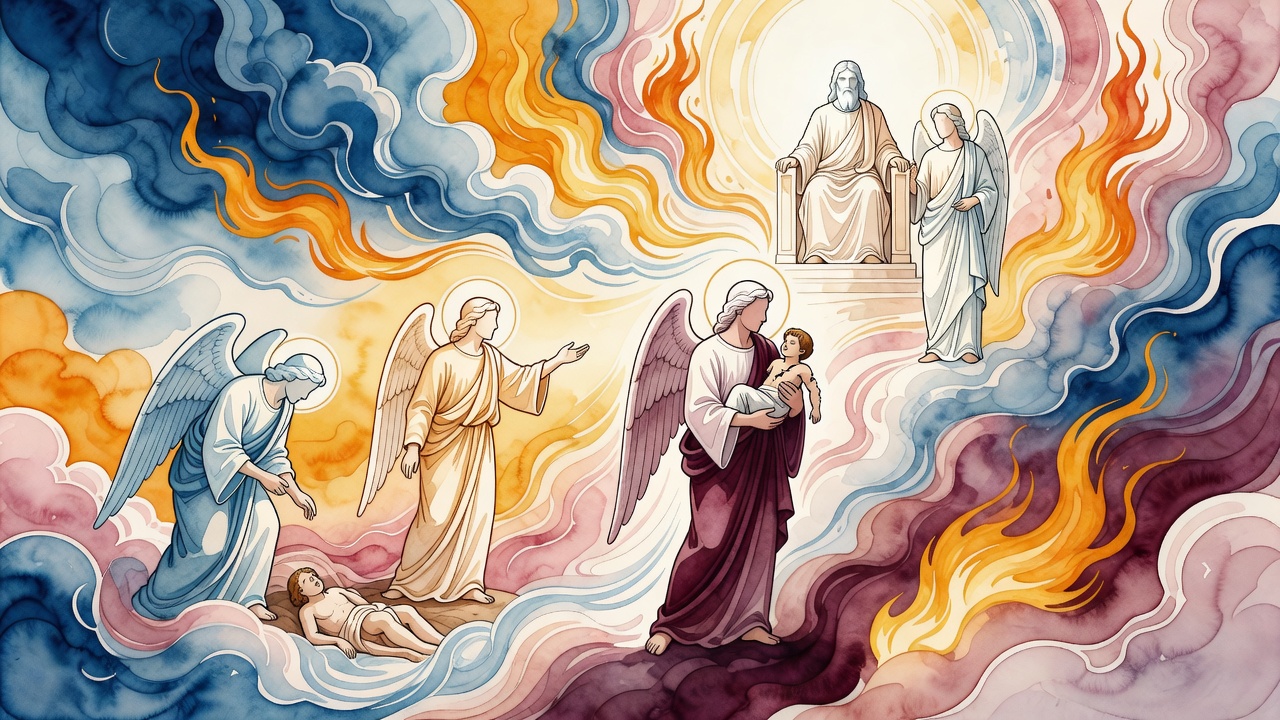
Michael lifted that name toward heaven. This one is Yours.
Levi Was Counted Out
Nothing about the river became quiet after that. The water kept pulling at the stones. Jacob kept pulling against the angel. The house of Levi had been marked, but Jacob still had Esau ahead of him, and Esau's merit was not small.
For twenty years Jacob had lived with Laban. He had survived the house of tricks, kept the commandments in a place built to corrode them, and sent word to Esau that he had remained a stranger there. The word carried the number 613 inside it. Jacob was telling his brother that Laban had not changed him.
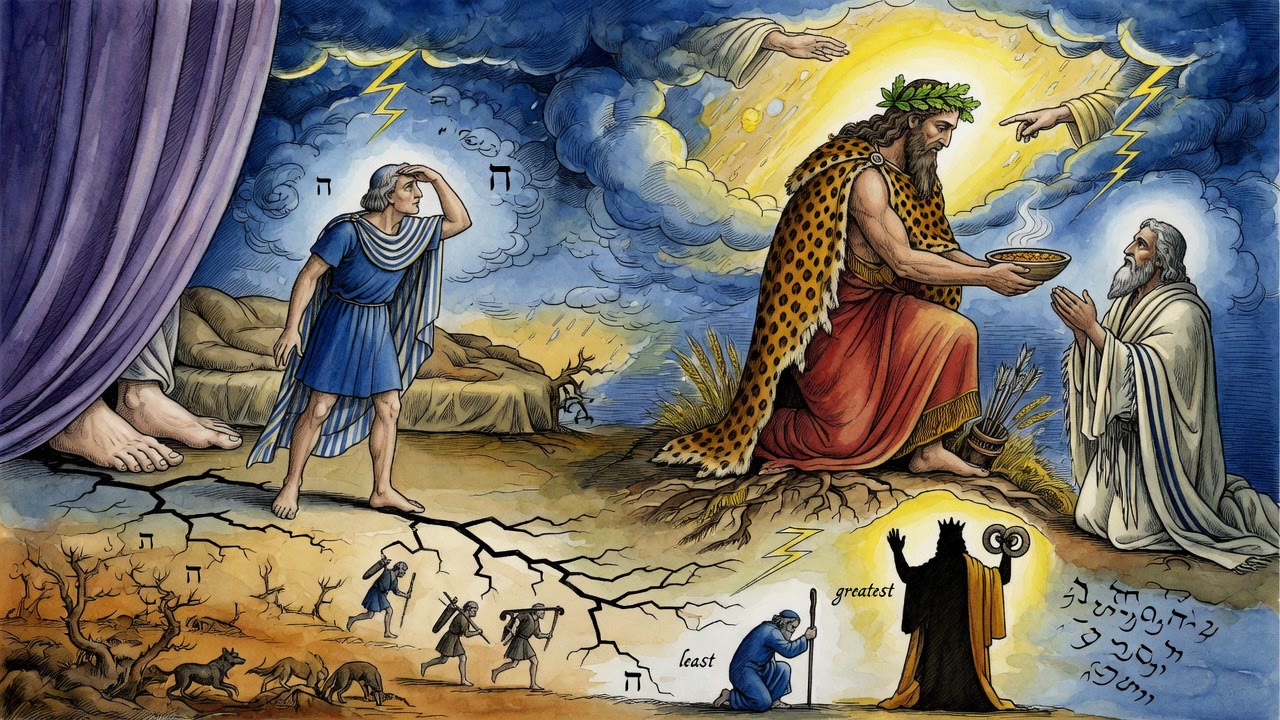
But Esau had honored their father while Jacob was away. That merit stood like a guard beside him. Jacob could not dismiss it. He feared his brother because guilt had weight, and because Isaac's blessing had carried a warning. If Jacob failed in righteousness, the yoke could slip from Esau's neck.
The Wrong Voice Wore a Mitzvah
The angel at the river was also Esau's force moving in another shape, the pressure that makes a person call appetite duty and fear prudence. The yetzer hara (the evil inclination) does not always arrive with dirt on its hands. Sometimes it arrives polished, quoting holiness, offering a sin dressed as a mitzvah (a commandment).
Jacob had spent the night before meeting Esau sorting animals into gifts, measuring distance between herds, rehearsing the words his servants would say. Every arrangement could be humility. Every arrangement could be panic. The difference was thin enough to cut him.
The struggle found that thin place. Head, heart, thigh. The angel could not master Jacob's head, where recognition of God burned clear. He could not master the heart, where fear and prayer moved together. So he struck lower, at the thigh, at the place of habit, at the part of a man that walks even when the mind has gone dull.
Jacob's leg buckled. He held on.
Dawn Pressed the Angel
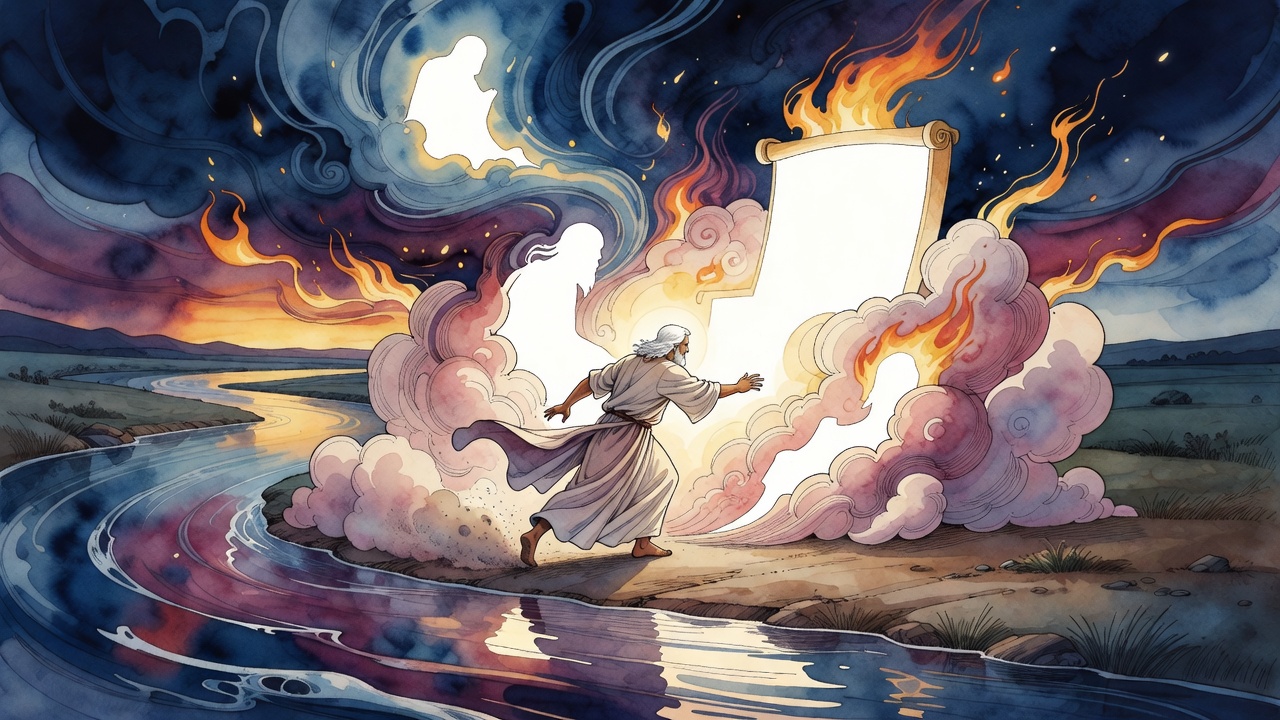
Then the eastern edge of the world paled. The angel changed his demand. Let me go.
Jacob tightened his grip. He had not survived Laban, Esau's shadow, the river, and the blow to the thigh to release the one who wounded him empty-handed. He wanted a blessing before day broke.
The angel had waited from the first day of creation for this morning. Above, the choirs were gathering in their order. Some angels praise once and vanish from the moment. Some wait through ages for the hour assigned to them. This angel's hour had finally arrived, and Jacob, mud on his clothes and pain in his hip, was making him late.
Still Jacob refused. The choir could wait another breath. Heaven had stopped him at the river. Heaven would have to send him forward with a word.
The New Name Walked Limping
The blessing came as a wound changed into a name. No longer only Jacob, the heel holder, the one who follows from below. Israel, the one who has struggled with the mighty and endured.
The angel would not give his own name. Names are not toys in a world where speech can bind a soul, appoint a tribe, or call a force down from heaven. He blessed Jacob there and pulled free toward the morning song.
Jacob named the place Peniel, because he had faced the messengers of God and lived. The sun rose before its time, paying back the sun that had set early when he first fled from Beersheba. The light came fast over the water, and Jacob crossed into the day with Levi marked for God, Esau ahead, a new name in his mouth, and a limp no blessing removed.
← All myths