Jacob Held Samael Until Dawn Broke Over the Yabbok
Four hundred armed men were a day away. Jacob sent everything ahead and stayed alone by the river, and something found him in the dark.
Table of Contents
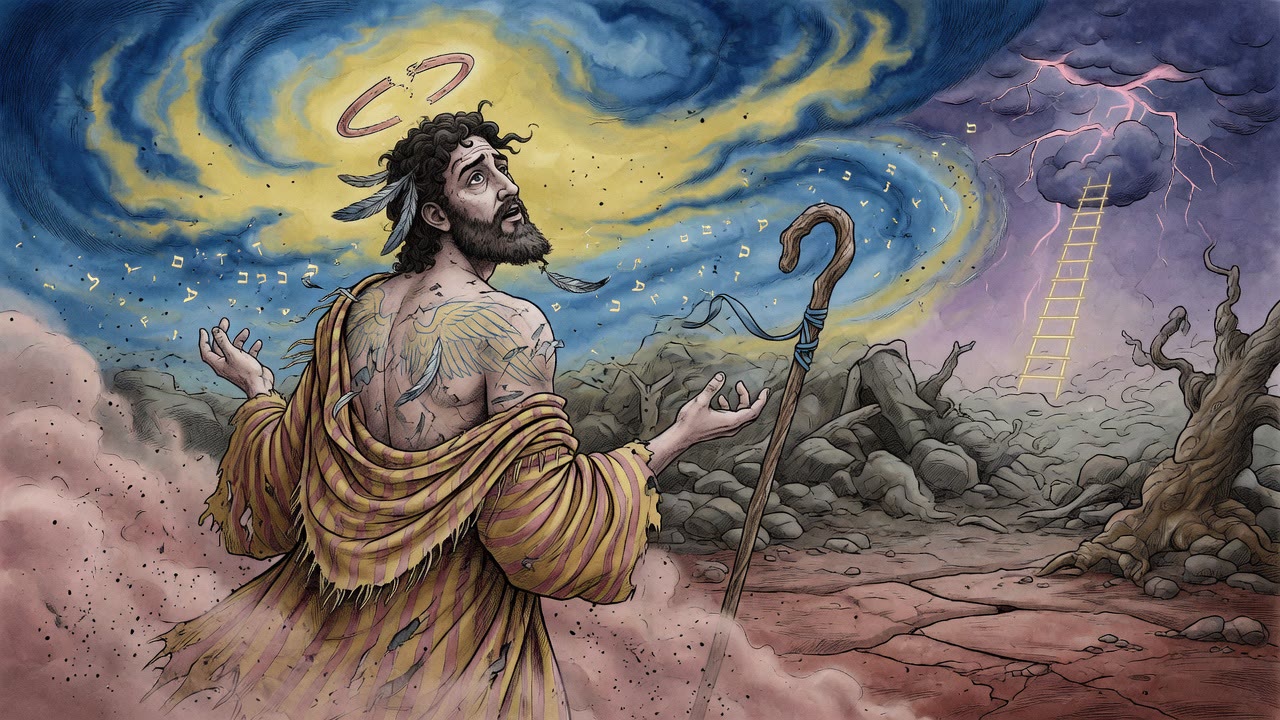
Jacob had spent three days stripping his camp down to nothing. Servants in waves, then she-goats and he-goats in waves, then camels, then cattle, then children and their mothers, the whole of his household moving south toward the Jabbok ford in separate droves so that if Esau came with his four hundred men and cut down the first group, the second would have time to scatter (Genesis 32:7). He had done everything a frightened man could think to do. He had prayed. He had sent ahead more than five hundred animals as a tribute. Now it was dark, the ford was quiet, and Jacob was alone on the north bank.
 Click for full size
He had crossed to retrieve something he had left behind. A small thing. He was standing there in the dark by the water when the attack came.
The Grip at the Ford
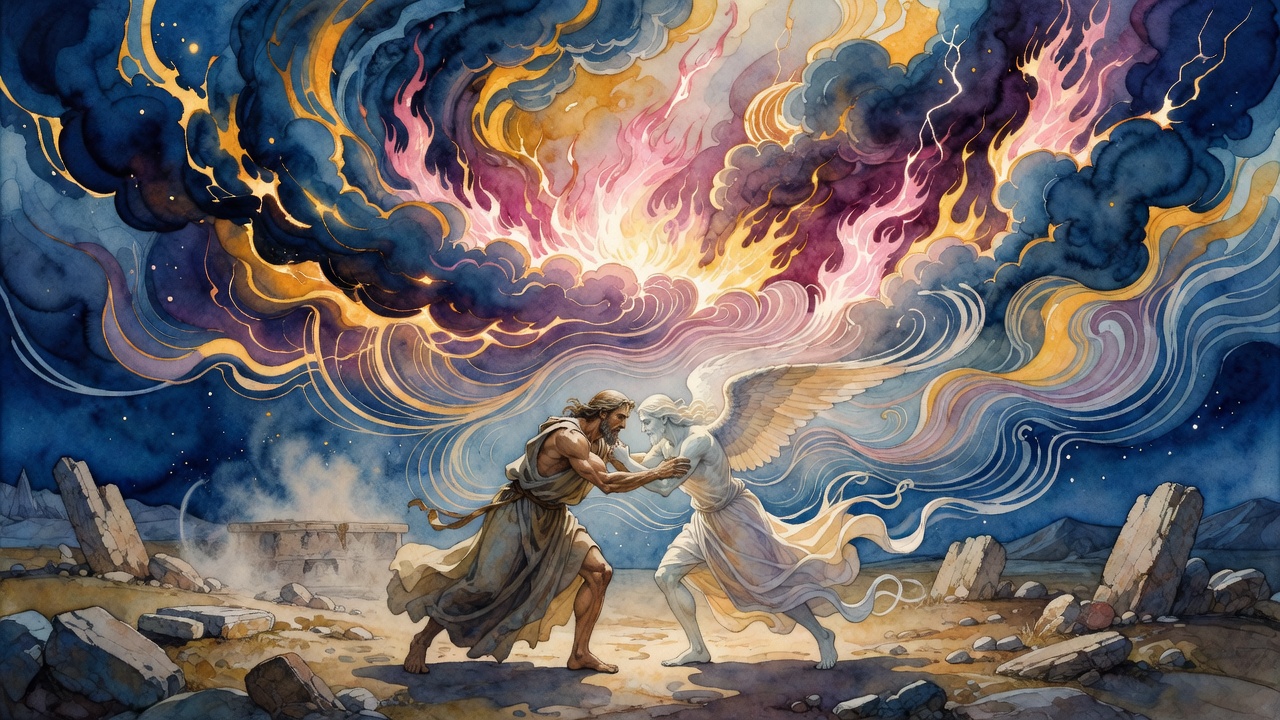
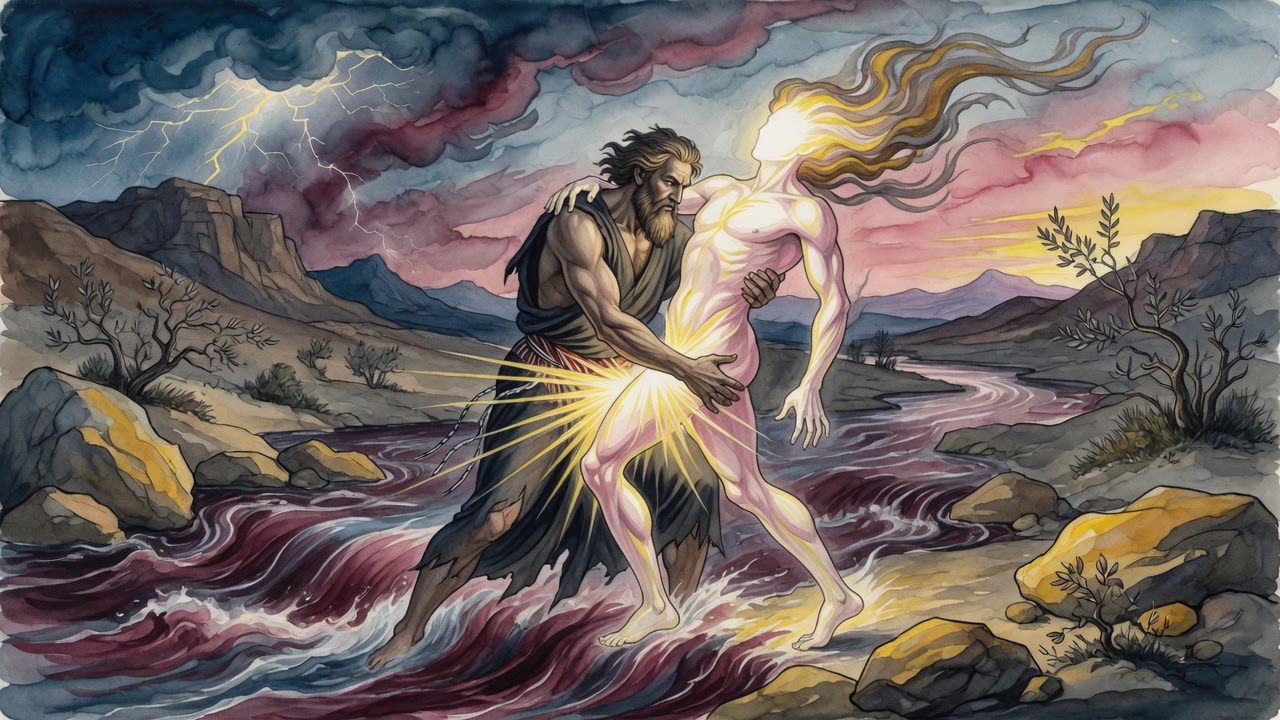
A figure seized him. No warning, no announcement. The text of Genesis calls it a man, ish in Hebrew, which could mean almost anything. They went down together in the mud of the riverbank and held each other, and the hours passed.
Jacob was not weak. The sources remember him as a man who had rolled a stone off a well mouth alone, a stone that ordinarily required several shepherds, the moment he saw Rachel approaching (Genesis 29:10). But this was different. This was a hold that lasted until the sky began to gray, and neither figure could break it.
Samael, the angel assigned as guardian of Esau's nation, came for Jacob that night. The tradition identifies him this way: not an independent power, not a rebel against heaven, but an advocate who serves God as accuser and tester, an agent assigned to press the claim of the nation whose destiny stood against Israel's. If Esau was going to be displaced in history, his heavenly champion would fight that displacement. And Jacob was alone.
The Hip That Would Not Break
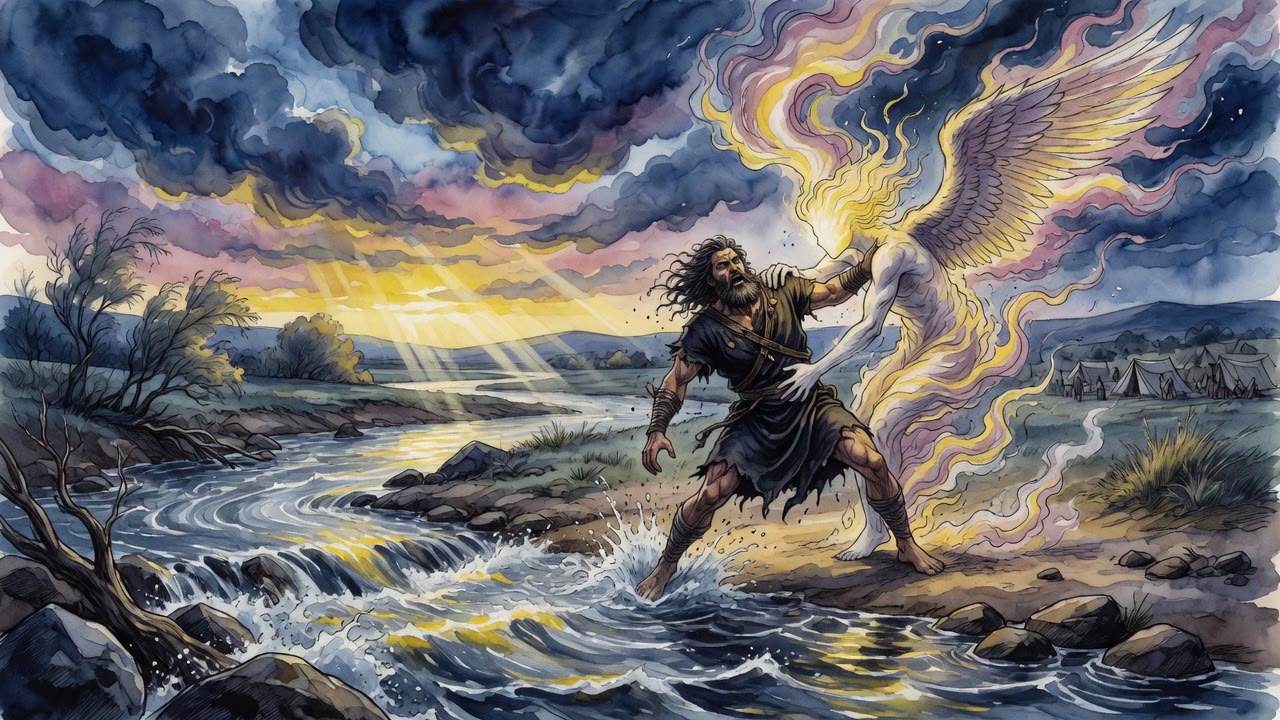
What happened next is precise in the text and strange. When the figure saw he could not overcome Jacob, he touched the socket of Jacob's hip, and the socket gave way (Genesis 32:26). The word for touched, vayiga, is the same word used elsewhere for the touch of an angel that conveys holiness. This was not a lucky strike. This was a targeted wound, the only damage an angel constrained by heaven's purpose could inflict on a man God had decided to carry through the night.
And Jacob held on.
The hip was wrenched and he held on. That is the center of the story. An angel of the nations was sent to weaken him, succeeded in wounding him, and still could not make him release his grip.
Running Late for the Morning Song
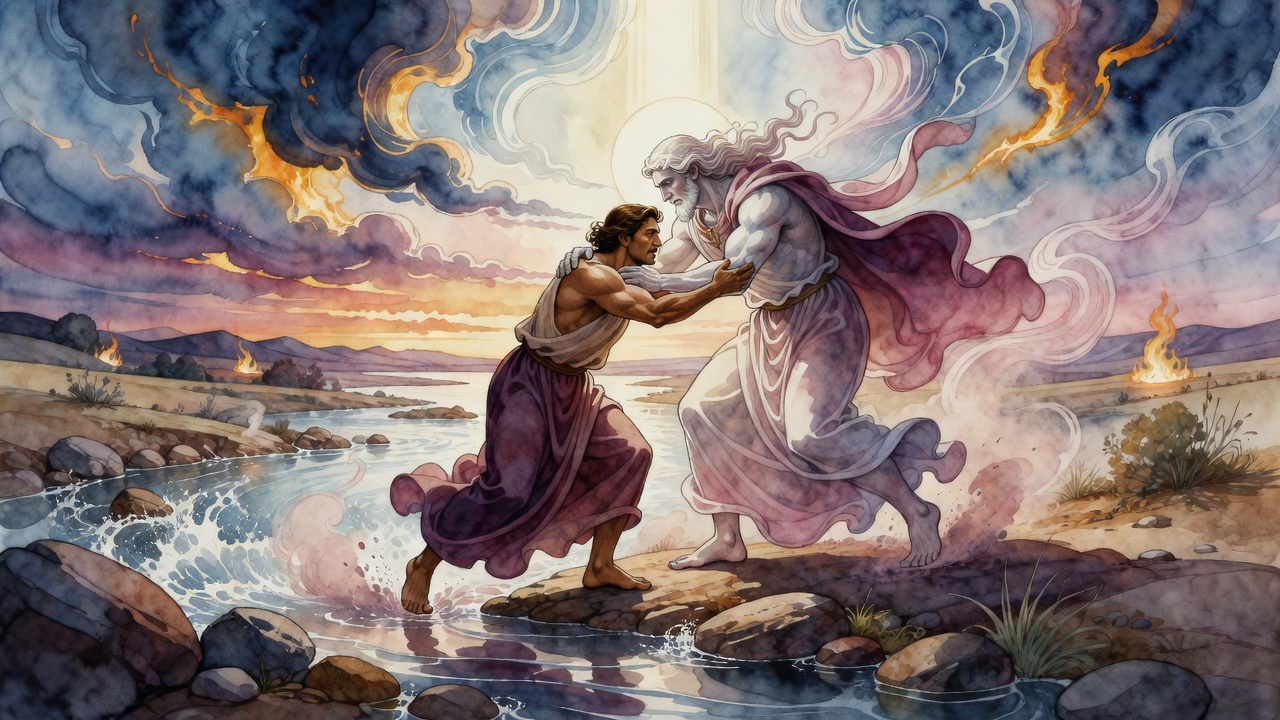
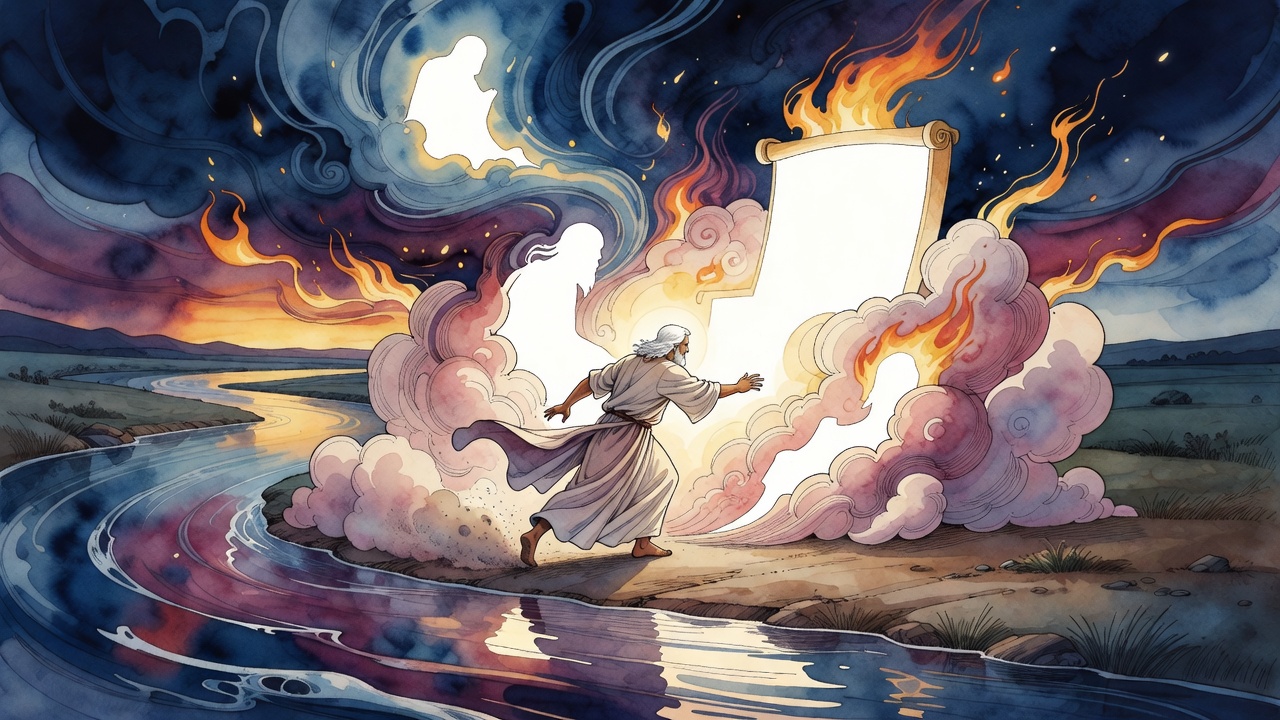
When dawn broke in the east, the figure said: "Let me go, for the sun is rising."
Angels who minister before the throne must ascend to sing at dawn. Every morning the heavenly court opens, and the ministering angels take their places. Missing that service carries consequence. Samael was not asking for mercy. He was pressed for time, and Jacob's hands around him were the reason.
Jacob said: "I will not let you go unless you bless me" (Genesis 32:27).
The demand is the strangest thing in the story. A man does not demand blessings from the figure who just dislocated his hip. But Jacob understood something about what had happened during those hours in the dark. The fight was not random. Samael was Esau's advocate, which meant Samael had standing. He could argue cases. He could confer or withhold. A blessing from the guardian angel of the opposing nation, forced out of his own mouth at dawn, would carry weight in the court where such things are weighed.
The Name Given Instead of an Answer
The figure asked: "What is your name?"
Jacob answered. The figure said: "Your name will no longer be Jacob. It will be Yisrael, Israel, for you have wrestled with the divine and with human beings, and you have prevailed" (Genesis 32:29).
Jacob asked for the figure's name in return. The answer was a refusal framed as a question: "Why do you ask my name?" And then a blessing, unnamed, given in the gray light at the ford.
The place Jacob called Peniel, the face of God. Because he had seen divine presence face to face and his life was preserved (Genesis 32:31).
The sun rose on a man limping across the ford, alone, moving toward four hundred armed men. The hip could not be healed by morning. The gid hanasheh, the sciatic nerve, had been pulled from its socket, and from that day the children of Israel do not eat it from any animal, because the hollow where it sits is the hollow Samael struck in their father (Genesis 32:33).
The Morning After the Night
Esau came running. He embraced Jacob and wept. The four hundred men stood aside.
The night at the Yabbok had not removed the danger. It had changed what Jacob was walking into it as. He had gone into the dark as a frightened man trying to buy off his brother with livestock. He came out as Israel, the one who holds on. The wound was the proof of the fight. The limp was the credential.
And Samael, late now for the morning song, had given him his name.
← All myths