Jacob Was the Axis All the Other Patriarchs Pointed Toward
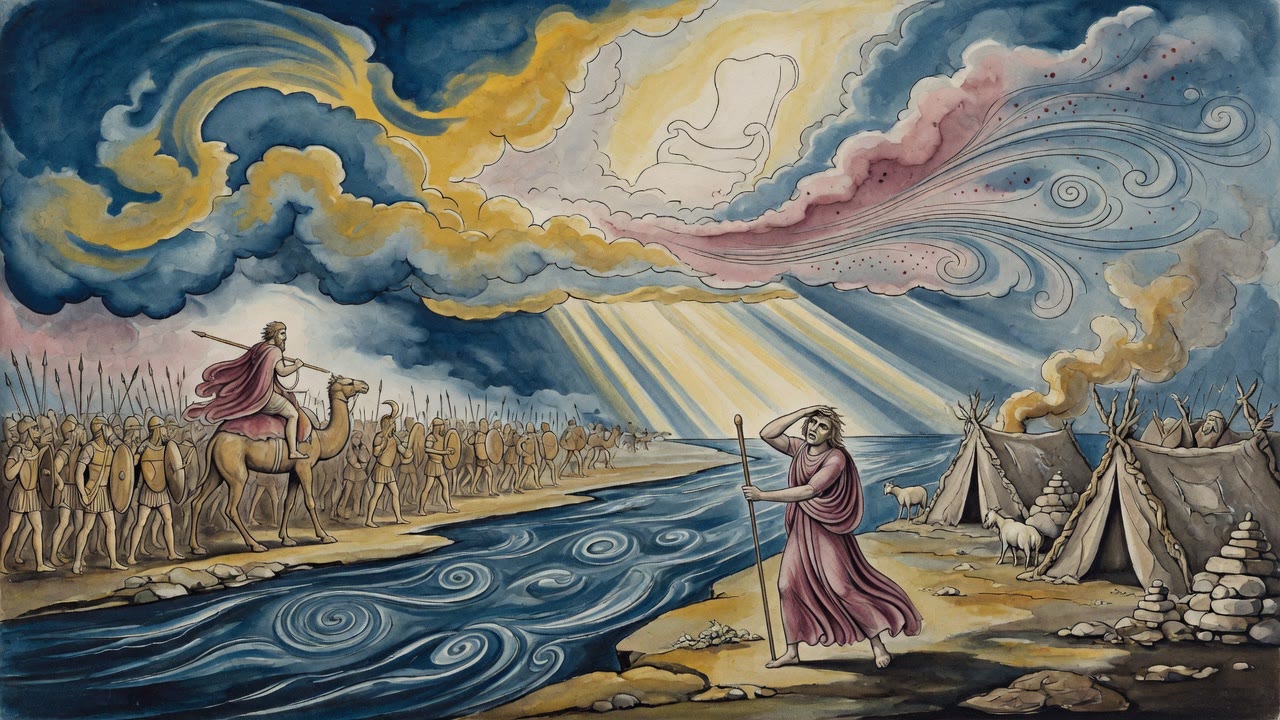
In the Prayer of Joseph, Jacob says he was an angel before the world was made. The man he wrestled at the Jabbok was Uriel, arguing over who descended first.
Table of Contents
 Click for full size
The Blessing That Could Not Have Gone Elsewhere
When Rebekah put the goatskin on her son's arms and sent him into his father's tent smelling of the field, the tradition has to decide: was this a deception that worked, or a correction that had been waiting to happen?
The Book of Jubilees does not hesitate. The blessing went to Jacob because no other outcome was possible. Not because Esau was wicked, though Jubilees is not gentle with Esau. But because Jacob was not simply the younger son of Isaac. He was something larger, carrying within himself a destiny that had been fixed before either of them drew breath, before Abraham had even left Ur.
The roots of that destiny run deeper than Rebekah's tent, deeper than any human voice. They reach back to a moment when Jacob had no mouth of clay to speak with at all, and yet he spoke.
Before Birth, Before the Womb
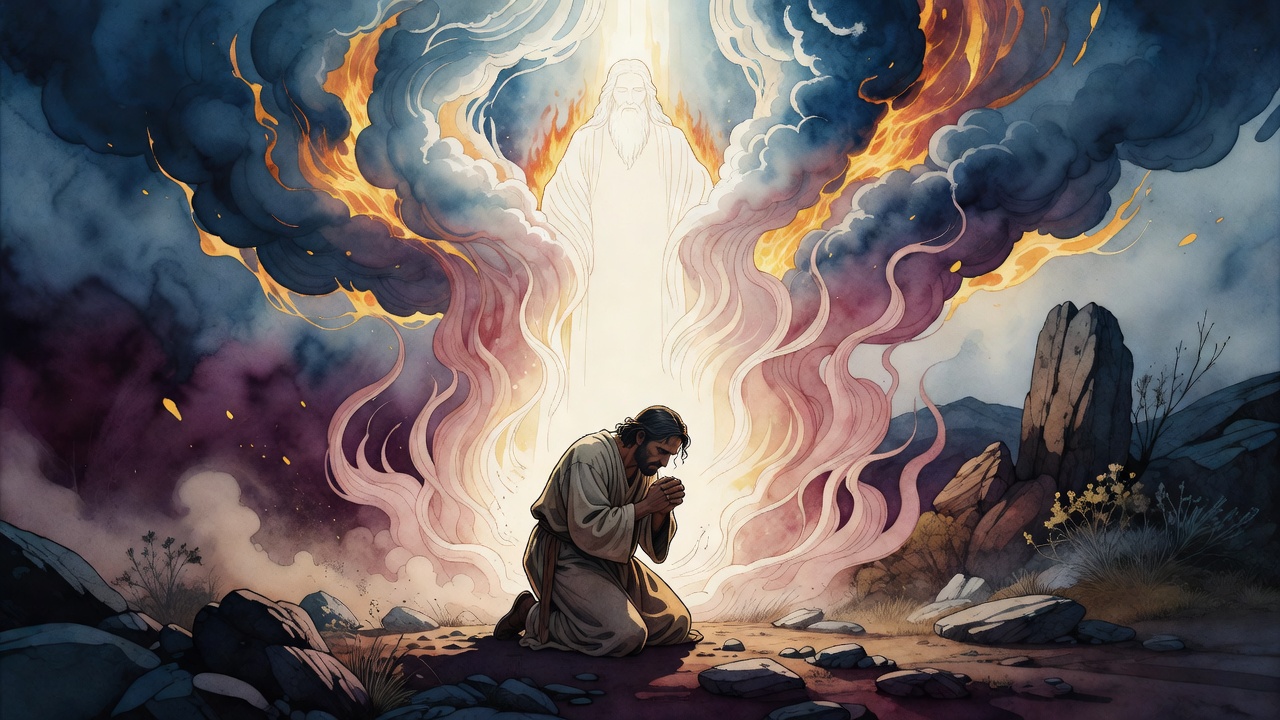
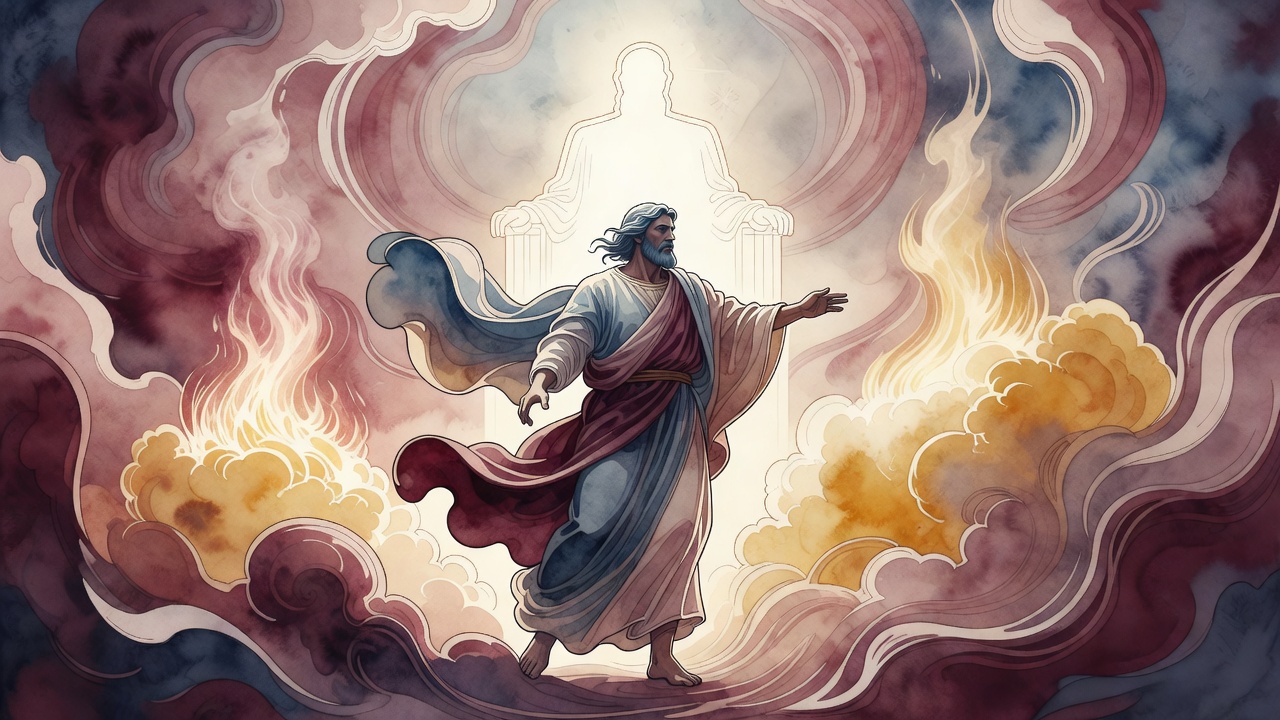
The Prayer of Joseph, a Jewish text from the first or second century CE that survived only in fragments quoted by the church father Origen, opens with Jacob speaking in his own first person: I, Jacob, who is speaking to you, am also Israel, an angel of God and a ruling spirit. He had been brought into existence before the creation of the world. He was the first angel, the archangel of the divine presence, possessing knowledge of the highest order. He had descended into material existence, been born of Rebekah, and taken on a human body.
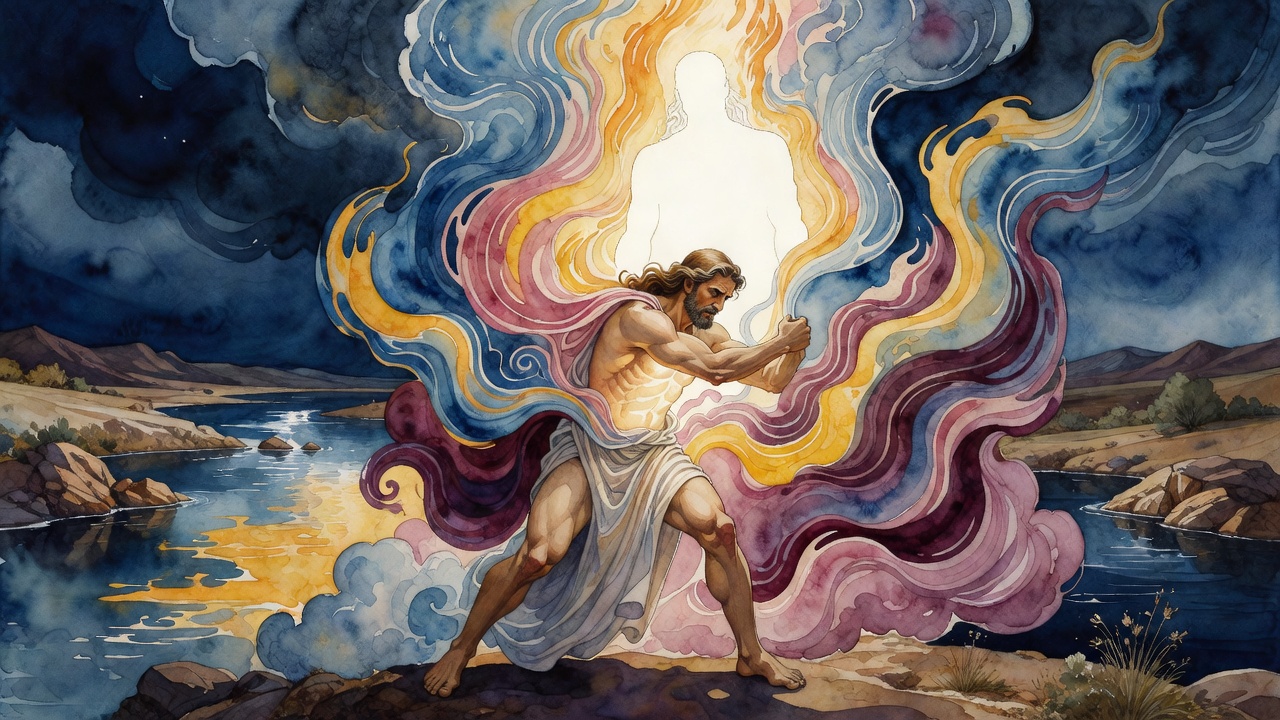
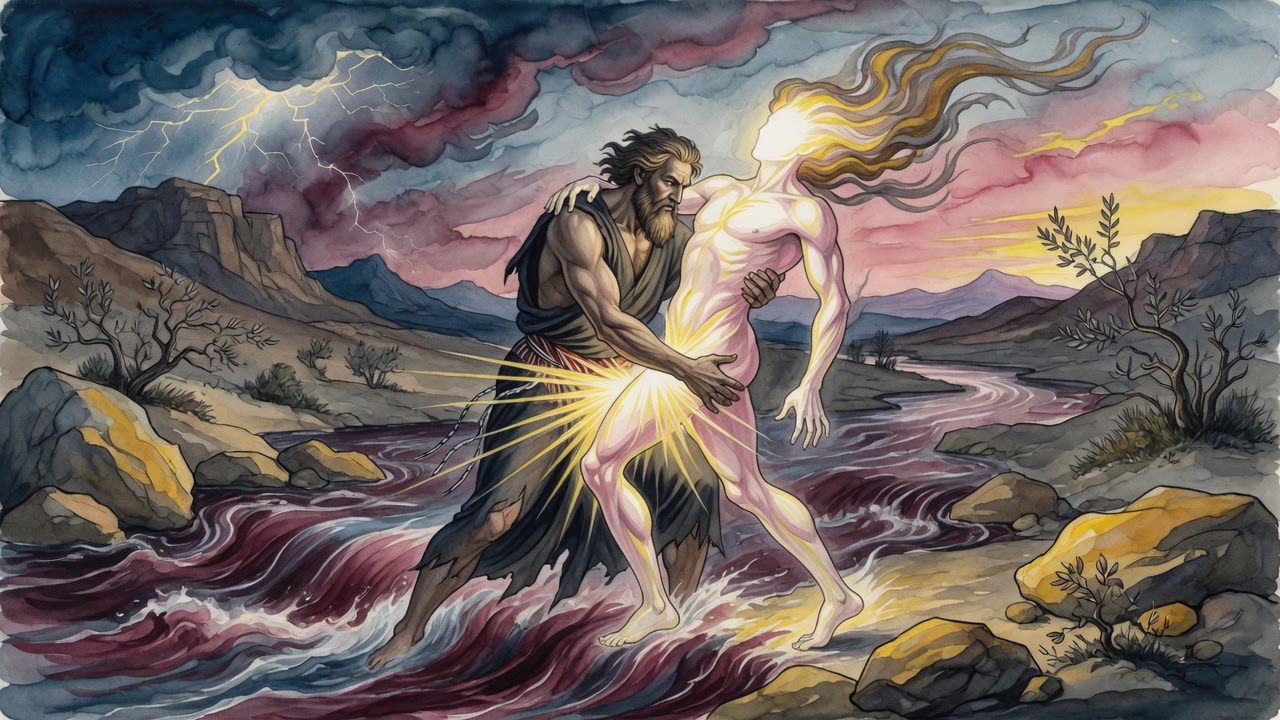
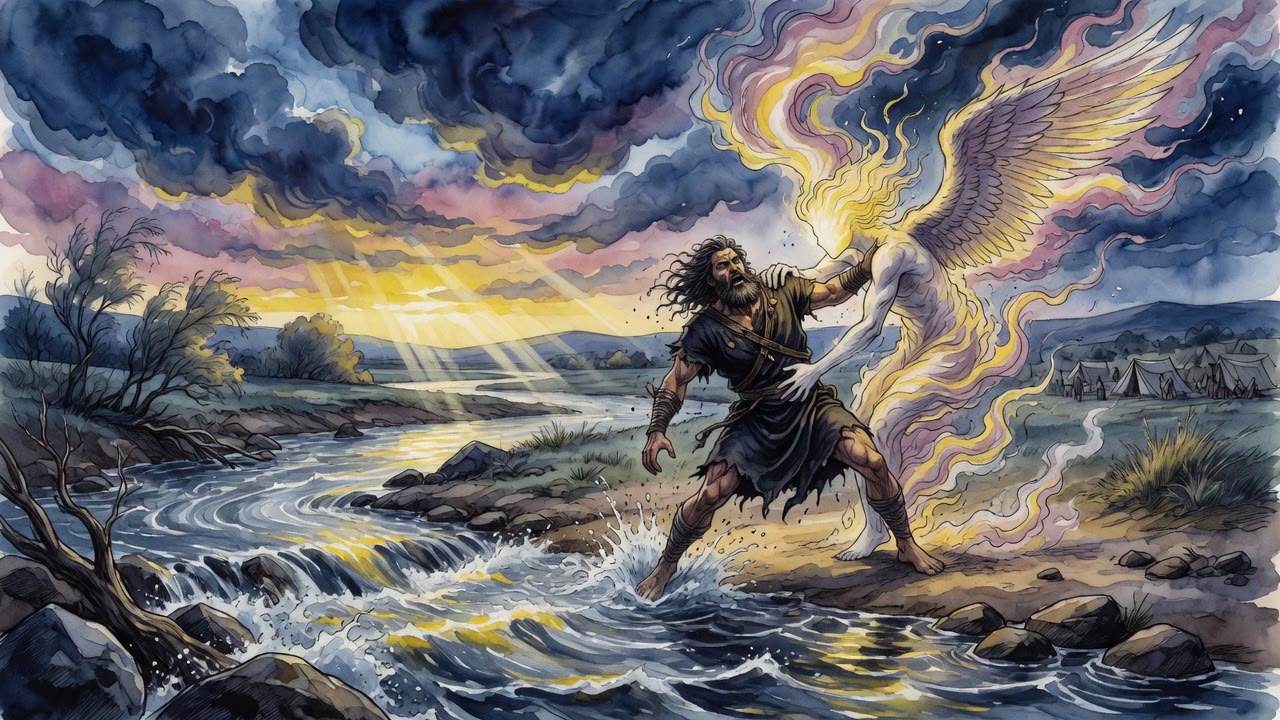
The wrestling match at the Jabbok was not, in this telling, a man struggling with a mysterious stranger. It was one angel contesting the precedence of another. The figure that confronted Jacob at the ford was an angel named Uriel, who had been claiming Jacob's rank in the heavenly hierarchy on the grounds that he, Uriel, had descended first and therefore held seniority. Jacob defeated him and proved his claim.
His new name was not a gift. It was a recognition of what had always been true.
What Esau's Rage Revealed
Jubilees, the second-century BCE text that retells Genesis and Exodus in a framework of heavenly tablets and predestined history, adds a dimension the Torah's surface leaves implicit. When Esau discovered what had happened with the blessing, his rage was not only wounded pride. He planned to murder Jacob the moment their father died. He spoke the plan aloud to his own children.
But Jubilees is equally clear that Esau's plan was never going to succeed, because the blessing had sealed something that force could not reverse. Isaac had blessed Jacob with the dew of heaven, the fatness of the earth, the service of nations and brothers. Once those words had left Isaac's mouth, they were not merely paternal sentiment. They were prophecy. Esau could not take back a blessing he had not received.
What the tradition finds interesting is not that Jacob tricked his brother but that the trick worked so cleanly. The goatskins fooled the blind old man's hands. The field-smell fooled his nose. But the blessing itself could not have been misdirected. It moved to where it was always going.
The Vision Jacob Woke From in Terror
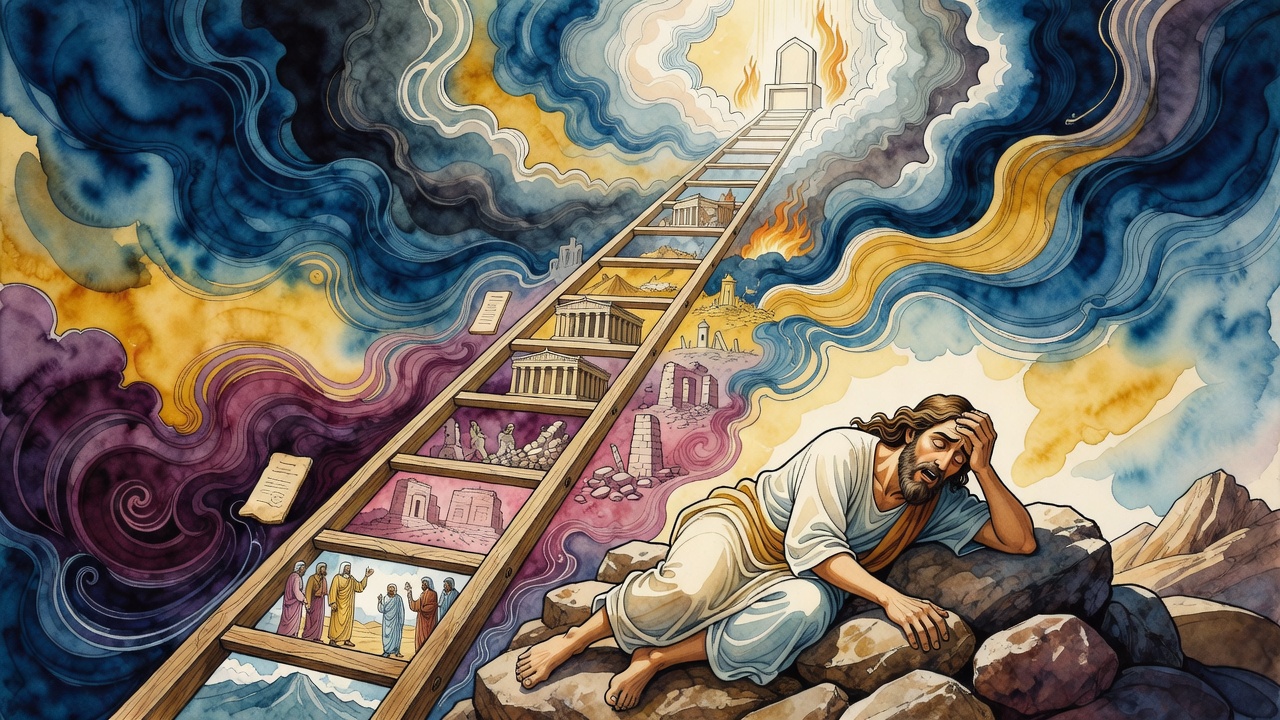
Among the traditions preserved in Legends of the Jews, one of the most haunting is a dream Jacob had at Bethel after fleeing Esau. God appeared and showed him his own future: the Temple standing, the Temple burning, the exiles moving through the dark. He woke from the vision shaking. He had seen not only the promise but the cost of the promise, the destruction that would precede the restoration.
He prayed over what he had seen. He prayed for his descendants to survive the exile his dream had shown him. He prayed not for himself, who had the promise already, but for the generations who would inherit the promise and then watch it seem to disappear.
This is what the tradition means when it says Jacob established evening prayer. Abraham prayed in the morning, when things could still be shaped. Isaac prayed in the afternoon, when the day was known. Jacob prayed at night, when what was coming could not be seen, only trusted. The night prayer is the prayer of someone who knows the darkness is not permanent but cannot see the light yet.
The Axis of the Seventy
The Targum Pseudo-Jonathan, the Aramaic translation of the Torah with its expansive additions, renders the blessing of El Shaddai in Genesis 28 with a specific number: twelve tribes and seventy souls would emerge from Jacob. This was not merely genealogical prediction. The seventy souls who descended into Egypt carried within them the seed of a people that would fill the world. Jacob carried them all, first as potential, then as name, then as history.
Isaac had fathered two sons, one of whom was chosen. Abraham had fathered multiple children, all of whom scattered except Isaac's line. But from Jacob, every single descendant was counted in. All twelve of his sons became tribes. None was Esau'd away. The axis held everything.
← All myths