Jacob Prayed in Darkness for What He Had Already Been Promised
God told Jacob at Bethel: I will bring you back, not one promise will fail. Then Jacob spent twenty years in exile praying for what he already had been given.
Table of Contents
 Click for full size
The Promise Was Already Made
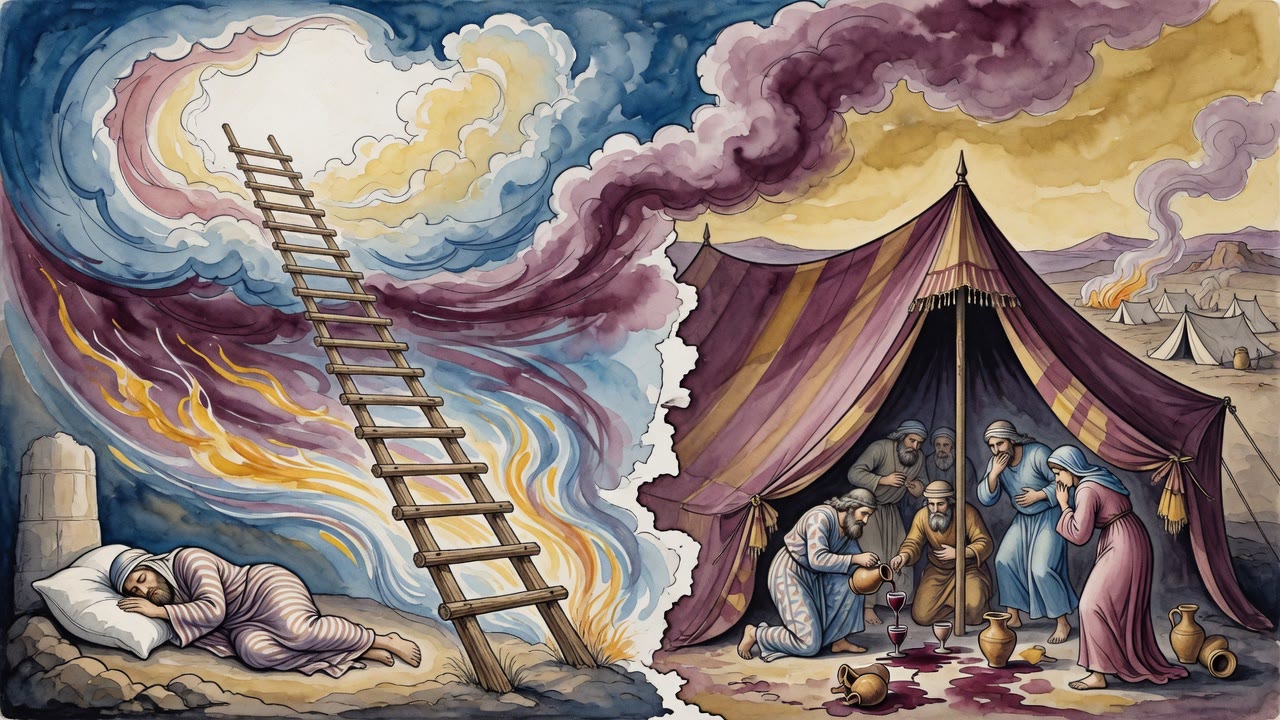
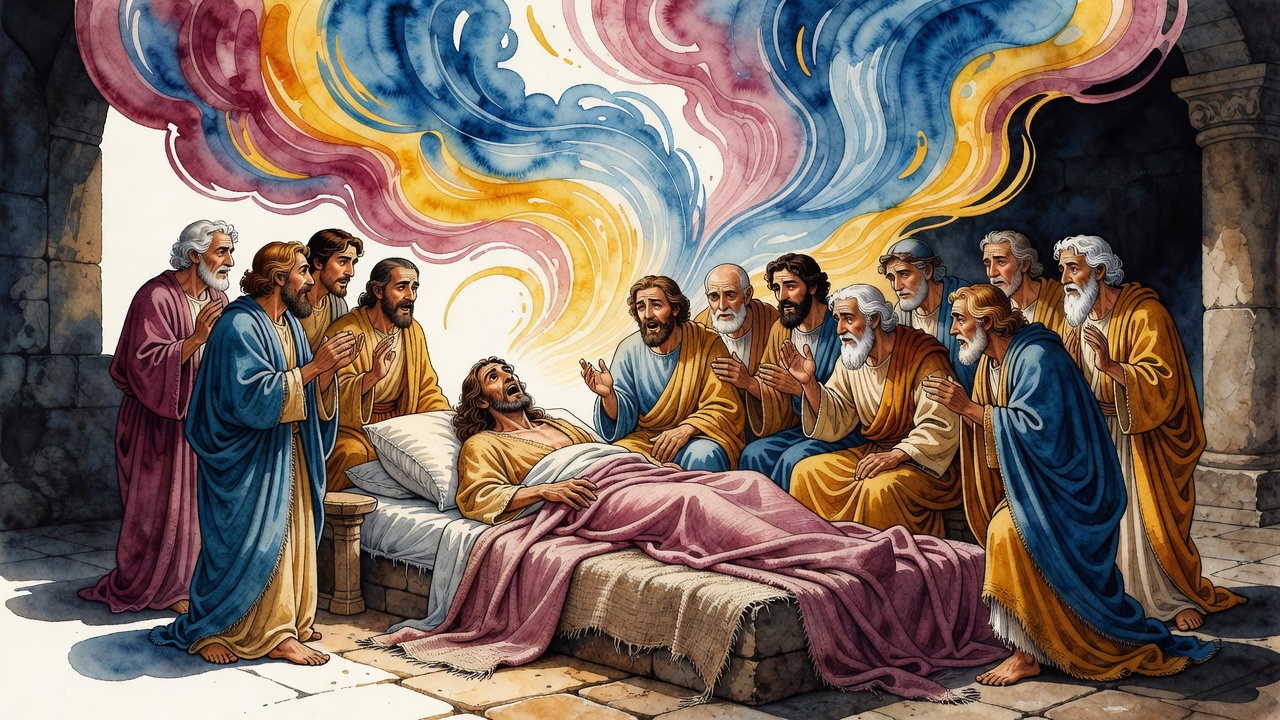
At Bethel, on the first night he spent outside his father's house, Jacob dreamed of a ladder and heard the voice at the top of it: I am with you. I will guard you wherever you go. I will bring you back to this land. I will not leave you until I have done what I have spoken to you.
He woke on the cold ground with his head still full of the voice and the light and the ascending figures, and he was afraid. Not comforted. Afraid. He had been given an unconditional promise by the God of his fathers, and his first response was to negotiate. If God will be with me, and will keep me in this way that I go, and will give me bread to eat, and raiment to put on, so that I come again to my father's house in peace, then shall the Lord be my God.
The rabbis looked at that if for a long time.
Twenty Years of Not Seeing
The night prayer Jacob established, the tradition says, was born from exactly this situation. Abraham had established morning prayer, Shacharit: the prayer of a man who rises before the problem has arrived, who addresses God in the first light of possibility. Isaac had established afternoon prayer, Mincha: the prayer of the middle of the day, when the outcome of the morning is known and the evening not yet certain.
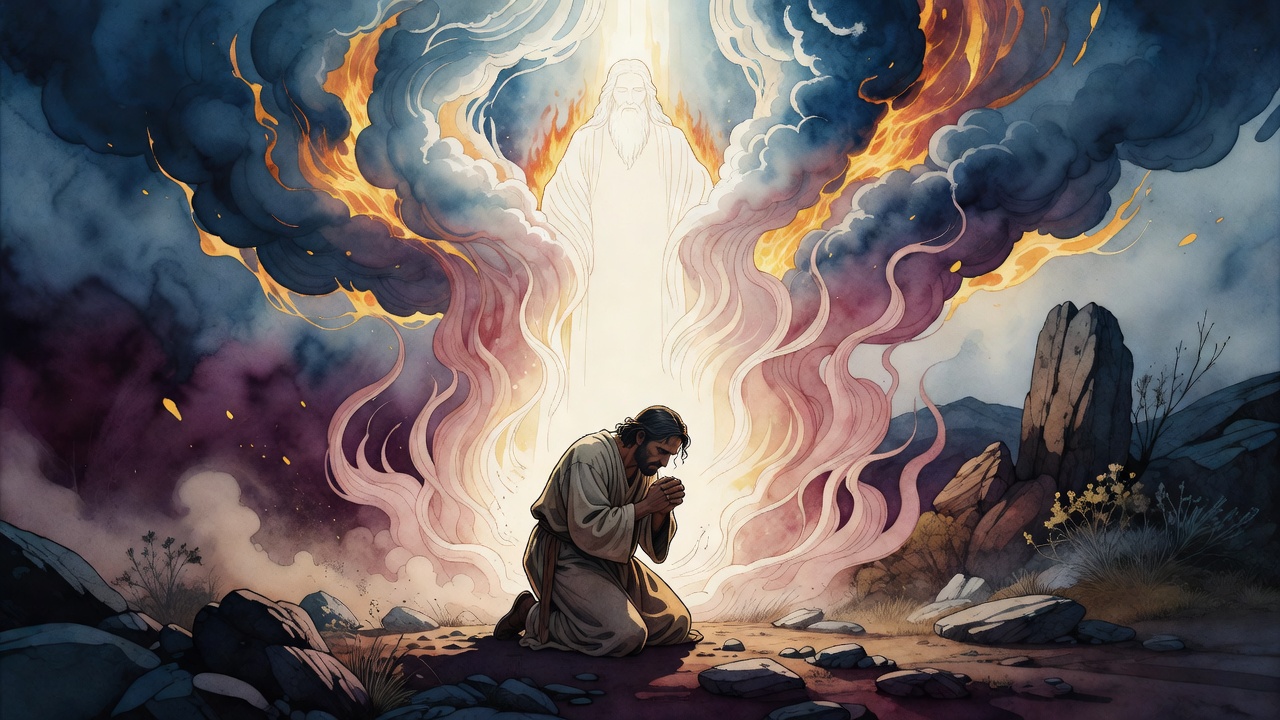
Jacob's prayer was Maariv, the night prayer. He said it in Laban's house, in Paddan-Aram, twenty years away from home, working for a man who cheated him ten times on wages, watching the years accumulate while the promise seemed to sit perfectly still.
The night prayer is the prayer said in conditions where no evidence supports what the prayer affirms. It is said after the day's work has gone badly or well, after the human accounting is closed, into the dark where the next morning's shape is entirely unknown. Jacob prayed it because he was the one patriarch who spent the longest time outside the promised land, in conditions that looked the least like the promise being kept.
The Dream That Made the Darkness Worse
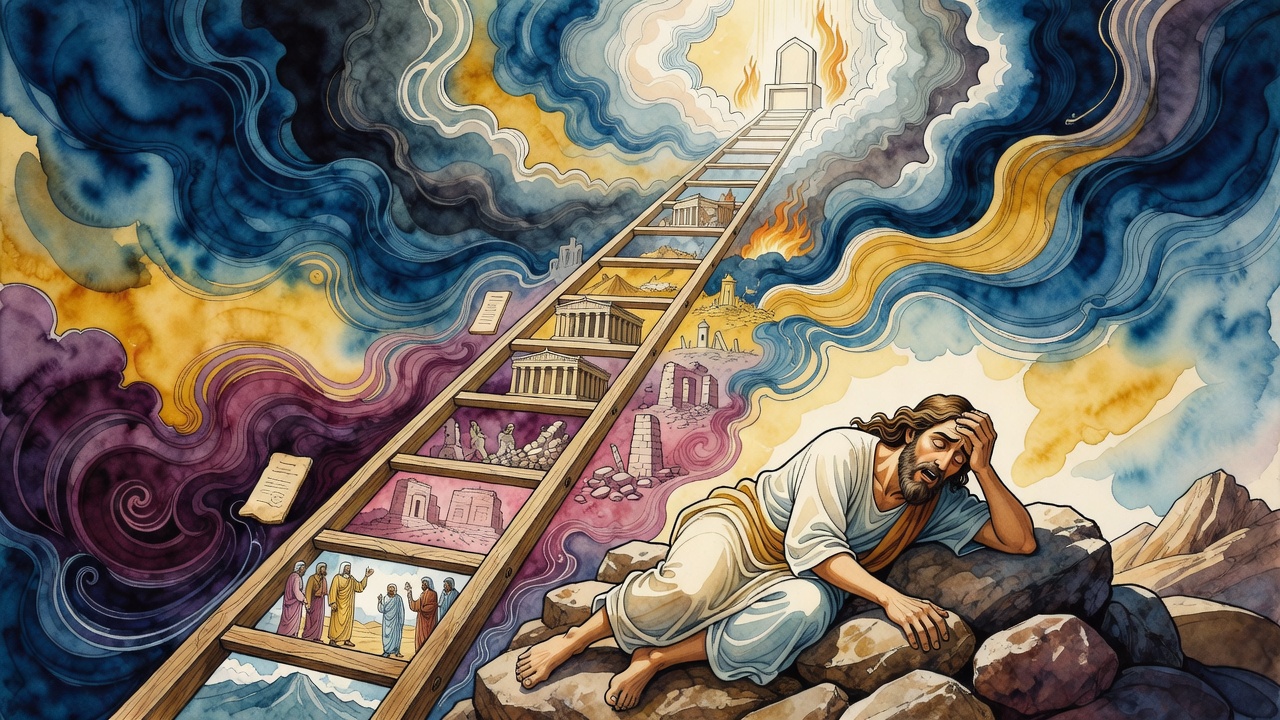
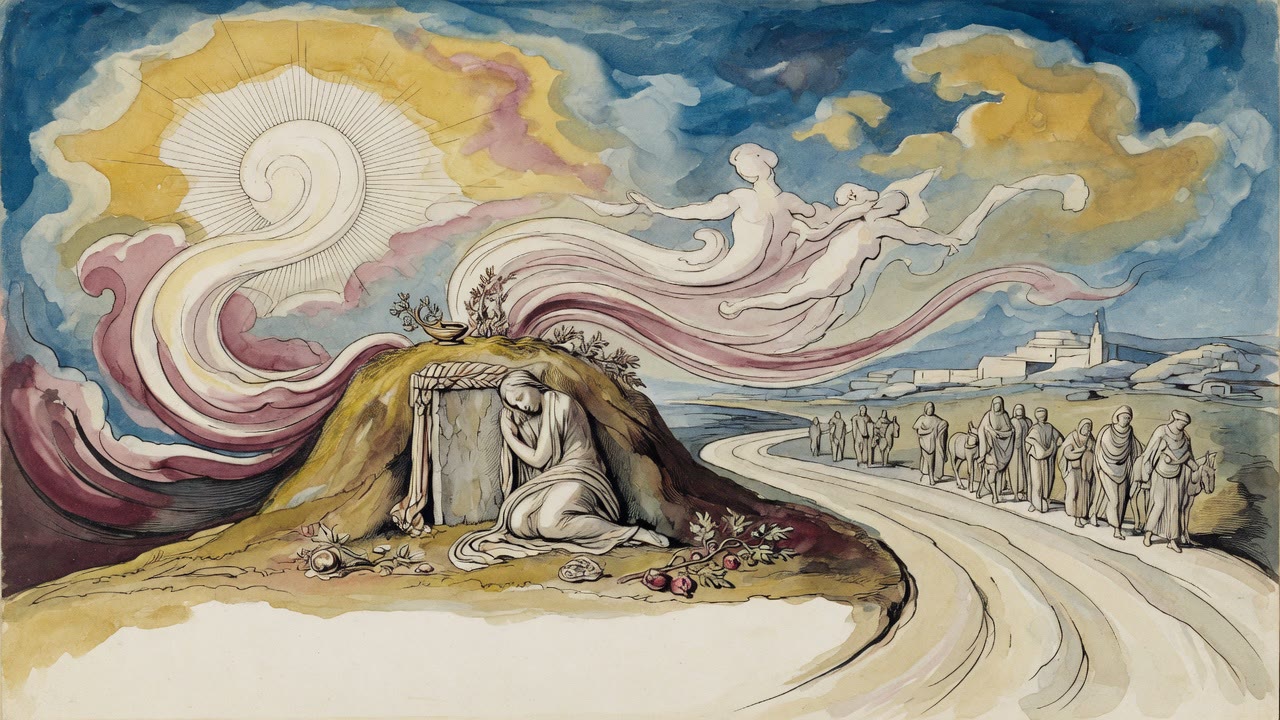
One of the traditions preserved in Legends of the Jews complicates the Bethel story with an additional vision. That night on the stone, Jacob dreamed not only of the ladder and God's reassurance but of the Temple. He saw it standing. He saw it on fire. He saw the exiles moving through the smoke. He saw the return, but only at the far end of a destruction he could not prevent.
He woke from this dream weeping. Not because the promise had been revoked, but because the promise included suffering he had not known was part of it. The return was real. The exile between the promise and the return was also real.
This is why he prayed continuously. Not because he doubted the promise. Because he had seen what stood between the promise and its fulfillment, and he was praying for everyone who would have to live inside that space.
The Battle at the River
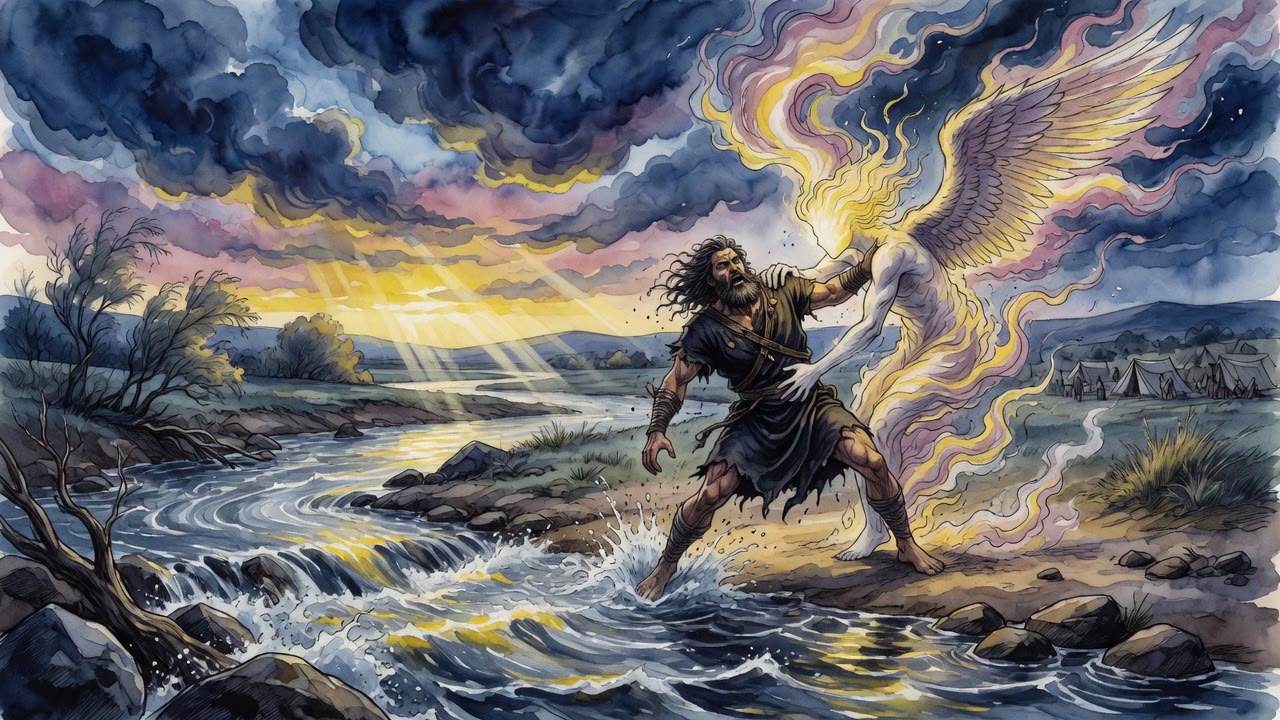
When the twenty years finally ended and Jacob gathered his household and his flocks and began the journey back toward Canaan, Laban came after him. The traditions amplify the confrontation sharply. This was not merely a father-in-law pursuing a son-in-law who had left without ceremony. It was, some rabbinic readings suggest, a battle that had spiritual dimensions, an attempt to reverse what had been set in motion at Bethel.
Laban failed. Jacob kept everything he had been given. He crossed the border into Canaan with his wives, his children, his servants, his animals. God had brought him back. Not one thing had been left undone.
The tradition notes that he did not arrive as the same man who had fled. He arrived carrying twelve children who would become twelve tribes. He arrived having learned, in twenty years of exile, what it felt like to hold a promise in the dark without knowing when the morning would come. That knowledge would pass into his descendants, who would need it.
← All myths