The Angels Wept Above the Knife and Isaac's Eyes Went Dim
On Moriah the ministering angels broke into weeping above the bound boy, and their tears dropped into Isaac's eyes and stayed there for life.
Table of Contents
The boy lay on the wood with his face turned up to the sky, and the sky was full of weeping.
 Click for full size
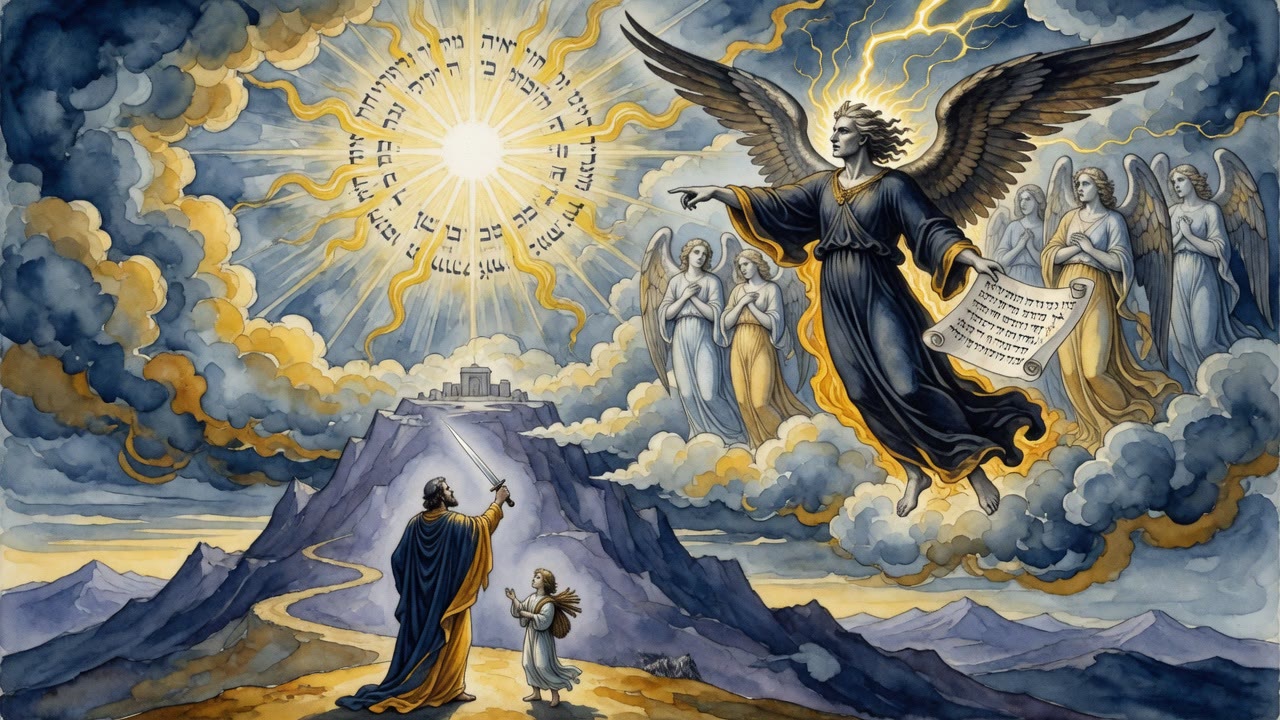
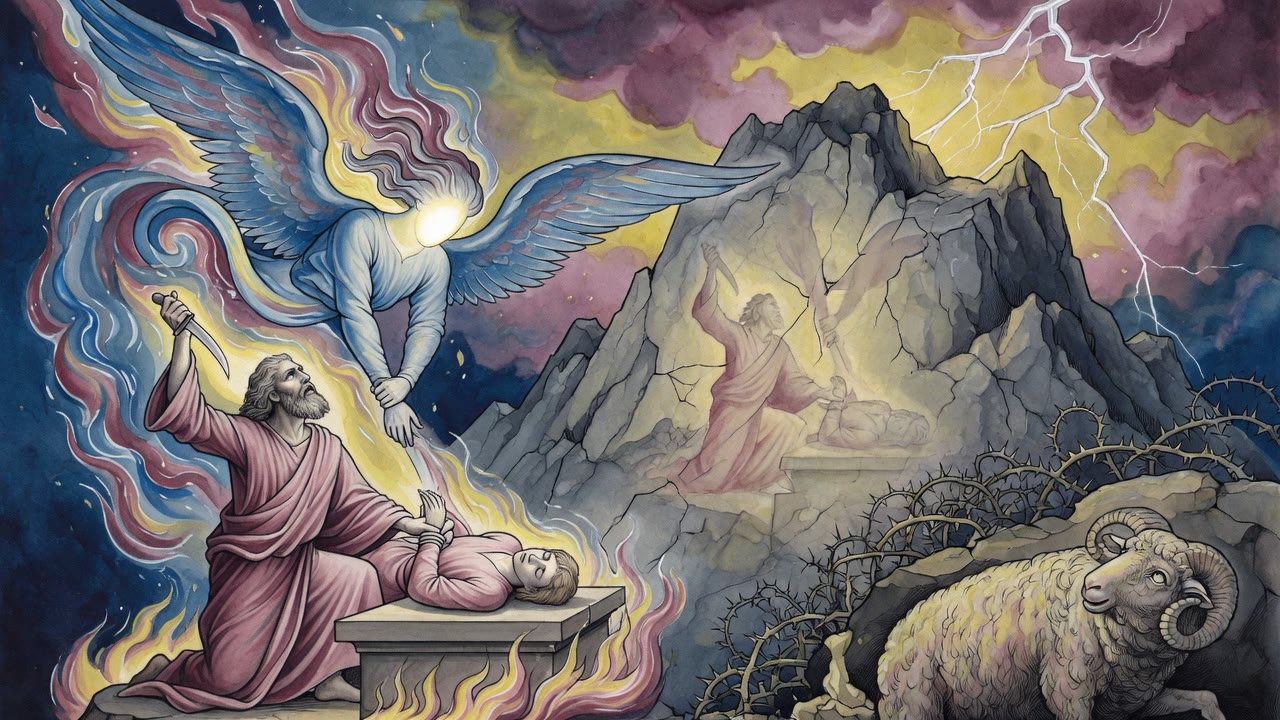
On the summit of Moriah, Abraham had built the altar stone by stone, laid the split wood across it, and bound his son the way a man binds an offering, wrists to ankles, so that nothing could flinch at the last moment. Isaac let himself be bound. He had carried the wood up the mountain on his own back. Now he watched his father's hand rise, and the knife caught the morning light, and above the two of them the ministering angels could not bear it.
The Knife Rose and Heaven Cried Out
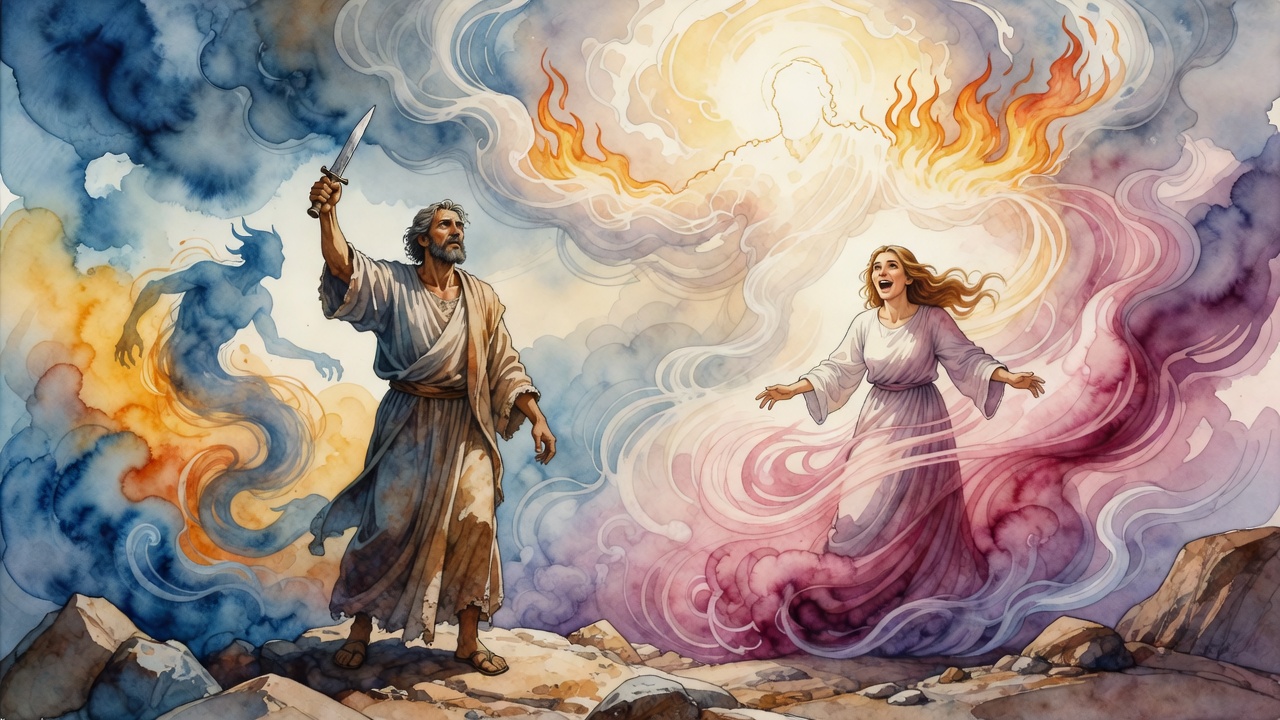
The angels are not built to interfere. They stand in their ranks and sing, and they do not vote, and they do not stay the hands of the righteous. But when the blade lifted over the throat of a child who had done nothing except trust his father, the host of heaven broke ranks the only way it could. They wept. Their valiant ones cried out in the open like men robbed in the street, a sound with no song in it, only grief, and the grief had nowhere to go but down.
The tears fell. They came down out of that crying multitude onto the one face turned toward them, the upturned face of the bound boy, and ran into his open eyes. Isaac did not blink them away. He could not move. The tears pooled against the surface of his eyes and pressed inward, and something in them stayed, took root in the soft dark behind the pupil like a seed pushed into wet ground.
Then the voice came. Abraham, do not stretch out your hand against the boy. The hand stopped. A ram was caught in the thicket by its horns, and it died in Isaac's place, and the fire took it instead. But the tears were already inside the boy, already imprinted, and no ram could be substituted for those.
The Father Came Down the Mountain Alone
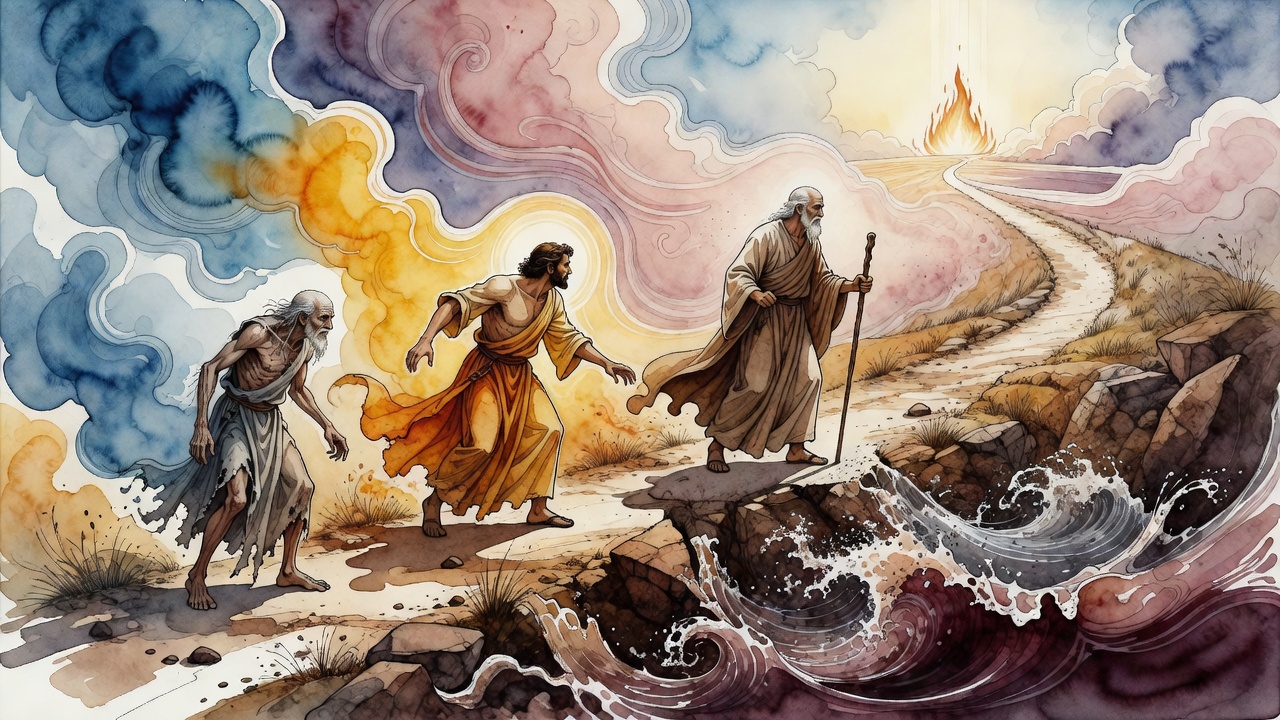
Abraham went back to the young men who had waited at the foot of the hill with the donkey. He came down the way he had gone up, and they rose to meet him, and together they turned toward home.
Isaac was not with them.
The boy had vanished from his father's side somewhere on that summit, between the binding and the blessing, and no one on the road asked where he had gone. There was no body. There was no grave. There was only a father descending alone, and a space at his shoulder where a son should have been.
Heaven had taken him. The same angels who had wept into his eyes did not leave him on the bloodied stone to walk home as though nothing had happened. They lifted him off the mountain and out of the world of ordinary mornings, up to a hidden house where the air was old and the only sound was study.
Three Years in the School of Shem
They brought him to the academy of Shem, the son of Noah, who had outlived the flood and the tower and the scattering of tongues, and who kept a house of learning older than Abraham himself. There the angels set the boy down among the benches, and there he stayed.
Three years. Long enough for the harvest to come and go three times, long enough for the sound of the horns and the crying and the scrape of the knife to lose its edge in his ears. A person who has lain bound under a raised blade does not return to the tent at sundown and pour the wine and sleep. Shem the Great was older than his father, older than the covenant, and in his house there was nothing to do but learn, and so Isaac learned, while the tears the angels had left in him went quietly to work behind his eyes.
When he came back he was a man who had been to the threshold of death and turned around inside it. He took a wife, Rebekah, and brought her into his mother Sarah's tent, and the lamp she lit stayed lit. But the seed in his eyes kept growing. The tears were patient. They had a generation to wait.
The Eyes Dim and a Stolen Blessing Slips Through
Isaac grew old, and his eyes grew dim, too dim to see. The reason was older than his age. It was the force of that seeing on the mountain, the angels' tears sown into his eyes when he was a boy on the wood, ripening at last into darkness. The host of heaven had wept over one binding, and the weeping had been quietly blinding him ever since.
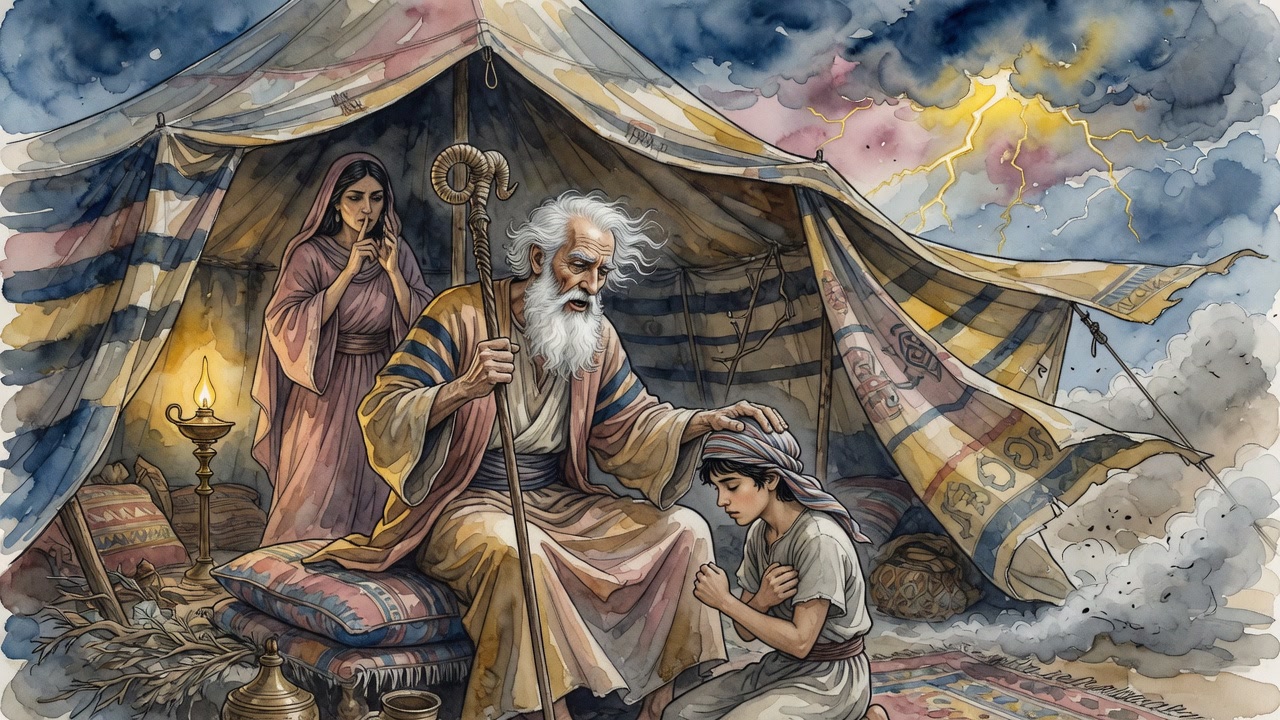
So the old man lay in his tent and could not tell one son from the other. He called for venison and a blessing. Rebekah dressed her younger son Jacob in his brother's garments, the very garments that had come down from Adam, pressed bread into his hands, and sent him in to a father whose eyes had been dimmed on Moriah before Jacob was ever born. The blessing meant for the firstborn slipped, in the dark, into the second son's hands. A morning on the mountain reached across the years and bent the whole future of a people sideways, threaded through a blind man's eyes.
An Angel Pours the Wine Kept Since Creation
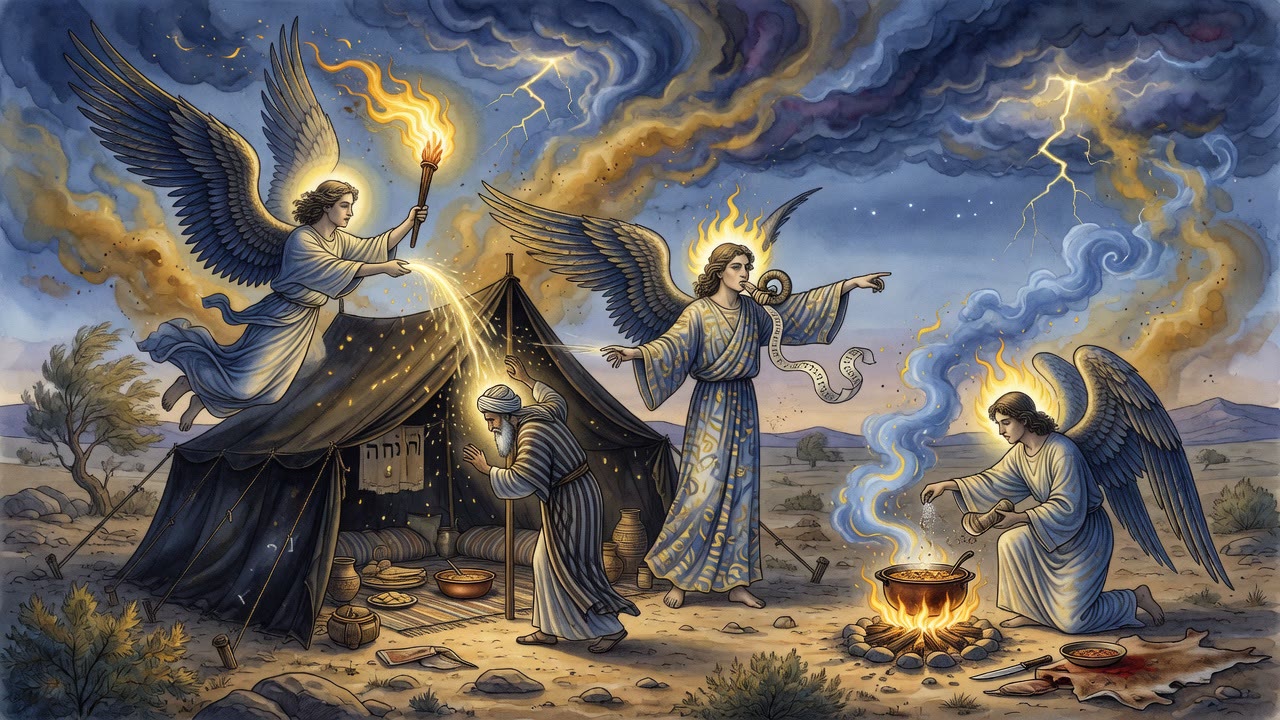
Isaac asked for wine. There was no wine in the tent.
So an angel brought it. Not from any pantry and not from any vineyard a human hand had planted, but the wine that had been held back in its own grapes since the six days of the beginning of the world, the yayin ha-meshumar, the vintage stored away for the righteous in the world to come, aging in secret since the world was six days old. The angel pressed the cup into Jacob's hand, and Jacob carried it to his father's lips.
The blind old man drank wine older than the mountain, older than his own binding, older than the tears that had blinded him. The same heaven that had wept into his eyes when he was a boy now poured into his cup the drink of the messianic feast, and the blessing went out of him consecrated before the first morning ever broke. His sight was gone. What flowed through him had been waiting in its grapes since creation for exactly this hand and this cup.
← All myths