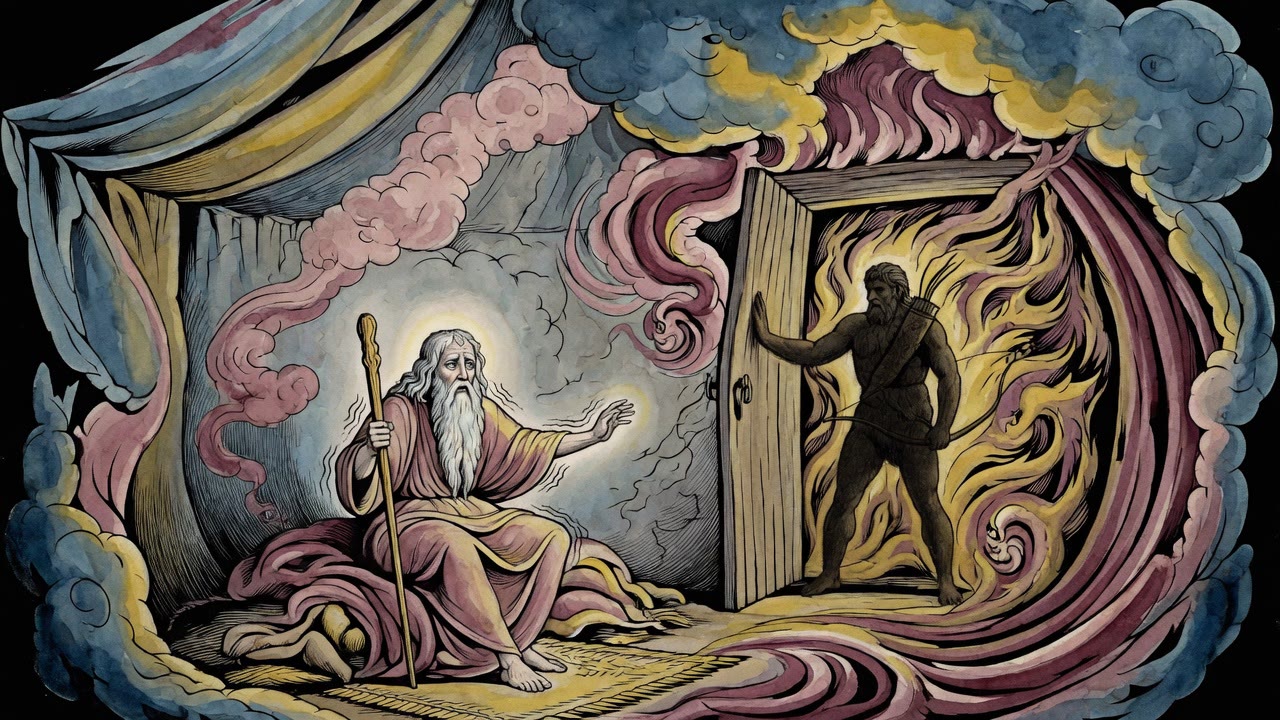
4 texts
Isaac in Jewish mythology is documented here through 4 source passages from 1 distinct source names represented in this theme. The strongest clusters come from Rabbinic Midrash (4), with frequent witnesses in Yalkut Shimoni on Torah (4). These texts preserve how Jewish writers, sages, and mystics described isaac across biblical interpretation, rabbinic storytelling, medieval compilation, and kabbalistic teaching.
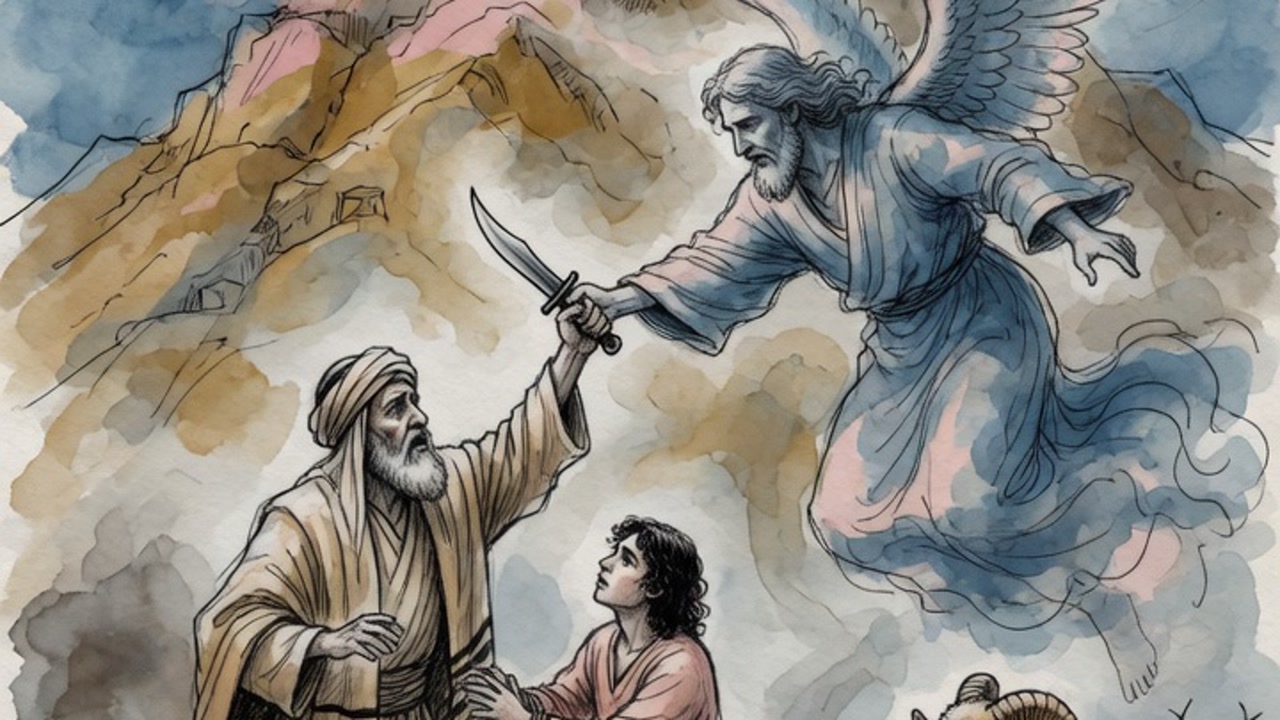
This page is a topic hub, not a single article. Use it to compare how different Jewish sources treat isaac: where the theme appears in narrative, how it changes across source families, which figures or symbols recur, and which passages are most useful for citation. Representative entries include The Weaning Feast and Isaac's Face Turned Like Abraham's, Isaac Weaned From the Evil Inclination to the Good, Og Mocks Isaac at the Feast and Is Doomed by His Line, and Ishmael Shoots an Arrow at Isaac and Sarah Demands His Removal. For synthesized anthology narratives, start with Creation Gave Adam Six Laws Before Sinai, How Sarah Prepared Isaac for the Mountain, and The Angel Who Stopped Abraham and the Mountain That Remembers.
Abraham (2), Divine Promise (1), Family (1), Good and Evil (1), Miracles (1), and Sarah (1)
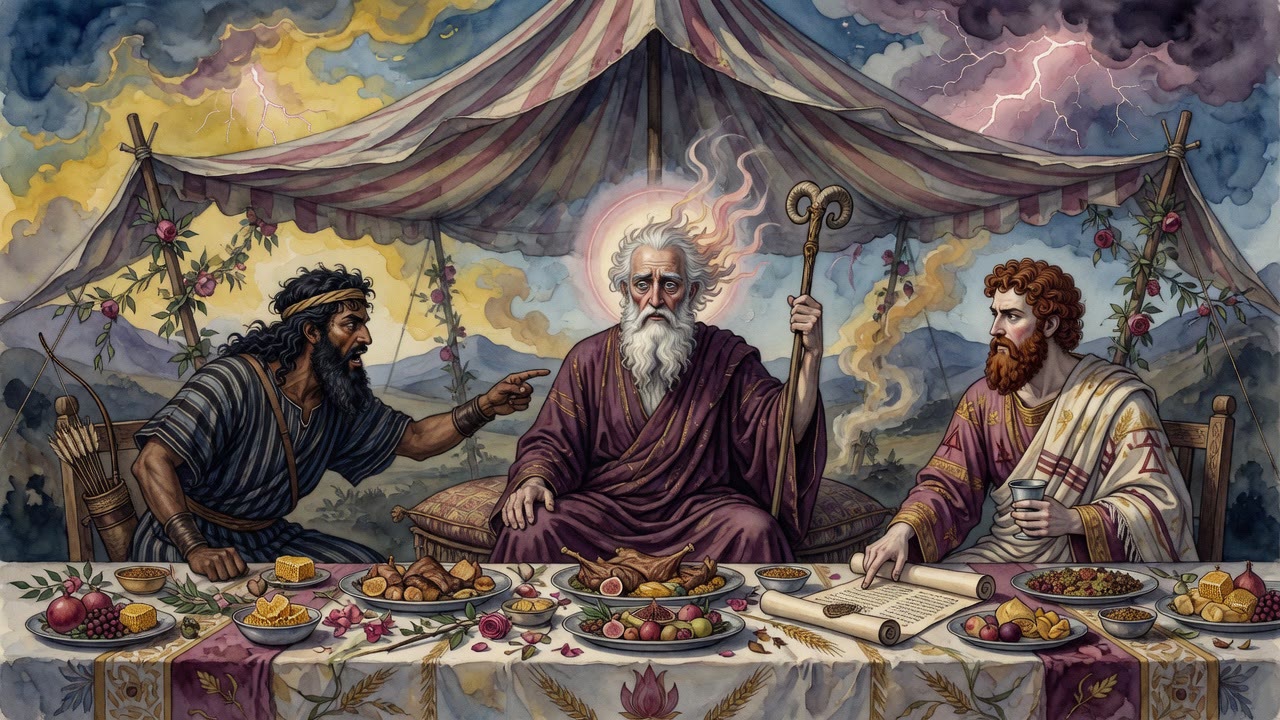
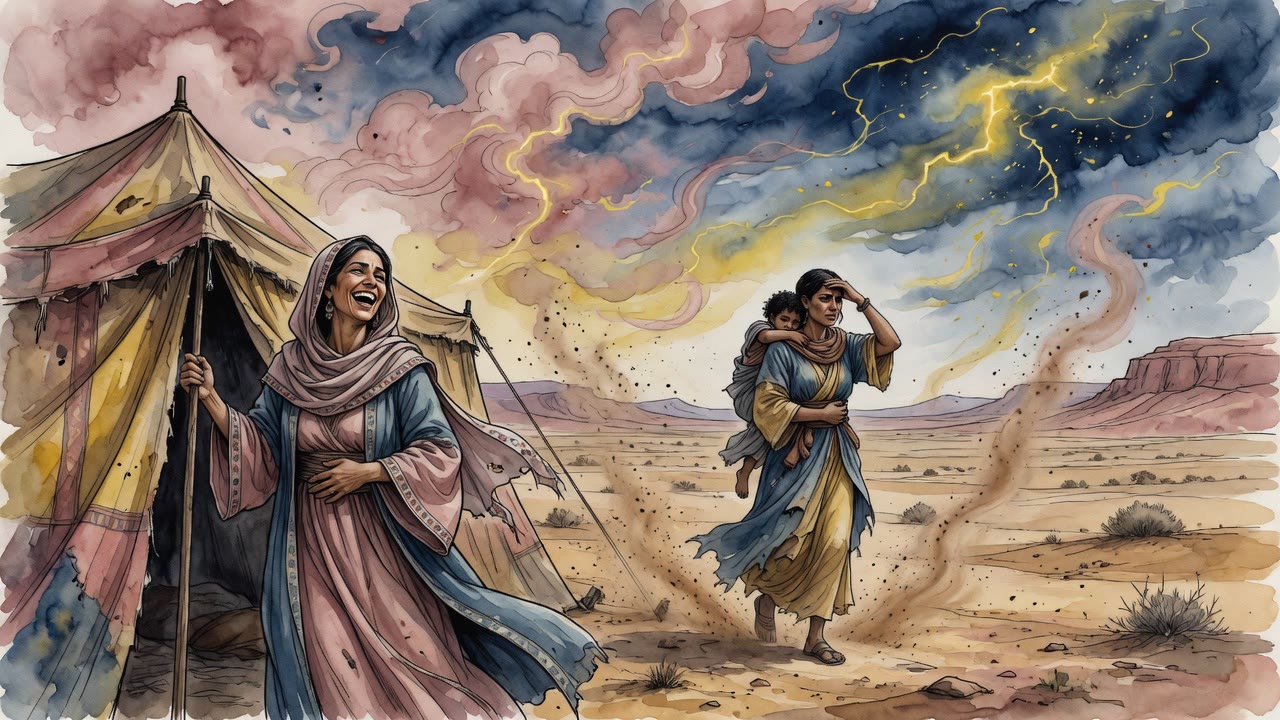
On the day Abraham weaned Isaac he threw a great feast, and the feast became a courtroom. The nations sneered that the old couple had simply picked up an abandoned baby from the ma...
Scripture records a small domestic fact, that the boy grew and was weaned, but the Sages refused to let the word "weaned" stay small. They heard in it the story of a soul learning ...
When Abraham made his great feast, the Sages say the celebration drew in the powers of the world, including the giant Og and the kings of the earth. These were the same skeptics wh...
This episode is counted as the ninth of Abraham's trials. Ishmael had grown into a skilled archer, and the Sages tell that he turned his skill on his half-brother. From behind a cu...
Bereshit Rabbah finds six commandments in Eden, strange lessons in Eve's creation, Abraham's covenant, and Isaac's dimmed eyes.
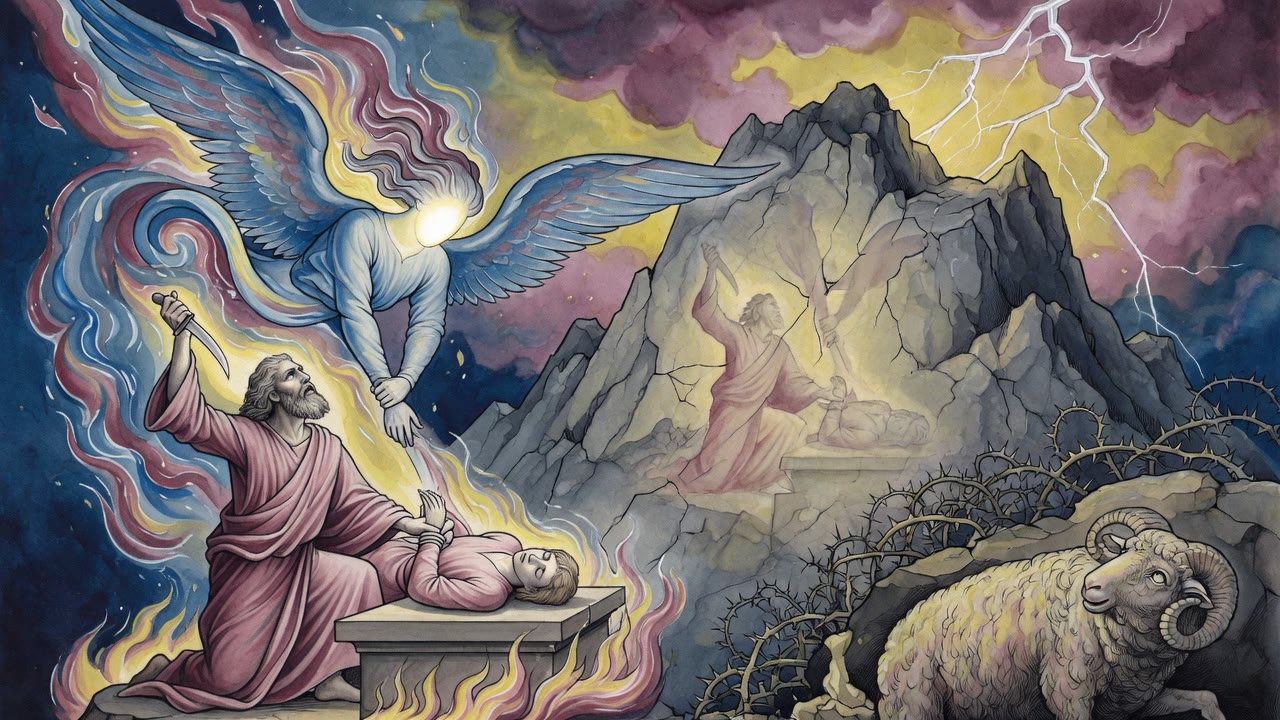
The night before the Binding of Isaac, Sarah dressed her son in her finest garments and wept until dawn, and the rabbis say she never recovered.
Two ancient sources on the Binding of Isaac - one written in Aramaic, one from the Second Temple period - reveal what the angel did and why the mountain was...
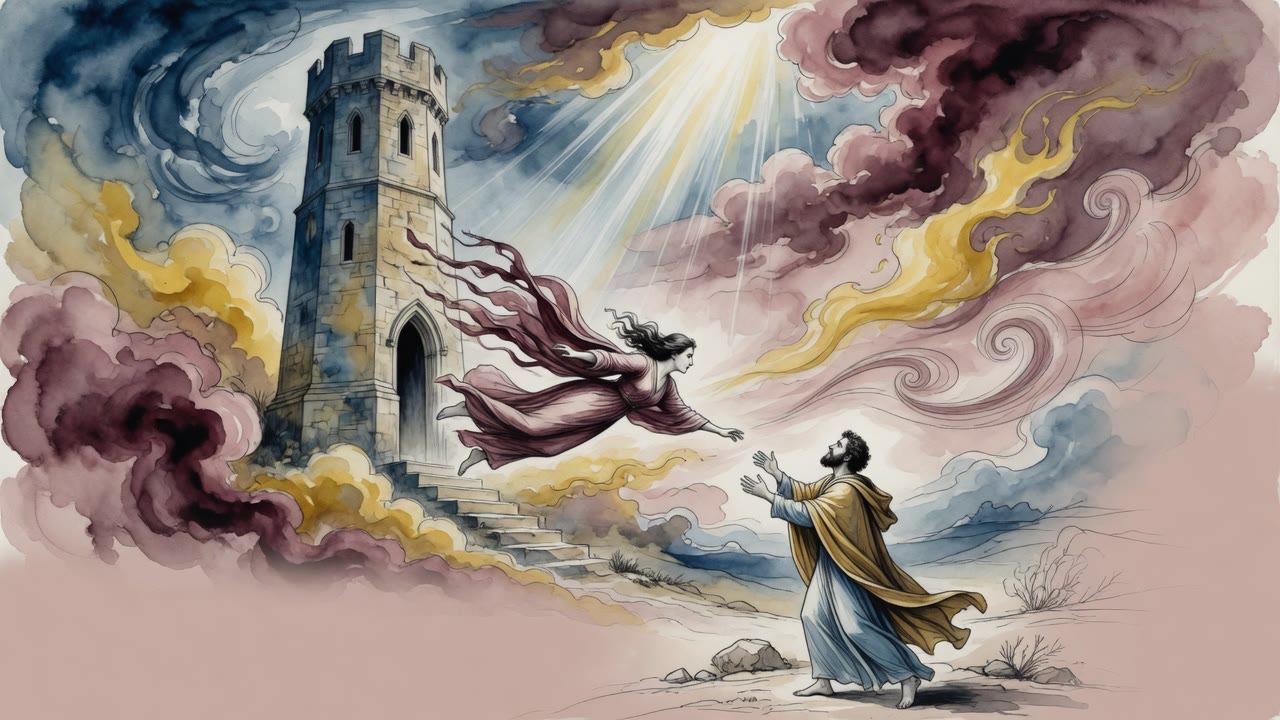
Isaac was named for the laughter his birth provoked. Moments later, Sarah turned that joy into exile, and God told Abraham to obey her.
God promised Abraham that the shofar blown on Rosh Hashanah would echo the Binding of Isaac forever. The rabbis took this promise with complete seriousness.
Isaac observed the Sabbath before Sinai and kept commandments before the Torah, earning direct access to God's heavenly academy through consistency.
The Torah never says if Isaac knew what was coming on Moriah. The Book of Jubilees says he did, and he carried the wood anyway. That changes everything.
Abraham hid Isaac before building the altar. When he raised the knife, his tears fell into Isaac's eyes and the angels above wept quoting Isaiah.
Isaac asked Abraham to bind him tightly so his fear would not ruin the offering. The same man later negotiated an imperfect but real peace with the Philistines.
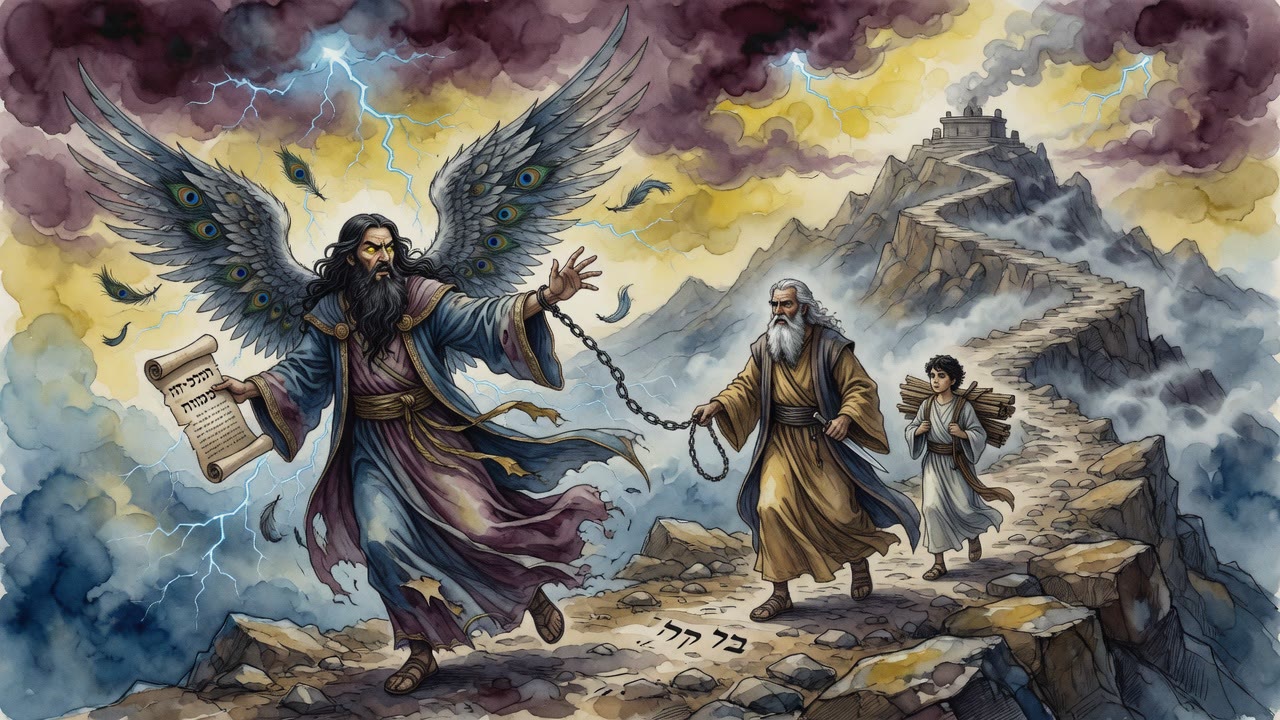
On the road to Moriah, Satan appeared three times to block Abraham and Isaac. He became an old man, a young man, and a river. None of it worked.
Ishmael was cast out of Abraham's household and out of the covenant. But the Midrash preserves a tradition that Ishmael repented in his old age and let...
Isaac and David never met, yet tradition insists they were linked from the moment of creation - two lives folded into a single covenant stretching from the...
When Abraham lifted the blade over Isaac on Mount Moriah, every eye in heaven was on him -- and the angels were not all rooting for the same outcome.
The Akeidah has a hidden layer. As Abraham walked toward Moriah with Isaac, Ha-Satan tried three times to sabotage the journey - and lost every round.
Jewish tradition says the ram caught in the thicket at the Akeidah was created at twilight on the sixth day of Creation - thousands of years before Abraham...
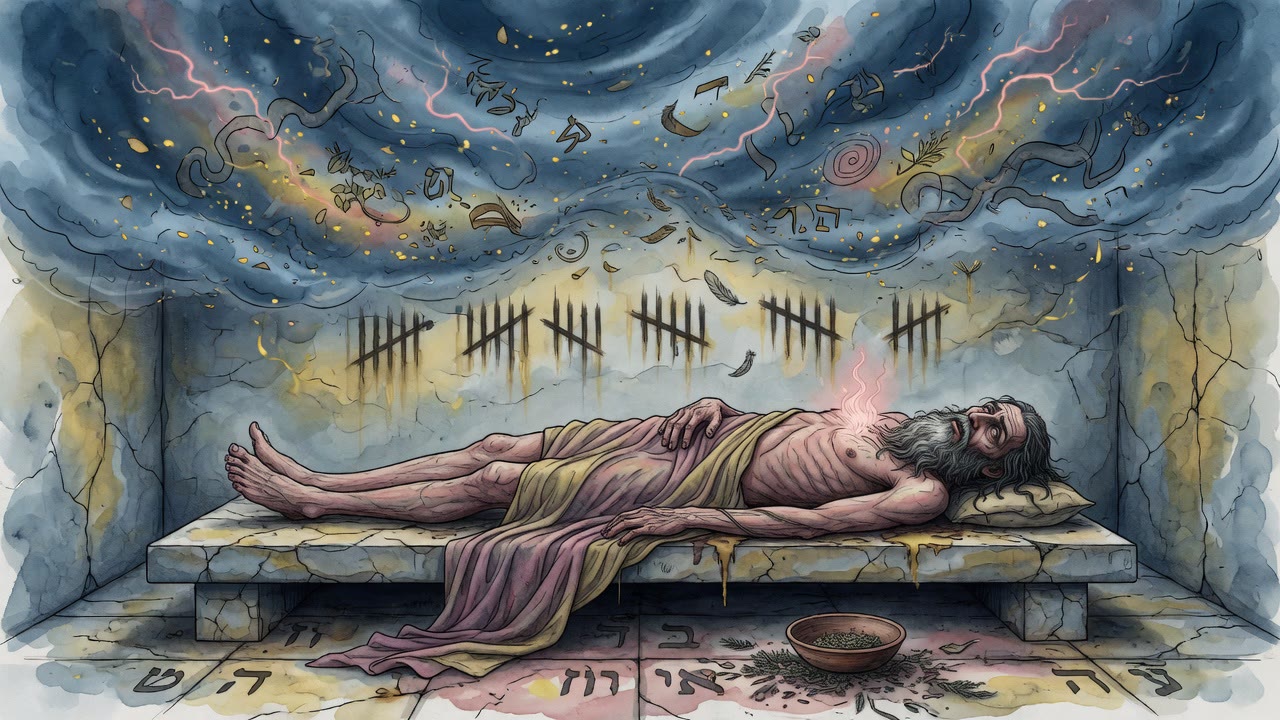
The Testament of Abraham shows Death arriving gently, then revealing seven terrifying faces when Abraham demands the truth.
Pirkei DeRabbi Eliezer reads Isaac's near-death vision dimming his eyes and the five silent cries traversing the world as twin pictures of transition cost.
The rabbis said Abraham was tested thirteen times before the Binding. They said David was tested for thirteen years before the rescue. Same math, same fire.
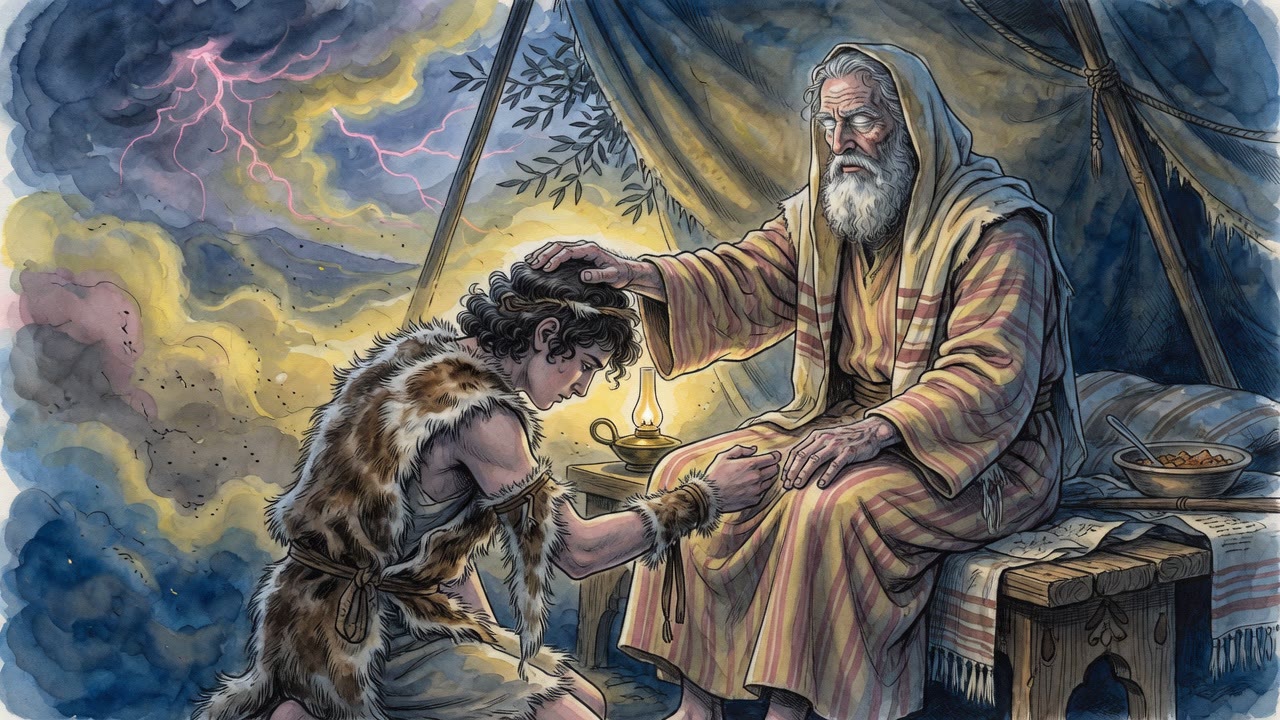
The Torah says Jacob disguised himself and lied. The midrash says his hands were shaking and he cried the whole way through.
While Esau hunted game to win his father's blessing, Ha-Satan kept slipping the knots. Every deer he caught vanished from the rope.
When Jacob walked into a room, the fragrance of Eden came with him. When his granddaughter delivered good news, she walked into Eden and never came back out.
When Levi and Judah walked toward Isaac, the darkness over his eyes lifted. What he saw made him prophesy over them both, splitting the future of Israel in two.
The Torah says Isaac went out 'lasuach' in the field. One word. The Mekhilta spends three Psalms proving that word means prayer - the quiet, solitary kind...
Isaac never left the land of Canaan. He tithed when others hoarded, dug wells others filled with sand, and turned his enemies into his witnesses.
Jacob tricked Isaac into giving him Esau's blessing. What the Midrash notices is what Isaac felt in that moment, and what it cost him afterward.
Isaac was meant to live 185 years. He lived 180. Bereshit Rabbah says Esau's sins were the reason, and God mourned what the patriarchs never received.
After Abraham died, the Philistines stopped every well he had dug. Isaac reopened them all and restored every name his father had given them.
The Torah never records Rebecca's death. The Book of Jubilees does, preserving a dying woman still working to protect the son she knew Esau intended to kill.
Esau was four hours late to claim his blessing. What he found when he arrived. How he tried to undo what was already done reveals the oldest rivalry in...
When famine struck, Isaac planned to go to Egypt. God stopped him. A sacrifice removed from its sanctuary becomes invalid. His consecration bound him to Canaan.
Isaac tried to comfort Esau after Jacob took everything, and God rebuked him for it. The exchange is one of the most startling in all of midrash.
Bereshit Rabbah follows Abraham from victory to fear, then through Moriah, Sarah's burial, Rebecca's kindness, Isaac's blessing, and Esau's flight.
Bereshit Rabbah turns Isaac's refusal to leave Gerar and Jacob's quill recording Joseph's dream into one rule about how patriarchs obey.
Ginzberg reads Abraham sitting at Gehenna's gates and Isaac seeing Gehinnom cling to Esau as twin pictures of how the patriarchs see across the cosmic gap.
Ginzberg reads Abraham's healing stone attached to the sun's wheel and Isaac's lineage amplifying his prayer over Rebekah's as twin amplifications.
Pirkei DeRabbi Eliezer reads the Ruach HaKodesh creating air-water-fire and embracing patriarchs and Jacob emerging crowned with ten utterances.
Pseudo-Jonathan preserves three quiet patriarchal miracles: a well that knew its owner, sheep that tracked Laban's mind, and a sun that owed Jacob a sunrise.
Ginzberg reads Abraham's refusal to bless Isaac and Jacob's year of gifts to Esau as twin strategies for managing the conflict between brothers and successors.
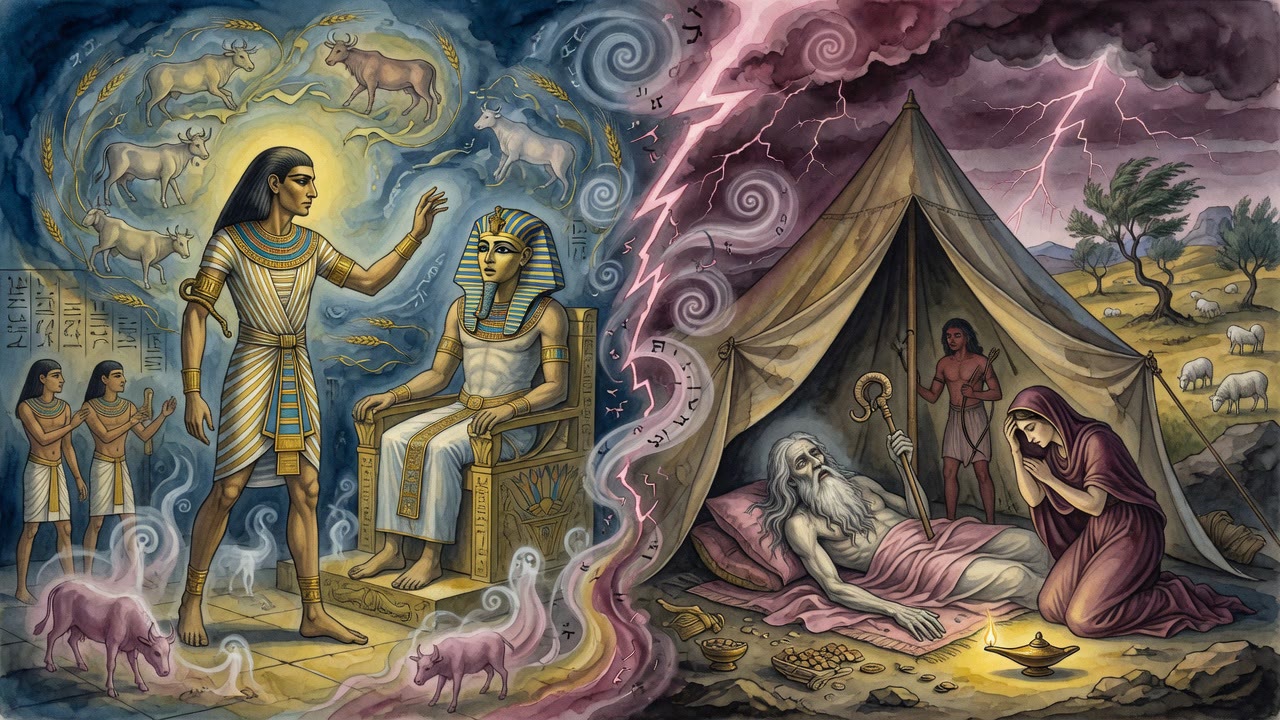
On the same day Joseph stood before Pharaoh at age thirty, his grandfather Isaac breathed his last. The Book of Jubilees holds both moments as one.
Bereshit Rabbah says Isaac pleaded for Esau because Rome would burn the Temple, and Joseph wept on Benjamin's neck for the same Temples to come.
Ginzberg reads Isaac blessing Levi as priest after Jacob's dream and the family's shared crewless ship dream as twin pictures of how lineage is shaped.
Ginzberg reads the Tabernacle dedication delayed for Isaac's birthday in Nisan and Aaron needing Moses's joint entry to bring the Shekinah as twin pictures.
The Torah gives the Akedah nineteen quiet verses. The Rabbis filled the silence with angel tears, Satan in the road, and a son who volunteered to die.
A mother who had not seen her son in twenty years watched him approach from a window. The old texts say she did not wait for him to reach the gate.
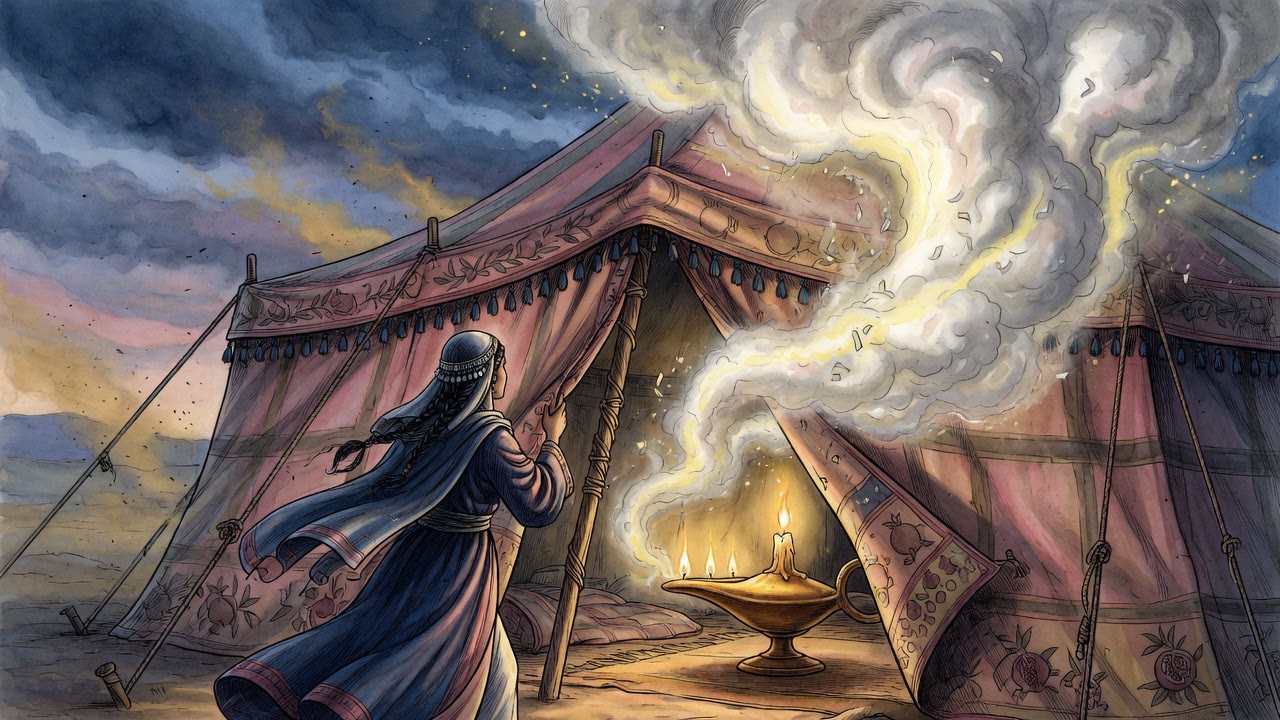
When Isaac brought Rebecca into his mother's tent, the cloud that had lifted at Sarah's death returned. The miracle of one woman passed to another.
They gathered at their father's last feast as grown men who had inherited the same memory and drawn opposite conclusions from it - and the argument they had...
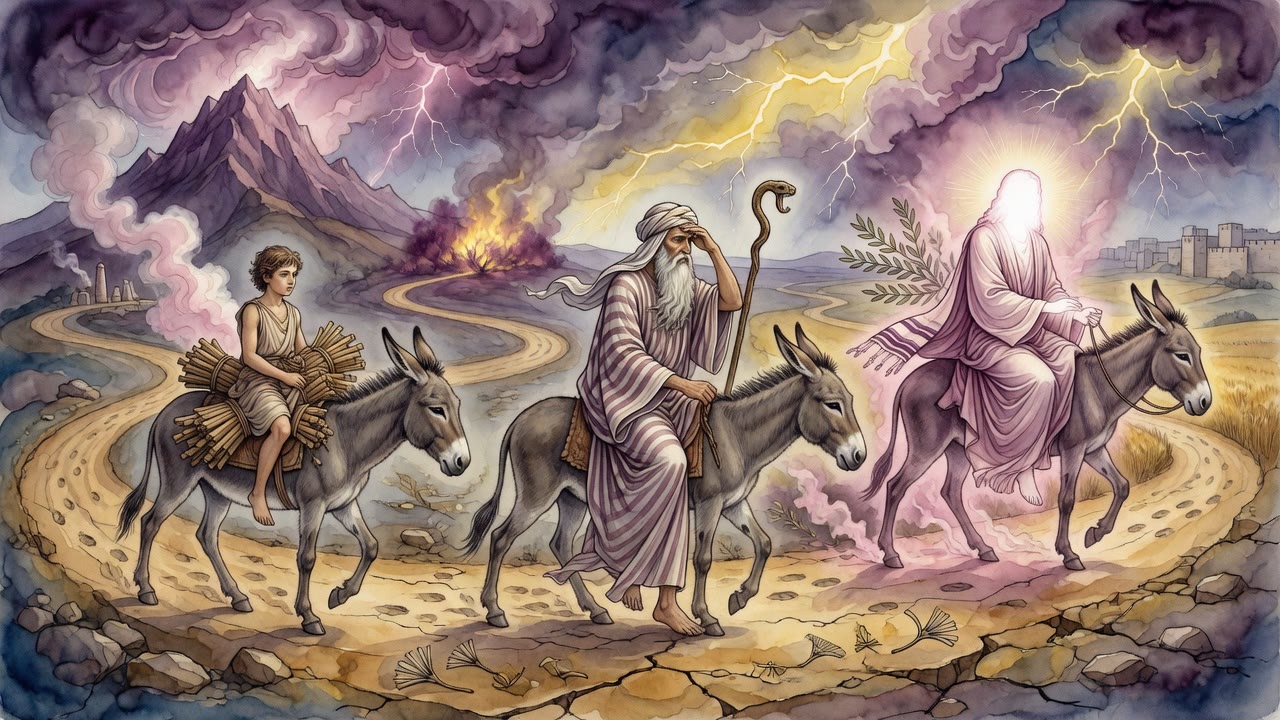
One ancient donkey carried Isaac to his binding on Mount Moriah and Moses toward Egypt, and will carry the Messiah at the end of days. Three riders, one beast.
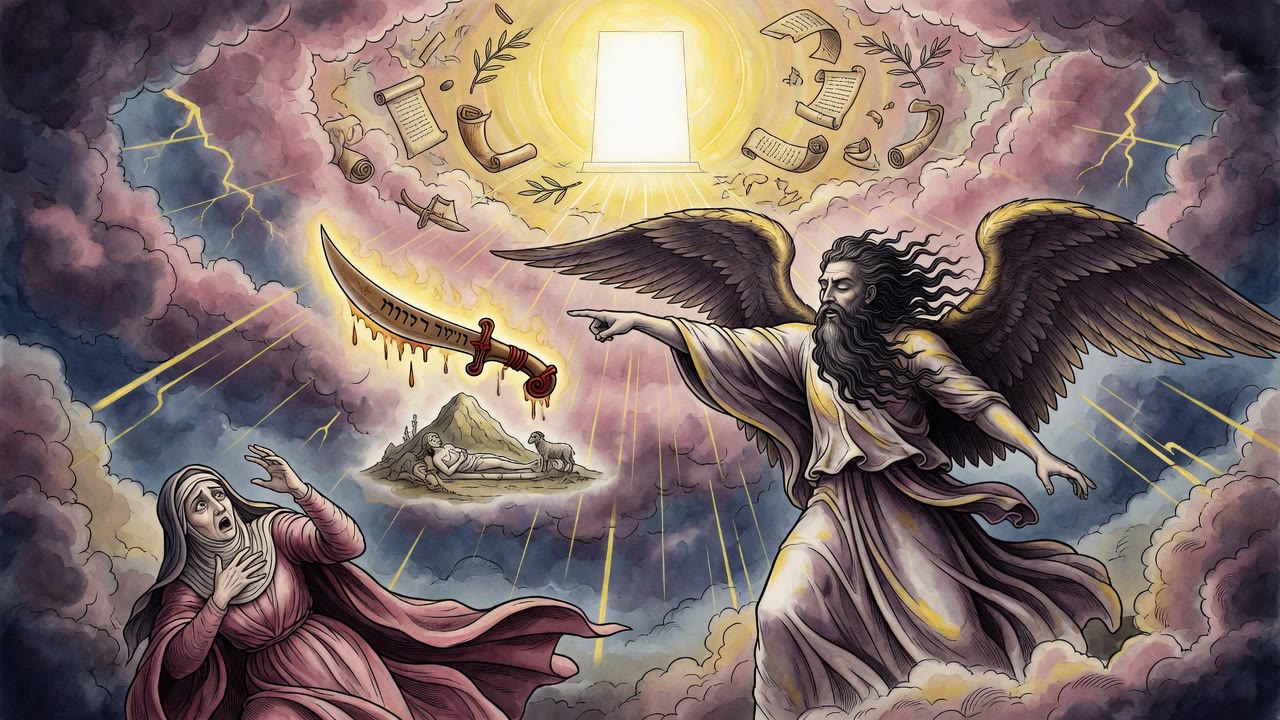
Isaac, Solomon, and Josiah were named by God before their mothers conceived them. The rabbis counted carefully and found only three in all of Jewish history.
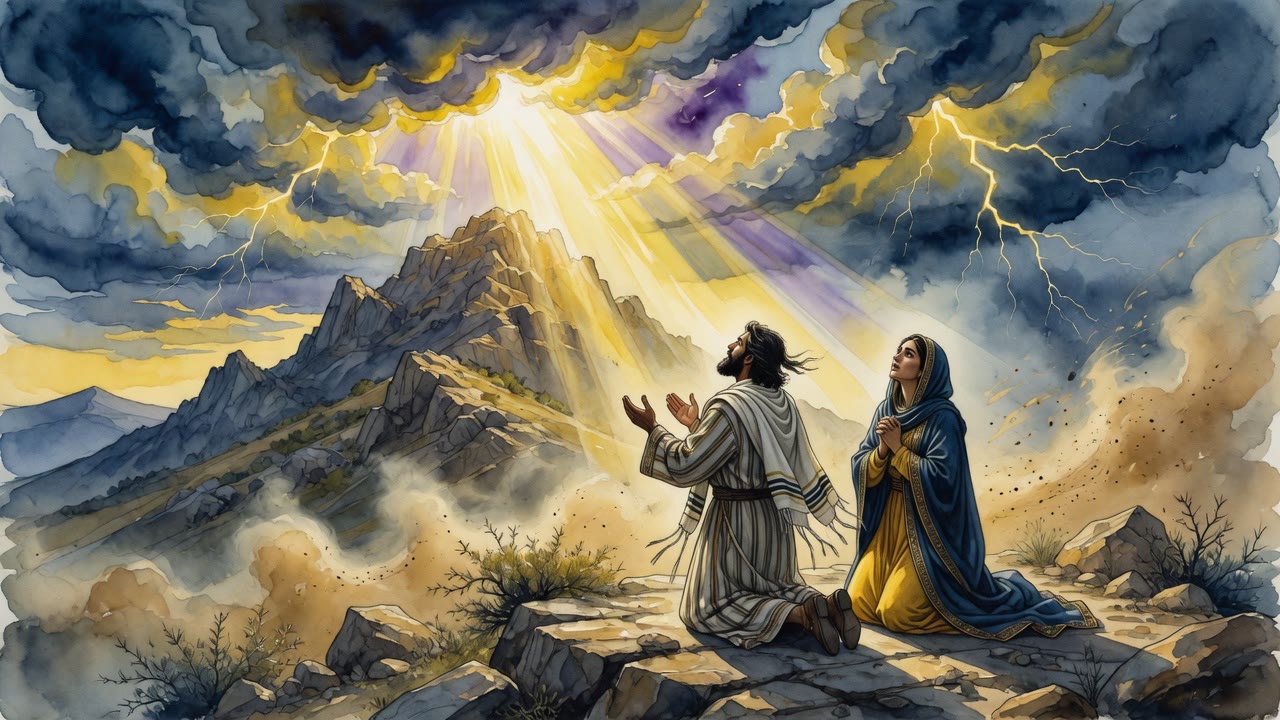
After twenty-two years of barrenness, Isaac brought Rebecca to Mount Moriah to pray. He returned to the place of his binding because he knew it was where...
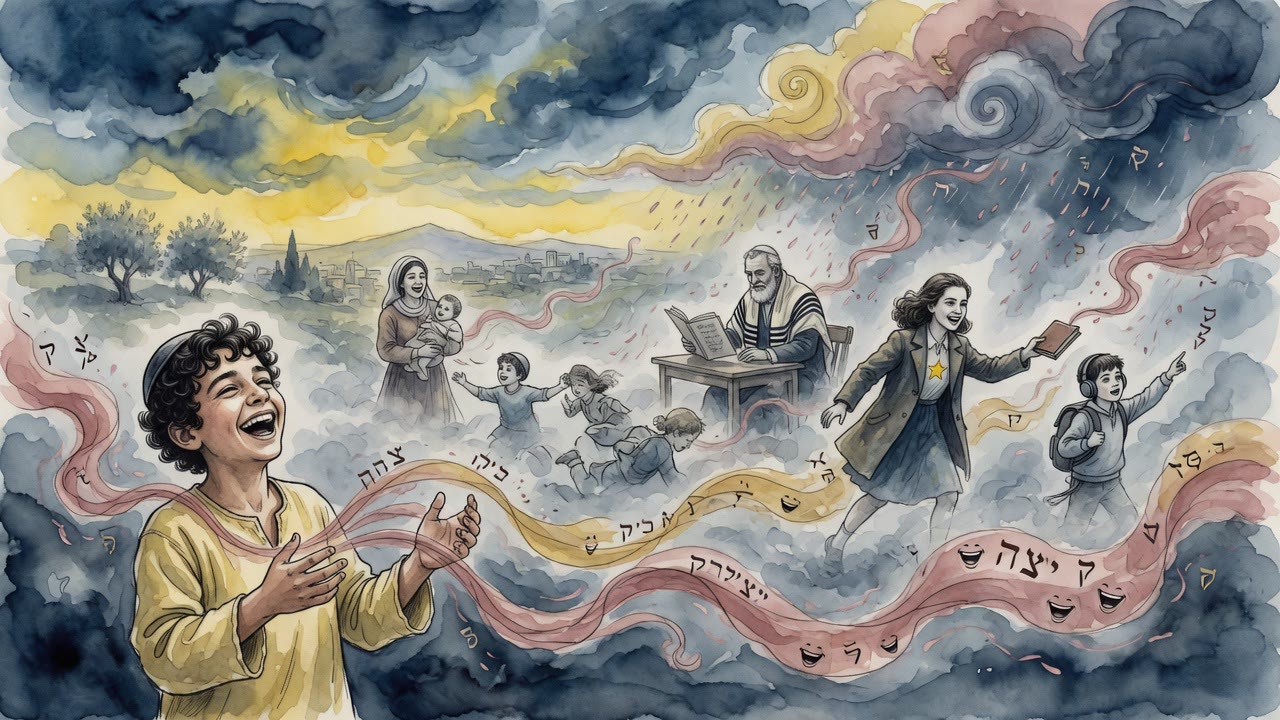
His name meant he will laugh. future tense. The rabbis said it was a prophecy with four installments, spread across a lifetime and beyond.
The angels watched from heaven as Abraham raised the knife over his son. They wept. Then the manna that fell in the wilderness turned out to be their tears.
The midrash says water rose for Rebecca at the well before she arrived. Bereshit Rabbah says her righteousness was recognized before she spoke a word.
Abraham prayed for a pagan king, and the angels demanded God remember Sarah in return - Isaac was born on the Day of Remembrance itself.
Ha-Satan blocked the road to Moriah three times - as an old man, a young man, and a flood. Abraham walked through him every time.
Everyone knows Abraham's faith at the binding of Isaac. Almost no one knows what Isaac did while his father tied the ropes.
Jubilees and Ginzberg's Legends record Esau's bitter cry, Isaac's second blessing, and Jacob's divided camp as he prepared to face his brother once more.
Most people remember Esau as the brother who lost. The rabbis preserved something stranger: his argument that his blessing equaled Jacob's.
While Jacob labored for Laban, the Book of Jubilees records he sent provisions to his parents throughout. The Torah omits this. The ancient tradition did not.
When Isaac was born, every barren woman conceived, the blind saw, and the sun shone with a light not seen since Adam's fall. The birth healed the world.
Isaac blessed Jacob in the dark and did not know what he was doing. God confirmed every phrase through the prophets, word for word, centuries later.
The Kabbalists named Isaac as the force of divine judgment that holds the worlds apart so they can meet. His life was a repair always in process.
Rabbi Yitzchak made a startling claim: the Shekhinah surpasses even Abraham's hospitality, feeding the worthy and the wicked alike without distinction.
Three times the Philistines stole Isaac's wells. Three times he named each one for what they did. The fourth time he called it Room and said God had made space.
While Jacob was in Mesopotamia, Esau moved to Mount Seir and left their aging father behind. Jubilees marks this as the moment Esau sealed his own path.
When Isaac's sight returned long enough to see Jacob's sons, he wept and prophesied. He put Levi on his right and saw the priesthood in his face.
After decades apart, Jacob came home to his blind father. What passed between them that night the Book of Jubilees refused to let go unrecorded.
Satan went to Sarah while Abraham was at Moriah and told her Isaac was dead. Her grief killed her. When she learned he was alive, the joy killed her too.
When Abraham released Isaac from the altar, Isaac stood up and said a blessing. The Akedah was not only Abraham's test. The tradition says it was Isaac's.
When Rebekah first saw Isaac, an angel walked beside him. The holy spirit struck her with a vision of the son she would bear. And she fell.
When Abraham and Jacob refuse to plead for Israel at the last judgment, Isaac steps forward and negotiates a number so small even God has to agree.
When Tamar was dragged before the judges, her father-in-law Isaac sat on the bench. So did Jacob. So did Judah, who had to condemn or confess.
When Abraham set out for Mount Moriah, the heavenly Accuser tried every trick available to make him turn back. The midrash records three separate...
At the moment Abraham raised the knife at Mount Moriah, Isaac saw what his father could not: the angels of heaven weeping above the altar. The Talmud...
Rabbi Hama of Hama found a profound analogy hidden in the most basic priestly requirement: every sacrifice must be salted. His teaching in Midrash Tehillim...
Two mountains stand at the center of Jewish consciousness: Moriah, where Abraham bound Isaac, and Sinai, where Moses received the Torah. The rabbis...
God told Abraham to sacrifice Isaac on a specific mountain but never named it. The midrash traces how Abraham navigated three days of silence to find the...
Isaac knew what Esau was. He had watched his son sell the birthright, marry foreign women, and abandon every obligation of the covenant. And still, on what...
The Tabernacle was completed on the twenty-fifth of Kislev but not erected until the first of Nisan, three months later. Yalkut Shimoni explains the delay...
The Torah says to bind a sign on your hand, and the rabbis spent centuries arguing about which part of the arm that meant. Sifrei Devarim preserves the...
The Binding of Isaac is usually told as Abraham's test. Targum Jonathan, the ancient Aramaic translation composed in first-century Palestine, reveals that...
God promises Abraham a son through Sarah and uses the phrase 'whom Sarah shall bring forth.' The Midrash of Philo asks why that detail matters, and finds an...
Pseudo-Jonathan reads the patriarchal blessings as one continuous transmission: Abraham under the stars, Isaac through the dew, Jacob giving the same to Joseph.
Midrash Tanchuma derives shaatnez from Cain's flaxseed and Abel's wool, and reads Isaac's blindness as a state structurally similar to death.
Bereshit Rabbah follows Abraham, Rebecca, Isaac, and Jacob as one family carries creation through famine, exile, vows, and royal promise.
Targum Pseudo-Jonathan turns Rebekah's arrival into a story of two quiet prayers, one answered before it was finished and one waiting in the field.
The Book of Jubilees, written around 160 BCE, frames Isaac's whole life around three handoffs. A meal. A stolen blessing. A deathbed warning.
Isaac dug up his father's buried wells and refused to rename them. Years later, his grandsons would carry names that hid Israel's whole future.
A furnace that refuses to burn, a single Hebrew letter screaming at heaven, and a dying father begging two sons not to repeat the family's worst mistake.
Two scenes from Bereshit Rabbah show Abraham building a son he could not afford to lose, then forbidding anyone from carrying him backward.
Bereshit Rabbah lifts Abraham above the dome of the sky to see what is hidden. The same collection has Isaac admit he cannot know the day of his death.
Ginzberg reads Isaac fulfilling later rabbinic Sabbath limits and resembling Abraham in five qualities as twin patriarchal confirmations.
When Abimelech came seeking a covenant, Isaac agreed. But Jubilees records what the Torah omits. That night, Isaac said plainly he had sworn under constraint.
Pirkei DeRabbi Eliezer reads Jebusite copper images of Abraham's covenant and Isaac's oath blocking David in Philistia as twin pictures of oath power.
Pseudo-Jonathan places Ishmael behind Sarah at the tent door at Mamre and later lets Sarah grade the angel as faithful after the weaning feast.
Shir HaShirim Rabbah reads Temple stones lifting themselves and Isaac as hakofer the atoning cluster as twin pictures of the cosmos cooperating.
Every nation has an angelic patron. Israel has none. The Mekhilta explains why direct divine protection is both the greatest privilege and the hardest burden.
Ginzberg reads Isaac's unconditional blessing for Esau and Job's notarized commitments to widows as twin pictures of how blessing relates to merit.
The Song of Songs opens with a lover searching through the night, and Yalkut Shimoni identifies that night as the night before the Akeidah, when Abraham and...
The Kabbalists taught that cosmic repair requires two forces moving at once, and they mapped that partnership onto the patriarchs and matriarchs in ways...