The Water Rose for Rebecca Before She Arrived
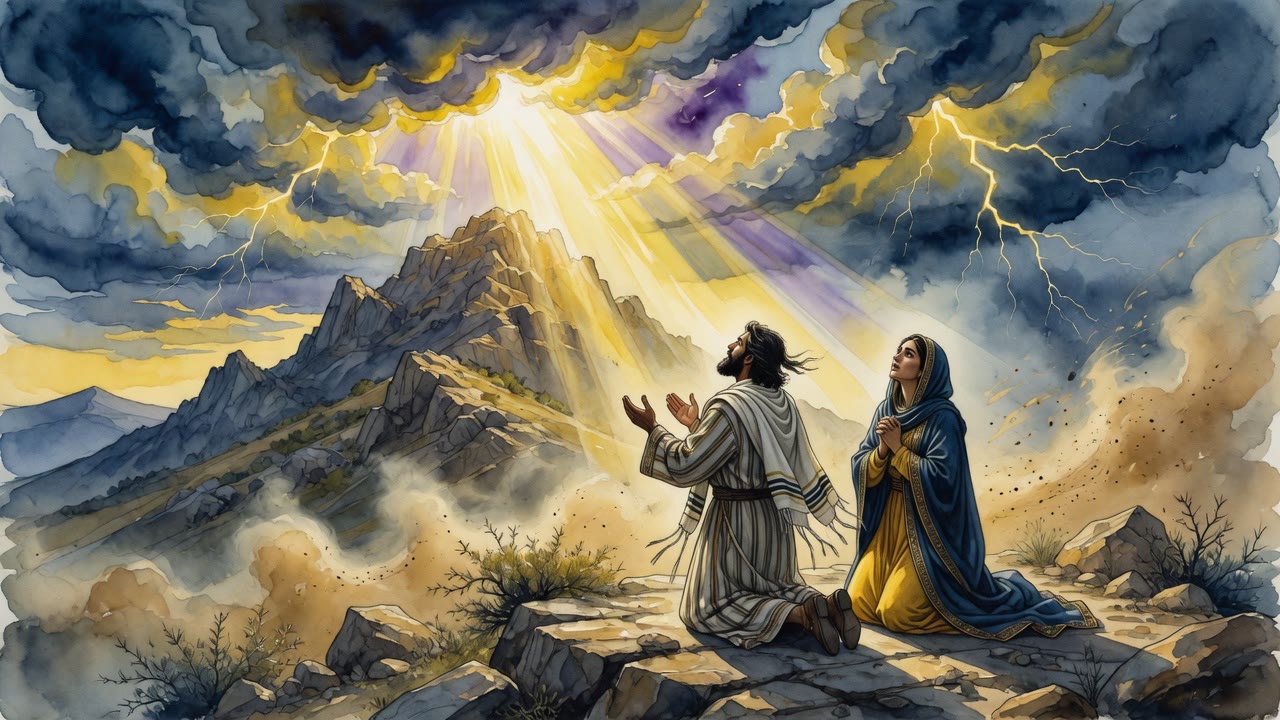
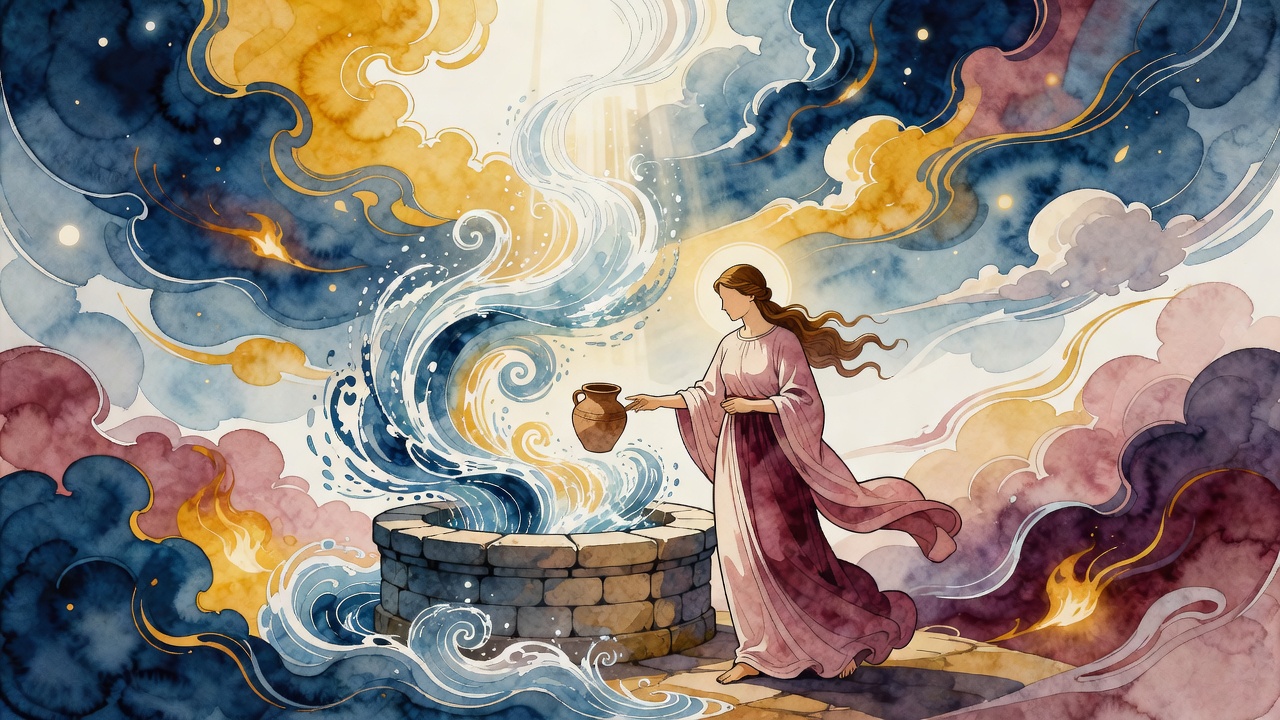
The midrash says water rose for Rebecca at the well before she touched the jar. Bereshit Rabbah says the cosmos arranged itself around her goodness in advance.
Table of Contents
 Click for full size
The Water That Rose on Its Own
The servant ran toward Rebecca. The rabbis of Bereshit Rabbah, the great Palestinian midrash on Genesis compiled in the fifth century CE, read the word for running carefully. He was not simply moving quickly. He was running toward what he had already seen: the water rising to meet her in the well before she had even lowered the jar. In the rabbinic imagination, physical miracles were moral indicators. The water that rose for her meant she was the kind of person the water wanted to rise for. The cosmos had arranged itself around her goodness before Abraham's servant had finished introducing himself.
She then offered not the sip he had asked for but an overflowing generosity: drink, my lord, and I will water your camels too. The rabbis heard in this response the character of someone who understood the difference between what was requested and what was needed. She gave the fuller gift without being asked, and the servant recognized in that impulse the completion of his mission. He had prayed for a sign. The sign was not the water rising. The sign was what she did after the water rose.
Hidden in Her Name
Bereshit Rabbah opens another window through the scene of Rebecca's departure from her family's house years later. When she learned that Esau intended to kill Jacob, she urged him to flee to her brother Laban and said: live with him a few years. The word the Torah uses for "few" is the same word used elsewhere to describe the years Jacob served for Rachel. The rabbis heard in this parallel a woman who had known the exact duration of Jacob's exile before it happened. How? Because certain events are embedded in names and numbers in the Torah's grammar. Rebecca did not simply make a guess. She spoke with the precision of a prophet.
Rabbi Hagai, quoting Rabbi Yitzhak in Bereshit Rabbah, made this explicit: the matriarchs were prophets. Not in a subordinate or decorative sense. In the full sense. They possessed the capacity for direct divine knowledge that the tradition otherwise reserved for the prophets of Israel's public history. Rebecca's prophetic knowledge shaped every major decision she made in her son's life.
The Repeated Word for Aramean
The Torah describes Rebecca's origin three times in a single verse. "Isaac took Rebecca, daughter of Betuel the Aramean, from Padan Aram, sister of Laban the Aramean." Rabbi Yitzhak in Bereshit Rabbah 63 pressed the triple repetition. If we already know she comes from Padan Aram, why emphasize the Aramean identity twice more? The rabbis heard in the repetition a kind of insistence on something that was supposed to be disqualifying and was not. She came from Aram, a family embedded in idolatry, in a land that was not part of the covenant. The Torah repeated this background not to diminish her but to establish the scale of what she had been before she became what she was. The righteousness the water rose to meet had been formed in a place that did not produce it naturally.
Planned Before Her World Was Ready
The Book of Jubilees, the second-century BCE Jewish text that retells Genesis with attention to covenant law, records the shadow that hung over Rebecca's family. The pronouncement over her cursed relatives, the stark language about names being erased and seeds cut off, functions in Jubilees as a backdrop against which Rebecca's character becomes visible. She was not formed by her family's righteousness. She was formed in spite of it, or perhaps against it, which made her choice to leave, to follow the servant, to say yes to a stranger's God, all the more extraordinary.
The rabbis held her emergence from that background as a persistent mystery. She could not have been produced by Betuel and Laban. She had to have been, in some deeper sense, planned. The water that rose before she arrived was a signal that the world had been expecting her. What God had arranged in advance was not just the servant's journey, not just the well, not just the camels. It was Rebecca herself, arriving from Aram into the covenant line, carrying with her something that had not been there before and that the covenant required.
← All myths