Rebekah Saw the Angel Beside Isaac and Fell From Her Camel
Rebekah looked up on the road to Canaan and saw an angel walking with Isaac. Then the holy spirit showed her the son she was going to bear.
Table of Contents
 Click for full size
Three Hours From Haran to Canaan
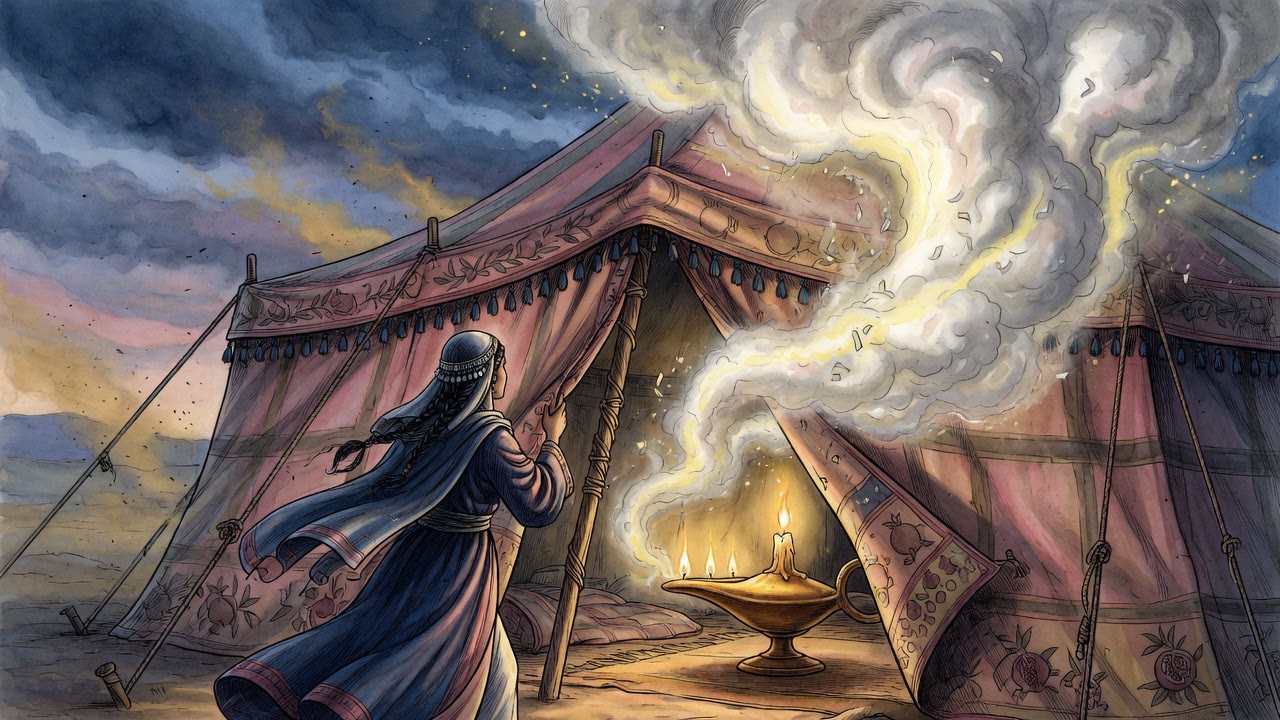
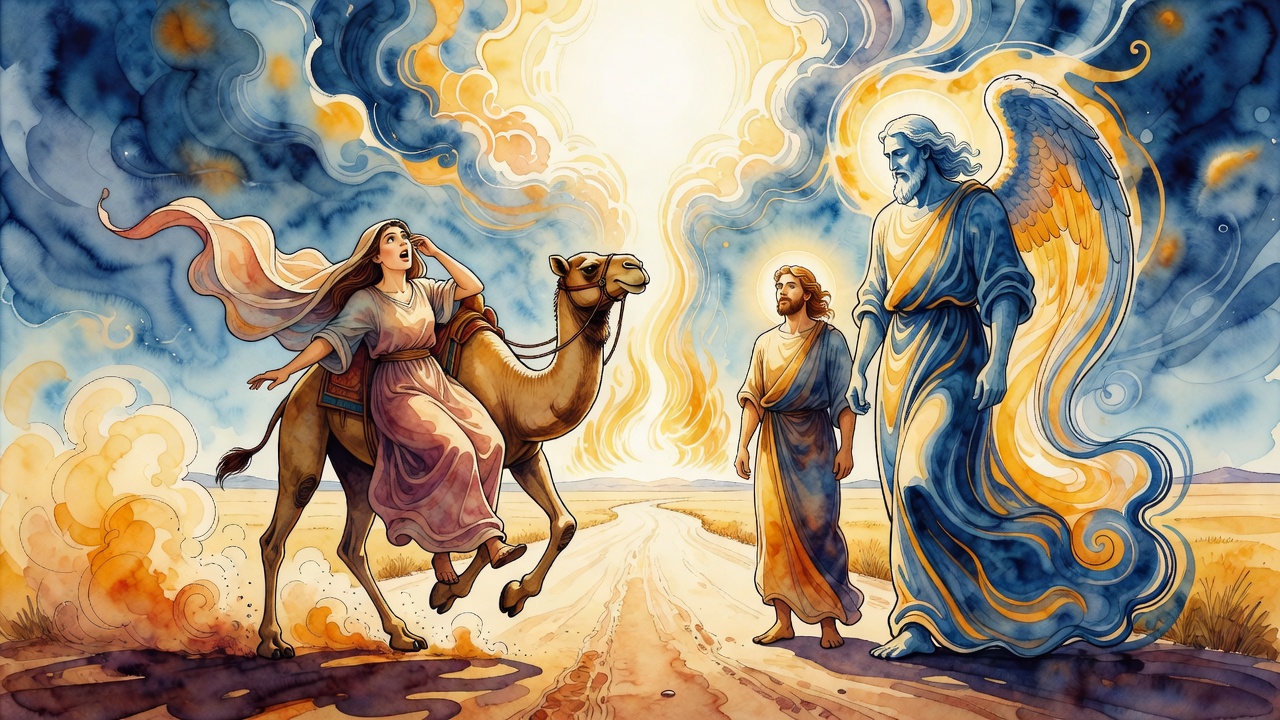
The return journey should have taken seventeen days. Eliezer made it in three hours. That is the tradition's way of saying that God was paying close attention to the timing of this particular meeting and did not want it delayed. The dust of Haran had barely settled on the camels' flanks before the hills of Canaan rose ahead of them. When the servant arrived in the late afternoon, the light slanting long across the fields, Isaac was standing in a field in prayer. He was the first person to observe the Minchah, the afternoon prayer, and this was the very moment he was observing it, his lips moving, his face turned toward the place where the day was beginning to fade.
Rebekah looked up from her camel and saw him.
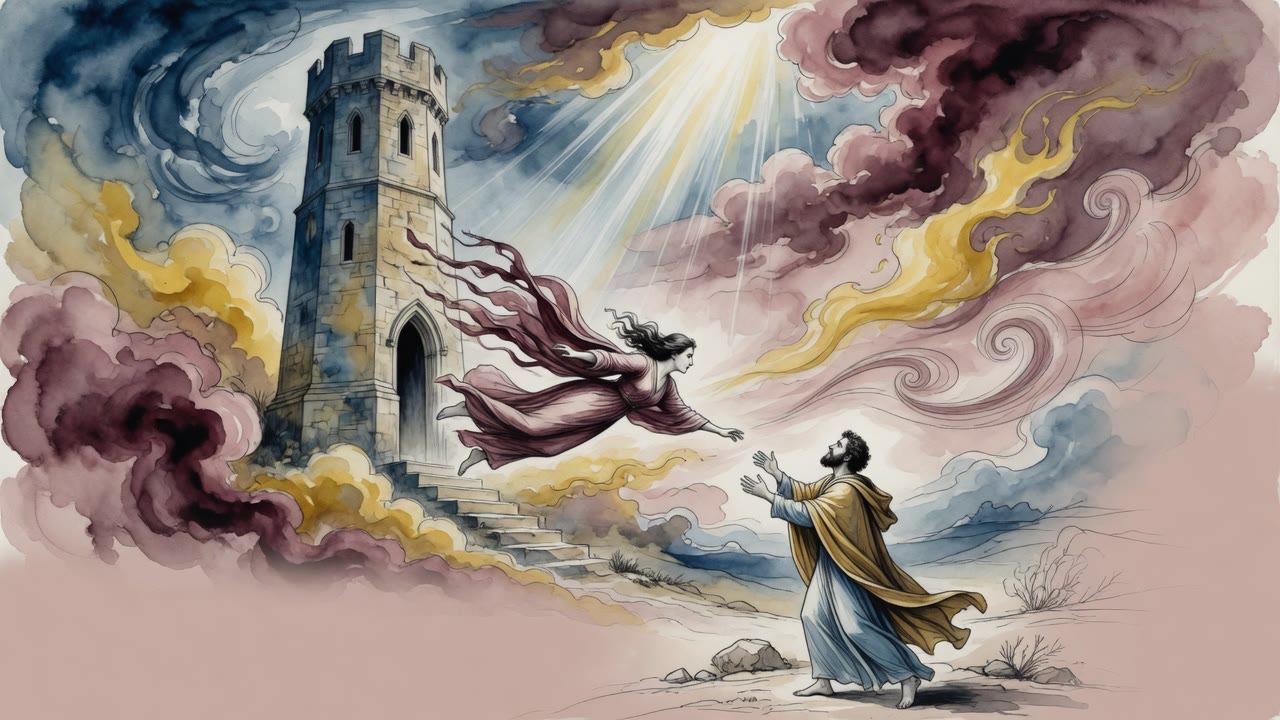
She did not see an ordinary man. She saw what the holy spirit showed her: that an angel was walking beside him. Not disguised as something else, not hidden in human form, but present in the way angels are present to people who can perceive them. She saw both the man standing in the field and the bright presence that moved at his shoulder, the two of them together in the dimming light.
Then the holy spirit showed her something else.
What the Vision Told Her
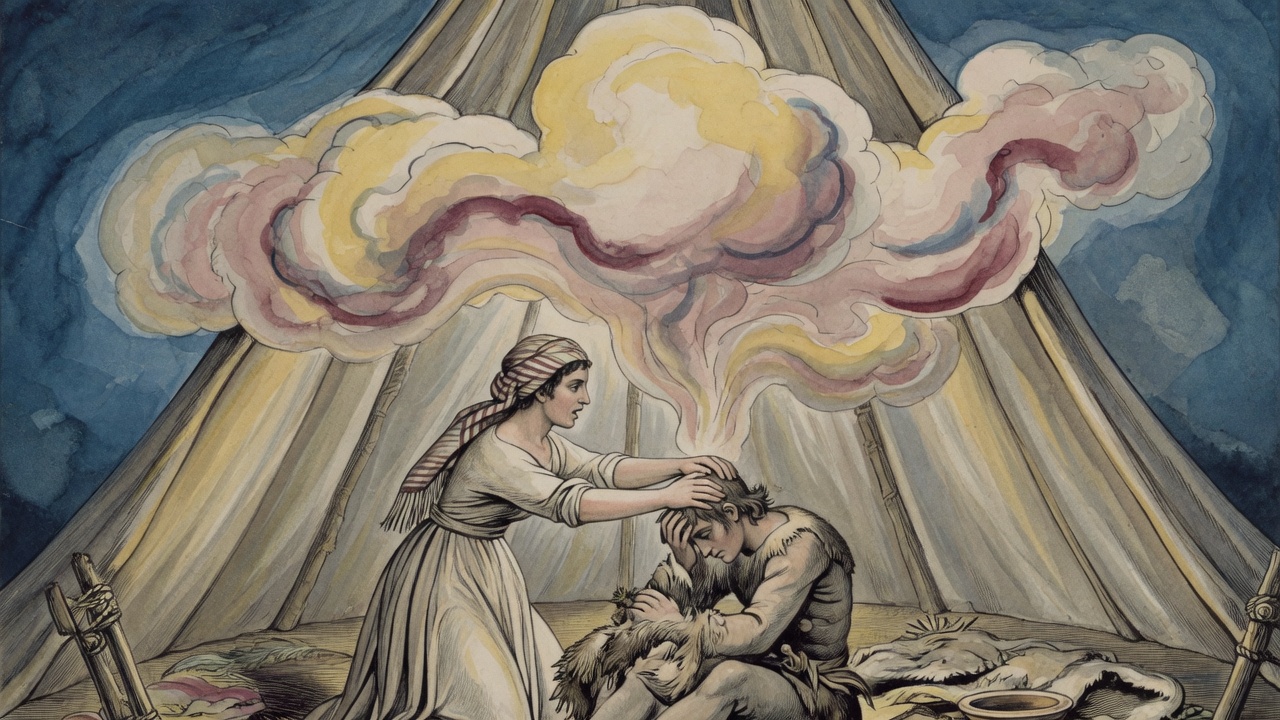
She was going to bear Esau.
That was the second revelation. She was not simply seeing her future husband for the first time, struck by his appearance or the angel at his side. She was seeing, in the same moment, the son who would come from this union, the red-haired firstborn who would despise his birthright and marry Canaanite women and build his life against everything his father held sacred. The holy spirit did not spare her this knowledge. It showed her the man and the cost in the same glance, the joy and the grief folded into a single instant of sight.
She fell from the camel.
The text in Genesis says she fell; the tradition explains why. It was not physical clumsiness, not a stumble of the animal or a slip of her hand on the saddle. It was the body's response to a vision too large to receive without being undone, the weight of it dropping her toward the ground before her mind could find words for what she had seen.
The Veil She Drew Across Her Face
She asked the servant: who is that man walking in the field toward us? And Eliezer, who had spent his whole mission under the watchful attention of the angel God sent ahead of him, answered that it was his master. And Rebekah took her veil and covered herself.
She knew before the veil went up. She had seen the angel. She had seen the son she would bear. She drew the cloth slowly across her face, the way a person steadies their hands when those hands have begun to shake. She was veiling herself not out of modesty alone but out of the kind of composure a person needs when they have just been shown the shape of the rest of their life and must still proceed through it day by day, meal by meal, year by year.
What Her Womb Remembered
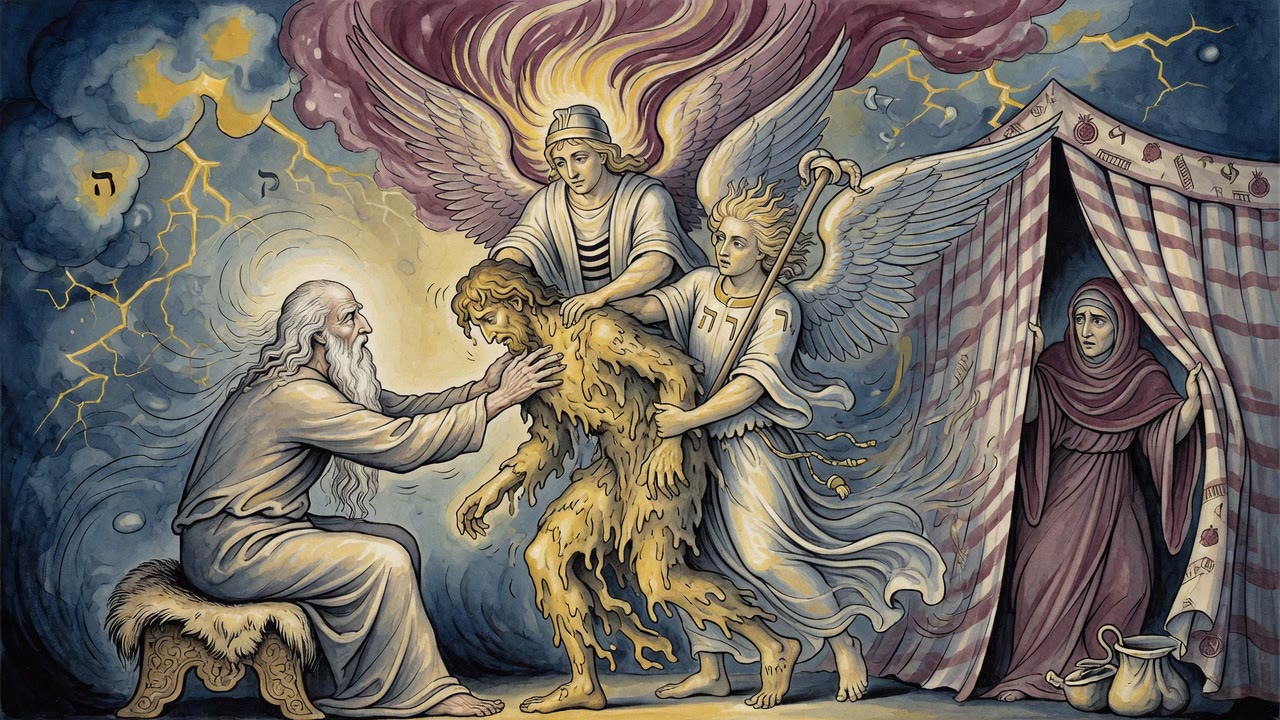
The tradition also preserves what happened in her womb years later, when she finally understood the connection between what she had seen on the camel and the two nations fighting inside her. She had known, or some part of her had known, since the moment of first sight on that road into Canaan. The struggle in her body was not new information; it was the slow arrival of a thing already glimpsed. The holy spirit does not give partial information. It gives what the person needs to understand their place in the story, and then it waits while the years catch up to the vision.
← All myths