Isaac Stayed in the Land and Changed His Enemies' Minds
Famine opened the road to Egypt. Isaac packed. In the night a voice forbade the Nile and sent him into Philistine ground instead.
Table of Contents
 Click for full size
The Egypt Road Closes
Isaac had the Egypt road in his mouth when the dream cut it off. Famine had opened that road for his father before him. Pack animals stood ready. Rebecca waited for the nod south. Then God appeared in the night and forbade the Nile.
"Go not down into Egypt. Dwell in the land that I shall tell thee of. Sojourn in this land, and I shall be with thee and bless thee." Gerar, then. The king of the Philistines. Walk into the territory of people who may not want you. Trust that the covenant travels with you.
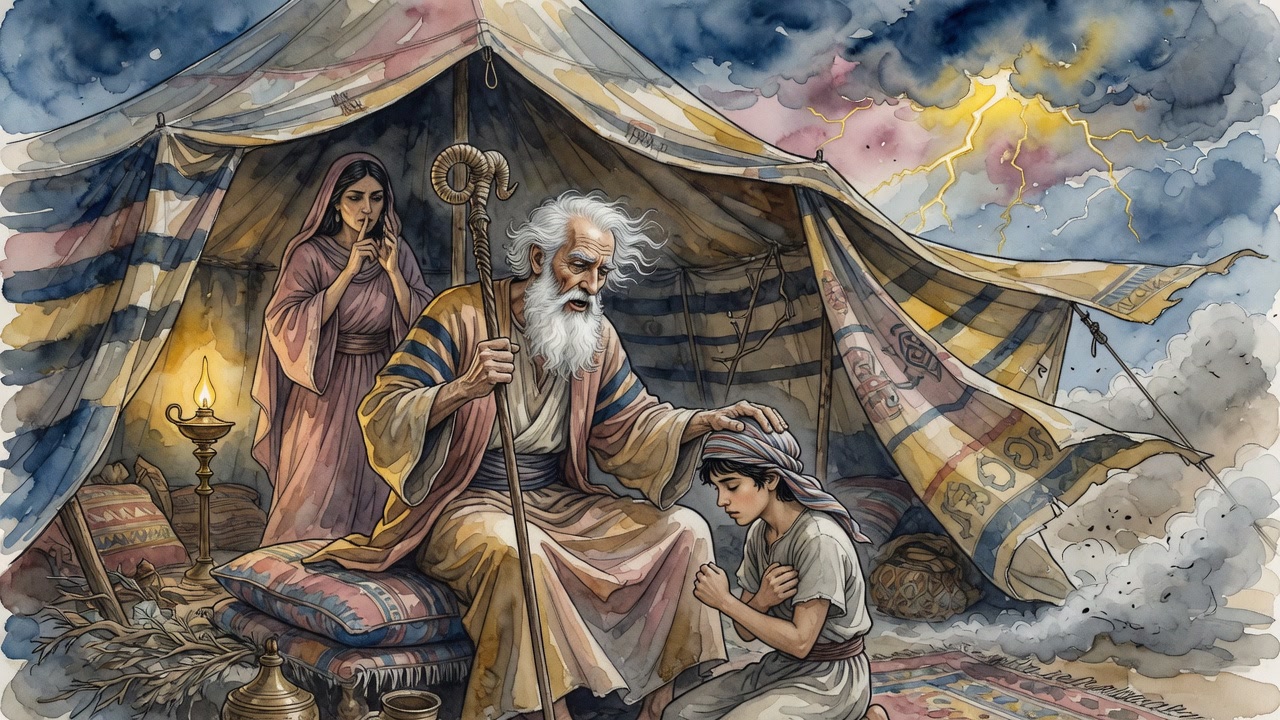
Isaac obeyed. He settled in Gerar. He introduced Rebecca as his sister, because her face was a danger he could measure and Egypt was a danger he had been barred from. For three months the lie held. Then Abimelech looked out a window and saw Isaac sporting with her, husband and wife in a king's line of sight. The king confronted him. One of my people could have taken her, he said, and you would have brought guilt on us. Isaac said he had feared for his life. Abimelech dressed them in royal garments and paraded them through the city with a cry that this man and this woman were not to be touched.
A Hundredfold That Made a King Afraid
Isaac sowed in that land. The soil was poor. The year was unkind. The yield came back a hundredfold anyway. He grew large enough that Abimelech noticed and asked him to leave, not from a simple quarrel, but from something closer to fear. The man who had been commanded to stay had grown too large for the space he occupied.
Philistines muttered in the gate that they would rather have the dung from Isaac's she-mules than Abimelech's gold and silver. Envy has a joke and a knife in the same sentence. Faces began to turn away from him in the street. He moved.
He did not take the Egypt road even then. Abraham's son stayed in the land he had been told to sojourn in, and everyone else around him seemed to want him gone.
Wells Filled With Sand
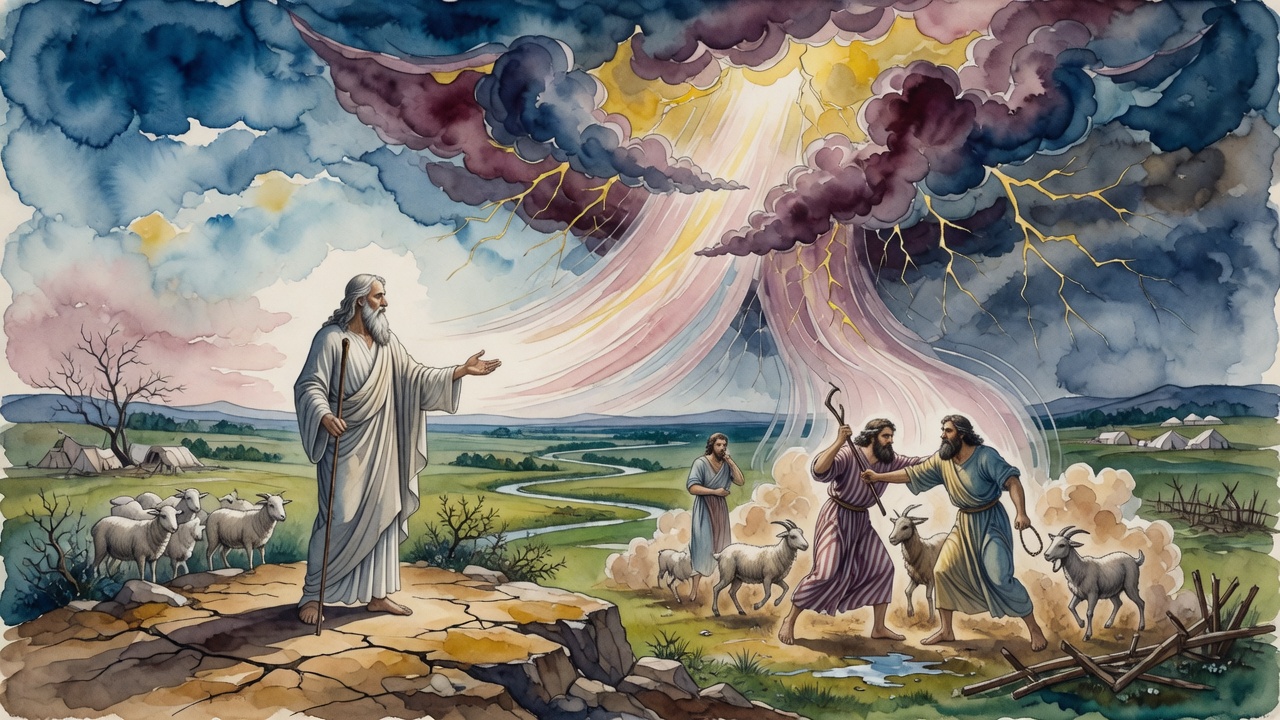
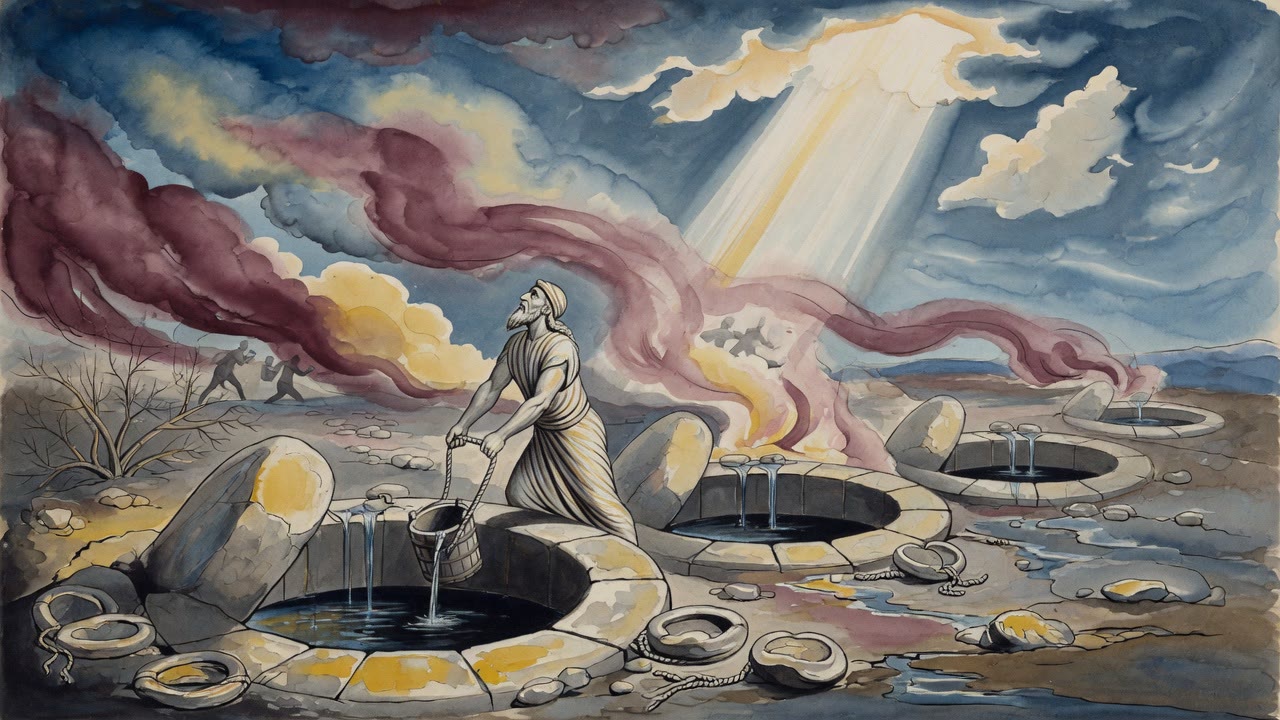
He dug wells his father had opened, and new ones besides. The Philistines filled them with sand. He dug more. They claimed those too, calling the water theirs. Isaac named each well for what had happened to it: Esek, contention. Sitnah, enmity. He did not fight for them. He moved on. The water was real. The quarrel was cheaper than blood, and he would not buy it.
A sojourner can win a well and lose the land. Isaac chose the land. He left sand in other men's mouths and walked until the next digging, and the next, until a well finally kept his name without a fist around it.
The Philistines had turned their faces from him. He had turned his back on their sand. Neither gesture was peace. Peace still had to walk toward him from a king who had already asked him to leave.
Abimelech Came Because He Felt It
Then Abimelech came. His officials came with him. Isaac's question was direct.
"Why are you coming to me now, seeing that you hate me?"
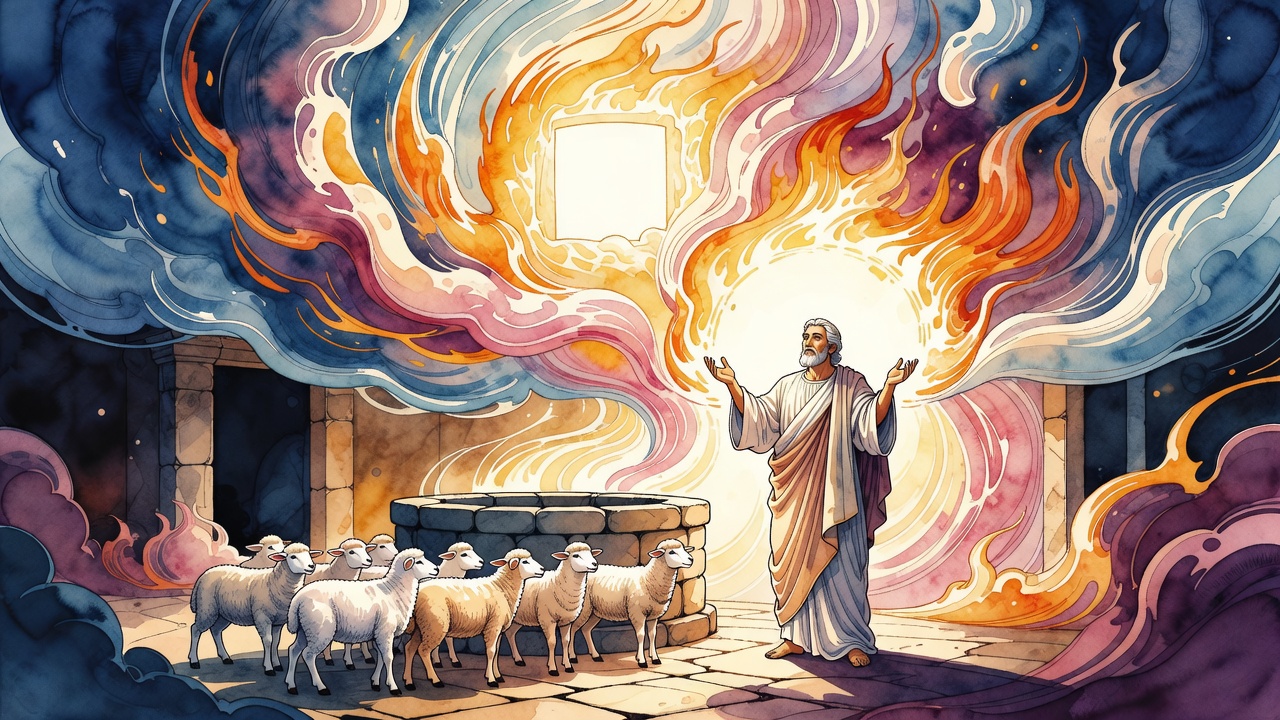
"We saw plainly that the Lord was with you." The Shechinah (שכינה), the divine presence, had been visible to them. They had felt it, and they came to make peace with the man who carried it. They wanted the old covenant with Abraham renewed, a promise that Isaac would not harm them, "as we also did not touch thee."
They took credit for restraint. Isaac heard the boast inside the courtesy. A wicked mouth is proud of the harm it did not do. He still swore the peace. They had not come to negotiate from strength. They had come because a presence they could not account for had made the negotiation necessary. Enemies' minds can change without a battle when the thing they fear is not a sword.
He Sowed the Yield to the Poor
After the settlement Abimelech offered him prime fields and vineyards. Isaac accepted and immediately tithed everything, a tenth to the poor of Gerar. He did not wait for a law commanding it. He did not wait for precedent. He acted as if abundance had an obvious first address.
He had been born in the third month, in the middle of the month, on the Festival of First Fruits, the day the year's first yield is brought to God. The promised child arrived on the day devoted to first offerings. He spent his life enacting the logic of that birthday: offering first, receiving afterward. Some said he did not sow corn at all. He sowed his wealth in charity to the needy, and for everything he tithed, the land gave a hundredfold back, even on poor soil, even in a bad year.
Abraham had left Mesopotamia. Jacob would leave, wrestle, and father nations on the road. Isaac stayed. He dug. He gave. He watched a king come to him because a Presence the king could not name had made peace necessary. The son who stayed when everyone else left did not win by battle. He changed his enemies' minds by remaining where he had been told to remain, until even the men who filled his wells with sand had to admit they had felt God in the room.
← All myths