Mount Moriah and Sinai Lean Toward Messianic Hope
Isaac told his father to bind him tight so a tremble would not spoil the offering. He looked at the angels, not at the knife.
Table of Contents
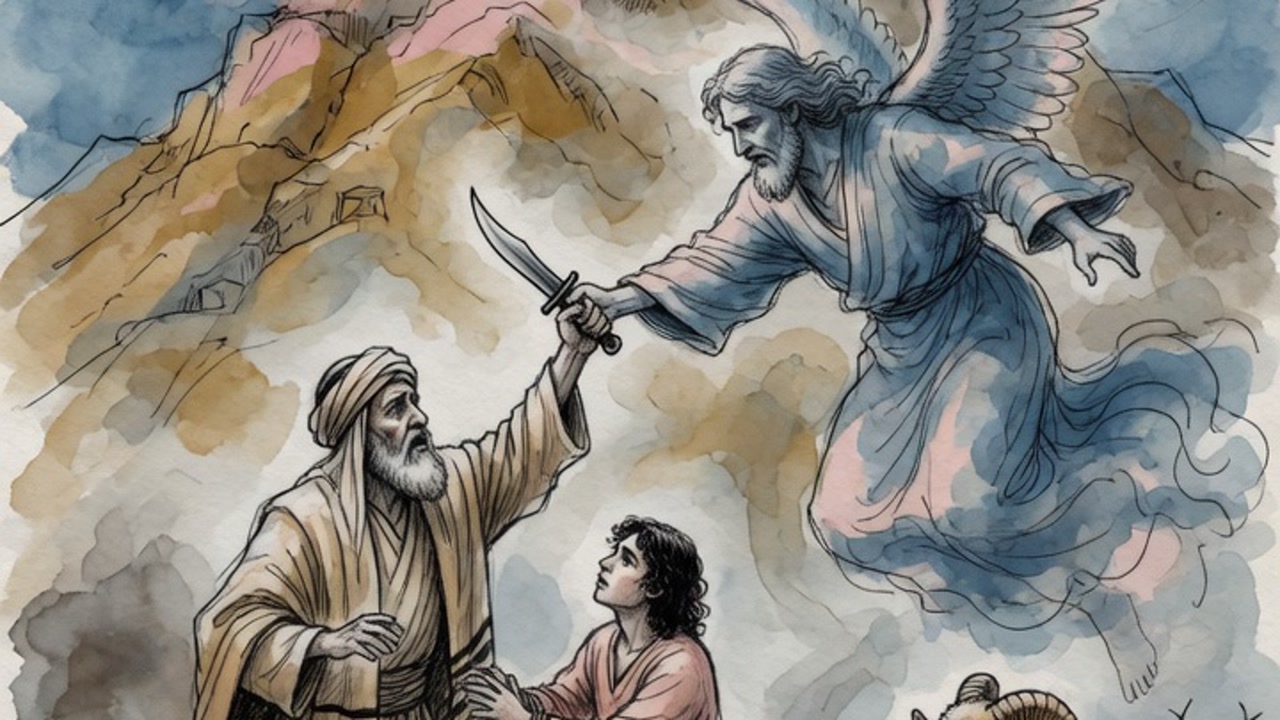
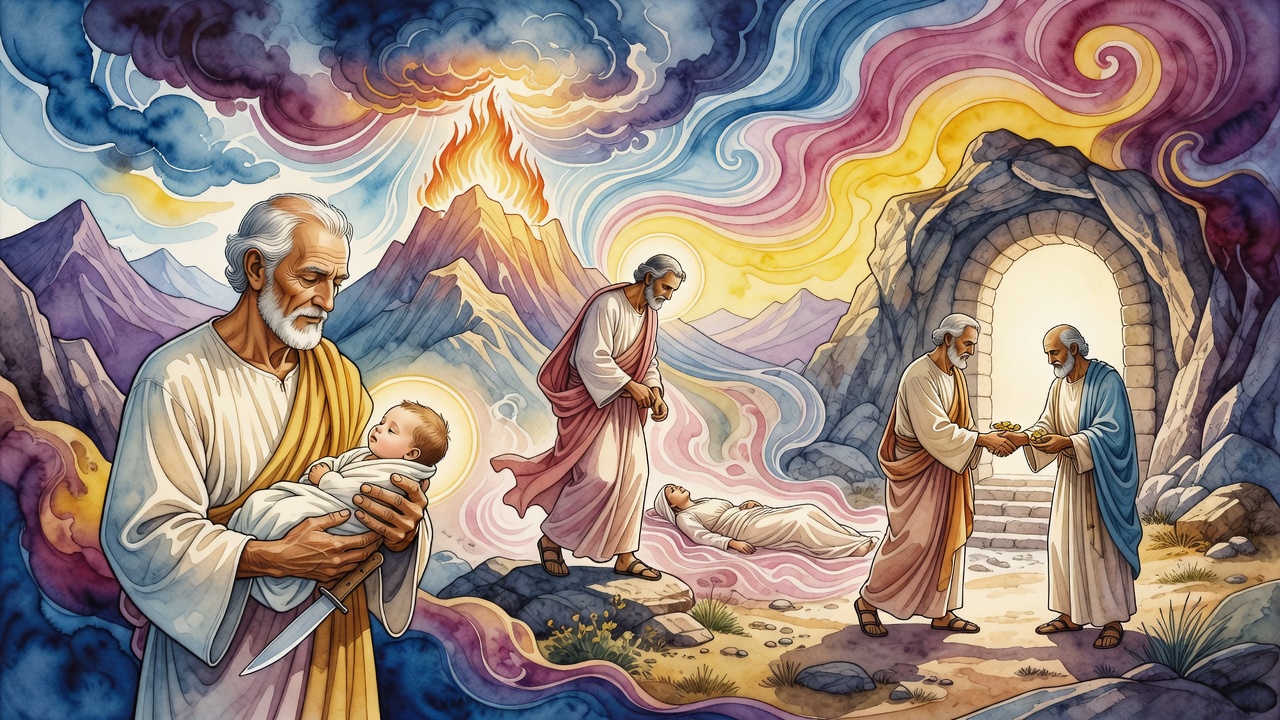
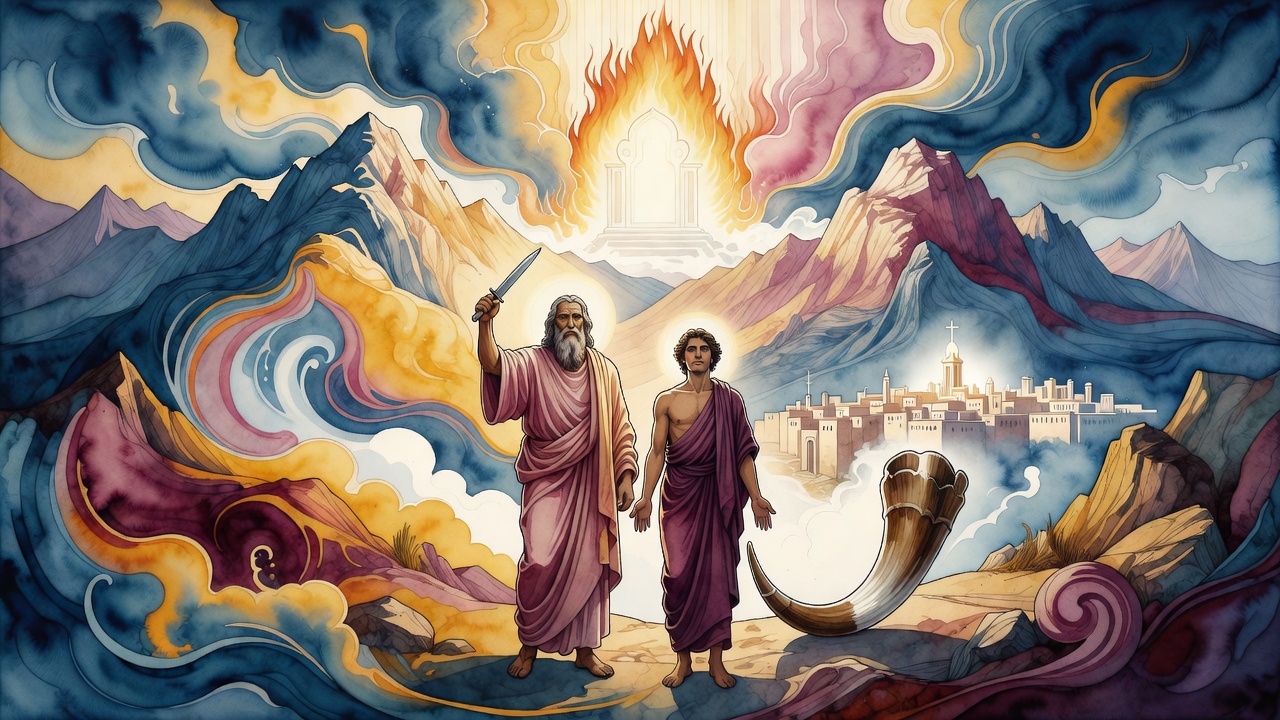
"Bind me properly," Isaac said. The knife was already in Abraham's hand. "Bind me so I do not tremble from the affliction of my soul, and get thrown into the pit of destruction, and leave a flaw in your offering."
 Click for full size
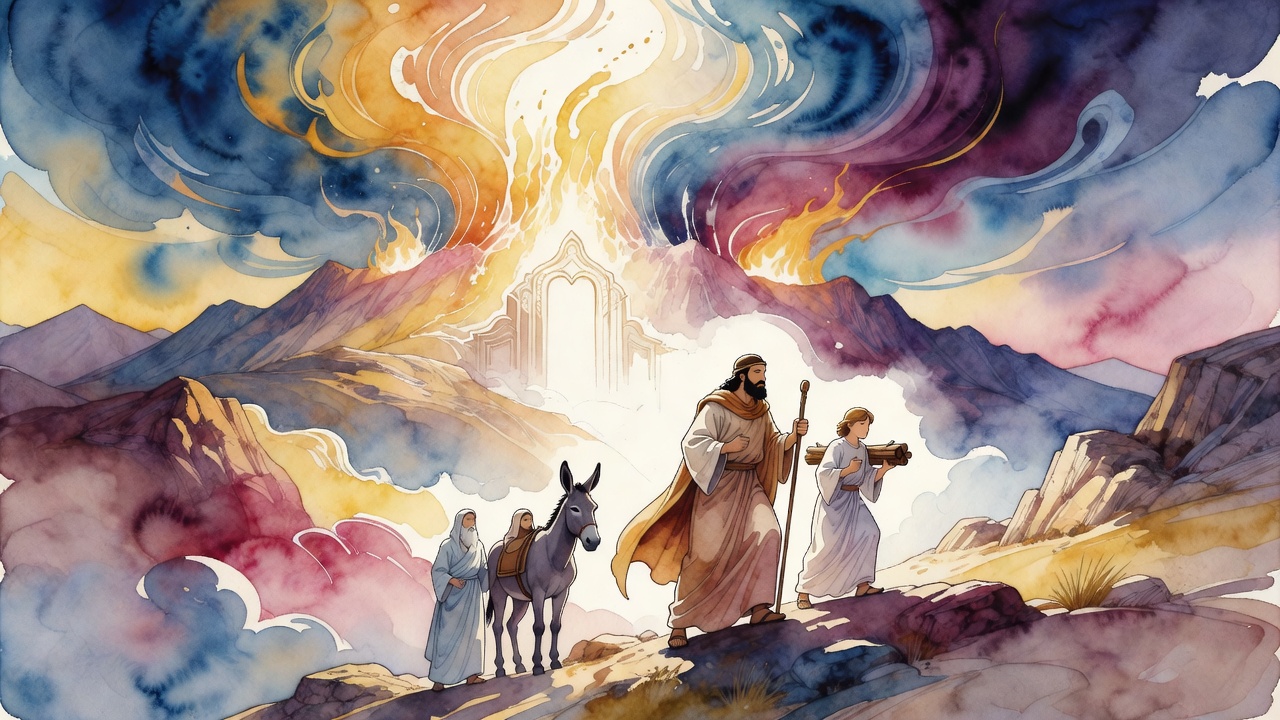
Abraham had saddled his own donkey that morning. He had not asked a servant to do it. He had taken Isaac and two young men and the wood for the burnt offering and gone toward the place God had named, and he had not been told which mountain until he saw the glory waiting on it, abiding there, saying, this is Mount Moriah.
On the third day he had seen it from a distance. He had told the young men to wait with the donkey while he and the boy went up to worship. He had said they would both come back.
Bind Me Tightly
Isaac had been almost silent on the climb. He carried the wood. He asked where the lamb was. He received an answer that was either faith or deflection. Then he was on the altar and the knife was in the air, and he found a voice for the one thing that could still go wrong.
He is not refusing. He is asking for the preparation that will let him hold still. Fear can make a body jerk. A jerk can spoil a cut. A spoiled cut can turn a commanded offering into a blemished one. Bind me tightly, he said, so that my father's hand will not be shamed by my nerves.
Abraham bound him. The Akedah (עֲקֵדָה), the binding, was not only a father's obedience. It was a son's choice to be held.
Isaac Looks Up, Abraham Looks Down
Abraham's eyes were on Isaac's eyes. Isaac's eyes were not on the knife. Isaac looked toward the angels on high. He beheld them. Abraham did not.
The angels spoke above. "Come, behold how these solitary ones who are in the world kill the one the other. He who slays delays not. He who is to be slain reaches forth his neck."
Two men alone in a world of other altars, performing a command neither of them fully understood. The one with the knife did not hesitate. The one on the wood offered his neck. Heaven watched, astonished, while a father looked at a son and a son looked past him into the court that Abraham could not see.
Then the angel called from heaven and stopped the hand. Abraham looked up and saw a ram caught in the thicket. He offered it in place of his son.
The Ram That Was Ready From Twilight
That ram had not wandered in. It was created at twilight on the sixth day, in the last hour before the first Sabbath, placed in readiness from the beginning of the world for this mountain on this day. Nothing of it went to waste. The ashes of the parts burnt upon the altar would become the foundation of the inner altar, where the expiatory offering would be brought once a year on the Day of Atonement, the day on which the offering of Isaac took place. Of its sinews David would make ten strings for his harp. The skin would serve Elijah for a girdle.
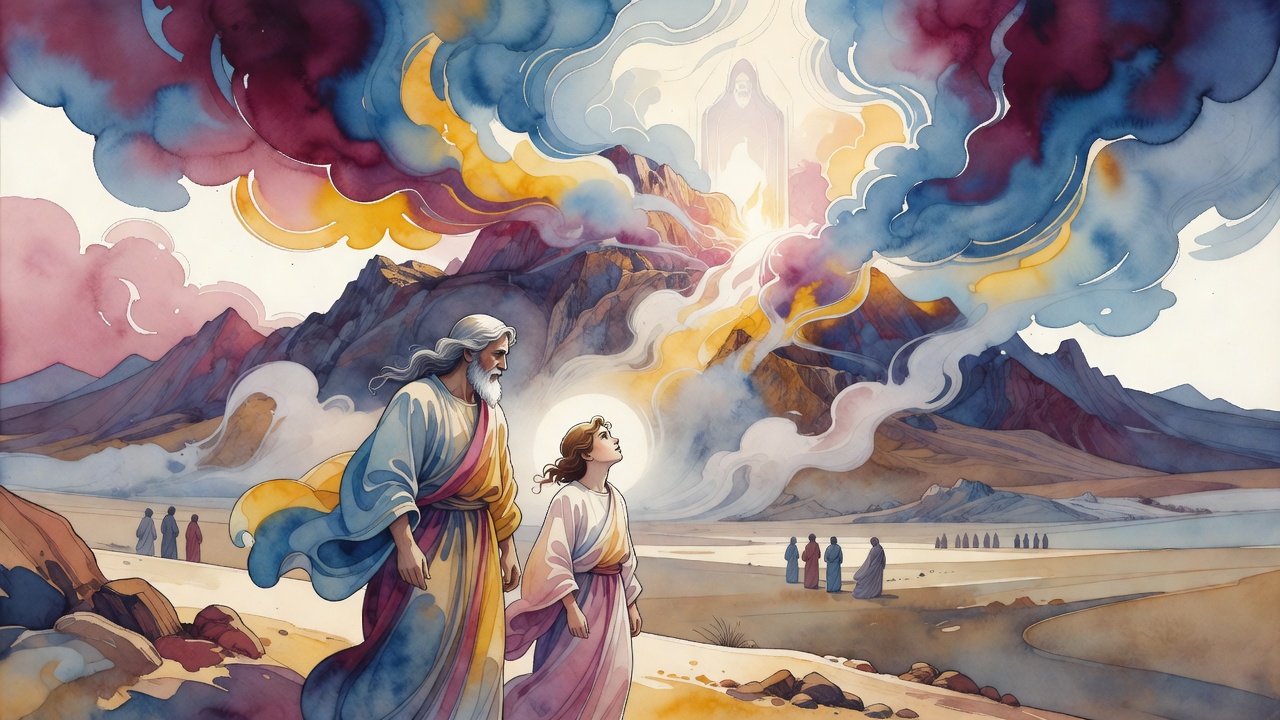
And of its two horns, one was blown at the end of the revelation on Mount Sinai, when God descended in fire and cloud and thunder and the entire camp trembled. The other, the larger one, is reserved. It will be used to proclaim the end of the Exile, when the great horn shall be blown, and they shall come who were ready to perish in the land of Assyria, and they that were outcasts in the land of Egypt, and they shall worship the Lord in the holy mountain at Jerusalem. (Isaiah 27:13)
The Same Donkey, the Same Horn
The donkey Abraham saddled was not an ordinary beast either. It was the offspring of the ass created during that same twilight, the hour when certain things were finished just before rest. Moses would set his wife and sons upon that line of beasts when he came to Egypt (Exodus 4:20). In the future the son of David will ride one, lowly, and on a colt, the foal of an ass (Zechariah 9:9). The animal that carried the wood and the boy up Moriah would carry, in its line, the lawgiver toward Egypt and the king toward Zion.
One mountain held the knife and the ram. The other mountain would take one horn of that ram and split the sky with it. Sinai's blast was Moriah's leftover, a sound stored in a creature that had been waiting since the sixth day. The larger horn has not sounded yet. It is still waiting, the way the ram waited in the thicket, for a morning that has not come.
Jerusalem Stands on Both
Moriah and Sinai are not rival mountains. Jerusalem is built on what both of them gave, and they lean together toward that city. Whoever later named the city's foundations named these two slopes, and the messianic hope in it is the larger horn still waiting. Moriah gave the site of trust, the place where a father raised his hand and a son held still and God accepted the ram instead of the death. Sinai gave the text, the commandments inscribed in stone and carried through the wilderness and later housed in the Temple that stood on Moriah's slope.
At the end of days, the mountain of the Lord's house will be established as the top of the mountains (Isaiah 2:2). God will bring Jerusalem to the forefront and set it on Sinai, on Tabor, and on Carmel, and the nations will flow to it, and the flowing will also be a singing. A city built on both is a city that holds the word spoken in thunder and the silence of a man lying on an altar looking up at angels, the shofar blast that terrified the camp at Sinai and the shofar still waiting in the second horn for a gathering that has not yet begun.
Isaac's neck is still the picture. Abraham's eyes on his son. The son's eyes on a court the father could not see. A ram in a thicket, ready since twilight. One horn already spent on Sinai. One horn not yet spent on Jerusalem. The two mountains lean toward the same city, and the city is still waiting for the larger sound.
← All myths