30 texts
A man in the Talmud (Bava Batra 58a) once overheard his wife whispering to their daughter. Of their ten sons, she admitted, only one was truly his. She would not say which. The fat...
A Jewish merchant died abroad, far from his family, in the house of a stranger. Years later, his grown son traveled to find the merchant's hidden property — but the man who had inh...
A Jewish child, still young enough to be sitting with a melamed, had just finished memorizing a portion of the book of Bereshit (Genesis) when the soldiers came. He was captured an...
A ma'aseh preserved in the Gaster manuscripts, and recorded as exemplum no. 308 in Moses Gaster's 1924 The Exempla of the Rabbis, tells of a man who made a single vow early in his ...
A pious couple in the Gaster manuscripts had been childless for many years. The husband, desperate, went to the cemetery and prayed at the tombs of the righteous through a long nig...
A man lay dying. He had ten sons. His wife, in a bitter moment late in the marriage, had once told him that only one of the ten was biologically his. The other nine were fathered b...
A rich man, old and childless, prayed for years for a son. In his advanced age God granted him one. He named the boy Saul, after the first king of Israel, and lavished everything o...
A poor fisherman cast his net and pulled up a great fish. As he lifted it from the water, the fish spoke. Cut me open, it said. Gather my blood in three bottles. Keep them safely. ...
Ashmedai, king of the demons, wanted to humiliate Solomon, whose wisdom was famous in every kingdom. So Ashmedai brought up from the netherworld a man with two heads, a living curi...
Gaster's Exempla (1924), No. 330, tells a folktale of two brothers. One was rich. The other was poor and had many children. The rich brother took one of the poor brother's sons — a...
A rich man lay dying, and he called his son to the bedside. He made him swear one oath — "Never take an oath yourself. Not in court, not in dispute, not for any price." The son agr...
Rav — one of the founding figures of the Babylonian Talmud, third century CE — had a difficult wife. Whenever he asked her to cook a particular dish, she would prepare its opposite...
A man of Sidon came to Rabbi Shimon ben Yochai to arrange a divorce. He had lived many years with his wife and no children had been born to them. In the Jewish world of the time, c...
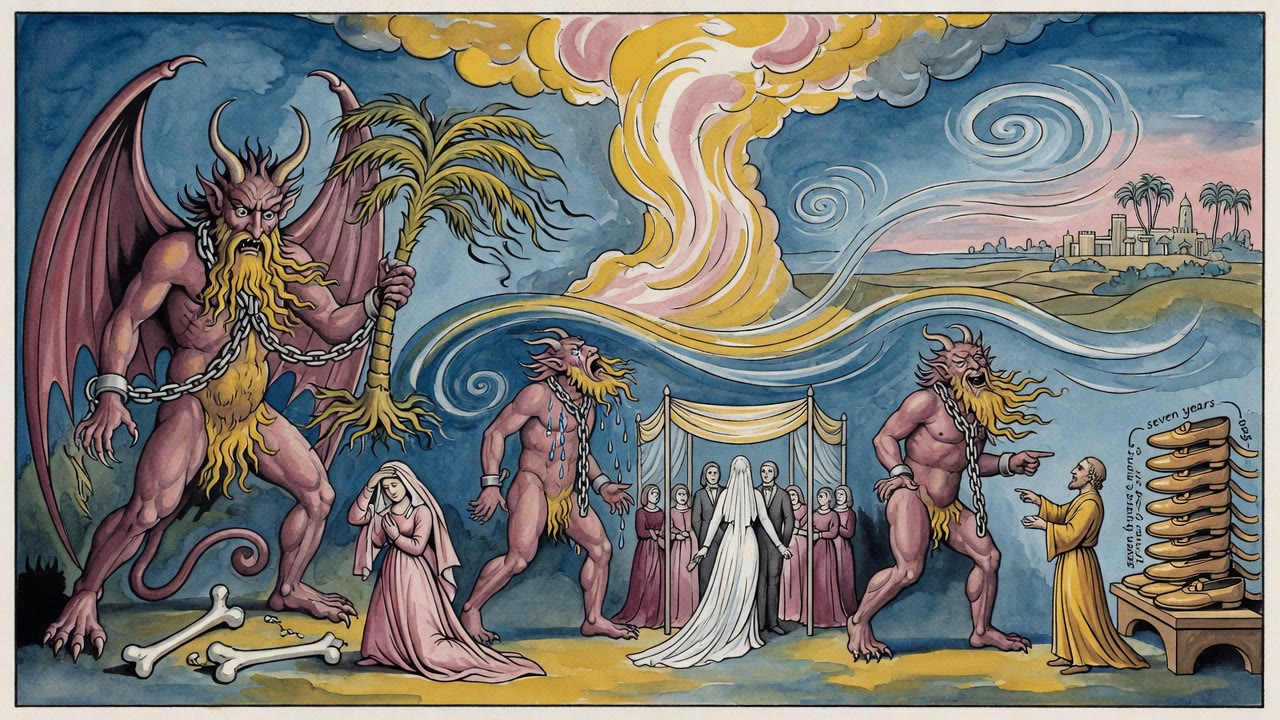
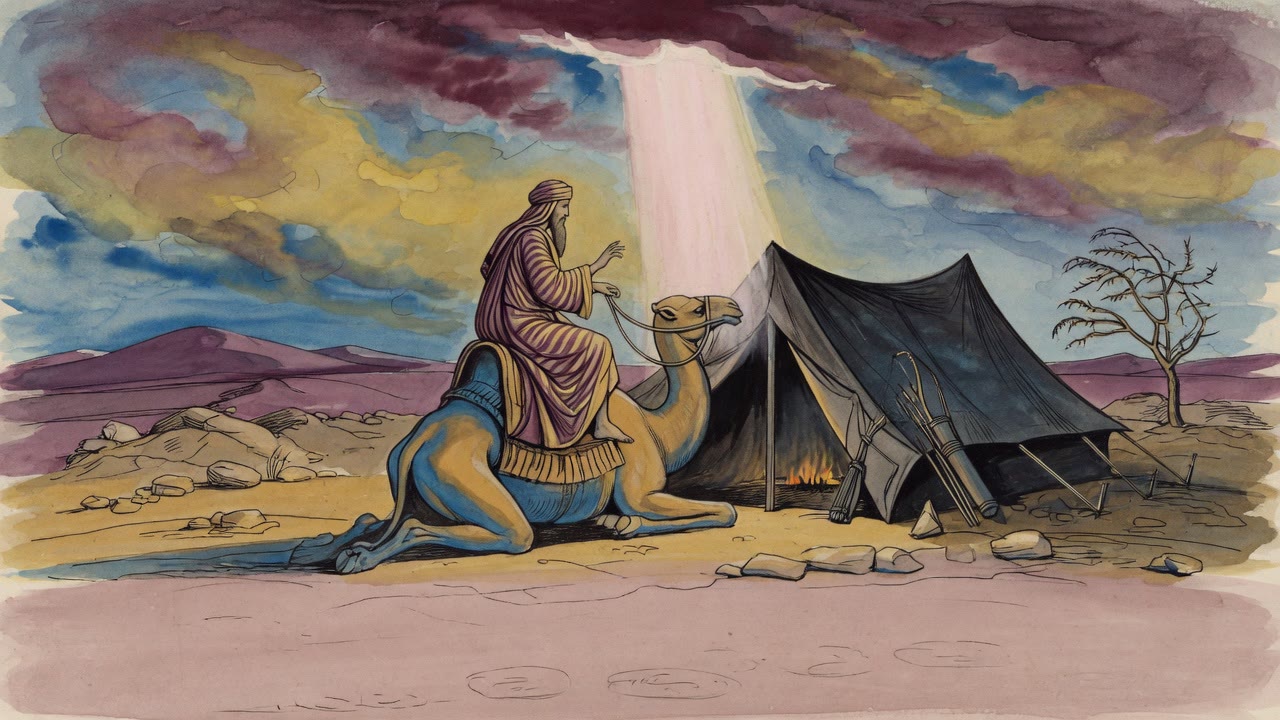
After Abraham had sent his son Ishmael away to live with his mother Hagar, Ishmael settled in the wilderness and married a Moabite wife. Years passed. Abraham wanted to see how his...
A group of children in a Jewish village were playing on Shabbat. As the sun rose higher over the day of rest, they wandered too close to the edge of an old well and fell in. The we...
A man had three daughters, and each carried a flaw. The first was a thief who could not keep her hand from what was not hers. The second was lazy and refused the work a household r...
The sages liked to place two sons side by side to show how kibbud av, honor of a father, can be faked and how it can be real. The first son fed his father lavishly. He set out rich...
A wealthy man had an only son and trusted him completely. In his later years he signed over the entire estate to the son's name, keeping nothing for himself except the promise of h...
Rabbi Shimon bar Yochai, the second-century sage to whom tradition attributes the core of the Zohar, once sent his son to the study house so that the scholars might bless him. What...
Gaster preserves, as exemplum No. 194, a tiny, terrible story — almost a folk horror — about a mother whose son was murdered by his own brothers. She gathered the blood of her son ...
Gaster's exemplum No. 303 preserves a Jewish folktale about a father's last clever gift to his son. A wealthy Jewish merchant lay dying in a distant city far from home. He drew up ...
It was prophesied to Rabbi Akiva that his beloved daughter would die on the day of her wedding. Akiva was a student of signs and omens; he believed the prediction. But he also beli...
Gaster's exemplum No. 381 preserves a cascading folktale from the Midrash Aseret HaDibrot, the Midrash on the Ten Commandments, all arranged around the commandment to honor one's f...
Gaster's exemplum No. 399, drawn from the Ben Attar collection of medieval Jewish exempla, preserves a courtroom puzzle about a cunning father's last will. A wealthy Jewish merchan...
Two brothers hated each other. Their father, growing old, asked each of them privately why. The elder said he did not know the reason — only that the hatred was so deep he would gl...
A father drank too much. His children, embarrassed, tried an extreme intervention. They refused to give him wine. They cut off the household supply. And when he kept finding it any...
A rich man had one son. When the son turned eighteen, he begged his father for permission to travel to a famous academy. The father let him go, and three times over three years the...
A merchant left his young wife at the start of a long trading voyage. She was pregnant at his departure, though he did not know it. He was gone many years — so many that the infant...
A rich man once swore an oath before his sons that when he died he would leave each of them one hundred dinars. He had ten sons, so the promise totaled one thousand dinars. Then hi...
The Talmud returns often to a gentile from Ashkelon named Dama ben Netina, whom the sages held up as the gold standard of the commandment to honor father and mother. They told his ...