Jacob Went Down to Egypt With Seventy Souls and One Name
Jubilees counts every soul who descended with Jacob into Egypt. Seventy names, twelve tribes, one family mirroring the whole human world.
Table of Contents
 Click for full size
The Night He Would Not Get In the Wagons
The wagons had come up from Egypt and were standing in Beersheba with their oxen unhitched, and Jacob would not get in them.
He was a hundred and thirty years old. He had been told that morning that Joseph was alive and governing Egypt, and he had gone down and come back up again in one breath and believed it, and he still would not get in the wagons, because Beersheba was where Abraham had planted the tamarisk and called on the name of the Lord, and where Isaac had been standing when God renewed the covenant with him. It was the last altar going south. Past it there was road, and after the road there was Egypt.
So he slept there instead, out in the open next to the carts.
Do Not Fear to Go Down
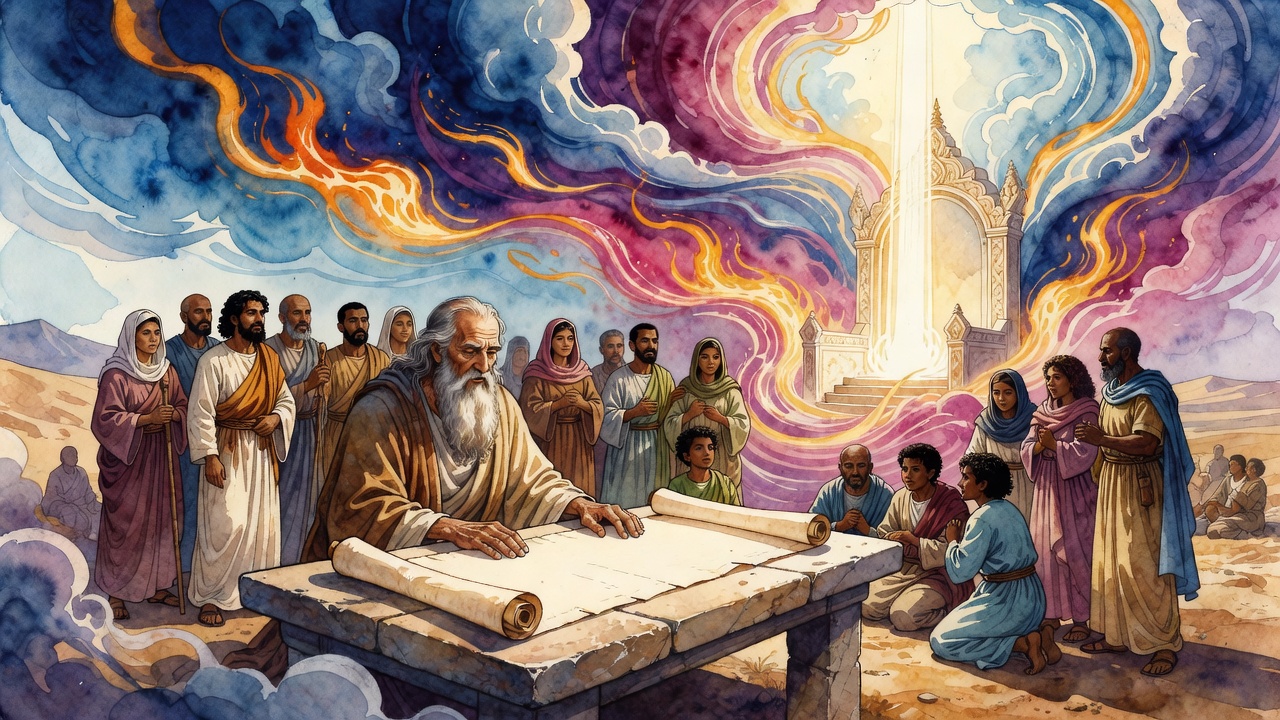
God came in the night and told him not to be afraid of the descent, and promised to make a great nation of him down there, and promised to bring him up again.
Then came the last clause, and it was the one that moved him. Joseph would put his hand on his father's eyes and close them. Jacob lay in the dark at Beersheba and worked out what that sentence contained, which was that he would not be coming back up on his own feet, that the promise about being brought up was for his body and not for him, and that the price of seeing his son's face was dying with sand under him that his grandfather had never walked on.
He got in the wagon at first light.
Seventy, Counted on the Road
The household came out at seventy.
Some of it was straightforward. Reuben's five sons, Simeon's seven, Levi's three, though among Simeon's was Shaul, whose mother was the Zephathite woman, so even the roster of the twelve tribes going down into Egypt had somebody in it from outside the family. Dinah was counted. She was the only daughter on the list and she went down with her brothers.
Two of the seventy were not in the wagons at all, since Manasseh and Ephraim had been born in Egypt years before and were waiting at the other end of the road. The count held them the whole way down. Jacob traveled south toward a number that could not come out right until he arrived.
Pharaoh's Wagons
The carts were not Joseph's. Pharaoh had sent them, ox-drawn, up out of the delta and into the hill country of Canaan to carry an old shepherd and his grandchildren down to Goshen, so the sons of Israel entered Egypt sitting in Egyptian transport that an Egyptian king had paid for.
Everybody rode. The sons went up into the carts with their father, and the little ones after them, and the wives, until the whole household of a hill-country shepherd was coming down the road toward the border in vehicles that had been sent north for one old man.
Four hundred years later the same royal stables sent wheels north after the same family, with soldiers in them, and caught up to them at the edge of the sea.
Bread and Wine at the Table in Goshen
Joseph gave them Goshen and Rameses and the whole district around it, which he ran on Pharaoh's behalf, so a family that had come down as famine refugees was standing on the best ground in Egypt before anybody had eaten anything.
Joseph had ridden up the road to meet the caravan and had fallen on his father's neck out in the open, and the two of them stood there in the dust for a long while with the household waiting in the carts behind them.
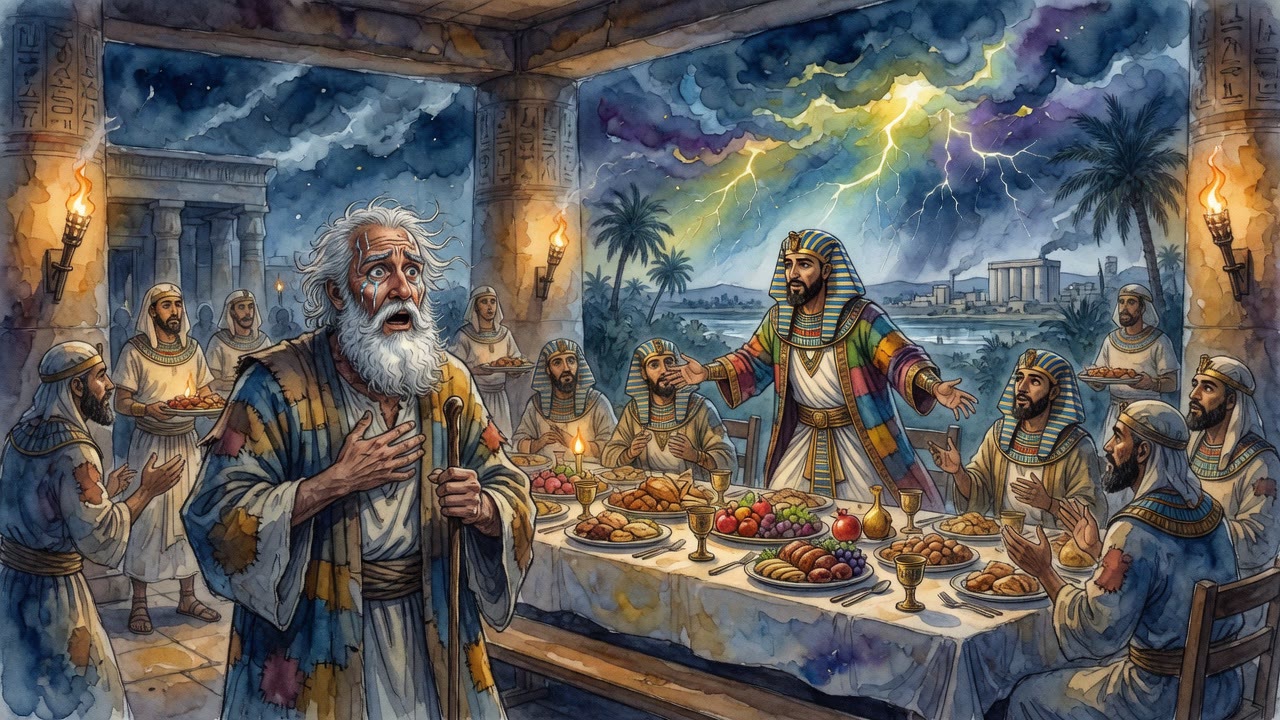
Then they ate. Joseph and his brothers sat down with their father over bread and wine, and Jacob rejoiced with exceeding great joy, because he was watching a man he had mourned for twenty years pass a cup to the brothers who had let him go. He had spent two decades certain that an animal had torn his son apart. Now the son was at the table with two boys of his own, and Jacob blessed the Creator of all things for keeping him alive to see it and for not letting him lose a single one of the twelve.
Outside in the yard the wagons stood empty with their poles down, waiting to be sent back to the man who owned them.
← All myths