Abraham Built Altars After the Furnace That Took His Brother Haran
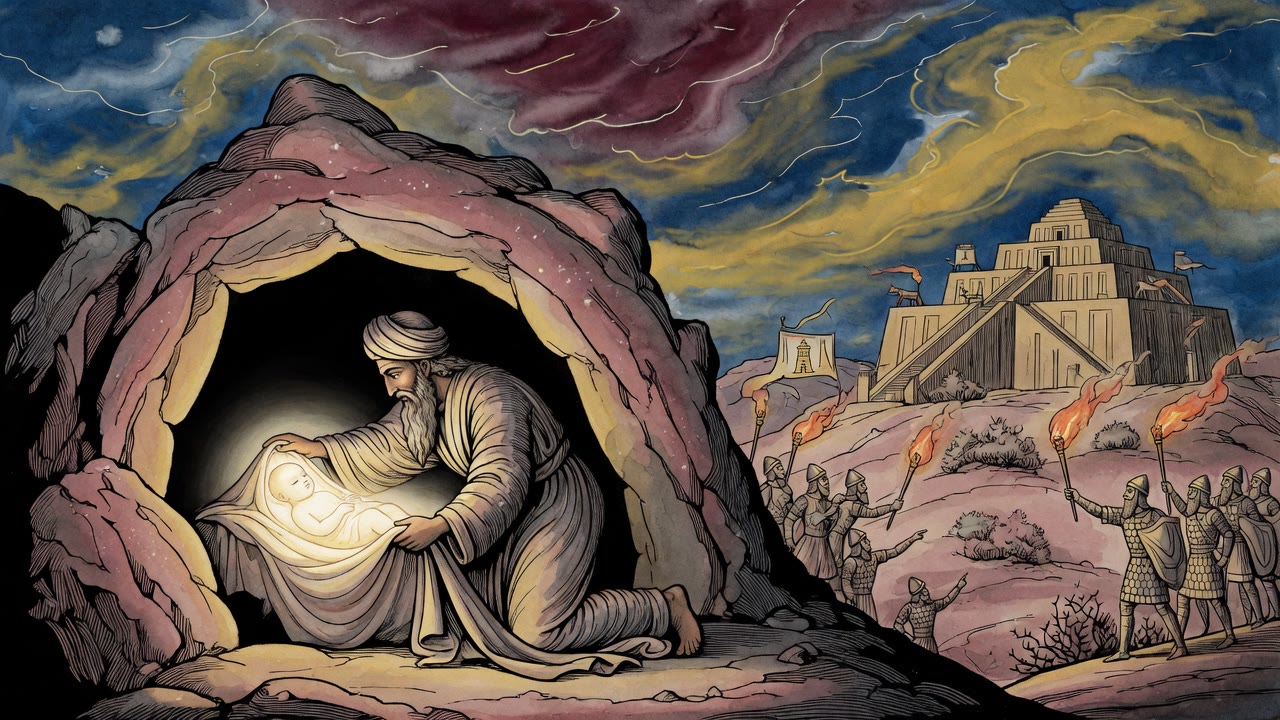
Terah stood before the king and named Haran. Both sons went into the furnace. Abraham walked there for three days, and Haran did not.
Table of Contents
 Click for full size
Terah Named Haran to the King
Terah had lied to the king, and the king had found out. He stood there with the charge already read. "Tell me who advised you to do this," the king said. "Hide nothing, and you will not die."
Terah had two sons in reach. Haran, the older one, had been thirty-two on the day Abraham was born. Terah named Haran. It was not true. It bought him nothing. The king ordered both sons taken.
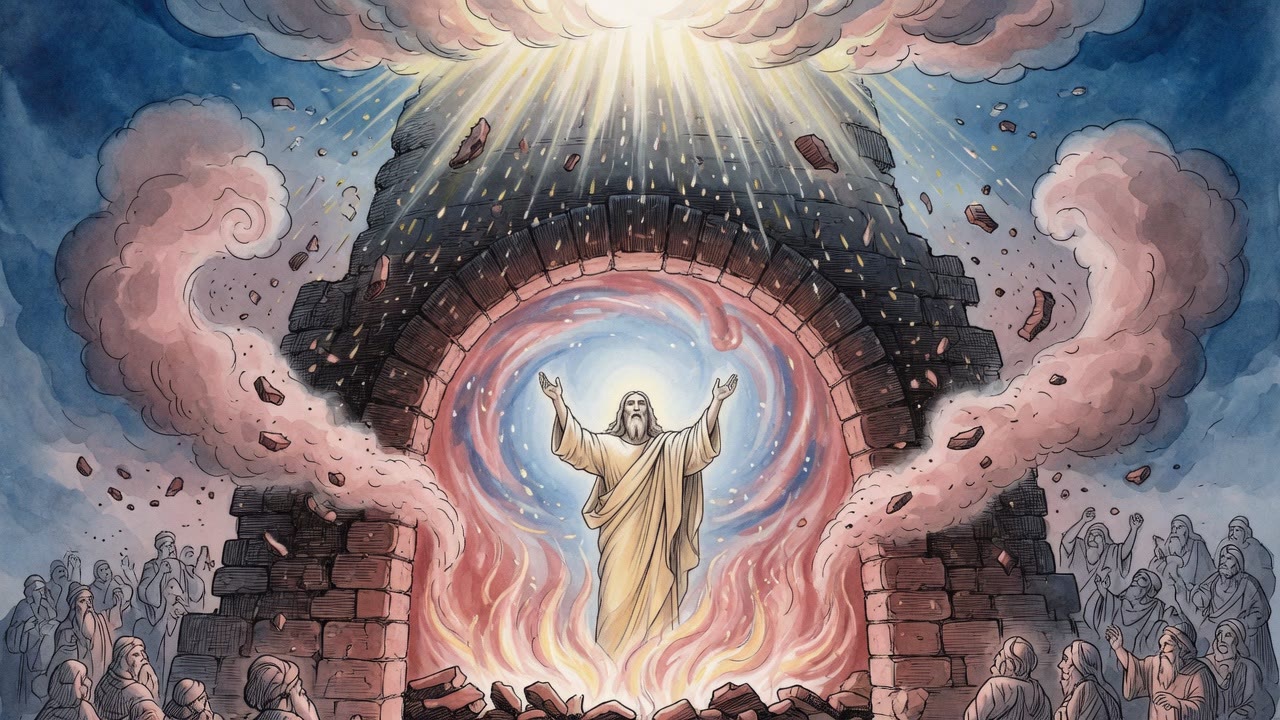
They stripped the two men down to their underclothes, tied their hands and feet with linen cord, and carried them to the mouth of the furnace. Terah watched his own mouth finish its work. He had given a son to save himself, and the king had taken both.
Three Days Inside the Fire
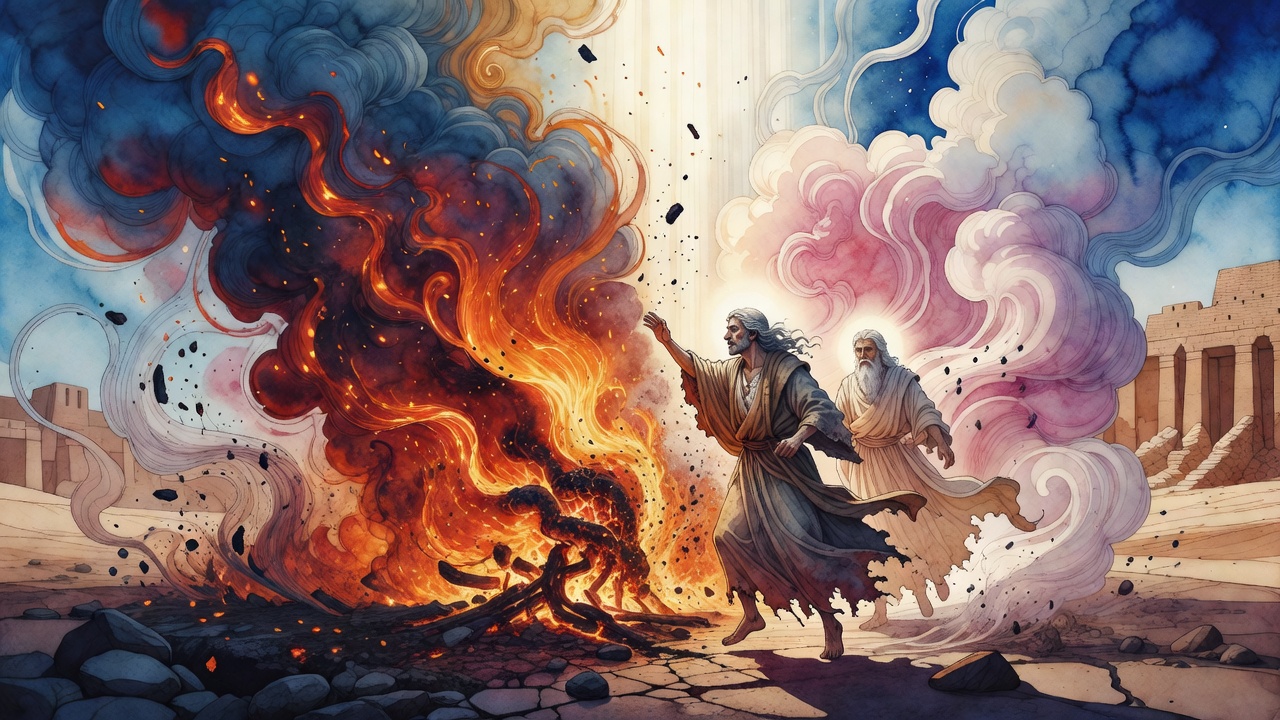
Haran went in and burned, because his heart was not whole with the Lord. The flames came up out of the opening and took the men who had thrown them in, standing there with the rope still warm in their hands.
Abraham did not burn.
The cords on his wrists and ankles went to ash and dropped off him, and nothing else did. For three days and three nights he walked back and forth inside the fire. The king's servants ran to the palace and said, "We have seen Abraham walking about in the middle of the fire."
A man who has walked out of a furnace can go anywhere and be listened to. Abraham did not stay to inherit a throne in the city named for the brother who had not walked out. After the fire, Terah took what was left of the family toward Haran. Abraham did not build his kingdom there.
A Tent for Sarah First
What he built was tents, and then an argument.
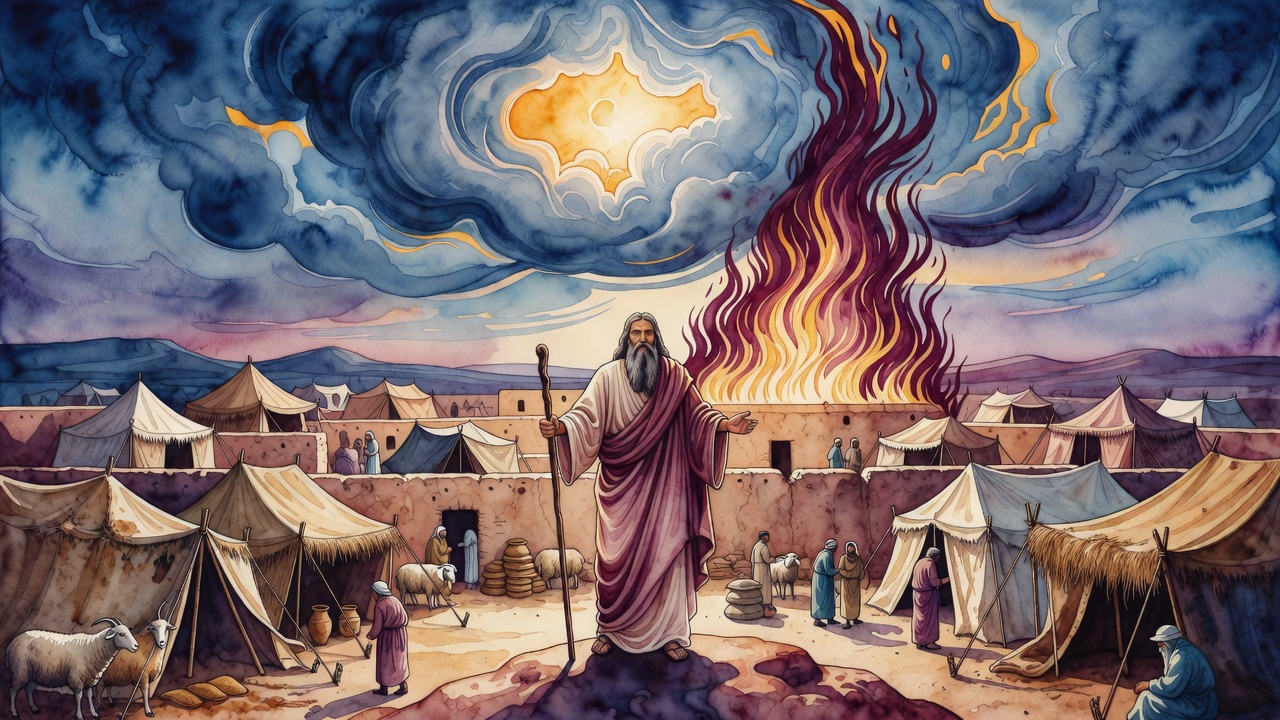
The order never changed. He would come into a place where he meant to stay a while and set up a tent for Sarah before he set up one for himself. Then he would start on the people. He wanted them under the wings of the Shekhinah (שכינה), the divine presence, and he would not stop working a town until they were.
Every altar he stacked was a base. The stones went up, the fire went on them, and the crowd that came to see what the stranger was doing was the whole point of the stones. He was after one thing everywhere he went: to get every man alive saying the Name out loud.
He had left a brother in a furnace and a father who had named that brother to a king. He was building a household out of strangers, a kingdom with no palace and no guard, only tents in the right order and a fire on stacked rock.
Canaan Would Not Leave Shem's Land
The country he was walking into was already occupied, and not lawfully.
After the flood, when the earth was divided among the sons of Noah by lot, Canaan looked at the ground running from the Lebanon down to the River of Egypt and decided he wanted it. His own share lay westward, along the sea. He refused to go there. He settled on the good land instead, east and west of the Jordan.
His father Ham came to him about it, and his brothers Cush and Mizraim came with him. "You are living in a land that is not yours," they told him. "It was not assigned to us when the lots were drawn. If you stay, you and your children will fall in this land, cursed, in a rebellion, and your seed will be cut down forever. Do not settle in the land of Shem. We swore an oath before the holy Judge and before our father Noah."
Canaan stayed. Generations later Abraham walked in over that same border with his tents and his converts, holding a promise about ground that a cursed man was farming.
Ten Years and Still No Child
The one thing he could not gather was a child.
He and Sarah had an explanation for it while they were still outside the country. They were being kept childless because they were living in the wrong place, and once they stood on the land itself the block would lift. It was a bearable answer. It had a remedy in it.
They lived ten years in the land. Nothing came.
Somewhere in the tenth year Sarah stopped blaming the map. She worked out that the fault was in her body. She did not turn on her husband. She went and got Hagar. Hagar belonged to Sarah, not to Abraham. Pharaoh had handed her over, and Pharaoh was her father. Sarah had raised her and taught her and walked her along the same road she walked herself, which was the only reason Sarah considered her fit for this at all. Before she brought the girl to her husband, Sarah made her a free woman. Then she offered her, and Abraham took the proposal.
The covenant of the pieces, where the entire future of his descendants was laid out in front of him in the dark, was cut while he still had no descendants at all. Animals split on the ground. A fire moved between the halves. Abraham sat with the promise and with the empty tent, and the kingdom he had built out of strangers still had no son of his own to inherit it.
← All myths