Isaac and Jacob Sat on the Court That Would Burn Tamar
When Tamar was brought before the judges, Isaac sat on the bench. So did Jacob. So did Judah, who had to speak first and already knew what he had done.
Table of Contents
 Click for full size
The Tribunal Assembled Against Her
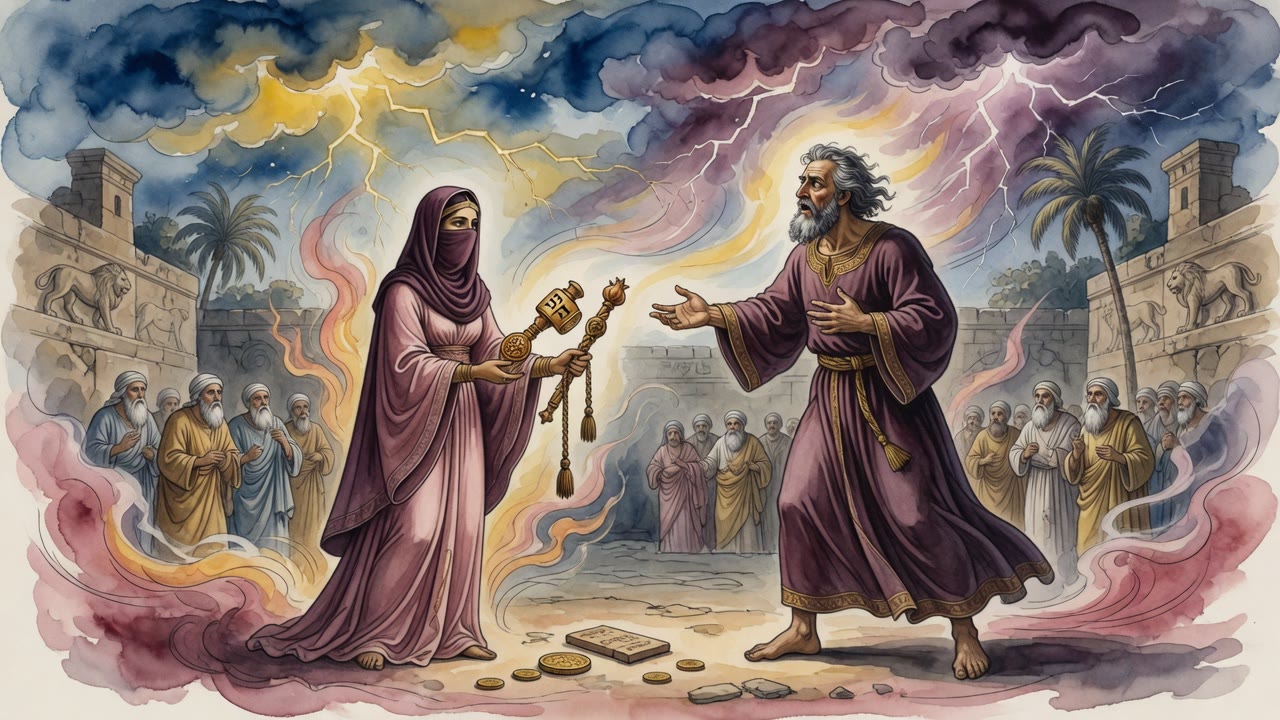
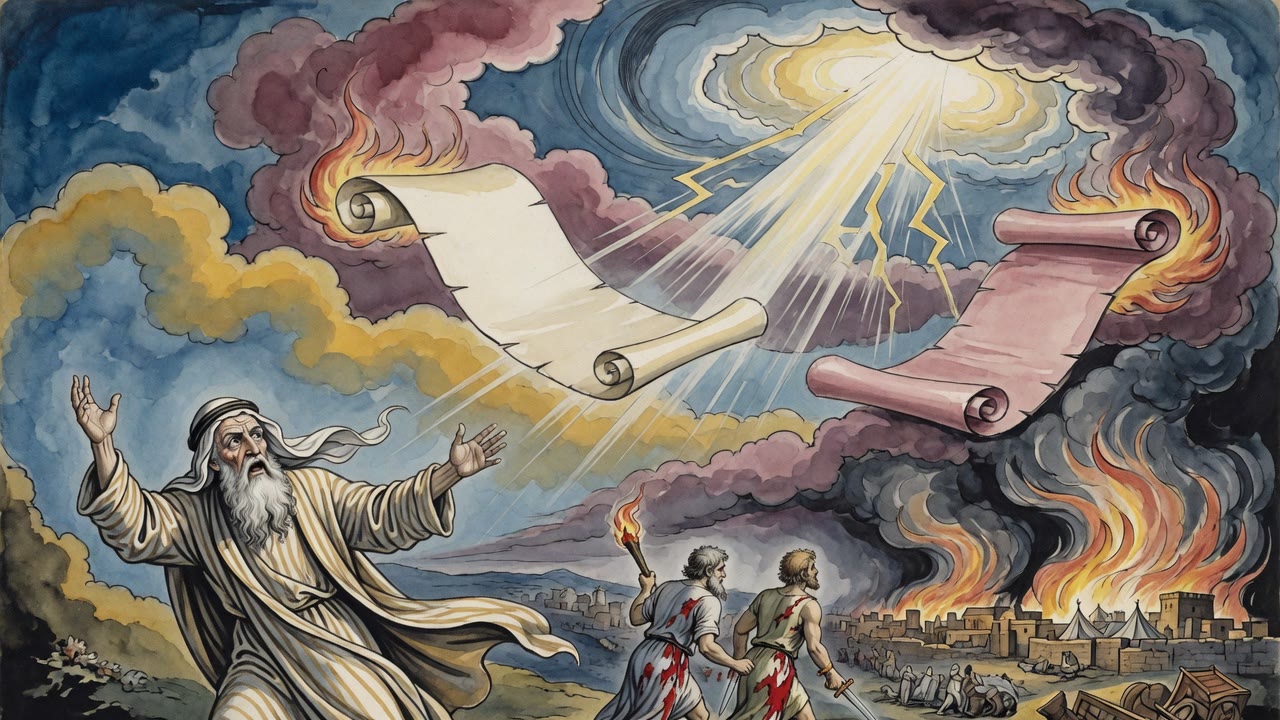
When word reached Judah that his daughter-in-law Tamar was pregnant, he did not wait for an explanation. He called for her to be burned. She was brought out to the place of judgment, and the court that convened to judge her was not an ordinary tribunal of village elders. Three of the men sitting in judgment over her were her father-in-law Judah, his father Jacob, and Jacob's father Isaac. The oldest living generation of the patriarchal family sat on the bench to adjudicate the death of the woman owed a levirate husband from that same family.
The tradition records the composition of this court without irony, but the irony is built into the facts. The men who had the obligation to provide Tamar a husband were now the men deciding whether she would burn for the pregnancy that obligation, if fulfilled, would have prevented.
The Rule About Who Speaks First
In criminal cases, the tradition prescribed a specific sequence. The least senior judge gave his opinion first, so that the senior judges would not overawe the others with their authority and sway the verdict before full deliberation. This meant that Judah, as the youngest and least considerable in dignity of the three patriarchal judges, had to speak before Isaac and Jacob.
Judah knew who had gotten Tamar pregnant. He had pledged her his signet, his mantle, and his staff. He had gone in to her at the crossroads. He had sent Hirah back with the kid from the flock and heard that nobody in the area knew anything about a woman at that location. He had lived with that knowledge for three months, from the encounter at the crossroads until the morning the pregnancy became public. Now he was sitting on the court that would decide whether the woman he had gotten pregnant would die for getting pregnant.
His first statement was a verdict of death: the woman is liable to death by fire.
The Message Tamar Sent
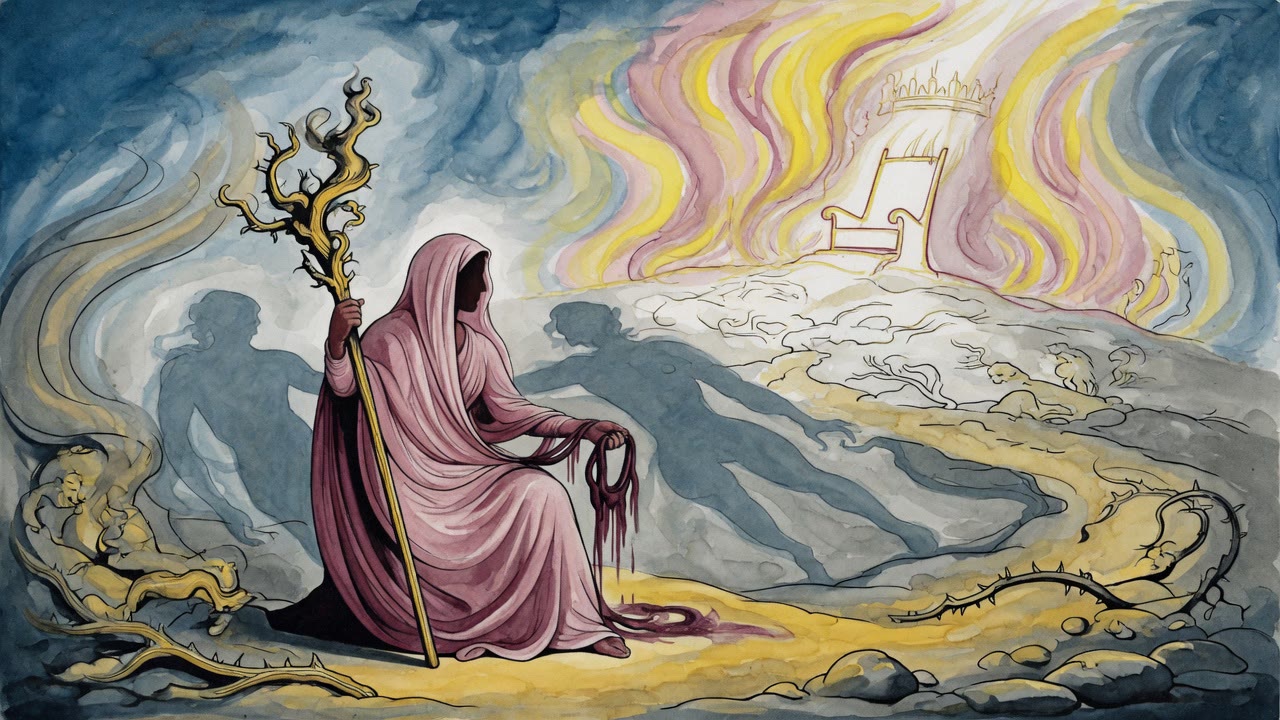
As she was being brought out, Tamar sent a message to Judah. Not a public accusation. Not a declaration before the court. A private message: the man who owns these objects is the father. With the message came the signet, the mantle, and the staff.
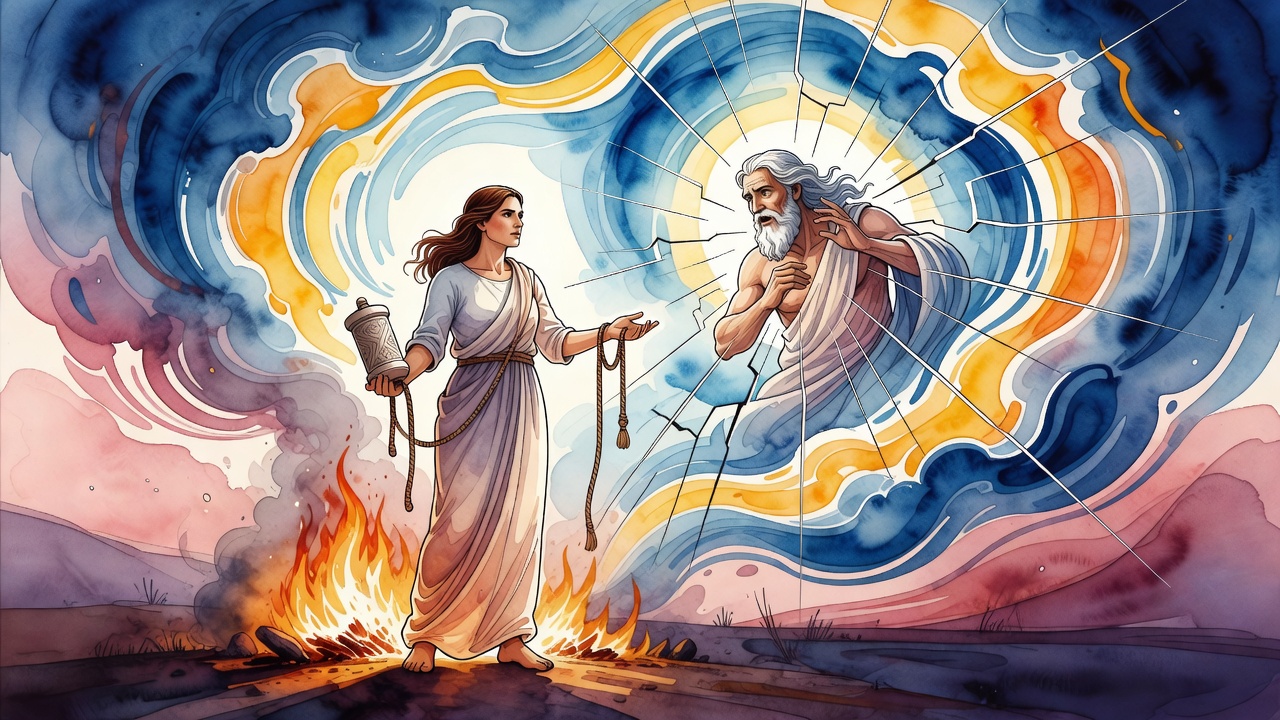
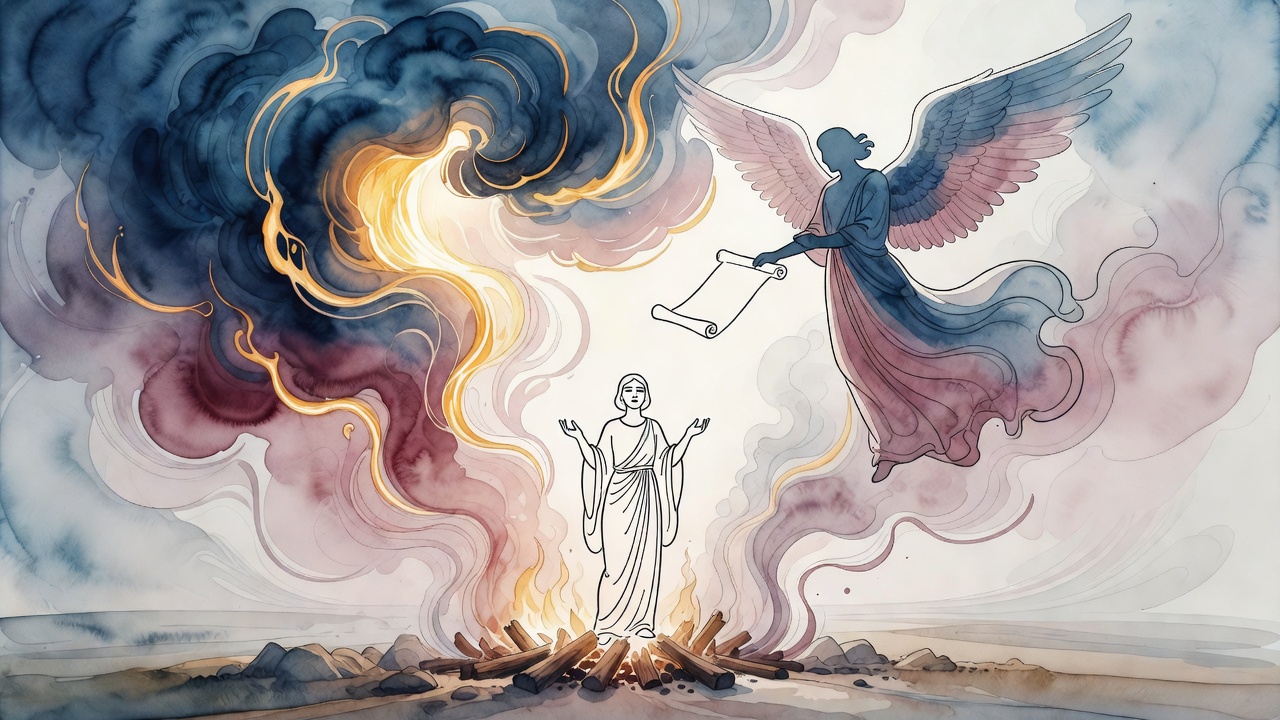
She had searched for them before this moment and found them gone. The objects that could save her had disappeared. She had prayed at the edge of the fire and asked to live, invoking the three men who would one day stand in a furnace for God's name: Hananiah, Mishael, and Azariah. At the moment her prayer completed, an angel retrieved the pledges and placed them where she could find them. She sent them to Judah before the court gave its final ruling.
Judah Stood Up and Confessed
He recognized the objects. He looked at them in his hands. He could have said nothing. He could have kept his face still and let the court proceed to a verdict. He was the least senior judge. He had already given his opinion. Isaac and Jacob sat above him on the bench. He could have allowed the older patriarchs to override or modify his initial ruling without any of them knowing why.
Instead he stood and spoke. He said: she is more righteous than I, because I did not give her to Shelah my son. He did not add conditions. He did not say she had deceived him, though she had. He did not say the encounter had been ambiguous, though it had been at night and she had been veiled. He said she was more righteous than he was, and he gave the reason: he had withheld Shelah, and she had acted to secure what was owed her. The public confession was complete and unambiguous, made before his father and grandfather at mortal risk to himself.
What the Holy Spirit Did in That Court
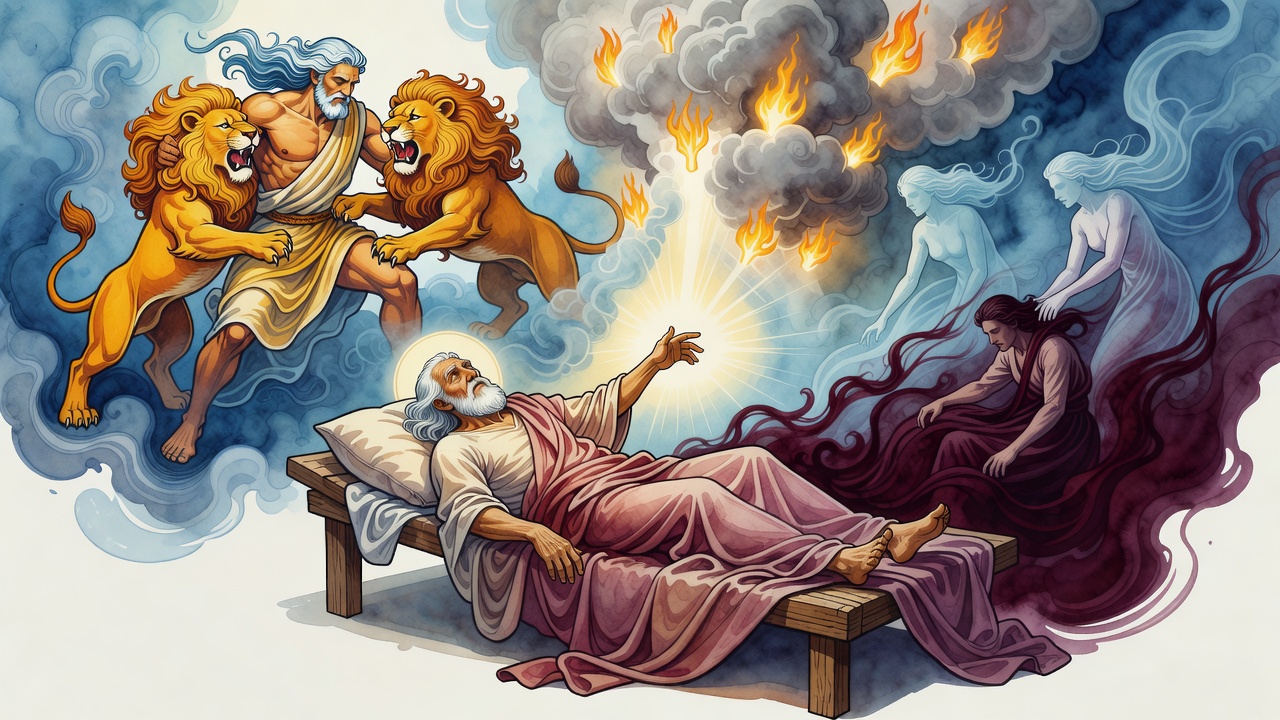
The tradition in the Legends of the Jews records that the Holy Spirit appeared in the court at that moment and declared: from Me went forth the hidden matters of the world. The messianic future that ran through Tamar and Judah was not something that could be read from the surface of the day's events. A patriarch had gone in to his daughter-in-law at a crossroads. She was pregnant. He had called for her death. The whole sequence looked like a story about violation and its consequences. The Holy Spirit's declaration cut across the surface reading and named what was actually happening: the hidden matters of the world were being arranged, and the man standing before the court confessing his guilt was not simply a man acknowledging a mistake. He was completing the transaction that the angel of desire had opened at the crossroads.
← All myths