Isaac Asked to Be Bound and Then Negotiated His Own Peace
Isaac tells Abraham to bind him tightly so his fear won't ruin the offering. The same man later hammers out an imperfect peace with the Philistines.
Table of Contents
 Click for full size
Bind Me Tightly
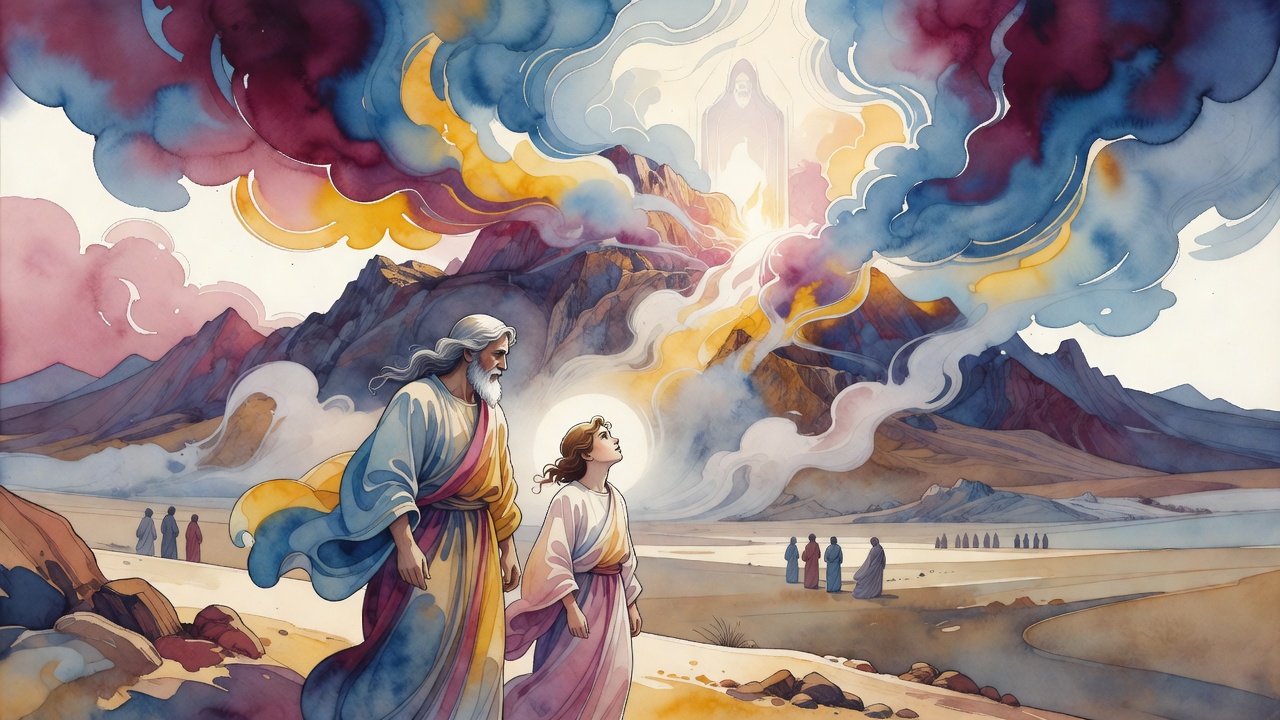
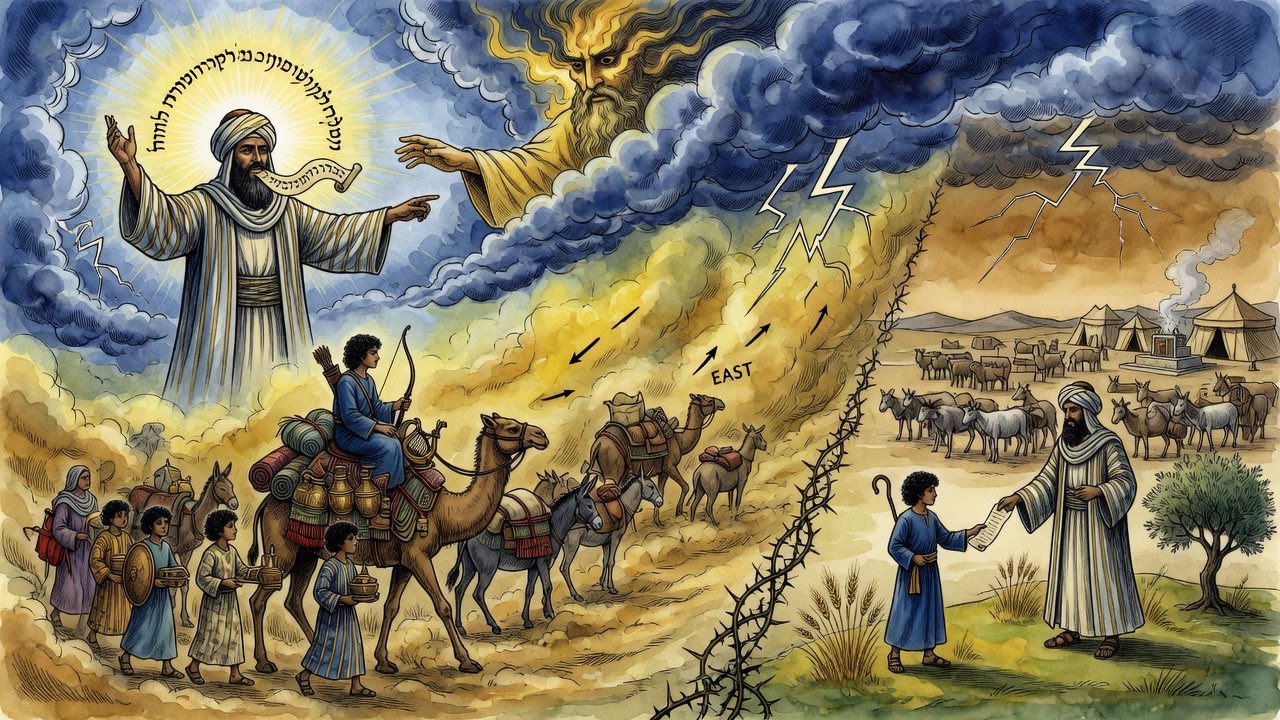
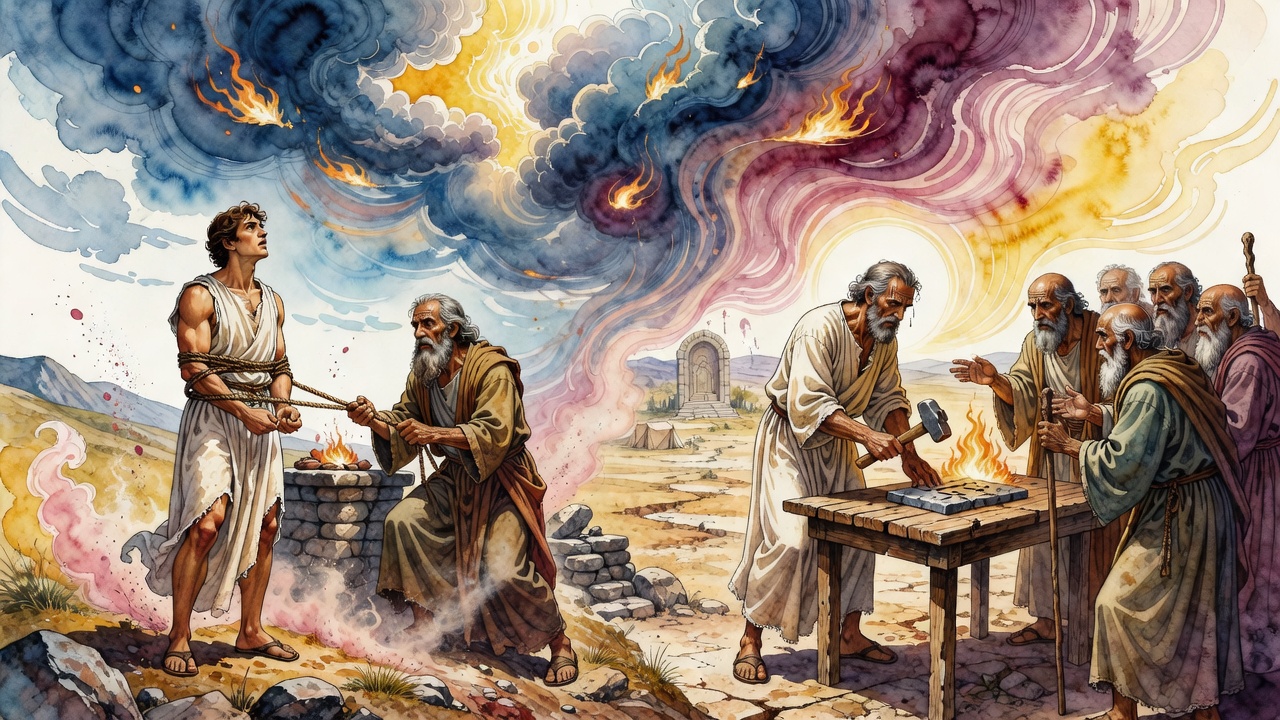
When Abraham moved to bind his son on the altar at Moriah, Isaac spoke first. Rabbi Yitzhak, whose own name shared a root with the son's, read the passage without the passivity that most readers brought to it. Isaac said to his father: I am a young man, and I am afraid. Not afraid in the sense that I want to run. Afraid in the sense that I know my body. I know that when the knife comes close, my limbs will shake. A trembling sacrifice is an invalid sacrifice. So bind me tightly. Bind me so that my fear cannot move through my hands and ruin this.
He lay down. He let his father bind him. He waited.
The rabbis found in this exchange not a passive victim but a figure who had thought carefully about the mechanics of his own sacrifice and taken steps to make sure it would succeed. The consent was total. The preparation was his. By the time the knife was raised, Isaac had already done his part.
The Water Rights of Gerar
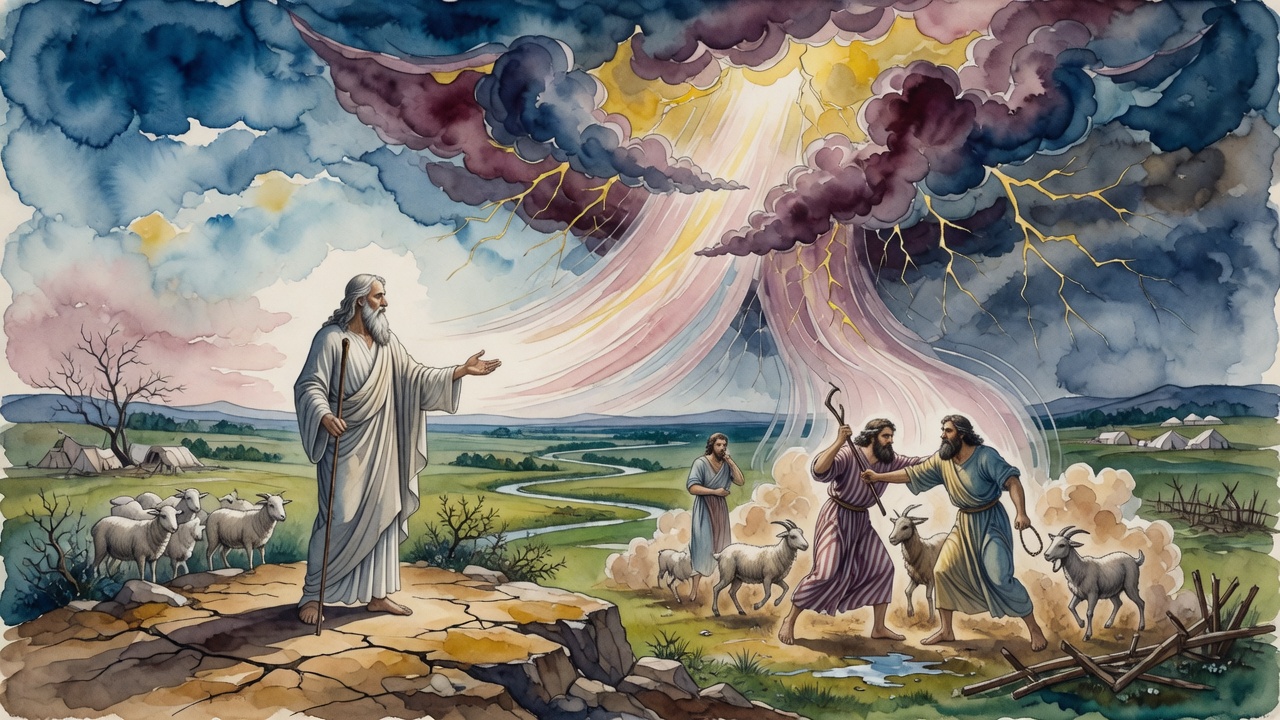
Years later, Isaac was in Gerar. Abimelech's servants had been filling in the wells that Isaac's people had dug, and there had been quarrels over water rights across the valley. Isaac moved from place to place, digging and renaming and being contested and moving again.
When Abimelech Came With His Commander
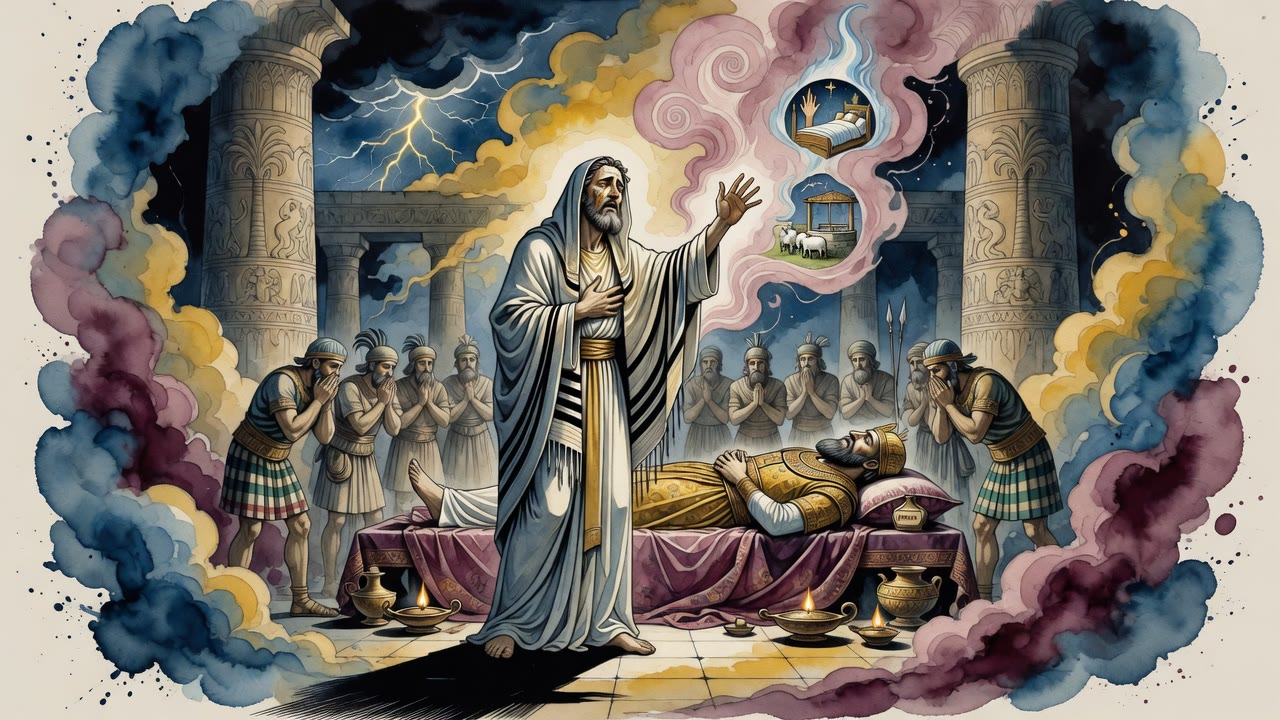
Finally Abimelech came to him with his military commander and a request: swear to us that you will not harm us, as we have not touched you and have only done good to you and sent you away in peace.
This was a political fiction, and Isaac knew it. Abimelech was there because his servants had been blocking wells. Isaac had been sent away. The claim that they had done him no harm was the kind of claim that powerful men make when they come to negotiate with someone whose power they have underestimated and now suddenly need to account for. Isaac did not correct the record out loud. He made a feast and they swore oaths to each other and the Philistines left.
What the Same Man Did Both Times
The tradition held these two stories in the same frame because they described the same character operating in two completely different circumstances. On the altar, Isaac faced a situation he could not negotiate and did not try to. He prepared himself for the thing that was coming and gave his consent cleanly. At Gerar, Isaac faced a situation that could be negotiated and navigated it without pretending the terms were fair. He accepted an imperfect treaty, made the feast, let the Philistines call it mutual goodwill, and sent them home.
The rabbis were interested in the continuity between these two postures. They were not the same gesture, but they came from the same place: a man who assessed what was actually in front of him and then did the most coherent thing available rather than the most dramatic or the most righteous-sounding thing. On the mountain, that meant asking to be bound. In the valley, that meant accepting a treaty with people who had wronged him without demanding they admit it first.
← All myths