The Blessing Isaac Gave Esau Was a Sword Not a Promise
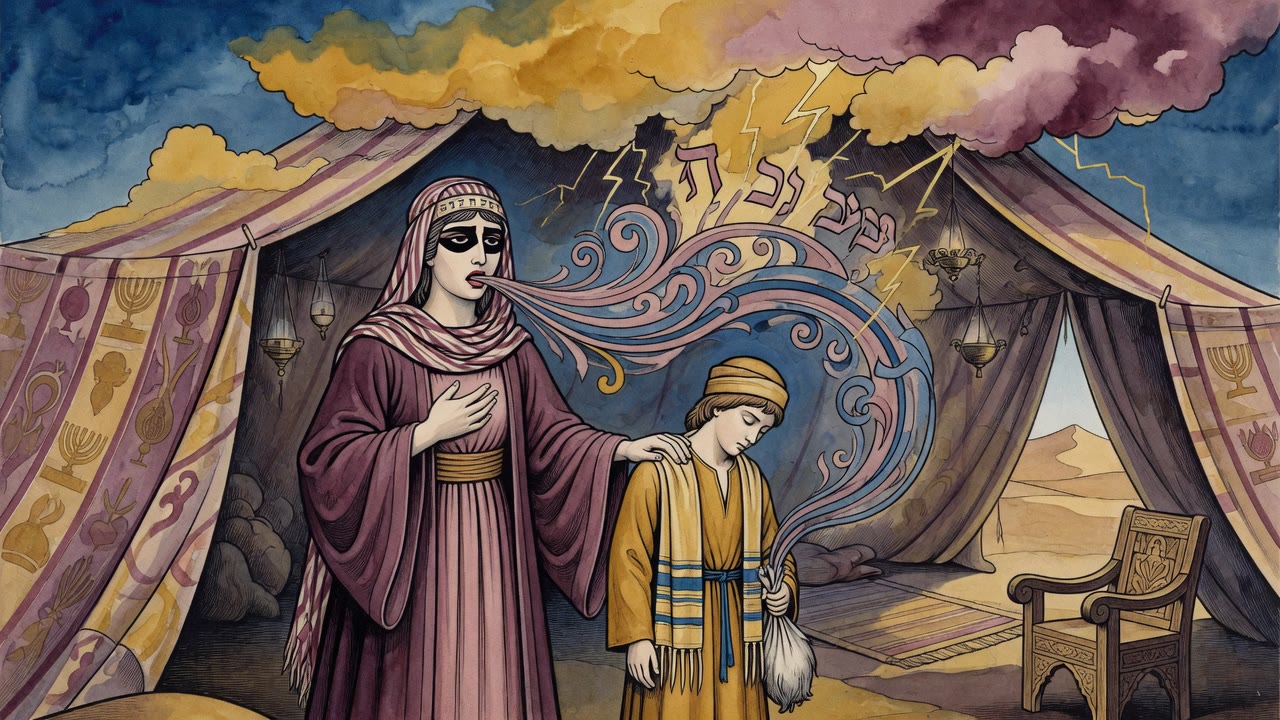
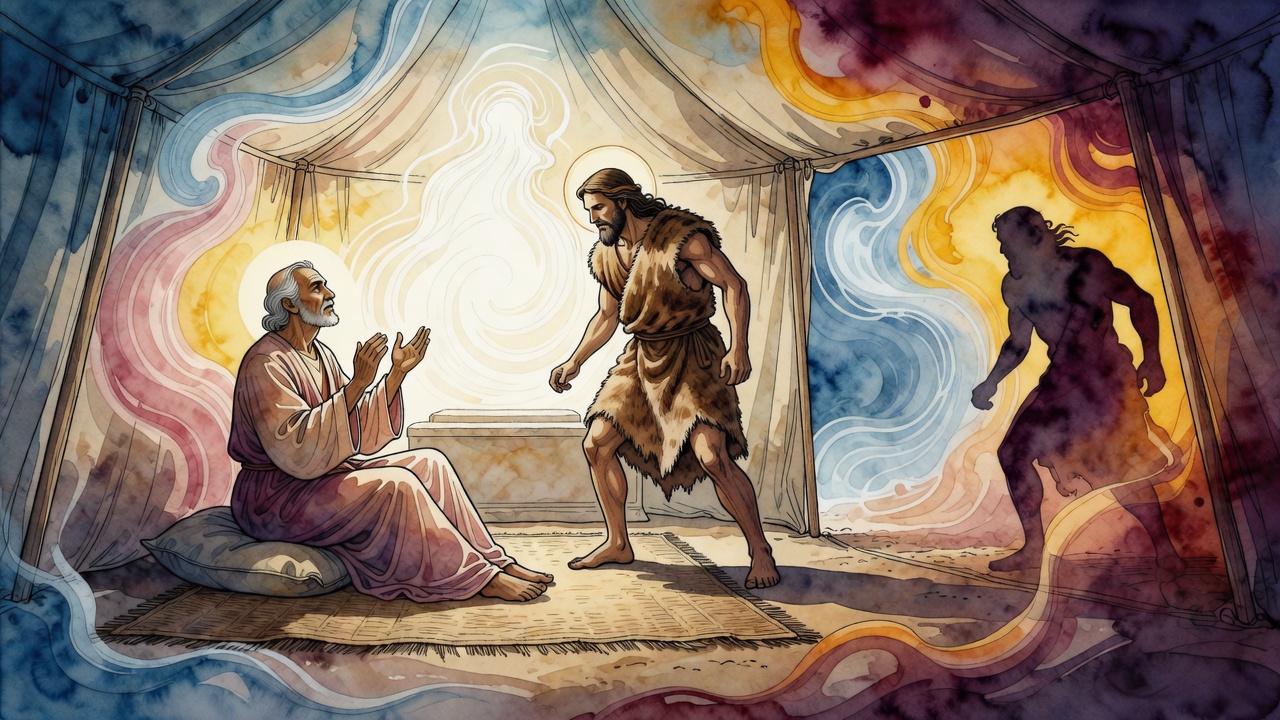
Isaac opened his mouth to bless his older son. The Presence left the tent. What came out of the old man was a life lived by the sword.
Table of Contents
 Click for full size
The Cry That Filled the Tent
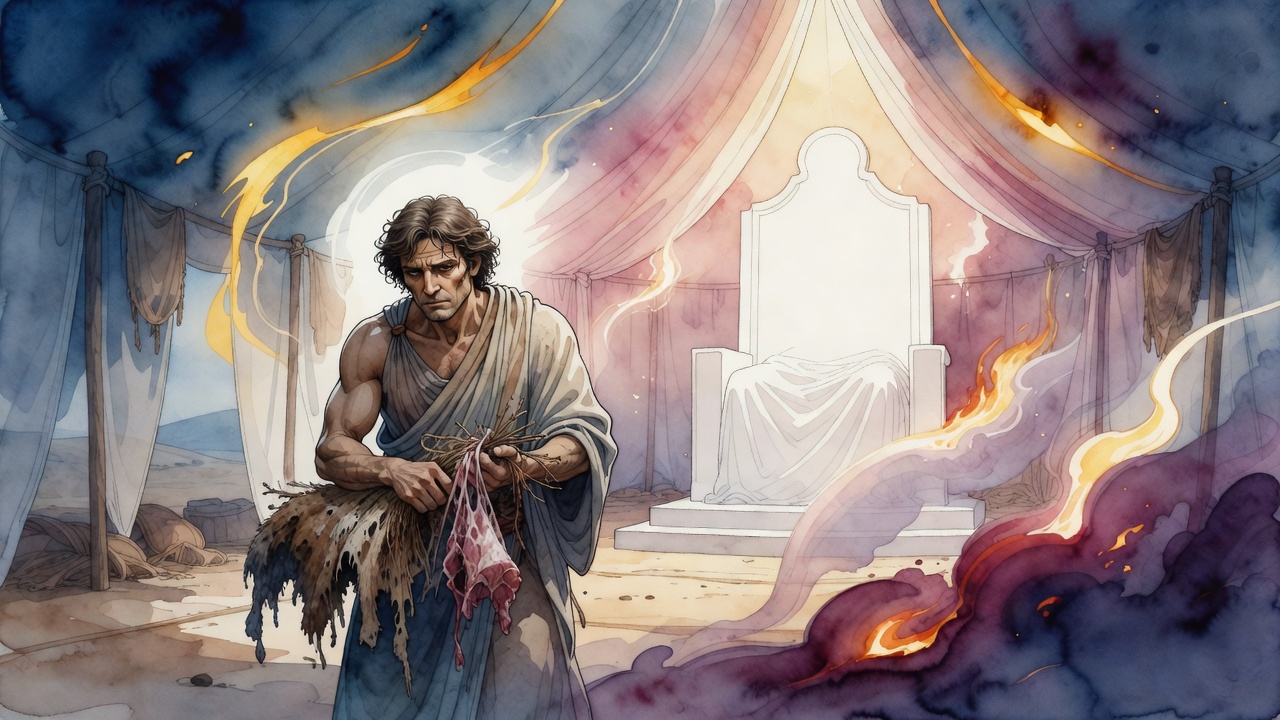
Esau came in from the hunt carrying the meal he had prepared for his father. He had gone out the moment Isaac called him, done exactly what was asked, come back with the food, and walked into a tent where his father's face told him everything before a word was spoken.
When he understood, he cried with an exceeding great and bitter cry (Genesis 27:34). Not a complaint. Not a bargain yet. The sound of a man watching a future dissolve in the time it took a blind father to speak a blessing he could never unsay. The game in his hands was already cold.
"Bless me, even me also, father."
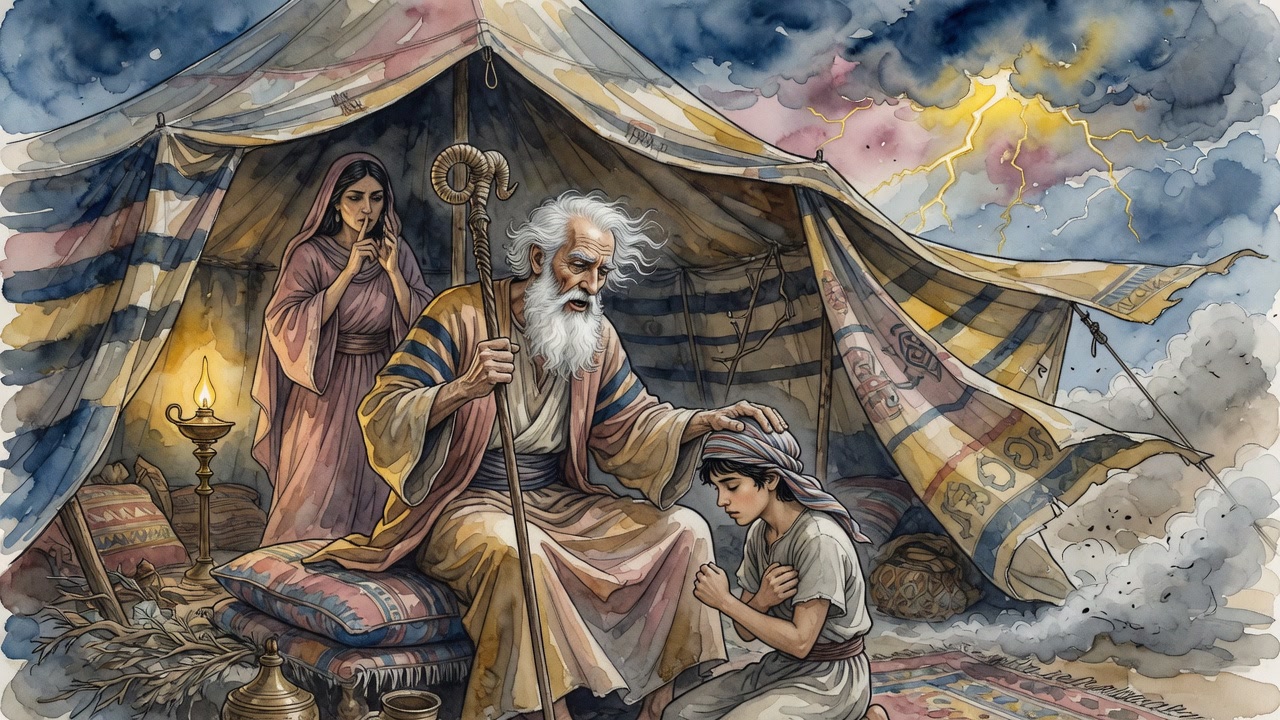
Isaac's answer was flat. "Thy brother came with guile, and hath taken away thy blessing." No comfort. No reframing. It is gone. I gave it away. I cannot take it back.
Esau named the pattern himself. Now I know why he is called Jacob, he said. He has supplanted me twice. The birthright. And now the blessing.
Have You Only One Blessing
He would not stop asking.
When the direct plea failed he changed tactics. "Hast thou but one blessing, my father? Bless me, even me also, O my father, else it will be said thou hast but one blessing to bestow. Suppose both Jacob and I had been righteous men, had not then thy God had two blessings, one for each?"
The arithmetic was sound. It was not the arithmetic that mattered. Righteousness was not what had been under discussion. What had been under discussion was the covenant line, and Esau had sold his place in it for stew and then lost the last formal token of it to a brother who wanted it badly enough to take it.
God answered the argument Himself. Silence. Jacob will bless the twelve tribes, and each blessing will be different from every other. There is no shortage in heaven. There is a shortage of what can be given to this son.
The Tear That Would Not Fall
Isaac felt great pity for him. He opened his mouth to bless his older son anyway.
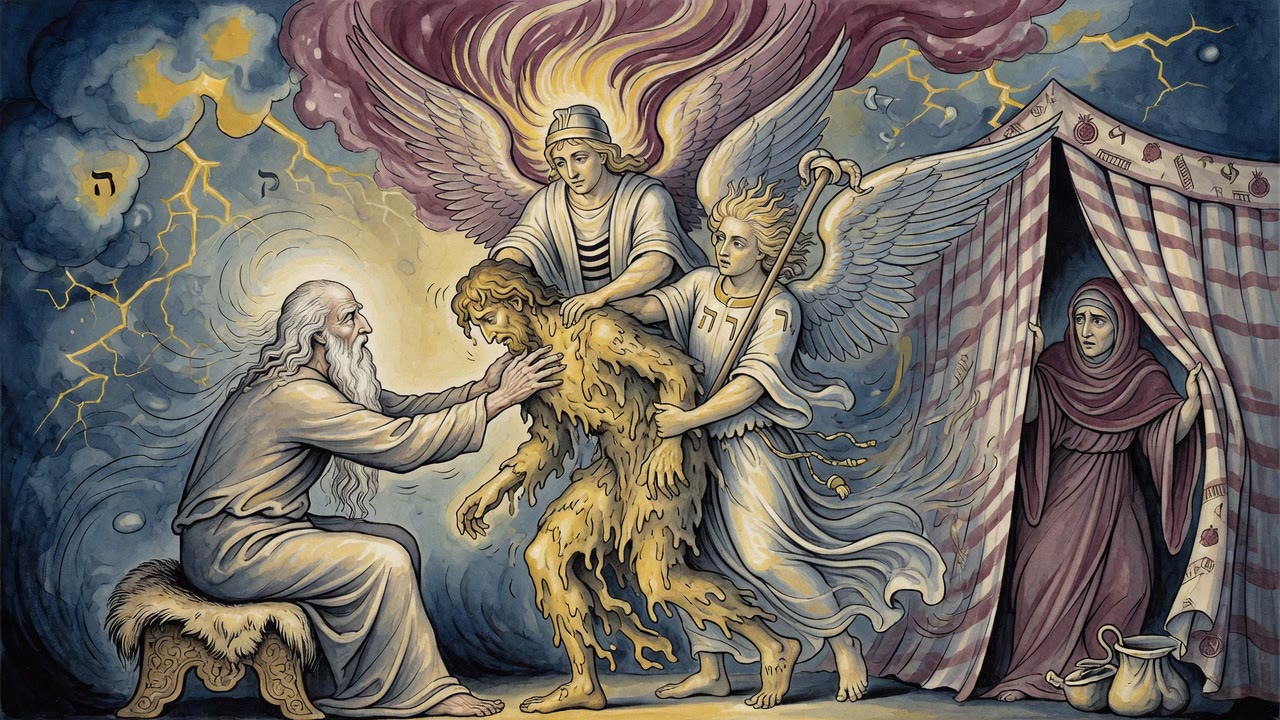
The Shechinah (שכינה), God's presence, left the tent. Isaac could not carry out what he purposed. The words would not come.
Esau wept. He shed three tears. One ran from the right eye. One ran from the left. The third remained hanging from his eyelash and would not fall.
God said, This villain cries for his very life, and should I let him depart empty-handed? Then He bade Isaac bless the older son. The blessing that came was not the one Isaac had wanted to give. The Presence had already told him why. It was known before Him that this son would destroy the Temple and enslave the twelve tribes. So the blessing came out light.
By Your Sword You Shall Live
What Isaac gave him was not nothing. It was a different category of thing from what Jacob had received. Jacob got the dew of heaven and the fat of the earth, the service of nations, and the covenant from the God of Abraham. Esau got the fatness of the earth for a dwelling, a life by the sword, service to his brother, and one day, if he struggled enough, the chance to throw the yoke from his neck (Genesis 27:39-40).
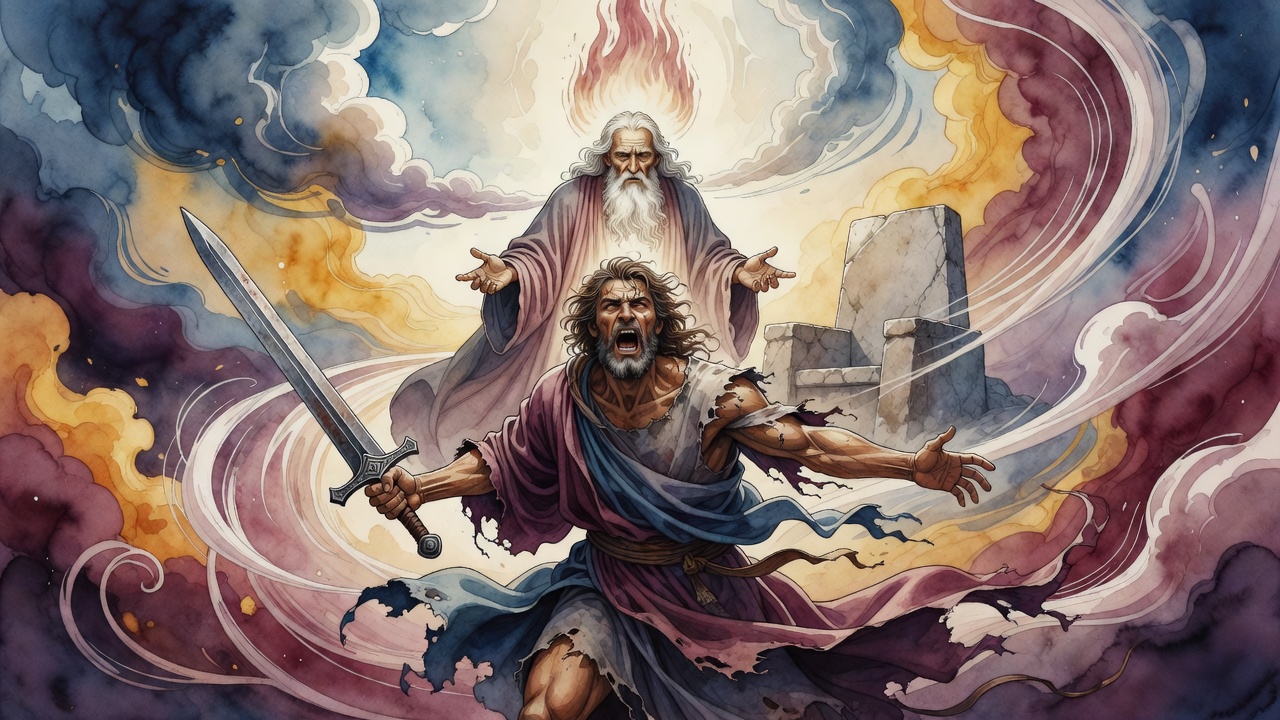
Live by the sword. Isaac was not inventing a curse. He was describing the man standing in front of him. Esau hunted. He fought. He took by force what others accumulated through covenant and patience. The description came out sounding like a sentence.
It was not a promise. Buried in it was a condition. Upon thy sword shalt thou depend, entering at every place, and thou shalt be in subjection to thy brother. But when his sons become evil, and fall from keeping the commandments of the law, thou shalt break his yoke of servitude from off thy neck.
As long as Jacob's children sat and busied themselves with Torah, the yoke held. The moment they grew careless with those words, the verse turned, and the hands were the hands of Esau.
Four Hundred Men on the Road
Years later Jacob learned that Esau was coming toward him with four hundred men (Genesis 32:7). He divided his camp in two. If Esau strikes one camp, he reasoned, the other will escape. He set Damesek and Alinus, the two sons of Eliezer who had served Abraham, over the companies. He did not pray for his brother's heart to soften before he arranged the retreat. He prayed. Then he prepared. Then he sent ahead wave after wave of gifts, goats and rams and camels and cattle and donkeys, divided into three droves so that Esau would think he had the whole present and then be astonished by the second and the third.
He was trying to put livestock between himself and the brother he had wronged, enough livestock to occupy the sword Isaac had given Esau for thirty years.
The prayer Jacob offered at the ford of the Jabbok that night was the prayer of a man who understood exactly what he had done and who he was dealing with. He had asked for, and received, the birthright and the blessing. He had gained the covenant future. The price of that gain was a brother whose destiny was a sword, walking toward him at the head of four hundred armed men, with one tear that had never fallen still hanging in the old story of that tent.
← All myths