God Stopped Isaac at the Border and Explained Why He Could Not Leave
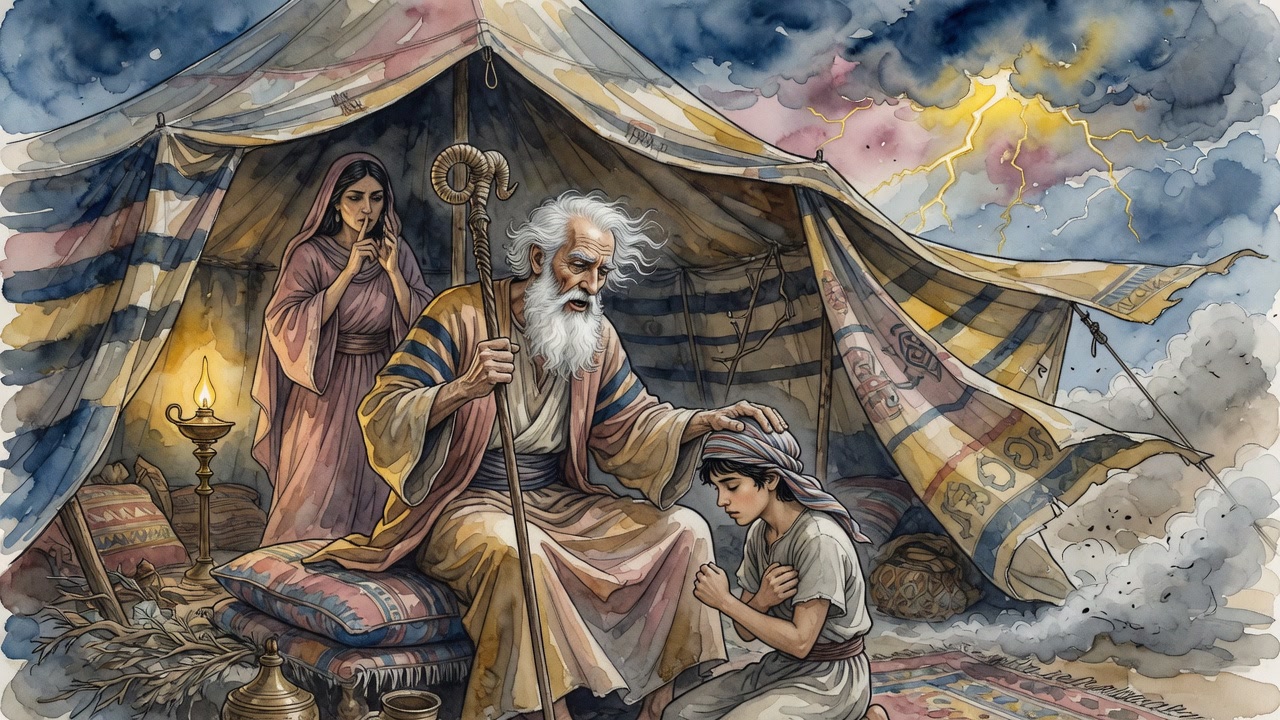
Famine struck and Isaac looked toward Egypt. God stopped him with one reason: a consecrated offering taken outside its sanctuary becomes invalid. He stayed.
Table of Contents
 Click for full size
The Famine That Made Egypt Look Reasonable
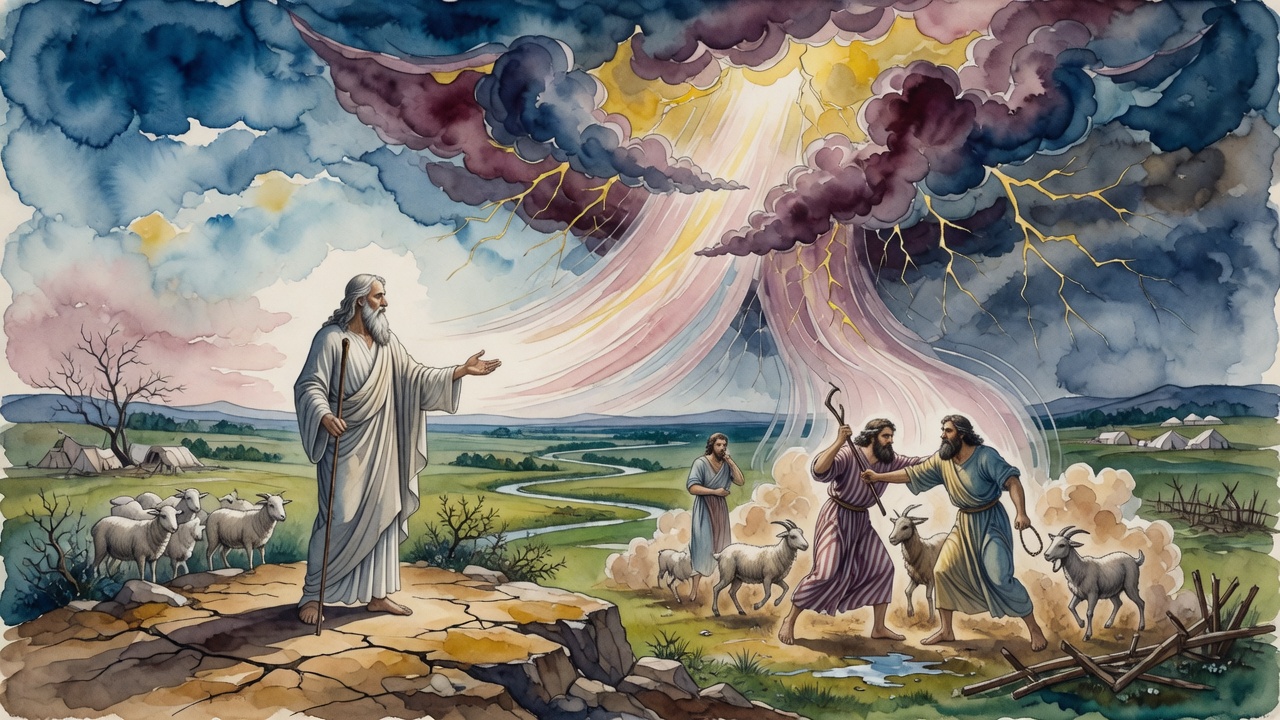
Isaac knew the history. His father had gone to Egypt in famine and come back richer and more famous, though the story of what had happened with Sarah and Pharaoh was one that did not improve with retelling. The famine logic was sound: Egypt had the Nile, Egypt had grain, Egypt did not depend on rainfall the way Canaan did, and when Canaan went dry, Egypt stayed fed. Abraham had made the calculation once. Isaac looked at the same situation and reached for the same solution.
God appeared to him at Gerar and said: do not go down to Egypt.
A Sacrifice Too Holy to Export
The reason God gave was not strategic. It was not: Egypt is dangerous for you, as it was for your father. It was not: I will provide for you here, trust the process. What God said was something stranger and more specific.
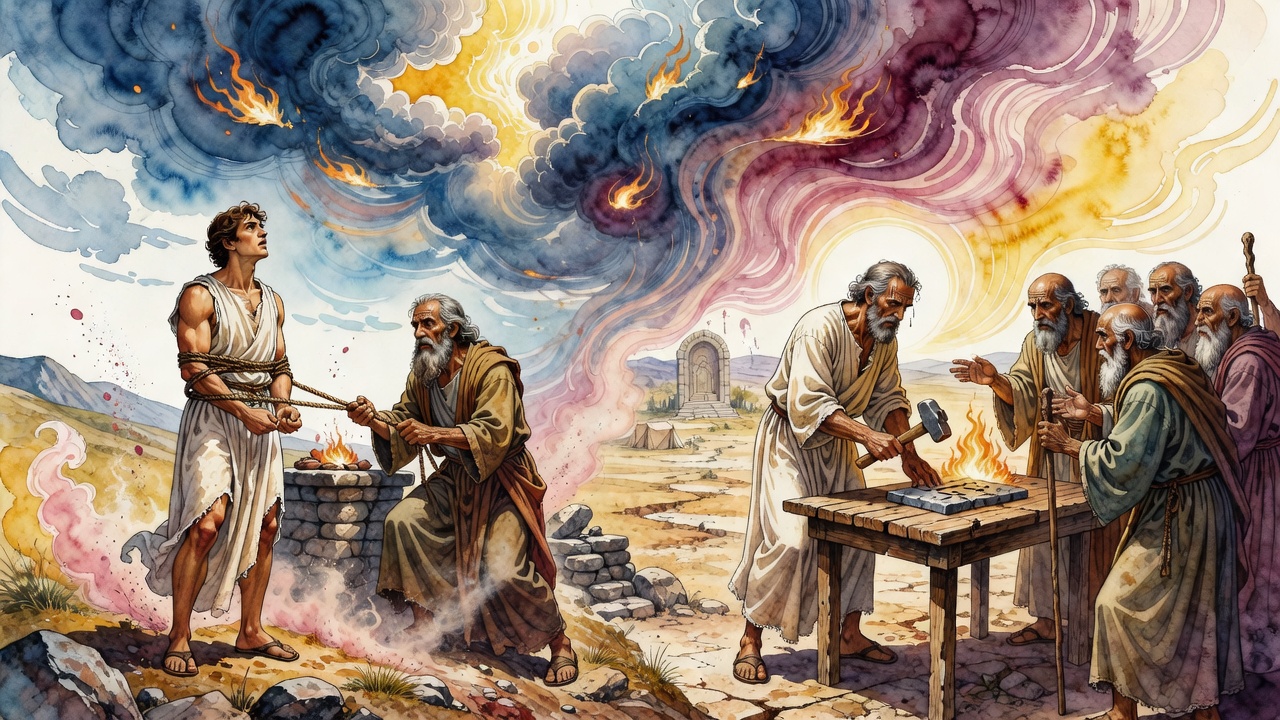
You are a perfect sacrifice. You are without blemish. When a burnt offering is consecrated and then taken outside the boundaries of the sanctuary, it becomes invalid. The sanctity that was placed on it in the right place does not follow it to the wrong place. You were bound on Moriah. You were consecrated there. If you leave the Holy Land, the land that is your sanctuary, you will be profaned in the same way a burnt offering is profaned when it is removed from the place where it was made holy.
Isaac was the only patriarch who never left Canaan. He spent his entire life within the land's borders, not from lack of opportunity or imagination, but because his father had carried him up the mountain and bound him and the knife had been raised over him and the ram had died in his place. He had been offered. The offering had been accepted. He was now, permanently and irrevocably, a sacred object, and sacred objects cannot be moved.
The Philistines and the Wells
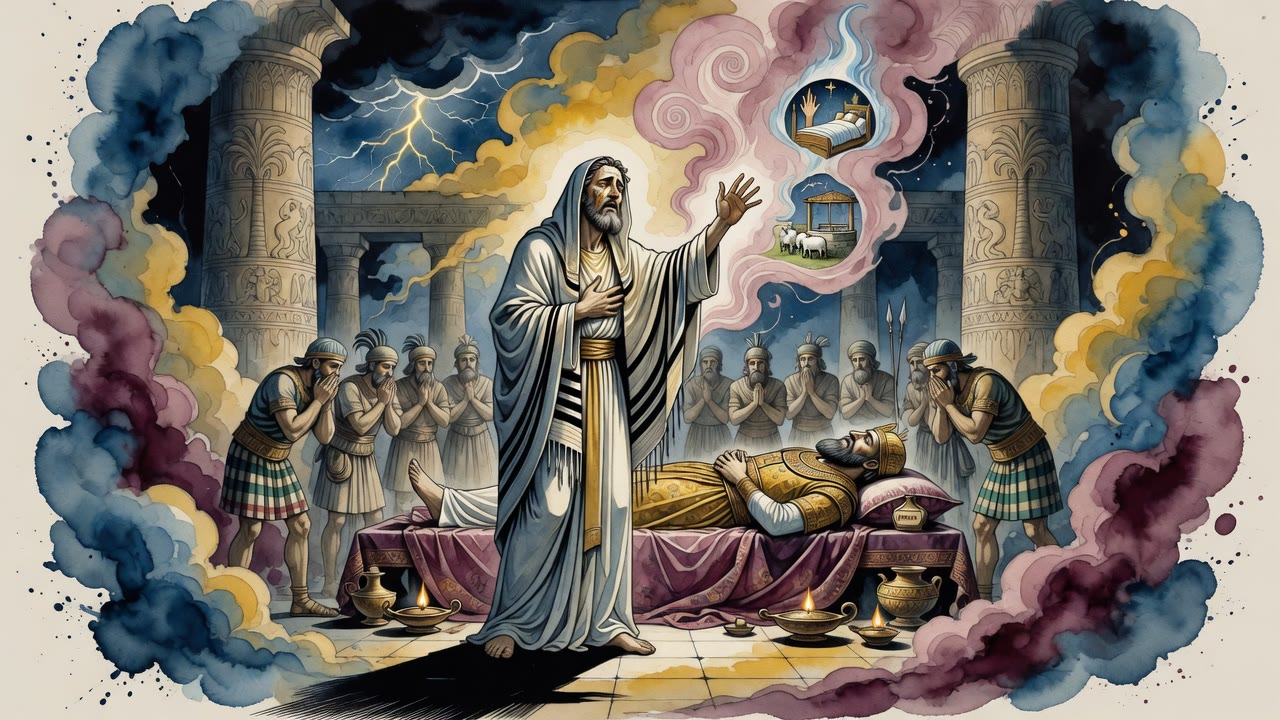
He stayed in Gerar. He planted crops in the famine year and harvested a hundredfold, which the tradition reads as a miracle: where Abraham had received wealth from Pharaoh, Isaac received a harvest that the land itself produced beyond all expectation. The Philistines watched this and felt the thing they feel when the man next to them prospers while they merely survive: envy, and then the action envy leads to.
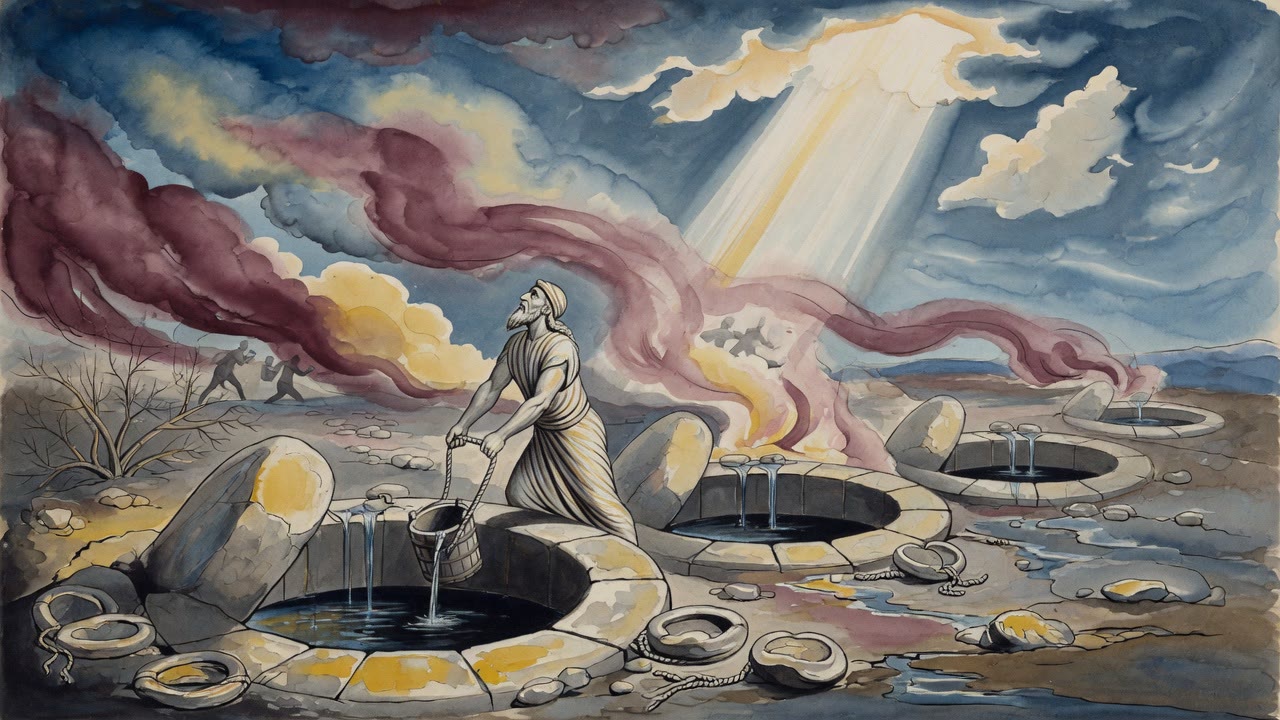
They filled in Abraham's wells. The infrastructure that sustained life in an arid country, the Philistines stopped it up with earth. Then King Abimelech came to Isaac and said: go away from us, you are more powerful than we are. So Isaac moved further into the valley and dug new wells, and each time he found water the Philistines argued that it was theirs, and he moved again, and dug again, and found water again. The pattern repeated until he had moved far enough that nobody came to contest what he had dug.
The Consecration That Could Not Be Undone
There is something particular about being a sacrifice that survived. Isaac's entire life takes on that texture in light of the Akedah: the near-death on the mountain had not simply been a test that was called off. It had changed what he was. He had been placed on the altar in the intention of his father and in the sight of God. The angels had wept at the sight of him bound on the wood. The offering had registered. The ram's death had substituted for his but not cancelled the fact of his consecration.
He lived the rest of his life as a man who had been given back to himself for a specific purpose, in a specific place, and the conditions of that return included the condition that he stay. The sanctuary was the land. He was the offering. As long as he remained within the sanctuary, he remained holy. The moment he crossed the border, the holiness would dissolve, and he would be neither a living man nor a valid sacrifice but something with no category at all.
← All myths