Isaac and David Were Bound Together Before Time
Adam found David's soul in the book of generations with almost no lifespan assigned to it and gave seventy of his own years away.
Table of Contents
 Click for full size
What Adam Found in the Book
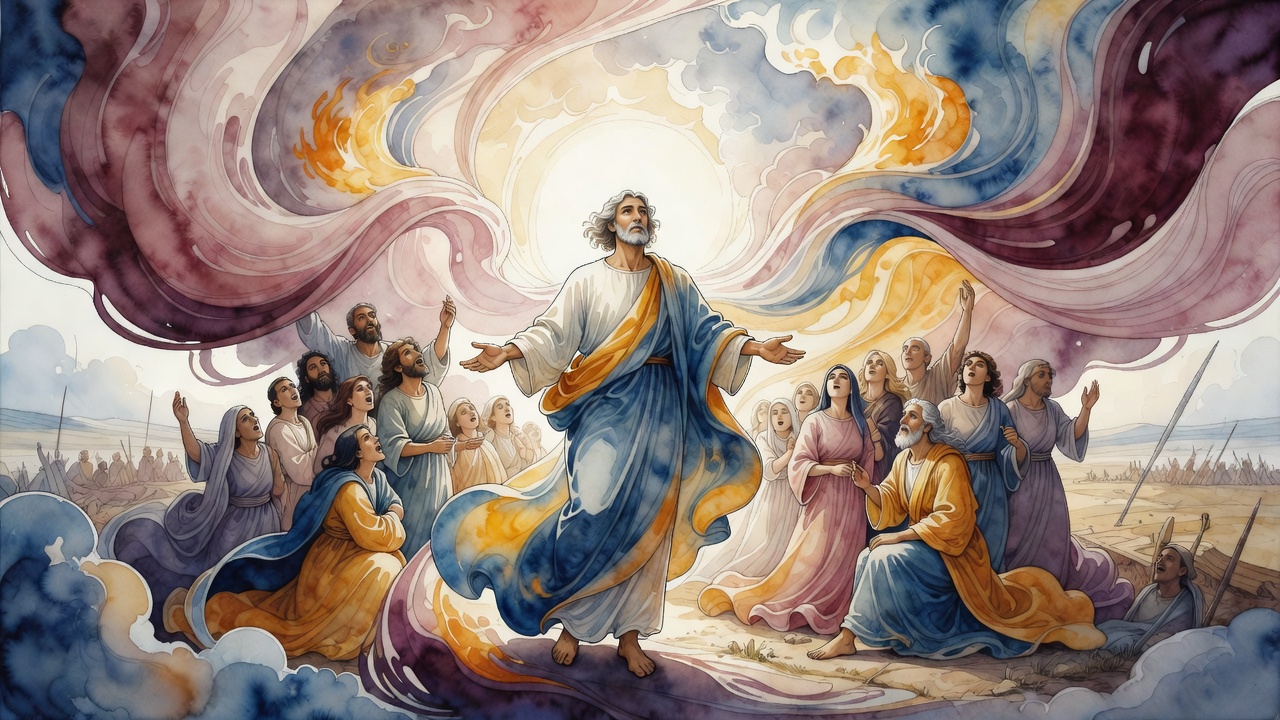
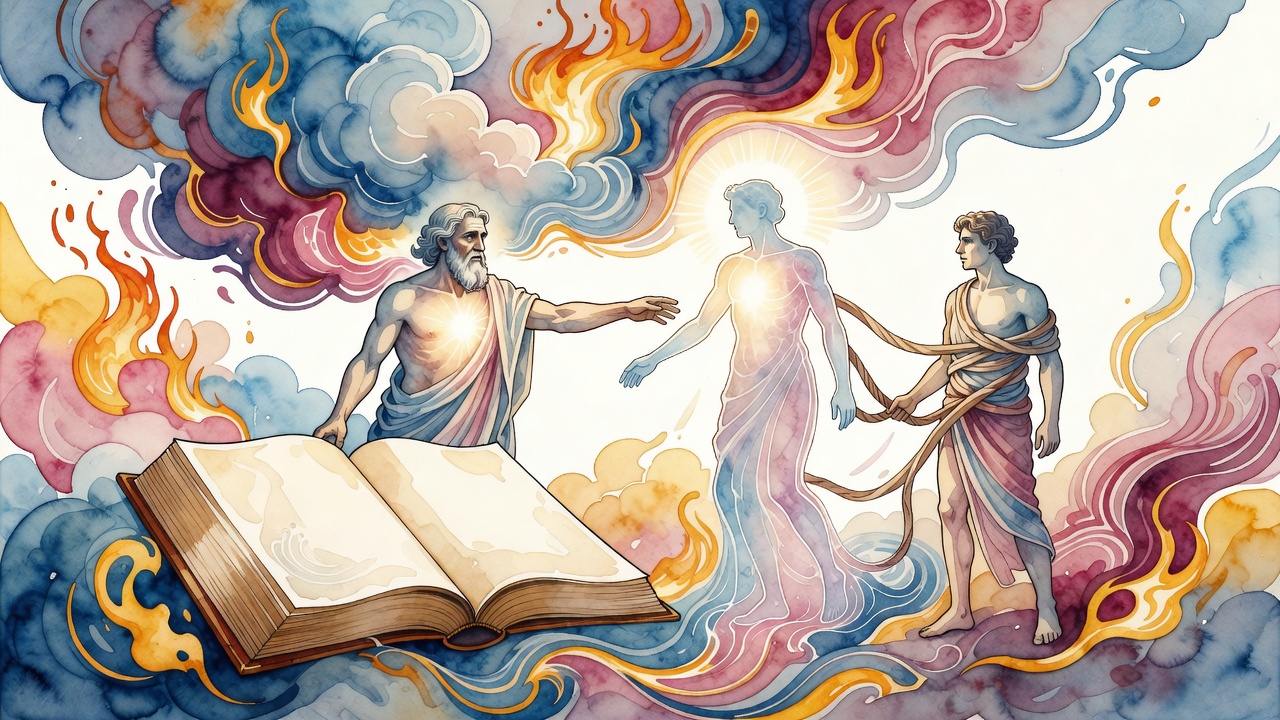
Adam stood at the beginning and the whole future unrolled before him. The book of generations opened in his hands, and he saw name after name, each with a number beside it: the years allotted, the life that would be lived. He moved through them the way a man reads a census, until one name made him stop.
David. Beside it, almost nothing. One version of the tradition gives him a single minute. Others give him three hours. Enough time to open his eyes and close them. Not enough time for a shepherd boy to become a king, not enough for a fugitive to learn to pray in caves, not enough for a song to be written that would outlast the singer by three thousand years.
Adam had been given a thousand years. He asked what the purpose was of a life so short it could not even be measured in days. Then he gave seventy years away, and the book changed.
The Akedah and What Heaven Was Watching
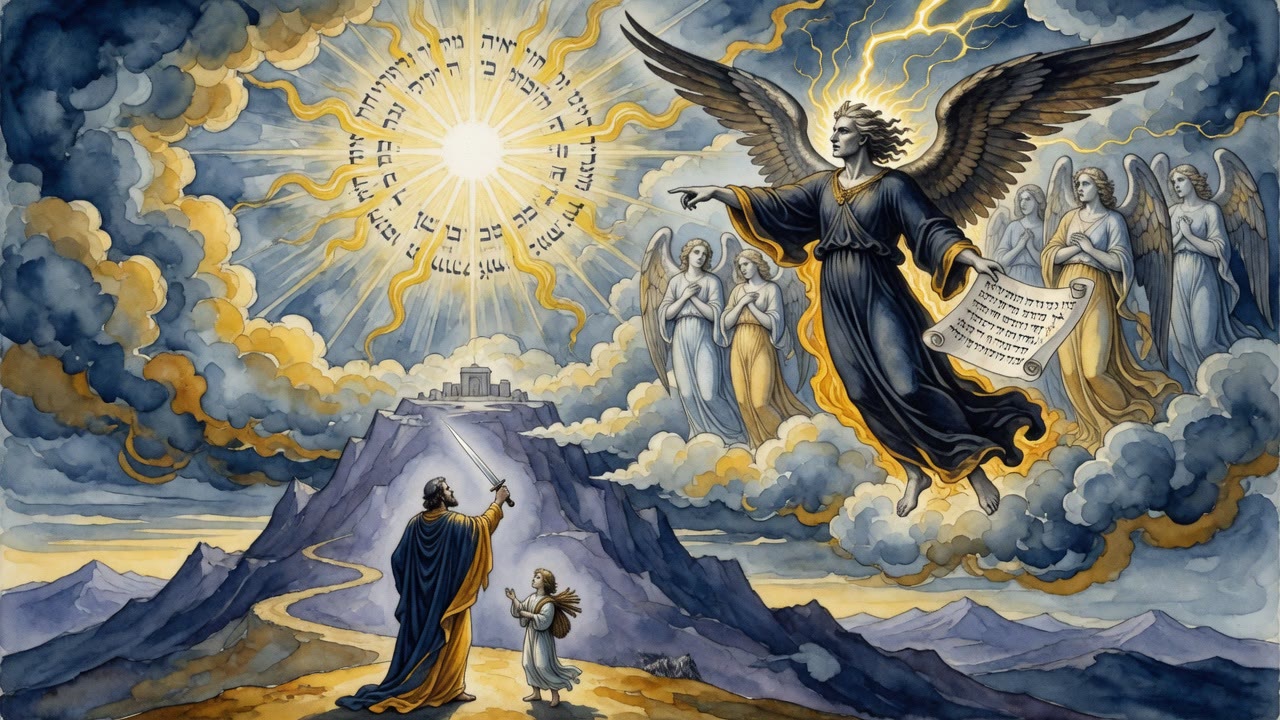
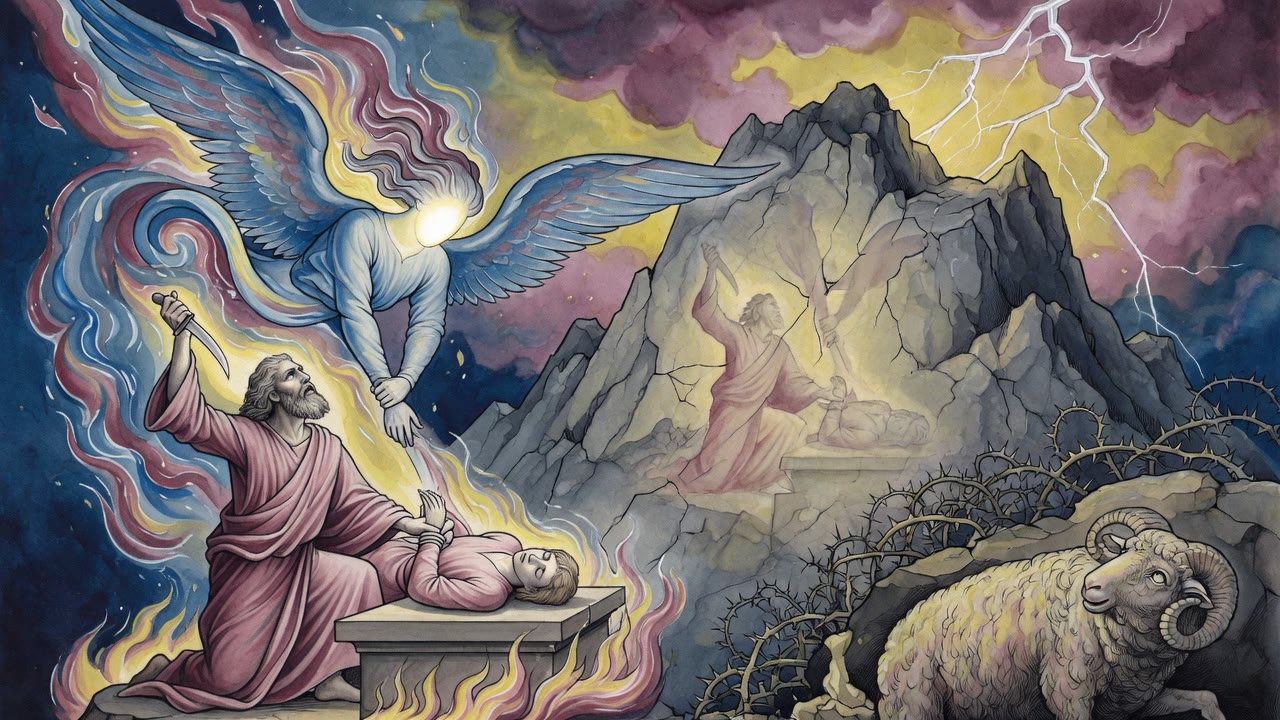
Isaac did not know, when his father bound him on the altar at Moriah, that the mountain already held a future appointment. The Book of Jubilees, composed in the second century BCE, describes the binding as a crisis that reached all the way into the heavenly court. The angel Mastema, the heavenly prosecutor, had pressed God to prove Abraham's loyalty. What happened on the mountain was not merely a test of a father's obedience. It was a confrontation between the prosecuting force and the God who had chosen Abraham's line.
When the angel stopped the knife and Abraham looked up and saw the ram caught in the thicket, what was secured was not just Isaac's life. The altar at Moriah remained consecrated. The place where Abraham had been willing to give everything was the place where the Temple would eventually stand, where Solomon would build what God had been building in heaven since before creation, where David's son would house the Ark that David had brought into Jerusalem with dancing.
Isaac survived Moriah. David was born with seventy years that had never been his own. The thread between them runs through the same mountain.
The Patriarchs Raised From Their Graves
The third book of Enoch, a Hebrew mystical text preserved in rabbinic circles, places Abraham, Isaac, and Jacob in a vision of paradise where their souls rise from their resting places and stand before God in grief. They look down at Israel's exile and cannot bear what they see. They weep. They ask why their children suffer.
Isaac is among them. The Isaac who was bound, who was almost sacrificed, who carried in his body the mark of what it costs to be chosen. The text uses his presence in that vision as proof that the patriarchs do not simply rest. They witness. They intercede. The covenant obligation that was tested at Moriah is still alive in them centuries after their deaths.
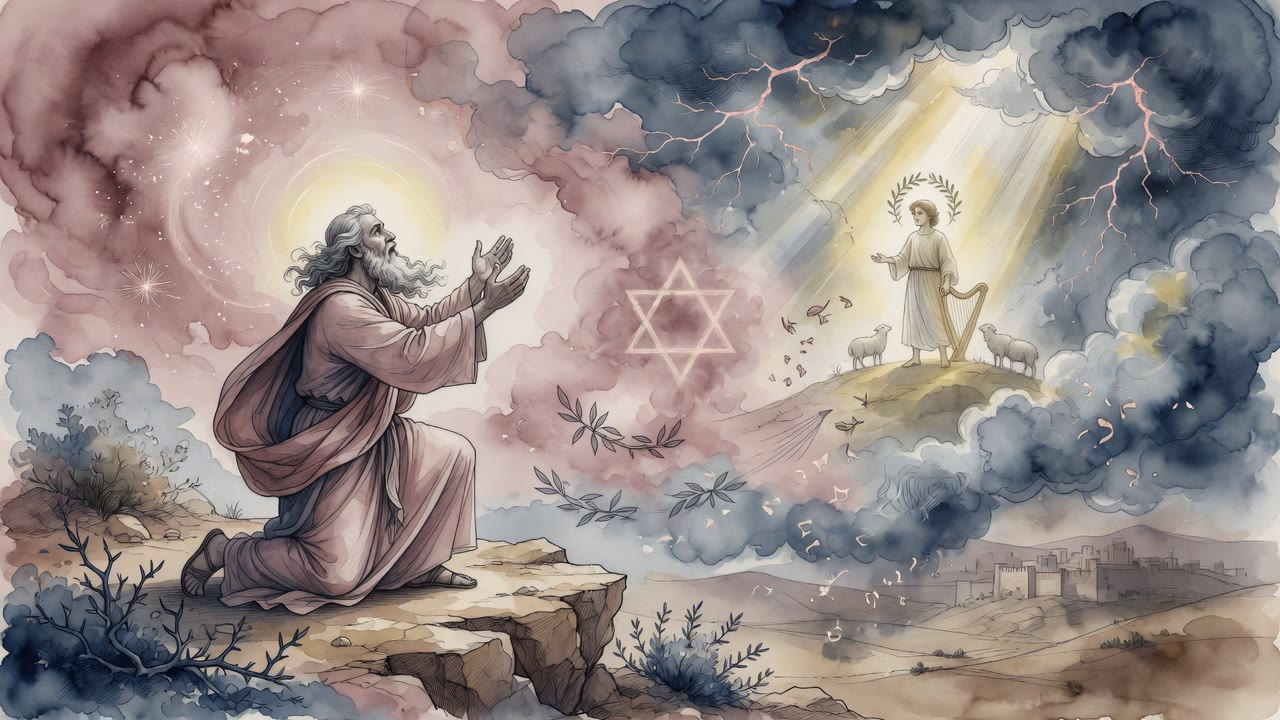
David understood this. His psalms return repeatedly to the God of Abraham, Isaac, and Jacob not as a formula but as an address. He knew the line he had been given access to. He knew, in some functional sense, that the years he was living had been purchased at the beginning of history.
David Among the Tribe of Lions
Ben Sira, writing in the second century BCE, describes David's military victories in the language of cosmic force. He shattered the horn of the Philistines. The horn was their power, their standing, their capacity to threaten the line of Judah. Ben Sira sees David's campaigns as the fulfillment of a destiny that was architectural from the beginning, the same destiny that the tribe of Judah was given when Jacob blessed them at his death: the lion's crouch, the scepter that would not depart.
The connection between Isaac and David becomes visible here. Isaac was the son who survived the altar and carried the covenant forward through his own body. David was the king who fought for the territory in which that covenant could be housed. Both of them were creatures of the same divine calculation, the same pre-creation arithmetic that determined how much time and how much trial each soul required.
Adam's gift was the seed of that arithmetic. He did not choose David because he knew him. He chose him because the number beside his name was unbearable, and the first man, who had failed in the garden and been cast out of paradise, understood that the world needed this particular soul to have enough time to do what it was made to do.
← All myths