Isaac Put Levi on His Right Hand and Wept
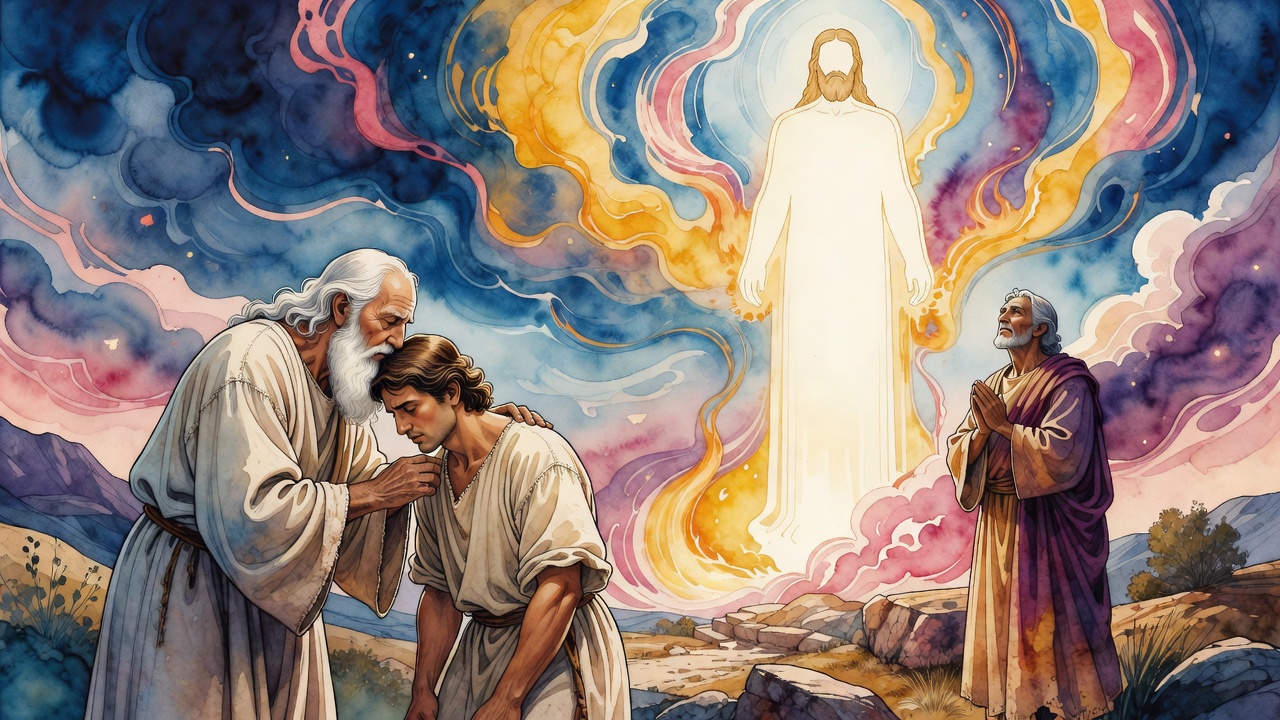
Isaac's eyes had been dark for years. Jacob kissed him, and the dimness lifted long enough to see two grandsons waiting.
Table of Contents
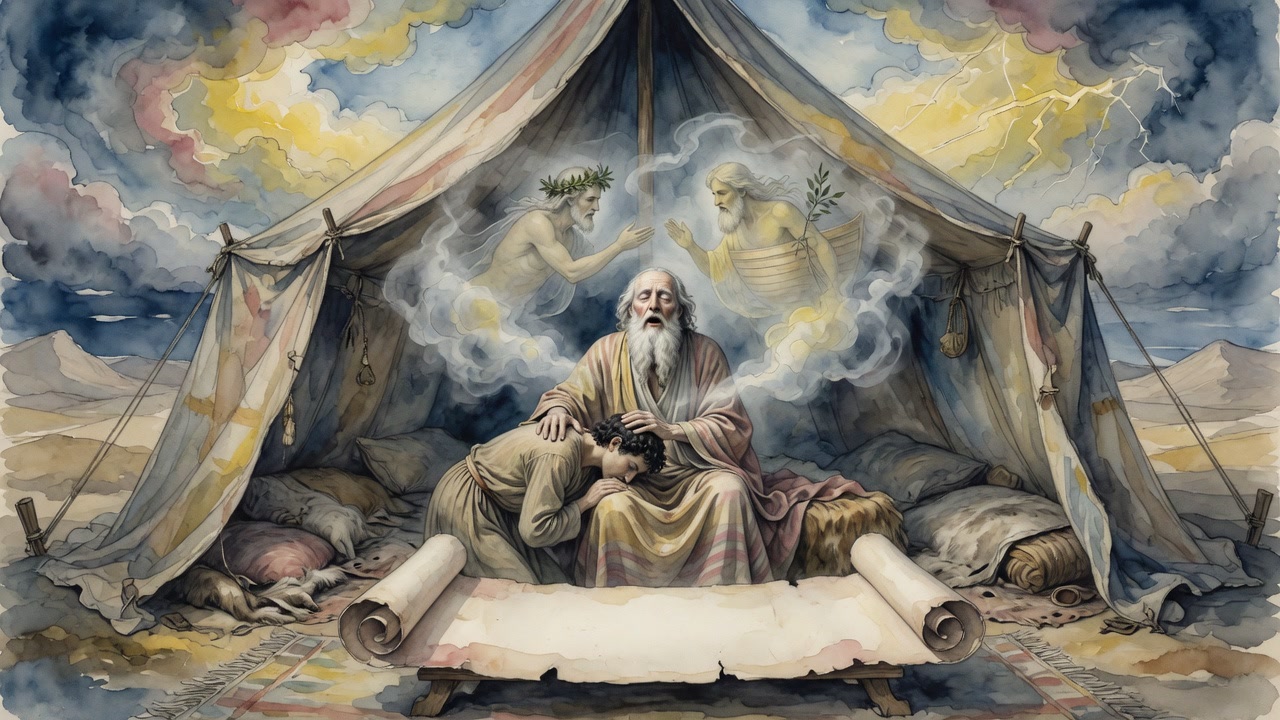
Isaac was nearly blind and nearing death when Jacob came to see him. His eyes had been dim for years, the world reduced to shapes and warmth and the sound of footsteps on the floor. Jacob brought his sons Levi and Judah with him, led them forward in the old way, and took his father's hand to kiss him.
 Click for full size
Isaac clung to Jacob's neck and wept against him. The weeping was not only grief. Something shifted in the room. The dimness that had covered Isaac's eyes lifted, briefly, like a cloth drawn back, and he saw his son's children standing there in the light.
Darkness Left His Eyes
"Are these thy sons, my son?" he asked. "For they are like thee."
Jacob said they were truly his sons. "And thou hast truly seen that they are truly my sons." Levi and Judah came near. Isaac kissed them and embraced them both together. For a moment the failing eyes did the work they had not done in years. He took in the two young men, the set of their shoulders, the faces that carried Jacob forward into another generation.
Years earlier Isaac had already given Jacob the eternal blessing, all the blessings with which the Lord had blessed him, to belong to Jacob and his seed always. He had called Jacob before the eyes of Rebecca and kissed him then too. This visit was not the first transfer. It was the sorting of what that transfer would become in the next generation.
The Right Hand Chose the Priest
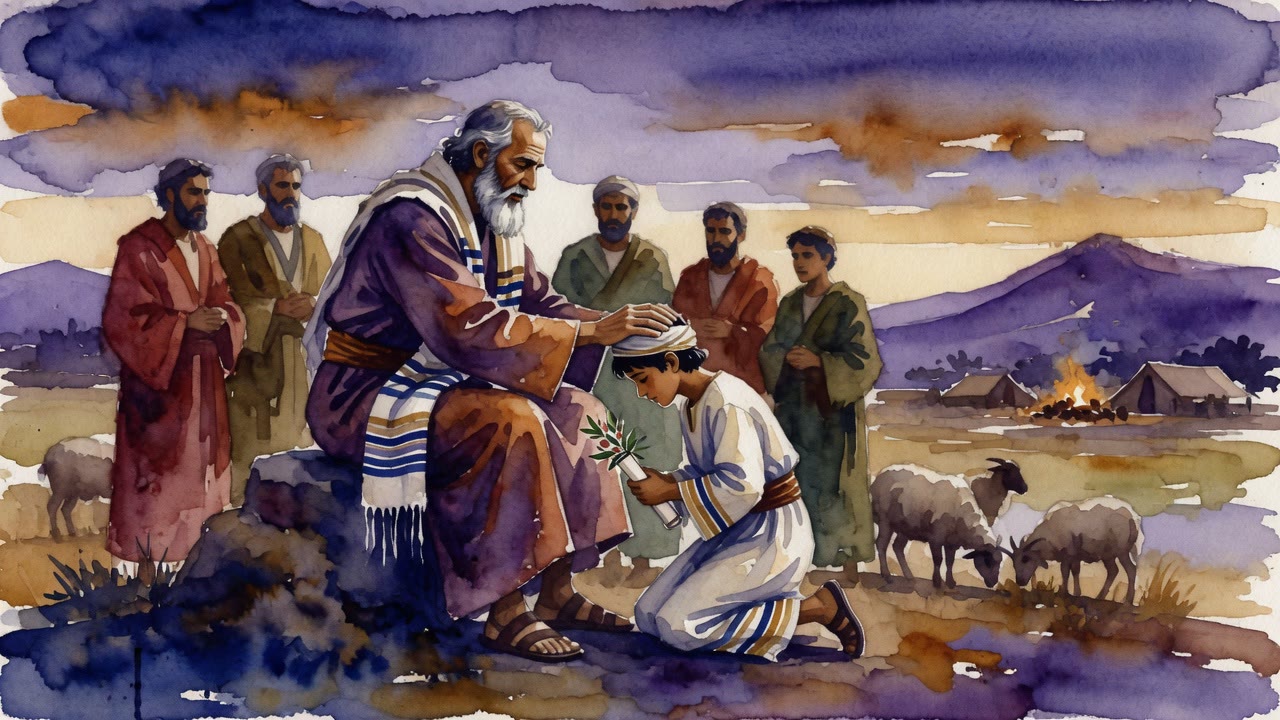
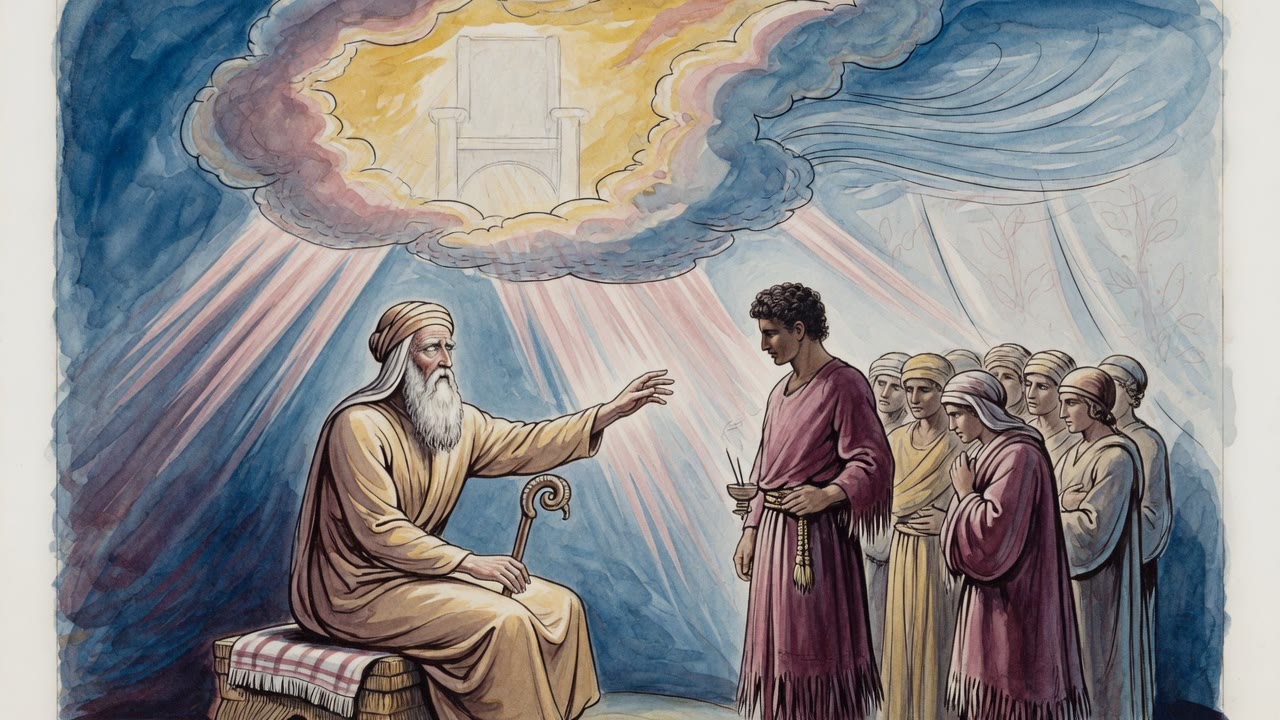
The spirit of prophecy came down into his mouth. He put Levi on his right hand. He took Judah by the left. The hands moved with a certainty the rest of his body had lost, settling each grandson into his place. Then he turned to Levi first and began to bless him first.
Right hand first. Priest before king. The gesture was the verdict before any sentence was finished. Judah, on the left, would carry the throne. Levi, on the right, would carry the word. Isaac ranked them before he had said a word, and the ranking held.
Two days before this visit, Levi had dreamed the appointment. He and Judah had come to their grandfather so the dream could be confirmed by a living mouth. Jacob also had seen it: Levi appointed priest of God, and through him Jacob would set apart a tenth of his possessions unto the Lord. The right hand in the dim room was not a surprise to heaven. It was a seal on what the night had already shown.
Levi Heard the Table Assigned
Isaac's blessing over Levi named what Levi would become. They will speak the word of the Lord in righteousness. They will judge all His judgments in righteousness. They will declare My ways to Jacob and My paths to Israel. The blessing of the Lord will be given in their mouths to bless all the seed of the beloved.
"Thy mother hath called thy name Levi, and justly hath she called thy name. Thou wilt be joined to the Lord and be the companion of all the sons of Jacob. Let His table be thine, and do thou and thy sons eat thereof. May thy table be full unto all generations, and thy food fail not unto all the ages."
Levi was not receiving a blessing for himself alone. The old man's grip on the right hand was an appointment that reached past the boy standing in front of him. He was receiving the priesthood on behalf of every descendant who would stand in the sanctuary, every Levite who would carry the ark, every generation of teachers who would stand between the people and the word they could not approach directly. The hand that closed around Levi's hand was closing around centuries.
Hebron Taught the Office by Touch
When they established themselves in Hebron, the residence of Isaac, their grandfather taught Levi the law of the priesthood and admonished him to hold himself aloof from unchastity. The deathbed ranking became a curriculum of the body: how to approach, how to eat from the table, how to keep the office clean. Judah would later wear a crown. Levi learned, in a house of failing sight, that the right hand had already spent the greater weight.
This was the third generation of the same scene. A patriarch near death, the body failing, the inner sight sharpening in a way the physical eyes could not. Abraham had blessed Isaac. Isaac had blessed Jacob. Now Jacob's sons stood at the threshold of their grandfather's last clarity. What changed with each generation was the scope. Abraham blessed a son. Isaac blessed a son who would become a nation. Isaac now blessed grandsons who would become offices, not just lines of descent but permanent functions in the life of the people.
The room held three deathbeds at once, the same light returning to the same failing eyes, the same hands reaching out to sort the future into its places. Then the cloth of dimness dropped again. Levi left already ranked above the future kings. Judah left with a throne in the left hand, which is still a throne, and still second.
← All myths