When Two Silent Prayers Brought Rebekah Home
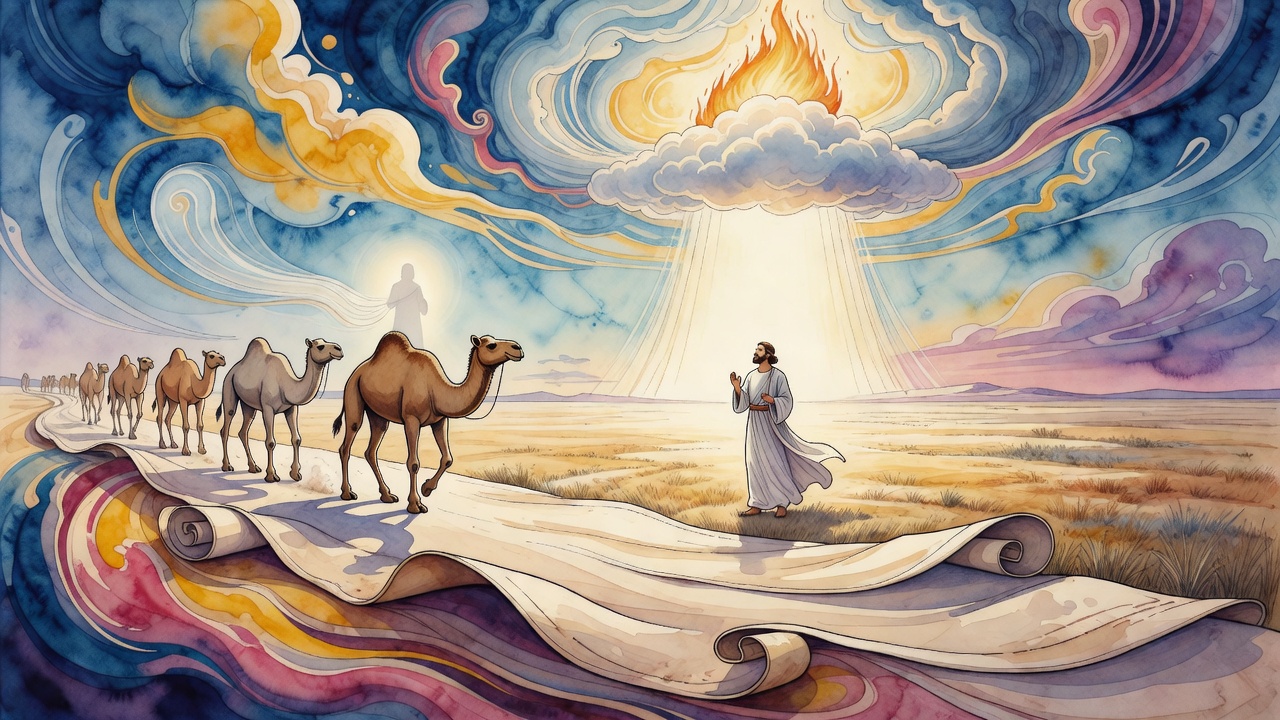
Eliezer's prayer is answered before it leaves his heart, the road folds under the camels, and Isaac stands in a field at evening to pray the first mincha.
Table of Contents
 Click for full size
The Answer Before the Sentence Was Finished
Eliezer had not finished praying when Rebekah appeared with the pitcher on her shoulder.
The prayer had not yet reached his lips. It was still forming inside him, still moving through the hidden chamber where thoughts exist before they become words. He had knelt at the well outside the city of Nahor, had arranged his request in his mind, the sign he was asking for, the girl who would offer water to him and to his camels, and had begun to form the words. He had not finished forming them when the answer walked toward the water.
Targum Pseudo-Jonathan, the Aramaic Torah translation with its midrashic layers settled in the late antique or early medieval world, presses on this detail because it is the most important thing about the scene. Not that God answered Eliezer's prayer. That God answered it before the prayer was complete. The response preceded the finished request. Heaven moved while the prayer was still in the category of thought rather than speech.
Ten Camels at a Well in Aram
The mission had seemed impossible from the beginning. Abraham was old, his wife Sarah recently buried, his son Isaac waiting for a wife in a land where none of the local women would serve. The instruction was specific and difficult: go to my family in Aram, find a woman there, bring her back, but do not bring Isaac to her. The servant must go alone and return with a bride, which meant the bride must choose to come, which meant the servant needed help that no servant's diplomatic skill could produce on its own.
Eliezer took ten camels and departed. Ten camels is not a small caravan. It is a display of Abraham's wealth, a statement that the family he was going to see would understand, but it is also ten animals to water, ten animals whose presence at a well created the exact circumstances of his test. A girl willing to draw water for one thirsty traveler is a hospitable person. A girl willing to draw water for ten camels is someone extraordinary, because ten camels drink a great deal and the work is not small.
Rebekah appeared and offered both. Before Eliezer said anything, before he explained who he was or where he came from or what he needed, she offered the water, drew enough for all the camels, and asked about lodging for the night. The prayer that had not yet finished forming in Eliezer's heart had found its answer in the first young woman who approached the well.
The Road That Folded
The return journey was fast. Targum Pseudo-Jonathan preserves a tradition that the road home folded under Eliezer's camels. The same principle that would later bring Abraham's servant from one place to another without the expected duration, kefitzat haderech, the compressing of the road, the earth gathering itself underfoot to shorten the distance, operated on Eliezer's journey back to Canaan with Rebekah.
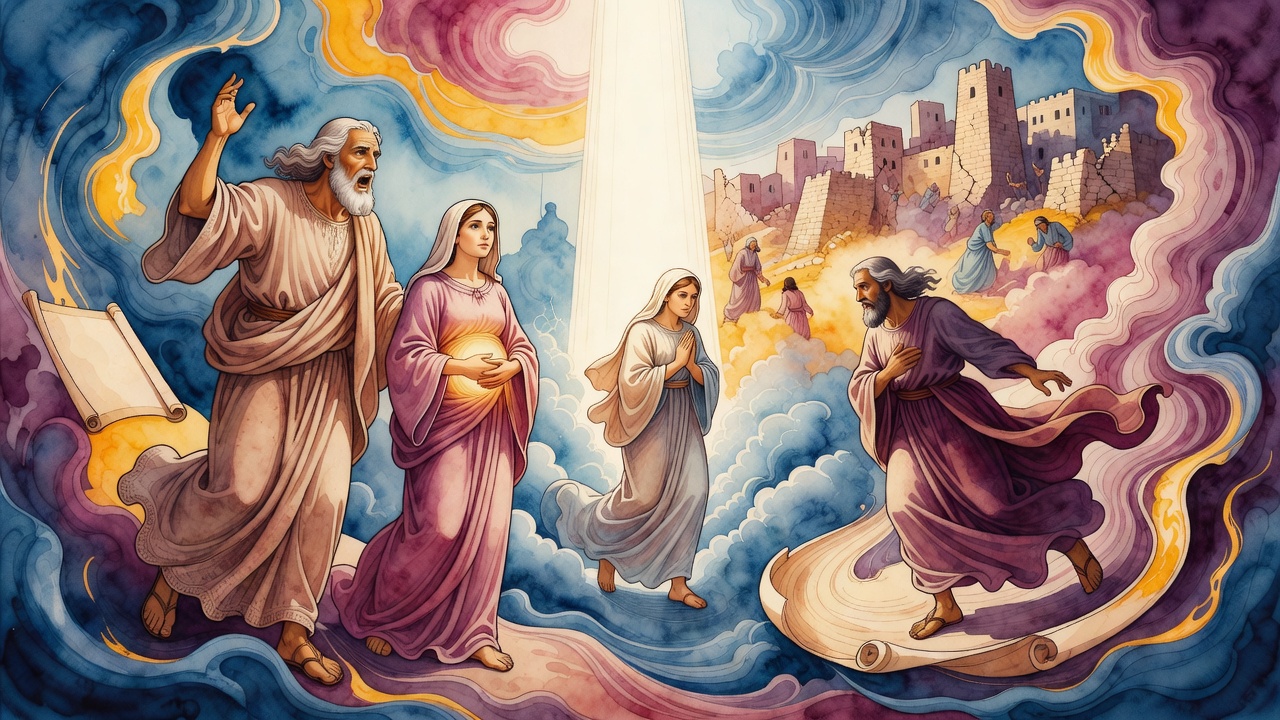
This miracle is paired with the miraculous answered prayer as evidence of the same truth: Abraham's mission to find Isaac a wife was not a private family matter that Providence was graciously monitoring from a distance. It was an event at the center of the covenant's continuation, and the divine attention given to it was commensurate with its importance. The prayer answered before it was finished, the road that folded, these were not random graces. They were the scale of attention appropriate to the moment when the covenant generation was about to begin.
Isaac in the Empty Field at Evening
On the other side of the return journey, Isaac was alone in a field.
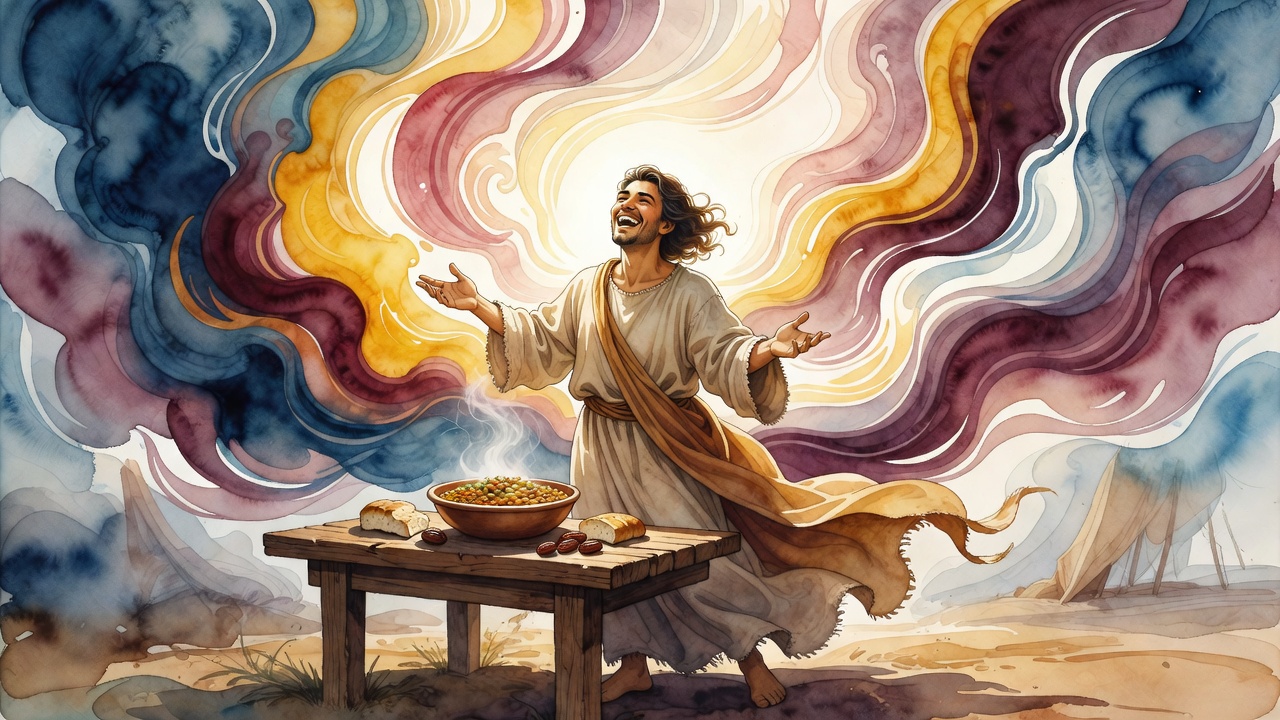
The Torah says he went out to meditate in the field toward evening (Genesis 24:63). Targum Pseudo-Jonathan reads this line with enormous attention. The word translated as "meditate" is interpreted as prayer, and the field and the hour are not incidental. Isaac, the Targum teaches, was the one who established the afternoon prayer. He went out at the hour between afternoon and evening and stood in the field and prayed, and what he was praying about was Rebekah's arrival, the answer to his long waiting.
The two prayers run on parallel tracks. Eliezer prays at a well in Aram while Rebekah is already walking toward him. Isaac prays in a field in Canaan while Rebekah's camels are approaching from the north. Both prayers are answered before the men know the answers have arrived. Eliezer learns the answer at the well. Isaac looks up from the field and sees the caravan.
The Light of Sarah's Tent
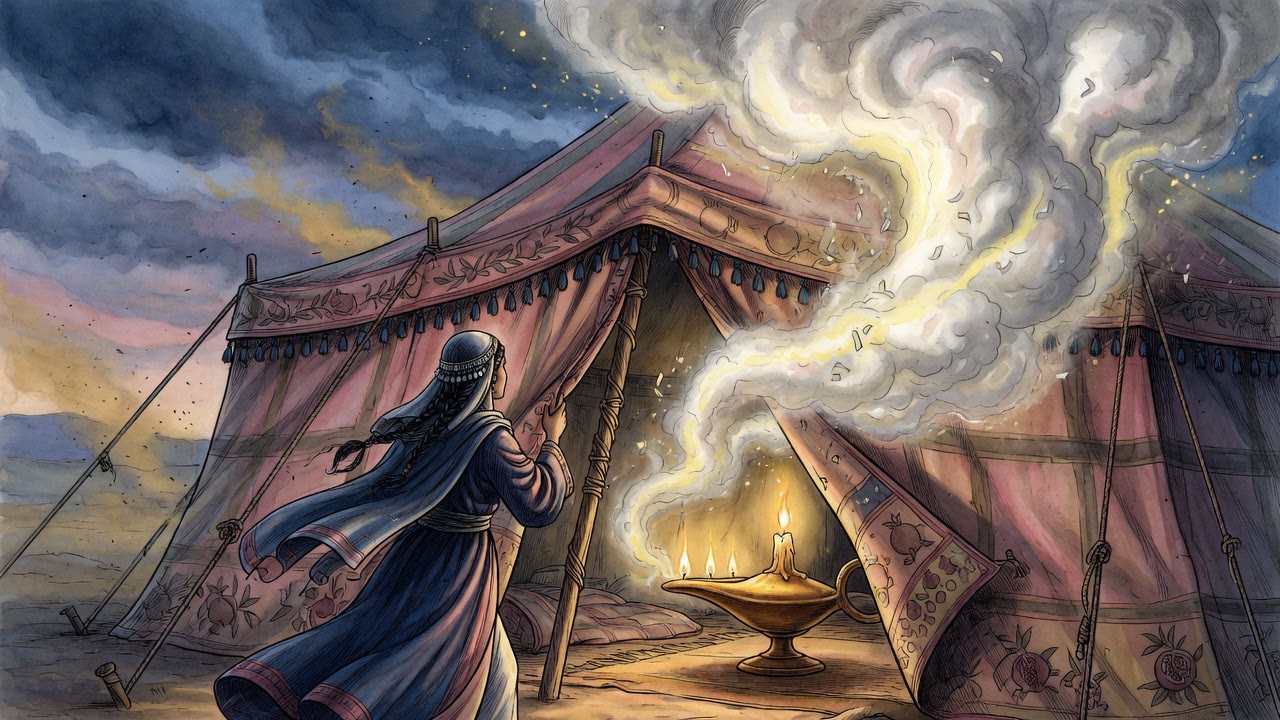
Rebekah arrived and dismounted. When she entered Sarah's tent, Targum Pseudo-Jonathan says, the signs that had departed with Sarah's death returned. The cloud of the divine presence that had rested over the tent came back. The lamp that had burned from one Sabbath eve to the next lit again. The blessing that had been in the dough came back into the bread. The things that a house has when the right person lives in it and the things that a house lacks when she is gone returned with Rebekah's first night in the tent.
These were no small domestic signs. For the Targum, the return of these signs is confirmation that the covenant had made the right choice. The prayer answered before it was finished at the well, the road that folded under the camels, Isaac standing in the field at the hour he had established for the afternoon prayer, and now the light coming back into the tent: four signs converging on the same point. The woman who offered water to ten camels at a well in Aram, who agreed to leave her family and travel to an unknown husband in a distant land, was the one the covenant had been preparing for Isaac since before either of them knew the other existed.
← All myths