Isaac Volunteered for the Binding and the Angels Wept
The Akedah was not only Abraham's test. In the Aramaic tradition, Isaac offered himself willingly, heaven wept, and the knife became useless.
Table of Contents
 Click for full size
The Boast That Started It
Ishmael and Isaac were arguing about devotion, and Ishmael was winning on points. He had accepted circumcision at thirteen years old, he pointed out. He had been old enough to refuse. That made his acceptance a choice, and his choice proved his faithfulness in a way Isaac's could not, since Isaac had been circumcised at eight days old with no capacity to consent.
Isaac answered: if the Holy One required all his limbs, he would not delay.
Those words rose before God. In Targum Jonathan on Genesis 22, the ancient Aramaic translation developed in the land of Israel between the 4th and 7th centuries CE, this is the moment that triggered the binding. The trial was not arbitrary. It was a response to Isaac's own declaration, spoken carelessly in an argument, received in heaven with terrible precision. A man had said he would offer everything. Heaven decided to find out if he meant it.
Three Days Toward Moriah
The Book of Jubilees, a Second Temple Jewish retelling of Genesis composed around the second century BCE, keeps the road to Moriah cold and spare. Abraham rises early on the morning of the command. He says nothing to Sarah. He splits the wood, saddles his donkey, takes Isaac and two servants, and they go. Three days of walking with the weight of the unspoken between father and son.
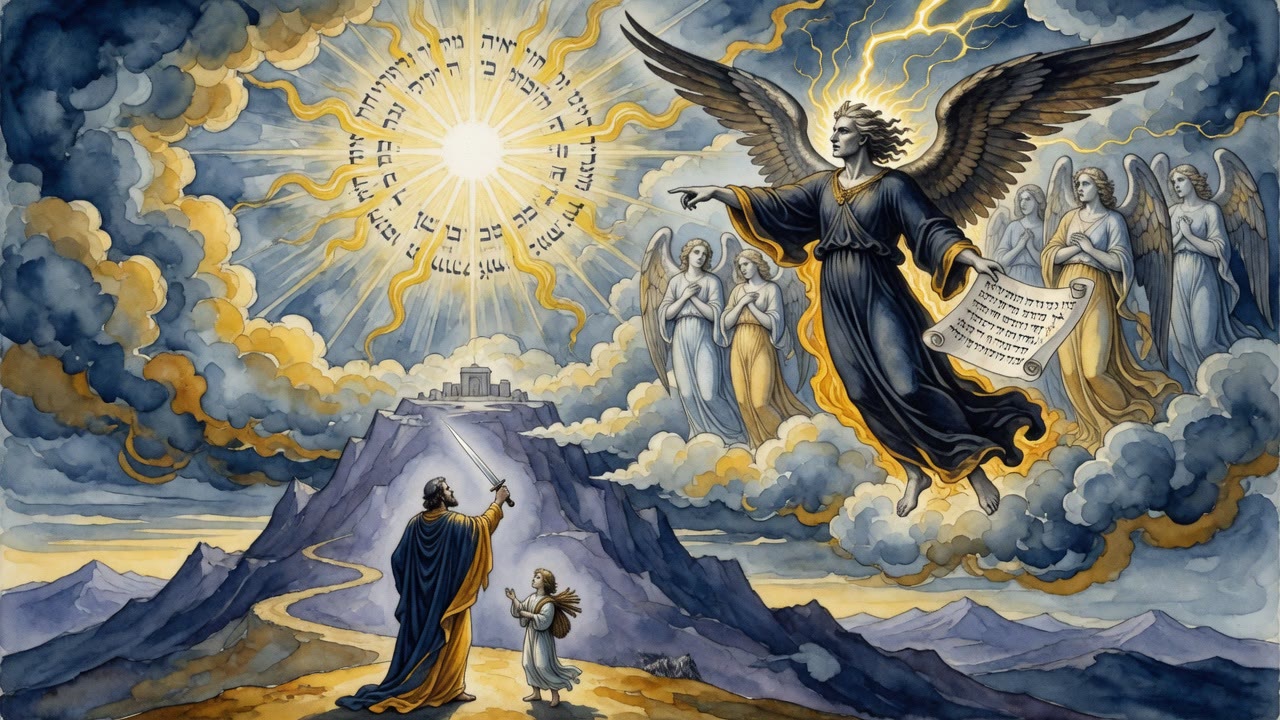
On the third day, Abraham sees the cloud of glory hovering over Mount Moriah. The servants cannot see it. He tells them to wait with the donkey: "I and the lad will go yonder and worship and return." The plural: both of us. This is Abraham's only spoken prediction about what will happen on the mountain, and the tradition hears it as faith, not evasion. He said "we will return" because he believed it.
The altar Isaac and Abraham build together on the mountain, according to Targum Jonathan, is not a new altar. It is the same altar Adam had built, used by Cain and Abel, built again by Noah, used again by Abraham at other moments. The mountain remembers every sacrifice that has ever been laid on it.
What Isaac Asked and What He Was Told
Legends of the Jews, Louis Ginzberg's six-volume compilation of rabbinic and midrashic tradition published in the early 20th century, preserves a scene that the Targum and Jubilees both approach but that the rabbinic tradition carries in full detail. Isaac sees the wood and the fire and the knife but no animal. He asks his father: where is the lamb for the burnt offering?
Abraham tells him: God will provide the lamb for the burnt offering, my son. And then Isaac understands that he is the lamb. The tradition records that he asked Abraham to bind him tightly, so that he would not flinch at the last moment and render the offering unfit. He asked to be tied so that his own instinct for survival would not destroy what his declared intention had set in motion.
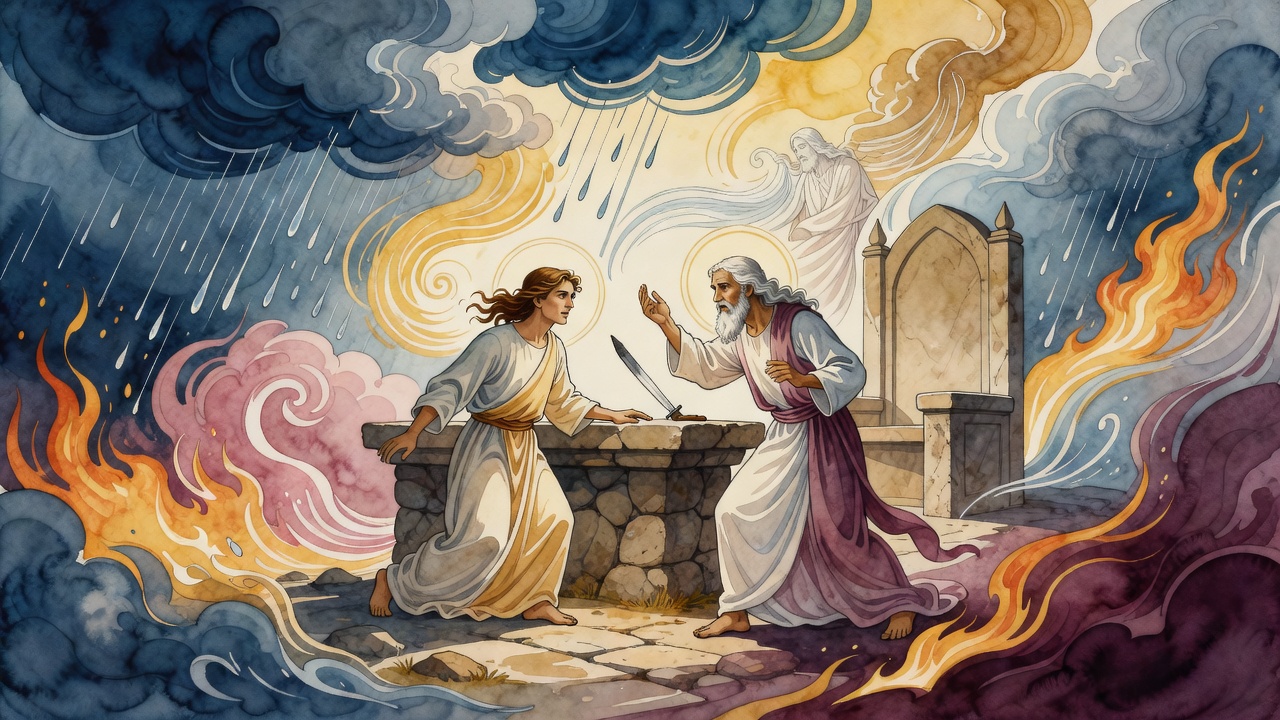
Together they built the altar. Isaac helped hand stones to Abraham. He helped lay the wood. He climbed onto the altar himself. There is, in this reading, no passive victim at Moriah. There is a thirty-six-year-old man, which the Targum specifies as Isaac's age, who heard his own words repeated back at him from heaven and decided that his words were true.
The Tears That Fell on the Knife
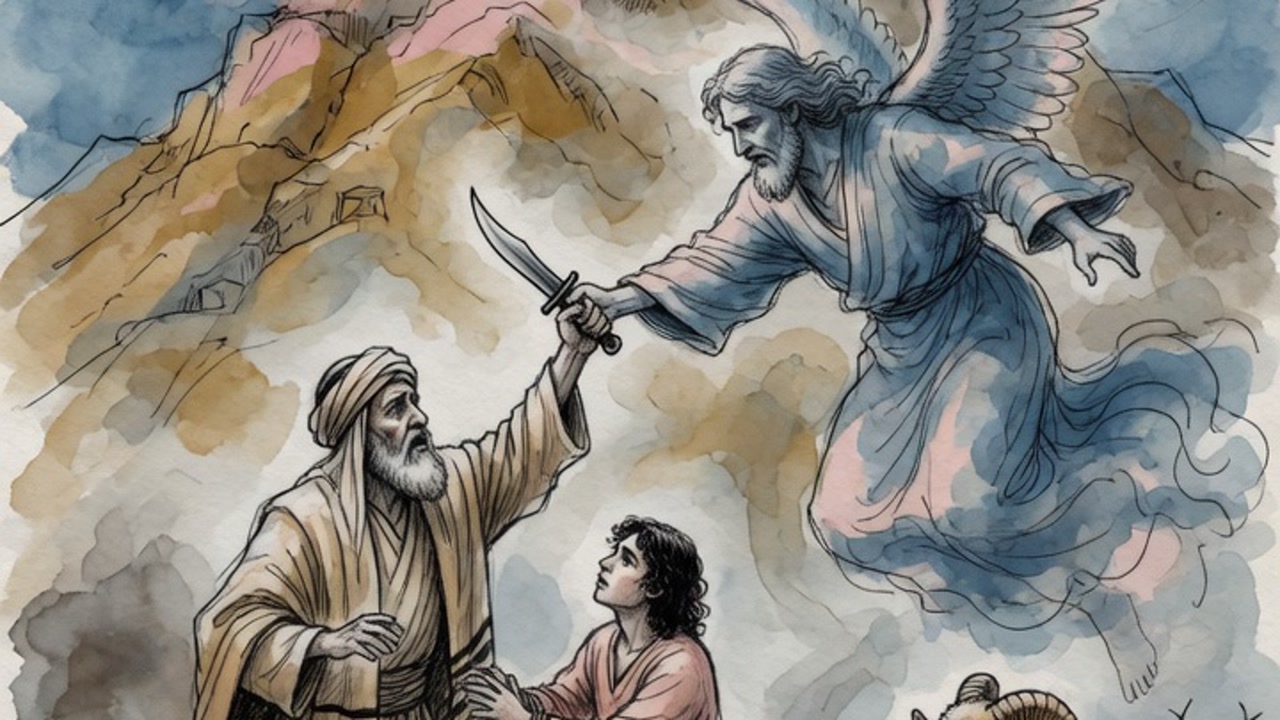
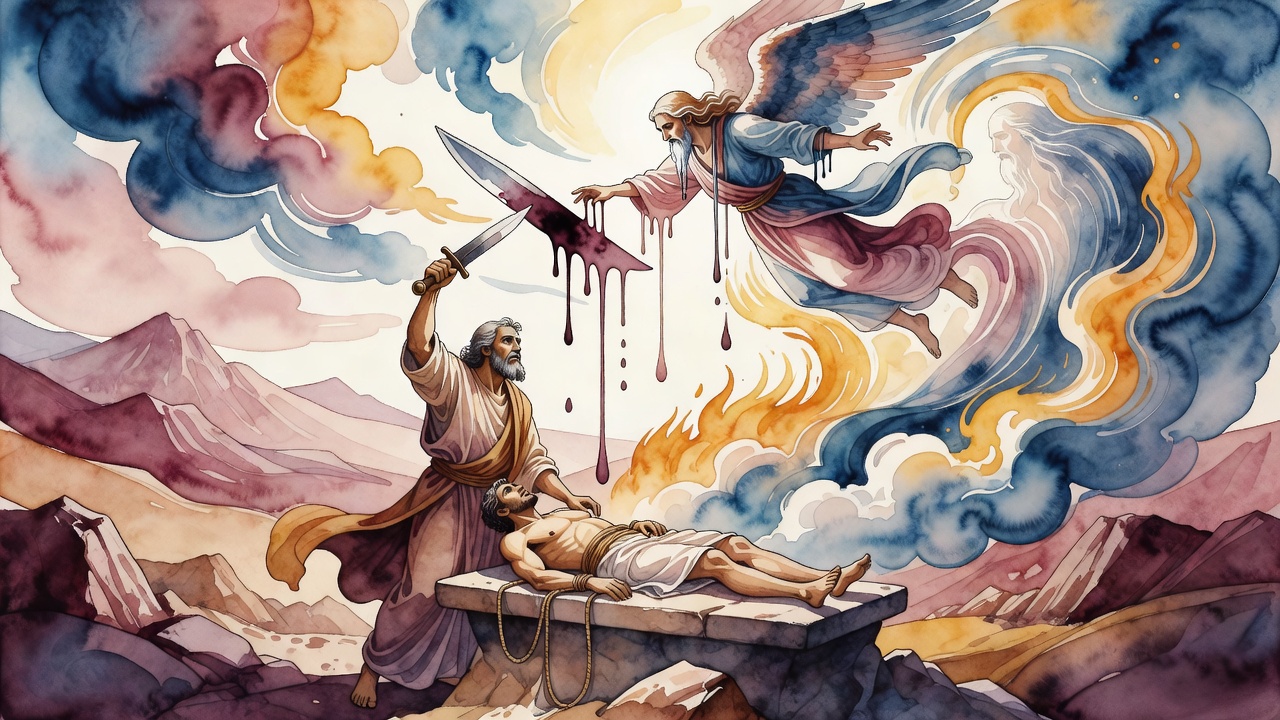
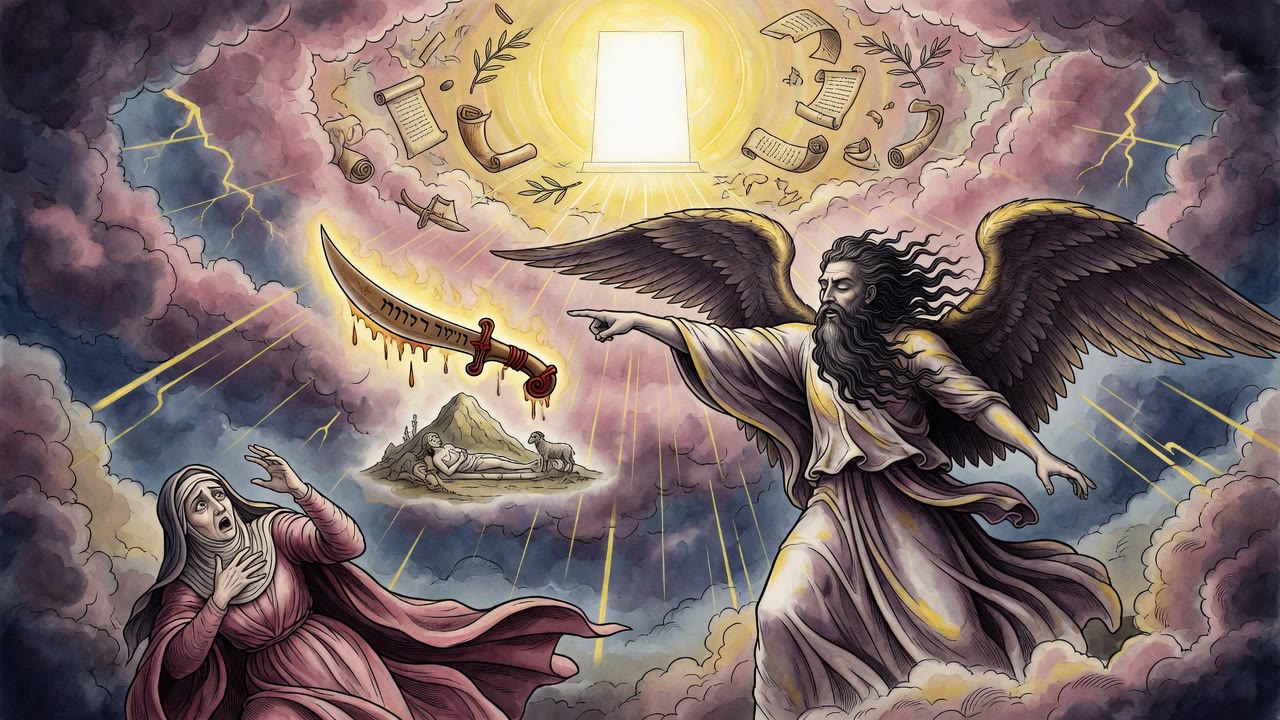
Abraham raised the knife. At that moment, the rabbinic tradition preserved in Legends of the Jews says, Isaac's soul left his body momentarily, whether from terror or from some anticipatory crossing of the threshold between worlds. The angels above wept at what they were watching. Their tears, the tradition says, fell on the knife and made it useless.
The archangel Michael stood above and could not act without authorization. "Why standest thou here?" God asked. "Let him not be slaughtered." Michael called down to Abraham with a voice so urgent that the tradition describes it as multiple calls compressed together: Abraham, Abraham, once with full stops and once without pause. The knife was already raised. Every fraction of a second mattered.
Abraham heard the voice and lowered the knife. He looked up and saw a ram caught by its horns in a thicket. He had said "we will return" on the road to the mountain. Both of them walked down.
← All myths