Isaac Stood Up From the Altar and Said a Blessing
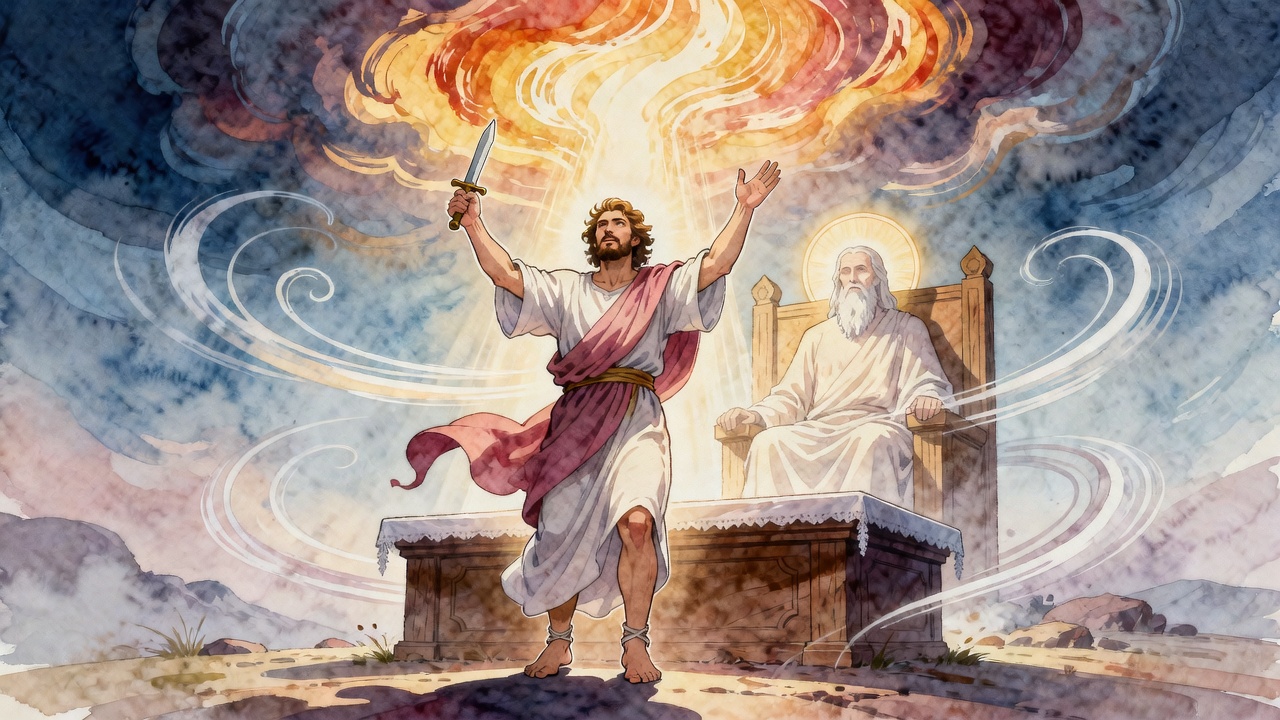
The moment Abraham's knife stopped, Isaac's soul returned. He rose from the wood, stood on bound feet, and blessed God for reviving the dead.
Table of Contents
 Click for full size
The Knife Stops and the Soul Returns
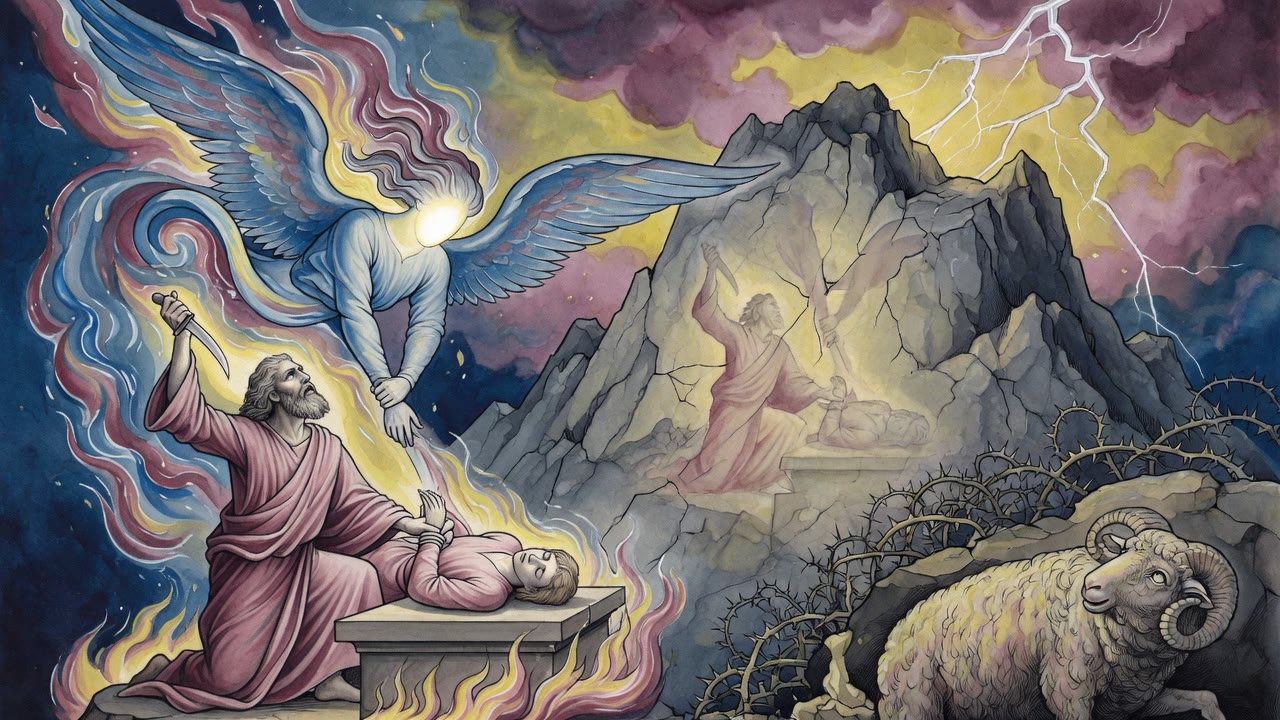
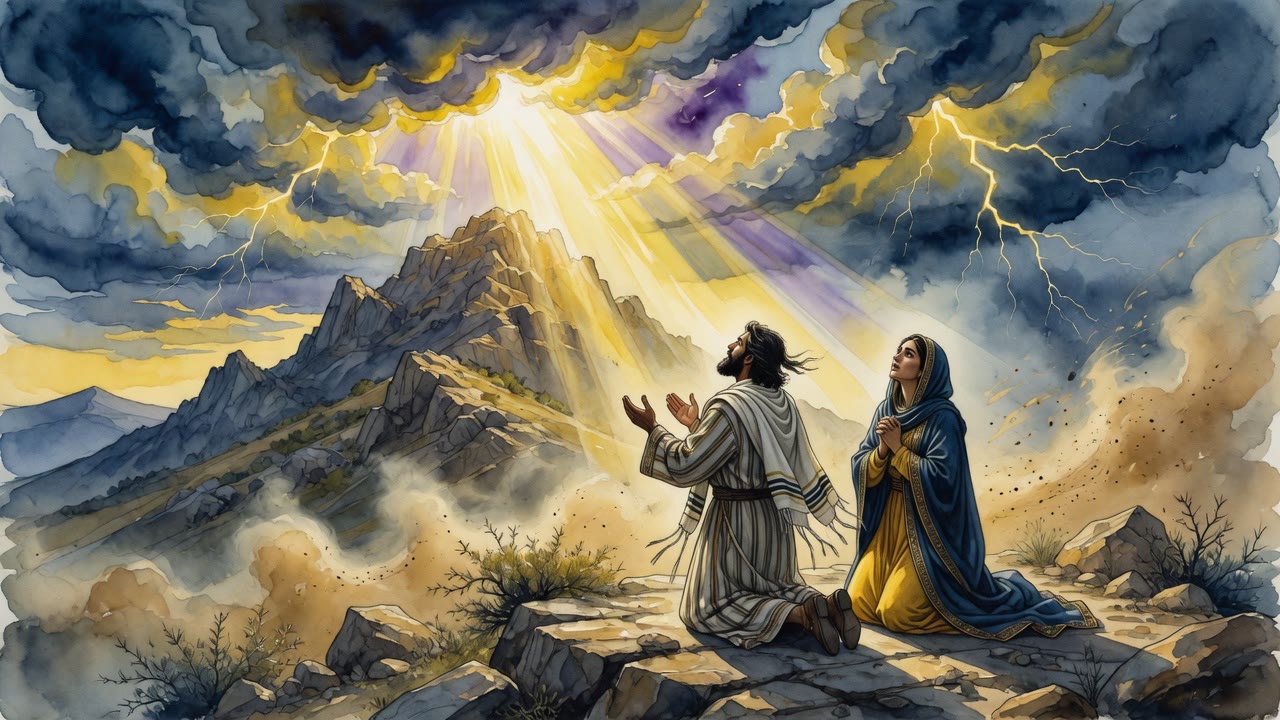
The knife was in the air. Isaac's soul had already left. The tradition is careful about this: not that he nearly died, not that he fainted from fear, but that the soul departs when death appears with certainty, and death had appeared with certainty on Mount Moriah with a bound boy and a knife and a father who did not flinch. The wood was stacked beneath him. The cords held his wrists against his ankles. The blade had already caught the light.
Then the voice came. Abraham's hand stopped above the small body, the arm frozen at the height of its swing. The angel spoke a second time and the ram appeared in the thicket, its horns caught fast in the branches. Isaac's soul was called back from wherever it had gone, and he felt it return, the breath coming back into a chest that had stopped expecting it.
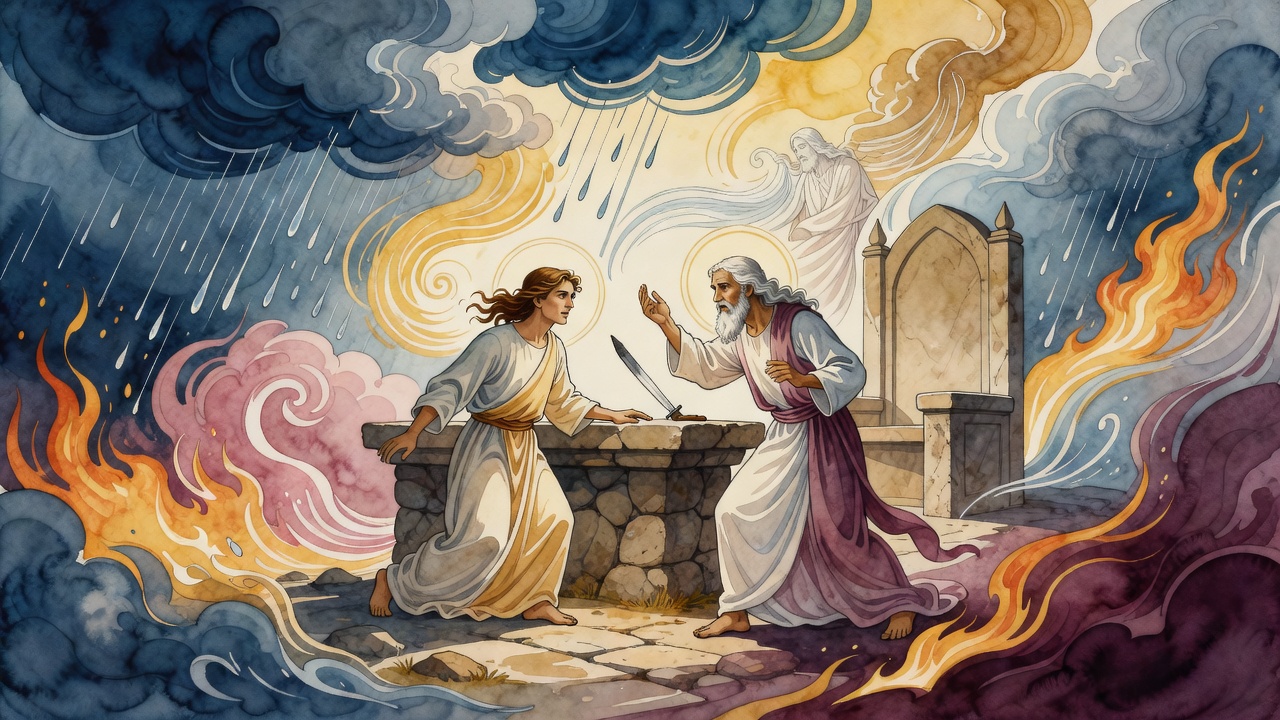
He did not weep. He did not collapse. He did not ask his father a single question. He stood up from the wood of the altar, on feet that had been bound and still carried the marks of the cords, and he said a blessing.
"Blessed are You, Lord our God, who revives the dead."
That blessing is still said today in the Amidah, the standing prayer recited three times daily. The rabbis preserved it because Isaac said it first, on an altar, after personal experience had confirmed that the words were true. He was not blessing God for a theological proposition. He was blessing God for something that had happened to him, on a stone, before he was old enough to understand it.
What the Book of Jubilees Saw From Heaven
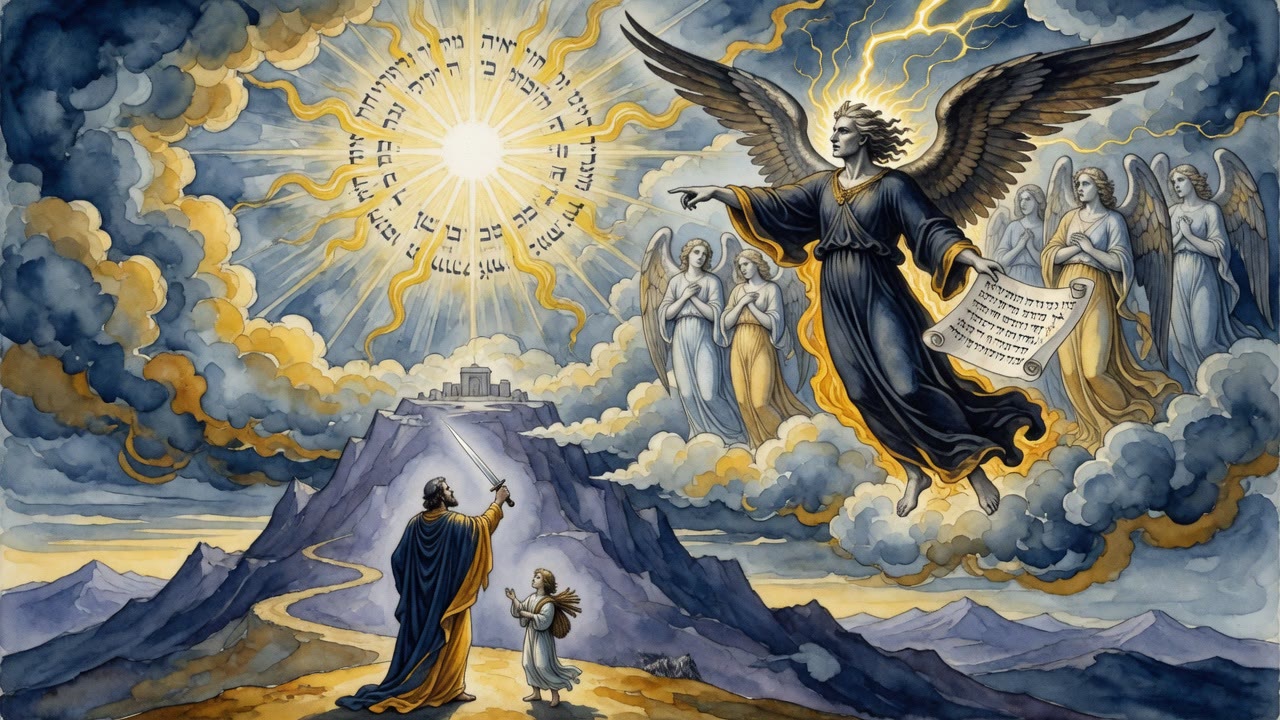
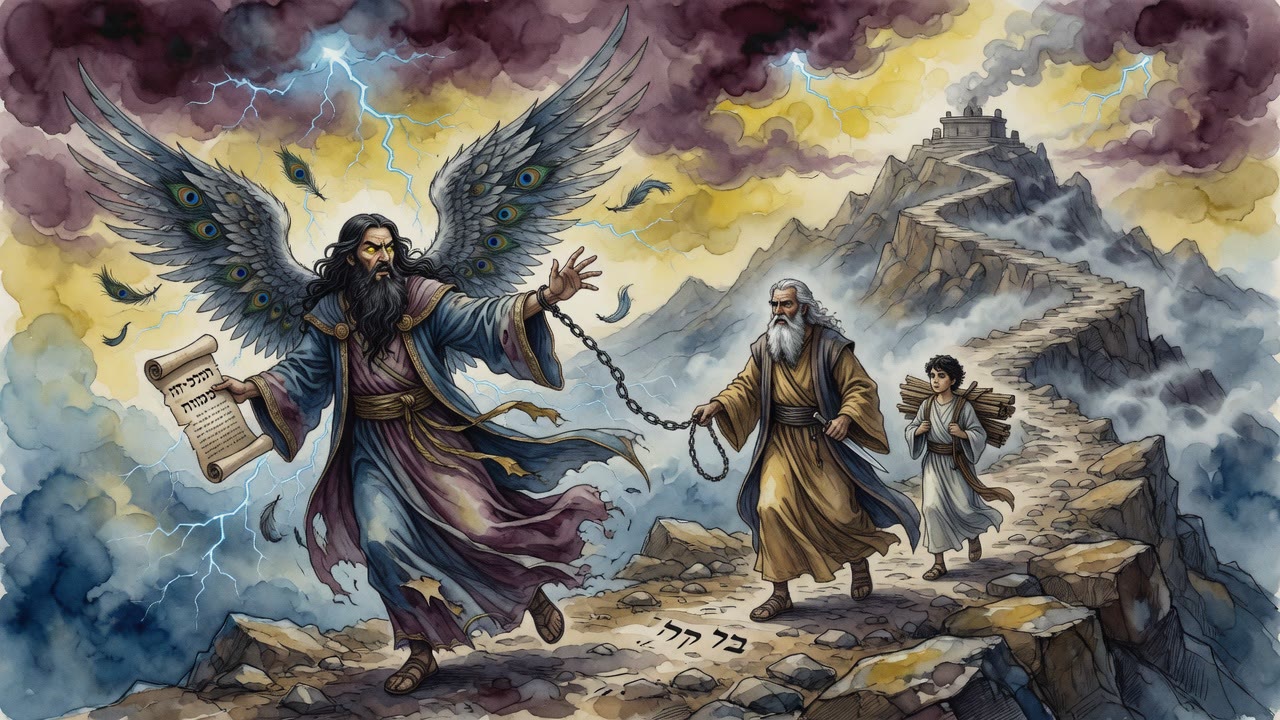
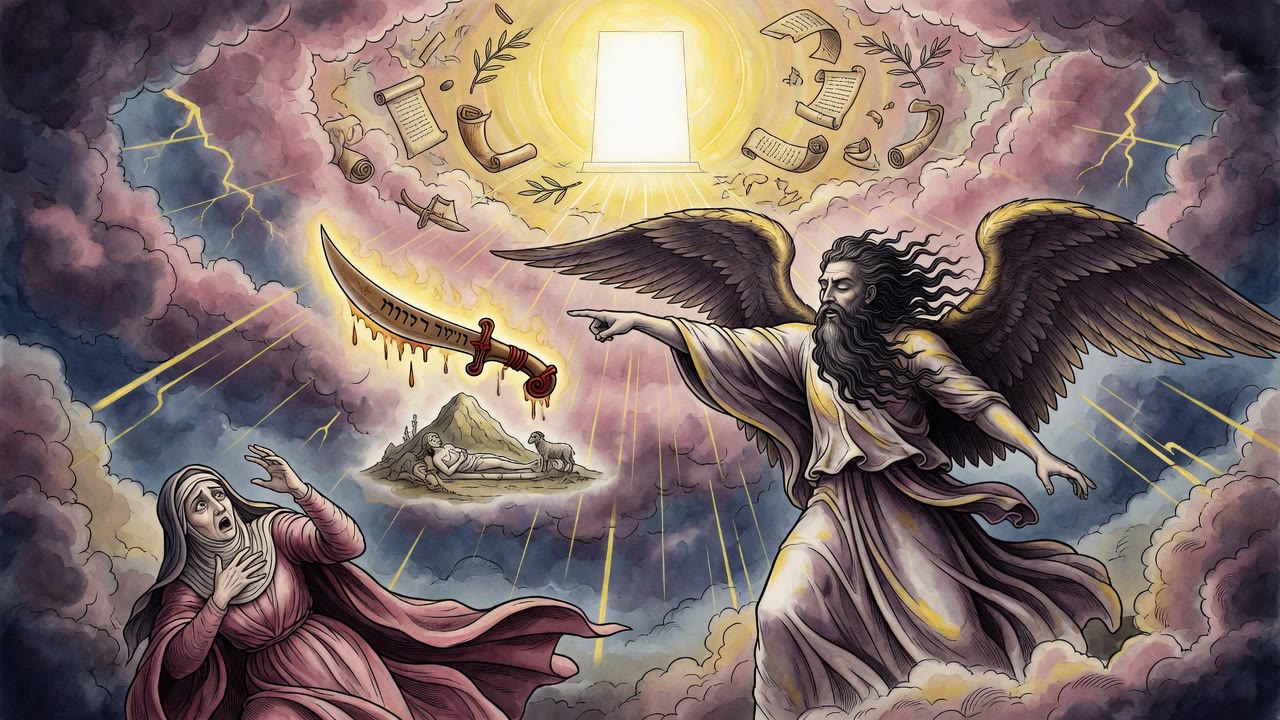
Angels watched the binding. Not from a distance, not as observers, but with the kind of attention that generates a full record. The Book of Jubilees preserves the divine perspective: Abraham's loyalty was not only being tested in front of God. It was being witnessed by heaven and recorded as evidence against the Accuser, the one who had prompted the test in the first place by arguing that Abraham's devotion was comfortable devotion, the faith of a man who had never truly been asked.
The ram appeared and was offered, its blood given in place of the boy's. The angels descended and attended, gathered close around the altar and the father and the son who had come back from somewhere none of them could follow. Abraham did not know he had won something for every generation that came after him.
The Dew That Revived Him on the Stone
The tradition says Isaac's soul returned fully, that the celestial dew revived him on the spot, the same dew that the dead will one day be raised by. It fell on the wood and on the marks the cords had left, and what had been a body without breath became Isaac again. The angels carried him to the Garden of Eden for three years while Abraham descended alone.
This is a detail worth sitting with. Abraham went home and reported to Sarah. Isaac went somewhere else first, somewhere between the altar and ordinary life, held in a place outside human time. He was kept there until he could be returned to the world as something more than a boy who had nearly been killed by his father's obedience.
What Isaac Carried Down the Mountain
When he came back, he came back changed by what he had touched. The years in the Garden had set something in him that the years on the mountain could not undo. He had crossed into death and crossed out of it again, and he carried that crossing the way a man carries a scar he cannot show.
He blessed God for reviving the dead. He knew the blessing was accurate. He had verified it himself, on a stone, under a stopped knife, with his soul going out and coming back. The words were not borrowed. They were the only true thing he could say about the thing that had happened to him.
← All myths