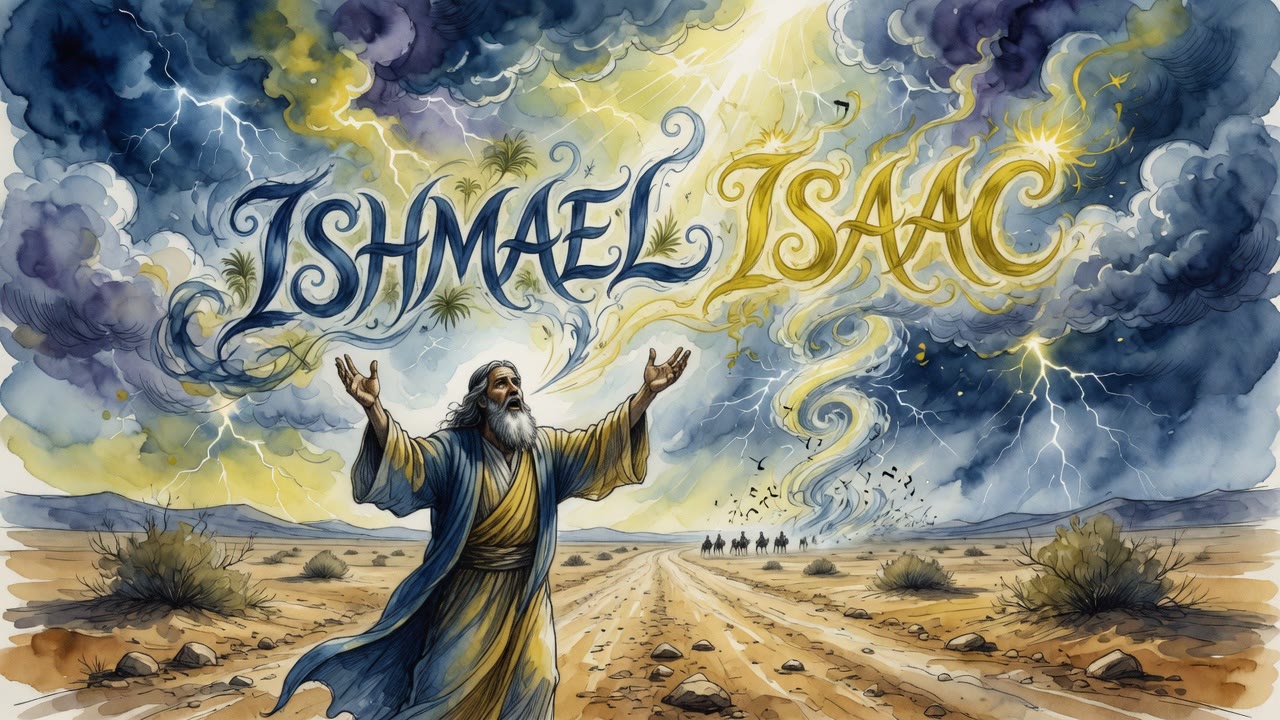
Sarah Died Twice After Satan Said Isaac Was Dead
She went looking for Isaac as far as Hebron. No one had seen him. Then an old man came back to say the first news had been a lie.
Table of Contents
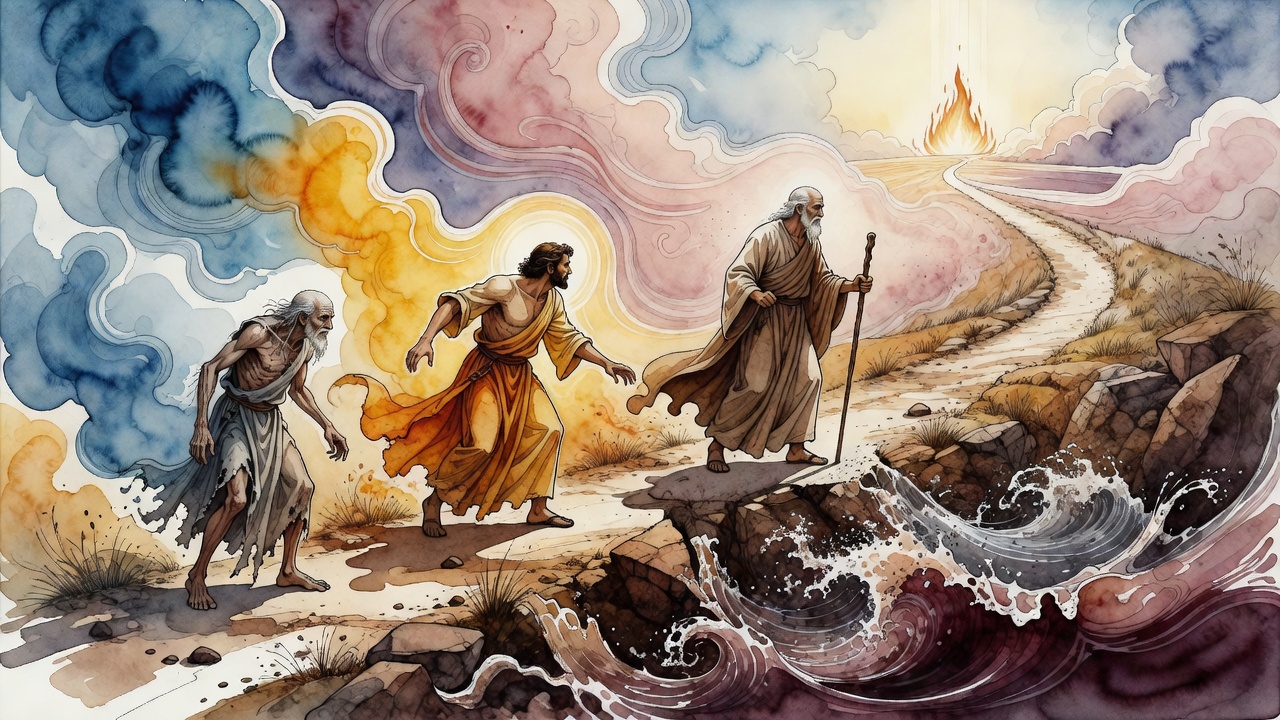
Sarah opened the door to an old man while Abraham was still on the mountain. He looked humble and weathered, the kind of traveler a woman would not shut out. He asked where her husband had gone.
 Click for full size
"To his work," she said.
"And where did your son Isaac go?"
"He went with his father to a place of Torah."
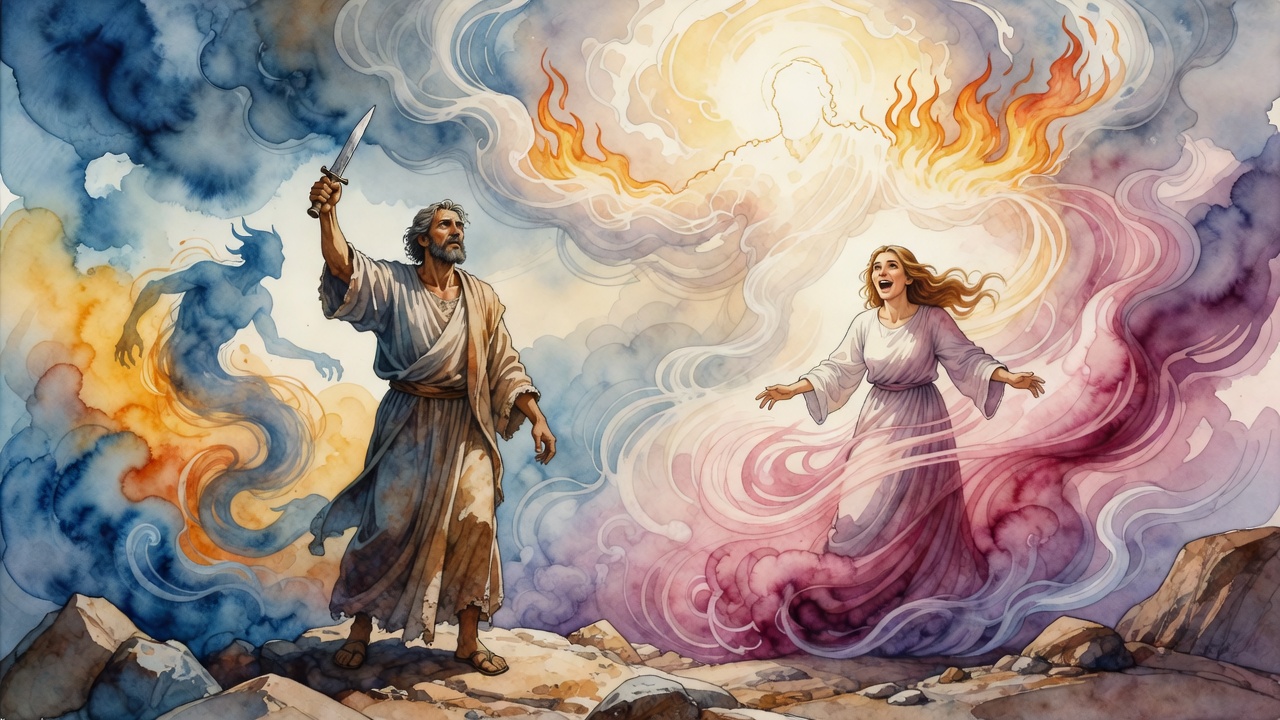
Ha-Satan (הַשָּׂטָן), the Accuser, had put on that old face. "O you poor old woman," he said. "Your teeth will be set on edge on account of your son. You do not know that Abraham took him on the road to sacrifice him."
Sarah's loins trembled. Her limbs shook. For a breath she was no more of this world.
The Knife He Described
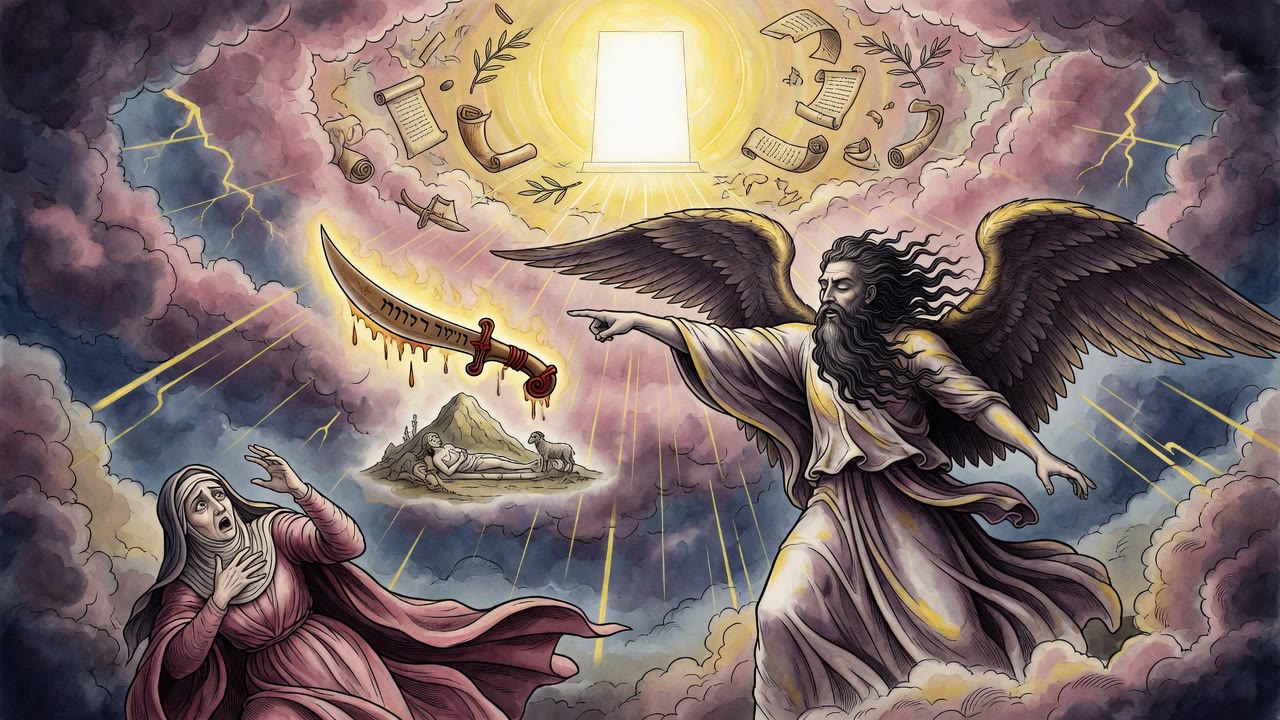
The old man did not stop at the road. He told her the rest as if he had stood at the woodpile. Abraham took Isaac, built an altar, slaughtered him, and brought him up as a burnt offering. Isaac cried and wept before his father. Abraham did not look at him. He had no compassion on him.
Then the old man went away. Sarah thought him a traveler from among the sons of men who had been with her boy that morning.
She pulled air back into her mouth. "All that God has told Abraham, may he do it unto life and unto peace." The sentence held. Her body did not. She lifted her voice anyway. "O my son, Isaac, my son. Would that I had died this day instead of you. I cried and prayed until I bore you at ninety. Now you have served this day for the knife and the fire."
She caught herself on the Name. "You are just, O Lord our God. While my eye weeps, my heart rejoices, for who can transgress Your word?"
She laid her head upon the bosom of one of her handmaids and became as still as a stone.
No News in Hebron
She rose afterward. The same afternoon had not yet turned. She went about asking for her son until she came to Hebron, and no one could tell her what had happened. Her servants ran to the house of Shem and Eber. They did not find him. They sought throughout the land. He was not there.
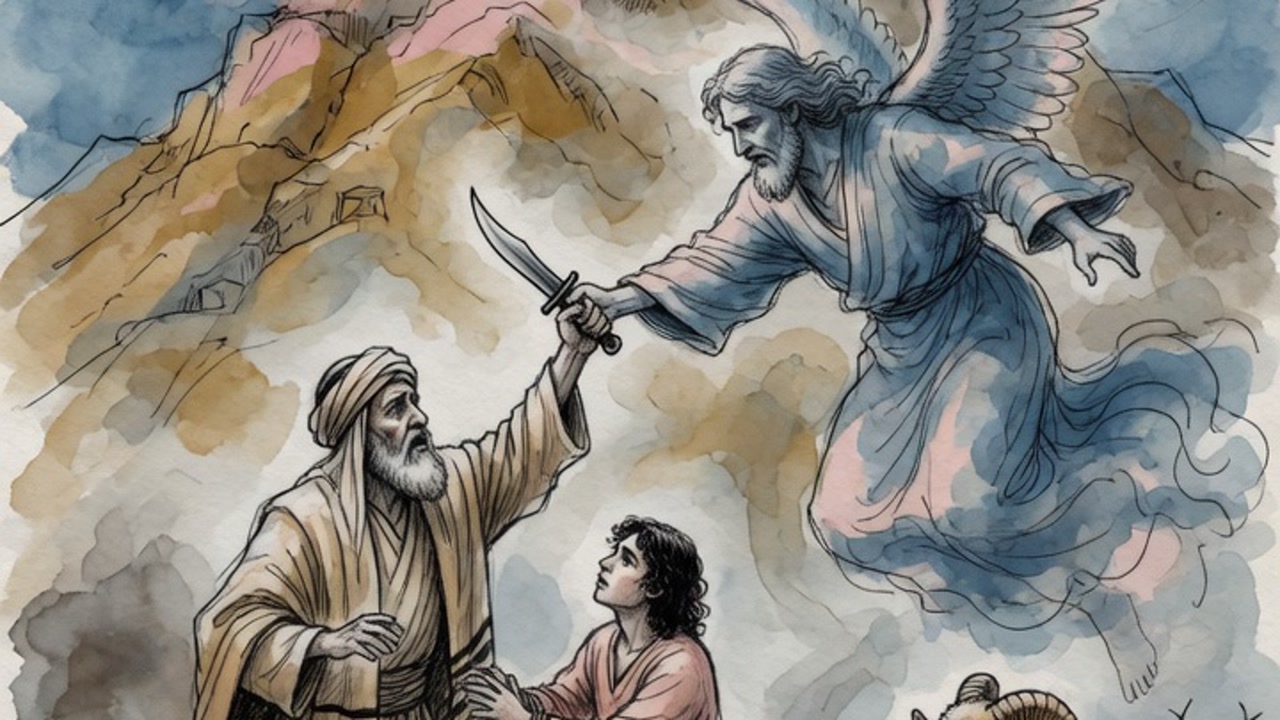
On the mountain the knife had already been stayed. Isaac's breath was still in him. Sarah did not have that hour. She had the old man's mouth, and the empty road, and a house in Hebron that could not answer.
Abraham was coming down. Angels had carried Isaac away for a while, so the father walked toward Beer-sheba alone. A wife who sees a husband return without the boy he took does not need a second witness.
The Mouth That Took It Back
Ha-Satan came again in the same old shape. "I spoke falsely unto you," he said. "Abraham did not kill his son, and he is not dead."
The joy hit her harder than the grief. It was still the same afternoon. Her soul had already left once, gone out through the cry, and come back far enough to walk to Hebron. Now it went out through joy, and this time it did not return.
Before that second blow she had also been strangled by the first. She rose, cried out, and the agony closed her throat. Abraham was still resting on the way. He had no living boy in the doorway to stop the rumor. The Accuser had only needed to arrive a little early, and then a little late.
A Grave from the Children of Heth
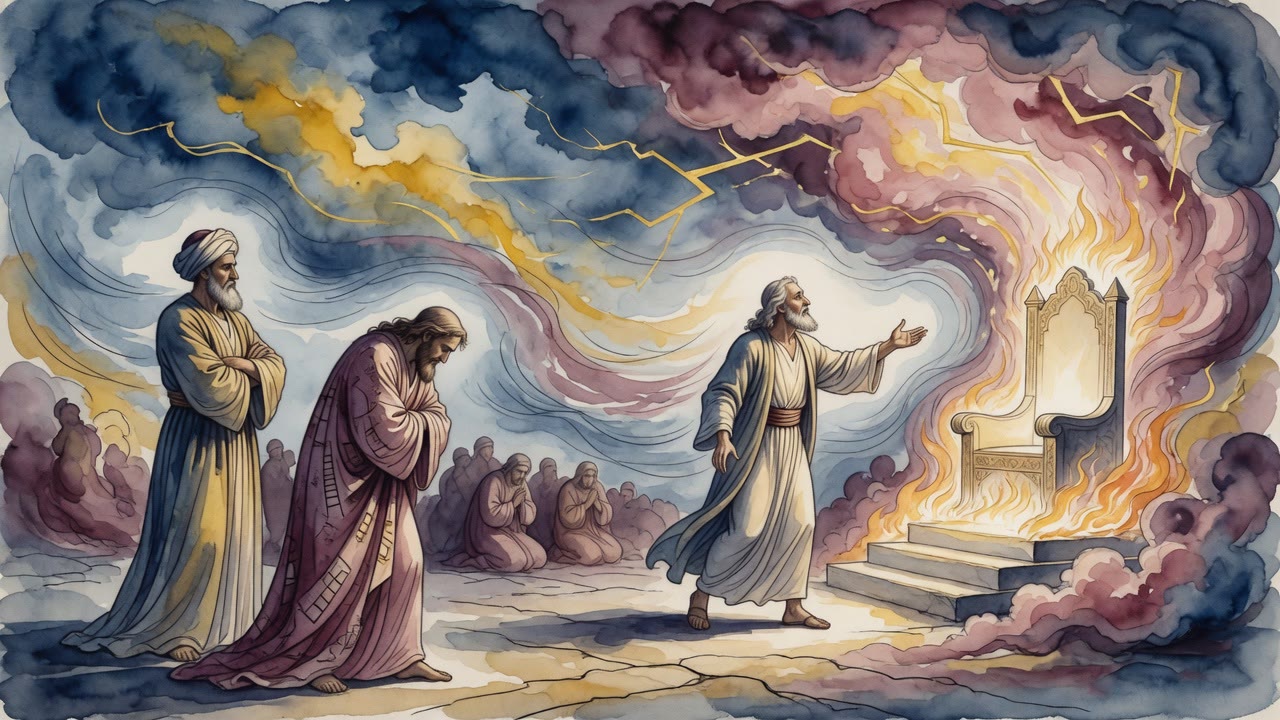
Sarah died in Hebron. Abraham went to mourn over her and to bury her. The children of Heth held the cave. He had to speak with them for a grave while the loss was still new in his mouth.
Heaven watched that mouth. The test this time was not a knife. It was whether grief would make him indignant in the words he used. He was found patient. He was not disturbed. He conversed with the children of Heth until they gave him a place for his dead.
Isaac would live. Sarah would not. The Accuser had not needed to touch her body. He had only needed an afternoon, a false slaughter, and the truth that arrived too late to keep her.
← All myths