Esau Sent Messengers With an Argument, Not a Sword
The envoys did not carry spears. They asked why Jacob envied dew when Esau had been given fat earth. They wanted to share the trouble too.
Table of Contents
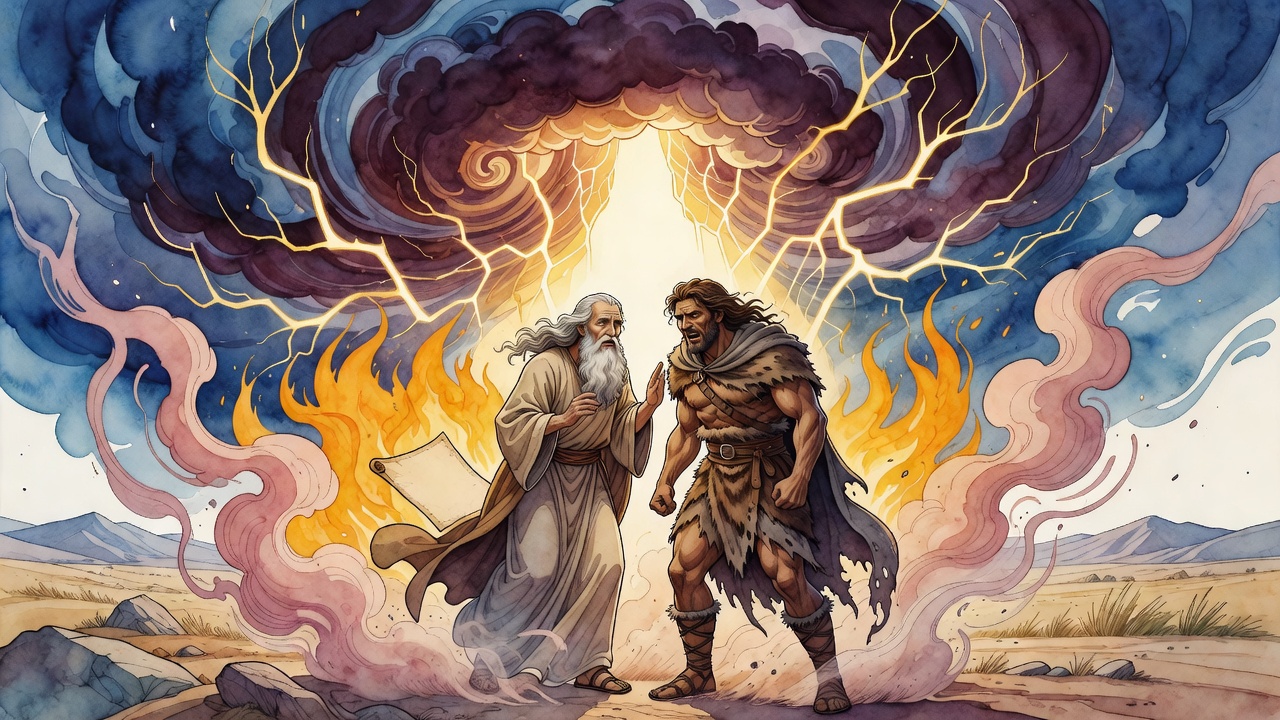
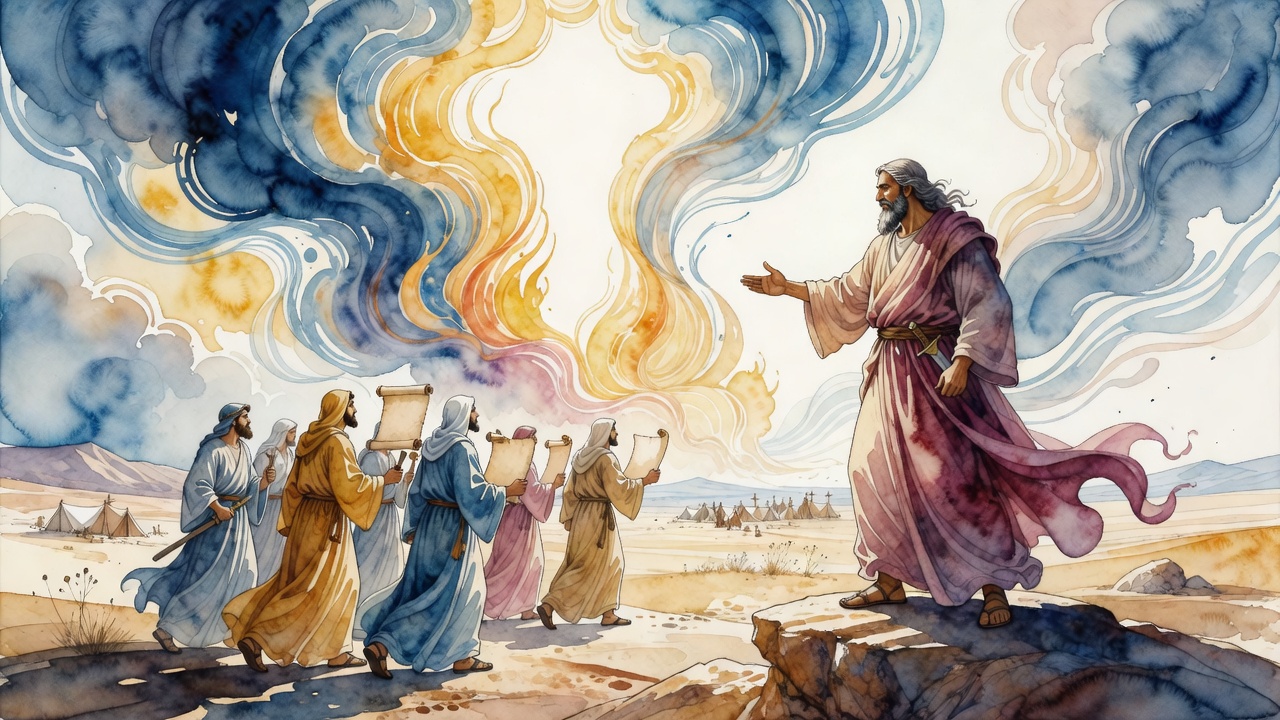
The envoys did not carry spears. They walked into Jacob's camp with a question that had been rehearsed until it was clean.
 Click for full size
"Why do you envy me for the blessing my father gave me?" They spoke for Esau. "Does the sun shine only on my land? Does the dew fall only on my fields? Does the rain stop at my border?"
Jacob heard the argument before he saw his brother's face.
The Messengers Spoke of Dew and Fatness
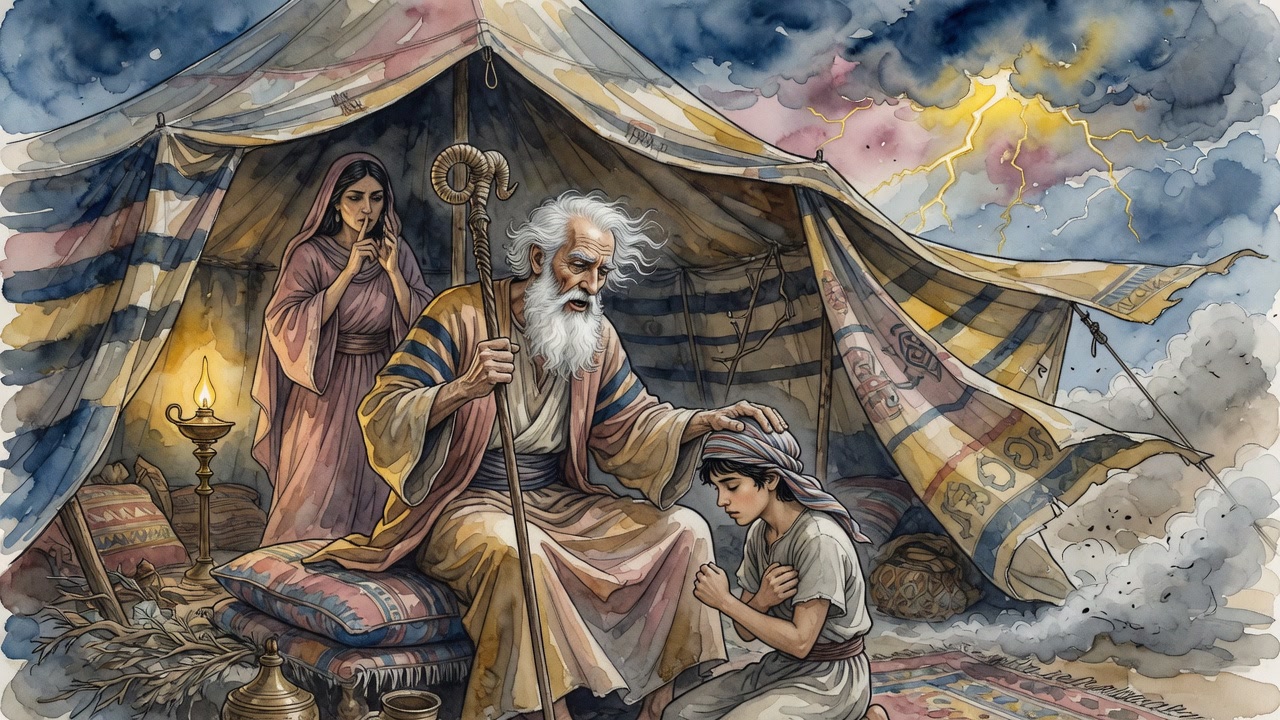
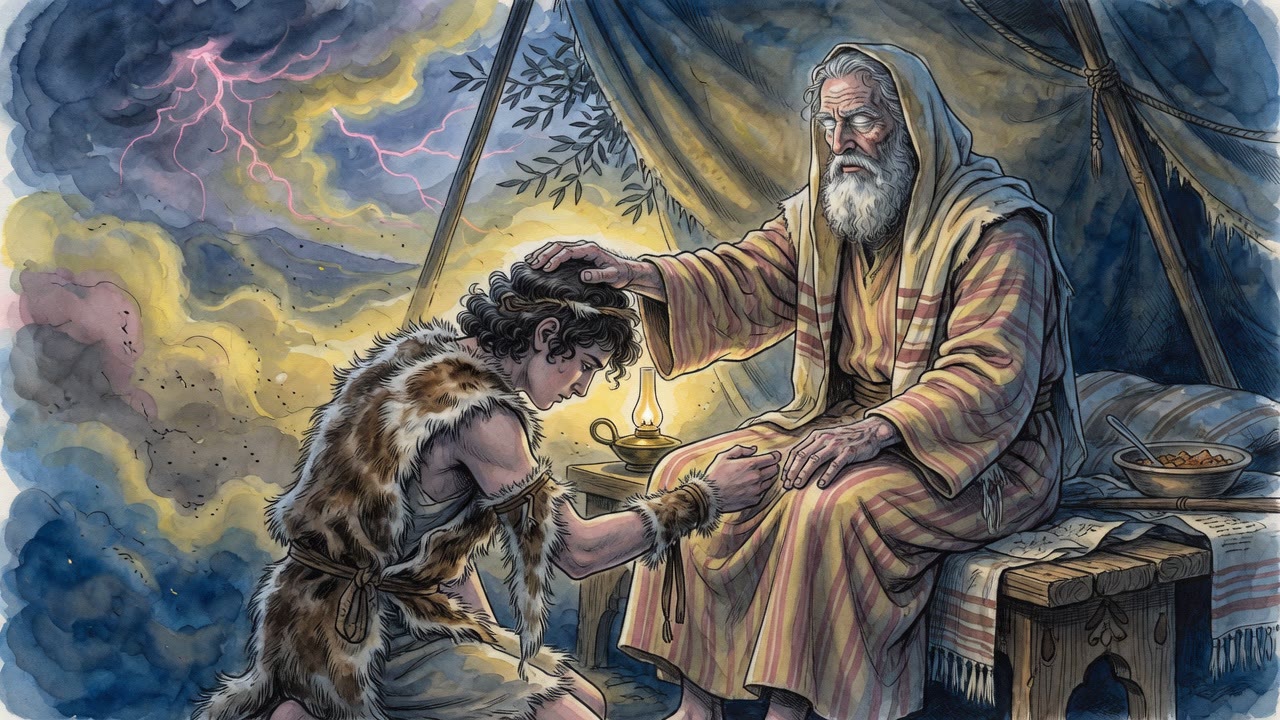
The case was this. The blessings were different, not empty on one side. When Isaac said to Jacob, "God give thee of the dew of heaven," he said to Esau, "thy dwelling shall be of the fatness of the earth" (Genesis 27:28, 27:39). When he said to one son, "peoples shall serve thee," he said to the other, "by thy sword shalt thou live."
Two destinies. Two kinds of plenty. One son would live by covenant and harvest. The other would live by blade and territory. The sun, said the messengers, shines on both.
A man who had sold his birthright in a hunger-hour, then heard his blessing go to the wrong brother while his father still smelled of the food, had grounds to cry theft. Esau's messengers did not cry theft. They argued proportion. They did not demand the blessing back. They said it was still present, shaped another way. Jacob stood in the dust of his own camp and listened to a case built from their father's mouth.
Jacob Would Not Share the Trouble
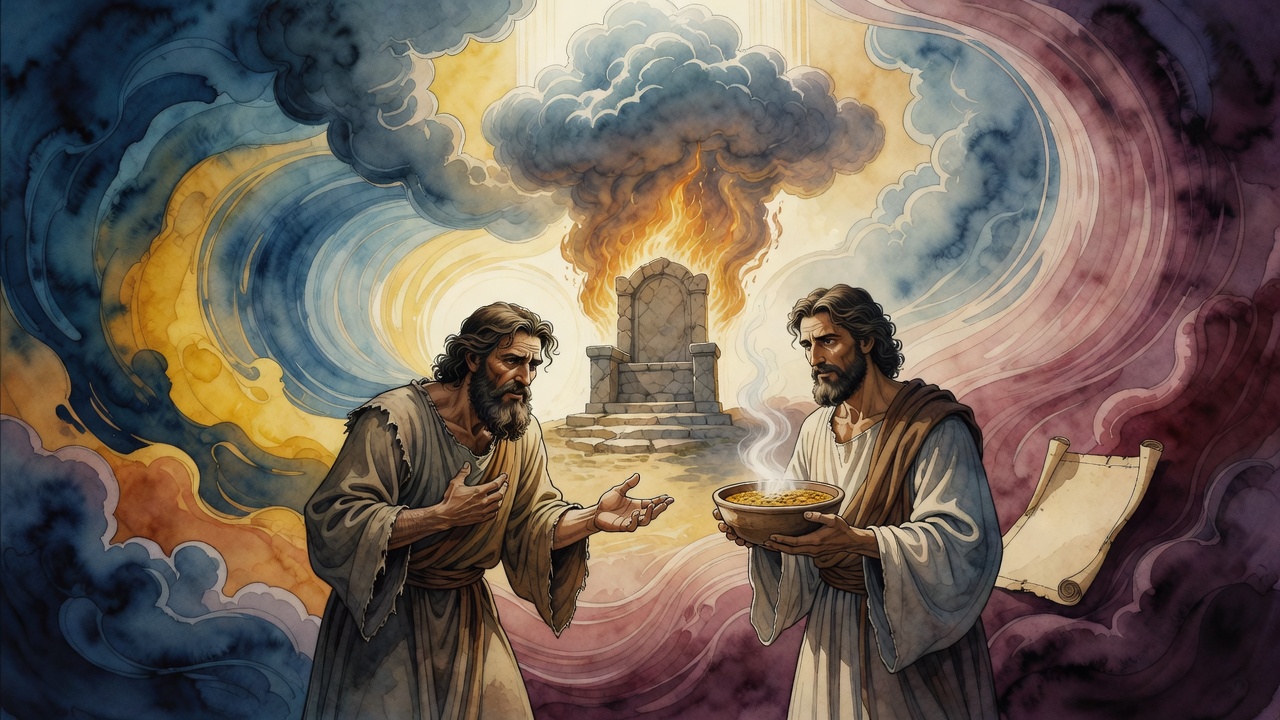
Then the offer. "Come now. Let us set up a covenant between us. We will share equally all the vexations that may come."
Not the wealth. The trouble.
Two men with different destinies could at least carry grief alongside each other. Whatever came for Jacob, Esau would bear half. Whatever came for Esau, Jacob would bear half. Brothers who could not occupy the same blessing might at least share the same suffering.
Jacob did not accept. The record does not give his words of refusal. It gives the silence after the proposal, and the absence of the covenant. The messengers waited. No oath was spoken. They turned and left. Esau moved to the hill country of Seir. The distance between them grew into the distance between nations.
Israel Lifted Its Eyes to Esau's Mountains
Centuries piled up. Esau's line became Edom. Edom became the name for every empire that stood against Israel. Soldiers entered Jerusalem with torches. One of them walked into the Temple with a sword and dragged the blade across the stones until blood ran along the floor. He left boasting that he had killed inside the house of God (Lamentations 1:16).
Israel looked toward the mountains. "I lift my eyes to the mountains" (Psalm 121:1) was not a calm prayer. It was a prayer about living under weight. The mountains were the empires rising on every side. Fathers could not protect sons. Brothers could not help brothers. The people turned to their Father in Heaven. "For You are our Father" (Isaiah 63:16).
God's answer was direct. "I cannot forget you" (Isaiah 49:15). The way a mother cannot forget a nursing child. The covenant with Jacob held because it did not depend on Esau's behavior. Esau's line had done what it did. The promise was not canceled by what his descendants destroyed.
First Out of the Womb, First in the Reckoning
Esau came out of the womb first. Red, covered in hair, named for what he looked like. Jacob came second, gripping the heel (Genesis 25:25). That birth order did not stay in the tent. It became the order of restoration.
God will deal with wicked Esau first, the one called "first" from the beginning. Then the Temple rises, "the throne of glory, exalted from the first" (Jeremiah 17:12). Then the king arrives at Zion, "the first to Zion, behold, they are here" (Isaiah 41:27). The brother who was given the sword for an inheritance still stands in the line of what comes after. His accounting comes first because he emerged first.
Under Edom's mountains, Israel waited for that first. The shared trouble Esau had offered was never sworn. The nations carried the vexations alone. The cry Esau had made when the blessing left him (Genesis 27:34) stayed in the record, loud and bitter, while the messengers' clean argument waited without an answer, and the firstborn waited at the end of the line he had opened with his own birth.
← All myths