The Furnace Bloomed, the Yod Cried, the Father Spoke
Nimrod piled the wood high enough to flatten a city. The logs put out fruit. His princes fell on their faces and named Abraham's God.
Table of Contents
King Nimrod wanted a clean death. He had Abraham bound. The furnace was stoked. The wood was piled high enough to flatten a city.
 Click for full size
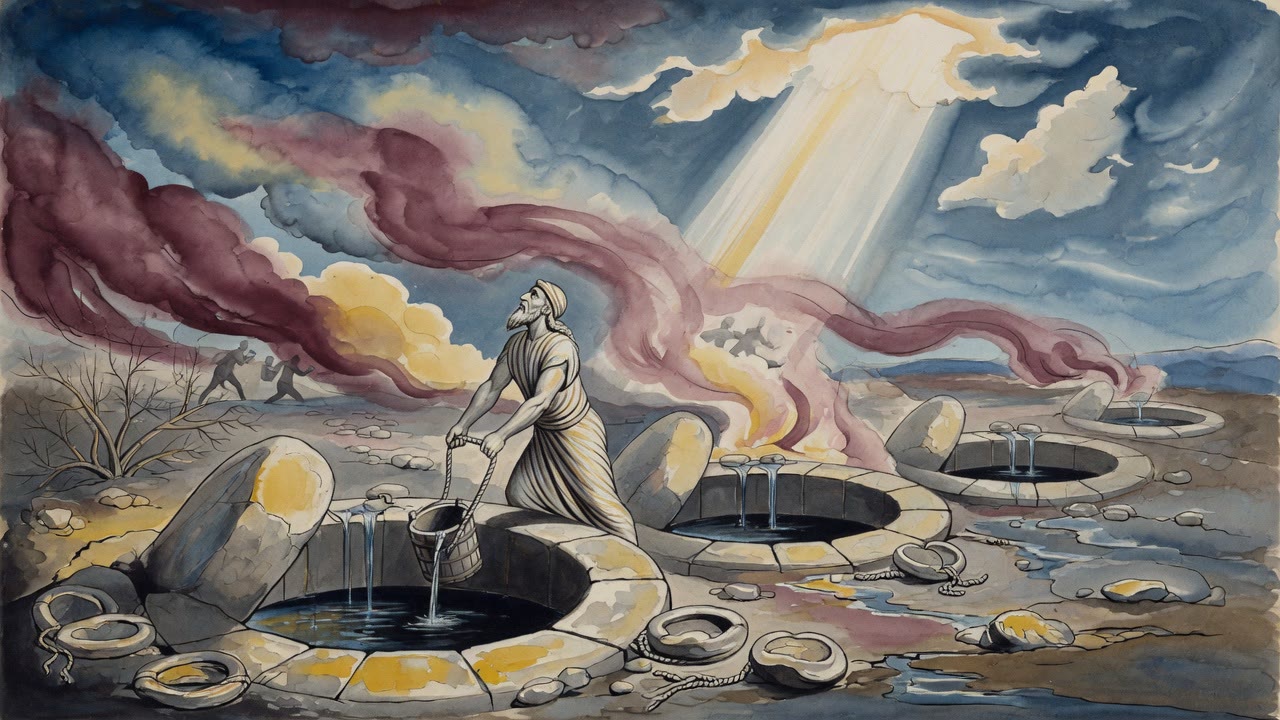
No water was needed to kill the fire. The logs put out buds. Each kind of wood became its own fruit tree, and the furnace turned into a garden, a gan eden (גן עדן), with angels sitting beside Abraham among the fruit.
The Logs Put Out Fruit
Abraham sat in the heat that was no longer heat. Figs where there had been fuel. Vines where there had been kindling. The angels did not snatch him out. They sat with him, as if the garden had always been the point of the wood.
The crowd saw a man who should have been ash eating fruit in a king's furnace. Nimrod saw a public loss. He did what a king does when the world refuses his sentence in front of witnesses. He named it a trick.
Nimrod Called It Witchcraft
"Great witchcraft," Nimrod shouted. "You make it known that fire has no power over you, and you show yourself to the people sitting in a pleasure garden."
His own princes stepped forward before the crowd could take that word as law. They spoke with one voice. "This is not witchcraft. This is the power of the great God, the God of Abraham, beside whom there is no other. We acknowledge that He is God, and Abraham is His servant."
Then the princes and the people believed in that hour. They cried out, "The Lord He is God in heaven above and upon the earth beneath; there is none else." Abraham walked out unburned. Nimrod still had a furnace. He no longer had a people who would call the garden a trick.
The man who walked out of that fire had a wife whose name was about to change. The line would go on. Even the smallest mark in her name would refuse to be thrown away.
The Smallest Letter Would Not Be Thrown Away
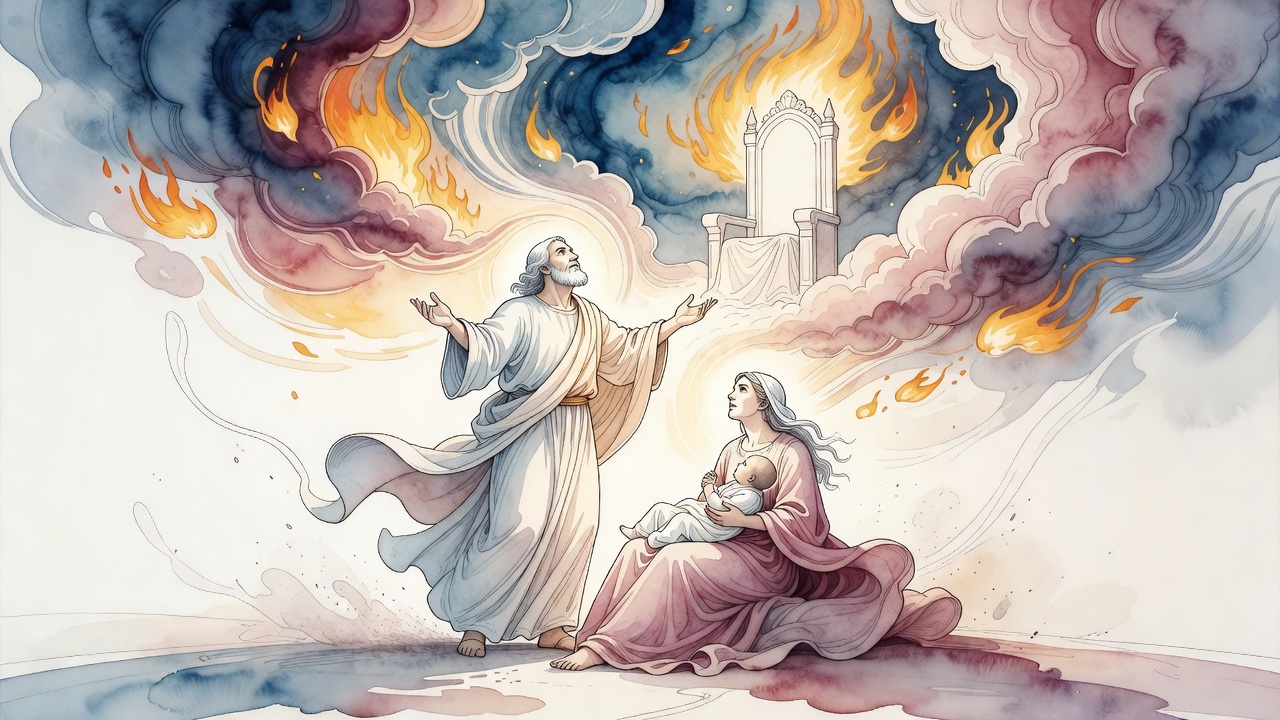
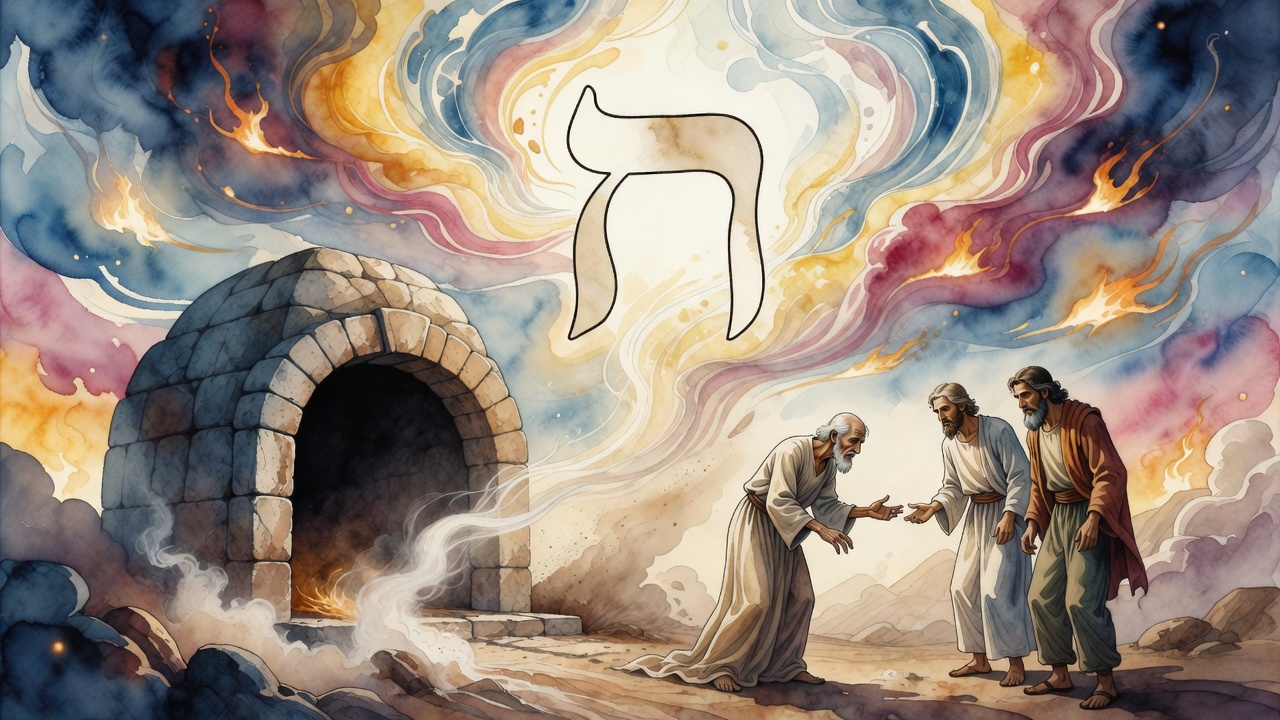
When God changed Sarai to Sarah, He took the letter yod (י) from the end of her name. The yod did not go quietly. It was the smallest of the letters, and it had lived in a righteous woman's name since she was called Sarai. It flew about the celestial Throne and lamented.
"Is it because I am the smallest among the letters that You have taken me from the name of the pious Sarah?"
God quieted it. "Formerly you were in a woman's name, and at the end of it. I will affix you to a man's name, and at the beginning."
The letter waited. Years later Moses took Hoshea son of Nun and set that same yod at the front of him, and the man who would bring Israel across the Jordan was called Joshua. The smallest letter that had been evicted from Sarah led a name into the land Abraham had been promised while he sat among fruit that had been firewood.
Isaac Called Both Sons to the Bed
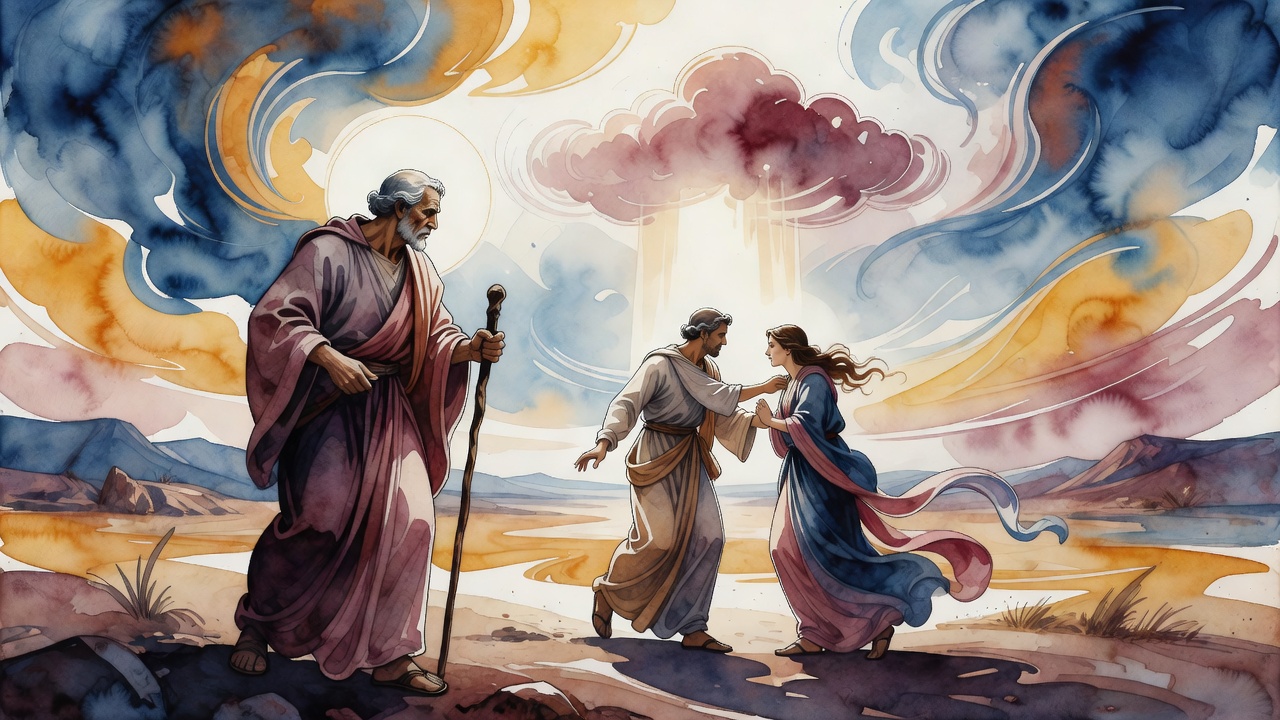
Isaac felt his end coming. He called Jacob and Esau to him. He did not begin with the herds. He did not divide the tents. Those fights had already done their work. He wanted a charge that would outlast his breath.
The room smelled of a dying man and of two sons who had not learned how to stand in the same light. Isaac had felt the wrong arms under his hands once. He had heard, later, how close a brother's rage can come to murder. He had time left for one adjuration, not for a court.
Love Your Brother, or Perish
"I adjure you by the exalted Name," Isaac said, "the praised, honored, glorious, immutable, and mighty One, who hath made heaven and earth and all things together, that ye fear Him, and serve Him, and each shall love his brother in mercy and justice, and none wish evil unto the other, now and henceforth unto all eternity, all the days of your life, that ye may enjoy good fortune in all your undertakings, and that ye perish not."
Not a ruling. A last wish with the Name in it. Love, or at least no evil wished. Mercy and justice between two men who had already practiced the opposite. He blessed them. Then he died between them.
Abraham had walked out of a furnace because God would not let a king's fire finish the line. A letter had refused to be waste, and it had been given a better place. Isaac used his last air to keep the line from tearing itself. They were present. They heard him. Isaac's mouth closed. Two living sons were left with the charge.
← All myths