Abraham Rode to See Ishmael and Never Got Off the Camel
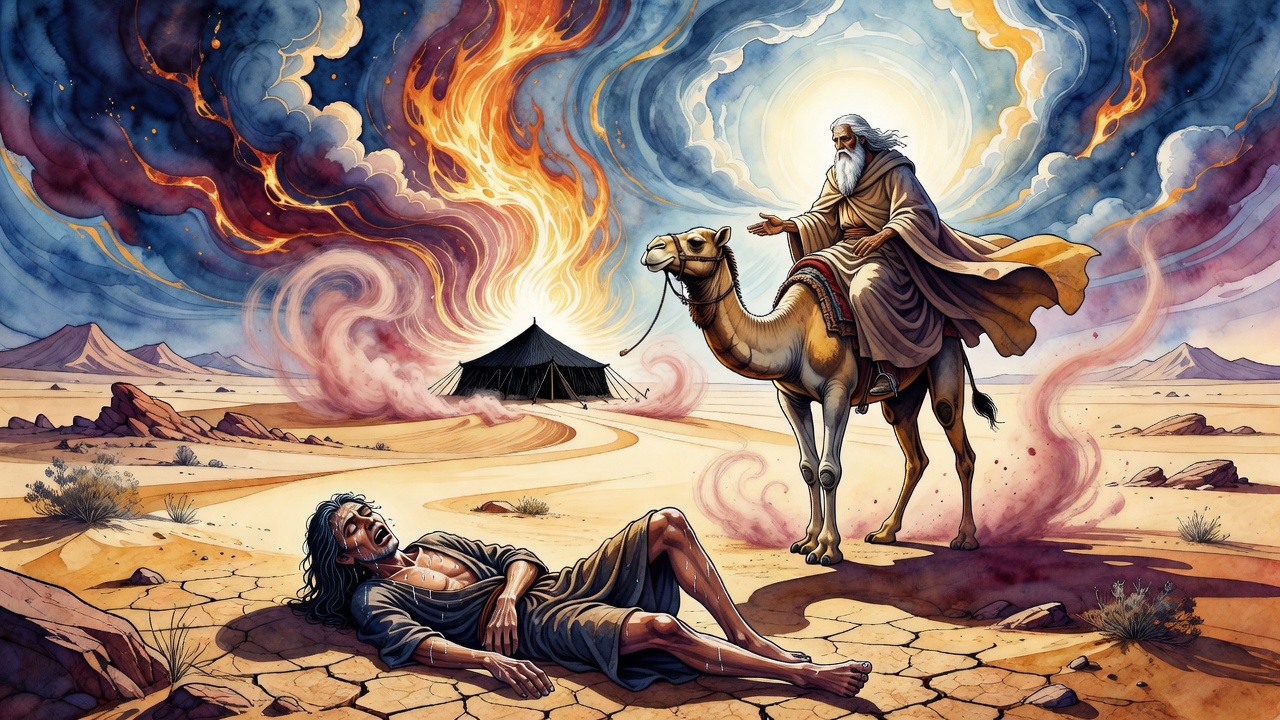
Sarah named the price before he left. See the boy. Stay in the saddle. He rode into Paran with that vow locked in his knees.
Table of Contents
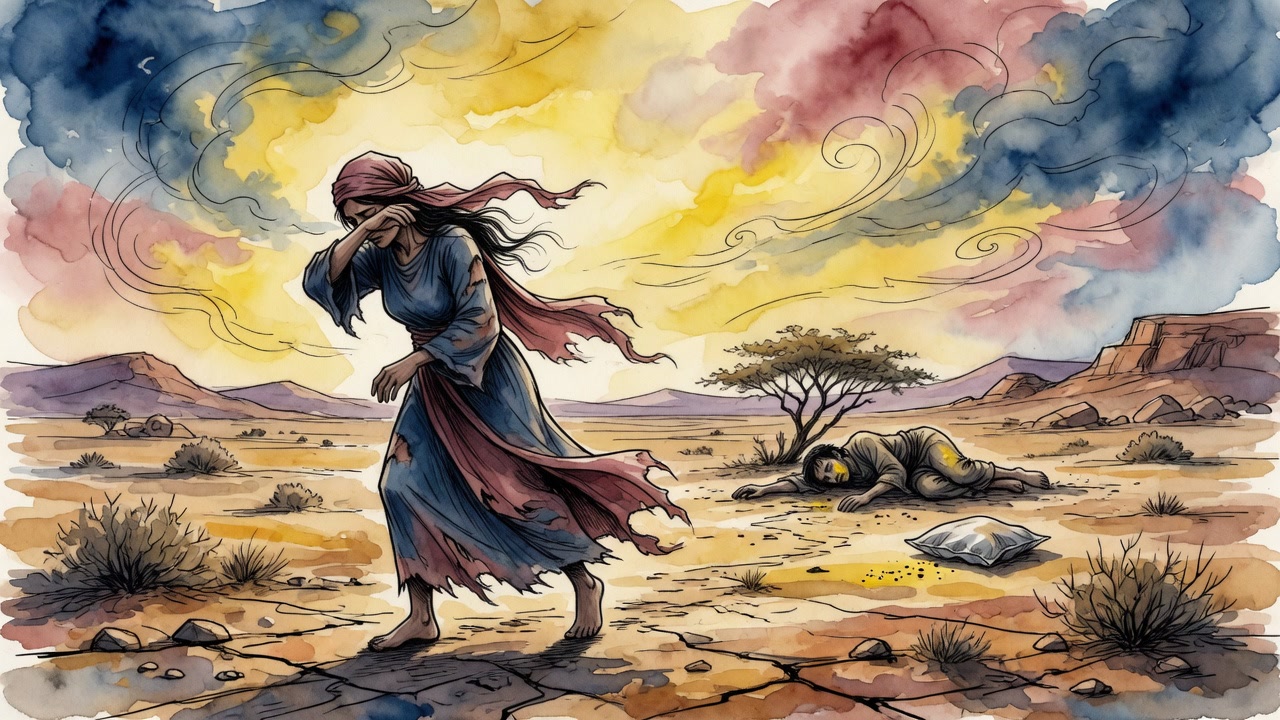
The worst day was not the furnace in Ur. It was not the road out of Haran. It was not even the knife above Isaac, which ended with a ram in the thicket. The day Sarah sent Hagar away ended with nothing. No substitute stepped out of the brush. Abraham wrote her a bill of divorce, tied a length of cloth around her waist as a legal marker, and watched his firstborn walk into the desert holding a waterskin.
 Click for full size
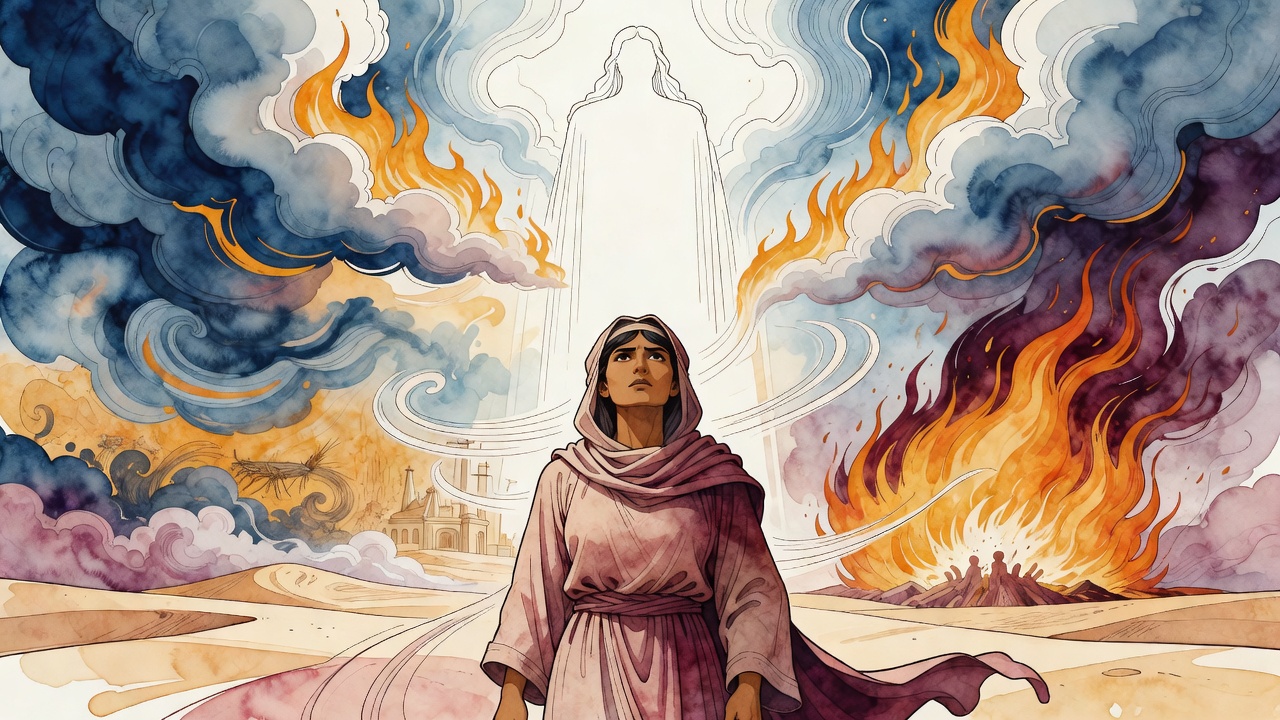
He had already asked God to let the boy live. "O that Ishmael might live before You," he had said (Genesis 17:18). God had promised a nation from that son. The promise did not make the sending easier. It made the empty road worse.
The Price of the Ride
Ishmael had been a boy with a waterskin. By the time Abraham told Sarah he was going to look for him, Ishmael was a man with sons and tents of his own, somewhere in the wilderness of Paran. Abraham said it plainly. He yearned to see him. He had not seen him in a long time.
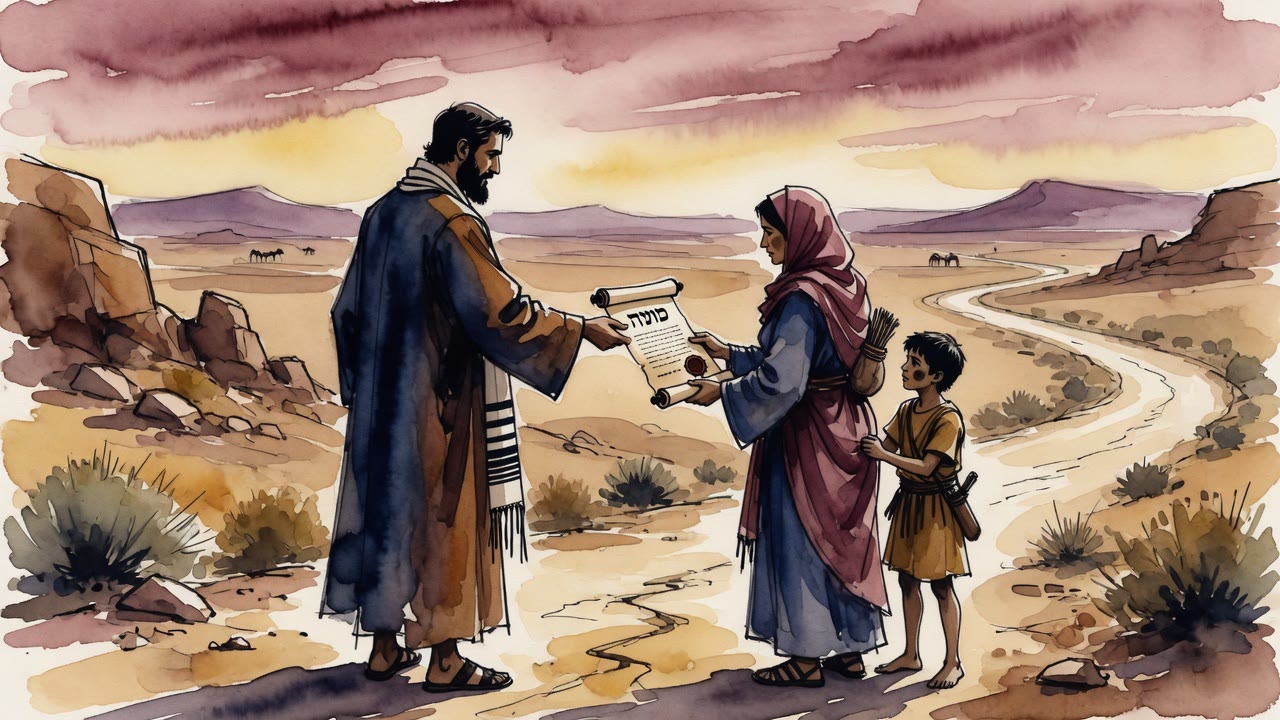
Sarah looked at him. She named the price before he saddled.
"You may go," she said. "You may not get off the camel."
He took the vow into his knees. He rode. The camel's gait worked the old joints, and still he did not plan to step down. Sarah had kept the house. She would not have the first wife's camp claim him, even for an hour, even for a son's face.
The Woman at the Tent Door
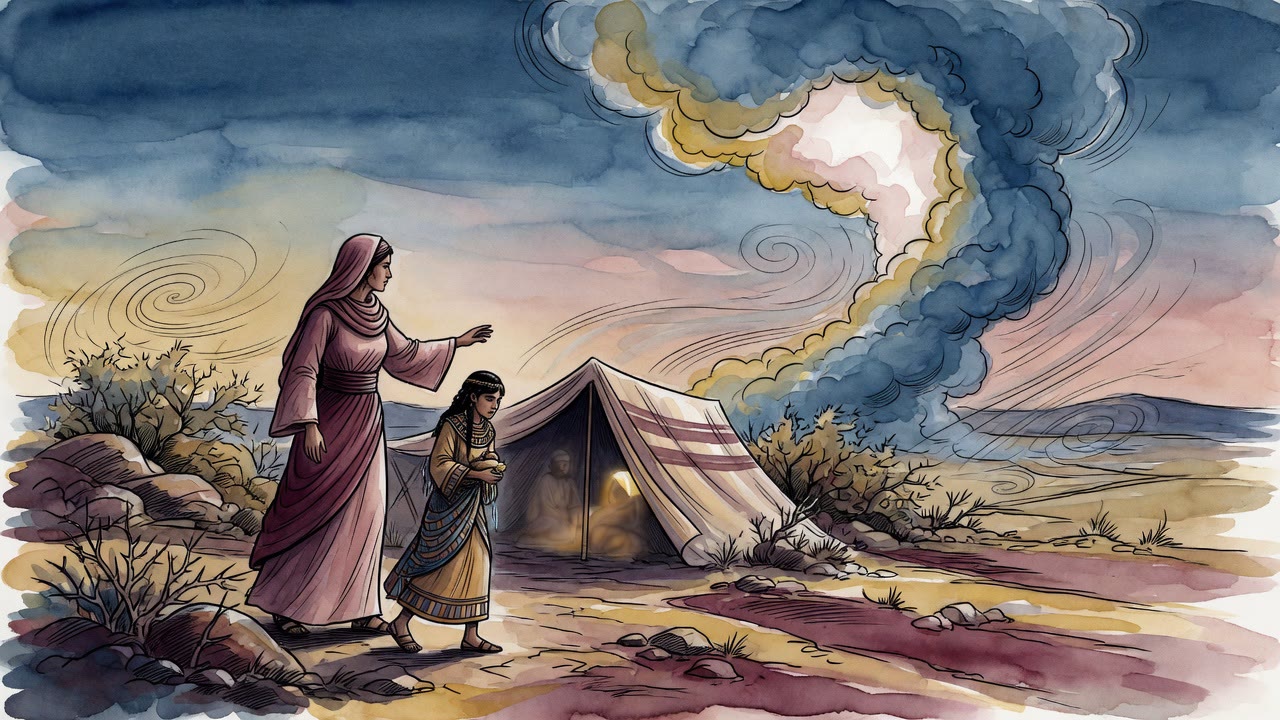
He found the camp around midday. Ishmael was not there. He was out hunting, tending camels, somewhere beyond the visible edge of the tents. A woman came out. She was Ishmael's wife, a Moabite he had married in the wilderness.
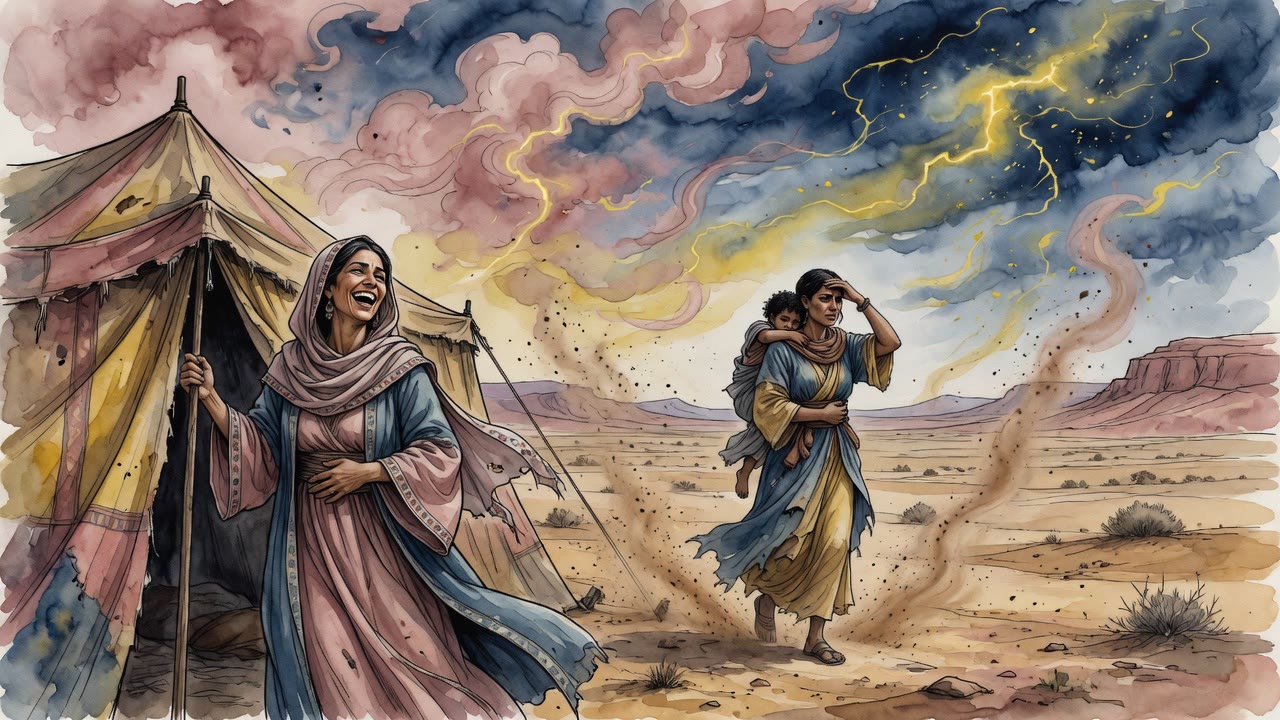
Abraham stayed on the camel. He asked after his son. The woman complained. She told the old man on the camel how hard it was, how little they had, how the desert ate them, how exhausting everything was. She invited him in. He declined.
The camel shifted under him. He could have swung down. The vow held.
"When your husband comes home," he said, "give him a message from an old man who passed by. Tell Ishmael the peg of his tent is not good. He should find a different one."
He turned the camel around and rode back toward Canaan. He had come all that way and had not seen his son's face. He had seen the door. That was enough to judge the house.
Ishmael Heard the Peg
When Ishmael came home and heard what the man on the camel had said, he knew at once. The peg of a tent means the wife. His father had come, seen the woman he had married, and judged her. The message was: divorce her.
Ishmael divorced her. He married again, a woman named Fatimah, from the house of his mother's people. She came from Egypt the way Hagar had come from Egypt. The tent changed its peg.
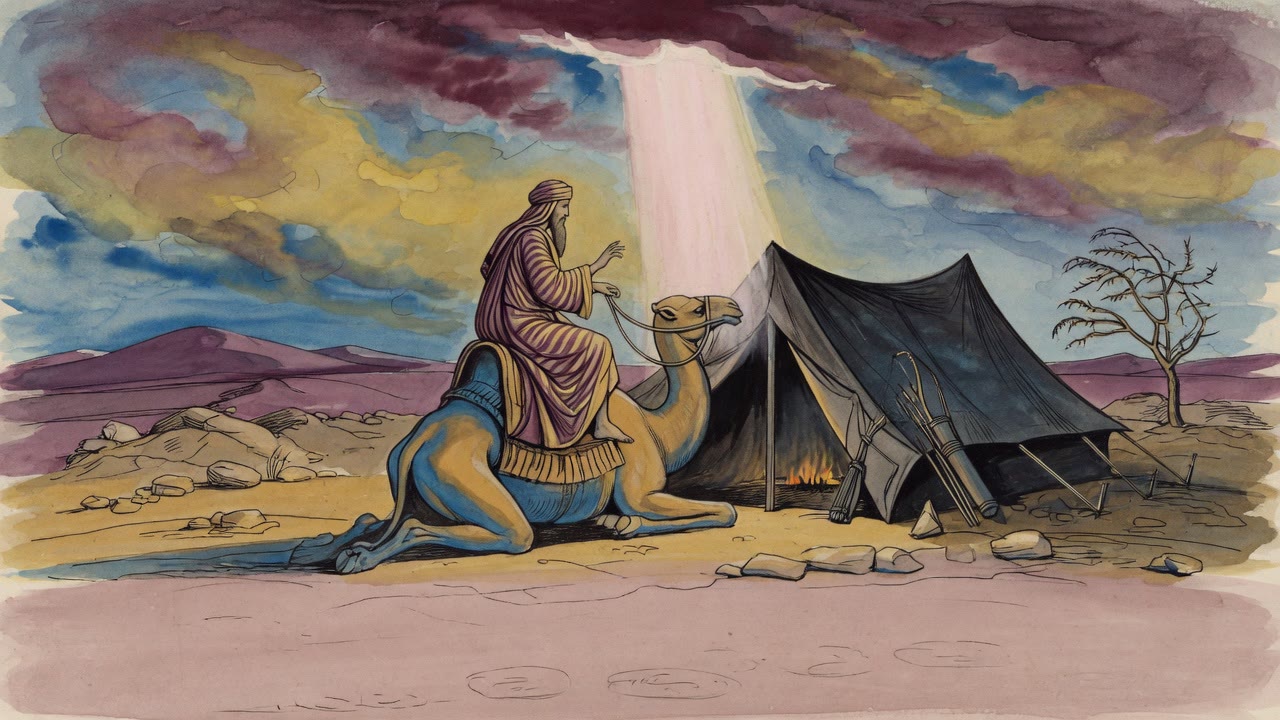
Three years later Abraham rode out a second time. The same vow sat in the same knees. Ishmael was gone again. This wife came out of the tent and offered water. She offered bread. She spoke about the camp with gratitude, with enough, with warmth. Abraham stayed on the camel. He asked her to bring him something to eat, because a man who had ridden since morning had a right to rest his bones a little, even if he could not dismount.
She brought food and water. He ate in the saddle. The bread tasted of a house that knew how to open.
When he was done, he told her, "When your husband comes home, tell him the peg of his tent is very good. He should keep it."
Bread on the Camel
Ishmael came home to a blessing this time, not a sentence. He kept Fatimah. The wilderness of Paran held a tent whose door would feed a stranger without first counting the cost. Abraham rode back to Sarah with that news locked in his mouth, and he still had not set a foot on his son's sand.
The camel knew the road better than the father did. Two visits. Two messages. No embrace. Hospitality had been the test, because hospitality had always been Abraham's own law. A son who shut the door was not yet his son in the way that mattered. A son whose wife poured water was a son he could bless from the height of a saddle.
Two Sons at One Table
Years later the road reversed. Ishmael came to Hebron. Isaac was already there. They sat together and ate. Isaac offered a burnt offering on the altar Abraham had built in that place years before. Abraham blessed both of them. No coded peg. No wife at the tent door. An old man with two sons at the same table, and all the years between them folded into a meal.
When Abraham died, they buried him side by side at Machpelah. Ishmael's name first. Isaac's name second. The firstborn had been restored to his place in the list, if not in the land. At the grave the order of the tent was corrected.
The camel was not there. The vow had done its work and gone. What remained was a cave, two brothers, and a father who had stayed in the saddle long enough for the house to learn how to open.
← All myths