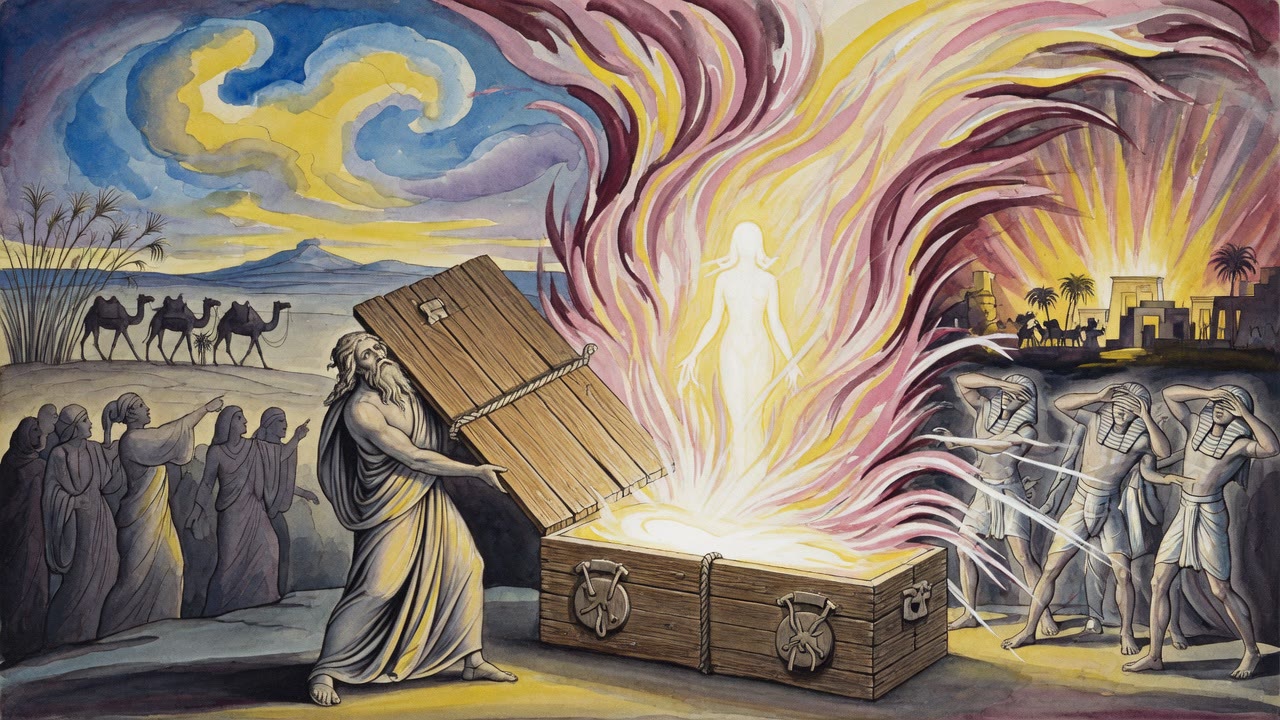
Abraham's Dream by the Nile and What Pharaoh Paid for It
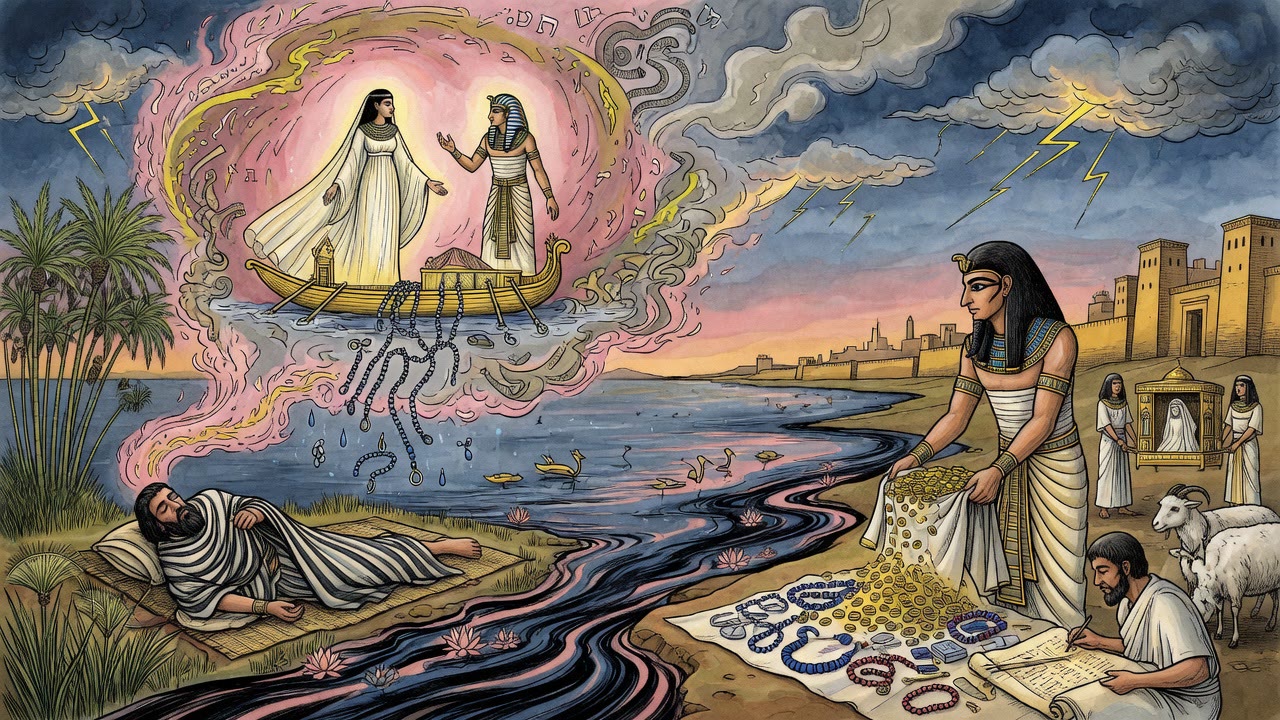
Hebron had no bread left in the famine. At a branch of the Nile, a palm spoke in Abraham's sleep and bargained for the cedar beside it.
Table of Contents
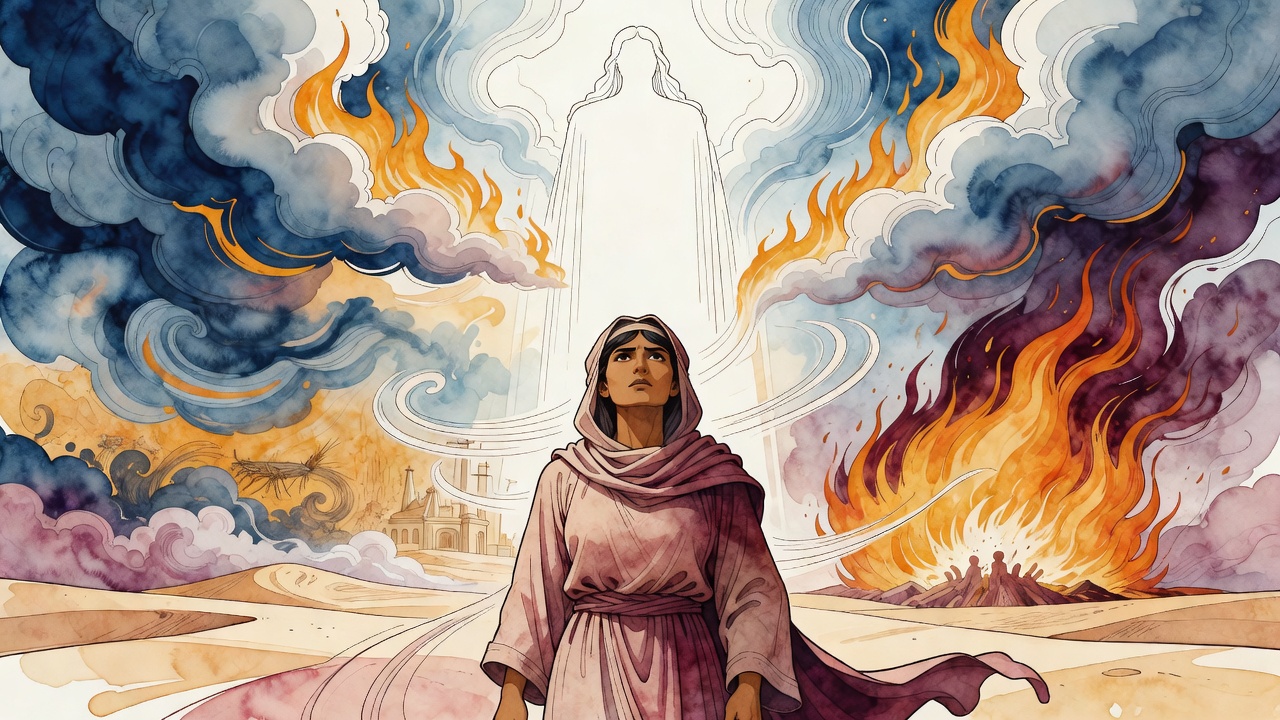
Hebron had given out. The hills of Canaan held no reason to stay. Abraham and Sarah walked until the land promised to them ran out, and then they walked farther, until one of the seven branches of the Nile lay in front of them, wide and slow, and they were too tired to guess what waited on the other side.
 Click for full size
That night Abraham dreamed.
The Palm Speaks for the Cedar
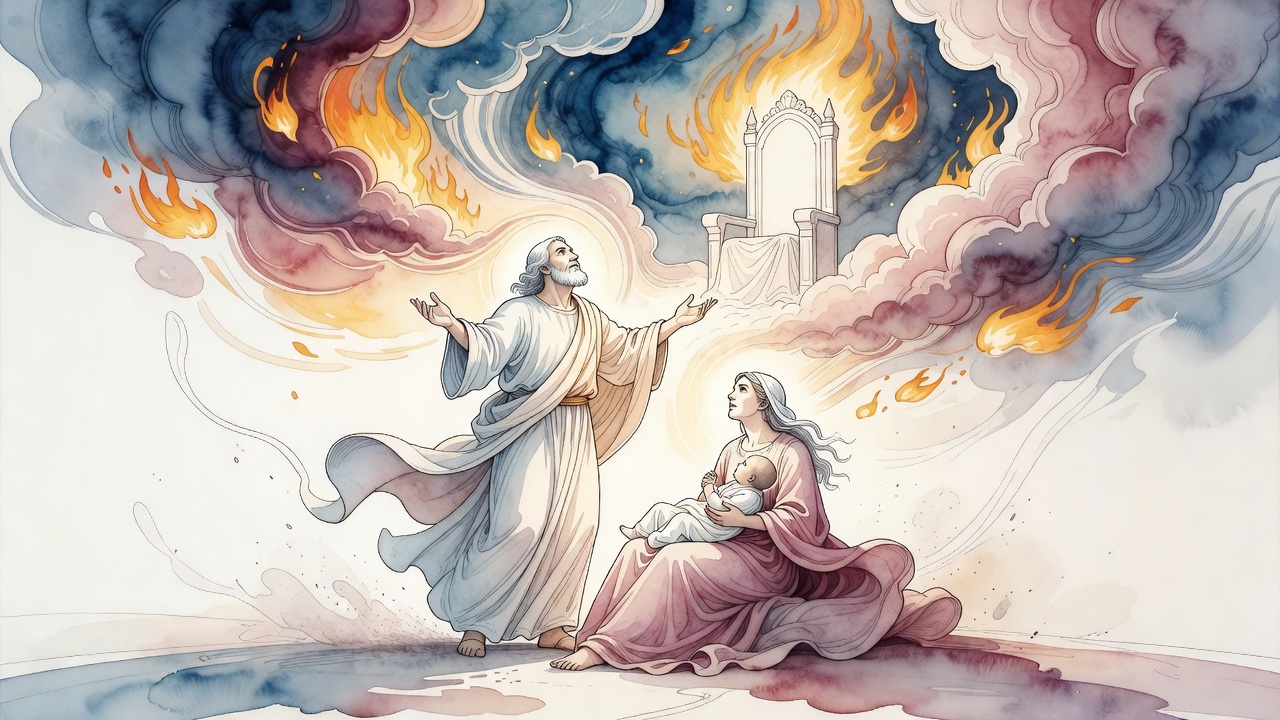
Two trees grew from one root. A cedar. A palm. They had been growing that way as long as either of them had existed, two different trunks sharing a single hold in the earth.
Men came with axes. They wanted the cedar.
The palm spoke. "Do not cut it down. We share the same root. If you take the cedar, you take what I cannot live without."
The men with the axes stopped. The cedar stayed standing.
Abraham woke afraid. He did not need a priest to parse it. He was the cedar. Sarah was the palm. The men were Egyptians. The voice in the palm, the one that saved the cedar by pleading their shared root, was God.
Call Yourself My Sister
He shook her before the border. "I know what is coming. They will want you. They will try to cut us apart. Tell them you are my sister, so they will treat me well because of you. If they think you are my wife, they will kill me to have you."
The lie was not fully a lie. Sarah was his half-sister, daughter of the same father from a different mother. He had seen the dream and still made a plan. He did not lie down and wait for the axes to change their minds on their own.
Years earlier God had said Lekh Lekha (לך לך), go forth, leave land and father's house for a country not yet shown (Genesis 12:1). They had gone. Famine had shoved them one country farther than the first command named. The palm in the dream was the only map he had left.
The Courtiers Write Her Down
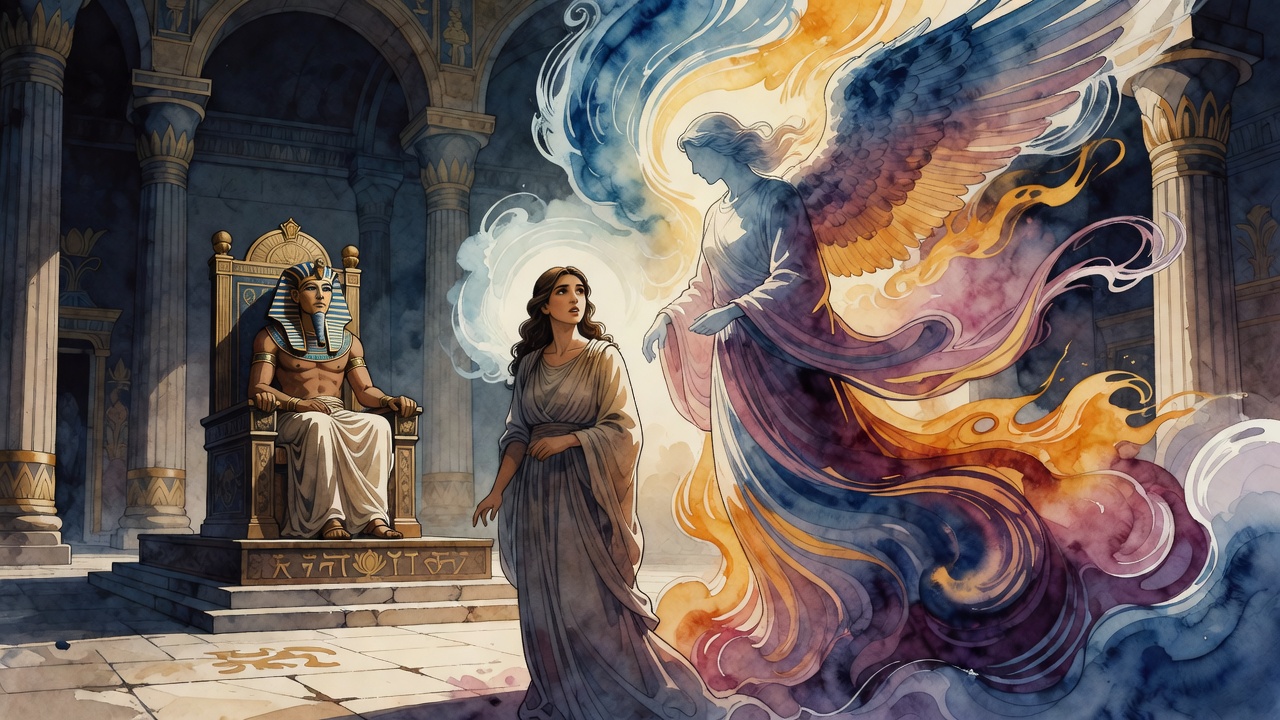
Egypt noticed Sarah the way a court notices a jewel that does not belong to it. The courtiers did not only stare. They wrote. Face, eyes, hair, the way she walked. Their reports went up to Pharaoh as if beauty were a kind of tax record, each line another reason to summon her.
Pharaoh sent for her.
Abraham was not killed. He was treated well because of her, exactly as the plan had said. Flocks. Servants. Silver. Gold. He lived in the court while his wife lived in the palace, and the arrangement sat on him like a stone he had chosen and could not put down.
Two Years Behind Palace Walls
The months stacked. Abraham counted them. Sarah was a wall away and then a set of rooms away, and the gifts kept coming as if payment could make the theft look like hospitality.
He prayed at night. He did not pray for more silver.
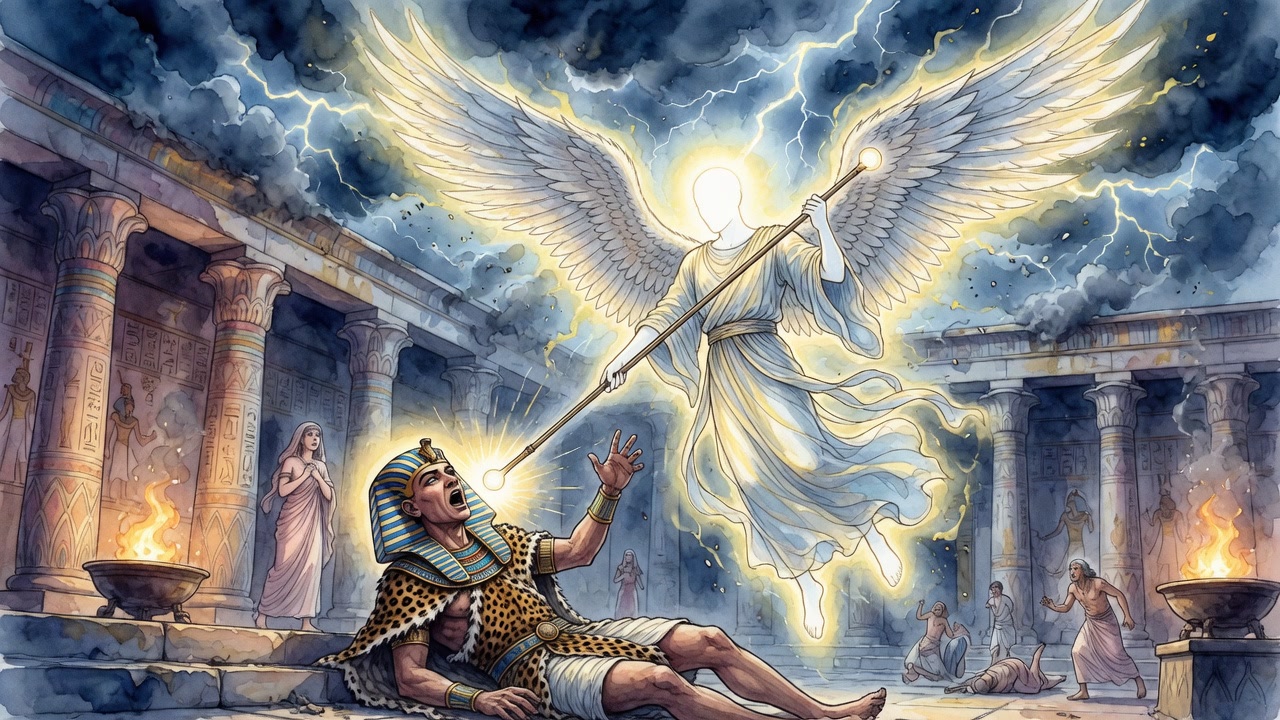
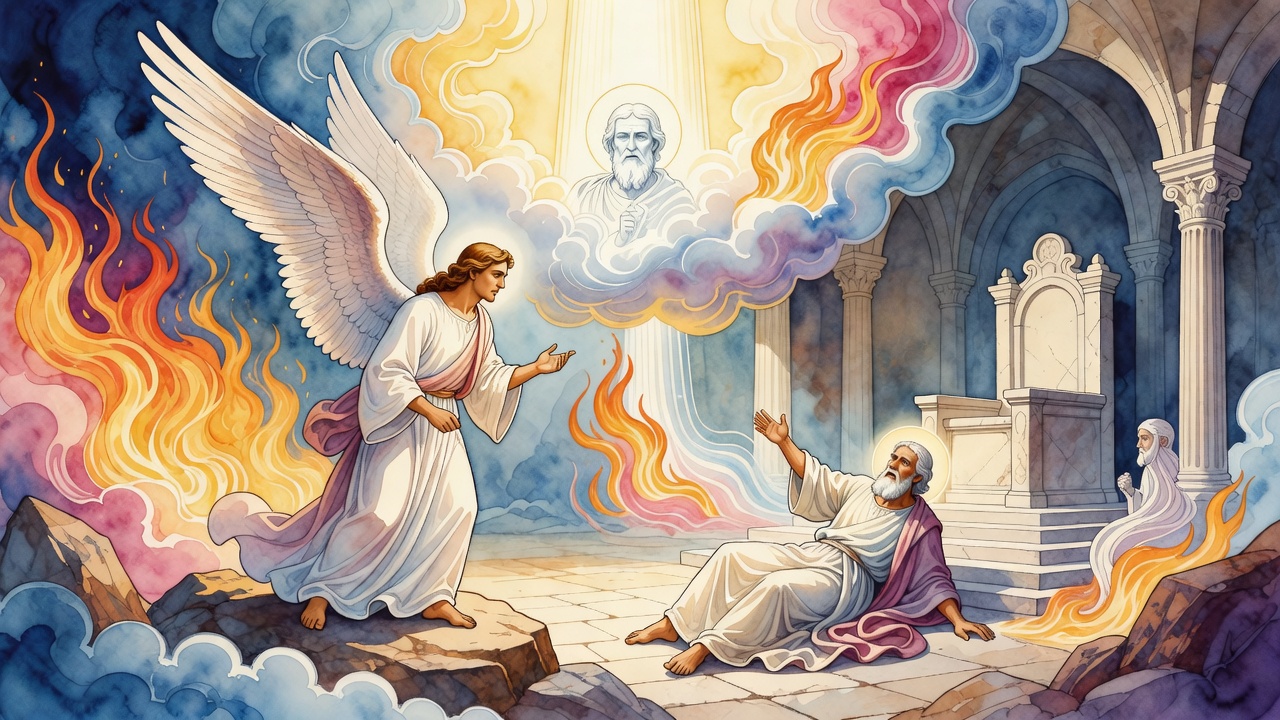
God struck Pharaoh's house. Plague after plague, and Pharaoh did not know why his own rooms had turned against him. An angel came to him in the dark and said the thing the dream had already said at the Nile. This woman is the wife of Abraham. She is not available to you. Everything that has happened to you is because she is here.
Pharaoh summoned Abraham at dawn and threw the question at him. "Why did you tell me she was your sister? She is your wife. I could have taken her for good. I could have acted against you without knowing what I was doing."
Anger in that speech, and also relief. He had been struck without a name for the blow. Now he had the name. He gave Sarah back. He sent them out of Egypt with everything the deception had piled up.
Abraham left richer than he had entered, with his wife beside him again. The cedar still stood. The axes had been paid to drop.
He Waits at Another Door
Long after the Nile, long after the grave, Abraham stood at the threshold of God's house and did not go in. He wept for children who had been sent out of their land. The angels saw the weeping and turned on God with it.
"Why do You array yourselves against Me with your complaints?" God said.
"On account of Abraham, Your beloved," they said. "He has come into Your house wailing, and You pay him no heed."
"Since my beloved ended his earthly life," God said, "he has not been in My house. What has My beloved to do in My house?"
Abraham came forward anyway, as he had come forward at the river. "Why have You exiled my children, delivered them to nations that torture them, and made desolate the sanctuary where I was ready to bring You Isaac?"
"Your children have sinned," God said. "They have transgressed the whole Torah, every letter of it."
"Who will testify?" Abraham asked.
The Torah was called. Abraham spoke to her as to a daughter. She had been offered to every nation and refused, and his children had taken her at Sinai. On the day of their distress she would not stand against them. She stepped aside.
Alef, first of the letters, came next. Abraham stopped it at the threshold. "You come to testify against Israel in his distress? Remember the day God opened at Sinai with you: I am the Lord your God. No nation took you. My children did." Alef went silent. The rest of the letters followed it out.
Abraham stayed at the door. The man who had planned at Egypt's border still stood at a border, still trying to keep the next generation from the axe. The palm had spoken once in a dream beside the Nile. In the end he did the speaking himself.
← All myths