The Angel Who Stood Beside Sarah in Pharaoh's Palace
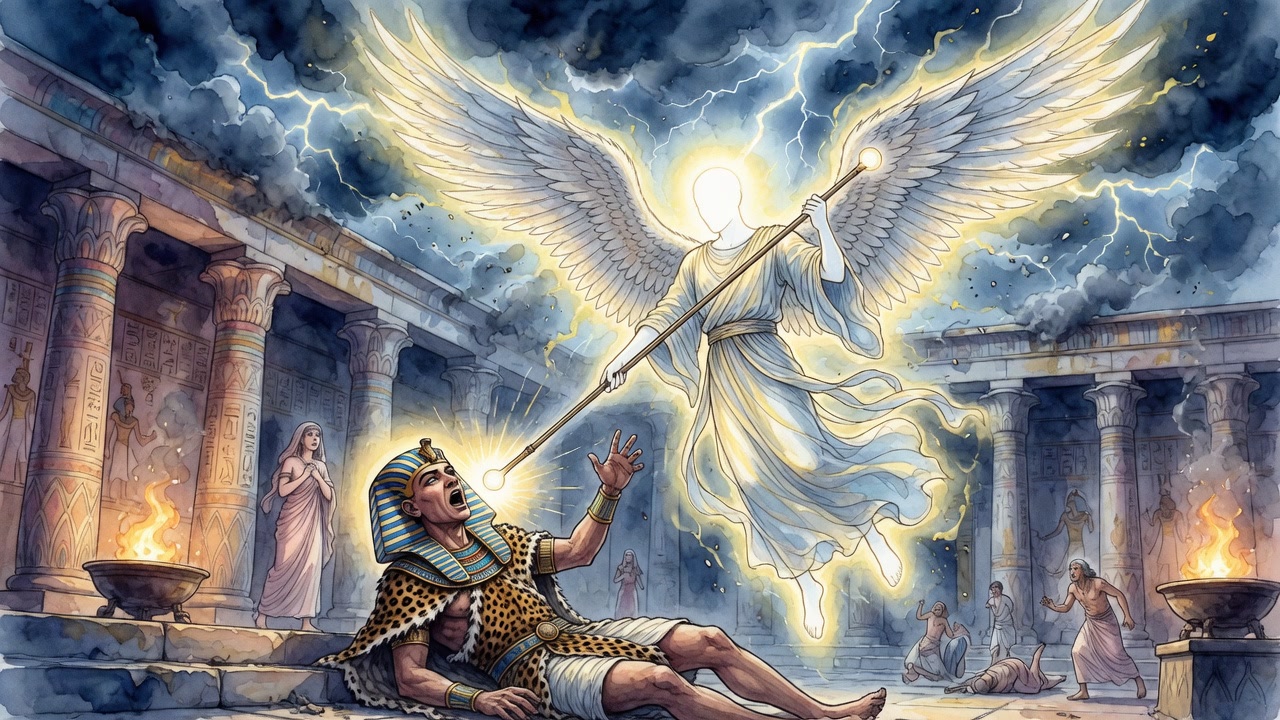
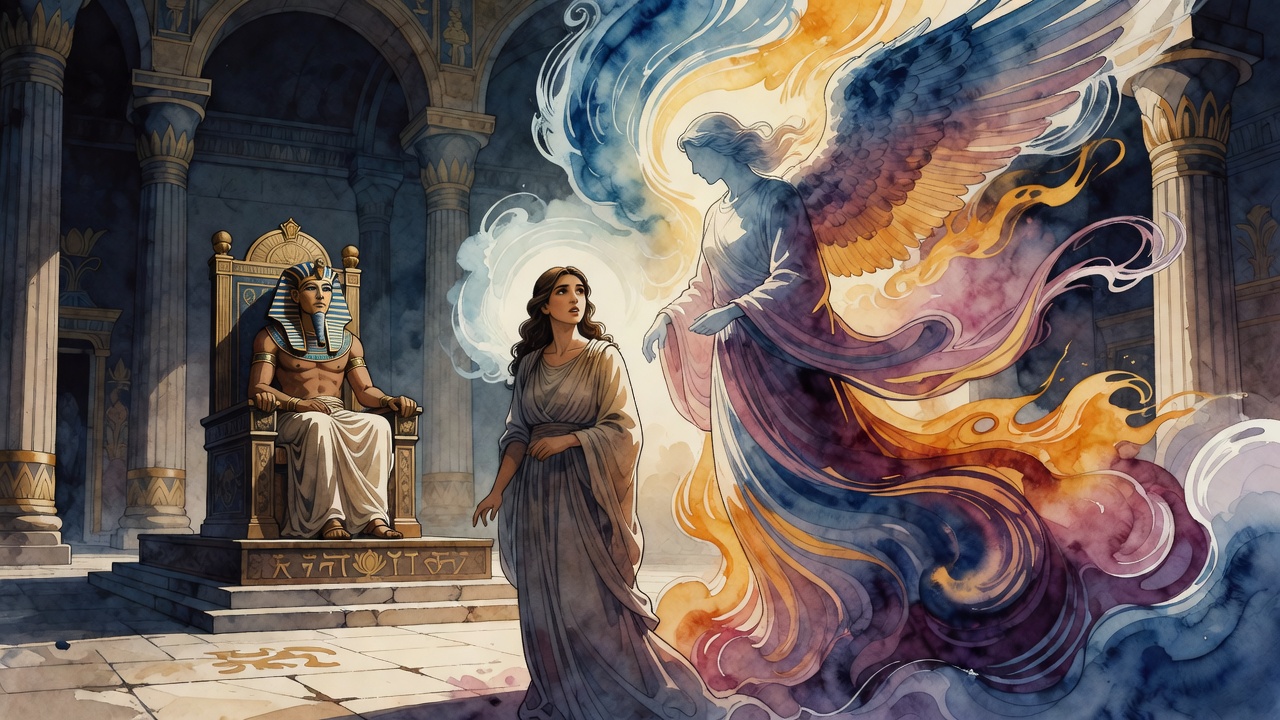
An angel appeared in Pharaoh's throne room while Sarah stood before the king. Only she could see him. He told her not to be afraid.
Table of Contents
 Click for full size
Inside the Palace
The moment Pharaoh's men brought Sarah into the palace at Egypt, an angel appeared beside her. The king could not see him. Only Sarah could. The angel told her: do not be afraid. God has heard your prayer.
This detail, absent from the plain text of (Genesis 12), changes everything about how the episode reads. The common understanding of the Egypt story treats it as a tale of moral compromise, a patriarch trading on his wife's beauty to save his own skin. The midrashic tradition refuses that reading. Sarah was not unprotected in that palace. She had company. And what she received from Pharaoh before she left was not the settlement of a transaction but the beginning of a legacy.
Pharaoh's Gifts and the Province of Goshen
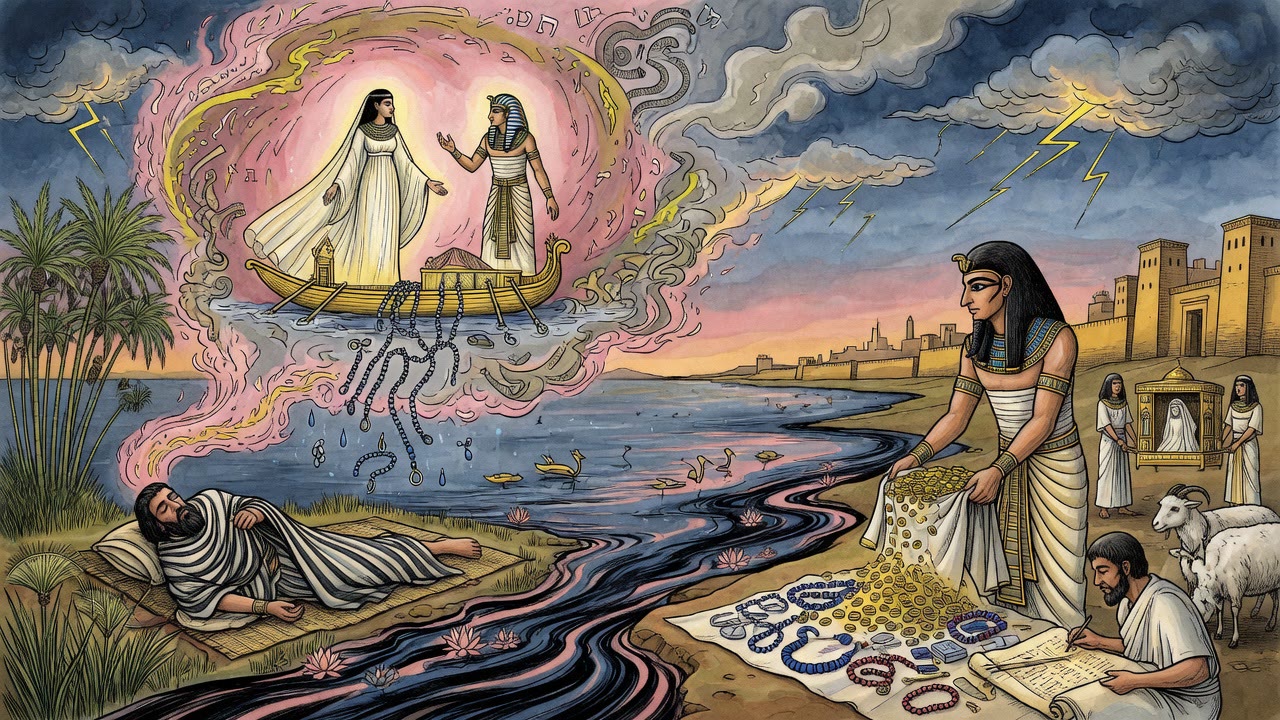
The Ginzberg account describes the scene with close attention. Pharaoh, captivated by Sarah and standing in the presence of an angel he could not see, pledged himself to make Abraham great. He sent gold, silver, livestock, and servants. He wrote out a marriage contract. He deeded to Sarah the province of Goshen, that specific region of Egypt, the richest grazing land in the delta, the same territory where centuries later Sarah's descendants would settle when they came down to Egypt as slaves.
The rabbis saw this as a quiet irony written into the geography of history. Goshen was always Sarah's. Pharaoh gave it to her before he understood what he was giving away, before he knew who she was or whose descendants would one day walk out of it carrying the bones of Joseph.
How Hagar Came to Abraham's House
Then Pharaoh did something remarkable. He gave Sarah his own daughter.
Hagar was the king's daughter. The logic Pharaoh applied, as the tradition preserves it, was the logic of a man who had seen something that frightened him: better for my daughter to be a servant in this woman's house than to reign as mistress in any other. He had watched plagues come upon his palace. He had felt an angel's presence in his own throne room even if he could not see it. He understood, in the way that powerful men understand things after they have been humbled, that this household was different from any he had encountered.
So Hagar came to Abraham's household as a gift from a king who had tried to take Sarah and failed. She came carrying her father's estimation of what she was entering, and she carried that estimation badly. Years later, when she became pregnant with Abraham's child, she would use her pregnancy to settle old scores with her mistress, and the tradition would trace her downfall to this exact error: she had seen the power of this household clearly enough to be placed in it by a frightened king, and she still failed to understand what she was living inside.
The Angel's Name
The tradition gives the angel a message but not a name in this episode. What matters is his function: he stood beside Sarah in a place of danger and told her she was not abandoned. This is also what happens when Hagar is later driven out into the wilderness with Ishmael, an angel appears and speaks. The household that began with an angel in Pharaoh's palace would produce generations of people who encountered angels at the edges of survival, at wells in the desert, at the gates of burning cities, at the moment when the water ran out.
← All myths