6 min read

When the Casket Opened Egypt Blazed with Primordial Light

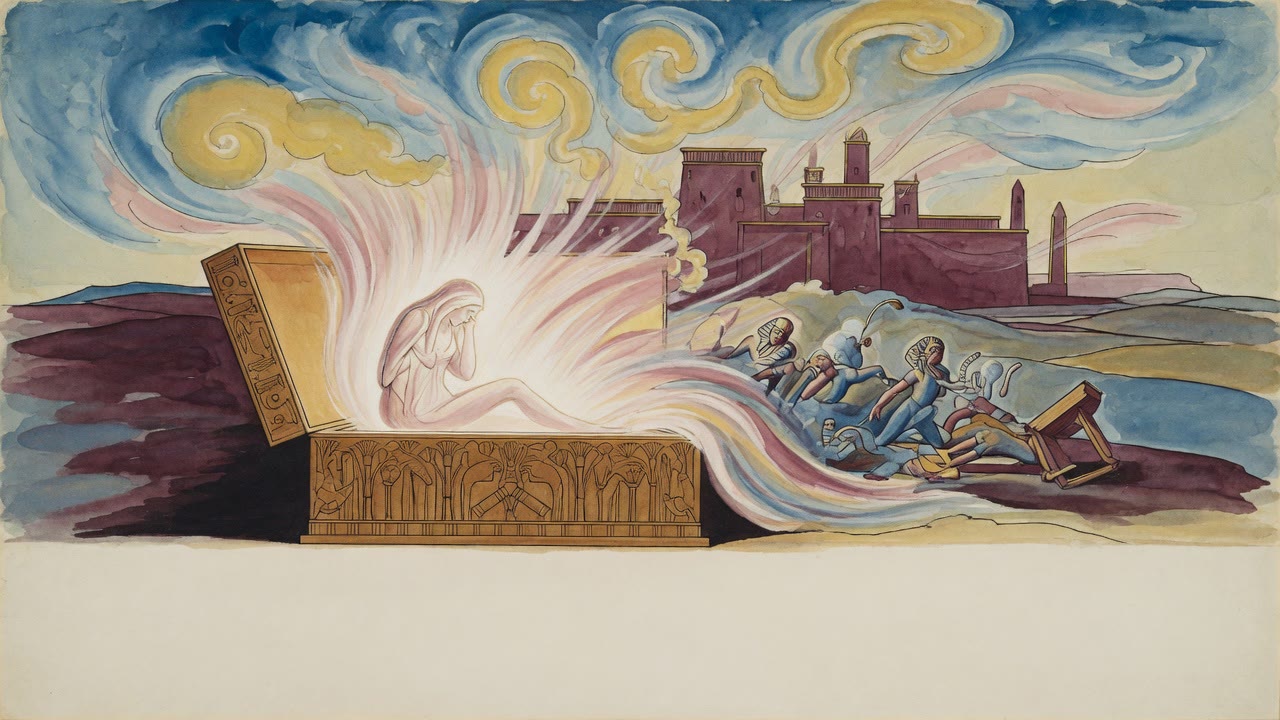
Abraham carried Sarah past the Egyptian border in a sealed casket, paying every tax rather than open the lid, until Egypt blazed.

Curated by Arthur · Told by Maggid ·
Table of Contents
  1. The Road Into Egypt and What Abraham Feared
  2. Egypt Blazed When the Lid Came Off
  3. The Wages of a Lazy Workman
  4. The Old Man at Hebron on Yom Kippur Eve

Abraham saw his wife's face for the first time in a stream.
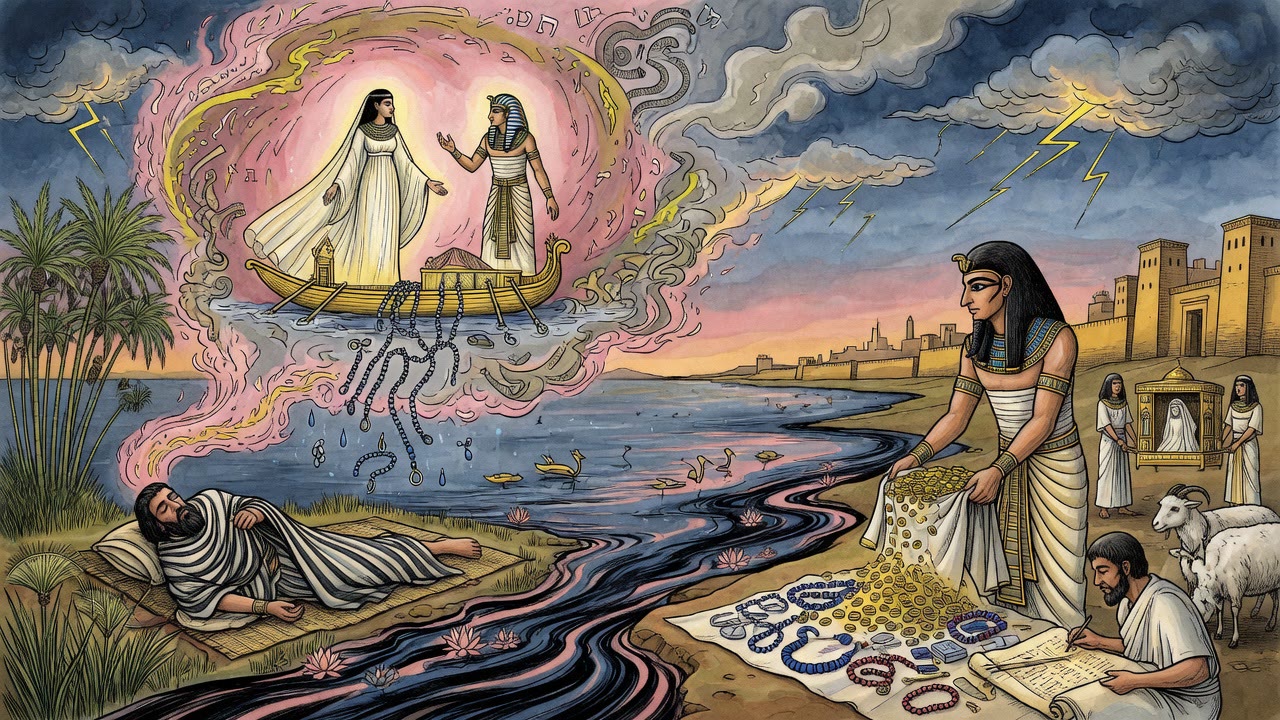
They had been married for years. He had traveled beside Sarah, argued with kings over her, prayed alongside her in the dark. But he had been looking elsewhere, always: at the sky, at the fire his father sold, at the voice that told him to go. The stream outside Egypt stopped him. He looked down, and there was her reflection moving in the water, bright as a sun on the surface, and his breath left him.

He had never seen anything like it.

And now he was afraid.

The Road Into Egypt and What Abraham Feared

He told her plainly. The Egyptians would see her and want her. They would take her and kill him for standing in the way. He had to hide what he had seen. So he asked her to climb inside a casket, and he closed the lid, and carried her across the border with the lid fastened shut.

The tax collectors at the border asked him what the casket contained.

"Barley," he said.

They said the tax on barley would be due. He agreed to pay it.

"No," they said, looking at the casket's size and weight. "It must be wheat."

He agreed to pay the wheat tax.

They raised it to pepper. He paid.

"Gold," they pressed. He paid.

"Precious stones." He paid that too, without argument, without asking them to open it, agreeing to every charge they named and reaching for his purse each time. They had never met anyone who did this. A man does not pay the gold tax on a casket full of barley. Either the man is a fool, or the casket holds something he will not surrender for any price.

Egypt Blazed When the Lid Came Off

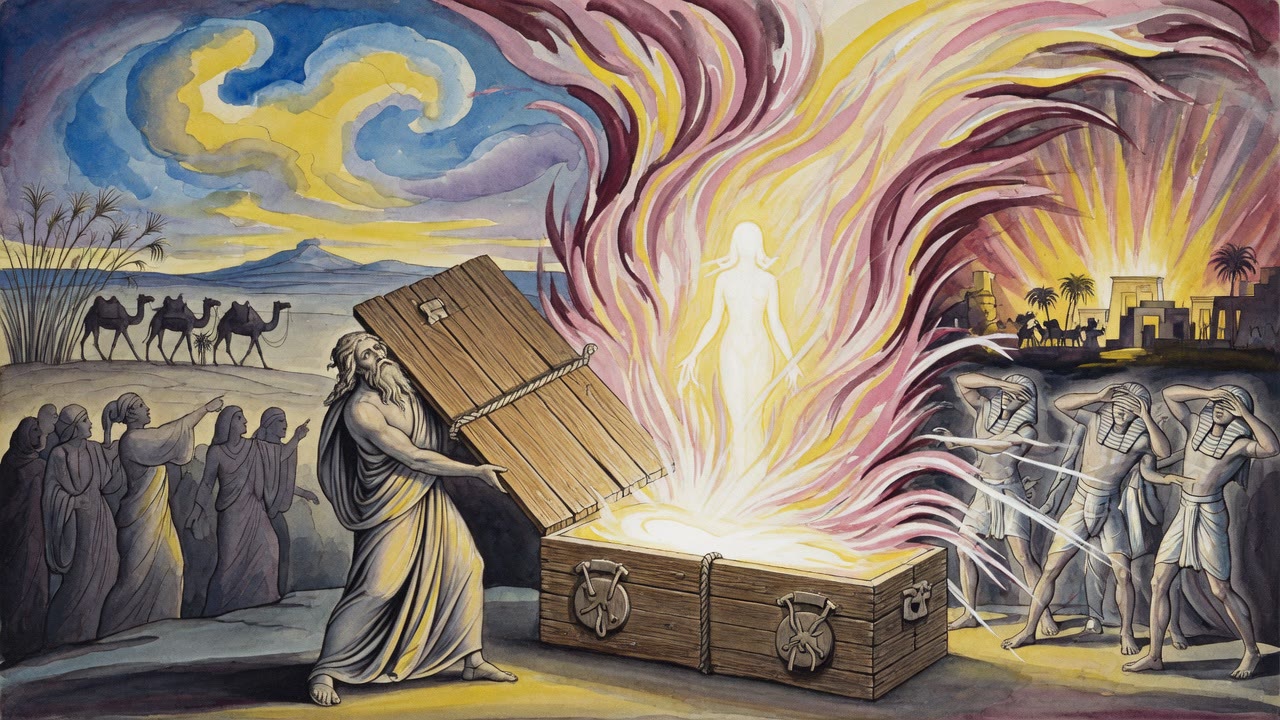
They pried it open.

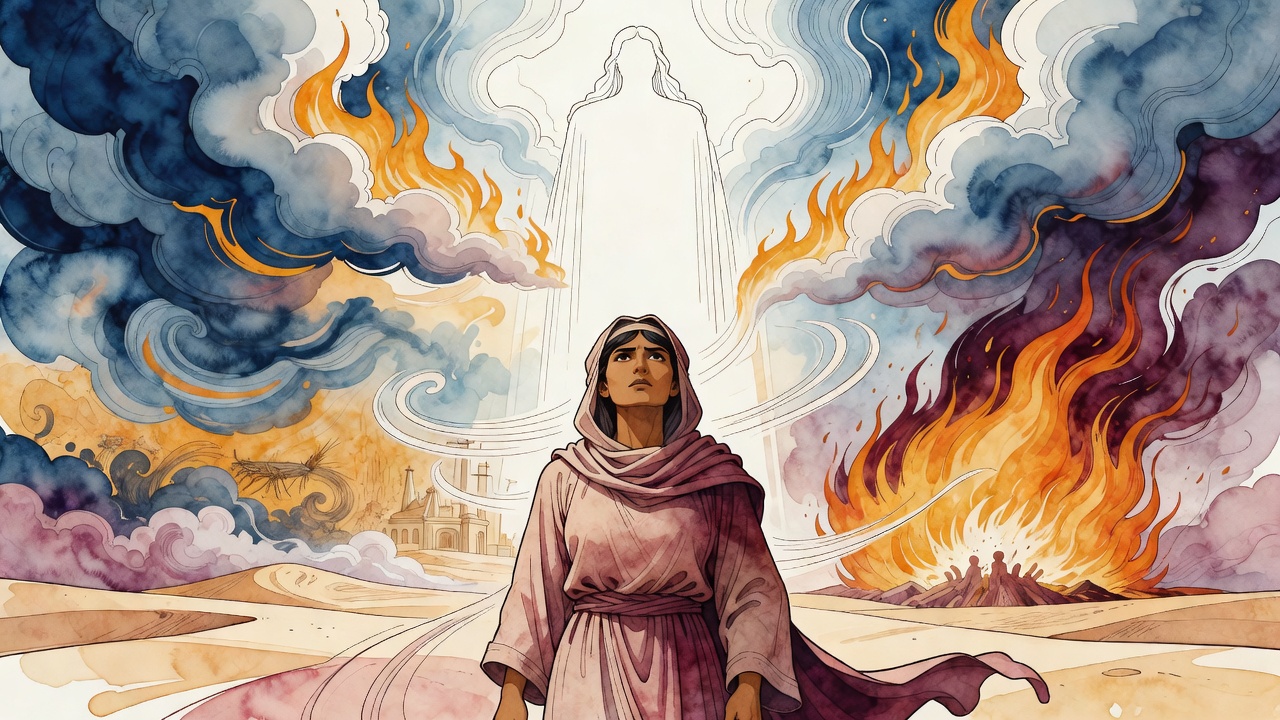
The whole of Egypt lit up.

Sarah's beauty, when it escaped the casket, was not compared to a woman's beauty. It was compared to the light of the first day of creation (Genesis 1:3), the or-haganuz (אוֹר הַגָּנוּז), the hidden light, the radiance that shone before sun and moon existed and that God later concealed because it was too much for an ordinary world to bear. Against that light, all other beauties were as apes to men. The Egyptians who had come to collect taxes stood blinking. The servants of Pharaoh outbid each other in a frenzy, all of them suddenly certain that a radiance like this could not belong to a private man. They ran to tell the king.

Abraham had known what was in the casket. He had paid every tax they named rather than open it. The fear had been warranted.

The Wages of a Lazy Workman

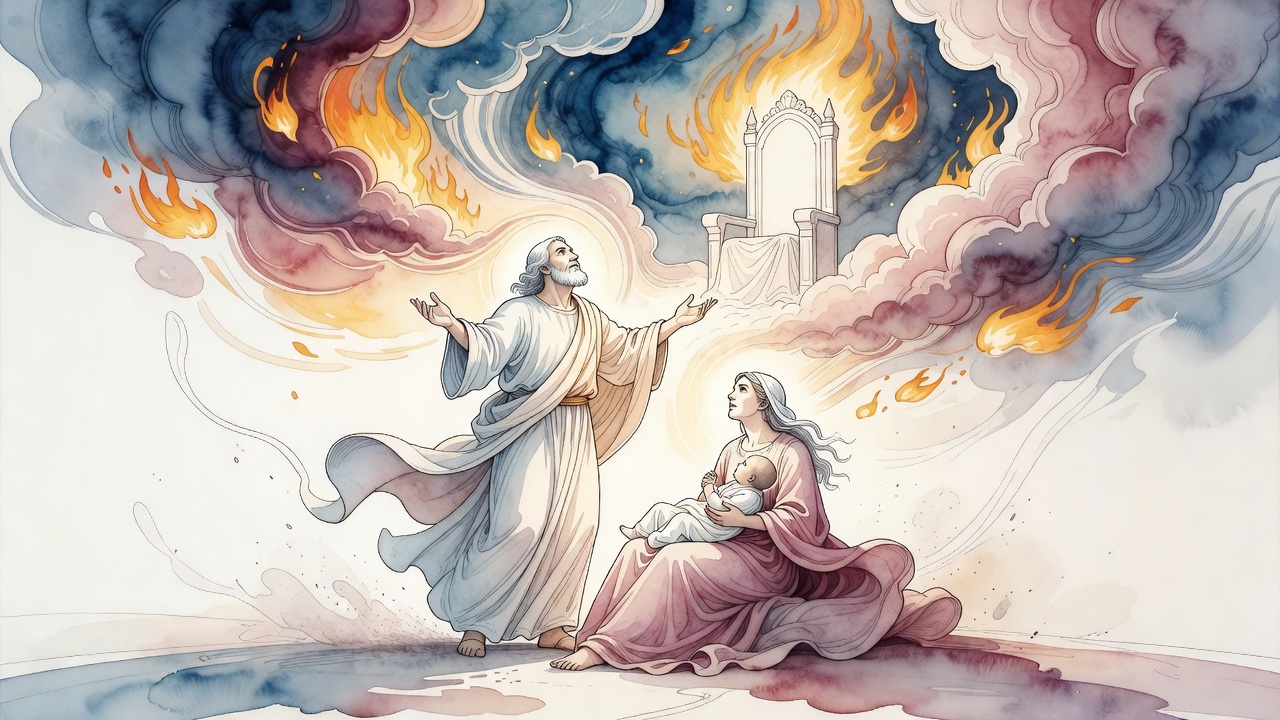
A prayer attributed to Solomon turns on this moment: when a man hires a zealous worker and pays him his wages at the end of the job, what favor has he done? The worker earned it. The payment is a debt, not a gift. But if a man hires a lazy worker, and the worker fails to do the job well, and the man pays the full wages anyway, that is something else entirely. That is chesed (חֶסֶד), loving-kindness that runs past any accounting of what is owed.

Solomon brought this before God: Abraham and Isaac and Jacob were zealous workmen. They earned what they received. But we, he said, are the lazy workmen. When you pay our wages in full anyway, when you heal us and restore what we forfeited, everyone who sees it will praise you. Because it will be impossible to explain on any ordinary accounting. No one pays the lazy workman his full wages. Only someone who chooses to.

This is the shape of what Abraham carried into Egypt. Not the ability to earn what he had, but the willingness to pay whatever was asked rather than let the lid come off on someone else's terms. He did not bargain. He did not argue. He simply paid and paid and paid, until the tax collectors had to see for themselves what could not be bought at any price.

The Old Man at Hebron on Yom Kippur Eve

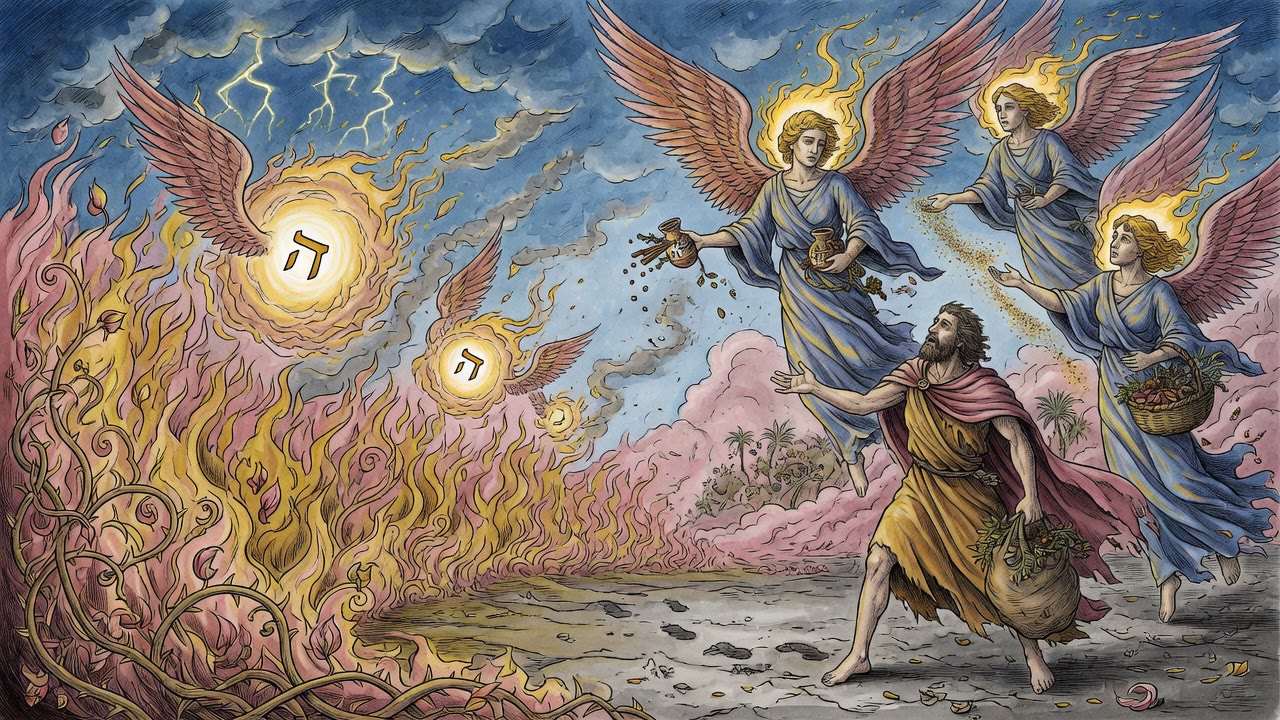
The community at Hebron found themselves one man short on the eve of Yom Kippur. They had done everything right. The prayers were ready, the white garments were laid out, the fast was about to begin. But a minyan requires ten, and they could only find nine. Without a tenth man, the communal prayers could not be said aloud. The holiest night of the year would pass in silence.

The sun was going down when they saw him.

An old man, silver-bearded, his clothes torn, a sack over his shoulder. His feet were badly swollen from walking, the kind of swelling that comes from days of it. He was not from there. He did not explain where he had come from. They ran to meet him before he passed, brought him inside, gave him food and water, and dressed him in fresh white garments. He went with them to the synagogue and they said the prayers.

When they asked his name, he told them: "Abraham."

The light that had blazed across Egypt from inside a casket had arrived on swollen feet at dusk, dressed in torn clothes, just in time.


← All myths
From the tradition

Sources

3 sources

The texts this telling draws on, in full. Open a card to read inline, or expand it for a wider, quieter read.

Pirkei DeRabbi Eliezer 54:5Pirkei DeRabbi Eliezer

Pirkei DeRabbi Eliezer, a fascinating collection of early Jewish stories and interpretations, grapples with just that. Chapter 54 gives us some intriguing food for thought. It's a chance to really think about what constitutes true kindness and how we relate to the Divine.

Rabbi Meir starts us off with a Seems obvious. Someone's in trouble, a doctor helps, good deed done. But is it really that exceptional?

Then Rabbi José chimes in, and things get more interesting. He uses the analogy of hiring a worker. "If a man hires a zealous workman and pays him his wages in full when he's discharged, what favor is he really doing?" In other words, the worker earned it! It's an obligation, not necessarily an act of remarkable generosity.

Then Rabbi José flips the script: "If he hires a lazy workman and still gives him his wages in full when he discharges him, verily he is giving him a real favor." Now we're talking! That's going above and beyond. It's unexpected kindness, a true gift.

So what's the connection to the Divine? Well, the text continues with Solomon speaking before the Holy One, blessed be He. Solomon says, "Sovereign of all the worlds! Abraham, Isaac, and Jacob were zealous workmen. You gave them wages in full, of their own earnings You did give them." The patriarchs, those foundational figures of our faith, were diligent and righteous. God rewarded them fittingly. But Solomon continues, "But we are lazy workmen, and when You will give us our wages in full, and will heal us; verily, everyone will praise You and bless You."

The implication is powerful. We, unlike the patriarchs, are imperfect. We fall short. We’re the “lazy workmen.” And yet, if God, in His infinite mercy, still provides for us, if He heals us and gives us what we need despite our shortcomings, then that is an act of incredible grace. That’s when true praise and gratitude become truly meaningful.

It makes you wonder, doesn't it? Is our relationship with the Divine about earning rewards through perfect behavior? Or is it about recognizing the overwhelming kindness and mercy that we receive, even when we don't deserve it? Maybe true goodness isn't just about doing what's expected, but about exceeding expectations, especially when extending compassion to those who need it most, as God does for us. What does it look like to be a “lazy workman” who still receives grace? And how does that change how we view our obligations to others?

Full source
Legends of the Jews 5:96Legends of the Jews

It’s a story filled with hidden beauty, shrewd bargaining, and a touch of divine protection.

Our tale begins as Abraham and Sarah journey from Canaan to Egypt. According to Legends of the Jews, by Louis Ginzberg, it was during this trip that Abraham truly beheld Sarah's beauty for the first time. They were wading through a stream, and he saw her reflection shimmering in the water, like the sun's brilliance itself. Up until then, the text implies, he'd been almost… unaware.

This sudden realization led Abraham to worry about the dangers that awaited them in Egypt. "The Egyptians are very sensual," he told Sarah. So, he decided to conceal her in a casket, hoping to protect her from unwanted attention.

Here’s where the story gets interesting. At the Egyptian border, the tax collectors grew suspicious. They asked Abraham what the casket held. He replied, "Barley." But the officers weren't convinced. "No," they said, "it contains wheat!"

Abraham, ever the negotiator, agreed to pay the tax on wheat. But the tax collectors pressed on, each guess more outlandish than the last. "It contains pepper!" they exclaimed. Again, Abraham agreed to pay the tax. Then came gold, and even precious stones! Abraham, remarkably, didn't refuse a single charge, no matter how high.

This, of course, made the tax collectors even MORE suspicious. What could possibly be so valuable that this man would pay any price to keep it hidden? They insisted on opening the casket.

And what happened when they did? According to Legends of the Jews, the whole of Egypt was suddenly resplendent with Sarah's beauty! The effect was so dramatic that all other beauties paled in comparison – "like apes compared with men." She even surpassed Eve herself!

The servants of Pharaoh, utterly captivated, began vying to possess her. But they quickly realized that such radiant beauty shouldn't belong to a mere private individual. They reported their discovery to the king.

Pharaoh, upon hearing the news, immediately dispatched a powerful armed force to bring Sarah to his palace. He was so bewitched by her charms that he showered the messengers who brought him news of her arrival with lavish gifts. The story emphasizes the immense power of beauty, but also the potential dangers it presented, requiring Abraham's quick thinking and, perhaps, divine intervention to navigate. It is a narrative that illustrates how beauty can be both a blessing and a curse, and how faith and shrewdness can help overcome even the most challenging situations. It begs the question: what lengths would you go to protect something – or someone – truly precious?

Full source
Legends of the Jews 5:313Legends of the Jews

The people of Hebron certainly did, right before Yom Kippur, the Day of Atonement.

It's the eve of the holiest day of the year, a time for communal prayer and reflection. But Hebron, despite all its preparations, was missing something crucial: a tenth man for a minyan, the quorum of ten Jewish adults required for certain prayers to be recited publicly. Can you imagine the anxiety? The fear that they would be unable to properly observe the holy day?

In Jewish tradition, communal prayer holds immense power. The absence of a minyan would mean their prayers wouldn't ascend in the same way.

Then, just as the sun was about to dip below the horizon, painting the sky in fiery hues, they saw him. An old man, his beard like spun silver, his clothes torn and dusty. He carried a sack slung over his shoulder, and his feet were swollen from a long journey. You can almost feel the hope surging through the community, can't you?

They rushed to meet him, these desperate souls, offering him food, water, and a place to rest. They gave him fresh, white garments, symbolic of purity and renewal, and together, they walked toward the synagogue. What a powerful image – community rallying around a stranger to fulfill a sacred obligation.

And then, the question: "What is your name, traveler?"

His answer? One simple word, laden with history and meaning: Abraham.

Whoa.. The implications of this story, though brief, are profound. Was it literally Abraham, the patriarch, returning to aid his descendants? Or was it a symbolic representation of his enduring legacy, his commitment to faith and community? We don't know for sure.

Perhaps, as Ginzberg suggests through this tale in Legends of the Jews, it serves as a reminder that even in our most vulnerable moments, when we feel incomplete or lacking, help can arrive in the most unexpected forms. Maybe it even suggests that the spirit of our ancestors, their devotion and righteousness, is always with us, ready to guide us when we need it most.

So, the next time you feel like you're missing something, remember the story of Hebron. Remember the old man with the silver beard. And remember that sometimes, all it takes is one person, one act of kindness, one shared moment of faith, to make everything whole.

Full source